Last updated 2026-07-26
TL;DR
A woods food plot works if it gets at least 4-6 hours of direct sun, has soil you've actually tested, and uses shade-tolerant species like clover, oats, or brassicas. Most failures come from too much canopy, not bad seed. Clear or thin overhead cover first, then plant to your soil test, not a bag label.
what is a food plot, exactly
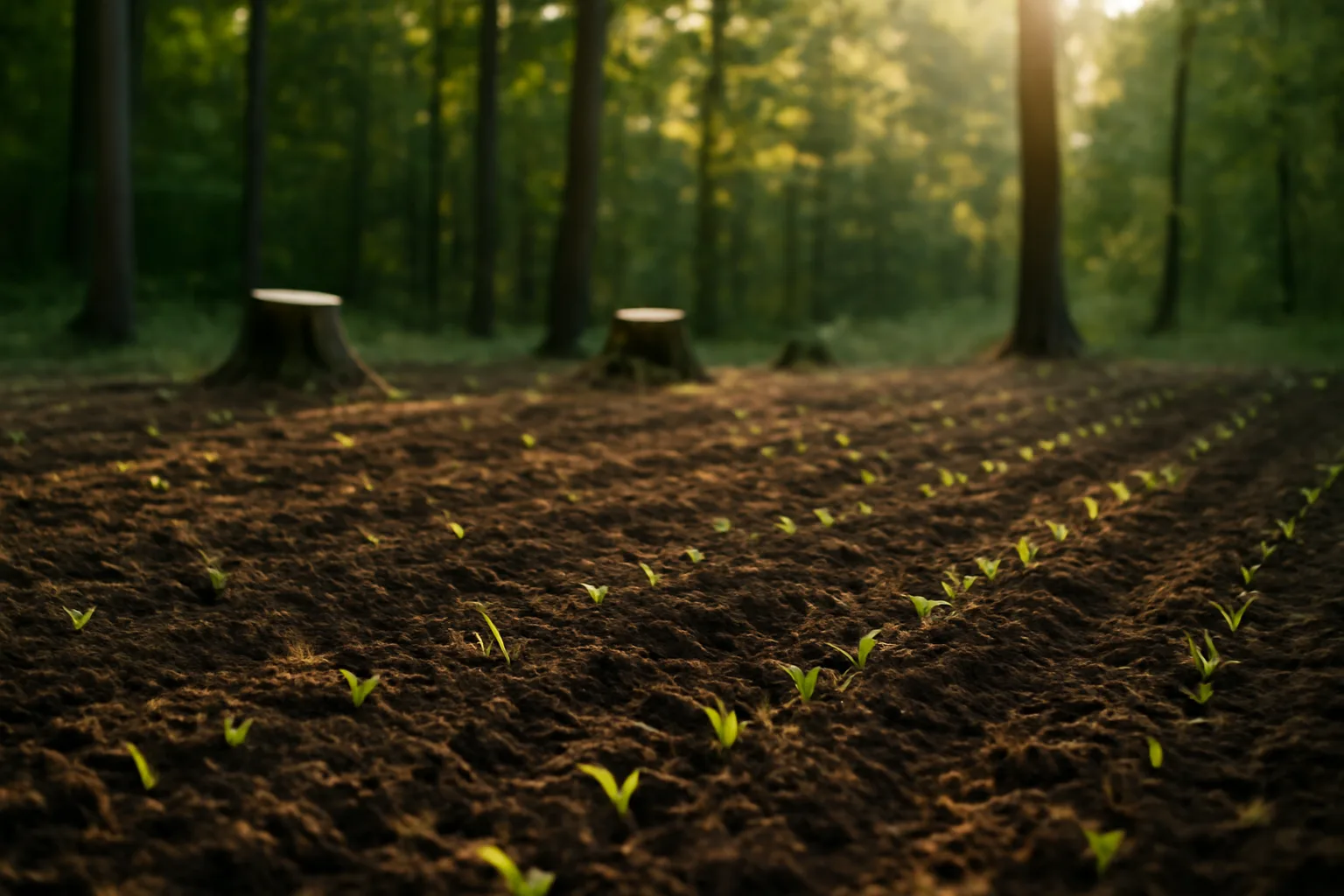
A food plot is a planted patch of forage on land you own or lease, put there specifically to feed and hold deer (and often other wildlife) rather than to harvest a cash crop. It can run from a quarter-acre kill plot tucked in timber to a 5-acre clover field along a fence row. The point is nutrition and attraction, not yield per bushel. The U.S. Department of Agriculture doesn't regulate food plots as a farm program category, but the Natural Resources Conservation Service (NRCS) does fund wildlife habitat plantings under programs like the Environmental Quality Incentives Program (EQIP), which covers wildlife habitat practices including forage plantings on private land [1]. So this isn't some fringe hobby activity. It has a real conservation-agriculture backbone. A woods food plot specifically means one planted inside or along the edge of timber rather than in an open ag field. That changes almost everything: sunlight, soil pH, deer approach patterns, and equipment access all behave differently under a canopy than they do in the open. Most of the mistakes people make with woods plots come from treating them like a shrunk-down version of a field plot instead of respecting the shade and root competition that comes with trees.
why plant a food plot in the woods instead of an open field
Woods plots exist for one main reason: they let you put food where deer already feel safe, which is inside cover, not out in the open. A small interior plot (sometimes called a kill plot or hidey-hole plot) gives you a huntable ambush point without asking deer to expose themselves in a big field during daylight. Open-field plots get hit hard after dark by mature bucks that won't step into the open until legal light is gone. A quarter-acre plot cut into a stand of hardwoods, timed right for bow season, can pull daytime activity because the deer feel enclosed. The tradeoff is real, though. Sunlight is the single biggest limiting factor in a wooded plot, and no amount of fertilizer fixes a canopy that's blocking 80% of your light. If you can't get a plot to at least 50% full sun for a good chunk of the day, you're better off making that spot a trail or a bedding thicket and putting your food elsewhere.
how much sunlight does a woods plot actually need
Most food plot forages, including clover, brassicas, and cereal grains, need a minimum of 4 to 6 hours of direct sunlight to grow a usable stand. Full shade forages are limited and generally weak producers. Nothing you'd plant for deer tonnage does well under a closed canopy. This is why the first job on any woods plot isn't tillage, it's timber work. You need to open the canopy before you touch the soil. That means dropping some trees, at least thinning around the plot perimeter, or using a hack-and-squirt herbicide method on standing timber you want to kill in place (leaving it as standing cover while it dies back and lets light through). A rough rule some experienced plotters use: if you can stand in the middle of your proposed plot at midday in July and see clear blue sky over at least half the opening, you've probably got enough light. If it's dappled shade the whole day, don't bother planting clover there. Try a shade-tolerant option instead, or accept it as a sanctuary trail.
when to plant food plots for deer
Timing depends on your region and what you're planting, but there are two windows almost everyone in whitetail country works around: spring (April through June) for warm-season forages, and late summer to early fall (August through September) for cool-season forages. The exact dates shift by USDA Plant Hardiness Zone and by your state's first-frost date. Cool-season plantings, which cover most classic deer plot species (clover, brassicas, cereal grains), generally go in 4 to 8 weeks before your area's average first fall frost, so the plants establish before growth slows. That window usually falls somewhere in the August 15 to September 30 range for most of the whitetail's core range. Spring/summer annuals, like soybeans, cowpeas, or sorghum-type forages, go in after your last frost date and soil temps hit at least 60°F, which for most of the country lands somewhere between late April and early June. Woods plots specifically often need to plant a little earlier in the cool-season window than open-field plots because germinating seedlings compete with tree roots for the same moisture, and any delay compounds that stress. If you're on the fence about a date, plant early rather than late in a wooded opening.
when to plant clover for deer
Perennial clovers like white clover and red clover establish best in spring (March through May, once soil temps hit around 50°F) or in late summer to early fall (August to mid-September), depending on your zone. Fall plantings in the North need enough time, generally 45 days, before hard frost to get root systems established before winter dormancy. Clover is one of the more shade-tolerant plot options, which matters a lot for woods plots. White clover in particular can persist in partial shade better than brassicas or cereal grains, though it still performs best with at least half-day sun. It's also a perennial, so once established (2 to 3 years of productive stand life is typical for a good clover blend, sometimes longer with proper mowing and weed control), you're not re-tilling and re-seeding every single year. That's a real advantage in a wooded interior plot where equipment access is a pain.
do deer like clover, and do they actually eat it
Yes, deer eat clover readily and it's one of the most consistently used food plot forages across whitetail range. Clover is high in crude protein, typically in the 25 to 30% range when well-fertilized and actively growing, which makes it valuable during spring green-up and antler growth season as well as lactation for does. Extension forage nutrition summaries covering common pasture and plot legumes place well-managed clover forage crude protein content in that same general 25 to 30% range depending on cutting stage and fertility [2]. It's also one of the most forgiving plants for a beginner plotter. Clover tolerates a wider soil pH range than many alternatives (though it still performs best around pH 6.0 to 6.5) and it comes back on its own each spring once established, unlike annuals you have to replant. The catch with woods plots is that clover needs sun to photosynthesize enough to survive grazing pressure. In a shaded plot, deer can browse it down faster than it can regrow, and it'll thin out and die within a season or two. If your woods opening gets a solid half-day of sun, clover is a strong first choice. If it's heavily shaded, skip it.
when to plant oats for deer
Oats are a fall-planted cereal grain, typically going in the ground 60 to 90 days before your first expected hard frost so plants can reach a few inches of growth before cold slows them. For most of the whitetail belt that lands in the August 15 to mid-September window, matching the same general fall planting calendar as brassicas and clover [3]. Deer hit oats hard in early fall when the shoots are young and tender, then again in late fall and winter when other green forage has died back, since oats stay palatable even after light frost (a hard freeze eventually kills them back in most zones, though). Oats also germinate fast, often within a week under good moisture, which makes them a good quick green-up option for a woods plot where you want cover on bare soil fast to fight erosion and weed pressure. One practical note for wooded ground: oats do best with reasonably full sun and decent soil drainage. If your interior plot holds water or stays soggy under heavy leaf litter, oats can struggle with root rot before they ever get established.
when to plant turnips for deer, and do deer actually eat them
Turnips are planted in late summer, generally late July through early September depending on zone, timed so the bulbs have 80 to 90 days to mature before a hard frost sweetens them up. Deer often ignore the tops and bulbs early in the season, then switch hard to eating both after repeated frosts convert starches to sugars, which is why brassica plots often get discovered in November and December rather than October. This delayed-use pattern trips up a lot of first-time plotters who plant turnips, see them ignored for two months, and assume the plot failed. It didn't. It's just doing exactly what turnips do. Turnips need decent sun too, similar to oats, and they want a fertile, well-drained soil. In a shaded woods opening with heavy leaf duff and low light, turnip bulbs often stay small and stunted even if the tops look fine.
do deer eat sorghum, and does it fit a woods plot
Deer will eat sorghum, particularly the grain heads once they mature and the leaves and stalks earlier in the growing season, but it's not a top-tier deer forage compared to soybeans, clover, or brassicas. It's more commonly planted as a screening or cover crop, or blended into a warm-season mix for structure and some grain value, rather than as a standalone attractant. Sorghum is a warm-season crop, planted after last frost once soil temps are reliably above 60 to 65°F, generally similar timing to corn and soybeans. It needs a good amount of sun to grow tall and produce grain heads, so it's a poor fit for a shaded woods interior plot. Where it does make sense in timber is along a sunny south-facing edge, where the height also doubles as bedding cover or a visual screen between a food plot and a road or property line.
what are deer's favorite foods, and does honey have anything to do with it
There's no single universal favorite food for deer. Preference shifts by season, region, and what's naturally available. That said, across food plot research and browse studies, a few categories consistently rank high: soybeans and clover for protein during spring and summer, acorns and other hard mast in fall, and brassicas (turnips, radishes) in late fall and winter once frost sweetens them. On honey specifically: no, deer do not eat honey in any meaningful, documented way as part of natural or food plot diets. Deer are herbivores built to digest plant fiber through a four-chambered rumen system; honey isn't a forage they seek out or a substance their digestive system is adapted to use. This question shows up online mostly because of confusion with mineral licks or scent products, some of which use honey or sugar-based additives as an attractant scent, not because deer graze on honey in the wild. If you're using any kind of bait, mineral, or attractant product, check your state wildlife agency's baiting and feeding regulations first, since many states restrict or fully ban baiting for deer hunting and the rules vary sharply by state.
how do you clear and prep a wooded spot for a food plot
Clearing a woods plot is 80% chainsaw and herbicide work and 20% actual planting. Start by identifying which trees you want gone entirely (cut and remove or leave as felled cover) versus which ones you'll hinge-cut or hack-and-squirt to open canopy while leaving standing structure. Hack-and-squirt (cutting a ring of shallow cuts into the bark and applying a systemic herbicide like glyphosate or triclopyr directly into the cuts) kills a tree in place over a season or two without the labor of dropping and hauling it. It's slower than a chainsaw felling, but a lot less physical work per tree, and it leaves standing dead timber that still blocks wind and adds edge cover. Once the canopy's open enough, you're dealing with root mat and leaf litter instead of typical field soil. A disc or tiller made for food plots struggles in root-heavy dirt; a lot of experienced woods-plot guys use a heavy rear-tine tiller, a no-till drill, or simply broadcast seed onto disturbed soil and drag a section of chain-link fence or a harrow behind an ATV to work it in. Full inversion tillage often isn't practical or necessary in a small interior plot.
do you need a soil test before planting in the woods
Yes, and it matters more in the woods than in an open field, not less. Forest soils are frequently more acidic than adjacent ag ground because of decades of leaf litter decomposition, and low pH is one of the most common reasons woods plots underperform even after decent seed and sun. A standard soil test, available through most land-grant university extension offices for a modest fee (often in the $10 to $20 range per sample), tells you your exact pH and nutrient levels rather than making you guess. Your soil test lab is the actual authority here on how much lime and fertilizer to apply; a food plot plan or blog article can give you general ranges, but the lab report is site-specific and should always override generic advice. If your woods soil comes back at pH 5.0 or lower, which isn't unusual under mature hardwoods, you may need substantially more lime than you'd guess, and it takes months to fully react into the soil profile. That's part of why fall-planted woods plots often benefit from liming the spring or even the year before, if you can plan that far ahead.
what equipment do you actually need for a small woods plot
For a quarter-acre to one-acre interior plot, you generally don't need full-size tractor equipment. A lot of successful woods plots get built with a chainsaw, a brush cutter or mower, a hand or ATV-mounted sprayer for herbicide, a broadcast spreader, and a light disc, harrow, or drag. A no-till drill is nice if you have one, since it minimizes soil disturbance in root-heavy ground and gets better seed-to-soil contact than pure broadcasting, but it's not required for most small plots. Plenty of woods plots get planted successfully with nothing more than a hand spreader, a rake, and boots to walk the seed in. If you're weighing seed options for a small shaded or partially shaded plot, look at blends built for lower light and smaller acreage rather than straight commodity ag seed. For general reference on species and blend selection, the food plot seed and deer food plot seed guides break down which mixes handle partial shade and small-plot conditions best, and the food plot whitetail overview covers plot placement basics if you're still deciding where in the timber to put this thing. If all of this, soil test interpretation, species picks, timing by zone, feels like too many variables to juggle for a one-time plot in the timber, that's exactly the gap a $99 one-time Custom Food Plot Plan is built to close: you get a plan based on your zone, your soil test numbers, and your equipment on hand, without having to piece it together from six different extension bulletins. Start at /plot-plan-builder.
what species actually work best in a shaded woods plot
| White clover | 4-6 hrs | Good | Interior plots, perennial base | |
|---|---|---|---|---|
| Cereal rye | 4-6 hrs | Good | Fall cover, poor soil, low light | |
| Oats | 6+ hrs | Fair | Fall attraction, needs more sun | |
| Turnips/brassicas | 6+ hrs | Poor | Edge plots, sunnier openings | |
| Soybeans | 6-8 hrs | Poor | Full-sun field plots only | |
| Sorghum | 6-8 hrs | Poor | Sunny edges, screening/cover | If you want a broader rundown on picking species by strategy rather than just shade tolerance, the deer food plots and species and strategy resources go deeper on matching a species to your specific hunting goal, whether that's early season, late season, or a year-round perennial base. |
If you're stuck with partial shade (roughly 4 to 6 hours of direct or dappled sun), your realistic options narrow fast. Clover, particularly white clover, tolerates more shade than almost anything else in the standard plot lineup. Winter rye (cereal rye, not ryegrass) is another strong shade performer and one of the most forgiving cool-season cereal grains for low-light, poor-soil conditions. Brassicas and soybeans want more sun and generally disappoint in heavy shade, producing thin, leggy plants with little bulb or bean development. Corn and sorghum need full sun almost without exception and aren't realistic choices for a true interior woods plot. | Species | Min. sunlight needed | Shade tolerance | Typical use in woods plots |
how big should a woods food plot be
Most interior woods kill plots run a quarter-acre to one acre. Bigger isn't automatically better inside timber, since you're constrained by how much canopy you can realistically open and how much equipment access you have. A lot of experienced plot builders aim for long, narrow shapes (a dog-leg or hourglass shape following a natural opening) rather than a perfect square, because irregular shapes tend to match natural light gaps in the canopy and give better bow or gun shot lanes without needing to clear as much timber. These smaller, irregular interior plots concentrate daytime deer movement into a huntable space, unlike large field plots that spread activity out and often get used mostly after dark. If you're trying to feed a lot of deer through a hard winter or hold summer doe groups, a woods interior plot isn't the tool for that job anyway. That's what larger field plots or a food source like food plot whitetail planning is for. Think of the woods plot as a hunting tool first and a feeding program second.
Frequently asked questions
Do deer eat sorghum?
Yes, deer eat sorghum leaves, stalks, and mature grain heads, but it ranks below soybeans, clover, and brassicas as a preferred forage. It's more often planted as a warm-season screen or cover crop component than as a standalone attractant, and it needs full sun, which makes it a poor choice for shaded woods interiors.
Do deer eat clover?
Yes, clover is one of the most consistently used food plot forages for whitetail deer. It runs 25 to 30% crude protein when actively growing and well-fertilized, which makes it valuable during spring green-up, antler growth, and lactation. Deer will browse it heavily, sometimes hard enough to thin a stand if it doesn't get enough sun to regrow.
When should you plant deer food plots?
Cool-season species (clover, brassicas, cereal grains) go in 4 to 8 weeks before your area's average first fall frost, generally mid-August through late September across most whitetail range. Warm-season annuals (soybeans, sorghum) go in after last frost, once soil hits 60°F, typically late April through early June depending on zone.
Do deer like clover more than other food plot options?
Deer show strong, consistent preference for clover, but it's not universally their single favorite; preference shifts seasonally. Clover ranks high in spring and summer for protein, while acorns and other hard mast often outcompete it in fall when available, and brassicas take over as a preferred food after frost sweetens the bulbs and tops.
When should you plant oats for deer?
Plant oats 60 to 90 days before your area's first hard frost, generally mid-August through mid-September in most whitetail range. Oats germinate quickly, often within a week, and stay palatable through light frosts, making them useful for early fall attraction and again in late fall once other green forage dies back.
When should you plant food plots for deer in general?
Two main windows: spring/early summer (after last frost, soil at 60°F+) for warm-season annuals like soybeans or sorghum, and mid to late summer (roughly 45 to 90 days before first fall frost) for cool-season species like clover, oats, and brassicas. Exact dates shift by USDA hardiness zone and your local frost calendar.
When should you plant turnips for deer?
Plant turnips late July through early September, timed so bulbs get 80 to 90 days to mature before a hard frost. Deer often ignore turnips early on and switch to heavy use after repeated frosts convert starches to sugars, so don't judge a turnip plot's success until well into late fall or early winter.
What is a food plot?
A food plot is a planted patch of forage on hunting land, put there specifically to feed and attract deer or other wildlife rather than for commercial harvest. It ranges from a quarter-acre interior kill plot in timber to multi-acre open clover fields, and USDA programs like EQIP can fund wildlife forage plantings on qualifying private land.
What are deer's favorite foods?
There's no single universal favorite; it shifts by season and region. Soybeans and clover rank high for protein in spring and summer, acorns and hard mast dominate fall diets when available, and brassicas (turnips, radishes) become highly preferred in late fall and winter after frost sweetens them.
Do deer like honey?
No, deer don't eat honey in any documented, meaningful way. They're herbivores with a four-chambered rumen built to digest plant fiber, not a system adapted to use honey. Confusion usually comes from honey or sugar-based scent additives in some attractant products, not from deer actually grazing on honey.
Can you grow a food plot in a heavily shaded part of the woods?
Not well. Most plot species need at least 4 to 6 hours of direct or strong dappled sunlight; heavy, closed-canopy shade limits almost everything except the hardiest shade-tolerant options like white clover or cereal rye, and even those will thin out over time without enough light to regrow after grazing.
How do you open up canopy for a woods food plot?
Drop unwanted trees with a chainsaw, or use hack-and-squirt herbicide application (cutting into the bark and applying systemic herbicide) to kill trees in place over a season or two while leaving standing structure. Opening the canopy should happen before any soil prep or planting.
Is a soil test necessary for a small woods plot?
Yes, arguably more than for open-field plots, since forest soils are often more acidic from years of leaf litter decomposition. A land-grant extension soil test (typically $10 to $20) tells you exact pH and nutrient levels so you're not guessing on lime and fertilizer rates; your lab report is the final authority over generic planting advice.
How big should a food plot in the woods be?
Most interior woods kill plots run a quarter-acre to one acre. Smaller, irregularly shaped plots that follow natural canopy gaps tend to work better for hunting access than large square clearings, since they concentrate daytime deer movement into a huntable space without requiring you to clear excessive timber.
Sources
- USDA NRCS, Environmental Quality Incentives Program (EQIP): USDA EQIP funds wildlife habitat plantings, including forage plots, on qualifying private land
- University of Missouri Extension, Managing Forest Openings for Wildlife (G9421): Opening canopy and controlling competing vegetation is a recommended first step before soil prep in wooded plot sites
- Mississippi State University Extension, Establishing Wildlife Food Plots (Publication 2111): Fall cool-season plot species are generally planted mid-August through late September across most of the whitetail range
- USDA Natural Resources Conservation Service, Plant Hardiness Zone Map: Warm-season annual plot species are planted after last frost once soil temperatures reach about 60°F, based on regional hardiness zone timing
- Oklahoma State University Extension, Forage Quality Interpretations (PSS-2117): Well-managed clover forage commonly tests in the 25-30% crude protein range
- Pennsylvania Game Commission, White-tailed Deer Management Plan 2020-2029: State wildlife agencies rank clover, soybeans, and hard mast among preferred whitetail deer foods
- U.S. Fish and Wildlife Service, Lacey Act Overview: Federal wildlife law framework underlies state-level regulation of wildlife feeding and baiting practices, which vary by state
- Mississippi State University Extension, Soil Testing for the Home Landscape or Garden (Publication 2622): Land-grant extension soil tests are typically available for a modest per-sample fee and report exact soil pH and nutrient levels
- University of Kentucky Cooperative Extension, Cereal Rye for Forage (AGR-229): Cereal rye is among the more shade-tolerant cool-season cereal grains suited to low-light, poor-soil food plot conditions