Last updated 2026-07-26
TL;DR
There's no single best seed for all of Michigan. Clover and cereal grains work statewide as anchors, brassicas (turnips, radish) shine in the UP and northern Lower Peninsula for fall attraction, and soybeans or sorghum fit longer-season southern ground. Match species to your zone, soil test, and equipment before you buy seed.
What is a food plot, exactly?
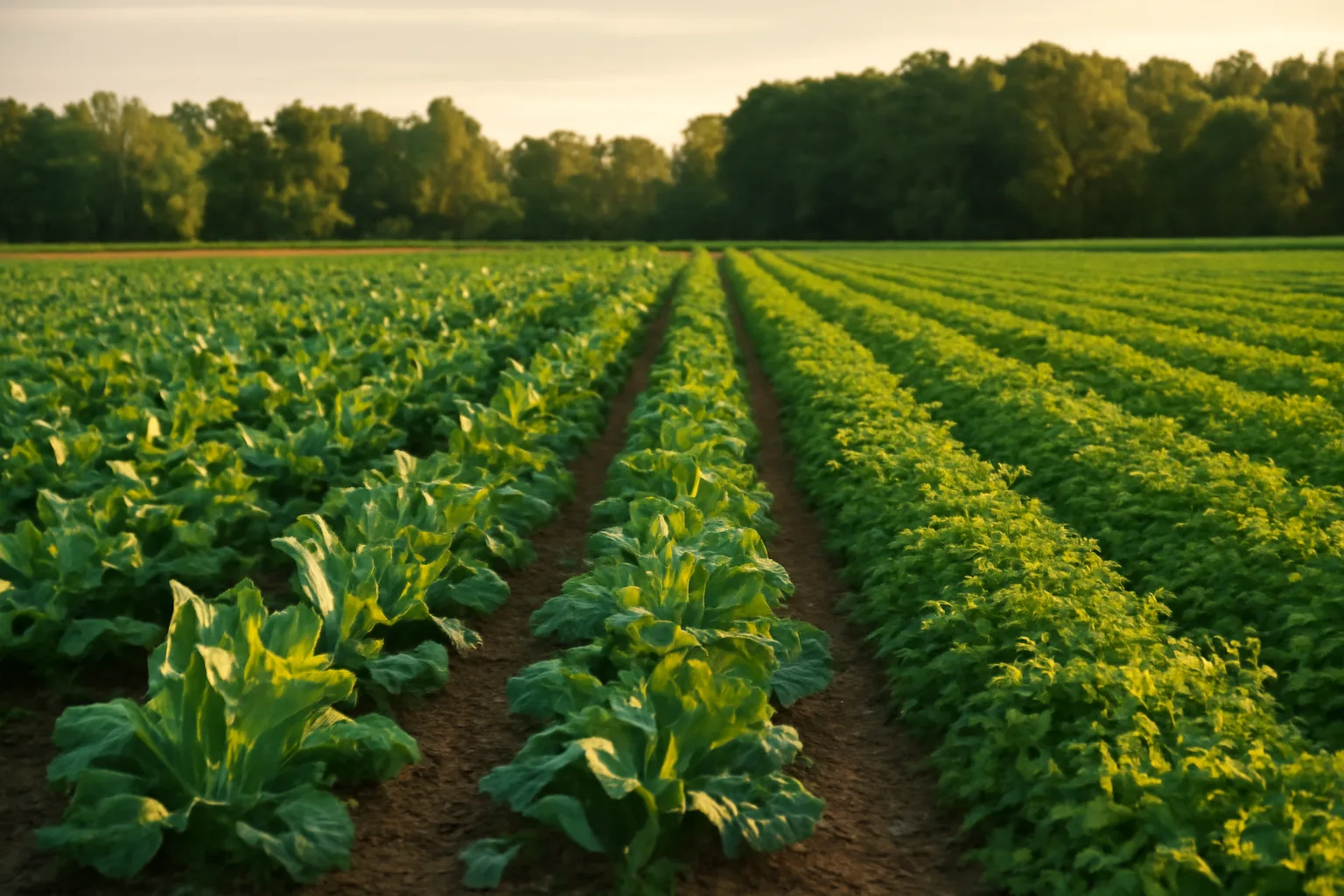
A food plot is a planted area, usually a quarter acre to several acres, designed to feed deer and other wildlife while giving hunters a predictable place to watch or hunt. It's farming on a small scale, but with a wildlife goal instead of a commodity check. Most plots fall into two categories: annuals you replant every year (brassicas, cereal grains, soybeans) and perennials that can produce for three to five years with maintenance (clover, chicory, alfalfa). Michigan hunters often run both, a perennial clover plot for spring and summer plus an annual brassica or cereal grain plot timed to peak right before firearm season. Michigan State University Extension frames food plots as one tool among several for improving deer nutrition and habitat, not a replacement for natural browse and cover [1]. That matters because a lot of new plotters over-invest in seed and under-invest in soil work, which is backwards. The dirt does more work than the bag. See our broader breakdown of food plot whitetail strategy if you're starting from zero on planning.
What is the best food plot seed for Michigan overall?
| Clover (white/red) | Statewide | Late April-May or Aug | Season-long, low reseed cost | |
|---|---|---|---|---|
| Brassicas (turnip, radish) | Northern LP, UP | Mid-July to early Aug | Late-season draw after frost | |
| Cereal grains (oats, winter rye, wheat) | Statewide | Aug-Sept | Fast growth, cold tolerant | |
| Soybeans | Southern/central LP | Late May-June | High tonnage, needs longer season | |
| Sorghum | Southern LP mostly | Late May-June | Cover plus limited forage use | If you want a plan built around your specific zone and soil results rather than a general chart, that's exactly the gap a paid plan tool fills; ours runs $99 one time at /plot-plan-builder. |
For most Michigan properties, a clover blend paired with a fall cereal grain or brassica mix covers the most ground. Clover is the workhorse perennial, brassicas and cereal grains carry the late season, and soybeans or sorghum can add tonnage on properties with longer growing seasons and good soil. There isn't one seed that wins everywhere in a state that stretches from the Ohio border to Ontonagon County. Michigan spans USDA Plant Hardiness Zones roughly 4a in the western Upper Peninsula up through 6b in parts of the southeast Lower Peninsula. That range in growing season length is the single biggest reason "best seed" answers vary so much across the state. Here's a rough comparison of the core options: | Seed type | Best zone fit | Planting window | Strength |
When should you plant food plots for deer in Michigan?
Timing splits into two windows: spring plantings (late April through June) for warm-season annuals and perennials, and late-summer plantings (late July through early September) for brassicas and cereal grains. Which window you use depends entirely on the species and your region's frost dates. Michigan's average first fall frost ranges from early September in the far north and UP to early-to-mid October in the southern Lower Peninsula, based on NOAA climate normals for stations across the state [2]. That gap of four to six weeks is why a planting calendar that works in Berrien County can fail in Baraga County. A practical breakdown: - Spring/early summer (late April-June): clover, soybeans, sorghum, chicory
- Late summer (mid-July to early September): brassicas, cereal grains, most fall blends The general MSU Extension guidance for establishing perennial forages recommends spring seeding when soil temperatures warm and moisture is reliable, since late-summer seeding of perennials risks poor establishment before winter [3]. Annuals aimed at fall hunting get planted backward from your first frost date, not forward from a calendar page. For a zone-by-zone breakdown built specifically for planting calendars, our deer food plots guide covers regional timing in more depth.
When to plant oats for deer in Michigan
Plant oats in Michigan between mid-August and early September, roughly six to eight weeks ahead of your area's first hard frost. Oats grow fast, tolerate cool soil, and green up quickly, making them a reliable late-summer planting for fall attraction. Oats are not winter-hardy the way winter rye or winter wheat is. A hard freeze in the teens will usually kill oats outright, so they peak in September and October and then fade. That's fine if your hunting season runs archery-through-gun in that window, which covers most of Michigan's regular firearm season (mid-November) and much of archery season (opening October 1) [4]. If you want fall forage that survives into winter and regrows in spring, blend oats with winter rye or winter wheat. The oats give you fast early tonnage; the rye or wheat carries the plot through snow cover into late winter and early spring green-up, which matters for post-season nutrition and shed hunting activity.
When to plant turnips for deer in Michigan
Turnips and other brassicas go in the ground from mid-July through early August in Michigan, giving them 90 to 100 days to mature before a killing frost sweetens the leaves and bulbs. Planting too late is the most common brassica mistake; the plants need the full season to bulb out. Brassicas taste bitter and get largely ignored by deer until a freeze converts starches to sugars, which is why a lot of first-time brassica growers think their plot "failed" in September only to watch it get hammered in November. That transformation is well documented in university forage research on brassica crops for livestock and wildlife forage use, where cold exposure triggers the sugar conversion. In the Upper Peninsula and far northern Lower Peninsula, aim for the earlier end of that window, mid-July, because the growing season is shorter and frost can arrive by late September. In southern Michigan you can push planting into the first week of August and still get a full bulb before frost hits in October. Don't skip the soil test before a brassica plot. Brassicas are heavy nitrogen users and respond hard to lime if your pH is off; MSU Extension's soil testing program is the right place to start rather than guessing at fertilizer rates.
Do deer eat clover, and do they actually like it?
Yes. Clover is one of the most consistently preferred forages for whitetail deer across their range, and Michigan is no exception. White clover and red clover both show up repeatedly in deer diet studies as high-use, high-protein forage. Clover's appeal comes down to protein content and digestibility. Quality clover stands can run 20 to 25 percent crude protein during active growth, which rivals or beats a lot of other plot options, and it's available from spring through fall in a well-managed perennial stand. That long season of availability, more than palatability, is what makes clover the default "first plot" recommendation from most extension programs and seed companies alike. The tradeoff is establishment and maintenance. Clover needs decent soil pH (extension guidance generally targets 6.0 to 6.5 for legumes), needs mowing a few times a season to stay vegetative and beat back weeds, and can thin out under heavy deer pressure or drought without some rest. It's low cost per acre over its multi-year life, but it's not a plant-and-forget crop. For a deeper species-by-species comparison, see deer food plot seed.
Do deer eat sorghum?
Deer will eat sorghum, particularly the grain heads and young shoots, but it's a secondary food source compared to clover, soybeans, or brassicas. Sorghum's bigger value in a Michigan plot plan is usually as cover and screening, not as the primary attraction crop. Grain sorghum and forage sorghum both get browsed, especially in late fall and winter when the grain heads are exposed and other food sources thin out. But deer generally rank sorghum below legumes and brassicas in preference studies and practical field observation. It's a decent option to mix into a diverse plot for structure, height, and some late-season grain, especially on a property that also wants standing cover for hunting access or screening a plot from a road. In Michigan specifically, sorghum needs a full, warm growing season, planted late May through June once soil has warmed, and it does best in the southern half of the Lower Peninsula. Pushing it into northern counties or the UP risks an immature crop that never fully heads out before frost.
What are deer's favorite foods, and does that change by season?
Deer preferences shift by season and by what's available naturally, but across most research and field data, acorns, soybeans, clover, and other legumes consistently rank as top choices when available. In a food plot context, clover and soybeans are the closest things to a universal favorite. In late summer and early fall, soybeans (both the leaves and later the pods) draw heavy use. Once acorns start dropping, deer will often shift hard to mast and temporarily ignore plots entirely, something a lot of hunters mistake for plot failure when it's really just a mast year competing for attention. Late in the season, after a hard frost, brassicas and cereal grains take over as the preferred food because they're often the only green, high-carb food left standing. Michigan DNR's deer management materials note that food availability and quality directly affect deer body condition and antler development, which is the underlying reason food plots get built in the first place, to supplement what natural habitat provides during stress periods. There's no single "favorite" food that holds all year; the honest answer is that it changes with the calendar and with what the woods are already offering.
Do deer like honey, and does it belong in a food plot conversation?
Deer are not drawn to honey the way they are to forage crops, and honey has no real role in food plot planning. This question comes up because of scent and mineral attractant products that use honey or molasses-based ingredients, not because deer forage on honey in the wild. Some commercial mineral licks and scent products include sweet ingredients like molasses or honey-scented additives to increase palatability of a mineral block, but that's a different category from seed and forage plots entirely. If you're checking legality before using mineral or scent-based attractants, check Michigan's specific baiting and feeding regulations first, because rules differ from feeding rules in other states and change periodically. Michigan DNR maintains current baiting and feeding restrictions by zone, including areas with bovine TB or CWD-related feeding bans, on its regulations pages, and it's worth confirming current status before placing any attractant, mineral, or bait product . For plot purposes, skip the honey question and focus seed dollars on clover, brassicas, and grains, all of which deer actually seek out as a food source rather than a novelty.
How does soil testing change which seed you should plant?
A soil test tells you your current pH and nutrient levels, and that data should drive your fertilizer and lime decisions more than any seed bag's marketing copy. Skipping the test means you're guessing, and guessing on lime rates in particular can waste a full growing season. MSU Extension's soil testing program, run through the Soil and Plant Nutrient Lab, is the standard reference point for Michigan growers and food plotters alike, and it returns specific pH and nutrient recommendations rather than generic ranges. Most food plot species want pH somewhere between 6.0 and 7.0; clover and other legumes are especially sensitive to low pH because it locks up available nitrogen-fixing capacity in the root nodules. If your test comes back at 5.2, no seed choice fixes that. Lime takes months to fully react in the soil, so testing in fall for a spring planting (or even a full year ahead) gives lime time to work before you need it. This is also where a general planting article like this one hits its limit: your soil test is site-specific data, and the lab's recommendations for your exact field should always override generic advice, including anything in this guide.
What equipment do you actually need to plant these seeds?
At minimum you need a way to kill existing vegetation, a way to work or expose soil, a way to spread seed, and a way to get seed-to-soil contact. That can be as simple as a hand sprayer, a hand tool, a broadcast spreader, and a lawn roller for a quarter-acre plot, or as involved as a tractor, disc, drill, and sprayer boom for multiple acres. Clover and brassica seed is small and needs shallow planting, often a quarter inch or less, so a cultipacker or roller after broadcasting matters more than deep tillage. Cereal grains and soybeans can handle slightly deeper placement and tolerate a drill or even a light disc-and-broadcast approach. Sorghum wants warm soil and decent seed-to-soil contact but isn't especially fussy about depth precision. ATV and UTV-mounted spreaders and small disc/harrow combos have made one- to three-acre plots realistic for hunters without full-size tractors, and that equipment category has grown significantly as more leased-ground hunters build their own plots rather than relying on ag-equipped landowners.
Building a Michigan planting calendar around your zone
The single biggest variable in Michigan food plot timing is where you are north-to-south, because frost dates and season length shift by weeks across the state's roughly 456-mile span from the Ohio border to the tip of the Keweenaw . A calendar built for Lenawee County will run three to four weeks ahead of one built for Marquette County. Rough regional windows: - Upper Peninsula and far northern Lower Peninsula: clover and cereal grains in spring (May), brassicas by mid-July, cereal grain fall plots by mid-August
- Central Lower Peninsula: clover/soybeans late May, brassicas late July, fall cereal grains late August
- Southern Lower Peninsula: clover/soybeans through early June, brassicas into early August, fall cereal grains into early September These are starting points, not guarantees, and local microclimate (elevation, lake effect, soil drainage) shifts things further. If you want this matched to your specific coordinates, soil test, and equipment rather than a regional range, that's the exact problem our $99 Custom Food Plot Plan is built to solve at /plot-plan-builder; it's general guidance built from your inputs, not a substitute for your soil lab's specific lime and fertilizer numbers. For more on matching species to a broader planting calendar, see deer for food and domain food plot seed.
Frequently asked questions
Do deer eat sorghum?
Yes, deer eat sorghum grain and shoots, but it ranks below clover, soybeans, and brassicas in preference. It's more useful in Michigan plots as cover and late-season grain than as a primary attraction crop, and it needs a full warm season, so it fits southern Lower Peninsula ground best.
Do deer eat clover?
Yes, clover is one of deer's most consistently preferred forages, with crude protein often running 20 to 25 percent in a healthy stand. It's available from spring through fall as a perennial, which is why most Michigan food plot plans use clover as the base plot.
When should you plant food plots for deer in Michigan?
Spring annuals and perennials (clover, soybeans, sorghum) go in late April through June. Fall annuals (brassicas, cereal grains) go in mid-July through early September, timed backward from your local first frost date, which ranges from early September in the north to mid-October in southern Michigan.
Do deer like clover?
Yes, clover consistently ranks as one of the most preferred food plot forages for whitetail deer. It offers high protein and stays available across a long season, spring through fall, which is why it's the most common perennial base plot in Michigan and nationally.
When to plant oats for deer?
Plant oats in Michigan mid-August through early September, six to eight weeks ahead of your area's first hard frost. Oats grow fast and green up quickly but aren't winter-hardy, so blend with winter rye or wheat if you want the plot to survive into late winter.
When to plant food plots for deer?
It depends on species: spring window (late April-June) for clover, soybeans, and sorghum; late-summer window (mid-July to early September) for brassicas and cereal grains. Michigan's regional frost date differences of four to six weeks mean northern growers should plant earlier in each window.
When to plant turnips for deer?
Plant turnips mid-July through early August in Michigan, giving them roughly 90 to 100 days before a hard frost. The frost converts starches to sugars and makes the bulbs and leaves palatable, so plots planted too late in August often don't mature in time.
What is a food plot?
A food plot is a planted area, from a quarter acre up to several acres, seeded specifically to feed deer and other wildlife and give hunters a predictable observation or hunting location. It's usually one part of a broader habitat plan alongside natural browse and cover.
What are deer's favorite foods?
Acorns, soybeans, and clover consistently rank among the top preferred deer foods where available. Preference shifts by season: clover and soybeans dominate spring through fall, mast (acorns) can pull deer off plots entirely in good acorn years, and brassicas and cereal grains take over after frost.
Do deer like honey?
No, deer don't forage on honey in the wild, and it has no real role in food plot seed selection. Some commercial mineral or scent products include honey or molasses as an additive, but that's unrelated to actual forage crop planning.
What's the best single food plot seed if I can only plant one thing in Michigan?
For most Michigan properties, a quality white or red clover blend is the safest single choice. It's a perennial, works statewide across zones, offers season-long forage, and gives you a base plot to build around later with brassicas or cereal grains.
Can I plant a food plot without a soil test?
You can, but you're guessing on lime and fertilizer needs, which risks poor establishment, especially for pH-sensitive legumes like clover. A soil test through your state extension lab costs relatively little and should always be your first step before buying seed.
Do brassicas work in the Upper Peninsula's shorter season?
Yes, but plant earlier, mid-July rather than early August, since the UP's shorter growing season and earlier frost dates give brassicas less time to bulb out. Choose faster-maturing turnip or radish varieties over slower brassica blends in that region.
Is it legal to bait deer near a food plot in Michigan?
Food plots themselves are legal statewide, but separate baiting and feeding rules apply in Michigan and vary by region, including restrictions tied to bovine TB and CWD zones. Check Michigan DNR's current baiting and feeding regulations before adding any supplemental bait or mineral product.
Sources
- Michigan State University Extension, Food Plots for Wildlife: Food plots are one tool for improving deer nutrition and habitat, not a replacement for natural browse and cover
- NOAA National Centers for Environmental Information, Climate Normals: Michigan's average first fall frost date ranges from early September in the north to mid-October in the south
- Michigan State University Extension, Establishing Forage Stands: Spring seeding of perennial forages is generally recommended over late-summer seeding for reliable establishment
- Michigan Department of Natural Resources, Deer Hunting Season Dates: Michigan's archery season opens October 1 and firearm season runs in mid-November
- Michigan State University Extension: Soil testing determines the pH and nutrient levels needed to select the right food plot seed and amendments
- Michigan State University Extension: Turnips and other brassicas should be planted in late summer so they mature by fall for deer forage
- Michigan State University Extension: Deer readily consume clover and it is a preferred perennial forage in food plots
- USDA National Agricultural Statistics Service: Agricultural planting date and climate data relevant to Michigan crop and forage planting calendars