Last updated 2026-07-26
TL;DR
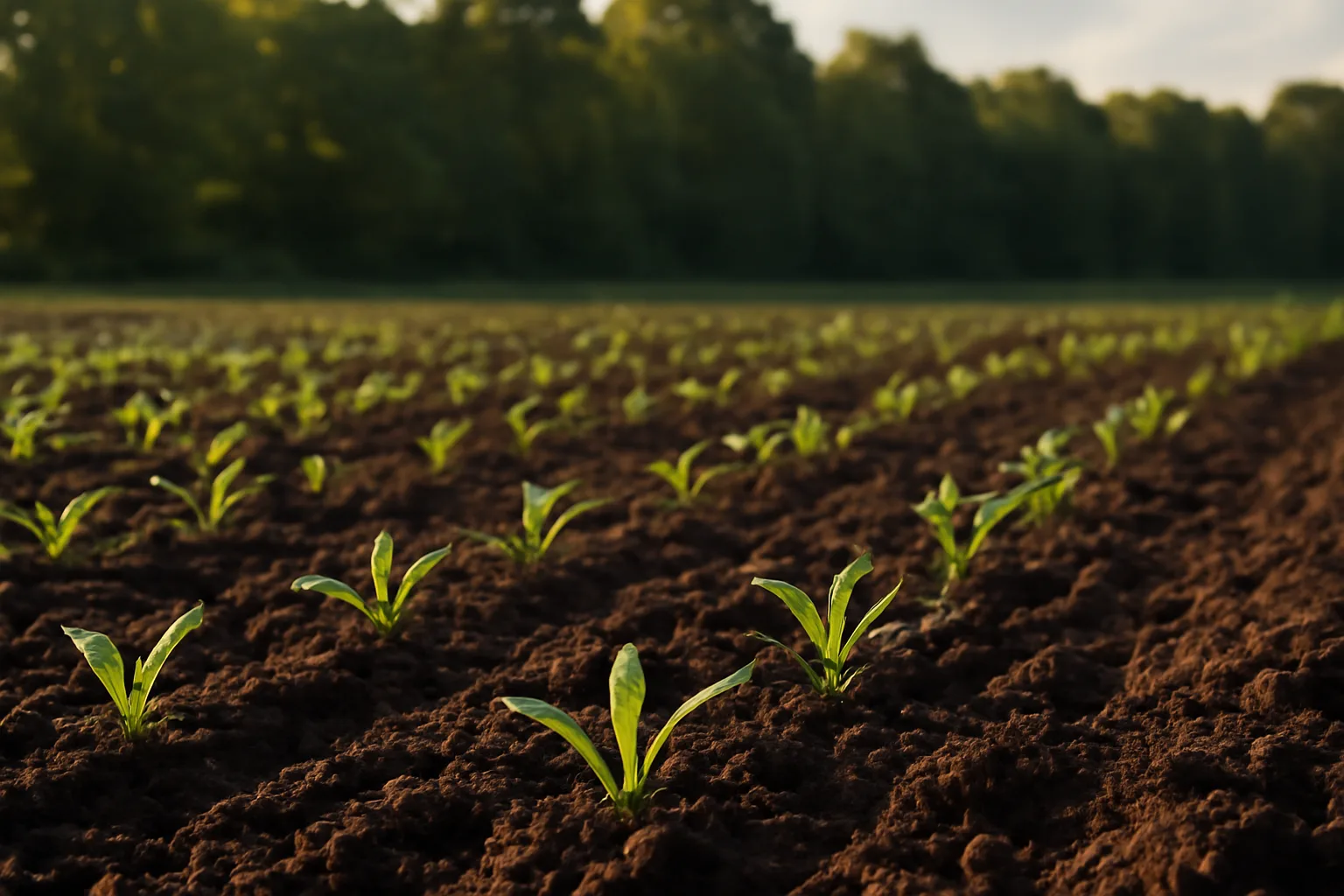
The best early season food plot combines a fast-growing annual (oats, sorghum, or brassicas like turnips) with a perennial clover base. Plant brassicas and oats 60 to 90 days before your first killing frost, and clover in late summer to early fall depending on your zone. Soil test first; pH and fertility drive whether any of this actually grows.
What is a food plot, exactly?
A food plot is a planted patch of forage, usually somewhere between a quarter acre and a few acres, put in specifically to feed and hold deer on a property. It's not the same as agriculture in the commercial sense. Nobody is trying to maximize bushels per acre for market. The goal is attraction, nutrition, or both, depending on the season and the plot's job. Most hunters run at least two types: a perennial plot (clover, alfalfa, chicory) that persists for two to five years, and an annual plot (brassicas, cereal grains, sorghum) that gets replanted each season. Early season plots lean on quick-growing annuals or on a clover stand that's already established and just needs to be maintained. State wildlife agencies generally treat food plots differently from bait piles, but the line matters. A planted, rooted crop is legal almost everywhere deer hunting is legal. Piled corn or protein pellets are a different question and get regulated as bait in a lot of states. Check your state wildlife agency's baiting and feeding regulations page before you do anything beyond planting seed in the ground [1].
When to plant food plots for deer?
Timing depends entirely on what you're planting and where you live, not on a single calendar date. As a rule, spring plots (soybeans, corn, some clovers) go in after your last frost date, and fall plots (brassicas, cereal grains, most clover establishment) go in 60 to 90 days before your first fall frost. The reason for that 60-90 day window is simple biology. Brassicas like turnips need time to bulb out before cold weather hits, and cereal grains need enough growing season to tiller and put on leaf mass before deer start browsing them hard. Plant too late and you get spindly, unpalatable plants that never bulk up. Your local land-grant extension office publishes a frost-date map and planting calendar specific to your county, and that's a better source than any generic national chart. Penn State Extension, for example, publishes forage establishment windows built around regional frost dates rather than a single national date. Use your own last and first frost dates, not a friend's three counties over, because frost timing can shift by two or three weeks across a single state. For a broader look at how planting windows shift by zone, see seasonal food plot calendars if you want the full year mapped out.
What counts as an early season food plot?
Early season, in food plot terms, usually means the plot that's ready to hunt over from opening day (often September in bow season states) through the first few weeks of the season, before the rut shifts deer behavior. This is different from a late-season plot meant to carry deer through winter scarcity. The best early season plots share a few traits: they're palatable to deer right when they're planted or shortly after, they hold up under early-season heat and humidity, and they don't require a full growing season to become attractive. That's why annual grains and brassicas dominate early season plot lists, alongside clover that was established the prior year and is already mature. A newly planted brassica plot in August won't be attractive yet in September if you seeded it late. That's the most common mistake: hunters plant their early season plot too close to opening day and end up hunting over bare dirt or three-inch sprouts deer walk right past.
Do deer eat clover, and do deer like clover?
Yes. Clover is one of the most consistently preferred forages in whitetail diet studies, and it's a foundation crop for most food plot programs. White clover (Trifolium repens) and red clover (Trifolium pratense) both show up repeatedly in forage preference research as high-use species relative to native browse [2]. Clover's advantage over annuals is that it comes back. A well-maintained clover stand can produce forage for three to five years before it needs to be replanted, which makes it cheaper per year of production than replanting an annual plot every season. It also fixes nitrogen in the soil, which helps whatever you rotate into that ground later. The catch: clover needs a soil pH close to neutral, generally in the 6.0 to 7.0 range, to perform well and to let the rhizobia bacteria fix nitrogen effectively [3]. If your soil test comes back at 5.2, clover is going to struggle no matter how good the seed is. Lime first, plant second. Clover's weakness for early season specifically is that it's a mainstay plot, not a burst-of-attraction plot. It's dependable but it's not always the thing that pulls a deer across a field at first light in September when acorns and ag fields are also dropping. Pair it with something more aggressive for early season pull. For a deeper look at clover varieties and blends, see deer food plot seed.
Do deer eat sorghum?
Yes, deer eat grain sorghum, both the standing plant and the seed heads, and it's used both as a food plot component and as cover. Sorghum (including grain sorghum and forage sorghum types) is more drought-tolerant than corn, which makes it a reasonable substitute in areas with sandy soil or unreliable summer rain [4]. Where sorghum earns its place in an early season plot is less about deer preference and more about structure. A stand of sorghum planted in late spring is head-high and thick by September, giving you screening cover around a plot edge or a staging area, while the seed heads mature into a food source that becomes more attractive as fall progresses and other food sources thin out. It's not usually the top choice for a pure early season attraction plot compared to a fresh brassica or a mature clover field, but it's a solid secondary planting, especially where you want both cover and food in the same footprint. Some hunters plant it in blocks mixed with sunflowers or milo for the same screening effect.
When to plant turnips for deer, and do deer eat turnips?
Deer eat both the leafy tops and the bulbs of turnips, though the order matters. In late summer and early fall, deer browse the leaves first. As temperatures drop and a few hard frosts sweeten the starches in the bulb, deer switch to digging up and eating the bulbs themselves, which is why turnip plots often get hammered hardest in late fall and early winter rather than in September. Plant turnips 60 to 90 days before your first expected fall frost. In much of the Midwest and mid-South that puts seeding somewhere between late July and mid-August. Turnips need that lead time to bulb properly; planted too late, you get leaf growth but small, underdeveloped bulbs. A turnip-only plot isn't usually the best early season choice on its own, because the peak attraction (the bulb) doesn't happen until after a few frosts, which is typically late season territory. Turnips work best in a brassica blend alongside forage rape or a cereal grain, so you get leaf browsing in September and bulb feeding in December from the same planting.
When to plant oats for deer?
Oats are one of the most reliable, fastest-establishing early season plot options, and timing them is straightforward: plant 6 to 10 weeks before your average first fall frost date, which for most of the whitetail's range lands somewhere in late August through mid-September [5]. Oats germinate fast, often within 7 to 10 days under decent soil moisture, and they're highly palatable to deer as soon as they hit a few inches of growth. That combination, fast germination plus high early palatability, is exactly why oats are a go-to early season pick. Deer will often start browsing an oat plot within two to three weeks of emergence. Oats don't survive hard winter in most of the whitetail range the way winter wheat or rye does, so plan on oats being a fall-focused planting rather than something that carries a plot through January. In the Deep South and parts of the Southeast where winters stay mild, oats can persist longer. Mixing oats with a brassica (like a forage rape or turnip blend) is a common and effective combo: oats give you fast early attraction while the brassica component matures for late season. Check deer food plot seed for common oat-brassica blend ratios.
What are deer's favorite foods, generally?
Deer are opportunistic browsers, and their preferences shift by season, region, and what's available. Research on whitetail diet composition consistently shows that acorns, when available, are among the most preferred fall foods because of their high fat and carbohydrate content, and deer will often bypass a food plot for a good acorn drop in years when mast crops are heavy. Outside of mast years, agricultural crops like soybeans and corn rank high, along with clover, and (in season) the tender growth of brassicas and cereal grains. A widely cited whitetail nutrition study from the Mississippi State University Deer Lab found that forage quality and protein content, more than palatability, drive a lot of deer selection, especially for does raising fawns and bucks building antler mass in spring and summer. There's no single universal favorite. A property with a heavy white oak component may see deer almost ignore a food plot in a big acorn year, while the same plot gets hit hard the next year when the oaks produce nothing. This is one of the most common frustrations hunters run into and it's not a sign the plot failed. It's a sign the woods had a good mast year.
Do deer like honey?
There's no real research support for deer specifically seeking out honey, and it's not a natural or practical food plot input. Some hunters have used sugar-based attractants near feed sites in states where that's legal, but honey itself isn't a documented deer food source in wildlife nutrition literature, and it's expensive and impractical compared to actual forage crops. More relevant: many states classify sugar-based or scent-based attractants under baiting and feeding regulations, the same category as corn piles or mineral blocks, separate from planted food plots. If you're tempted to pour anything (honey, molasses, apple scent) near a stand, check your state wildlife agency's baiting rules first, because the legal line is about the substance and method, not the sweetness [1]. Planting an actual crop is the safer, more effective, and usually legal-everywhere route.
How do I pick the single best early season plot for my property?
| Oats (alone or blended) | 6-10 weeks | 2-6 weeks after planting | Fast, cheap, doesn't overwinter in most zones [5] | |
|---|---|---|---|---|
| Brassica blend (turnip + rape) | 8-12 weeks | Leaves in early fall, bulbs after frost | Best as a blend, not a monocrop | |
| Established clover | N/A if already mature | Consistent all season | Needs pH 6.0-7.0 to perform [3] | |
| Grain sorghum | Planted in spring/early summer | Late summer into fall | More drought tolerant than corn, doubles as cover [4] | If you're starting from bare dirt with a fresh soil test in hand, the most common and defensible early season combo is a clover base on one plot (for consistency) and an oat/brassica blend on another (for early pull and late season carryover). That gives you two different windows of peak attraction instead of betting everything on one crop's timing. This is also where a soil test earns its money. A $99 Custom Food Plot Plan can take your test results and property details and lay out species, seeding rates, and a planting calendar matched to your zone, but your soil test lab is still the final word on lime and fertilizer amounts. A plan is general guidance built from your numbers, not a replacement for what your lab's report says to apply. |
There isn't one best species. There's a best combination for your soil, your frost dates, and what you're hunting the plot for. That said, a few combinations show up again and again as reliable early season performers across most of the whitetail range. | Plot type | Time to plant before frost | Peak attraction window | Notes |
How much lime and fertilizer does an early season plot actually need?
This depends entirely on your soil test, and there's no honest way to give a blanket number here. Cooperative extension offices consistently note that pH correction with lime is usually the single highest-impact, lowest-cost fix most food plot soils need, because nutrients like phosphorus and potassium become less available to plants when pH drops much below 6.0 [6]. Lime takes time to work. Depending on your soil's buffer capacity, ag lime can take 6 months to a year to fully raise pH, which is why extension agronomists recommend testing and liming the season before you plant, not the week before [6]. If you're starting a new plot in late July for an August planting, and your soil is at pH 5.4, lime applied now won't finish correcting pH before the seed goes in. It'll still help, but don't expect full correction in one growing season. Fertilizer needs vary by crop. Brassicas and cereal grains are heavier nitrogen feeders than clover, which fixes its own nitrogen once established. Your soil test report will list actual N-P-K recommendations in pounds per acre specific to the crop you tell the lab you're planting, which is far more useful than a generic bag rate off a fertilizer label.
What equipment do I actually need to get an early season plot in the ground?
At minimum: something to kill or turn existing vegetation, something to break up soil, a way to spread seed, and a way to get seed-to-soil contact. That can be as simple as a tank sprayer, a hand tiller or disc, a broadcast spreader, and a drag harrow (or even a section of chain-link fence dragged behind an ATV). For small plots (under an acre), ATV or UTV-mounted implements handle almost everything. For plots over two or three acres, a compact tractor with a disc, cultipacker, and PTO spreader saves a lot of time and gets more even seed depth, which matters a lot for small-seeded crops like clover and brassicas that fail if buried too deep. Don't overspend on equipment before you've got a soil test and a plan. A lot of first-year plotters buy a disc and a spreader before they know their pH, plant into acidic dirt, and wonder why nothing came up. Buy the soil test kit first. The equipment is only as good as the ground you're putting it into.
Frequently asked questions
Do deer eat sorghum?
Yes. Deer browse grain sorghum plants and eat the seed heads, especially as other food sources thin out in fall. It's more drought-tolerant than corn and often planted for the standing cover it provides as much as the food value, particularly for staging or screening near a plot edge.
Do deer eat clover, and do deer like clover?
Yes, clover is one of the most consistently preferred whitetail forages in preference studies. White and red clover both rank high. It needs soil pH around 6.0 to 7.0 to perform well and can produce for three to five years once established, making it cheaper per year than annual replanting.
When to plant deer food plots?
Fall plots (brassicas, cereal grains, clover establishment) go in 60 to 90 days before your area's first fall frost. Spring plots (soybeans, corn) go in after your last spring frost. Use your county's actual frost dates from your local land-grant extension office rather than a generic national calendar.
Do deer like clover more than other food plot crops?
There's no universal ranking; preference shifts by season and what else is available, like acorns in a heavy mast year. Clover is consistently high in preference studies and offers season-long consistency, but a fresh brassica or oat planting can outpull it briefly in early fall when deer key in on new growth.
When to plant oats for deer?
Plant oats 6 to 10 weeks before your first expected fall frost, typically late August through mid-September across most of the whitetail range. Oats germinate in 7 to 10 days under good moisture and become palatable within a few weeks, making them one of the fastest early season options available.
When to plant food plots for deer in general?
Timing depends on the crop and your zone. Cereal grains and brassicas go in 60 to 90 days before first fall frost. Perennial clover is often seeded in late summer to early fall, or in spring in northern climates. Always check your local frost dates before setting a planting date.
When to plant turnips for deer?
Plant turnips 60 to 90 days before your first fall frost, often late July to mid-August in much of the Midwest and mid-South. Deer typically browse the leaves first in early fall and switch to digging up bulbs after a few hard frosts sweeten the starches inside.
What is a food plot?
A food plot is a planted area, from a quarter acre to several acres, seeded specifically to feed or attract deer. It differs from commercial agriculture because the goal is attraction and nutrition rather than yield per acre. Plots are usually split between annual crops and multi-year perennials like clover.
What are deer's favorite foods?
There's no single universal favorite; it shifts by season and region. Acorns rank extremely high when available due to fat content, often outcompeting food plots in heavy mast years. Outside mast years, soybeans, corn, clover, and tender brassica or cereal grain growth all rank as strong preferences.
Do deer like honey?
There's no real wildlife research showing deer seek out honey specifically, and it's not a practical or documented food plot input. Sugar-based attractants often fall under state baiting and feeding regulations anyway, so check your state wildlife agency's rules before using any attractant near a stand.
What's the best single early season food plot if I can only plant one?
A blend, not a single species, usually performs best: oats mixed with a brassica like forage rape gives fast early attraction from the oats and late-season carryover from the brassica. If you already have a mature clover stand, that's a strong standalone option since it needs no fresh establishment time.
How soon before hunting season should I plant my early season plot?
Plan for 60 to 90 days of growth before you want to hunt over it, depending on species. Oats can be huntable in as little as 4 to 6 weeks after planting; brassicas need the full 60 to 90 day window to bulb properly and reach peak attraction.
Is a food plot legal, or does it count as baiting?
A planted, rooted crop is legal almost everywhere deer hunting is legal and is treated differently from piled bait like corn or protein pellets. Baiting and feeding rules vary significantly by state, so check your state wildlife agency's specific regulations before adding any loose feed, mineral, or attractant to a plot.
Sources
- State wildlife agencies (example: Michigan DNR baiting and feeding regulations): Baiting and feeding rules vary by state and are regulated separately from planted food plots
- USDA NRCS Plant Guide, White Clover (Trifolium repens): White clover is a high-preference forage species for whitetail deer
- University of Missouri Extension, Soil pH and clover establishment: Clover requires soil pH near 6.0 to 7.0 for adequate nodulation and nitrogen fixation
- USDA NRCS Plant Guide, Grain Sorghum: Grain sorghum is more drought tolerant than corn and used for food and cover plantings
- Mississippi State University Extension, Food plot establishment for white-tailed deer: Oats germinate quickly and are planted roughly 6 to 10 weeks before first fall frost
- University of Georgia Extension, Soil testing and liming for food plots: Lime correction of soil pH is often the highest-impact, lowest-cost fix for food plot soils and can take months to fully act