Last updated 2026-07-26
TL;DR
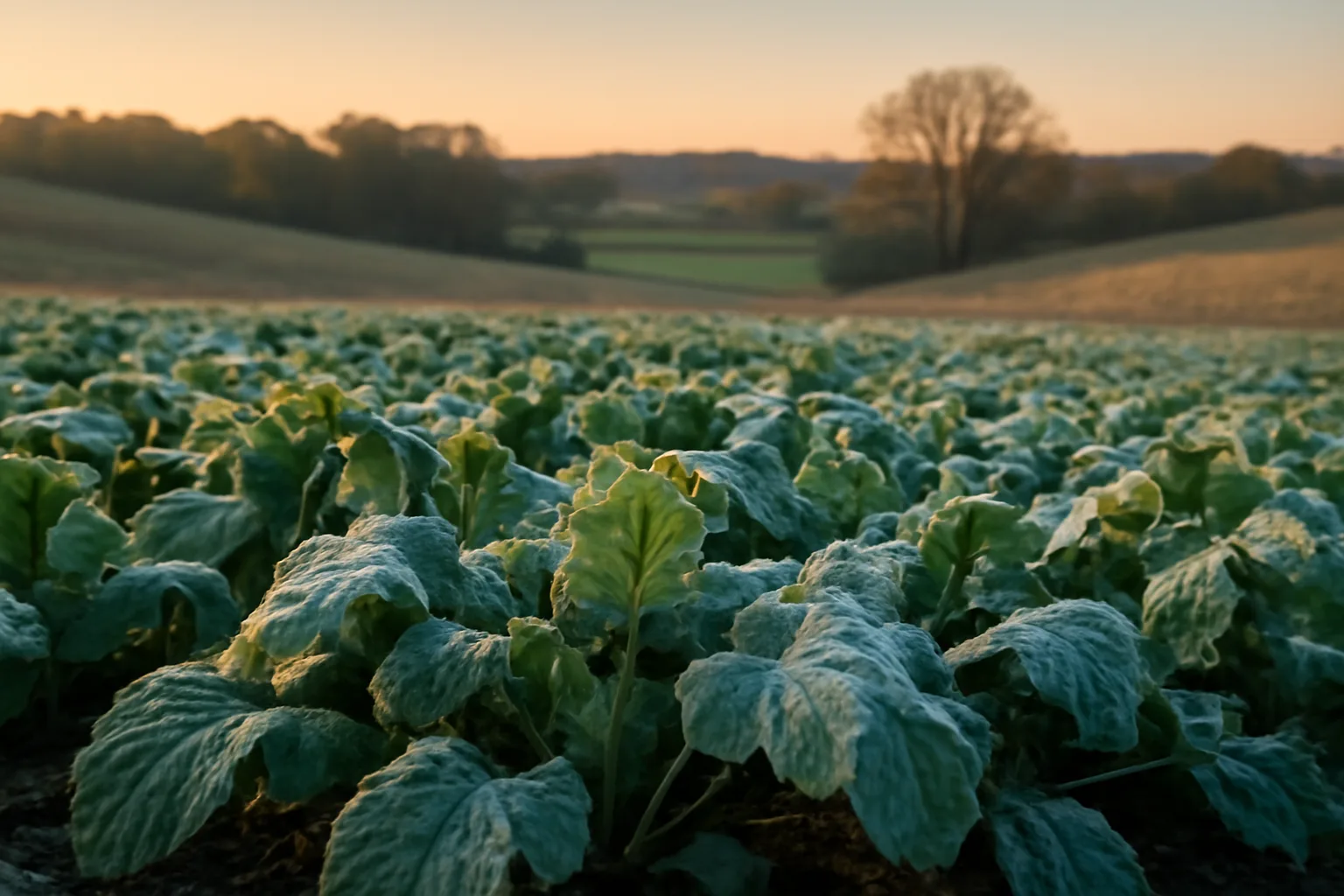
The best fall food plots for Missouri deer are cereal grains (wheat, oats, rye) mixed with brassicas (turnips, radishes) and clover, planted late August through mid-September in northern Missouri and into early October in the south. These give you fast fall attraction plus winter tonnage once frost sweetens the leaves and bulbs.
what is a food plot, exactly
A food plot is a planted area of forage, usually somewhere between a quarter acre and a few acres, put in specifically to feed and attract deer or other wildlife. It's not a garden and it's not a hay field, though it borrows techniques from both. On Missouri deer ground the two big categories are spring/summer plots (soybeans, cowpeas, chicory, clover) that grow tonnage through the hot months, and fall plots (cereal grains, brassicas, clover) that green up as temperatures drop and stay attractive into winter. The Missouri Department of Conservation manages its own system of plantings on conservation areas under what it calls the "Grow Native" and food plot cooperative programs, but for private land the same basic logic applies everywhere: match the plant to your soil, your season, and what you actually want it to do (early season pattern, late season energy, or both). A well-run half-acre plot with correct pH and fertility will out-produce a neglected three-acre plot every time. That's the single biggest lesson from University of Missouri Extension's forage work: soil fertility problems, not seed selection, cause most plot failures [1]. If you want a structured plan instead of guessing at rates and blends, that's the whole idea behind PlotSeason's $99 one-time Custom Food Plot Plan, built off your soil test and acreage rather than a generic bag mix.
when to plant food plots for deer in Missouri
Timing splits Missouri into two rough windows. Northern and central Missouri counties should get fall plots in the ground from mid-August to early September. Southern Missouri, particularly the Ozark and Bootheel regions, can push planting into late September or even the first week of October because of a longer frost-free stretch. MU Extension's forage planting guides put Missouri in USDA Hardiness Zones 5b through 7a, with the state's average first fall frost ranging from late September in the north to late October in the south. Cereal grains and brassicas need 60 to 90 days of growth before a hard freeze locks things down, so working backward from your local frost date is the real planning tool, not a calendar date pulled from a bag. A practical rule: plant cereal grains and brassicas 8 to 10 weeks before your area's average first hard frost. Clover establishment is more forgiving and can go in earlier, late July through early September, since it's a perennial that doesn't need to bulk up before frost the way turnips do. Spring plots (soybeans, cowpeas) obviously run on a completely different calendar, planted after last frost in April or May. This article is about the fall side only.
what are deer's favorite fall foods in Missouri
Native mast, especially white oak acorns, usually wins over anything you plant when it's available in volume, and Missouri deer key hard on acorn drop from September through November. MDC's deer research has documented that acorn availability directly affects deer movement and food plot use in a given fall, meaning a heavy mast year can make your plot look ignored even though nothing is wrong with it [2]. When mast is scarce or gone, the next tier of preference among planted forages, based on decades of extension and food plot research, runs roughly: soybeans (while still green), then brassicas (after frost sweetens them), then cereal grains, then clover. Deer prefer the tuber/bulb portion of turnips and radishes almost exclusively after several hard frosts convert starches to sugars, which is why a turnip plot can sit untouched in October and get hammered in December. There's no single scientifically ranked "favorite food" list for whitetails because preference shifts with plant maturity, frost exposure, and what else is available nearby. Anyone who tells you deer have one universal favorite forage is oversimplifying a genuinely situational answer.
do deer like clover, and is it worth planting
Yes. Clover is one of the most consistently used food plot forages across the whitetail's range, and it's a perennial, which means one planting can produce for 3 to 5 years with proper mowing and fertility maintenance. Ladino and red clover blends handle Missouri's clay and loam soils well as long as pH is corrected to the 6.0 to 6.5 range that MU Extension recommends for legume establishment [3]. Clover's real strength in a Missouri rotation is spring through fall attraction and protein during antler growth and lactation, not necessarily peak late season pull. It stays green longer into fall than most annuals and will often still show some growth under snow cover in a mild winter, but it can't match a frosted brassica or standing grain for raw calories in January. The honest tradeoff: clover costs more to establish per acre (seed plus lime plus time) but costs less per year over its life since you're not replanting annually. If you've got a well-drained plot with decent soil and you're willing to mow it two or three times a year to knock back weeds, clover is close to the best acre-for-acre investment in a Missouri plot rotation. If you have a wet, low-lying field, expect standing water problems; clover doesn't tolerate saturated soil well.
do deer eat sorghum
Yes, deer will eat sorghum, particularly the grain heads once they mature, but it's a minor player in most Missouri fall plot plans. Grain sorghum (milo) is more commonly planted as a screening or standing-cover crop that also provides some late season grain, rather than as a primary attraction forage the way brassicas or cereal grains are. Sorghum's real value on Missouri ground is height and visual cover. A dense sorghum block along a plot edge breaks sightlines and gives deer confidence to enter a field in daylight. It also holds up reasonably well through frost and snow, unlike soybeans, which get hammered flat. If you're choosing between sorghum and a cereal grain like winter wheat for straight food value, cereal grains win almost every time for actual fall/winter forage tonnage per acre. Use sorghum as a screen or a supplemental grain source along a field edge, not as your main fall plot species.
when to plant oats for deer in Missouri
Plant oats in Missouri between mid-August and mid-September for fall food plots, giving them 6 to 8 weeks of growth before frost really slows them down. Oats are one of the fastest-establishing cereal grains, often showing green growth within 5 to 7 days of planting under decent moisture, which makes them a favorite for hunters who want quick attraction ahead of archery season. The catch: oats are the least cold-hardy of the common cereal grains. A hard freeze in the mid-20s or lower will kill oats outright in most winters, while wheat and cereal rye keep growing. That's fine if your goal is early-to-mid season attraction and you don't need the plot to carry through January. It's a problem if you're counting on it for late season energy. A lot of Missouri plotters split the difference and plant an oats/wheat blend: oats for the fast early pull, wheat for winter persistence. Seeding rate for oats alone typically runs 2 to 3 bushels (about 96 to 128 pounds) per acre broadcast, per standard extension forage seeding tables [4], though rates should be adjusted down slightly when blending with other grains.
when to plant turnips for deer in Missouri
Plant turnips in Missouri from mid-August through the first week of September in the north, and up to mid-September in southern counties, giving them the 80 to 90 days most brassica varieties need to bulb out and reach peak sugar content before or during hunting season. Turnips are a two-stage food source. The tops (leaves) get eaten through fall as soon as they're a few inches tall, but the bulbs are largely ignored until repeated hard frosts, typically several nights in the mid-20s or lower, convert stored starches to sugars. That's why a turnip plot can look like a wasted planting in October and turn into the most hammered field on the property by late December. Seeding rate matters more than most people think. Turnips are usually broadcast at 4 to 6 pounds per acre; go much heavier and you get small, crowded bulbs that don't size up properly. Blending turnips with a cereal grain (oats or wheat at a reduced rate) gives you fall leaf browse and fall grain growth while the bulbs finish maturing underground, which is why turnip/cereal blends are one of the most common fall combinations sold and planted in Missouri.
how do brassicas, cereal grains, and clover compare for a Missouri fall plot
| Cereal grains (wheat, oats, rye) | mid-Aug to late Sept | 21 to 60 days to usable growth | Fast fall attraction, winter grain | $15 to $35 | |
|---|---|---|---|---|---|
| Brassicas (turnips, radishes) | mid-Aug to mid-Sept | 80 to 90 days to full bulb | Late season, post-frost energy | $10 to $25 | |
| Perennial clover (ladino, red) | late July to early Sept | 60 to 90 days to first graze, years 2+ | Spring through fall, multi-year | $25 to $50 (establishment year) | Costs above are rough seed-only estimates based on typical per-acre seeding rates and common regional pricing; actual costs shift with seed source, blend, and year. They don't include lime, fertilizer, or equipment time, which for a lot of Missouri clay soils will cost more than the seed itself. Most experienced Missouri plot managers run all three in rotation across different fields rather than picking one. A common setup: clover in your best, most accessible field for season-long draw, a cereal grain/brassica blend in a second field for the fall-to-winter push, and maybe a soybean field left standing from summer plantings to add variety once pods start dropping. |
Here's a side-by-side on the three main categories most Missouri hunters choose between for fall planting. | Forage type | Plant window (Missouri) | Days to maturity | Best use | Cost per acre (seed only, rough) |
does honey or sugar actually attract deer
There's no real evidence deer are drawn to honey specifically, and it's mostly a myth that gets repeated in hunting forums without much behind it. Deer are drawn to sugar content in general, which is exactly why frosted brassicas and turnips become so attractive in late fall: cold temperatures convert starches to sugars in the plant tissue, not because anyone added sweetener. Some mineral and attractant products include molasses or sugar-based components because deer, like most mammals, respond to sweetness and salt. But pouring honey or sugar water on the ground is not a documented food plot strategy in any extension or wildlife agency publication, and in a lot of states it may run afoul of baiting regulations anyway. Missouri's own baiting rule is worth knowing before you try anything like this: the Missouri Department of Conservation prohibits hunting over bait, defining bait as "salt, mineral, grain, fruit, vegetable, hay or other food placed or scattered" for the purpose of attracting deer or turkey, with exceptions for normal agricultural and food plot practices [5]. A properly planted, standing food plot is legal to hunt over in Missouri; scattering feed, sugar, or minerals to draw deer to a spot is not. Check the current MDC Wildlife Code before doing anything that could cross that line, since interpretations and enforcement details can shift year to year.
what's the best fall food plot mix for Missouri specifically
For most Missouri properties, a blend of winter wheat or cereal rye, a brassica (turnip or radish), and a small percentage of clover in the mix gives you the widest window of attraction, from bow season through the December/January late gun and antlerless seasons. Wheat and rye are workhorses here because they tolerate Missouri's clay-heavy soils better than oats, keep growing through much of the winter, and provide green forage even under light snow. MU Extension's cereal grain forage guidance notes that cereal rye is the most winter-hardy of the common cool-season grains and will often resume growth the moment temperatures allow, even in January thaws [6]. A rough blend that works across most of the state: 60 pounds winter wheat, 5 pounds brassica (turnip/radish mix), broadcast together, with clover either seeded separately in a dedicated perennial plot or added at a light rate (1 to 2 pounds per acre) into the same field as a long-term carryover. Adjust rates down if you're drilling instead of broadcasting, since drilled seed has better soil contact and needs less volume. Soil test first. MU Extension and most private soil labs will tell you Missouri's default assumption shouldn't be "add lime," it should be "test, then add exactly what the results call for." A lot of Missouri ground, especially in the Ozarks, runs acidic enough (pH 5.0 to 5.5) that legumes and even brassicas struggle without correction, and MU Extension recommends getting soil to a pH of at least 6.0 before planting clover or alfalfa [3]. Your soil test lab is the authority on exact lime and fertilizer rates for your specific field; a general article like this can't replace that report.
putting together a full fall plot rotation
Think in terms of function, more than species. You want something growing fast in late summer for early bow season, something that peaks in cold weather for December and January hunts, and ideally something perennial that carries value year over year without a full replant. A three-field example on a typical 40 to 80 acre Missouri lease: Field one, half to one acre of clover near a bedding edge for spring-through-fall draw and low-impact access. Field two, one to two acres of a wheat/brassica blend timed for peak sugar content by late November. Field three, leftover soybeans from the summer planting, left standing to add variety once the pods start browning and dropping in October. That kind of layout spreads your risk. If mast is heavy and deer ignore everything for six weeks in October, you've still got a plot peaking in December when acorns are gone and deer need calories. If you want the exact species mix, rates, and layout sized to your acreage and your soil test results rather than a generic template, that's the specific problem the Custom Food Plot Plan is built to solve for $99, one time. For more on matching plot type to your land and goals, see food plot whitetail and deer food plots. If you're still deciding on seed sources and blends, deer food plot seed and food plot seed cover selection in more depth.
Frequently asked questions
Do deer eat sorghum?
Yes, deer eat sorghum grain, especially once it matures late in fall, but most Missouri plotters use it as a screening crop and standing cover rather than a primary food source. Cereal grains and brassicas provide more usable forage per acre for actual attraction and winter feeding value.
Do deer eat clover?
Yes, clover is one of the most reliably used food plot forages for whitetails, providing high protein forage from spring through fall. It's especially valuable during antler growth and lactation months, though it doesn't match frosted brassicas or standing grain for pure late-season calorie density.
When should I plant food plots for deer in Missouri?
Plant fall cereal grains and brassicas 8 to 10 weeks before your area's average first hard frost, roughly mid-August to early September in northern Missouri and into late September or early October in southern Missouri. Perennial clover can go in a bit earlier, late July through early September.
Do deer like clover more than other food plot forages?
Deer readily use clover, but "favorite" shifts by season. Clover often wins spring through early fall; brassicas and standing grain typically win late season once frost sweetens sugars. No single forage tops deer preference in every month, so a rotation covers more ground than one species alone.
When should I plant oats for deer in Missouri?
Plant oats mid-August to mid-September for fall attraction. Oats establish fast, often greening within a week, but they're the least cold-hardy cereal grain and typically die back after a hard freeze in the mid-20s or lower, so they're better for early-to-mid season pull than winter carryover.
What is a food plot?
A food plot is a planted patch of forage, usually a quarter acre to several acres, established specifically to feed and attract deer or other wildlife. Fall plots typically use cereal grains, brassicas, and clover; spring and summer plots typically use soybeans, cowpeas, or chicory.
When should I plant turnips for deer in Missouri?
Plant turnips mid-August through the first week of September in northern Missouri, up to mid-September in the south, giving them 80 to 90 days to reach full bulb size before hard frosts convert starches to sugars, which is when deer actually start eating the bulbs heavily.
What are deer's favorite foods in Missouri in fall?
Acorns, especially from white oaks, usually top whatever deer are eating when mast is available, per MDC research on deer movement and food plot use. When acorns are scarce, deer shift heavily to planted soybeans, then frosted brassicas, then cereal grains and clover.
Do deer like honey?
There's no documented evidence deer are specifically drawn to honey. They do respond to sugar content generally, which is why frosted brassicas and turnips get hit hard in late fall, since cold converts plant starches to sugars naturally. Pouring honey or sugar on the ground isn't a real food plot strategy and can risk baiting violations.
Can I hunt over a food plot in Missouri, or does it count as baiting?
A properly planted, standing food plot is legal to hunt over in Missouri. MDC's Wildlife Code prohibits hunting over bait, defined as things like scattered grain, salt, or minerals placed to attract deer, but planted crops grown in place through normal agricultural practice are treated differently. Check current MDC regulations before hunting any edge case.
How much does it cost to plant a fall food plot in Missouri?
Rough seed-only costs run $15 to $35 per acre for cereal grains, $10 to $25 per acre for brassicas, and $25 to $50 per acre for establishing perennial clover. Lime and fertilizer, based on your soil test, often add more to the total than the seed itself, especially on acidic Ozark soils.
Should I broadcast or drill fall food plot seed in Missouri?
Drilling gives better seed-to-soil contact and generally allows lower seeding rates, which saves money on seed. Broadcasting is faster and works fine for small grains and brassicas if you cultipack or drag afterward, but you typically need to seed 10 to 20 percent heavier to compensate for uneven soil contact.
Sources
- University of Missouri Extension, Soil Testing for Lawns, Gardens and Wildlife Food Plots: Soil fertility problems, not seed selection, cause most food plot failures; soil testing guides fertility correction
- Missouri Department of Conservation, Deer Research and Management: Acorn availability affects deer movement and food plot use in a given fall
- University of Missouri Extension, Clover and Other Legumes for Missouri Pastures: Legumes like clover establish best at soil pH 6.0 to 6.5
- University of Missouri Extension, Small Grain Forage Production: Standard oat seeding rate of 2 to 3 bushels (96 to 128 lbs) per acre broadcast
- Missouri Department of Conservation, Wildlife Code: Hunting Over Bait: Missouri prohibits hunting over bait defined as salt, mineral, grain, fruit, vegetable, hay or other food placed to attract deer or turkey, with exceptions for normal agricultural practices
- University of Missouri Extension, Cereal Rye and Winter Cover/Forage Grains: Cereal rye is the most winter-hardy common cool-season cereal grain and resumes growth during winter thaws