Last updated 2026-07-26
TL;DR
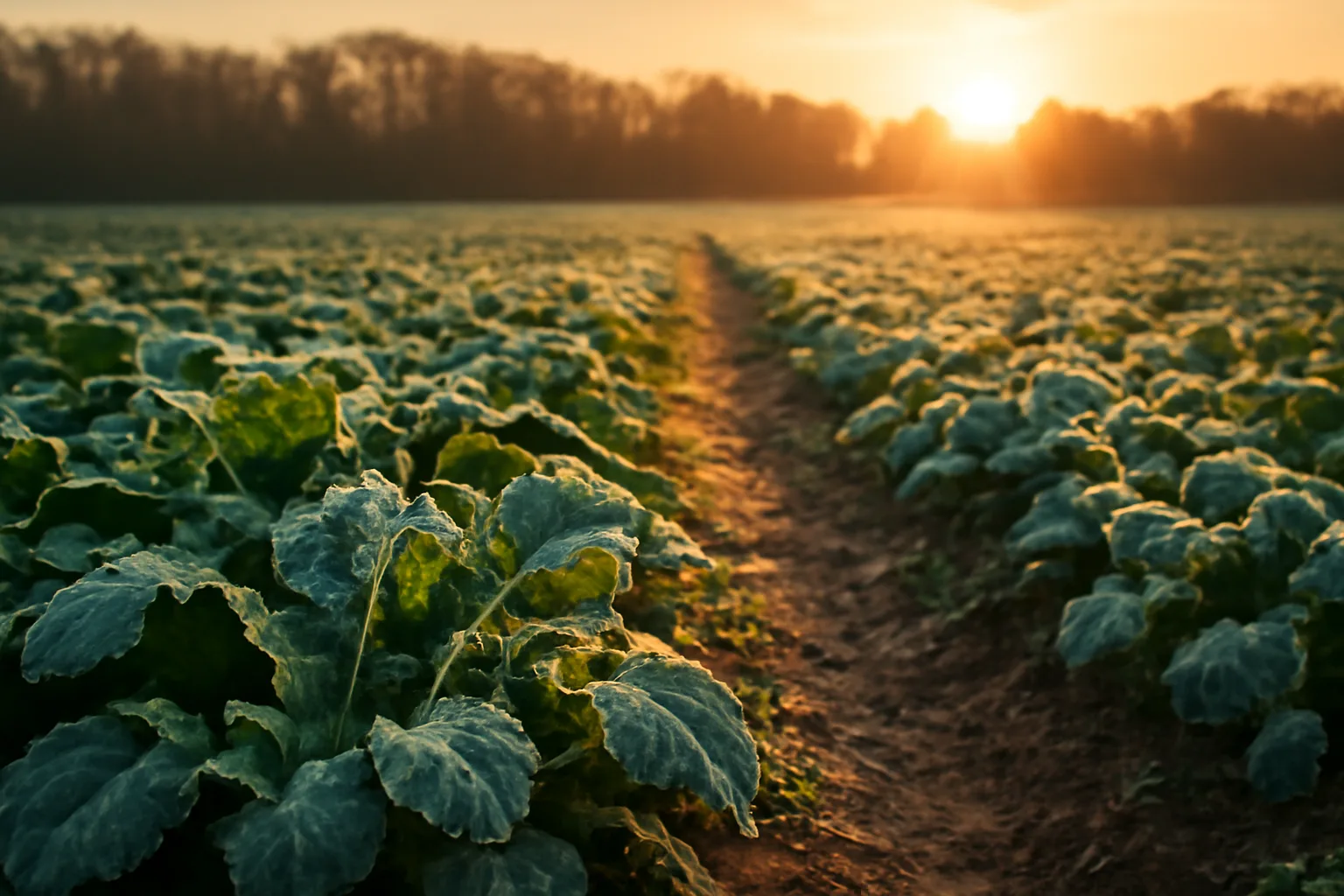
The best food plot for November is a brassica blend (turnips, radish, rape) planted in late summer, plus standing cereal grains like oats or winter wheat and any leftover soybeans. Cold weather converts starches to sugars, making these plots hyper-attractive right when deer need calories most and hunting pressure peaks.
What actually makes a food plot the best choice for November
By November, deer are shifting from summer's focus on protein and antler growth to a hard push for carbohydrates and fat reserves ahead of winter. The best food plot for November is whatever crop is still green, still palatable, and converting starches to sugars in cold weather. That's a short list: brassicas (turnips, radish, rape, kale), cereal grains (oats, winter wheat, winter rye), and standing soybeans or corn left unharvested. The reason brassicas dominate the November conversation is simple plant physiology. A hard frost triggers the plant to convert stored starches into sugars as a natural antifreeze response, and that makes the bulbs and leaves taste sweeter right as hunting season peaks. Mississippi State University Extension explains that brassicas like turnips and radishes accumulate sugars after frost, which is why deer often ignore these plots in early fall and then hammer them once temperatures drop [1]. Cereal grains work a different angle. Oats and winter wheat stay green late into fall and keep growing in cool soil, so they offer tonnage when everything else is going dormant or getting hammered down to dirt. Winter rye is the most cold-hardy of the group and will often still be putting on growth in December in the Upper Midwest. There's no single "best" species for every property. Soil type, your frost date, deer density, and what's already growing wild nearby (acorns are a huge wildcard) all shift the answer. If you want a plan built around your specific soil test and zone instead of a generic list, that's exactly what a Custom Food Plot Plan is for.
When to plant food plots for deer season
| North | MN, WI, upper MI, ME | Aug 1 to Aug 20 | |
|---|---|---|---|
| Mid | IA, IL, OH, PA, southern MI | Aug 15 to Sep 10 | |
| South | TN, AR, VA, NC | Aug 25 to Sep 25 | |
| Deep South | GA, AL, MS, LA | Sep 10 to Oct 10 | Perennial clover plots get planted in spring (April to May in the North, earlier in the South) or in late summer alongside your brassica plots. Either window works for clover establishment. The choice usually comes down to what else you're planting that season and whether you can control weeds before seeding. |
Timing splits into two seasons: spring/summer plots for warm-season annuals and perennials, and late-summer plots for the fall/winter brassica and cereal grain mix that peaks in November. Get the late-summer window wrong by even two or three weeks and you'll have undersized turnips or thin wheat when you need tonnage. For fall brassica and cereal grain plots, most extension guidance points to planting 60 to 90 days before your average first hard frost. Mississippi State University Extension recommends planting brassica blends roughly late August through mid-September in much of the Southeast, with earlier windows farther north where frost arrives sooner [1]. Miss that window and you're gambling on a mild fall to finish the crop. Here's a rough planting calendar by zone. Treat these as starting points, not gospel, since local microclimates and elevation shift things by a week or two either direction. | Zone | Region example | Brassica/cereal grain planting window |
When to plant oats for deer plots
Plant oats for deer 60 to 90 days before your first killing frost, which lines up with the same late-summer window as brassicas: mid-August in the North, into September or even early October in the Deep South. Oats germinate fast, often in 5 to 7 days in warm soil, and put on rapid growth, which makes them a good nurse crop alongside slower brassicas or clover. Oats aren't very winter-hardy compared to winter wheat or winter rye. A hard freeze in the teens will usually kill oat plants outright, though the residue often stays somewhat palatable for a while. That's actually fine for a November-focused plot: oats peak in September and October, stay attractive into November in most zones, and then hand off grazing pressure to the brassica bulbs and cereal rye as the oats decline. If you want grain that survives into December and beyond, blend oats with winter wheat or winter rye rather than planting oats alone. The oats give you fast early tonnage; the wheat or rye carries the plot through the coldest stretch.
When to plant turnips for deer food plots
Turnips need roughly the same 60 to 90 day head start before frost as other brassicas, planted at about 1/4 to 1/2 inch seed depth into a clean, firm seedbed. Plant too shallow and germination suffers; plant too deep and the tiny seed can't push through. Turnip bulbs need real soil contact and a firm seedbed, so cultipacking after seeding matters more with turnips than with cereal grains. Oklahoma State University Extension notes that brassica seed is small and should be planted shallow, roughly a quarter inch deep, into a firm, well-prepared seedbed for reliable stands [2]. One mistake a lot of first-time plotters make: planting turnips too early in warm soil expecting bigger bulbs. What actually happens is the plant races through vegetative growth and bolts or gets stressed by heat and drought before frost ever arrives to sweeten it up. Stick to the 60-90 day window and let cold weather do the conversion work for you.
Do deer eat sorghum, and does it belong in a November plot
Deer will eat sorghum grain heads and browse young sorghum plants, but it's a secondary food source at best, not a plot centerpiece for November hunting. Sorghum (grain sorghum, also called milo) is planted as a warm-season summer crop, not a fall plot species, so by November it's typically standing dead or dried grain rather than something actively growing. Where sorghum earns a spot is as a cover crop or screening plant mixed into summer plantings, or as leftover standing grain that gives deer (and turkeys, and doves) something to peck at into early winter. It's not efficient use of plot acreage if your goal is maximum November attraction. Standing corn or soybeans do that job better calorie-for-calorie, and brassicas do it better for pure palatability once frost hits. If you already have sorghum in a summer plot rotation, leave it standing through fall rather than mowing it. It won't be the reason deer show up in November, but it adds diversity and cover value at no extra cost.
Do deer eat clover, and do deer actually like it
Yes, deer eat clover readily and it's one of the most consistently preferred forages across whitetail range, but by November most clover plots have slowed way down or gone semi-dormant depending on your zone. Clover is a spring-through-fall workhorse, not a November specialist crop, though it can still pull deer in the South where growing seasons run longer. Do deer like clover? The research backs up what plotters see in the field. White clover and red clover both show up repeatedly in whitetail diet studies as high-preference forages, prized for high protein content (often 25 to 30% crude protein in vegetative growth) and digestibility. The University of Tennessee Institute of Agriculture lists clover among the most palatable and productive forages for deer food plots because of its protein value and its ability to regrow after grazing [3]. The catch for November hunting: clover growth slows dramatically once soil temperatures drop below about 40 degrees Fahrenheit, and a hard freeze will knock it back further, especially in northern zones. In the Deep South and mid-South, clover can stay green and grazeable well into December or January. In the North, don't count on clover as your main November draw; treat it as a bonus plot deer will hit on warmer days, with brassicas and grain doing the heavy lifting.
What is a food plot, exactly
A food plot is a planted area, usually somewhere between a quarter acre and several acres, seeded with forage crops specifically to feed and attract wildlife, most commonly deer, turkey, and other game species. It's different from a wildlife opening or native habitat management because it involves active tillage, seeding, and often fertilization, similar to a small farm field. Food plots serve two overlapping purposes: nutrition (helping deer through stress periods like late winter or lactation) and hunting access (concentrating deer activity somewhere you can hunt them ethically and legally). The two goals sometimes pull in different directions. A plot meant purely for winter nutrition might sit in a spot too far from stand access to hunt well, and a plot built for hunting might be small enough that it doesn't move the needle on herd nutrition. State wildlife agencies generally regulate food plots differently than bait piles or feeders. Most states classify a properly planted, growing food plot as legal hunting over standing crops, while piling loose grain, minerals, or feed is often classified as baiting and restricted or banned. Rules vary a lot by state, so check your state wildlife agency's regulations before assuming your plot setup is legal for hunting over. Michigan's baiting and feeding statute, for example, defines the terms "bait" and "baiting" and addresses how they apply to supplemental feeding versus standing agricultural crops, under Michigan's Natural Resources and Environmental Protection Act at MCL 324.40111c.
What are deer's favorite foods, ranked by what the research actually shows
Deer preference isn't one fixed list; it shifts by season, region, and what's locally available, but a few foods show up again and again in browse studies and extension forage guides. Acorns, when available, usually beat almost anything planted, because of their high fat content deer need heading into winter. After that: soybeans (both as forage and as grain), clover, brassica bulbs and tops after frost, and cereal grains like oats and wheat. Acorns are the wildcard every plot planner has to respect. In a heavy mast year, deer will often ignore a beautiful brassica plot in favor of a white oak flat 200 yards away, because the fat content in acorns (especially white oak acorns, which are lower in tannins and more palatable than red oak) outcompetes almost anything cultivated. Research on white-tailed deer diets in the Southern Appalachians found acorns are a preferred, heavily used fall food where available, with use tracking mast abundance year to year (Wentworth et al., Journal of Wildlife Management, 1990) [4]. Mast production itself swings hard from year to year, which is exactly why relying on a single food source, wild or planted, is a mistake. Soybeans, left standing into fall rather than harvested for grain, are one of the single best November foods where you can grow them, because deer eat both the leaves in summer and the beans themselves once they dry down. Corn works similarly as a standing grain source. Brassicas and cereal grains round out the list because they stay green or sweeten with frost right when other food sources are drying up or disappearing. There's no universal answer to "what's the number one deer food," and anyone who tells you there is hasn't hunted over a mast year that blew up their plot plans.
Do deer like honey, or is that a myth
No, deer don't eat honey in any meaningful way, and it's not a real food plot or attractant strategy despite occasional forum chatter. Deer are herbivores built to digest plant fiber through a four-chambered rumen system; honey is a concentrated sugar product from bees, not a browse or forage plant, and there's no wildlife agency or extension guidance recommending it as deer food. What's likely driving the question is confusion with "honey hole" (hunter slang for a great stand location) or with sweetened commercial attractants and mineral licks that use molasses or sugar-based additives to draw deer to a site. Those products exist and deer will use them, but they're regulated as attractants or supplemental feed in many states, not treated the same as a standing food plot. If you're checking legality, look at your state's baiting definition rather than assuming any sweet substance is fine because it's not literally corn.
How do soil test results change your November plot plan
Your soil test is the actual authority here, not a generic article. Cooperative extension soil labs (most land-grant universities run one, often for $15 to $20 per sample) will tell you your current pH, phosphorus and potassium levels, and give lime and fertilizer recommendations specific to the crop you tell them you're planting. Brassicas want a soil pH in the 6.0 to 6.5 range for best nutrient uptake, and most extension guidance points to nitrogen rates around 100 to 120 pounds per acre for brassica blends, split between a pre-plant application and a topdress a few weeks after emergence. The Mississippi State University Extension food plot guide recommends soil testing well ahead of planting and applying lime early because it takes months to fully react with the soil and shift pH [1]. If your soil test comes back at pH 5.5, don't expect a fall lime application to fully fix that before your brassicas are in the ground; it may take a full season or more to see the pH shift. Skipping the soil test and guessing at fertilizer is one of the most common ways plotters waste money. Underapplying lime on acidic soil means your fertilizer dollars don't get absorbed efficiently regardless of how much you spread. If you've already got a soil test in hand and want help translating it into an actual seed and fertilizer plan for your zone, that's the whole point of the $99 Custom Food Plot Plan, built around your soil numbers and region rather than a one-size-fits-all bag of seed.
Equipment and site prep for a late-summer to November plot
You don't need a tractor to plant a good November plot, but you do need a way to get seed-to-soil contact and control competing weeds before your brassica or grain seed goes in. A basic setup: something to kill or till existing vegetation (glyphosate spray, disking, or a no-till drill), a broadcast spreader for small seed, and a cultipacker or drag to firm the seedbed after planting. ATV/UTV-mounted disks and cultipackers have made small food plots (under 2 acres) realistic for hunters without farm equipment access. For brassicas specifically, seed depth control matters more than horsepower; a $40 hand-crank broadcast spreader followed by a drag harrow will outperform an expensive drill if the drill buries brassica seed too deep. If weeds are heavy going into your planting window, spray glyphosate 7 to 14 days before planting and let it work before disturbing the soil, rather than tilling green weeds under and fighting regrowth all fall.
Brassicas vs. cereal grains vs. standing beans: which wins in November
| Planting window | 60-90 days pre-frost | 60-90 days pre-frost | Spring, left standing | |
|---|---|---|---|---|
| Cost per acre (seed) | $25-45 | $15-30 | $50-70 | |
| Peak attraction | Post hard frost | Emergence through hard freeze | All fall, especially once leaves drop | |
| Winter hardiness | Bulbs persist under snow | Rye best, oats weakest | Pods persist into winter | |
| Best zone fit | North and mid-zones | All zones | Wherever beans will mature | If you're planting fresh for November and have no standing beans or corn already in the ground, a brassica and cereal grain blend is the most reliable, most affordable option almost everywhere in whitetail range. If you've got the acreage and growing season for soybeans, leaving a few rows standing rather than harvesting them is arguably the single best add-on to any fall plot program. |
Here's a side-by-side of the three main November plot strategies, since the honest answer is that the best choice depends on your zone, budget, and whether you already have beans or corn in the rotation. | Factor | Brassica blend | Cereal grains (oats/wheat/rye) | Standing soybeans |
Frequently asked questions
Do deer eat sorghum?
Yes, deer eat sorghum grain and will browse young plants, but it's a summer crop, not a fall specialist. By November most sorghum is standing dead or dry grain. It works fine as a secondary food source or cover crop, but brassicas and cereal grains outperform it for November hunting attraction.
Do deer eat clover?
Yes, clover is one of the most consistently preferred whitetail forages, valued for high protein (often 25-30% crude protein). Growth slows sharply once soil temps drop below about 40°F, so clover works best as a spring through fall plot and a secondary November draw, especially in northern zones.
When should you plant deer food plots?
Split it into two windows: spring (April-May) for warm-season annuals and perennial clover establishment, and late summer (mid-August through September, earlier in the North, later in the Deep South) for fall brassicas, oats, and winter wheat that peak in November and December.
Do deer like clover more than other plants?
Deer show strong preference for clover in most browse studies, largely due to its protein content and regrowth after grazing. But preference shifts seasonally; acorns often beat clover outright in a heavy mast year, and clover's appeal drops in cold weather compared to frost-sweetened brassicas.
When should you plant oats for deer?
Plant oats 60 to 90 days before your first hard frost, the same window as brassicas: mid-August in northern states, September into early October farther south. Oats germinate in about 5-7 days and grow fast, but aren't very winter-hardy, so blend with wheat or rye for late-season persistence.
When is the best time to plant food plots for deer overall?
There's no single best date; it depends on the crop and your zone. Perennial clover and warm-season annuals go in spring. Brassicas and cereal grains for fall and November hunting go in 60-90 days ahead of your local first frost date, which ranges from early August in the North to October in the Deep South.
When should you plant turnips for deer?
Plant turnips 60 to 90 days before your average first hard frost, at 1/4 to 1/2 inch seed depth, into a firm, weed-free seedbed. Planting earlier in warm soil often produces smaller, tougher bulbs since the plant races through growth before frost sweetens it.
What exactly is a food plot?
A food plot is a planted, cultivated area, typically a quarter acre to several acres, seeded with forage crops to feed and attract deer or other wildlife. It differs from natural habitat management because it involves tillage, seeding, and often fertilizer, much like a small farm field.
What are deer's favorite foods overall?
Acorns, especially white oak acorns, typically top the list when available due to high fat content. After mast, deer strongly prefer soybeans, clover, brassica bulbs and tops after frost, and cereal grains like oats and wheat. Preference shifts by season and local availability, so there's no fixed universal ranking.
Do deer like honey?
No, honey isn't a real deer food or attractant. Deer are herbivores that digest plant fiber; honey is a bee product with no role in natural browse. The idea likely comes from confusion with sweetened mineral attractants or the slang term 'honey hole' for a good stand location.
What's the single best food plot crop for November specifically?
For most of whitetail range, a brassica blend (turnips, radish, rape) planted 60-90 days before frost is the most reliable November draw, since cold weather converts starches to sugars and sweetens the bulbs and leaves right as hunting pressure peaks. Standing soybeans are a strong runner-up where you can grow them.
Is it legal to hunt over a food plot?
In most states, yes, a standing, growing food plot is treated differently than a bait pile or feeder, but rules vary significantly by state. Some states restrict plot size, distance from stands, or define baiting narrowly. Always check your state wildlife agency's current regulations before hunting over any planted plot.
Sources
- Mississippi State University Extension, Establishing Fall Food Plots for Deer: Brassica planting windows and post-frost palatability, plus early lime and soil testing recommendations
- Oklahoma State University Extension, Establishing Fall Wildlife Food Plots: Brassica seed should be planted shallow, about a quarter inch deep, into a firm seedbed for good germination
- University of Tennessee Institute of Agriculture Extension, PB1769, Establishing and Managing Wildlife Food Plots: Clover is among the most palatable, productive forages for deer food plots due to protein content and regrowth
- Wentworth, Kirkpatrick, and Vaughan, Journal of Wildlife Management, acorn use by deer in the Southern Appalachians: Acorns are a preferred, heavily used fall food for white-tailed deer, with use tracking mast abundance
- USDA Forest Service Northern Research Station, Treesearch record 6183: Mast crops like acorns vary year to year and are a major fall and winter food source for wildlife