Last updated 2026-07-25
TL;DR
The best time to plant a deer food plot depends on species and your zone. Fall annuals like brassicas and cereal grains go in 60 to 90 days before your first hard frost, usually late July through early September. Clover and spring plots go in March through May once soil hits 50 degrees F. Soil moisture matters more than the calendar date.
When should you plant deer food plots?
There is no single date. Planting time depends on what species you're planting, your USDA hardiness zone, and if you're aiming for a fall hunting plot or a summer nutrition plot. As a general rule, fall annuals (brassicas, cereal grains, clover-grain mixes) go in the ground 60 to 90 days before your area's average first hard frost. Spring and summer plots (clover, chicory, soybeans, cowpeas) go in after your last frost date, once soil temps hold above 50 degrees F. The USDA Plant Hardiness Zone Map is the starting reference most seed companies and extension offices use to talk about regional timing, and it's a good first stop before you pick a calendar date. If you're in zone 5 (much of the Upper Midwest and Northeast), that first frost might hit by late September. In zone 7 (much of the mid-South), you might not see frost until early November. That's a six-week swing in your planting window just from zone differences. Soil moisture beats the calendar every time. A perfectly timed planting into bone-dry dirt will sit ungerminated for two weeks and then get hammered by deer the second it sprouts, with no root system to recover. Watch your local forecast for a rain window and plant just ahead of it if you can. Penn State Extension notes that good seed-to-soil contact and adequate soil moisture are among the most common factors separating a successful forage stand from a failed one, which lines up with what most experienced plotters already know from watching plantings fail in dry Augusts.
When to plant food plots for deer by region and season
| Zone 3-4 (Upper Midwest, N. New England) | Mid-May to mid-June | Late July to mid-August | |
|---|---|---|---|
| Zone 5-6 (Midwest, Northeast, Mid-Atlantic) | Late April to late May | Early August to early September | |
| Zone 7 (Mid-South, Virginia, N. Carolina) | Early April to mid-May | Mid-August to mid-September | |
| Zone 8-9 (Deep South, Gulf Coast) | March to April | Early September to early October | Your state wildlife agency and local extension office almost always publish a more specific frost-date table for your county. Checking one before you buy seed saves a wasted bag. |
Break it into two planting seasons: spring/summer and late summer/fall. Spring plots (clover, alfalfa, chicory, soybeans) are planted after the last frost, generally March in the Deep South, April in the mid-South and lower Midwest, and May in the Upper Midwest and Northeast. These plots feed deer through spring green-up and summer antler growth, and a well-maintained clover stand can produce for 3 to 5 years before it needs renovation. Fall plots (brassicas, cereal grains, winter peas) are timed backward from first frost. Turnips and other brassicas need roughly 80 to 90 days to bulb out and reach peak palatability after a frost sweetens them up. Cereal grains like winter wheat, oats, and rye need less time, often just 45 to 60 days to establish enough leaf growth to hold up to grazing pressure. Here's a rough regional planting calendar. Treat it as a starting point, not gospel, since local frost dates vary by elevation and microclimate. | Region (USDA zones) | Spring/summer plot window | Fall plot window |
When to plant turnips for deer
Plant turnips 80 to 90 days before your area's first hard frost. That timing lets the bulb and top growth mature, and cold weather converts starches to sugars, which is what makes deer suddenly hammer a turnip plot in November when they ignored it in September. Cold acclimation in Brassica species is a documented physiological response: exposure to low, non-freezing temperatures triggers accumulation of soluble sugars in leaf and root tissue, a mechanism described in cold-hardiness research on Brassica napus published in Plant Physiology [1]. In most of the whitetail's range, that puts turnip planting somewhere between late July and early September. Seed shallow, about 1/4 to 1/2 inch, into a firm seedbed. Turnips are tiny seed and get buried too deep constantly, which is the number one reason a turnip plot fails to come up. One caution: turnips planted too early in hot, dry August soil can bolt or get grazed to nothing before the tuber ever forms. If you're not sure whether you have enough season left, cereal grains are a safer fallback since they establish faster and tolerate a later planting date.
When to plant oats for deer
Oats go in 6 to 8 weeks before your first fall frost for a fall/winter plot, or in early spring for a short-lived spring plot in colder zones. Oats are a cool-season annual grass, and they're one of the fastest-establishing food plot cereals, often showing green growth in 5 to 10 days under good moisture. Oats are not as cold-hardy as winter wheat or cereal rye. In zones 5 and colder, oats will usually winterkill after a hard freeze, which is fine if your goal is late-season attraction into December, but it means oats alone won't carry a plot through February the way rye will. Many food plotters blend oats with wheat or rye specifically so the oats provide fast, attractive early growth while the wheat or rye holds the plot through winter. South of zone 7, oats can be planted in fall and will often survive winter to produce forage again in spring, which is a bonus if you're not in a hurry to rotate that ground to something else.
Do deer eat sorghum?
Yes, deer eat sorghum, both the grain heads and the young green forage, though it's typically planted as a summer screening and browse crop rather than a primary attractant crop. Grain sorghum and forage sorghum (including sorghum-sudangrass hybrids) are warm-season plants, planted after soil temps reach the mid-60s F, generally May through June depending on zone. Deer will browse young sorghum shoots, and turkeys and other wildlife use the grain heads once they mature. Sorghum's bigger food-plot role is usually as a tall summer screen or a component in a diverse summer blend alongside soybeans and cowpeas, since its drought tolerance makes it a reliable filler in dry, sandy, or low-fertility ground where clover struggles. It's not typically anyone's first choice as a stand-alone fall attractant, since deer generally prefer softer, higher-protein forages like soybeans, clover, or brassicas when those are available.
Do deer eat clover, and do deer like clover?
Yes, deer eat clover heavily, and it's consistently rated one of the most preferred and most planted food plot forages in the whitetail's range. Clover is high in crude protein, commonly 25 to 30% in a well-fertilized stand, which makes it valuable for antler growth in bucks and lactation in does through spring and summer. White clovers (Ladino and intermediate types) and red clover are the two main types planted for deer. White clover tolerates closer, more frequent grazing and is the more common choice in high-deer-density areas. Red clover grows more upright and can outlast white clover in poorly drained or lower-fertility soils, but it doesn't hold up as well to constant close grazing. A properly limed and fertilized clover plot, planted at the right depth (1/4 inch or less, since clover seed is tiny), can produce for 3 to 5 years off a single planting with annual mowing and a fertility top-up each spring. That multi-year return is a big reason clover shows up in almost every serious food plot rotation, and why a lot of hunters treat it as their perennial base plot alongside annual fall plots elsewhere on the property. If you want a deeper look at species selection for your specific ground, the food plot whitetail guide breaks down which forages fit which soil and shade conditions.
What is a food plot?
A food plot is a planted area, usually somewhere between a quarter-acre and several acres, established specifically to provide forage for deer and other wildlife on hunted or managed land. Food plots serve two overlapping purposes: nutrition (helping deer through stress periods like antler growth, lactation, and winter) and hunting (concentrating deer activity somewhere you can watch or set a stand). Most state wildlife agencies distinguish food plots, which are planted crops left to grow and mature, from baiting or feeding, which involves placing loose grain, minerals, or feed on the ground. That distinction matters legally. Many states restrict or ban baiting for hunting purposes but allow food plots without a permit, since the crop is standing and rooted rather than piled. Rules vary widely by state and even by county in some cases (chronic wasting disease zones often carry extra restrictions on baiting and sometimes on supplemental feeding), so check your state wildlife agency's current regulations before you plant or hunt over anything you're unsure about. A basic food plot program usually starts with a soil test, because lime and fertilizer decisions genuinely depend on your specific dirt. Your soil test lab (a university extension lab or a private ag lab) is the authority on how much lime and what fertilizer blend your plot actually needs. If you want a starting point for species and seeding rates tailored to your acreage and region, a Custom Food Plot Plan from PlotSeason runs $99 one-time and gives you a general planting plan, though your soil test results should always be the final word on lime and fertilizer amounts for your specific ground.
What are deer's favorite foods?
Deer are generalist browsers, and their food preference shifts by season, region, and what's available, but a few categories show up again and again in food plot and forage studies as high-preference items. Soybeans and cowpeas rank at the top of most summer preference lists, both for their protein content (often 30%+ in the leaf) and their attractiveness during the growing season, though soybeans need enough acreage (often 3 to 5 acres minimum in high deer-density areas) to survive early browsing pressure before they can produce pods. Clover is the perennial favorite across most of the whitetail range, both for taste and for its long growing season. Acorns, when available, often outrank planted forages entirely in fall, since deer key in hard on the fat and carbohydrate content of a good acorn crop the moment it drops. Brassicas (turnips, radishes, rape) become a strong late-season draw specifically after frost sweetens them. None of this is universal. A study of white-tailed deer food habits published by the National Park Service found that seasonal diet composition shifts substantially with mast availability, with deer relying heavily on acorns during fall in years of good mast production and shifting to browse and forbs when mast fails [2]. A soybean field next to an oak flat dumping acorns will often lose to the acorns until they're gone.
Do deer like honey?
There's no real evidence deer seek out honey or that it's a meaningful food plot or attractant additive, and no state wildlife agency or extension publication lists honey as a deer forage or attractant. Deer are herbivores built to digest fibrous plant material through a four-chambered rumen system, not concentrated sugars, and there's no established research showing honey draws deer the way, say, a soybean field or a mineral site does. Some hunters have used honey or sugar-based sprays as scent or taste additives on other feed, similar to how molasses gets mixed into livestock feed to improve palatability. That's a different claim than deer actively seeking out honey itself, and it's not something backed by peer-reviewed wildlife research. If you're trying to boost a plot's draw, a proven forage species planted at the right time will do far more than any additive.
How does soil temperature affect food plot planting time?
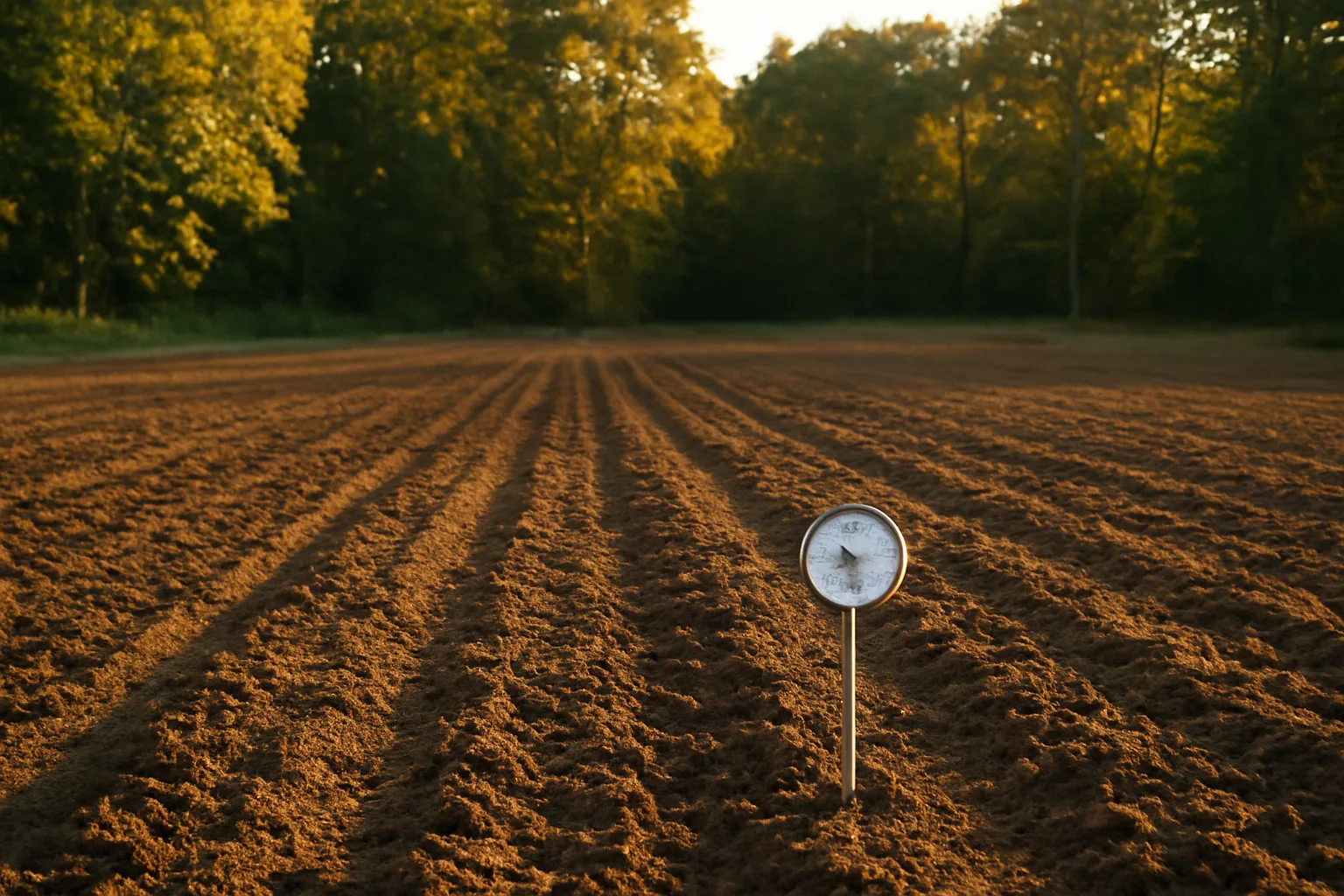
Soil temperature, not air temperature, determines whether a seed will actually germinate, and it's the single most common reason a plot planted "on schedule" fails anyway. Clover germinates reliably once soil hits about 50 degrees F. Warm-season legumes like soybeans and cowpeas want soil closer to 60 to 65 degrees F before they'll come up strong. Brassicas will germinate cooler, but still want soil in the 45 to 85 degree F range for good stands. A cheap soil thermometer, pushed 2 to 4 inches down, tells you more than a calendar ever will. Air temperature swings 20 degrees in an afternoon; soil temperature moves slowly and gives you a truer read on whether seed will actually sprout instead of rotting in cold, wet ground. University agronomy guidance on small grains and forage seeding generally recommends checking soil temperature trends over several consecutive days rather than a single morning reading, since a warm afternoon after a cold snap can give a misleading spike.
How does rainfall timing affect when you should plant?
Rain right after planting is what actually makes or breaks germination, more than hitting an exact calendar date. Small-seeded species like clover, chicory, and brassicas are especially vulnerable, since they're planted shallow and dry out fast in the top inch of soil if a rain doesn't follow within a few days. A common, practical strategy among experienced food plotters is to watch the 7 to 10 day forecast and plant 1 to 3 days ahead of a predicted rain event, rather than locking in a fixed date on the calendar every year. That means your plot might go in the third week of August one year and the first week of September the next, purely based on where the rain lines up. If you're stuck between two windows and no rain is in sight for either, most agronomists recommend planting into the drier window closer to your ideal timeframe rather than delaying weeks and risking a shortened growing season, especially for fall brassicas that need their full 80 to 90 days before frost.
What equipment do you need to plant on time?
Planting on the right calendar date doesn't help much if you're not set up to actually get seed in the ground when the window opens. At minimum, most food plotters need some way to kill existing vegetation (herbicide and a sprayer, or tillage), something to work the seedbed (disc, tiller, or a no-till drill), a way to broadcast or drill seed, and a cultipacker or drag to firm the seed-to-soil contact afterward. No-till drills have become popular specifically because they let you plant faster, right into standing residue, without waiting on a full tillage-and-settle cycle. That speed matters most in a tight fall window, where a week's delay in tillage can push your brassica planting past the point where it has enough season left before frost. If you're working smaller plots or don't own a tractor, ATV-mounted sprayers, small tillers, and hand-crank broadcast spreaders can get the job done on an acre or two. The gear matters less than the timing discipline. Plenty of plots planted with basic equipment on the right week outperform plots planted with expensive equipment two weeks late.
Frequently asked questions
When to plant deer food plots in general?
Fall plots (brassicas, cereal grains) go in 60 to 90 days before your area's first hard frost, usually late July through early September depending on zone. Spring/summer plots (clover, soybeans) go in after your last frost, typically March through May. Always confirm with your local frost dates and soil temperature rather than a fixed calendar day.
When to plant turnips for deer?
Plant turnips 80 to 90 days before your first expected fall frost, generally late July through early September across most of the whitetail's range. Seed shallow, 1/4 to 1/2 inch deep. Frost sweetens the bulbs through starch-to-sugar conversion, which is why deer often ignore turnips until cold weather arrives.
When to plant oats for deer?
Plant oats 6 to 8 weeks before first fall frost for a fall/winter plot, or in early spring in colder zones for a short-season plot. Oats establish fast, often 5 to 10 days to emergence, but usually winterkill in zone 5 and colder after a hard freeze.
Do deer eat sorghum?
Yes. Deer browse young sorghum shoots and eat mature grain, though sorghum is usually planted as a summer screen or drought-tolerant filler crop rather than a primary attractant. It's planted after soil warms to the mid-60s F, typically May through June.
Do deer eat clover, and do deer like clover?
Yes, clover is one of the most preferred and most planted food plot forages for whitetails. It offers 25 to 30% crude protein in a well-managed stand and can produce forage for 3 to 5 years off one planting with annual maintenance.
What is a food plot?
A food plot is a planted crop area established on hunted or managed land to provide deer forage and, often, a spot to hunt over. It differs legally from baiting or feeding, since the crop is standing and rooted rather than piled loose feed. State rules on both vary, so check your wildlife agency before planting or hunting.
What are deer's favorite foods?
Soybeans, cowpeas, clover, acorns (when available), and frost-sweetened brassicas consistently rank as top preferences in forage studies and food plot experience. Preference shifts by season and by what's locally abundant; a strong acorn drop will often out-compete any planted forage in fall.
Do deer like honey?
No solid evidence supports honey as a deer attractant. Deer digest fibrous plant material through a rumen, not concentrated sugars, and no state wildlife agency or extension publication lists honey as deer forage. Stick with proven forage species timed correctly instead.
What's the best month to plant a fall food plot?
It depends entirely on your zone. Zone 3-4 growers often plant late July to mid-August; zone 5-6 growers plant early August to early September; zone 7 growers plant mid-August to mid-September; zone 8-9 growers plant early September to early October. Match it to your local first-frost date, working backward 60 to 90 days.
Can you plant a food plot too early?
Yes. Planting brassicas or clover too early into hot, dry late-summer soil can cause poor germination, bolting, or seedlings getting grazed to nothing before they establish a root system. Waiting for the right soil moisture and temperature window matters more than hitting an early date.
How late can you plant a fall food plot?
Cereal grains like winter wheat and rye can be planted later than brassicas, sometimes within 45 to 60 days of first frost, and still establish enough growth to hold up through winter. Brassicas planted too late may not have time to bulb before hard frost arrives.
Do I need a soil test before planting a food plot?
It's strongly recommended. A soil test tells you your actual pH and nutrient levels, which determines how much lime and what fertilizer blend your specific plot needs. Your soil test lab, not a general planting guide, is the right authority on those exact amounts for your ground.
Sources
- Plant Physiology, cold acclimation and sugar accumulation in Brassica napus: Cold temperatures trigger starch-to-sugar conversion and soluble sugar accumulation in brassica tissue after cold exposure
- National Park Service, White-tailed Deer Food Habits and Management summary: Deer forage selection varies by season and local mast abundance, with acorns dominating fall diets in good mast years
- University of Wisconsin-Madison Extension, Soil Temperature and Seed Germination: Minimum soil temperature thresholds for clover, brassica, and warm-season legume germination
- Mississippi State University Extension, Establishing and Managing Wildlife Food Plots: Regional guidance on fall and spring food plot planting windows and species selection by soil and site conditions
- University of Tennessee Extension, Wildlife Food Plots: Cereal grains like wheat, oats, and rye require less establishment time than brassicas before providing usable forage