Last updated 2026-07-26
TL;DR
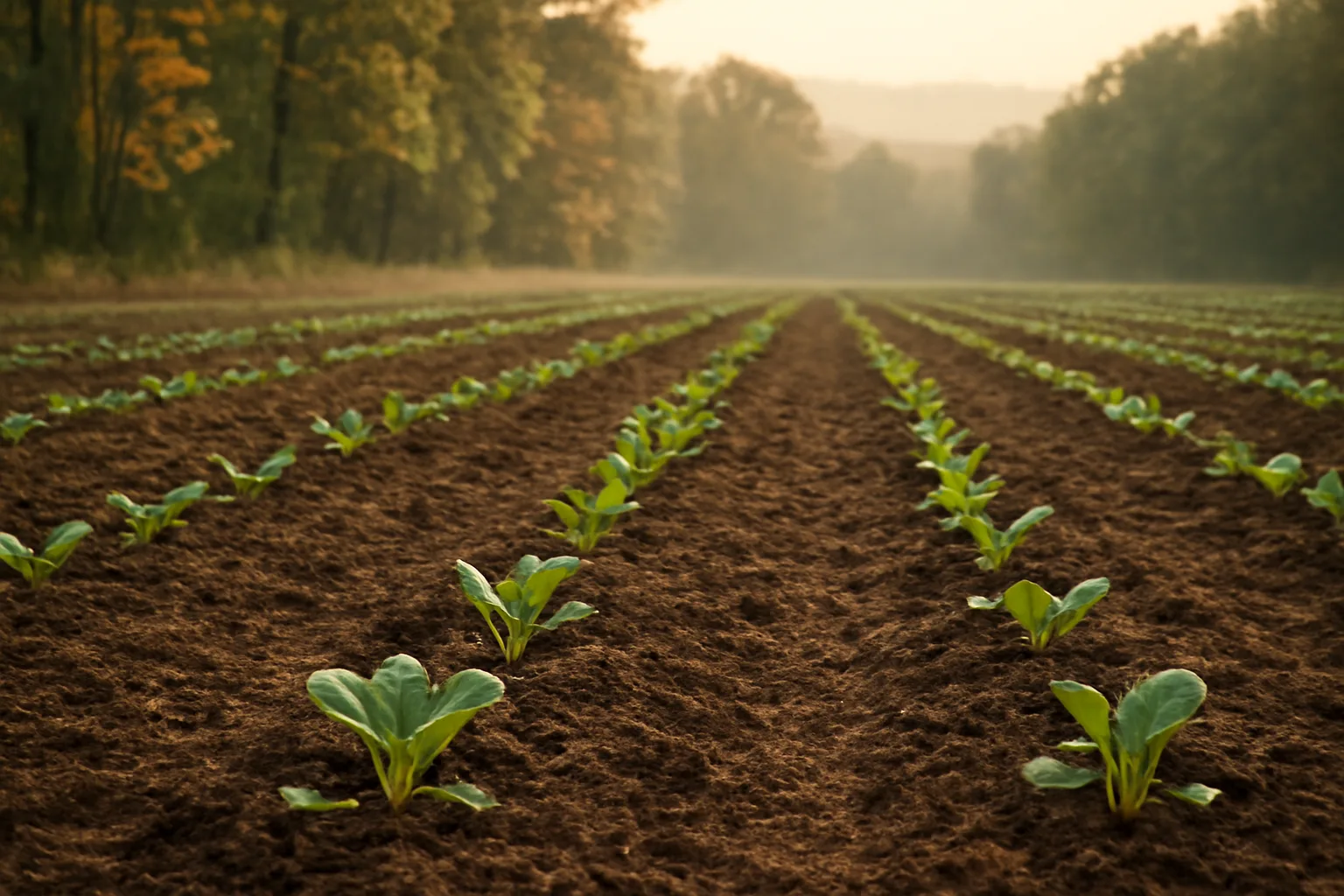
The best time to plant fall food plots is 60-90 days before your area's average first frost date, so plants mature before deer season and cold weather. For most of the whitetail range, that's late July through early September for brassicas and early September for cereal grains like oats, based on USDA hardiness zone and frost data.
When should you plant fall food plots for deer?
Count backward from your area's first frost date, not forward from a date on the calendar. Brassicas like turnips and radishes need 60 to 90 days to reach full size, and cereal grains like oats or wheat need 45 to 60 days before they get knee-high and attractive. Get the math wrong by even two weeks and you end up with plots that peak after your season closes instead of during it. Most of the whitetail range falls somewhere between USDA Plant Hardiness Zones 4 and 7, and first frost dates in that band run from early September in the northern Midwest and New England down to late October or even November in the Deep South. A guy in central Minnesota might need brassica seed in the ground by late July. A guy in south Georgia can wait until mid-September and still be fine. The practical rule most extension agronomists use: plant brassicas 80 to 90 days before your average first frost, and plant cereal grains and clover 45 to 60 days before that same date [1]. If you don't know your first frost date off the top of your head, your state climate office or the National Weather Service publishes it by county, and it's worth five minutes to look up before you buy seed. Soil temperature matters as much as the calendar date. Brassica seed germinates best when soil temps are between 45 and 85 degrees F, and it germinates slowly or not at all once soil cools below about 40 degrees. A soil thermometer costs ten bucks and tells you more than any planting chart ever will.
When to plant food plots for deer, zone by zone
| Northern Midwest, New England (zone 3-4) | early to mid-September | mid-July to early August | mid-August to early September | |
|---|---|---|---|---|
| Mid-Midwest, Mid-Atlantic (zone 5-6) | late September to mid-October | early to late August | early to mid-September | |
| Southern Midwest, Mid-South (zone 6-7) | mid to late October | late August to mid-September | mid-September to early October | |
| Deep South, Gulf Coast (zone 7-9) | early November or later | mid-September to mid-October | early October to early November | These windows are built off USDA Plant Hardiness Zone Map data and typical extension planting guides, and they're starting points, not gospel [2]. Elevation, local microclimate, and a wet or dry fall can shift things by two or three weeks in either direction. If you're on a ridge in the mountains or in a low frost pocket near a creek bottom, adjust accordingly. A soil test result and a zone map together tell you almost everything you need before you buy a bag of seed. If you want a starting point built around your specific location instead of a generic zone chart, that's the exact gap the Custom Food Plot Plan is built to fill: you get planting windows and a species list matched to your actual county and soil test, not a national average. |
There's no single fall planting date for the whole country, and anyone who tells you otherwise hasn't planted plots outside their own state. Zone matters more than the month on a bag of seed. | Region (approx. USDA zone) | First frost window | Brassica planting window | Cereal grain / clover window |
When to plant oats for deer
Plant oats 45 to 60 days before your first frost date, which for most of the whitetail range lands somewhere between mid-August and mid-September. Oats grow fast, tolerate a light frost, and green up again after that first hard freeze knocks them back, which is exactly why deer hunters like them for early season attraction. Oats don't survive hard winter cold the way winter wheat or winter rye does. In zones colder than about zone 6, oats will die out after a few hard freezes in the 20s, so treat them as an early to mid-season plot, not a food source that carries deer through February [3]. If you want something standing in January, pair oats with wheat, rye, or a brassica blend that holds up better. Seeding rate for oats runs 2 to 3 bushels per acre (about 96 to 128 pounds) drilled, or up to 3.5 bushels broadcast, according to Purdue Extension's forage guidance [3]. Oats also work well as a nurse crop for clover, protecting young clover seedlings from heat and weed pressure through late summer establishment.
When to plant turnips for deer
Plant turnips 80 to 90 days before your first frost, because turnips need that long window to bulb up and become genuinely attractive to deer. Plant too late and you'll get leafy tops deer will nibble in October but no bulb development, which is where most of the tonnage and late-season value comes from. Turnip seed is tiny, so seeding rate is low: 4 to 6 pounds per acre broadcast, planted no deeper than a quarter to half an inch. Deer generally hit the leafy tops first in early fall and don't dig into the bulbs until after a couple of hard frosts sweeten the starches into sugars, usually late November into December depending on your zone. The mistake most first-time plotters make with turnips is planting them alone in poor soil and expecting a wall of green. Turnips are heavy nitrogen feeders, and a soil test showing low fertility will show up as stunted, small-bulb turnips that deer walk past for something better. Your soil test lab's fertilizer recommendation is the real authority here, not a generic bag rate. See our food plot whitetail guide for how brassicas fit into a broader fall rotation.
Do deer eat sorghum?
Yes, deer eat sorghum, particularly the grain heads once they mature and dry down in fall, and sorghum also works well as a screening or bedding cover crop planted alongside food plots. It's less of a primary attraction food than brassicas or beans for most of the growing season, but the seed heads pull deer, turkey, and other wildlife hard once they ripen. Grain sorghum is planted in late spring to early summer in most regions, not fall, since it needs a full warm season to mature grain heads before frost. If you're asking about sorghum for a fall plot, you're more likely thinking of it as a standing food source planted earlier in the year that becomes attractive in fall and winter once the heads dry and drop. Sorghum tolerates drought and poor soil better than corn, which is part of why it shows up in food plot mixes for sandy or marginal ground. It's rarely the main event in a plot plan, but as a component mixed with other species or as standing cover near a plot edge, it earns its place.
Do deer eat clover, and do deer like clover?
Yes, deer eat clover heavily, and most whitetail research and extension forage trials rank clover among the most consistently preferred food plot forages available, especially in spring and summer when it's actively growing [1]. Clover isn't technically a fall-planted crop in most of the country, but late summer to early fall (roughly 60 to 90 days before frost) is actually the best time to establish it, because cooler weather and fall rains reduce weed competition compared to a spring planting. A University of Tennessee Extension study found white clover food plots can provide crude protein levels well above 20 percent during the growing season, which is part of why it's a staple in perennial plot mixes [2]. It's also one of the few food plot species that comes back year after year without replanting, provided you maintain fertility and mow to control weeds. The catch with clover is that it needs a full season or more to really establish, and it's not a fast fall attraction play the way brassicas or oats are. Think of clover as the perennial backbone of a property's plot program, not the plot you plant three weeks before opening day.
What is a food plot?
A food plot is a planted area, usually somewhere between a quarter acre and several acres, established specifically to provide a concentrated, attractive food source for deer and other wildlife on hunted or managed land. Plots range from small hidden kill plots tucked into timber to large destination fields planted in beans, corn, or clover. Food plots serve two overlapping purposes: nutrition (helping deer through stress periods like late winter or antler growth in summer) and hunting access (giving hunters a predictable place deer will show up). Most state wildlife agencies and land-grant extension programs treat food plots as one tool within broader habitat management, alongside timber management, prescribed fire, and native forage improvement, not a replacement for any of those [4]. A good plot plan usually blends a perennial component (clover or alfalfa) with annual rotations (brassicas, cereal grains, or warm-season legumes like soybeans) so something attractive is in the ground across multiple seasons rather than one narrow window. If you're building a plot system from scratch, our deer food plots overview walks through how those pieces fit together across a full year.
What are deer's favorite foods, and how do food plots fit in?
Deer are opportunistic browsers, and their real favorite foods shift by season: soft mast (acorns, apples, persimmons) and agricultural crops in fall, forbs and browse in spring and summer, and whatever's still standing and digestible in winter. Studies of whitetail diet composition consistently show acorns and other hard mast dominate fall diets in years when the mast crop is strong, sometimes outcompeting planted food plots for deer attention entirely [5]. Among planted food plot species, deer preference research (much of it built on cafeteria-style feeding trials) generally ranks clover, soybeans, and brassica tops near the top of the list, with corn and cereal grains rated lower in raw preference but still heavily used, especially once other options thin out in late fall [1]. Preference also isn't fixed. Deer in a region with heavy ag will treat soybeans differently than deer on ground with no row-crop neighbors. The honest answer is that the "favorite food" question depends entirely on what else is available on and around your property in a given year. A plot that gets hammered in a poor mast year might get largely ignored the next fall when the oaks drop hard. That's not a plot failure, it's deer behaving like deer.
Do deer like honey, and does it belong in a food plot?
There's no real evidence deer specifically seek out honey, and it has no established role in food plot planning. Deer are drawn to sugar and carbohydrates in general (which is part of why molasses shows up in some mineral and attractant products), but honey itself isn't a forage crop, a plot amendment, or something you'd add to soil or seed. If you're seeing this question paired with food plot searches, it's likely people confusing honey with molasses-based attractants or with the sugar content deer chase in late-season brassica bulbs after a frost converts starches to sugar. That frost-sweetening effect on turnips and radishes is real and well documented in extension brassica guidance. Honey the substance is not part of that process. Worth noting separately: many states regulate or outright ban baiting and supplemental feeding for deer, and rules differ sharply by state and sometimes by county. Before you add any attractant, mineral, or feed product to your property, check your state wildlife agency's current baiting and feeding regulations, since a legal food plot can turn into an illegal bait pile fast depending on how a state defines the difference.
How do you pick the right fall food plot species for your zone?
Start with your soil test, then your frost date, then your goals. A soil test tells you pH and nutrient levels, which determines what will actually grow well before you ever pick a species. Extension soil testing programs, most of them run through your state's land-grant university, typically cost between $7 and $20 per sample and take one to three weeks to turn around results. Once you know your soil chemistry and your frost date, matching species gets simpler. Fast-maturing brassicas and cereal grains for early season attraction if you're short on time. Clover if you're building a perennial base and can wait a full season for it to establish. A blend of both if you have multiple plots and want food available across the whole season rather than concentrated in one window. Lime takes time to change soil pH, often 3 to 6 months to fully react depending on soil type and application method, so if your test comes back needing lime, get it applied as early as possible relative to planting [6]. Your soil test lab's specific lime and fertilizer recommendation is the real authority for your dirt. A blanket plot calendar can tell you when to plant. It can't tell you if your soil at 5.4 pH is going to choke out a clover stand no matter when you plant it. For a starting point built around your actual zone, acreage, and soil results rather than a generic calendar, the $99 Custom Food Plot Plan gives you a species list and planting window matched to your property instead of a national average. Related reading: deer food plot seed and food plot seed for species-specific planting depth and rate detail.
Frequently asked questions
When to plant food plots for deer in fall?
Count backward from your area's average first frost date: 80-90 days for brassicas, 45-60 days for cereal grains and clover. In most of the whitetail range that puts brassica planting in late July through early September, and cereal grains in late August through early October, depending on your zone.
Do deer eat sorghum?
Yes, deer readily eat sorghum grain heads once they mature and dry in fall, and they'll also browse the plant. Sorghum is planted in late spring to early summer, not fall, and works more as a standing grain and screening crop than a primary fall attraction plot.
Do deer eat clover, and do deer like clover?
Yes. Clover is one of the most consistently preferred food plot forages in whitetail research, with crude protein often exceeding 20 percent during the growing season according to University of Tennessee Extension data. Deer favor it especially in spring and summer, and it's a staple perennial base for most plot programs.
When to plant oats for deer?
Plant oats 45-60 days before your first frost date, typically mid-August to mid-September for most of the whitetail range. Oats grow fast and green up again after light frosts, making them a strong early season attraction crop, but they die out under sustained hard freezes below the mid-20s.
When to plant turnips for deer?
Plant turnips 80-90 days before your average first frost so bulbs have time to fully develop. Deer usually eat the leafy tops first in early fall and don't dig into sweetened bulbs until after a couple of hard frosts, often late November into December.
What is a food plot?
A food plot is a planted area, from a quarter acre up to several acres, established to provide concentrated, attractive food for deer and other wildlife on hunted or managed land. Plots support both deer nutrition and hunting access, and work best as part of a broader habitat plan, not a standalone fix.
What are deer's favorite foods?
Deer favorites shift by season: hard and soft mast like acorns and apples dominate fall diets in good mast years, forbs and browse dominate spring and summer, and agricultural crops and standing food plots fill gaps year-round. Among plot species, clover, soybeans, and brassica tops generally rank highest in preference research.
Do deer like honey?
There's no real evidence deer specifically seek out honey, and it has no established role in food plot planning. Deer do respond to sugar and carbohydrates in general, which is why molasses appears in some attractant products, but honey itself isn't a forage crop or plot amendment.
What's the best time to plant fall food plots overall?
The best time is 60-90 days before your local first frost date, adjusted by species: brassicas need the longer end of that window, cereal grains and clover need the shorter end. There's no single national date; a Minnesota plot and a Georgia plot can be three to eight weeks apart.
Can you plant fall food plots too early?
Yes. Planting brassicas or clover too early into hot, dry late-summer soil often causes poor germination and heavy weed pressure before deer season even starts, sometimes forcing you to replant. Soil temps above 85 degrees F slow brassica germination, so waiting for a cooling trend and rain in the forecast usually beats planting on a fixed calendar date.
Can you plant fall food plots too late?
Yes, and it's the more common mistake. Planting brassicas within 60 days of first frost often leaves you with leafy tops and no bulb development, and cereal grains planted too late may not establish enough root and leaf growth to survive the first hard freeze.
Do I need a soil test before planting a fall food plot?
You don't strictly need one, but skipping it is a gamble. A soil test costs $7-$20 through most land-grant extension labs and tells you pH and nutrient levels that determine whether your seed choice will actually thrive, regardless of when you plant it.
Sources
- Mississippi State University Extension, Establishing Fall/Winter Food Plots: Recommended planting windows counted backward from first frost for brassicas versus cereal grains
- University of Tennessee Extension, Establishing and Managing Wildlife Food Plots: Regional planting window guidance for fall food plot species
- Purdue University Extension, Forage Field Guide / Oats seeding rates: Oats seeding rate of 2-3 bushels per acre drilled and winter survival limits
- USDA Natural Resources Conservation Service, Wildlife Habitat Management: Food plots are one tool within broader habitat management, not a standalone practice
- USDA Forest Service, White-tailed Deer Diet Composition Research: Acorns and hard mast can dominate whitetail fall diets in strong mast years
- University of Missouri Extension, Soil pH and Liming: Lime takes several months to fully react and adjust soil pH