Last updated 2026-07-26
TL;DR
Late summer food plots (brassicas, oats, cereal grains, clover) go in the ground roughly 60 to 90 days before your area's average first frost, usually late July through early September depending on latitude. Turnips and radishes need about 80-90 days to bulb, oats and clover can go in closer to frost. Pull a soil test first; lime takes months to work.
what is a food plot, exactly
A food plot is a planted area of forage crops, usually somewhere between a quarter acre and a few acres, put in on private or leased land to give deer and other wildlife a concentrated food source. It's not a garden and it's not a lawn. Most plots run one of two directions: annual plots you replant every year (brassicas, cereal grains, sorghum, soybeans) or perennial plots that persist for 3-5 years with mowing and fertility upkeep (clover, chicory, alfalfa). Landowners plant them for a few overlapping reasons. Better nutrition during antler growth and lactation, a draw that concentrates deer activity for observation or hunting, and in a lot of cases just because it's satisfying to watch something grow that a herd actually uses. State wildlife agencies generally treat food plots as habitat management, distinct from baiting, though the line between the two is regulated differently state to state. Always check your own state's definition before you plant near a stand, because some states restrict hunting over plots that were planted with mechanized equipment within a certain distance or timeframe, and others don't distinguish at all. If you're new to this, start smaller than you think you need. A well fertilized half acre plot with the right seed beats a neglected three acre plot every time. For a broader rundown of plot styles and how to pick one for your ground, see food plot whitetail.
when to plant food plots for deer
| Northern (MN, WI, ME, MI Upper Peninsula) | Mid-Sept to early Oct | Late July to mid-Aug | |
|---|---|---|---|
| Mid-latitude (PA, OH, IA, southern MI) | Early-mid Oct | Late July to late Aug | |
| Transition zone (KY, VA, MO, KS) | Mid-late Oct | Mid-Aug to mid-Sept | |
| Southern (GA, AL, MS, TX) | Nov to early Dec | Late Aug to late Sept | Check your county's average first frost date through your state climate office or NOAA's climate normals before locking in a date [1]. |
Timing depends entirely on what you're planting and your average first frost date, not a calendar date that works nationwide. Spring plots (soybeans, corn, some clover establishment) go in after last frost, roughly April through June depending on latitude. Late summer plots (brassicas, oats, winter wheat, cereal rye, clover overseed) go in 60 to 90 days before first frost, which for most of the whitetail range lands somewhere between late July and mid-September. The reason late summer plots matter so much is timing with hunting season and with fall/winter deer nutrition needs. A plot that matures in October, right as bow season opens and as deer are shifting toward carb and fat storage for winter, tends to pull more attention than a plot planted too early that's already gone to seed or too late that never bulbed out. Work backward from your first frost date. That's the whole method. In the Upper Midwest and Northern zones, the planting window shifts earlier, often the last two weeks of July. In the Deep South, you can push into September because frost doesn't show up until December in a lot of areas. Here's a rough zone breakdown, treat it as a starting point and adjust against your local frost data, not a hard rule: | Zone (general) | Typical first frost | Late-summer plot window |
when to plant turnips for deer
Turnips need roughly 80-90 days from seeding to full bulb maturity, so back that up from your first hard frost. If your average first frost lands October 10th, you want turnips in the ground by mid-July to the first week of August at the latest. Turnips (and radishes, another common brassica plot component) are frost tolerant once established and actually get sweeter after a hard freeze, because the plant converts starches to sugars as a cold response. That's part of why deer often ignore turnip plots in September and hammer them in December. Don't panic if a turnip plot sits mostly untouched early on. That's normal, not a failure. Seeding rate for turnips alone typically runs 4-6 lbs per acre broadcast into a prepared seedbed, at a shallow depth (1/4 to 1/2 inch, or just broadcast on a firm seedbed and cultipacked). A soil pH in the 6.0-7.0 range gives you the best shot at germination and tuber development, which is one more reason a current soil test matters before you plant, not after.
when to plant oats for deer
Oats go in later than brassicas because they mature faster and deer eat the leafy growth, not a root or bulb. Plant oats 45-60 days before your first hard frost, which for most of the whitetail range is late August through mid-September. In southern states you can push into October. Oats are one of the most forgiving food plot crops out there. They germinate fast, often 5-7 days in warm soil, tolerate a wider pH range than clover, and give you green forage within a month. The tradeoff is they're not frost hardy the way winter wheat or cereal rye is; a hard freeze in the teens will usually kill oats outright, while wheat and rye keep growing into winter and green back up in spring. A lot of successful late-summer blends combine oats with a brassica and a small amount of clover: oats give you fast early cover and forage, brassicas take over as fall progresses, and clover is there for the following spring after the annuals die back. Seeding rate for oats alone runs about 100-110 lbs per acre drilled, or a bit higher broadcast. If you want a pre-built blend rather than sourcing individual species, deer food plot seed covers how blends are typically formulated for fall timing.
do deer eat sorghum
Yes. Deer eat grain sorghum, both the standing seed heads and the foliage, though it's generally treated as a summer/fall standing crop rather than a primary late-summer planting for most food plotters. Sorghum is more drought tolerant than corn and is often used in the South and parts of the Midwest where corn struggles in dry years. The catch with sorghum is timing. It's a warm-season crop that needs to go in during spring or early summer, soil temps above 60°F, not late summer. So if you're reading this in August looking for a late-summer option, sorghum isn't your play this year. It's worth planning for next spring if you're in a warmer, drier region and want a corn alternative. Deer will use standing sorghum heavily in fall and winter once it dries down, similar to how they use standing corn.
do deer eat clover, and do deer like clover
Yes, and it's one of the most consistently preferred forages in food plot research and practice. Clover (white clover, red clover, ladino types) is high in crude protein, often 20-30% on a dry matter basis depending on variety and maturity, and deer use it heavily spring through fall wherever it's established [2]. Clover's real strength is duration, not a single hot week of use. A well-maintained perennial clover stand can produce quality forage for 3-5 years before it needs to be renovated, versus annual plots you're replanting every single season. That said, clover is pickier about soil pH than a lot of annuals. Most extension guidance puts optimal clover pH at 6.0-7.0, and yields drop noticeably below 5.5 without lime correction. For late-summer planting specifically, clover can be frost-seeded or planted late summer into early fall (August into September in most zones) so it establishes before winter dormancy and comes on strong the following spring. It's slower to bulk up than annual grains, so don't expect a heavy stand the first fall. If you're deciding between a clover-based perennial plot and an annual rotation, deer food plots walks through that tradeoff in more depth.
what are deer's favorite foods
There's no single universal answer here, deer preference shifts by season, region, and what's available naturally. But across food plot research and browse studies, a few patterns show up consistently. Deer strongly prefer soft, high-protein forages when available (clover, soybeans, alfalfa, cowpeas in summer), shift toward carbohydrate and fat-dense foods as fall arrives (acorns, corn, standing grain), and will eat brassicas and turnip tops heavily once a frost sweetens them. Acorns, where available, often outcompete a food plot entirely in a heavy mast year. That's a real, documented phenomenon, not an excuse; wildlife biologists commonly note that deer will bypass planted plots for a good white oak drop. State wildlife agencies note preference studies rank clover, soybeans, and acorns near the top of whitetail forage lists depending on season . If your plot gets ignored in a big mast year, that's not a plot failure, that's deer being deer. One honest caveat: preference trial data is regional and often decades old in places, and deer behavior varies a lot by local food availability, so treat any "top 10 deer foods" list as a general guide, not gospel for your specific property.
do deer like honey
This one comes up a lot in food plot and attractant forums, and the honest answer is: there's no solid research showing deer specifically seek out honey, and it's not a natural or common part of their diet. Deer are herbivores built around browse, forbs, mast, and agricultural forage. Sugar-based attractants like honey, molasses, or commercial sugar-based sprays may draw incidental interest from the scent, but there's no wildlife agency or extension publication establishing honey as a meaningful deer food or attractant. More relevantly, using any food-based lure, including honey, molasses, salt, or mineral, can cross into your state's legal definition of baiting depending on how and where it's placed and whether you're hunting over it. Baiting rules vary widely; some states allow supplemental feeding and hunting over bait entirely, some ban it outright, and some allow feeding but not hunting over it within a certain distance. Check your state wildlife agency's current regulations before using any attractant near a stand.
how do I know what to plant and when on my specific property
Start with two things you probably already have if you're planning this season: a soil test and a rough idea of your local frost dates. Everything else builds off those two data points. Pull a soil test 4-6 weeks before you plan to plant if you haven't tested in the last 2-3 years. Most land-grant university soil labs turn results around in about a week and give you exact lime and fertilizer recommendations for the specific crop you list on the submission form. Your soil test lab is the authority here, not a blog post; follow their lime and fertilizer numbers over any generic rule of thumb, because pH and nutrient levels vary field to field even on the same property. Lime is the piece people skip and regret. Ag lime takes months to fully react in soil, so if your test comes back at pH 5.4 and your crop wants 6.5, spreading lime the week before you plant won't fix it in time for this season's crop. Plan lime applications for the fall before you intend to plant the following late-summer plot, if you can, or accept reduced yield this cycle and correct it going forward. Once you know your pH and nutrient status, match species to your actual frost window (covered above by zone) and to your soil drainage and light. Brassicas and cereal grains tolerate a wider range of conditions than clover, which wants full sun and decent drainage to really perform. This is genuinely the point where a lot of people want a second opinion or a plan built around their specific soil test and property details rather than general zone guidance. That's exactly the gap our $99 one-time Custom Food Plot Plan is built to fill: you send your soil test results, general location, and plot goals, and get back a species and timing plan built for your ground. Start one at /plot-plan-builder.
what equipment do I actually need for a late-summer plot
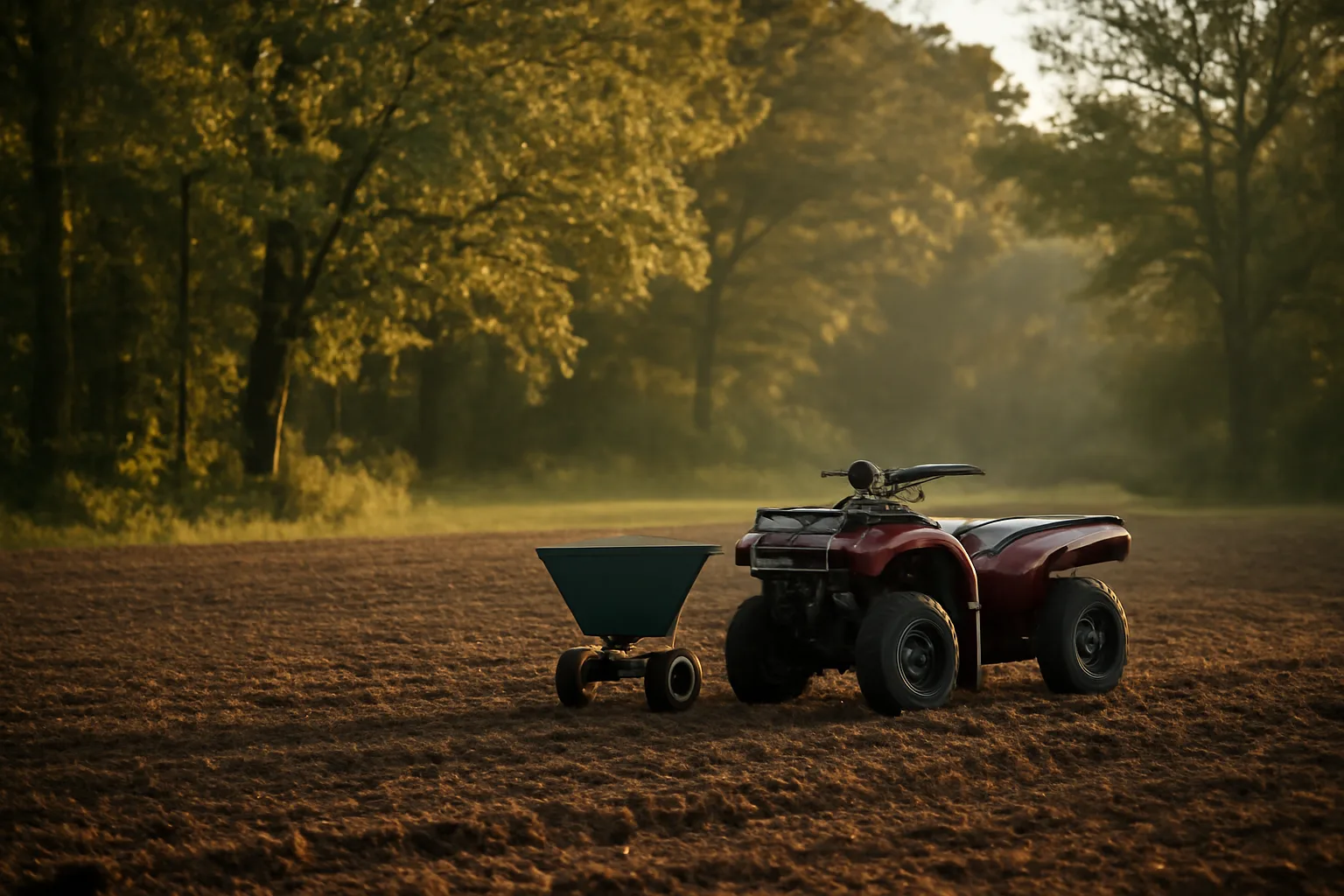
You don't need a tractor to plant a good late-summer plot, but you do need a way to kill existing vegetation, work the seedbed, and get seed-to-soil contact. For most half-acre to two-acre plots, an ATV or side-by-side with a small disc or tiller attachment, a broadcast spreader, and a cultipacker or drag harrow covers 90% of situations. For brassicas and clover, seed-to-soil contact matters more than planting depth, since both are broadcast onto a firm, prepared seedbed rather than drilled deep. A cultipacker (or even dragging a section of chain-link fence or a homemade drag) after broadcasting presses seed into contact with soil and dramatically improves germination versus broadcasting onto loose, fluffy dirt where seed just sits on top and dries out. Herbicide burndown clears existing weeds and grass competition. Glyphosate is the standard, applied 7-14 days before tillage or planting per most label and extension guidance, and this matters even more in late summer plots since you've got a shorter window before frost to let the new crop establish without fighting weeds for light and moisture. If you're working smaller or rougher ground, a good walk-behind tiller and a hand-crank broadcast spreader will get the job done on plots under an acre. It just takes longer.
how does soil pH and fertility actually change what I should plant
Soil pH controls nutrient availability more than almost any other single factor, and different food plot species have real, documented preferences that matter for late-summer plantings specifically because you don't have time this season to fully correct a bad pH before the crop goes in. Brassicas (turnips, radishes, rape) tolerate a fairly wide pH range, roughly 5.3 to 6.8, and are one of the more forgiving choices if your soil test comes back on the acidic side and you don't have time to lime and wait. Cereal grains (oats, wheat, rye) are similarly tolerant, often performing acceptably down to pH 5.5. Clover is the pickiest of the common plot species, wanting 6.0-7.0 for good nodulation and nitrogen fixation; below 5.5, clover yields drop sharply and the plant struggles to fix its own nitrogen, forcing you to add synthetic nitrogen to compensate. If your soil test comes back low on pH and you're planting in the next few weeks, lean toward brassicas or cereal grains this cycle rather than clover, and plan a lime application for later this year to set up a better clover planting next season. That's a genuinely useful, actionable move rather than trying to force a perennial legume into ground that isn't ready for it.
Frequently asked questions
Do deer eat sorghum?
Yes, deer eat both sorghum foliage and the grain heads, and it's a common summer-planted standing crop in drought-prone regions. It's a warm-season crop planted in spring or early summer, not late summer, so it's not an option if you're planting this late in the season.
Do deer eat clover?
Yes, clover is one of the most consistently preferred whitetail forages, often testing at 20-30% crude protein on a dry matter basis. Deer use it heavily from spring through fall wherever a stand is established and soil pH is maintained in the 6.0-7.0 range.
When should I plant deer food plots?
It depends on the crop, not a fixed date. Spring plots (soybeans, corn) go in after last frost; late-summer plots (brassicas, oats, cereal grains, clover) go in roughly 60-90 days before your area's average first frost, generally late July through mid-September.
Do deer like clover more than other forages?
Preference studies and extension data consistently rank clover among the top whitetail forages for protein content and palatability, though acorns and standing corn often outcompete it in fall once mast drops. It's a strong, reliable choice but not the only thing deer favor seasonally.
When should I plant oats for deer?
Plant oats 45-60 days before your average first frost, generally late August through mid-September in most of the whitetail range, later in southern states. Oats germinate fast, often within 5-7 days, but aren't frost hardy like winter wheat or cereal rye.
When is the best time to plant food plots for deer overall?
There isn't one best time across all species. Work backward from your local average first frost date and the days-to-maturity of whatever you're planting: brassicas need 80-90 days, oats need 45-60, clover establishment is more flexible but best late summer into early fall.
When should I plant turnips for deer?
Turnips need 80-90 days to bulb before a hard frost, so plant them roughly 12-13 weeks ahead of your area's typical first frost date. For most mid-latitude zones that's mid-July through the first week of August.
What exactly is a food plot?
A food plot is a planted area, usually a quarter acre to a few acres, seeded with forage crops like clover, brassicas, or cereal grains to provide concentrated nutrition for deer and other wildlife. It's classified as habitat management by most state agencies, distinct from baiting.
What are deer's favorite foods overall?
It shifts by season: clover, soybeans, and other high-protein forbs in summer; acorns, corn, and other carb-dense foods in fall; brassicas and turnip tops after a frost sweetens them. Acorns in a heavy mast year often outcompete any planted food plot.
Do deer like honey?
There's no solid wildlife research showing deer specifically seek out honey; it isn't a natural part of their diet. Sugar-based lures may draw incidental interest, but using them near a stand can cross into your state's legal definition of baiting, so check local rules first.
What's the ideal soil pH for a late-summer food plot?
It depends on species. Brassicas and cereal grains tolerate 5.3-6.8, while clover wants 6.0-7.0 for proper nitrogen fixation. Pull a current soil test and follow your lab's specific lime recommendation rather than guessing, since correction takes months to fully take effect.
Can I plant a late-summer plot without a tractor?
Yes. An ATV or side-by-side with a small disc, a broadcast spreader, and a cultipacker or drag harrow handles most half-acre to two-acre plots. For plots under an acre, a walk-behind tiller and hand spreader work too, it just takes longer.
How do I check my state's food plot and baiting rules before planting?
Contact your state wildlife agency directly; rules on baiting, supplemental feeding, and hunting over planted plots vary significantly state to state and change periodically. Many states, including Michigan, publish specific regulatory language distinguishing standing food plots from bait piles.
Sources
- Penn State Extension, "Brassicas for Deer Food Plots": recommended brassica planting window in Pennsylvania is late July through mid-August
- NOAA National Centers for Environmental Information, Climate Normals: average first frost dates by location are available through NOAA climate normals data
- USDA NRCS, Plant Fact Sheet: Oat (Avena sativa): oat seeding rates for cover crop/forage use run approximately 100-110 lbs per acre drilled
- USDA NRCS Plant Guide, White Clover (Trifolium repens): clover forage commonly tests in the 20-30% crude protein range on a dry matter basis
- Missouri Department of Conservation, "White-tailed Deer Habitat Management": acorns, soybeans, and clover rank among top whitetail forage preferences depending on season and mast availability
- Penn State Agricultural Analytical Services Laboratory, Soil Fertility Test Information Sheet: university soil testing labs provide crop-specific lime and fertilizer recommendations, typically returned within about a week