Last updated 2026-07-26
TL;DR
The best sandy soil food plot mix leans on drought-tolerant, low-fertility-friendly species: cowpeas, buckwheat, and grain sorghum for summer, and cereal rye, oats, and daikon-type radish or forage rape for fall. Clover works but needs irrigation-like rainfall or supplemental watering to establish. Always start with a soil test, since sandy ground drains nutrients fast and needs split fertilizer applications.
Why does sandy soil make food plot planning harder?
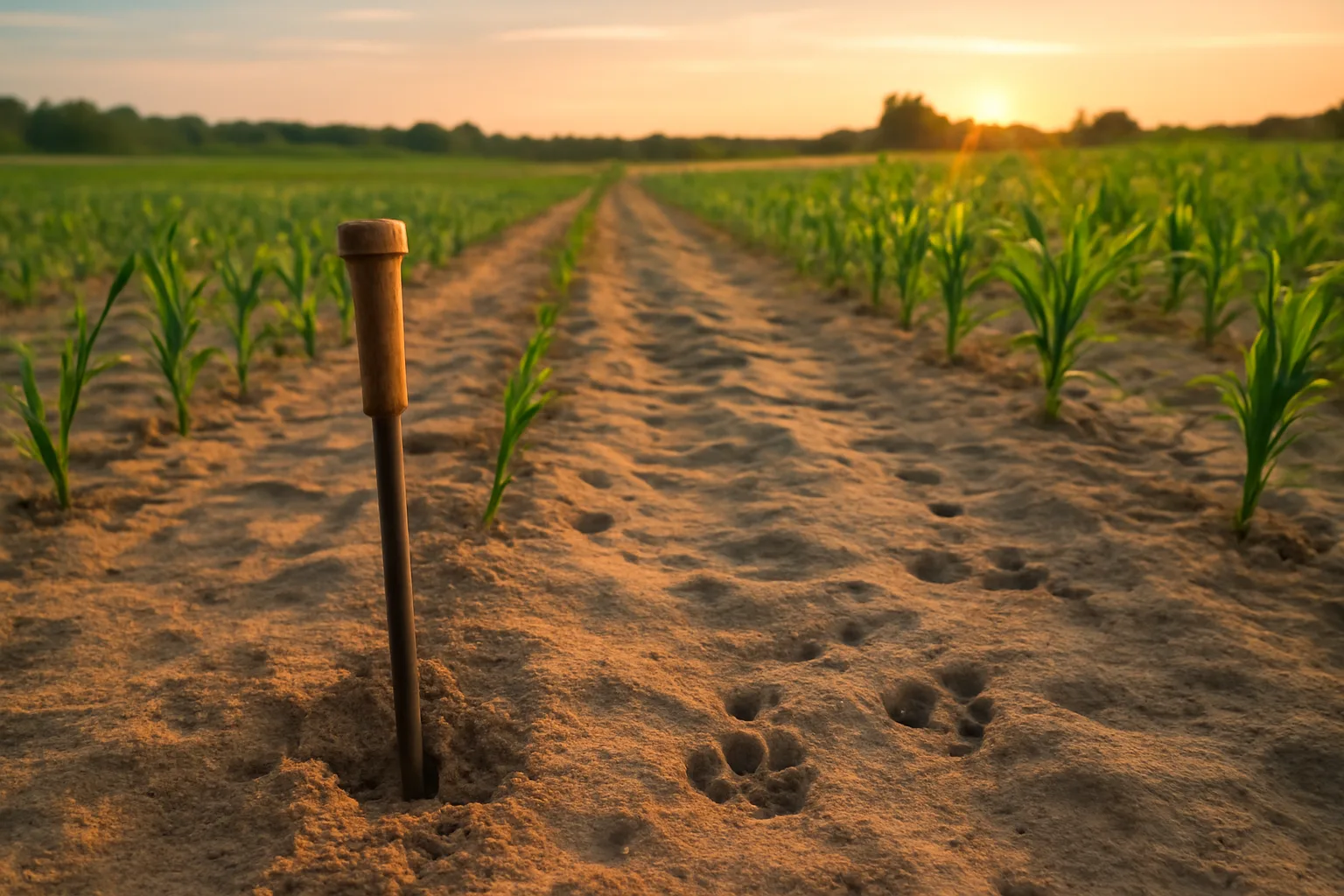
Sandy soil drains water fast and holds almost nothing back. Sand particles are big, so the pore spaces between them are big too, and water just runs through to the subsoil before roots can grab it. That same trait means nutrients wash out with the water. USDA's NRCS soil health guidance describes sandy soils as having low water holding capacity and low cation exchange capacity (CEC), which is the soil's ability to hold onto positively charged nutrients like potassium, calcium, and magnesium [1]. Low CEC is the real problem, more than the drainage itself. A clay-heavy soil might hold a CEC of 20 to 30 meq/100g. Pure sand can sit at 3 to 5 meq/100g or lower. That means whatever fertilizer you put down, a big chunk of it leaches past the root zone in the first hard rain instead of sticking around for the plant to use later in the season. Organic matter is the fix. But it's slow. Building organic matter in sandy ground through cover crops and residue takes years, not a single planting season. In the meantime, you manage around the limitation: split your fertilizer applications, pick species that don't demand much, and don't expect a plot on pure sand to perform like one on loam without extra work. The good news is that a lot of proven food plot species actually prefer well-drained ground. Deer plots fail more often from wet feet and root rot than from drought, so sandy soil isn't a lost cause. It just needs a different playbook.
What is a food plot, exactly?
A food plot is a planted area of forage or grain, usually somewhere between a quarter acre and several acres, established specifically to feed and attract deer or other wildlife on hunted land. It's not a farm field in the traditional sense. The goal is nutrition and attraction for game, not yield per acre for market sale. Most food plots fall into two rough categories: annual plots (replanted every year, often brassicas, cereal grains, or warm-season annuals like sorghum and cowpeas) and perennial plots (clover, alfalfa, or chicory blends that can produce for 3 to 5 years with proper maintenance). On sandy ground, annuals generally have an easier time than perennials because you can time-plant around drought stress instead of asking a stand to survive multiple dry summers. State wildlife agencies generally regulate hunting methods around bait piles or supplemental feed separately from the plot itself. Rules vary by state on baiting, and some states draw a legal line between a planted food plot and a pile of bait or minerals. Check your state wildlife agency's current regulations before you plant near a stand you intend to hunt.
What's the best food plot mix for sandy soil?
| Cereal rye | Fall/winter | Excellent | Most drought and cold tolerant cereal grain, germinates in poor soil | |
|---|---|---|---|---|
| Grain sorghum | Summer | Excellent | Handles heat and low fertility better than corn | |
| Cowpeas | Summer | Good to excellent | Fixes nitrogen, deer favorite, needs decent drainage which sand provides | |
| Buckwheat | Summer | Good | Fast growing, cheap, breaks up compaction, poor long-term nutrition alone | |
| Oats | Fall | Moderate to good | Winterkills in cold zones, great fall attraction while it lasts | |
| Forage rape/radish | Fall | Moderate | Needs some fertility to bulb out well, still tolerates sand better than clay | |
| Clover (ladino/red) | Perennial | Poor to moderate | Needs consistent moisture; struggles without irrigation or a wet climate | |
| Corn | Summer | Poor | High water and fertility demand, a bad fit for sand without heavy inputs | |
| Soybeans | Summer | Moderate | Doable but yields drop hard under drought stress on sand | A realistic fall mix for sandy ground: 60 lbs/acre cereal rye, 10 lbs/acre oats, and 5 lbs/acre forage rape or a radish blend. For summer, 90 lbs/acre grain sorghum with 15 to 20 lbs/acre iron-clay cowpeas drilled or broadcast together gives you height, tonnage, and a legume nitrogen source in one pass. If you want a mix built around your actual soil test numbers and region instead of a generic blend, that's exactly what a Custom Food Plot Plan is for. It's a $99 one-time plan, but the species picks above will get most sandy-ground hunters most of the way there on their own. |
There's no single universal mix, but a few species show up again and again in university trial data and extension recommendations for droughty, low-fertility soils. Cowpeas (iron-clay type), buckwheat, and grain sorghum are the workhorses for summer sandy plots because all three tolerate low fertility and dry stretches better than most competing species. For fall, cereal rye is close to bulletproof on sand, and oats plus a brassica like forage rape or a daikon-type radish round out a strong cool-season blend. Here's a practical breakdown. | Species | Season | Sandy soil tolerance | Notes |
Do deer eat sorghum?
Yes, deer eat grain sorghum, both the standing grain heads and the tender forage growth earlier in the season. Sorghum is a common food plot choice specifically because it tolerates heat and drought far better than corn, which makes it a strong fit for sandy soils that dry out fast in July and August. Deer tend to hit sorghum harder once the seed heads mature and other food sources start to thin out in early fall. It's not usually the first thing deer eat in a mixed plot, but it becomes more attractive as acorns and other summer forage decline. Sorghum also stands up through wind and light frost better than a lot of alternatives, so it holds grain into the late season when you need it most. One agronomic note worth flagging: grain sorghum can produce dhurrin, a compound that breaks down into hydrogen cyanide in young, drought-stressed, or frost-damaged plants. This mostly matters for livestock grazing management rather than deer plots, since deer browse selectively and in small amounts compared to cattle turned into a field. Still, know that stressed young sorghum forage carries more risk than mature grain heads, which is why grazing guidance treats young regrowth with caution [2].
Do deer eat clover, and do deer like clover?
Deer eat clover readily. Ladino (white) clover and red clover both show up as high-preference forage in whitetail deer research, often outranking many other planted legumes and grasses. The catch on sandy soil is establishment and persistence, not preference. Clover needs consistent soil moisture to germinate and to keep producing through summer, and sandy ground simply doesn't hold water the way loam or clay does. In regions with steady rainfall (parts of the Southeast and Midwest with 40+ inches annual precipitation) clover can still work on sand, especially in a lower spot in the field or with irrigation. In drier regions or sandy ground with any elevation, clover often thins out or dies back hard during a dry July. If you still want clover on sandy soil, plant it in a low, moisture-holding pocket of the field if one exists, keep pH corrected per your soil test (most clovers want a pH of 6.0 to 6.5), and treat it as a bonus plot rather than your primary sandy-ground strategy. For the main event on sand, lean on the annuals in the mix table above.
When to plant food plots for deer, by season?
Timing splits into two windows almost everywhere in whitetail range: a spring/summer planting for warm-season annuals and perennials, and a late-summer/fall planting for cool-season annuals. The exact dates shift by your USDA Plant Hardiness Zone and last/first frost dates, which you can look up by zip code through the USDA Plant Hardiness Zone Map. Warm-season plots (sorghum, cowpeas, buckwheat, soybeans, and clover establishment) generally go in after your last spring frost, once soil temps are reliably above 60°F. That's late April to mid-May in zones 5 to 6, and as early as March in zone 8 and warmer. Cool-season plots (cereal rye, oats, brassicas) go in 60 to 90 days before your first fall frost, which gives brassicas time to bulb or leaf out and gives cereal grains time to establish a root system before winter. That's typically mid-August through early September in zones 4 to 6, and can push into late September or even October in zones 7 to 9. Sandy soil doesn't really change the calendar dates, but it raises the stakes on rainfall timing. A cool-season plot on sand planted right before a forecasted rain will establish far better than one planted into dry sand hoping for rain later. Watch the forecast, more than the calendar.
When to plant oats for deer?
Plant oats for deer 60 to 90 days before your area's average first fall frost date, which puts most of the whitetail range in a mid-August to mid-September planting window. Oats germinate fast, often within 5 to 10 days in warm soil, and deer will hit young oat shoots hard within a few weeks of emergence. Oats are a cool-season annual that winterkills once temperatures drop into the teens for sustained periods, so in colder zones (4 and north) they're really a fall attraction play rather than a food source that lasts into late winter. In milder zones (6 and south), oats can survive light winters and keep producing into early spring. On sandy soil specifically, oats are a moderate performer. They germinate and grow fine in sand if there's adequate moisture at planting, but they don't have the deep root drought tolerance of cereal rye. Pairing oats with rye in the same mix is a common hedge: oats bring the fast, highly palatable early growth deer key in on, rye brings the long-season durability on droughty ground.
When to plant turnips for deer?
Plant turnips for deer 70 to 90 days before your first expected fall frost, giving the plant enough time to grow leaf mass and bulb out before a hard freeze locks growth. That timing lands most of the U.S. whitetail range in a planting window from mid-July in the far north down through early September in the mid-South. Turnips need that lead time because deer typically ignore the bulbs early in the season and focus on the leafy tops first. It's only after a few hard frosts convert starches in the bulb to sugars that deer switch over and start digging up and eating the roots. This frost-triggered preference shift shows up repeatedly in university extension brassica forage guidance. On sandy soil, turnips and other brassicas need a bit more fertility support than the cereal grains do, since bulb development pulls hard on soil nutrients. A soil test-guided fertilizer plan matters more here than almost anywhere else in the mix, because sandy ground's low CEC means a single fertilizer pass in July may not have enough left in it by October when the bulb is trying to size up.
How do I fix soil fertility and pH on a sandy food plot?
Start with an actual soil test, not a guess. State land-grant university soil test labs typically charge a modest per-sample fee and turn results around within 1 to 2 weeks during their regular season, and the report tells you your exact pH, phosphorus, potassium, and often CEC for that specific field [3]. On sandy ground, two adjustments matter more than they would on heavier soil. First, lime moves through sand slower than most people expect in terms of full pH correction, but the sand also buffers less, so it can take less lime per acre to shift pH than a clay soil would need for the same shift. Follow the rate your soil test report recommends rather than a generic bag-rate number, since agricultural lime recommendations are calculated against your soil's specific buffer capacity. Second, split your fertilizer applications instead of putting it all down at planting. Because sandy soil has low CEC, a big single application of nitrogen or potassium can leach past the root zone before the plant uses it, especially after a heavy rain. Putting down half your nitrogen at planting and the rest as a topdress 4 to 6 weeks later (for longer-season crops like sorghum or brassicas) keeps more of it in reach of the roots when the plant actually needs it. Organic matter is the long game. Working in cover crop residue, avoiding tillage where you can, and rotating a legume like cowpeas through the plot every year or two slowly builds the soil's water and nutrient holding capacity. It's not a one-season fix, but it's the difference between a sandy plot that struggles every single year and one that gets a little more resilient with each planting cycle.
What are deer's favorite food, and do deer like honey?
There's no single scientifically ranked "favorite food" for whitetail deer across all regions, because preference shifts by season, region, and what's available. That said, clover, cowpeas, soybeans, and acorns show up near the top of the list across multiple regional browse studies, with clover in particular ranking as a top pick. Acorns deserve a specific mention. In fall, deer will often abandon a food plot entirely in favor of a heavy acorn drop, especially white oak acorns, which are lower in tannins and more palatable than red oak acorns. USDA Forest Service research on southern deer food habits backs this up, and it's the single biggest reason a great-looking plot can suddenly go quiet in October [4]. As for honey: deer don't naturally forage on honey, and it isn't a practical or legal food plot ingredient anywhere. This question likely comes up because people confuse it with mineral or attractant products that use sugar or molasses as a base. Those products exist, but they're a different category from food plots, and many states restrict or ban supplemental feeding and baiting for deer hunting, including sugar and mineral-based attractants, depending on season and location. Check your state wildlife agency's current regulations before using any attractant near a stand [5].
What food plot mix should I use if my soil test comes back very low fertility?
If your soil test shows low P, low K, and a CEC under 5 meq/100g, don't fight it with a demanding species. Lean hardest on cereal rye, buckwheat, and iron-clay cowpeas, all of which perform on lower-fertility soils better than corn, soybeans, or clover. Buckwheat in particular is often used as a first-year soil conditioner on rough ground precisely because it germinates and grows with minimal fertility input, then breaks down fast and adds organic matter back when it's mowed or disced under. It's not a great standalone forage (deer will eat it, but it's not high-preference long-term), so think of it as a bridge crop while you build the soil, not your forever plot. Apply fertilizer according to your soil test report's specific recommendation rather than a flat rate off the bag. A generic 19-19-19 blanket application wastes money on sandy, low-CEC ground where a chunk of it leaches before the plant can use it. Your soil test lab is the authority on your exact lime and fertilizer numbers; treat any general mix advice, including this article's, as a starting point to adjust once you have your results in hand. For a plan built around your specific soil test, region, and acreage instead of a generic species list, the Custom Food Plot Plan runs $99 one time and gives you a mix and rate suited to your ground rather than an average one.
Frequently asked questions
Do deer eat sorghum?
Yes. Deer eat both young sorghum forage and mature grain heads, and it's a common food plot choice for sandy or droughty soil because it tolerates heat and low fertility far better than corn. Deer activity on sorghum often increases in early fall as other food sources like acorns start to decline.
Do deer eat clover and do deer like clover?
Deer eat clover readily and ladino and red clover consistently rank among the most preferred food plot forages available. The challenge on sandy soil isn't preference, it's establishment: clover needs consistent moisture that sandy ground doesn't hold well, so it often needs a wetter microsite or supplemental watering to persist.
When should I plant food plots for deer?
Warm-season plots (sorghum, cowpeas, soybeans) go in after your last spring frost, once soil temps hit roughly 60°F. Cool-season plots (cereal rye, oats, brassicas) go in 60 to 90 days before your first fall frost. Exact dates depend on your USDA Plant Hardiness Zone, so check your zone by zip code before locking in a date.
When should I plant oats for deer?
Plant oats 60 to 90 days before your area's average first fall frost, which lands most of whitetail range in a mid-August to mid-September window. Oats germinate in 5 to 10 days with adequate moisture and will winterkill in colder zones, so they're best paired with a hardier grain like cereal rye on sandy ground.
When should I plant turnips for deer?
Plant turnips 70 to 90 days before your first fall frost so the plant has time to grow leaf mass and size up a bulb before hard freezes hit. Deer usually ignore the bulbs at first and eat the tops, then switch to digging up bulbs after repeated frosts convert bulb starches to sugars.
What is a food plot?
A food plot is a planted area, typically a quarter acre to several acres, established on hunted land specifically to provide nutrition and attraction for deer or other wildlife rather than for commercial crop yield. Plots are either annual (replanted each year) or perennial (lasting 3 to 5 years with maintenance).
What are deer's favorite foods?
There's no single universal favorite, since preference shifts by region and season, but clover, cowpeas, soybeans, and acorns (especially white oak) consistently rank as top-preference foods in browse studies. Acorns in particular can pull deer away from a food plot entirely during a heavy fall drop.
Do deer like honey?
No, honey isn't a natural deer food and isn't used in food plots. This question likely comes from confusion with sugar or molasses-based mineral and attractant products, which are a separate category from planted food plots and are restricted or banned in some states depending on season and baiting rules.
What's the best food plot mix for sandy soil specifically?
For summer, grain sorghum paired with iron-clay cowpeas handles heat, drought, and low fertility well. For fall, cereal rye as a base with oats and a brassica like forage rape rounds out a strong cool-season sandy-soil mix. Clover can work but usually needs a moister microsite or irrigation to persist on sand.
Why does sandy soil drain nutrients so fast?
Sandy soil has large particles with large pore spaces, which lets water move through quickly and carry dissolved nutrients with it. This is tied to low cation exchange capacity (CEC), the soil's ability to hold onto nutrients like potassium and calcium, which USDA soil health guidance shows is typically much lower in sandy soils than in clay or loam.
Can I grow clover on sandy soil at all?
Yes, but it needs help. Clover establishes best on sandy ground in regions with steady rainfall, in a low or moisture-holding part of the field, or with supplemental irrigation. Without one of those, clover on pure sand tends to thin out during dry summer stretches, so treat it as a secondary plot rather than your main sandy-ground strategy.
How much fertilizer does a sandy food plot need compared to clay soil?
There's no flat answer without a soil test, but sandy soil generally needs split fertilizer applications rather than one large dose, since low CEC lets nutrients leach past the root zone after heavy rain. Your soil test report, not a generic bag rate, should set the actual pounds-per-acre recommendation for your field.
Sources
- USDA NRCS, Soil Health Key Points: Sandy soils have low water holding capacity and low cation exchange capacity
- University of Nebraska-Lincoln Extension, Prussic Acid Poisoning in Livestock (G1671): Young, drought-stressed, or frost-damaged sorghum can produce dhurrin which converts to hydrogen cyanide
- Mississippi State University Extension Publication 2822, Nutrition and Management of White-tailed Deer in Mississippi: Clover and cowpeas rank among the most preferred forages in whitetail deer preference studies
- North Carolina Department of Agriculture and Consumer Services, Agronomic Services Soil Testing Fees: University and state soil test labs typically charge a modest per-sample fee and return results within a couple weeks
- USDA Forest Service Southern Research Station, Research Paper SE-96, Food Habits of the White-tailed Deer: Acorns, particularly white oak, are highly preferred and can draw deer away from planted food sources in fall