Last updated 2026-07-26
TL;DR
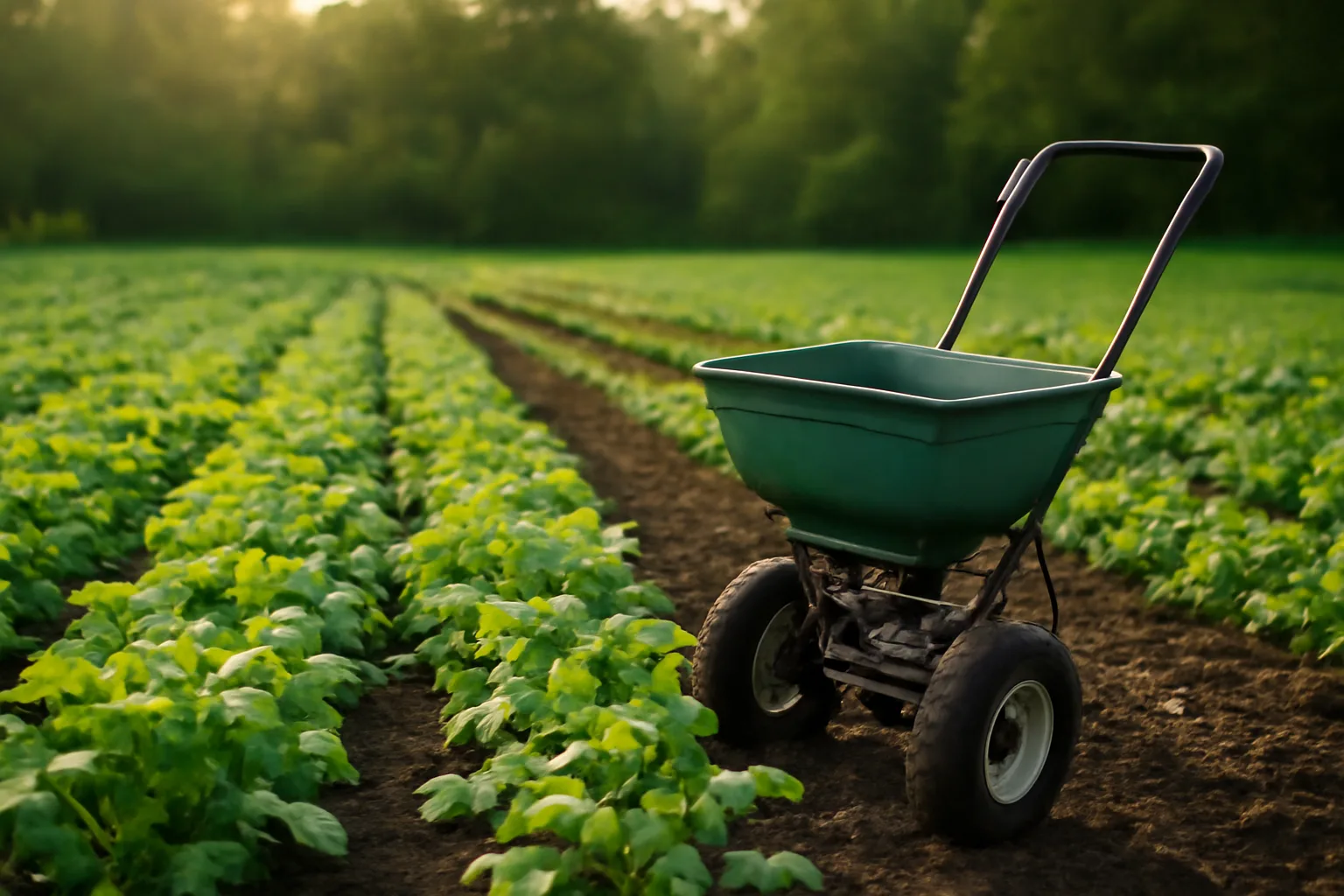
Brassicas (turnips, radishes, rape, kale) are heavy nitrogen feeders. Most university guides call for 80 to 120 lbs of actual nitrogen per acre, split between planting and a mid-season boost, plus phosphorus and potassium set by a soil test. A balanced starter like 19-19-19 or 13-13-13 at planting, followed by 46-0-0 urea topdress 4 to 6 weeks later, is the standard approach.
What fertilizer do brassica food plots actually need?
Brassicas, meaning turnips, radishes, rape, and kale, need more nitrogen than almost anything else you'd plant in a deer plot. That's because they're grown for leaf and bulb mass, not seed, and nitrogen drives that green growth. Clemson Cooperative Extension's forage brassica guidance recommends a nitrogen program split across the season, with a base application at planting and a follow-up as plants establish, generally landing in the 100 to 120 lbs actual N per acre range for maximum tonnage in deer plot settings [1]. Phosphorus and potassium matter too, but the amount depends entirely on what's already in your soil. A soil test is the only honest way to know that. If you don't have one, a reasonable blind guess for average cropland is 40 to 60 lbs each of P2O5 and K2O per acre, but that's a guess, not a recommendation. A $10 to $20 soil test removes the guesswork. The simplest real-world approach a lot of plotters use: apply a balanced starter fertilizer like 13-13-13 or 19-19-19 at 300 to 400 lbs per acre at planting, then come back 4 to 6 weeks later with 100 to 150 lbs per acre of urea (46-0-0) as a topdress once plants are established. That second nitrogen shot is what pushes bulb size and leaf tonnage right before the first frosts sweeten the plant and pull deer in.
How do I read a soil test for a brassica plot?
A soil test report gives you pH, and levels of phosphorus, potassium, calcium, magnesium, and sometimes organic matter, usually reported in pounds per acre or parts per million. Most land-grant labs also print a specific recommendation line for the crop you tell them you're planting, so if you list "brassica" or "forage turnip" as the crop, the report itself will spit out N-P-K numbers already tailored to your dirt. Brassicas do best in a pH range of 6.0 to 7.5, and most extension guides list 6.5 as the sweet spot [1]. If your pH is under 6.0, lime is doing more for you than any bag of fertilizer will. Lime takes months to fully react in the soil. If your test says you need it, get it down as early in the year as you can. Ideally that means the fall or spring before planting, not the week you're trying to drill seed. Your soil test lab is the real authority here. Every state's extension lab calibrates its recommendations to local soil chemistry, and a plan built off a national average will never be as accurate as a report pulled from your own dirt. Treat any generic fertilizer rate, including the ones in this article, as a starting point to compare against your actual test, not a replacement for it.
When should I fertilize a brassica food plot?
Apply your base fertilizer (the P, K, and roughly a third to half of your total nitrogen) at planting, worked into the seedbed or broadcast just before a rain. Brassica seed is tiny and needs good seed-to-soil contact, so a lot of growers use a cultipacker or roller after broadcasting rather than deep tillage. The nitrogen topdress comes later, typically 4 to 6 weeks after emergence, once plants have a few true leaves and are actively growing. Splitting nitrogen this way avoids burning tiny seedlings with a heavy dose up front and puts the bulk of the nutrient where it counts, right as the plant is bulking up bulbs and leaves in September and October. Timing the whole planting window matters as much as the fertilizer schedule. Brassicas are frost-tolerant and actually get sweeter after a hard freeze, since the plant converts starches to sugars as a natural antifreeze response. That's why brassica plots are planted mid-summer to late summer in most whitetail range, not spring.
When to plant food plots for deer?
Timing depends entirely on species and your zone, not one calendar date. Cool-season plots like brassicas, clover, and cereal grains go in from late July through September across most of the whitetail's range, timed so the plant has 60 to 90 days of growth before killing frost. Warm-season plots, think soybeans, cowpeas, or sorghum, go in April through June after soil warms above 55 to 60 degrees F. The general rule extension agronomists use for brassicas specifically is to count backward 80 to 100 days from your area's average first hard frost date. NOAA's climate normals data can give you a real, station-specific frost date for your area rather than a national guess [2]. In the Upper Midwest that often lands in late July, while in the Deep South you can push into early September. A lot of new planters try to do everything on one weekend in spring. That works for warm-season annuals but wastes the whole brassica and clover window. Building a real planting calendar around your zone, not a single date, is worth the extra planning time. For help matching species to your specific window, a Custom Food Plot Plan from PlotSeason runs species and fertility recommendations against your zip code and soil test for a one-time $99 fee.
When to plant turnips for deer?
Plant turnips 80 to 100 days before your area's first killing frost, which for most of the whitetail's range lands somewhere between late July and early September [2]. Turnips need that lead time to bulk up bulbs before cold weather hits, and they get more attractive to deer after a hard frost converts starches to sugar in the leaves and bulbs. Seeding rate for pure turnip stands runs 4 to 6 lbs per acre, planted a quarter inch deep or less since the seed is so small. Most successful plots use a cultipacker or roller before and after broadcasting to firm the seedbed. Turnips are almost always planted in a blend with radish or rape rather than alone, since a mixed brassica stand spreads out the browse pressure and gives deer both leaf and bulb options through fall and winter.
When to plant oats for deer?
Oats go in during the same late-summer window as brassicas, roughly 6 to 8 weeks before your first fall frost, so most of the whitetail range plants oats from late August through mid-September. Oats germinate fast, often in 5 to 7 days, and put on quick green growth that deer hit hard in early fall before brassicas and clover mature. Oats are also a common spring planting in the northern tier as a nurse crop for clover, planted March through May, but for pure fall deer attraction the late-summer window is standard. A seeding rate of 2 to 3 bushels (roughly 64 to 96 lbs) per acre is typical for a solo oat plot, and oats blend well with brassicas or winter peas for a mixed fall plot that offers both fast early growth and season-long tonnage.
What is a food plot, exactly?
A food plot is a planted patch of forage, usually a half acre to several acres, grown specifically to attract and feed deer or other wildlife on hunting land. It's different from a farm field in purpose, not necessarily in the plants used, since a lot of plot seed (soybeans, clover, brassicas, wheat) is the same stuff row-crop farmers grow, just planted at a smaller scale and often in an odd-shaped clearing rather than a square field. Food plots serve two jobs on most properties: they add nutrition during stress periods (late summer heat, or winter cold in northern states) and they concentrate deer activity somewhere a hunter can watch or hunt. State wildlife agencies generally regulate food plots differently than bait piles or feeders, since a planted, rooted food source is treated as normal agriculture rather than an artificial feeding operation. Rules vary a lot by state, though. Michigan's Natural Resources and Environmental Protection Act defines baiting as placing or distributing food to attract wild animals for the purpose of taking them, and treats it separately from crops planted and left standing in a field as normal agricultural practice [3]. Check your own state wildlife agency's current regulations before hunting over or near a plot, especially around any baiting definition that might apply to supplemental feed near your plot.
Do deer eat sorghum?
Yes, deer eat sorghum, both the grain and the young green forage, though it's usually a secondary or blend component rather than a primary attractant plot on its own. Grain sorghum is more commonly planted as a warm-season crop for its drought tolerance and as a food source that holds up into winter once it dries down on the stalk. Sorghum is more often grown for its cover value in mixed plots, screening deer movement while also offering late-season grain, than as a standalone attraction crop the way brassicas or clover are.
Do deer eat clover, and do deer like clover?
Yes, deer eat clover readily, and it's one of the most consistently preferred food plot forages across whitetail range. Clover (white clover, red clover, and various perennial blends) offers 20 to 30 percent crude protein in vegetative growth stages, which rivals or beats most other plot forages, and it regrows after grazing, unlike an annual that gets mowed down once [4]. Deer preference studies and long-running plot programs consistently rank clover among the top choices, largely because it's available spring through fall in a perennial stand, giving deer a reliable food source across multiple seasons rather than one narrow window. That said, preference shifts seasonally. Deer often hit clover hard in spring and early summer when protein demand is highest for antler growth and lactation, then shift toward acorns, browse, and brassicas as fall progresses. A property with both clover and a fall brassica or cereal grain plot covers more of the calendar than either alone.
What are deer's favorite foods overall?
Deer are opportunistic browsers, and their top preferences shift by season and region, but native and agricultural research consistently points to a short list: acorns (especially white oak group), soybeans, clover, and browse from preferred woody species like greenbrier, honeysuckle, and blackberry [5]. Acorns in particular are a fall staple because of their high fat content, which deer need heading into winter. Among planted food plot species, soybeans and clover consistently show up at the top of preference trials for palatability and use, with brassicas and cereal grains close behind, especially in the cool season when other options are dying back. There's no single universal "favorite," though, since preference depends on what's locally available and what stage of the growing season it is. A deer in a hardwood-heavy property with a good acorn year may barely touch a plot in October, then hammer it hard in January once the acorns are gone.
Do deer like honey, or anything sweet?
There's no real evidence deer seek out honey specifically, and it's not something wildlife agencies or extension programs list as deer forage or attractant. Deer aren't pollinators or honey raiders the way bears are, and their diet is built around browse, forbs, mast, and agricultural crops rather than sugary substances. What deer do respond to is sweetness in their existing forage, which is exactly why brassicas get more attractive after a hard frost. The cold triggers the plant to convert starch reserves into sugars as a natural freeze-protection response, and that shift in sugar content is well documented in cool-season forage physiology, not a myth [1]. So the connection between deer and "sweet" food is real. It's just happening inside a turnip leaf, not a honey jar.
Fertilizer rate quick reference for common brassica plots
| Balanced starter (13-13-13 or 19-19-19) | 300 to 400 lbs/acre | At planting | |
|---|---|---|---|
| Urea (46-0-0) topdress | 100 to 150 lbs/acre | 4 to 6 weeks after emergence | |
| Total nitrogen target | 100 to 120 lbs actual N/acre | Split, planting + topdress | |
| Lime (if pH under 6.0) | Per soil test, often 1 to 2 tons/acre | Fall or spring before planting | These numbers come from Clemson Cooperative Extension's forage brassica guidance and general land-grant fertility recommendations [1][4]. Your own soil test may call for meaningfully more or less phosphorus and potassium depending on what your specific field already has banked up. If you want a fertility and species plan matched to your zip code and soil report rather than a national average, PlotSeason's Custom Food Plot Plan builds that out for a one-time $99, though it's general planning guidance, not a substitute for your soil lab's site-specific recommendation. |
Here's a simple comparison of typical rates pulled from extension guidance, useful as a planning starting point before your soil test numbers come back. | Input | Typical rate | Timing |
What else should I plant with brassicas for a better plot?
Pure brassica stands work, but blends spread out risk and extend the plot's usefulness. Oats or winter wheat mixed with turnips and radish gives deer fast, tender green growth within a couple weeks while the brassica bulbs are still sizing up underground. Clover as a perennial base with an annual brassica strip nearby covers both spring and fall demand on the same property. If you're building out a full-season strategy rather than one plot, it's worth looking at how food plot seed blends are put together, and how species selection changes across a deer food plot system rather than a single field. A one-species plot is easy to plant but leaves gaps in the calendar that a mixed strategy fills.
Frequently asked questions
Do deer eat sorghum?
Yes, deer eat both grain and green sorghum forage, but it's usually a secondary component in mixed plots rather than a primary deer attractant. It's more often planted for its drought tolerance and cover value than as a standalone attraction crop the way brassicas or clover are used.
Do deer eat clover?
Yes, clover is one of the most consistently preferred food plot forages for whitetail deer, offering 20 to 30 percent crude protein in vegetative growth. It's especially attractive in spring and early summer when protein demand peaks for antler growth and lactation.
When should I plant food plots for deer?
Cool-season plots (brassicas, clover, cereal grains) go in late July through September, timed 60 to 100 days before your area's first frost. Warm-season plots (soybeans, cowpeas, sorghum) go in April through June once soil warms above 55 to 60 degrees F. Check local frost dates for your exact window.
Do deer like clover more than other plot forages?
Clover consistently ranks among the top-preferred food plot forages in extension and plot research, largely because it's a perennial available across multiple seasons rather than one narrow window. Preference still shifts seasonally, with deer favoring clover heavily in spring and shifting toward mast and brassicas in fall.
When should I plant oats for deer?
Plant oats 6 to 8 weeks before your first fall frost, typically late August through mid-September across most whitetail range. Oats germinate in 5 to 7 days and provide fast early-fall growth, often blended with brassicas or winter peas for a mixed plot.
When should I plant turnips for deer?
Plant turnips 80 to 100 days before your area's first killing frost, usually late July through early September depending on region. Turnips need that lead time to size up bulbs before cold weather, and they sweeten after a hard frost converts starches to sugar.
What is a food plot?
A food plot is a planted area of forage, from a half acre to several acres, grown specifically to feed and attract deer or other wildlife on hunting land. It uses many of the same crops as row-farming (soybeans, clover, brassicas) but is scaled and placed for wildlife nutrition and hunting access rather than commercial harvest.
What are deer's favorite foods?
Acorns (especially white oak group), soybeans, and clover consistently rank at the top across research and plot programs, with brassicas and cereal grains close behind in cool season. Preference shifts by region and season, so there's no single universal favorite food for deer.
Do deer like honey?
There's no real evidence deer seek out honey; it isn't listed as deer forage by any wildlife agency or extension program. Deer do respond strongly to sweetness that develops naturally in cold-stressed brassica leaves and bulbs, which is a documented starch-to-sugar conversion, not a myth about honey.
How much nitrogen do brassica food plots need?
Most university extension guidance recommends 100 to 120 lbs of actual nitrogen per acre for brassica food plots, split between a starter application at planting and a topdress of urea (46-0-0) 4 to 6 weeks after emergence. Exact needs depend on your soil test's organic matter and existing nitrogen levels.
What pH do brassicas need for a food plot?
Brassicas grow best in soil pH between 6.0 and 7.5, with most extension guides citing 6.5 as ideal. If a soil test shows pH under 6.0, apply lime as early as possible before planting, since lime takes months to fully react and adjust soil chemistry.
Can I use only urea for a brassica plot, skipping the starter blend?
You can, but you'd be skipping phosphorus and potassium unless your soil test shows those are already high. Urea (46-0-0) supplies nitrogen only, so most growers pair a balanced starter like 13-13-13 at planting with a urea topdress later rather than relying on urea alone.
Sources
- Clemson Cooperative Extension, Forage Brassicas: Brassica food plots need strong nitrogen inputs and grow best at pH 6.0-7.5, sweetening after frost
- University of Tennessee Extension, Establishing and Managing Wildlife Food Plots (PB1769): Soil test-based P and K recommendations and clover crude protein content in food plot forages
- NOAA National Centers for Environmental Information, U.S. Climate Normals: Regional first frost date data used to time brassica and turnip planting windows 80-100 days before frost
- USDA NRCS Plant Guide, Sorghum bicolor: Growth characteristics and use of sorghum as a forage and cover crop
- USDA Forest Service Fire Effects Information System, Odocoileus virginianus: Acorns, especially white oak group, and browse species like greenbrier and honeysuckle rank among top whitetail deer foods