Last updated 2026-07-24
TL;DR
The best fall and winter deer plots combine a cereal grain (oats or winter wheat), a brassica (turnips or radish), and a perennial clover. Plant 60-90 days before your first killing frost, usually late August through September in the North and September through October in the South. Deer hit oats and clover first, then switch to brassicas after frost sweetens the leaves and bulbs.
what is a food plot?
A food plot is a planted patch of forage, usually somewhere between a quarter acre and a few acres, put in specifically to feed and hold deer or other wildlife on a property. It is not a lawn and it is not a farm field, though it borrows techniques from both. Most hunters plant them in old logging roads, cleared timber openings, retired ag ground, or dedicated food plot fields carved out of the woods. The point of a food plot is twofold. First, it gives deer a reliable, high-quality food source, which can improve body condition and antler growth over time, though no plot guarantees you will see or kill a specific deer. Second, it concentrates deer activity in a spot you control, which helps with scouting, stand placement, and trail camera coverage. State wildlife agencies generally treat food plots differently from bait piles or feeders. Baiting rules (piling corn, feed, or minerals to attract deer) vary a lot state to state and sometimes county to county, so check your state wildlife agency's regulations before you plant near a stand or assume a plot is legal to hunt over in every situation [1]. A planted, standing crop is legal to hunt over in the vast majority of states even where baiting is banned, but always confirm with your state's regulations page, not a forum post. If you want a structured starting point rather than guessing at species and rates, a food plot whitetail plan built around your soil test and region removes a lot of the trial and error.
when to plant food plots for deer?
| 3-4 | N. Minnesota, N. Wisconsin, N. Maine | Late July to mid-August | |
|---|---|---|---|
| 5 | S. Wisconsin, Iowa, Pennsylvania | Mid-August to mid-September | |
| 6 | Kentucky, Virginia, Missouri | Late August to late September | |
| 7 | Tennessee, N. Georgia, Arkansas | Mid-September to mid-October | |
| 8 | S. Georgia, Louisiana, Texas coastal | Late September to early November | The deer food plots guide breaks this down further by species if you're mixing a multi-seed blend. |
Timing depends more on your first frost date than on the calendar month. As a rule of thumb, plant fall and winter plots 60 to 90 days before your average first killing frost so the crop has time to establish before growth slows. In practical terms that means late July through August in the far North (Zone 3-4), late August into mid-September in the Upper Midwest and Northeast (Zone 5), and mid-September into October across the South (Zone 7-8). Cooler-season annuals like oats, wheat, and brassicas actually prefer to germinate and grow in cooling soil, so waiting until early fall is not a compromise, it is the correct window. Soil temperature matters more than air temperature for germination. Brassicas and cereal grains germinate well once soil temps drop into the 50s and 60s Fahrenheit, which is part of why extension guides tie planting dates to frost windows rather than fixed calendar dates [2]. Planting too early in hot, dry August soil can mean poor germination and weed competition; planting too late means the plot never reaches a useful growth stage before killing frost or snow. Here is a general fall planting window by USDA hardiness zone. Adjust a week or two either direction based on your local extension office's frost date data. | Zone | Region example | Fall plot planting window |
when to plant oats for deer?
Plant oats for fall deer plots 60 to 75 days before your first killing frost, which lines up with the same late-summer to early-fall window as other cereal grains. Oats germinate fast, often in 5 to 10 days under good moisture, and put on a lot of leafy growth quickly, which is exactly why deer hammer them hard in September and October. Oats are not winter-hardy in most of the whitetail range. A hard freeze in the mid-20s Fahrenheit or lower will usually kill oats outright, unlike winter wheat, cereal rye, or triticale, which survive freezing and regrow in spring. That makes oats a great early-fall attraction plot but a poor choice if your goal is late-winter forage in northern states. Seeding rate for oats broadcast alone runs 2 to 3 bushels per acre (roughly 64 to 96 lbs), per land-grant agronomy guides for cereal grain forage plantings [3]. Most food plot blends cut that rate when oats are mixed with brassicas or clover, since the goal is a mixed stand, not a monoculture. Drilling into a firm seedbed at a quarter to half inch depth gets more consistent stands than broadcasting alone, though broadcasting followed by a light cultipacking pass works fine on smaller plots without drill access.
when to plant turnips for deer?
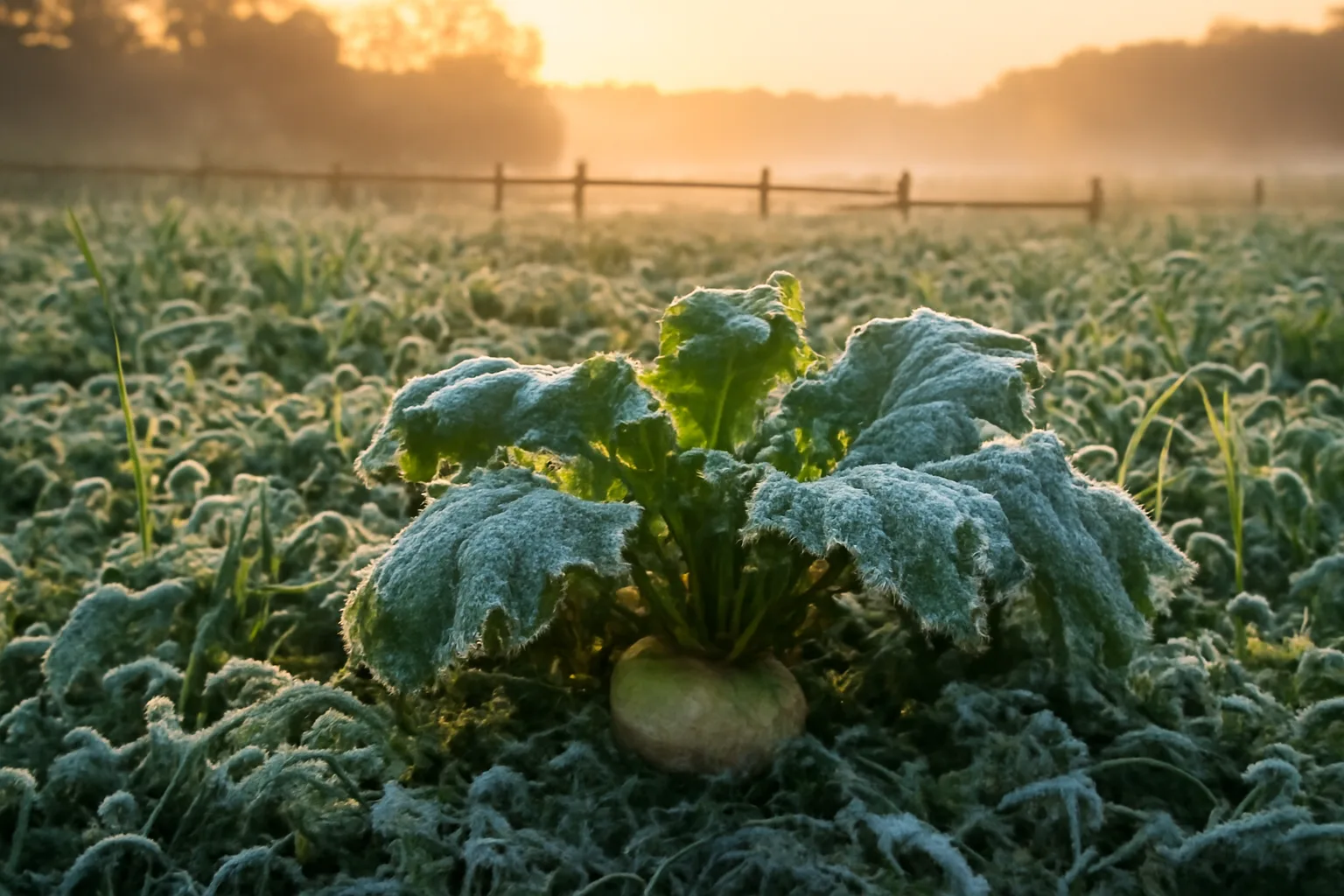
Plant turnips for deer 80 to 90 days before your first expected killing frost, which is a bit earlier than oats because turnips need more time to bulb up before cold weather sets in. In most of the whitetail range that means planting in August. Turnips are a brassica, and brassicas run on a two-stage feeding pattern that trips up a lot of new food plotters. Deer often ignore the leafy tops for the first several weeks after germination, then suddenly start hammering them once a hard frost hits. That is not deer being picky for no reason: cold temperatures trigger starches in the plant to convert to sugars, which makes the leaves and bulbs noticeably sweeter and more palatable. This is well documented in extension brassica forage research on freeze-related sugar conversion in brassica species. Seeding rate for turnips alone is light, around 4 to 6 lbs per acre broadcast, since the seed is tiny (over 100,000 seeds per pound is typical). Mixing turnips with a cereal grain like oats or wheat gives you fast early cover plus the late-season bulb and leaf forage once frost hits. The bulbs themselves matter too. In areas with deep snow, deer will paw down to reach turnip and radish bulbs into December and January, which is part of why brassica blends are the backbone of most late-winter plot strategies in the Midwest and Northeast.
do deer eat sorghum?
Yes, deer eat sorghum, particularly the grain heads once they mature and dry down in fall, and they will also browse young sorghum foliage earlier in the season. Grain sorghum is more commonly planted as a standing grain crop for winter cover and food in northern climates where corn is too input-heavy or expensive for a small plot, since sorghum tolerates drought and poorer soils better than corn. That said, sorghum is not typically a top-tier fall food plot choice compared to brassicas, cereal grains, or clover for whitetail-specific plots. It is more of a supplemental grain or a screening/cover crop that also feeds deer, turkeys, and other wildlife once it matures. If your goal is standing winter grain in a northern climate, sorghum and grain sorghum-sudangrass hybrids show up in USDA and extension wildlife planting guides as viable options, especially where corn is impractical [4]. One caution: sorghum and sudangrass can produce prussic acid (cyanogenic compounds) in young, frost-damaged, or drought-stressed regrowth, which is toxic to ruminants including deer and livestock. Extension guidance recommends avoiding grazing or browsing on stressed sorghum regrowth shortly after a frost event until the plant has dried down or several days have passed [5]. It is a real risk on wilted, immature growth, not on fully mature dried grain heads.
do deer eat clover, and do deer like clover?
Yes, deer eat clover readily, and most whitetail research and food plot literature rank it among the most consistently preferred forages available to plant. Clover is a perennial legume, meaning a single planting can produce forage for 3 to 5 years with proper maintenance, mowing, and fertility upkeep, rather than needing replanting every season like annuals. White clover (including Ladino types) and red clover are the two most commonly planted species for deer plots. Clover offers crude protein commonly in the 20 to 30% range depending on growth stage and management, which is part of why it supports lactation in does during spring and summer and helps bucks going into or coming out of the rut [6]. That protein level is comparable to or higher than most other food plot forages, including brassicas and cereal grains. Clover's weak spot is late fall and winter. Growth slows dramatically once temperatures drop consistently below the 40s, and clover goes dormant under snow cover. That is exactly why most serious food plotters pair a clover perennial plot with an annual brassica or cereal grain plot rather than relying on clover alone for a full fall-through-winter program. Clover feeds deer April through October; brassicas and grains pick up the late fall and winter slack. If you're deciding between a pure clover plot, a brassica blend, or a mixed perennial/annual rotation across your property, a deer food plot seed selection guide can help match species to your specific acreage and goals.
what are deer's favorite foods?
There is no single universal favorite; deer preference shifts by season, region, and what is locally available, but a few foods show up again and again as high-preference across studies and field observation. Acorns, particularly white oak acorns, are frequently cited as one of the most preferred natural fall foods because of their lower tannin content and higher palatability compared to red oak acorns [7]. Soybeans and clover rank high during the growing season for their protein content. In fall, standing corn, brassicas after a frost, and cereal grains draw heavy use. Agricultural crops in general tend to outcompete native browse in preference studies simply because of higher digestibility and lower fiber content, which is a big part of why food plots work as an attraction and nutrition tool in the first place. Deer are also opportunistic and adjust to whatever is most abundant, easy to reach, and nutritionally dense at a given moment, so "favorite food" is really a moving target tied to season and local food availability rather than a fixed list. Hunters chasing a specific answer for their property should think regionally: mast crops in big woods country, ag fields in farm country, and food plots as a supplement or replacement where neither of those is reliably available nearby.
do deer like honey?
Deer do not eat honey in any meaningful sense as part of natural foraging behavior, and it has no place in food plot planning. Deer are herbivores built to digest plant fiber through a four-chambered rumen system; honey is a concentrated sugar produced by bees, not a forage deer seek out or are physiologically adapted to process in any quantity. This question usually comes up because of "deer candy" style attractant products that use sugar, molasses, or apple/persimmon scent additives marketed as irresistible deer draws. Some of these products can draw curious deer in for a sniff, similar to how deer will occasionally nose around a spilled soda can, but there is no research base showing honey or sugar-based attractants outperform a standing food plot or mineral site for consistent deer use. If your state restricts baiting or feeding (many do, with specific distance and visibility rules from stands), sugar and scent attractants may fall under those same regulations, so check your state wildlife agency's baiting definitions before using any attractant product [1].
how do I choose between oats, wheat, brassicas, and clover for a fall plot?
| Oats | 60-75 days before frost | Low, killed by hard freeze | Sept-Nov | Fast growth, best early-season attraction | |
|---|---|---|---|---|---|
| Winter wheat | 45-75 days before frost | High, survives winter | Oct-March | Regrows in spring, good grain option too | |
| Turnips/brassicas | 80-90 days before frost | High (bulbs, some leaf dieback) | Nov-Feb | Needs frost to sweeten, slow early use | |
| Clover (perennial) | Spring or 60-90 days before frost | Dormant in cold, not killed | April-Oct | Multi-year stand, weak in deep winter | A common, well-tested combination is a cereal grain plus a brassica plus a small clover section: the grain and brassica leaf feed deer through fall, the brassica bulbs and any surviving grain carry into winter, and the clover comes back strong the following spring without replanting. Soil test results should guide your actual species mix and fertility program, since brassicas in particular are heavy nitrogen feeders and underperform badly on low-fertility ground without amendment . Your soil test lab's recommendations are the final word on lime and fertilizer rates for your specific field; a food plot guide can tell you what species tend to want, but only your test knows your dirt. A lot of hunters get overwhelmed trying to build this mix themselves, especially with limited plot acreage. That is really the gap a $99 one-time Custom Plot Plan Builder fills. It is general regional guidance built around your soil test numbers, zone, and plot size, not site-specific agronomy, but it does the species-and-rate math so you are not guessing at a blend ratio. |
Most successful fall and winter plot programs are not single-species, they are blends or side-by-side plantings that stagger palatability across the season. Here is how the four most common fall/winter options stack up. | Species | Best planting window | Frost tolerance | Peak deer use | Notes |
how much seed and fertilizer do fall plots actually need?
Seeding rates vary widely by species and whether you are broadcasting or drilling, and getting this wrong (too heavy or too light) is one of the most common plot mistakes. Oats run 2-3 bushels per acre alone; turnips run 4-6 lbs per acre alone; clover runs roughly 6-10 lbs per acre for white clover, higher for red clover [3]. Blends cut these rates since multiple species share the stand. Fertility is where soil test results earn their keep. Brassicas commonly want 40 to 60 lbs of actual nitrogen per acre plus phosphorus and potassium per soil test recommendation, and most extension guides note brassica yield and tonnage drop sharply on unfertilized or acidic soil . Clover, being a nitrogen-fixing legume, needs little to no nitrogen once established but is very sensitive to soil pH, with most guides recommending a target pH of 6.0 to 6.5 for good nodulation and growth. Lime takes months to fully react in soil, so if your test calls for lime, get it down as early in the season as you can, ideally the spring or even a full season before planting, not the week before you drill seed. A soil test costs $15-40 depending on state extension lab pricing and pays for itself many times over versus guessing at fertilizer rates on a several-hundred-dollar seed and lime bill.
what equipment do I actually need to plant a fall plot?
For a small plot (under an acre), a hand broadcaster ($20-40), a hand or tow-behind sprayer for herbicide burn-down, and a way to lightly work or cultipack the seedbed will get you a workable stand. For anything from one to several acres, an ATV or UTV with a small disc, drag harrow, and broadcast spreader speeds things up considerably and is the setup most food plot equipment guides recommend as the entry point for serious plotters. A no-till drill is the single biggest upgrade for consistency, since it places seed at the correct depth and in contact with soil rather than leaving it exposed on top where birds, drying wind, and uneven rainfall reduce germination. Drills cost more upfront (rental is common, often $30-75 a day locally) but noticeably improve stand consistency, especially on smaller-seeded species like clover and brassicas where planting depth is unforgiving. Depth matters a lot: clover and brassica seed wants roughly 1/4 inch of coverage; oats and wheat want 1 to 1.5 inches. Planting brassica or clover seed too deep is one of the most common reasons for a thin or failed stand.
Frequently asked questions
Do deer eat sorghum?
Yes. Deer browse young sorghum foliage and eat the mature grain heads in fall and winter. It is more common as a standing winter grain crop than a primary food plot species, and frost-stressed young regrowth can carry prussic acid risk, so let it dry down before relying on it as forage.
Do deer eat clover?
Yes, and clover is one of the most consistently preferred food plot forages available, often running 20-30% crude protein. It supports deer April through October but goes largely dormant in cold winter months, so it is usually paired with a fall annual like brassicas or cereal grain for year-round coverage.
When should I plant deer food plots?
Plant fall/winter plots 60-90 days before your area's first killing frost. That's roughly late July-August in Zone 3-4, late August-September in Zone 5-6, and September-October in Zone 7-8. Spring plots (clover, soybeans) go in after your last frost date instead.
Do deer like clover better than brassicas?
Deer usually hit clover immediately since it's palatable at any growth stage, while brassicas often get ignored until after a hard frost sweetens the leaves and bulbs. Neither is universally 'better'; they cover different seasons, which is why most plot plans use both.
When should I plant oats for deer?
Plant oats 60-75 days before your first killing frost, typically August in most of the Midwest and Northeast. Oats germinate fast (5-10 days) but are not winter-hardy and will die at hard freeze, making them an early-to-mid fall attraction crop rather than a late-winter one.
When is the best time to plant food plots for deer overall?
There's no single date; it's tied to your local first frost. Cool-season annuals (oats, wheat, brassicas, clover) go in 60-90 days before that frost date. Spring/summer plots (soybeans, cowpeas, warm-season clover establishment) go in after your last spring frost.
When should I plant turnips for deer?
Plant turnips 80-90 days before your expected first killing frost, generally in August across most whitetail range. This gives the bulb time to size up before cold weather triggers the starch-to-sugar conversion that makes the tops and bulbs attractive to deer.
What exactly is a food plot?
A food plot is a planted area of forage crops, from a quarter acre to several acres, established specifically to feed and hold deer or other wildlife on a property. It differs from bait piles and feeders, which most states regulate separately and often more strictly.
What are deer's favorite foods overall?
It varies by season and region, but white oak acorns, soybeans, clover, and standing corn consistently rank as high-preference foods in research and field observation. In fall, frosted brassicas and cereal grains also draw heavy use. There's no single fixed 'favorite' across all conditions.
Do deer like honey?
No, not meaningfully. Deer are herbivores that don't seek out honey as forage. Sugar or molasses-based 'deer candy' attractants sometimes draw curious sniffing, but there's no solid research showing they outperform a standing food plot, and some states regulate sugar-based attractants under baiting rules.
Can I plant a fall food plot without a soil test?
You can, but you're guessing at lime and fertilizer rates, which are the two biggest levers on plot tonnage and quality. A soil test typically costs $15-40 through a state extension lab and prevents wasting money on the wrong fertilizer blend for your pH and nutrient levels.
Will deer eat food plots over standing corn or acorns nearby?
Not necessarily; deer often prefer whatever is most abundant, digestible, and easy to reach at that moment. A well-timed brassica or clover plot can pull deer away from mediocre browse, but it won't reliably outcompete a heavy acorn drop or a neighboring cornfield in a given week.
How big should a fall deer food plot be?
There's no fixed rule; quarter-acre to two-acre plots work for most hunting properties, with size driven by available cleared ground, equipment, and seed/fertilizer budget rather than a magic number. Multiple small plots scattered across a property often outperform one large plot for hunting access and pressure management.
Sources
- Congressional Research Service / state wildlife agency baiting regulation summaries: Baiting and feeding regulations for deer vary significantly by state and should be checked before hunting over a plot or attractant
- University of Tennessee Extension, Wildlife Food Plot Establishment: Cool-season annuals like brassicas and cereal grains germinate best as soil temperatures cool in late summer/early fall
- USDA NRCS, Plant Fact Sheet: Grain Sorghum: Grain sorghum is used as a wildlife food and cover planting, especially in drought-prone or marginal soils
- Oklahoma State University Extension, Prussic Acid Poisoning: Frost-damaged or immature sorghum/sudangrass regrowth can develop toxic prussic acid levels dangerous to grazing ruminants
- USDA NRCS, Plant Guide: White Clover: White clover is a high-protein perennial legume forage widely used in wildlife plantings
- USDA Forest Service, Wildlife Habitat and Mast Production research summaries: White oak acorns have lower tannin content than red oak acorns, making them more palatable to deer
- University of Kentucky Cooperative Extension, Brassicas for Deer Food Plots: Brassica forage yield and quality depend heavily on adequate nitrogen fertility and soil pH correction from a soil test