Last updated 2026-07-26
TL;DR
A food plot is a planted patch of forage (clover, brassicas, cereal grains, or blends) meant to feed deer and hold them near your stand. Timing depends on species and your frost dates: spring plots (clover, soybeans) go in after last frost, fall plots (brassicas, cereal grains) go in 60-90 days before first frost. Soil test first; that drives everything else.
What is a food plot, exactly?
A food plot is a small, planted field on hunting land, usually somewhere between a quarter-acre and five acres, seeded with forage that deer prefer over whatever's growing wild nearby. It's not the same as a wildlife opening left to weeds, and it's not a crop field farmed for profit. The point is nutrition and attraction: you're growing something deer want to eat, in a spot where you want them to be. Most plots fall into two broad categories. Perennial plots (clover, alfalfa, chicory) get planted once and can produce forage for three to five years with maintenance. Annual plots (brassicas, cereal grains, soybeans, sorghum) get replanted every year, usually timed to peak right when your hunting season opens. A lot of serious plotters run both: perennial clover for spring and summer protein, annual brassicas or grains for a fall sugar-and-carb push right before the rut. The USDA Natural Resources Conservation Service publishes wildlife habitat practice standards, including Conservation Practice Standard 645 (Upland Wildlife Habitat Management), that treat plantings for wildlife food and cover as a habitat practice with its own design criteria, separate from row-crop agriculture managed for yield [1]. That distinction matters because it changes how you think about inputs. You're not maximizing bushels. You're maximizing tonnage of preferred forage available during the specific weeks you'll be in a tree stand. If you want a plan built around your specific property and hunting dates rather than a generic calendar, that's the whole reason a Custom Food Plot Plan exists: soil test in hand, zone and frost dates entered, you get species and timing specific to your dirt instead of a national average.
When to plant food plots for deer, by region
| Deep South (TX Gulf Coast, FL, LA) | Late Nov to Dec | Sept 1 to Oct 15 | Feb to March | |
|---|---|---|---|---|
| Mid-South (TN, AR, NC) | Mid to late Oct | Aug 15 to Sept 15 | March to April | |
| Midwest/Upper South (IA, IL, KY, VA) | Early to mid Oct | Aug 1 to Sept 1 | April to May | |
| Northern tier (MN, WI, MI, NY, ME) | Mid Sept to early Oct | Late July to Aug 15 | May to early June | Those windows aren't guarantees, they're starting points. Your county extension office has actual frost-date records for your area, and it's worth a five-minute phone call before you buy seed. NOAA's National Weather Service regional climate pages publish station-level freeze data, and frost date can shift by two to three weeks across a single state depending on elevation and terrain. One more timing rule that trips people up: soil temperature matters more than the calendar date for germination. Clover and brassica seed sitting in cold, wet soil just rots. If you can, check soil temp with a simple probe thermometer before you plant rather than going strictly by date. |
Timing is the single most common way food plots fail. Plant brassicas too early in a hot climate and they bolt or get shaded out by weeds before fall. Plant clover too late in a northern zone and it never establishes a root system before winter kills it. The right window depends on your USDA Plant Hardiness Zone and your local frost dates, not a date on a calendar that some article picked for a different state. As a rule of thumb: spring/summer plots (clover, alfalfa, soybeans, chicory) go in after your last spring frost date, when soil temps are consistently above 50°F. Fall plots (brassicas, cereal grains, winter peas) go in 60 to 90 days before your average first fall frost, which gives brassicas time to bulb up and grains time to establish before growth slows. Here's a rough national spread, based on typical first-frost dates by region tracked by NOAA's climate normals [2]: | Region | Typical first fall frost | Fall plot planting window | Spring plot planting window |
When to plant clover for deer
Clover gets planted in either early spring or late summer/early fall, and both windows work, they just serve different goals. Spring plantings (as soon as soil is workable and frost risk has passed) let clover establish through a full growing season before winter. Late summer plantings (roughly 45 to 60 days before first frost) let clover root in cooler, wetter conditions with less weed competition, which many extension agronomists actually prefer for establishment success. Clover is a perennial, so you're planting it once and managing it for years, not replanting annually like brassicas. Ladino and red clover are the two most common food-plot varieties. Ladino (a white clover type) tolerates closer grazing and comes back well under heavy deer pressure; red clover grows more upright and produces more tonnage but doesn't recover from close browsing quite as fast, according to variety comparisons in university forage agronomy guides such as Oregon State University's clover species guide [3]. A soil pH between 6.0 and 6.5 is the general target most extension guides list for clover, and if your test comes back below 6.0, lime needs to go down weeks to months before planting since it takes time to react with the soil, not the day you seed [4]. Your soil test report is the actual authority here, not a blanket number from any article, including this one.
Do deer like clover, and do they actually eat it?
Yes, and it's not close. Clover is consistently ranked among the most preferred whitetail forages in browse studies, and it's a foundation species for most food-plot programs across the whitetail's range. It's high in protein, commonly cited in the 20 to 30 percent crude protein range for vegetative clover in university forage nutrient summaries, and it's palatable through most of the growing season [3]. The practical reason clover shows up in nearly every plotter's rotation isn't just that deer like it. It's that clover keeps producing new growth all spring and summer as deer graze it, unlike an annual that gets eaten down once and is gone. A well-maintained clover plot can carry deer nutrition from spring green-up through summer antler growth and fawn-rearing season, then again in early fall before your brassicas and grains take over the fall push. The tradeoff: clover needs mowing two to four times a season to keep it from getting shaded out by grass and weeds, and it needs periodic lime and fertilizer touch-ups based on soil test results. It's low-maintenance compared to replanting every year, not maintenance-free.
Do deer eat sorghum?
Yes, deer eat sorghum, both the grain heads and the plant itself as browse, but it's more of a fall/winter standing-crop and cover play than a primary attraction species compared to clover or brassicas. Grain sorghum (milo) produces seed heads that mature in fall and can stand through winter, giving deer (and turkey, and other wildlife) a carbohydrate source when other food is scarce. Sorghum's bigger value in a lot of food-plot programs is structure, more than nutrition. Standing sorghum rows provide screening cover and a wind block, and some plotters plant it specifically as a nurse crop or edge planting around a brassica or clover plot to break up sightlines for bedded deer. It's drought-tolerant, which makes it a reasonable option in the southern Plains and parts of the Midwest where late-summer moisture is unreliable. It's not a species you'd want to build your whole program around if attraction is the goal. Deer will eat it, but in practical field experience and extension wildlife food plot guidance, brassicas and cereal grains tend to pull more consistent fall use once a hard frost sweetens them up [5].
When to plant turnips (and other brassicas) for deer
Turnips and other brassicas (rape, radishes, kale, sugar beets) get planted in mid to late summer, roughly 90 days before your first expected fall frost, so the bulbs and leaves have time to mature right as hunting season opens. Planting too early in hot climates causes the plants to bolt or get overtaken by weeds before cool weather hits. Planting too late means the bulbs never size up. Brassicas need a hard frost or two to convert starches to sugars, which is exactly why deer often ignore a brassica plot in September and then hammer it in November. That's not a planting failure, that's the plant doing what it's supposed to do. If your plot looks untouched a month after planting, don't panic and don't replant. Wait for cold weather. Seeding rates matter more with brassicas than with a lot of other species because the seed is tiny and easy to overseed. Extension guidance on brassica forage crops, including Purdue University's forage brassica publications, generally lands around 4 to 6 pounds per acre broadcast for turnip-type blends, sometimes lower depending on the mix, and going heavier doesn't mean more forage, it just means smaller, weaker plants competing with each other [6]. Read the bag rate, not a rule of thumb from a different product. Brassicas also want reasonably fertile ground. A soil test showing adequate phosphorus and potassium, with nitrogen applied at planting and again as a topdress about a month in, is the standard university recommendation for good bulb and leaf development [6]. If your soil test comes back with low pH, get lime down early. Brassicas are sensitive to acidic soil and won't perform well below a pH of about 6.0.
When to plant oats for deer
Oats get planted in late summer to early fall for a fall/winter food-plot use, typically 60 to 90 days before first frost, similar timing to brassicas. Oats germinate fast, tolerate a range of soil conditions, and green up quickly, which makes them a popular nurse crop mixed with clover or brassicas to give deer something to eat while the slower-establishing species get going. Oats aren't a great option for spring planting in most whitetail range because they're a cool-season annual that bolts and dies out once summer heat arrives. Where oats really earn their keep is as a fast, cheap, high-tonnage fall attractant, especially in a blend with winter wheat, winter rye, or brassicas, so you get immediate green-up from the oats and season-long durability from the other species. One caveat worth knowing: oats generally winterkill once temperatures drop into the low teens (Fahrenheit) or below for extended stretches, while winter wheat and cereal rye survive much colder and will green back up in spring. Cereal rye is widely documented as the most winter-hardy small grain among common cover-crop and food-plot cereals, tolerating temperatures well below what oats can handle, per cover crop variety guidance from Midwest land-grant agronomy programs such as Michigan State University Extension [7]. If you're in a northern zone and want a plot that lasts into late winter or produces spring growth too, winter rye is usually the more durable choice.
What are deer's favorite foods, really?
There's no single universal answer because preference shifts by season, region, and what else is available on the landscape, but browse studies and food-plot trial data consistently put a short list at the top: clover, soybeans, and brassicas (particularly after frost) rank as the most consistently preferred planted forages across whitetail range, alongside native browse like honeysuckle, greenbrier, and various forbs depending on region [3] [5]. Acorns deserve a mention here too, because in years with a good mast crop, deer will often walk past a food plot to hit a white oak flat. Wildlife research on whitetail food habits, including long-standing work summarized by state wildlife agencies and university deer programs, documents a strong seasonal shift toward acorns and other hard mast in fall when it's available, which is one reason plots sometimes go quiet in years with a heavy acorn drop [5]. The honest answer for a hunter planning a plot: there isn't one silver-bullet species. A plot that offers something in spring (clover), something in late summer (soybeans, if deer density and acreage allow it to survive browsing pressure), and something post-frost in fall (brassicas, cereal grains) covers more of the calendar than betting everything on one plant.
Do deer like honey, and does it work as an attractant?
There's no research support for honey as a meaningful deer attractant, and it's not something that shows up in any university food-plot or attractant study. Deer are herbivores built around browsing plants, and honey isn't part of their natural diet or a documented preference in wildlife forage research. Some commercial deer attractant products use sweet scents, including things marketed with "honey" or sugar-based names, on the theory that deer are drawn to sweetness the way brassicas get sweeter after a frost converts starch to sugar. That's a real phenomenon in plants; it's not evidence that raw honey poured on the ground does anything useful, and there's no extension or wildlife agency guidance recommending it. More practically: pouring food substances, syrups, or feed on the ground to attract deer runs straight into baiting and feeding regulations in a lot of states, and those rules vary a lot. Some states define bait broadly enough to include scattered feed or minerals, while others allow feeding outside hunting season but ban it during. Check your state wildlife agency's current baiting and feeding regulations before using any attractant product, honey-based or otherwise, because a real food plot (planted, growing forage) is treated completely differently under the law than bait piles or supplemental feed in most states.
How do you actually plant a food plot, start to finish?
Every successful plot follows roughly the same sequence, and skipping steps is where most first-timers lose money on seed that never comes up. 1. Soil test first. This is not optional and it's not a marketing line, it's the actual foundation. A basic soil test through your county extension office or a private ag lab tells you pH, phosphorus, potassium, and organic matter, and it costs somewhere in the range of $10 to $20 in most states through university extension labs . Everything else, lime rate, fertilizer rate, species choice, gets built on that result. 2. Kill or clear existing vegetation. Herbicide (glyphosate is standard for a clean kill) two to three weeks before planting, or till it under, depending on your equipment and no-till preference. 3. Lime if your test says to. Lime needs time to react with soil, often two to six months for a meaningful pH shift, so applying it the same week as planting mostly wastes money for that season, according to soil fertility guidance from land-grant soil testing labs [4]. 4. Prep a seedbed. For small equipment or hand-planting, a light disc or drag pass and a firm, not fluffy, seedbed matters a lot, especially for tiny seeds like clover and brassicas that can't be planted too deep. 5. Plant at the right depth and rate. Read the bag. Clover and brassica seed often needs only a light covering, a quarter inch or less, while cereal grains and beans want closer to an inch to an inch and a half. 6. Fertilize per your soil test recommendation, not a guess. 7. Time it to your frost dates and species, per the tables above. If you want help translating a soil test into an actual species mix and planting date for your specific zone, that's the exact gap a Custom Food Plot Plan fills for $99 one time: you get a plan built around your dirt and your hunting dates instead of a generic national calendar.
What equipment do you actually need?
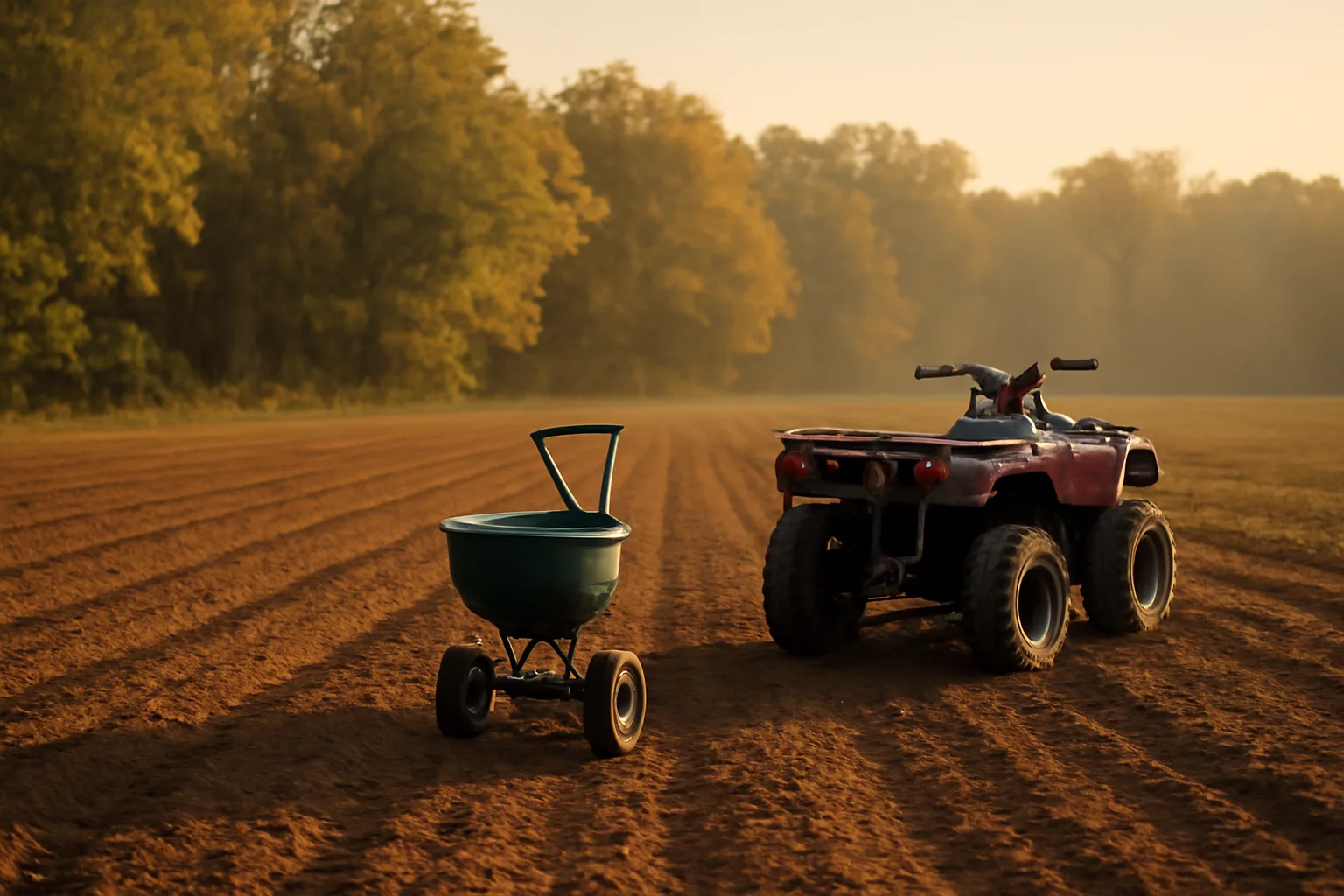
You can plant a small plot (a half acre or less) with hand tools: a broadcast spreader, a rake, and a lawn roller or ATV tire dragged behind a four-wheeler to firm the seedbed. It's slow and it works fine for clover and brassica food plots under an acre. For anything bigger, or for cereal grains and beans that want to be planted at depth, a disc, cultipacker, and a broadcast or drop spreader pulled behind a tractor or ATV speeds things up a lot and improves germination consistency. No-till drills are the gold standard for beans and grains because they place seed at consistent depth without a full tillage pass, but they're expensive to own outright, and a lot of plotters rent one or borrow through a local ag co-op or conservation district equipment loan program rather than buying. The honest budget advice: spend money on a soil test and the right seed before you spend money on equipment. A perfectly limed, perfectly fertilized half-acre plot planted with hand tools at the right depth will outperform a poorly limed five-acre plot planted with a $15,000 no-till drill. Soil chemistry and timing matter more than horsepower.
What species should go in your plot?
There's no single right answer, it depends on soil, sun, deer density, and what part of the season you're targeting, which is exactly why species selection deserves its own comparison. Clover and chicory work as long-term perennial bases. Brassicas and cereal grains work as fall annuals timed to frost. Soybeans and cowpeas work as high-protein summer annuals but need either low deer density or a large enough plot to survive browsing pressure before they mature. If you're weighing options for your specific ground, food plot whitetail breaks down species selection by goal, and deer food plot seed and food plot seed go deeper on blends versus straight species. If you're trying to figure out whether a small plot is even worth the investment on your acreage, deer food plots and deer for food cover the planning side, and domain food plot seed covers seed sourcing. A soil test is still step one no matter which species you land on. Your lab's recommendation on lime and fertilizer rate is the actual authority on your dirt, this article and any general guidance you read online is a starting framework, not a substitute for that report.
Frequently asked questions
What is a food plot for deer?
A food plot is a planted patch of forage, usually clover, brassicas, cereal grains, or soybeans, seeded specifically to feed deer and hold them near a hunting location. It's a wildlife habitat practice, not commercial farming, and plots typically range from a quarter-acre to a few acres depending on the property.
When should I plant food plots for deer?
Spring/summer plots (clover, soybeans, alfalfa) go in after your last frost date. Fall plots (brassicas, cereal grains) go in 60 to 90 days before your first fall frost. Exact dates depend on your USDA hardiness zone; check local extension frost-date records for your county rather than a national average.
Do deer eat sorghum?
Yes, deer eat sorghum grain and browse the plant, especially in fall and winter, but it's more valued for standing cover and drought tolerance than as a top attraction species. Clover and brassicas typically pull more consistent deer use in side-by-side plot comparisons.
Do deer like clover?
Yes, clover is one of the most consistently preferred whitetail forages, ranking high in browse-preference studies and commonly cited at 20 to 30 percent crude protein in vegetative growth. It's a staple base species in most food-plot programs because it regrows continuously through the growing season instead of being eaten down once.
When is the best time to plant clover for deer?
Either early spring (after frost risk passes) or late summer/early fall, roughly 45 to 60 days before first frost. Fall plantings often establish with less weed competition. Clover is a perennial, so this is largely a one-time planting managed with mowing and periodic fertilizer for three to five years.
When should I plant oats for deer?
Plant oats 60 to 90 days before your area's first fall frost. Oats germinate fast and work well as a nurse crop mixed with clover or brassicas. They generally winterkill once temperatures drop into the low teens or below, so if you want winter survival, cereal rye is more durable than oats.
When should I plant turnips for deer?
Plant turnips and other brassicas roughly 90 days before your first fall frost, in mid to late summer. Bulbs need a hard frost to convert starch to sugar, so don't expect heavy deer use until after a freeze, even if the plants look mature earlier.
Do deer like turnips before or after a frost?
After. Brassicas including turnips contain starches that convert to sugars once a hard frost hits, making the plant noticeably more palatable. It's common for a turnip plot to sit untouched in early fall and then get hammered once cold weather arrives.
What are deer's favorite foods overall?
Preference shifts by season and region, but clover, soybeans, and post-frost brassicas rank consistently high in browse studies, alongside native forages like acorns, honeysuckle, and greenbrier. In years with a heavy acorn drop, deer often prefer mast over planted food plots entirely.
Do deer like honey?
There's no research support for honey as a deer attractant. Deer are herbivores adapted to browse plants, not sweeteners like honey. Some commercial attractant products use sweet scents, but that's marketing, not documented deer preference, and pouring food substances on the ground may violate state baiting rules.
How big should a food plot be?
Most hunting-property food plots run a quarter-acre to five acres. Smaller plots (under half an acre) work fine for clover or brassicas but can get overbrowsed fast under heavy deer density. Larger plots and multiple smaller plots spread across a property both have tradeoffs in browsing pressure and visibility.
Do I need a soil test before planting a food plot?
Yes. A basic soil test costs roughly $10 to $20 through most university extension labs and tells you pH, phosphorus, and potassium levels, which determine lime and fertilizer needs. Planting without one is the most common reason first-time food plots underperform.
Is bait different from a food plot legally?
Yes, in most states. A planted, growing food plot is generally treated differently from bait piles or supplemental feed under state hunting regulations, but baiting and feeding rules vary a lot by state, including for hunting near actively growing food plots. Always check your state wildlife agency's current regulations before hunting a plot.
Sources
- NOAA National Centers for Environmental Information, U.S. Climate Normals: Regional first-frost date ranges used to build fall planting windows
- NOAA/NWS, Frost/Freeze climatology data by station: Local frost dates can vary significantly within a state due to elevation and terrain
- University of Missouri Extension, Soil Testing and Liming, Publication G9101: Lime requires time to react with soil and should be applied months ahead of planting
- Purdue University Extension, Forage Brassicas for Supplemental Pasture, AY-357: Brassica seeding rates and fertility recommendations for forage plantings
- Michigan State University Extension, Cereal Rye Cover Crop Recipe: Cereal rye winter hardiness compared to oats and other small grains
- 16 U.S.C. and state agency baiting regulations vary; check current state wildlife agency rule: Baiting and feeding of wildlife is regulated separately from planted food plots under federal and state wildlife rules
- University of Georgia Extension, Circular 896, Soil Testing: Typical cost range for a basic agricultural soil test through university extension labs