Last updated 2026-07-26
TL;DR
Plant clover in spring once soil hits about 50°F, usually mid-March to May depending on zone. Frost-seed in late winter or drill/broadcast after a firm seedbed and a soil test correction. Clover needs pH near 6.0-6.5, good seed-to-soil contact, and can feed deer for 3-5 years once established.
when to plant food plots for deer in spring
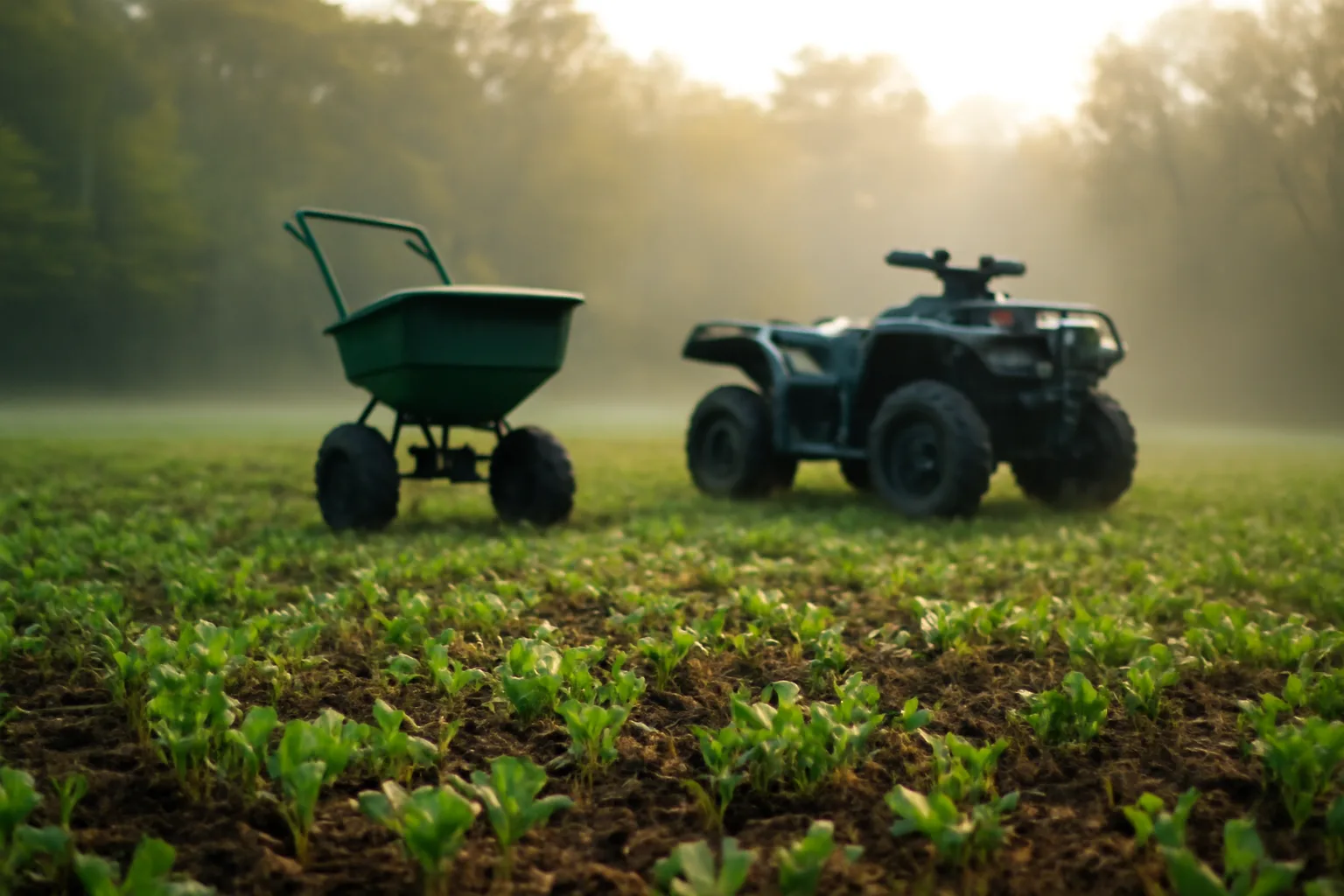
Spring food plot planting for clover runs from late winter frost-seeding through late spring seeding, and the right window depends entirely on your zone and soil temperature, not the calendar date. Clover germinates reliably once soil temperatures reach about 50°F, and university extension guidance ties seeding windows to weeks before your area's average last frost date. In the Deep South and lower Southeast (zones 8-9), that can mean late February into March. In the Mid-South and transition zone (zones 6-7), think March into April. Up in the northern tier and Canada-adjacent states (zones 3-5), you're often looking at April into May, sometimes later at elevation. Frost-seeding is the other spring option, and it's specific to clover (it doesn't work for turnips or brassicas). You broadcast clover seed onto frozen or thawing ground in late winter, typically February to early March in the North, and let freeze-thaw cycles work the seed into the soil. Penn State Extension guidance on frost seeding notes that the practice relies on the physical action of freezing and thawing, along with wetting and drying cycles, to work the seed into the soil surface for good seed-to-soil contact, and that it works best for thickening thin or damaged legume stands rather than establishing a new plot on bare, undisturbed ground. It's cheap and low-effort, but it's not a guaranteed stand builder on bare dirt. If you're starting a plot from scratch, a prepared seedbed usually beats frost-seeding. Don't confuse spring planting windows with fall ones. Clover can go in during late summer too (August into September in many zones), which some hunters prefer because it avoids competing with a flush of spring weeds. But spring planting is what most first-time plotters do, since it lines up with when people are already out prepping ground after winter. For a broader read on timing across plot types, more than clover, see food plot whitetail.
do deer like clover, and is it actually their favorite food?
Yes, deer eat clover heavily, and it's one of the most consistently preferred forages in food plot research. Clover is a legume, meaning it fixes nitrogen and runs high protein content, commonly cited in the 20-30% crude protein range during vegetative growth stage, which lines up well with lactation and antler growth periods [1]. But "favorite food" doesn't have one clean answer. Deer are opportunistic browsers and their diet shifts by season, region, and what's available. In spring and summer, clover, soybeans, and native forbs top the list. In fall, acorns and other hard mast often override any planted forage when they're on the ground; deer will walk past a lush clover plot for a good white oak drop. Corn and standing soybeans matter most in late fall and winter when energy (not protein) is the limiting factor. So clover isn't universally the single favorite, but it's close to it during the growing season, and it's one of the few forages that stays palatable and available for months at a time rather than a few weeks. That's why it anchors so many food plot programs. For a rundown of species deer prefer across seasons, see deer food plots.
do deer eat sorghum and turnips too, or is clover better?
Deer do eat sorghum, but it's not a top-tier forage choice for most plotters, it's used more as a screening/cover crop or a grain source for other wildlife (dove, deer to a lesser degree) than a preferred deer food. Grain sorghum heads can get browsed some in fall and winter, but deer generally rank it below corn and soybeans for grain, and it's rarely planted as a primary deer attractant. Turnips are a different story. Deer do eat turnips, but with a catch: they typically eat the tops first (late summer through fall) and don't touch the bulbs heavily until after a hard frost, which converts stored starches to sugars and makes the bulb noticeably sweeter [2]. That's why turnip plots often look untouched in October and then get hammered in December and January. When to plant turnips for deer is a fall-planting question, not a spring one. Turnips need roughly 60-90 days to reach a good bulb size and should go in the ground in late summer, usually July through early August in northern zones and into early September in the South, so the frost-sweetening effect lines up with hunting season [2]. Planting turnips in spring generally doesn't work well; they'll bolt and go to seed in the long days and warm temps before ever forming a good bulb. Clover, by contrast, is a perennial that tolerates spring planting fine and gives you multiple seasons of forage from one seeding, which is the main reason it gets recommended over turnips for a spring project.
what is a food plot, exactly?
A food plot is a planted area, usually somewhere between a quarter acre and several acres, seeded with forage crops to supplement natural deer browse and concentrate deer activity in a spot you can hunt or observe. It's not a natural clearing that happens to grow grass; it's an intentionally planted, usually fertilized and limed, agricultural plot managed specifically for wildlife rather than for harvest and sale. Most programs mix plot types: a perennial clover or clover/chicory blend for spring and summer nutrition, and annual plots (brassicas, cereal grains, soybeans) timed to peak during hunting season. Clover plots typically get planted once and then maintained (mowed, limed, sometimes overseeded) for several years before needing full renovation; extension forage agronomists commonly describe well-managed white/ladino clover stands persisting 3-5 years, with red clover typically shorter-lived [3]. Check your state's rules before planting anything meant to draw deer to a stand. Food plots themselves are broadly legal and are not considered baiting in the vast majority of states, since they're a standing crop rather than piled feed, but some states do regulate hunting over food plots differently depending on plot size, visibility, or proximity to a stand. Check your state wildlife agency's baiting and feeding regulations before you plant if you're unsure; rules vary by state and sometimes by year [4].
how do you actually plant a clover plot in spring, step by step?
Start with a soil test. This is the step people skip and regret. A basic soil test from your state land-grant extension lab runs somewhere in the $10-20 range in most states and tells you your pH and phosphorus/potassium levels, which determines your lime and fertilizer needs [5]. Clover wants pH in the 6.0-6.5 range; below that, nitrogen-fixing rhizobium bacteria don't function well and your clover will struggle no matter how good the seed is. Your lab report is the real authority here, not a general guide like this one. Follow its specific lime and fertilizer recommendations for your soil, not a generic "apply X lbs per acre" number pulled off the internet. Step by step for a spring seeding: 1. Kill existing vegetation with glyphosate 2-3 weeks before planting, or till it under, depending on your system. 2. Apply lime per your soil test if pH is low. Lime takes months to fully react, so if you skipped a fall application, spring lime helps some but won't fully correct pH before this season's crop. 3. Work up a firm, fine seedbed if you're not no-till drilling. Clover seed is tiny; it needs good soil contact and shallow planting, about 1/4 inch deep or less. Planting too deep is the single most common failure mode. 4. Broadcast at 6-8 lbs/acre for common white clover blends (ladino, alsike types) or drill at 4-6 lbs/acre, per typical land-grant extension seeding rate recommendations for white clover . Red clover often gets seeded slightly heavier, in the 8-10 lb/acre range for pure stands. 5. Cultipack or roll after seeding if broadcasting, to press seed into contact with soil. 6. Apply starter fertilizer per your soil test; clover generally needs less nitrogen than grasses since it fixes its own, but phosphorus and potassium (and sometimes boron) still matter. 7. Mow weeds down to 6-8 inches through the first summer as the stand establishes; don't let weeds shade out young clover. If you want gear-specific guidance on drills, cultipackers, and broadcast spreaders for small acreage, see equipment and methods content on the site, and for seed blend options, deer food plot seed.
when to plant oats for deer, and should you mix them with spring clover?
Oats are a fall planting, not a spring one, in most whitetail programs. Oats are a cool-season annual grain that deer readily browse in the leaf stage, and growers typically plant them in later summer so they're green and palatable through fall and into early winter before hard freezes knock them back [1]. Some southern growers also plant a spring oat crop, but it's less common for deer plots since it matures and heads out during the growing season rather than staying in a tender, browsable leaf stage. If you're planting clover this spring, you generally don't mix in oats. Oats are an annual nurse crop more commonly used with fall clover seedings, where the oats germinate fast, provide quick cover and early forage, and then die off with winter cold, leaving the clover to take over the following spring. For a spring clover planting, a light cereal grain nurse crop isn't necessary and can actually compete with young clover for light and moisture if seeded too heavy. Where oats do pair well is in the opposite scenario: if you're planting a fall food plot rotation, oats plus clover (or oats plus brassicas) is a classic combination, giving you fast fall growth from the oats and a perennial clover base establishing underneath for next year.
do deer like honey, and does that matter for food plots?
This one gets asked a lot, and the honest answer is: not in any way that matters for food plot planning. Deer aren't drawn to honey as a food source in the wild; they're browsers and grazers built around forage, mast, and grain, not sugar sources like honey. There's no meaningful body of wildlife research or extension guidance on deer and honey because it's simply not part of their diet or a product used in legitimate food plot or attractant programs. If you're seeing this question paired with food plot searches, it's likely getting confused with mineral licks, molasses-based attractants, or sweet feed mixes, all of which are separate products from honey and, depending on your state, may fall under baiting regulations if used to draw deer to a hunting location rather than as a standing planted crop. Check your state wildlife agency's definition of bait before using any supplemental attractant, since a poured mineral or sugar product is treated very differently under the law than a planted food plot in most states [4].
how much does a clover food plot cost to plant in spring?
| Clover seed (6-8 lb/acre, ladino/white blend) | $25-45 | |
|---|---|---|
| Lime (2 tons/acre if needed) | $60-100 delivered/spread | |
| Starter fertilizer (per soil test) | $30-60 | |
| Herbicide (glyphosate burndown) | $15-25 | |
| Fuel/equipment wear (owned equipment) | $20-40 | That puts a first-year clover plot somewhere around $150-270 per acre all-in if you own or borrow equipment, before accounting for lime if your soil needs a heavy correction (2+ tons/acre lime jobs can push total cost higher). The good news with clover versus annuals: year two and three costs drop way down, often to just mowing and a light fertilizer touch-up, since you're not reseeding every year. If you're not confident reading your soil test or building a lime/fertilizer plan for your specific ground, that's exactly the kind of thing worth getting a second set of eyes on. PlotSeason's $99 one-time Custom Food Plot Plan takes your soil test results and property details and builds a species and input plan around them, at /plot-plan-builder. It's general guidance built from your numbers, not a replacement for your soil lab's specific lime and fertilizer recommendations, which remain the final word on your ground. |
Rough per-acre costs for a spring clover planting break down like this, using typical retail seed and input pricing (these move year to year with commodity and fuel costs, so treat this as a planning range, not a quote): | Input | Typical cost per acre |
what mistakes ruin a spring clover planting most often?
Planting too deep tops the list. Clover seed is small, some varieties run several hundred thousand seeds per pound, and burying it more than half an inch deep means a huge percentage never emerges. Broadcast and cultipack, or drill shallow; don't bury it like corn. Skipping the soil test is second. Clover in acidic soil (below pH 5.5) will limp along and eventually get out-competed by weeds and grass, no matter how good your seed genetics are. A $15 soil test avoids wasting $150+ in seed and fertilizer on the wrong ground. Planting into a rough, cloddy seedbed without cultipacking is third. Poor seed-to-soil contact in loose or lumpy dirt kills germination rates even with good seed and good timing. Not managing weed competition in year one is fourth. New clover seedlings are weak competitors; mowing at 6-8 inches through the first summer, before weeds set seed, gives young clover the light and space it needs to spread and thicken up. Last, ignoring drainage. Most clover varieties don't like standing water or heavy, poorly drained clay that stays saturated in spring. If a spot holds water for days after rain, it's a poor clover site regardless of soil fertility.
what's the difference between planting clover for a fall plot versus a spring plot?
Spring planting establishes the stand before the growing season, giving clover a full summer to root in, thicken, and build the kind of stand that can handle grazing pressure through fall and into next spring. Fall planting (August-September in most zones) gets clover in the ground during cooler, often wetter conditions with less weed pressure, but the plant has less time to establish before winter dormancy. Most extension agronomists consider spring and late-summer/early-fall both viable clover planting windows, with the choice mostly coming down to regional rainfall patterns and what else is going into rotation with it. In the Southeast, where summer heat and drought stress young seedlings hard, many growers prefer fall planting for clover specifically to avoid that stress window. In the North, spring planting avoids the risk of an early hard freeze killing a stand that hasn't rooted in yet before winter. If you're combining clover with a fall annual (oats, brassicas) in a blend, that pushes you toward fall planting by default, since those companion species are fall-timed. A pure clover or clover/chicory perennial plot works fine on either spring or fall timing, so pick whichever fits your other spring/fall workload better.
how do you maintain a clover plot after spring planting?
Mowing is the main maintenance tool. Clip the plot to 6-8 inches height, 2-4 times over the growing season, whenever weeds start getting ahead of the clover or the clover itself gets tall and stemmy. Mowing also knocks back weed seed production and keeps clover in a vegetative, more nutritious, more palatable growth stage. Annual soil testing (or at least every 2 years) tells you when to reapply lime or add potassium, since clover pulls potassium out of soil at a decent clip and it's commonly the first nutrient to run short in a maintained clover stand, per land-grant extension soil fertility guidance for forage legumes . Overseeding thin spots with a light rate of fresh clover seed (2-3 lb/acre) every year or two extends stand life well past the typical 3-5 year window, especially on white/ladino clover types which spread by stolons and recover reasonably well on their own if not overgrazed or drought-stressed. Red clover is shorter-lived, often needing a fuller reseed by year 2-3. For building out a full rotation plan around a perennial clover base, see deer for food and food plot seed for annual companion options.
Frequently asked questions
Do deer eat sorghum?
Yes, but sorghum isn't a top deer forage choice. It's more commonly planted as a screening or cover crop, or a grain source that benefits other wildlife like dove, than as a primary deer attractant. Deer will browse sorghum some in fall and winter, but rank it behind corn and soybeans as a grain source.
Do deer eat clover?
Yes, heavily. Clover commonly runs in the 20-30% crude protein range during vegetative growth stage, making it one of the most consistently preferred food plot forages during spring, summer, and fall growing periods, per forage quality data cited by university extension programs. It's less relied on once hard mast like acorns drops in fall.
When should you plant food plots for deer?
Timing depends on species and zone. Clover can be spring-seeded (soil around 50°F, generally March-May by zone) or frost-seeded in late winter. Brassicas and turnips need late summer planting (July-August) to bulb before frost. Cereal grains like oats typically go in late summer for fall forage.
Do deer like clover more than other food plot crops?
During the growing season, clover ranks among the top preferred forages, largely because of its high protein and long availability window. But deer diet shifts seasonally; acorns and other hard mast often override clover preference in fall, and corn or soybeans matter more for winter energy needs.
When should you plant oats for deer?
Oats are typically a fall planting, going in the ground in later summer so they're in tender, browsable leaf stage through fall and early winter. Spring oat plantings exist but are less common for deer plots since oats head out and lose palatability during the growing season.
When should you plant turnips for deer?
Plant turnips in late summer, generally July through early August in northern zones and up to early September in the South, so they have enough time, roughly 60-90 days, to bulb before the season's first hard frosts sweeten them. Spring-planted turnips usually bolt to seed before forming a usable bulb.
What is a food plot?
A food plot is an intentionally planted, fertilized, and limed area, usually a quarter acre to several acres, seeded with forage crops like clover, brassicas, or grains to supplement deer nutrition and concentrate activity in a huntable location. It's managed specifically for wildlife, not for commercial harvest.
What are deer's favorite foods overall?
There's no single universal favorite; deer diet shifts by season and region. Acorns and other hard mast typically top preference lists in fall when available. Clover, soybeans, and native forbs dominate spring and summer diets. Corn and standing soybeans matter most for winter energy needs.
Do deer like honey?
No, honey isn't part of a whitetail's natural diet, and there's no meaningful research or extension guidance treating it as a deer attractant. This question usually gets confused with molasses-based mineral licks or sweet feed mixes, which are separate products and may fall under state baiting regulations depending on how they're used.
Can you plant clover and turnips together in spring?
Not really, and it's not typically recommended. Turnips planted in spring tend to bolt to seed in long daylight and warm temperatures before bulbing, defeating the purpose of planting them. Turnips belong in a late-summer seeding; save the clover-plus-brassica combination for a fall plot instead.
How long does a spring-planted clover plot last before needing renovation?
Most white/ladino clover stands last 3-5 years with regular mowing and periodic lime/fertilizer maintenance based on soil test results, a range commonly cited in extension forage persistence guidance. Red clover is shorter-lived, often needing full reseeding by year 2 or 3. Overseeding thin spots yearly extends stand life.
Is frost-seeding clover the same as spring-planting clover?
No. Frost-seeding means broadcasting seed onto frozen or thawing ground in late winter (often February-March) and letting freeze-thaw cycles work it into the soil, no tillage needed. Spring planting into a prepared seedbed happens later, once soil hits about 50°F, and generally gives more reliable establishment on bare ground.
Is planting a food plot considered baiting deer?
In most states, a standing planted food plot is not considered baiting, since it's a growing agricultural crop rather than piled feed. But rules vary by state and sometimes by plot size or hunting method, so check your state wildlife agency's specific baiting and feeding regulation page before hunting over one.
Sources
- Oklahoma State University Extension, "Forage Legumes for Wildlife" (PSS-2588): Clover crude protein content during vegetative growth stage
- University of Kentucky Cooperative Extension, "Establishing Forage Legumes" (AGR-26): Clover stand persistence and management for forage plantings
- Michigan Department of Natural Resources, "Baiting and Feeding of Deer and Elk" regulation summary: Baiting and feeding rules for deer vary by state and are separate from standing food plot crops
- University of Missouri Extension, "Soil Testing for Lawns, Gardens, and Wildlife Food Plots" (G9110): Basic soil test cost range and use for determining lime and fertilizer needs
- USDA NRCS Plant Guide, White Clover (Trifolium repens): Typical clover seeding rates for broadcast and drilled plantings, and potassium demand in maintained stands