Last updated 2026-07-25
TL;DR
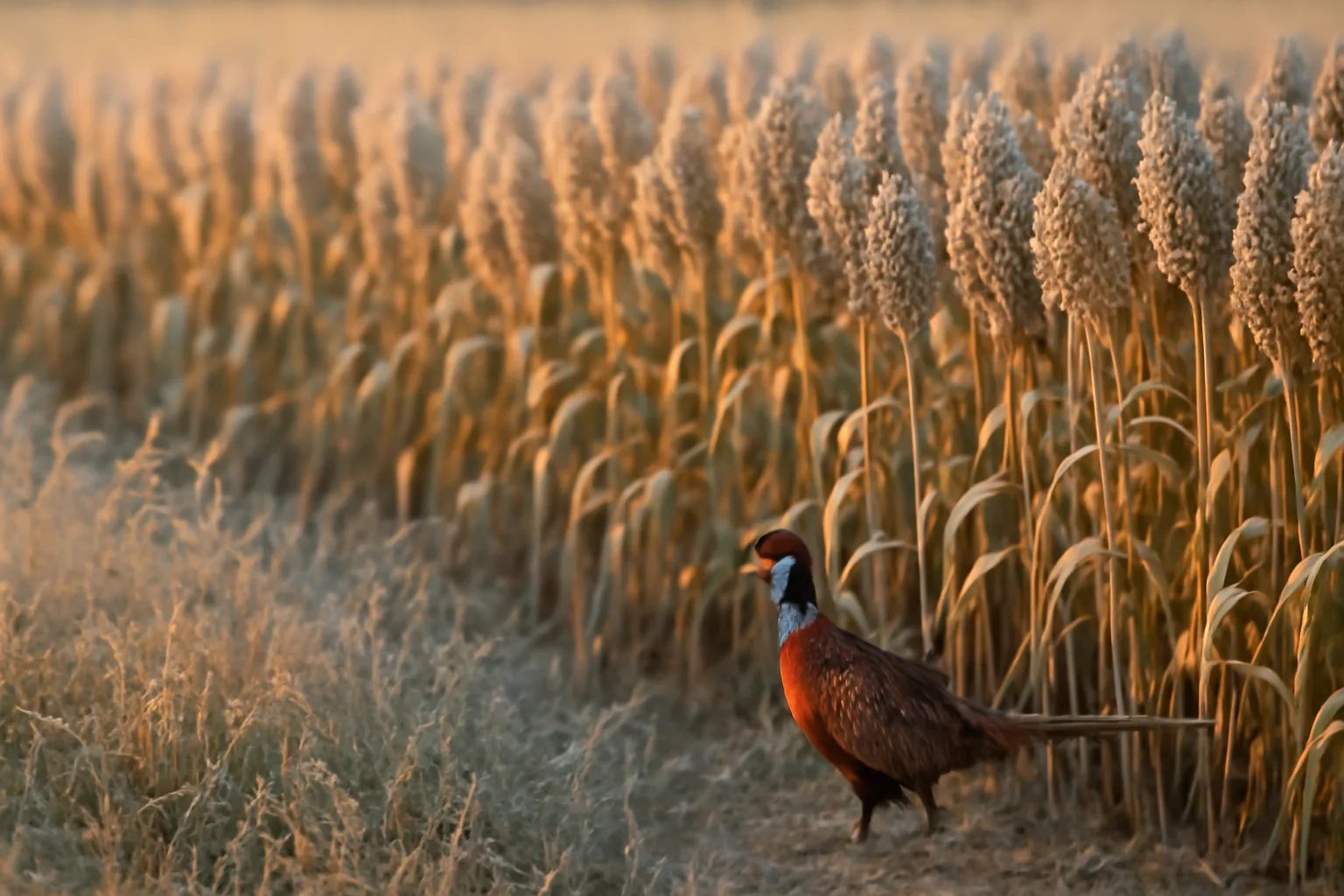
Good pheasant food plot seed mixes usually combine a grain component (grain sorghum, corn, or oats) with a legume like clover and standing cover such as switchgrass or shrubby edge. Pheasants need winter cover as much as food, so plots planted for them work best paired with adjacent cover, not planted alone in open ground.
what is a food plot, and does it work the same for pheasants as deer
A food plot is a planted patch of forage or grain, usually a half acre to a few acres, put in specifically to feed and hold wildlife on a property. For deer hunters this usually means clover, brassicas, or beans. For pheasants the goal shifts. Pheasants need food, yes, but they need winter cover just as much, and a lot of pheasant plots fail because someone planted a strip of grain in the open with no adjacent cover to hide in. Pheasants Forever and USDA Farm Service Agency guidance on CRP habitat practices both describe food plots as one part of a larger habitat package built around winter cover, nesting cover, and brood habitat, not a standalone fix [1]. A pheasant food plot that's just a strip of milo with nothing around it might get hit hard in October and sit empty by January when the birds have moved to better cover elsewhere. So when someone asks what a food plot is for pheasant ground, the honest answer is: it's one leg of a three-legged stool. You need winter cover (grass and shrub thickets), nesting cover (undisturbed grass in spring), and food. Seed alone doesn't hold birds through a hard winter if there's no place to get out of the wind. If you're running a mixed property with both deer and pheasant goals, a food plot whitetail plan and a pheasant plot can share some acreage, but the design priorities differ enough that it pays to plan them separately.
what are deer's favorite foods, and why does that matter for pheasant ground
This gets asked a lot on mixed-species properties, so it's worth a straight answer even in a pheasant article: deer favorites are usually soybeans, clover, and standing corn, with brassicas like turnips getting hit hardest after a frost sweetens them. Mississippi State University Extension's food plot forage research and similar deer food plot studies rank soybeans and clover among the highest-tonnage, highest-preference forages for whitetail food plots [2]. Why does this matter here? Because a lot of pheasant ground also carries deer, and food plot seed chosen for deer (clover, brassicas, beans) doesn't provide the same winter thermal cover pheasants need. If you're managing for both species, you generally want deer forage plots separate from pheasant winter cover blocks, with grain strips or a shrub/grass edge in between. Trying to make one plot do both jobs usually shortchanges the pheasants, since deer will hammer clover and beans down to nothing by late fall right when pheasants need standing food most. For a deeper look at species selection for deer specifically, see deer food plot seed or the broader deer food plots overview.
do deer eat sorghum, and is it good pheasant food too
Yes, deer eat grain sorghum (milo), though it's usually a lower preference food than corn, soybeans, or clover and gets used more as filler or late-season standing grain. Grain sorghum is also one of the best standing-grain options for pheasants, because the seed head stays up above snow line longer than corn in many winters and it's cheaper per acre to establish in a lot of regions [3]. For pheasant plots specifically, grain sorghum earns its spot for a few reasons. It's drought tolerant compared to corn, which matters on marginal soils common on CRP and pheasant range in the Dakotas, Nebraska, and Kansas. It stands reasonably well through wind and light snow load. And because deer, turkey, and other wildlife will also eat it, sorghum functions as a shared food source on mixed-use ground rather than a species-specific planting. The tradeoff is yield. Grain sorghum typically yields less tonnage per acre than corn under the same conditions, so if your goal is maximum standing food into February, corn or a corn/sorghum blend usually outperforms sorghum alone. Kansas State University Research and Extension's Grain Sorghum Production Handbook notes sorghum's comparative drought tolerance and lower input needs relative to corn, which is part of why it shows up so often on pheasant range in the central and western Corn Belt [3].
do deer like clover, and should you plant it for pheasants
Deer strongly prefer clover, and it's one of the most-recommended food plot species in whitetail extension literature for its protein content (often 20 to 25 percent crude protein in vegetative stages) and long growing season [2]. For pheasants, clover plays a different role: it's not a winter food source, but it is excellent early-summer brood-rearing habitat because it attracts insects that pheasant chicks need for protein in their first weeks of life. So do deer like clover? Absolutely, it's a staple. Does that make it a pheasant food plot seed? Not directly, but a clover field adjacent to nesting cover is genuinely valuable for hens and broods, since chicks eat almost entirely insects for the first two to three weeks of life and clover holds more insects than grass monocultures. If your property runs both deer and pheasants, clover is worth planting, just understand you're planting it for brood habitat and deer forage, not as pheasant winter food. Pair it with a separate grain and cover block for the actual winter food plot function.
do deer like honey, and is honey locust or honeysuckle relevant here
This question usually comes from confusion between three different things: honey the substance, honey locust trees, and honeysuckle shrubs. Deer don't eat honey (the substance) in any meaningful wildlife management sense, it's not a food plot input and there's no extension guidance treating it as deer food. Honey locust, on the other hand, produces long seed pods that deer and other wildlife do eat, and the tree is sometimes retained or planted as a mast source on wildlife ground, though it's a tree management decision, not a food plot seed choice. Honeysuckle is a shrub, and some varieties (particularly invasive bush honeysuckle species like Amur honeysuckle) provide dense cover that pheasants and deer both use, but USDA NRCS PLANTS Database records list Amur honeysuckle (Lonicera maackii) as an introduced species classified as invasive or noxious in a number of states, meaning most state agencies recommend controlling rather than planting it [2]. Bottom line: if you saw "honey" and wondered whether it belongs in a food plot mix, it doesn't. If you meant honeysuckle for cover, talk to your state wildlife agency or extension office before planting it, since several states restrict or discourage non-native honeysuckle plantings.
when to plant food plots for deer versus for pheasants
| Northern (MN, ND, WI, upper MI) | mid-May to early June | late July to mid-August | |
|---|---|---|---|
| Central (IA, NE, IL, IN, southern MN) | early May to early June | early August to early September | |
| Southern Midwest/Mid-South (KS, MO, southern IL, KY) | late April to late May | mid-August to mid-September | |
| Deep South/Southeast (TX, AR, MS, AL, GA) | April | September to early October | For pheasant-specific winter food plots (grain sorghum, corn, sunflowers), you plant in late spring like any grain crop, same window as field corn or milo in your area, generally May into early June depending on soil temperature. The point isn't a fall planting for pheasants, it's a spring-planted grain crop you leave standing through winter rather than harvesting. If you want a plan built around your exact coordinates and soil test rather than a regional table, that's the kind of thing worth running through a proper plot-plan-builder, since a $99 custom plan can save a season of guessing on a marginal frost date. |
Timing splits by species and by what you're planting, and this trips people up constantly. Spring plantings (clover, brood cover, spring oats) generally go in from mid-April through May depending on zone. Summer annuals for deer (soybeans, some brassicas) go in May through June. Late-summer brassica and cereal grain plantings for deer, and fall cereal grain plantings for pheasant winter food, generally go in from mid-July through early September depending on latitude. Here's a rough planting window table pulled from regional extension guidance, understanding that frost dates vary year to year and you should confirm against your local NOAA National Weather Service or land-grant extension office's frost date data [4]: | Region | Spring/summer plot window | Fall plot window |
when to plant oats for deer, and do oats work for pheasant plots too
Oats for deer food plots are typically planted in early fall, generally August through mid-September depending on zone, as a cool-season annual that deer hit hard through fall and early winter before it winter-kills in most regions colder than zone 7. Oats germinate fast, often in 5 to 10 days under good soil moisture, and provide quick tonnage of palatable forage. For pheasant use, oats aren't a strong standing winter food choice because the plant typically lodges (falls over) after frost and doesn't hold seed heads above snow the way corn or sorghum does. Oats do have a role in pheasant habitat as a spring nurse crop, planted alongside a grass/legume seeding to protect young grass seedlings during establishment, a practice described in the USDA NRCS Conservation Practice Standard for Cover Crop (Code 340), which covers using a companion or nurse crop to help establish a seeding while providing short-term cover [5]. So oats show up in pheasant country, just not as the standing winter grain component. If oats are your main deer food plot species, spring oats can also be planted in April in northern zones for early season forage, though most hunters plant the fall crop since it lines up with hunting season.
when to plant turnips for deer, and can pheasants use brassica plots
Turnips for deer food plots are planted in late summer, generally 60 to 90 days before your first expected hard frost, since turnips need that frost to convert starches to sugars and become palatable (deer often ignore turnip bulbs until after a freeze). That usually puts planting dates at late July in the far north, and August into early September through the central and mid-south regions . For pheasants, brassica plots aren't a significant food source. Pheasants are primarily grain and seed eaters, along with insects for chicks, and they don't dig or browse turnip bulbs and leaves the way deer do. Standing brassica can provide some low, thin cover in fall, but it's nowhere near as effective as grass, shrub, or standing grain cover for winter thermal protection, and it tends to collapse under snow load faster than switchgrass or corn. If you're planting turnips, plant them for deer, and plan separate acreage with grain and grass cover if pheasants are also a management goal on the property. Trying to stretch one brassica plot to cover both species usually leaves the pheasants with nothing useful come January.
what food and cover mix actually holds pheasants through winter
| Grain sorghum (milo) | 6-8 lbs/acre drilled | Standing winter grain | Good, holds through moderate snow | |
|---|---|---|---|---|
| Field corn | 28,000-32,000 seeds/acre | Standing winter grain, tallest cover | Very good, best snow-load performance | |
| Sunflowers (oil or confection type) | 4-6 lbs/acre | Supplemental seed, structure | Moderate, can lodge in ice storms | |
| Winter wheat/rye (as edge, not main food) | 60-90 lbs/acre drilled | Green browse, light cover | Poor as standing winter food alone | Notice sorghum and corn dominate the standing-food role, while small grains work better as a spring green-up strip or nurse crop than as the main winter food component. |
The single biggest factor in whether pheasants stick around through a hard winter isn't the seed variety, it's whether there's dense woody or grass cover within a short walk of the food source. South Dakota State University Extension pheasant habitat publications and Kansas State University Research and Extension grain production guidance both point to winter cover, shelterbelts, cattail marsh, or dense shrub rows as the limiting factor in pheasant survival during severe winters, more than food availability alone [3]. A workable plot design most habitat biologists recommend: a block of standing grain (corn, sorghum, or a mix, often 1 to 5 acres depending on property size) planted directly adjacent to, or wrapped around, a block of dense woody or tall grass cover of similar or larger size. Birds feed at the edge and retreat into cover within a few dozen yards, minimizing exposure to wind and predators. Sunflowers are frequently added to pheasant food blocks too, both for seed value and because the tall stalks add some structure. A rough seeding rate and species comparison for common pheasant food plot components, drawn from land-grant extension and grain crop production guidance [3] : | Species | Typical seeding rate | Role in pheasant plot | Winter standability |
do deer eat sorghum and clover differently, and should you plant them together
Deer will eat both, but not equally, and understanding the difference matters if your property runs deer and pheasant food goals on the same acres. Clover is a high-preference forage deer return to repeatedly through the growing season, often ranked at or near the top of preference studies for tonnage consumed per acre [2]. Grain sorghum is eaten, particularly the seed heads once they mature, but it functions more like a fall/winter grain crop than a season-long browse crop, similar to how deer use corn. Planting them together in the same plot generally doesn't work well agronomically, since clover is a low-growing perennial and sorghum is a tall annual grain, they compete for light and clover gets shaded out. The better approach on mixed-use ground is separate blocks: a clover block for deer forage and pheasant brood-rearing insects, and a sorghum or corn block for standing winter grain that benefits both deer and pheasants in the cold months. If you're trying to decide which species mix fits your specific soil and acreage, a soil test result is the real starting point, since sorghum tolerates a wider pH range (generally 5.5 to 7.5) and lower fertility than clover, which does best closer to pH 6.0 to 7.0 with adequate phosphorus and potassium . Your soil test lab's recommendations are the authority here, not a generic guide like this one, since lime and fertilizer needs are specific to your field.
what state rules should you check before planting or baiting pheasant plots
Every state treats baiting and supplemental feeding differently, and food plots occupy a legal gray area in some states depending on how the plot is planted, harvested, and hunted over. A standing food plot that's planted and left to grow naturally is generally legal to hunt over in essentially every state, since it's considered a normal agricultural practice rather than bait. But once you start spreading loose grain, corn piles, or seed on the ground specifically to attract birds, you can cross into baiting violations depending on the state. South Dakota's Administrative Rules, ARSD 41:06:38, define baiting for game bird and other hunting purposes and separately address hunting over standing, flooded, or manipulated (mowed or disked) crops planted for normal agricultural or wildlife food plot purposes, treating that differently from placed bait . Other states have their own specific language and some restrict hunting near bait for a set number of days after removal. Because these rules vary by state and change periodically, check your state wildlife agency's current hunting regulations before you plant with hunting-over-the-plot in mind, more than for pheasants but for deer season if the same property is used for both. This is also a good reminder that any general food plot guide, including this one, gives regional and species guidance, not site-specific legal or agronomic advice. Your state agency's current regulations and your soil test lab's fertility recommendations are the two authorities that override anything written here.
how a custom plot plan fits into pheasant and mixed-species ground
If you're managing ground for pheasants alongside deer, the planning gets genuinely more complicated than a single-species plot, since you're balancing nesting cover, brood habitat, winter food, winter cover, and deer forage across the same acreage, often with limited tillable ground to work with. A lot of hunters end up either over-planting deer forage species and shortchanging winter cover, or planting a generic "wildlife blend" that does a mediocre job for every species instead of a good job for any one of them. Working from an actual soil test and a real property layout (field shape, adjacent cover, water, prevailing winter wind direction) makes a bigger difference than seed selection alone. That's the gap a $99 one-time Custom Food Plot Plan is built to close: you get species and layout recommendations based on your specific soil test results and zone rather than a one-size table. It won't replace your soil test lab's fertility authority or your state agency's hunting regulations, but it can save you from planting clover where you needed standing sorghum, or vice versa. For more general deer-focused seed selection once your pheasant cover blocks are settled, see deer food plot seed or the broader food plot seed comparison.
Frequently asked questions
Do deer eat sorghum?
Yes. Deer eat grain sorghum (milo), especially the mature seed heads in fall and winter, though most preference studies rank it below corn, soybeans, and clover in overall selection. It's a common standing-grain component in both deer and pheasant food plots because it's drought tolerant and holds up reasonably well through snow.
Do deer like clover?
Deer strongly prefer clover. It's one of the highest-ranked forages in university extension preference studies, often 20 to 25 percent crude protein in the vegetative stage, and deer will return to a healthy clover stand repeatedly through spring, summer, and fall until frost slows growth.
When should I plant food plots for deer?
Spring/summer plots (clover, beans) generally go in April through June depending on zone; fall plots (brassicas, cereal grains) generally go in mid-July through September depending on latitude and frost timing. Check your state land-grant extension office's frost date data for exact local windows, since a single national date doesn't apply.
When should I plant food plots for pheasants specifically?
Pheasant winter food plots (corn, grain sorghum, sunflowers) are planted in late spring, same window as field grain crops in your area, generally May into early June. Unlike deer brassica or clover plots, the goal is a standing grain crop left through winter rather than a fall planting.
When do you plant oats for deer?
Fall oats for deer are typically planted in late summer to early fall, roughly August through mid-September depending on zone, as a cool-season annual. Oats germinate fast (often 5 to 10 days) and provide quick, palatable forage, but they usually winter-kill in colder zones and don't hold up as standing winter food.
When do you plant turnips for deer?
Turnips need roughly 60 to 90 days of growth before your first hard frost, since the frost sweetens the bulbs and triggers heavier deer use. That means planting dates run from late July in northern zones to late August or early September through the central and mid-south regions.
What is a food plot?
A food plot is a planted area, usually a fraction of an acre up to several acres, established specifically to provide forage or grain for wildlife. For deer that's often clover, brassicas, or beans; for pheasants it's typically standing grain like corn or sorghum paired with adjacent winter cover, since food alone doesn't hold birds without shelter.
What are deer's favorite foods?
Soybeans, clover, and standing corn generally top preference rankings in university food plot research, with brassicas like turnips gaining strong appeal after a frost. Actual preference shifts seasonally and by region, so a soil test and local extension guidance beat a generic national list.
Do deer like honey?
No, honey (the substance) isn't relevant to deer food plots or wildlife feeding. If you meant honey locust, its seed pods are eaten by deer and other wildlife, but it's a tree management decision, not a food plot seed. Honeysuckle is a separate shrub, and some varieties are invasive and best avoided.
What's the best seed mix for a pheasant food plot?
Most state pheasant habitat guides recommend grain sorghum, field corn, or a mix of the two as the standing winter food component, often with sunflowers added for diversity and structure. The mix matters less than pairing it with adjacent dense grass or shrub cover, which is usually the limiting factor for winter survival.
Can I plant the same food plot for deer and pheasants?
You can share a property, but rarely one plot. Clover and beans get hammered by deer before pheasants need them in winter, and brassica plots don't provide pheasant food or adequate cover. Most habitat plans separate deer forage blocks from standing-grain-plus-cover blocks built specifically for pheasant winter use.
Is it legal to hunt pheasants over a food plot?
Generally yes, if the plot was planted and left standing as a normal agricultural or habitat practice rather than spread as loose bait. Rules vary by state, and some states have specific language distinguishing standing crops from bait piles, so check your state wildlife agency's current regulations before hunting over any planted plot.
How much cover does a pheasant food plot need next to it?
There's no single legal minimum, but habitat guidance generally recommends adjacent cover blocks of at least an acre or two, roughly equal to or larger than the food block itself, to give birds a short walk from feed to shelter. Bigger, denser cover blocks generally correlate with better winter survival in harsh years.
Sources
- USDA Farm Service Agency, Conservation Reserve Program (CRP) habitat practice guidance: Food plots are one part of a larger habitat package built around winter cover, nesting cover, and brood habitat
- Kansas State University Research and Extension, Grain Sorghum Production Handbook (C-687): Grain sorghum is comparatively drought tolerant with lower input needs than corn, making it common on marginal pheasant range soils
- USDA NRCS PLANTS Database, Lonicera maackii (Amur honeysuckle) plant profile: Amur honeysuckle is listed as an introduced species classified as invasive or noxious in a number of states rather than recommended for planting
- University of Missouri Extension, Soil Testing and Fertilizer Recommendations for Forage Crops (G4652): Clover generally requires pH 6.0-7.0 with adequate phosphorus and potassium, while sorghum tolerates a wider pH range
- South Dakota Administrative Rules of South Dakota, 41:06:38 (Hunting over bait): Standing, flooded, or manipulated crops planted for agricultural or wildlife purposes are treated separately from bait under state hunting rules