Last updated 2026-07-25
TL;DR
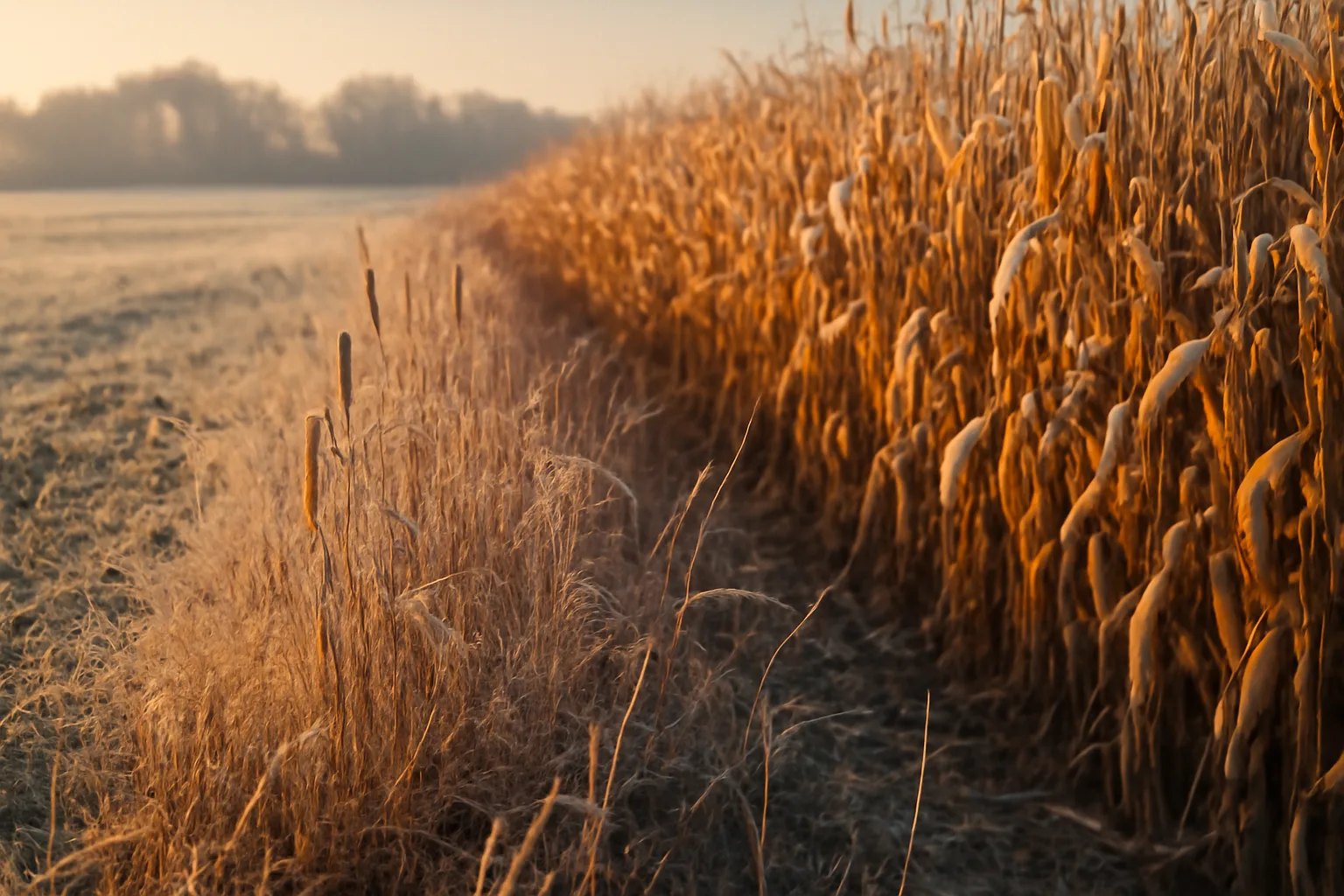
A pheasant food plot works best as a mix of standing grain (corn, sorghum, or milo) next to dense winter cover like switchgrass or cattails. Plant grain plots in late May through June, after soil hits 60°F. Food alone won't hold birds; cover next to food does.
What is a food plot, and does it work the same way for pheasants as deer?
A food plot is a planted patch of forage or grain, usually on ag or CRP-adjacent ground, meant to feed and hold wildlife nearby. For deer, that's mostly about nutrition and hunting position. For pheasants, food is only half the equation. Pheasants need thermal cover and escape cover just as much as calories, especially from December through March when snow covers waste grain in open fields. Most state wildlife agencies treat pheasant habitat work as a cover-and-food system, not a food system alone. A stand of standing corn or sorghum with no adjacent cattails, switchgrass, or shrub cover gets hit hard by wind and snow and does very little for winter survival. Pheasants roost and hide in dense grass or woody cover, then walk out to feed. If you only plant grain in the open with nothing to duck into, you've built a feeder, not a plot. So when people ask about a pheasant food plot, the honest answer is: think of it as one leg of a three-legged stool, food, winter cover, and nesting cover. Miss the other two legs and the food plot underperforms no matter what you plant.
What do pheasants actually eat, and what are their favorite foods?
Pheasants are opportunistic eaters. Adult birds eat waste grain (corn, wheat, sorghum, soybeans), weed seeds, and green forage, while chicks in the first few weeks of life need insects almost exclusively for protein. Corn and grain sorghum are the two heaviest-used winter foods across the northern Plains and Midwest, and that shows up consistently in state agency habitat guidance for pheasant range. If you had to name one favorite, corn wins in most survey work simply because of energy density and the fact standing corn holds up under snow load better than most other grains. Grain sorghum (milo) is a close second in areas where it's easier to grow, and it's arguably a better standing-cover crop because the stalks are shorter and denser, which matters when deer or other browsers aren't a competing factor. Birds also hit soybeans, sunflower heads, and wheat stubble hard in fall. Insects matter more than most food-plot planners think. Brood-rearing cover, meaning weedy, insect-rich edges near nesting grass, matters as much as the grain plot itself for chick survival in the first six weeks.
Do pheasants eat sorghum?
Yes, and in a lot of regions it's a better choice than corn. Grain sorghum, often called milo, is drought-tolerant, cheaper to establish than corn, and holds seed heads at a height (usually 3 to 5 feet) that stays more accessible under moderate snow than tall corn that can lodge or get buried. Kansas State University Research and Extension describes grain sorghum as well suited to dry, marginal ground and notes it needs warmer soil than corn to germinate reliably, which is why sorghum plantings typically wait a couple weeks behind corn in the same region [1]. It's also cheaper per acre in seed cost than corn in most years, and it doesn't need the nitrogen load corn does, which matters if your soil test comes back light on fertility. One caution: sorghum needs about 100 to 120 frost-free days depending on the variety, so check your local frost dates before committing a big block to it. In far northern zones with short seasons, some hybrid grain sorghums won't mature reliably.
Do pheasants (and deer) eat clover, and does clover belong in a pheasant plot?
Deer eat clover heavily, it's one of the most digestible, palatable forages you can plant for whitetails, and clover shows up constantly in deer food plot recommendations for exactly that reason. Pheasants, though, don't use clover as a food source in any meaningful way. It's not a seed or grain crop, and pheasants aren't grazing forbs the way deer do. Where clover helps pheasants indirectly is as brood habitat. A clover or clover-grass mix stays low, lets chicks move through easily, and holds insects that chicks need for protein in the first weeks of life. So clover has a place on pheasant ground, just not as a grain food source. It's brood cover with a side benefit of insect production, not a winter food plot species. If you're managing ground for both deer and pheasants (common on Midwest leases), clover plots for deer and grain plots for pheasants can sit on the same property without conflict. They're just serving different species with different needs. For deer-specific clover guidance, see food plot whitetail.
When should you plant food plots for deer versus pheasants?
Timing depends heavily on species and region, and pheasant grain plots and deer plots often go in the ground around the same window but for different reasons. For deer, cool-season plots (clover, brassicas, cereal grains like oats and wheat) typically go in late summer to early fall, roughly August through September in most of the whitetail's range, timed so brassicas and oats have 60 to 90 days of growth before hard frost. Warm-season deer plots (soybeans, cowpeas) go in during May and June like row-crop corn. For pheasant grain plots, corn and sorghum are planted in the same general window as commercial row crops, late April through early June depending on latitude and soil temperature. Iowa State University Extension agronomy guidance lists 50°F soil temperature as the minimum for corn germination, with better, more uniform stands once soil is consistently above 55 to 60°F [2]. Sorghum wants slightly warmer soil, generally 60°F, before you plant, since it's more cold-sensitive at germination than corn [1]. Bottom line: pheasant grain plots go in spring like a row crop. Deer food plots split into spring plantings (warm-season) and late-summer plantings (cool-season, and this is the bigger category for whitetail managers). If you're planning a mixed property, your spring window (May through June) covers pheasant grain and warm-season deer plots at the same time, which is efficient if you're running the same tractor and drill across both.
When to plant oats for deer, and do oats have any pheasant value?
Oats for deer plots typically go in during late summer, August into early September in most of the whitetail range, so they have time to establish before frost slows growth and before hunting season starts. Oats are a fast-growing, highly palatable cool-season cereal grain that deer hit hard in September and October, and they winterkill in most of the northern half of the country, which some hunters actually want (it opens the plot back up in spring without extra work). For pheasants, oats have limited direct food value once mature, birds will pick at spilled grain, but oats aren't a primary winter food crop for pheasants the way corn or sorghum are. Where oats help pheasant ground is as a nurse crop, oats germinate fast and can be seeded with a slower-establishing perennial grass or legume to reduce erosion and weed pressure while the main planting gets going. That's a habitat-establishment tool, not a food plot species for pheasants in its own right. If you're deciding between oats, wheat, or a brassica blend for deer, check regional guidance and your own soil test results before committing acreage. A university extension office in your state usually has a specific planting calendar tuned to your frost dates.
When to plant turnips for deer, and are they useful anywhere near pheasant ground?
Turnips (a brassica) go in the ground in late summer, generally 60 to 90 days before your first hard frost, which lands most turnip plantings between late July and early September depending on latitude. Turnips need that lead time because the tuber and leaf growth that makes them valuable as a late-season deer food source happens over roughly 80 to 90 days, and a hard freeze actually improves palatability by converting starches to sugars in the bulb, according to Mississippi State University Extension deer forage guidance [3]. Turnips have essentially zero food value for pheasants. Birds don't eat brassica tubers or the fibrous leaves. If you're managing a property for both species, turnip plots are a deer-specific tool, plant them where you want late-season deer hunting pressure, not as part of a pheasant habitat plan. One planning note: turnips fail hard on compacted or poorly drained soil, and they're picky about seeding depth (a quarter inch or less). A soil test matters here more than most plots because brassicas are heavy nitrogen feeders and respond fast to correct pH. Your soil test lab's recommendation on lime and nitrogen rate is the right call to follow, general planting guides can only give you a range.
Do deer like honey, and does that matter for a pheasant or deer food plot?
This one comes up in searches but doesn't have much practical food-plot relevance. Deer aren't drawn to honey as a food source in the wild, they're browsers and grazers built around forbs, browse, mast, and agricultural crops, not sugary substances. Any anecdotal reports of deer near beehives are more about opportunistic curiosity than a real dietary pattern, and there's no extension or wildlife agency guidance recommending honey or sugar-based attractants for food plots. Worth flagging directly: baiting rules vary by state, and many states restrict or ban placing feed, salt, or attractants (including sugar-based products) to draw deer for hunting purposes. Michigan's Wildlife Conservation Order sets specific baiting and feeding restrictions for deer, including limits on bait volume and zones where baiting is prohibited entirely for disease management reasons [4]. Plenty of other states have their own rules on bait piles versus food plots. A planted food plot is legal nearly everywhere; a bait pile or feeder often is not, or is restricted by distance and timing. Check your state wildlife agency's current regulations before assuming a practice is legal, because these rules change year to year and by zone.
What's the difference between a pheasant plot and a deer plot in practice?
| Primary species | Corn, grain sorghum, wheat | Clover, brassicas, soybeans, cereal grains | |
|---|---|---|---|
| Main planting window | Late April to early June | Late July to September (cool-season); May to June (warm-season) | |
| Plot size that works | Larger blocks (1+ acre), left standing through winter | Smaller plots (quarter acre to a few acres) often fine | |
| Needs adjacent cover | Yes, critical (grass, cattails, shrubs) | Helpful but less critical | |
| Harvested or left standing | Left standing all winter | Often grazed down by fall/winter | |
| Nitrogen needs | Corn is heavy; sorghum lighter | Brassicas heavy; clover fixes its own nitrogen | The biggest practical difference: pheasant plots need to stay standing and unharvested through the worst of winter, since that's the whole point, food available above snow line in January and February. Deer plots are usually meant to get browsed down, that's a sign they're working. If your "pheasant plot" gets grazed flat by August, you've actually built a deer plot with pheasant seed in it. For deer-specific seed selection and species comparisons, see deer food plot seed and food plot seed. |
The species, the layout, and the goal all differ, even though the fieldwork (spraying, tilling, drilling seed) looks the same. | Factor | Pheasant plot | Deer plot |
How much land and what layout actually holds pheasants?
State wildlife agencies and upland habitat programs generally point to blocks of at least 5 to 10 acres of combined cover and food for a meaningful pheasant habitat unit, though smaller plots still add value on a property already rich in grassland cover. A quarter-acre or half-acre food plot in isolation, without nearby winter cover, does very little. The layout that consistently gets recommended in state pheasant habitat programs is a food plot bordered by or adjacent to a block of dense grass or shrub cover, ideally with the food plot on the downwind or south side so birds have a short walk from cover to food during snow events. Strip-planting food next to cover, rather than one big block of grain surrounded by open field, gets a lot more use because it cuts down the exposure birds face moving between the two. If you're working a small acreage (5 to 40 acres) and want both deer and pheasant value, a common layout is a grain strip (corn or sorghum, 30 to 60 feet wide) run along the edge of a CRP or native grass block, with deer bedding or clover plots elsewhere on the property. That gets you standing winter grain for pheasants and separate forage plots for deer without either species competing for the same acres.
Where does a $99 custom plan fit into this?
Most of what's above is regional and rule-of-thumb, real numbers, but general ones. Your actual frost dates, soil pH, drainage, and existing cover determine what actually works on your specific acres, and a soil test result is more specific than anything in a general article like this one. If you want species selection, seeding rates, and a planting calendar built around your zip code and your soil test, PlotSeason's $99 one-time Custom Food Plot Plan turns those inputs into a specific plan rather than a general one. It's guidance, not site-specific agronomy advice, your soil test lab is still the authority on exact lime and fertilizer rates. But it saves the guesswork of translating extension bulletins written for row-crop farmers into something that fits a 20-acre lease with mixed deer and upland goals.
Frequently asked questions
Do deer eat sorghum?
Yes, deer will browse young sorghum plants and eat the grain heads, though it's not a top-tier deer forage compared to soybeans or clover. Sorghum is planted more often for pheasant and quail winter food than as a primary deer attractant, mainly because of its standability under snow.
Do deer eat clover?
Yes, clover is one of the most palatable and heavily used forages for whitetail deer, and it's a staple recommendation across nearly every state extension deer food plot guide. It's high in protein and digestible energy, especially in spring and early summer regrowth.
When to plant deer food plots?
Cool-season plots (clover, brassicas, cereal grains) go in late summer, roughly August through September, with 60 to 90 days before hard frost. Warm-season plots (soybeans, cowpeas) go in during May and June like a row crop. Exact windows depend on your local frost dates.
Do deer like clover?
Yes, strongly. Clover ranks among the top forage choices in deer food plot research and extension guidance because of its protein content and how well it regrows after grazing. It's also relatively low-maintenance once established, especially perennial varieties like white clover.
When to plant oats for deer?
Plant oats in late summer, generally August into early September in most whitetail range, giving them time to establish before frost. Oats grow fast and are highly attractive in September and October, though they typically winterkill once temperatures drop into the teens or lower.
When to plant food plots for deer?
It depends on the plot type. Warm-season plots (soybeans, cowpeas) go in May through June. Cool-season plots (clover, brassicas, cereal grains) go in late July through September. Check your local frost dates and a regional planting calendar before locking in a date.
When to plant turnips for deer?
Turnips need 60 to 90 days of growth before a hard frost, so most plantings happen between late July and early September depending on latitude. A frost actually improves turnip palatability by converting starches to sugars in the bulb.
What is a food plot?
A food plot is a planted area of forage, grain, or forbs on hunting or wildlife land meant to provide nutrition and, for game managers, a predictable place to observe or hunt animals. Plots range from a quarter-acre clover patch to multi-acre corn or sorghum blocks for upland birds.
What are deer's favorite foods?
Deer favor high-protein, digestible forage: clover, soybeans, and acorns rank consistently high in food-preference studies and extension guidance. Brassicas like turnips become highly attractive after frost. Preference shifts seasonally, spring favors green forage, fall and winter shift toward mast and grain.
Do deer like honey?
No, deer aren't naturally drawn to honey as a food source. They're browsers built around forbs, browse, and agricultural crops, not sugar-based attractants. There's no extension or wildlife agency guidance recommending honey or sugar products for food plots, and sugar-based attractants may violate state baiting rules.
What do pheasants eat in a food plot?
Adult pheasants eat waste grain, mainly corn, sorghum, wheat, and soybeans, plus weed seeds and green forage. Chicks in their first several weeks rely almost entirely on insects for protein, which is why brood-rearing cover near the food plot matters as much as the grain itself.
How big should a pheasant food plot be?
Most state wildlife agencies and habitat groups recommend food and cover blocks of at least 5 to 10 acres combined for a meaningful pheasant habitat unit, though smaller plots still help on properties already rich in grassland cover. Isolated small plots with no nearby winter cover do little.
Is corn or sorghum better for a pheasant food plot?
Corn generally offers more energy density and holds up well under snow, making it a top winter food choice. Grain sorghum (milo) is more drought-tolerant, cheaper to establish, and its shorter stalks stay accessible under moderate snow, so it's often the better choice on marginal or dry ground.
Sources
- Kansas State University Research and Extension, Field Corn Hybrid Selection and Planting guidance: Corn is a top winter food for pheasants due to energy density and standability under snow
- Kansas State University Research and Extension, Grain Sorghum Production Handbook (C-687): Grain sorghum is drought-tolerant and needs warmer soil temperatures at planting than corn
- Iowa State University Extension and Outreach, PM 1885, Corn Planting Guide: Optimal soil temperature for corn planting is 50°F and rising, with better stands above 55-60°F
- Michigan Department of Natural Resources, Wildlife Conservation Order, Baiting and Feeding of Deer (Amendment No. 4 of 2020): Michigan restricts baiting and feeding of deer in certain zones tied to CWD management
- Pheasants Forever, Habitat Help: Food Plots for Pheasants fact sheet: Habitat guidance treats pheasant food plots as part of a combined food and cover system