Last updated 2026-07-25
TL;DR
Fleet Farm carries decent food plot seed (clover, brassica blends, oats, winter wheat) in its farm and outdoor sections, mostly regional and seasonal. It works fine if you match species to your soil test and calendar. Clover and oats go in spring through late summer; turnips and brassicas need roughly 90 to 100 days before your first hard frost.
What is a food plot, exactly?
A food plot is a planted patch of forage on hunting ground meant to feed and hold deer, not a garden and not a lawn. It's usually somewhere between a quarter acre and a few acres, planted with clover, brassicas, cereal grains, or a blend, and located to give deer something better to eat than the surrounding woods or ag ground. Food plots do two different jobs, and it helps to know which one you're planting for. A "destination" or hunting plot is small (often under an acre), tucked near cover, and designed to draw a deer into bow range at a predictable time. A "food source" or nutrition plot is bigger, often several acres, and its job is building body condition and antler growth across the season, not necessarily killing anything on it. State wildlife agencies generally treat food plots as normal agriculture, not baiting, as long as the seed is broadcast and grown in the ground rather than piled or scattered as loose grain. That distinction matters a lot, because baiting rules vary by state and by county. Some states draw a hard line between a growing crop and a pile of corn; others don't care either way. Always check your state agency's current baiting and feeding rules before you plant or hunt over anything. Rules change year to year, and in a few states, county to county.
Does Fleet Farm actually carry good food plot seed?
Yes, within limits. Fleet Farm's farm and outdoor departments stock clover blends, brassica and turnip mixes, winter wheat, oats, and some proprietary food plot bags, usually shelved seasonally in spring and again in late summer. The selection leans toward what sells well in the Upper Midwest, since Fleet Farm's footprint is Wisconsin, Minnesota, Michigan, Iowa, North Dakota, and South Dakota. The seed itself is generally fine agronomically. A bag of red clover, ladino clover, or a brassica blend from a farm store is often the same base genetics you'd get from a specialty food plot brand, just packaged and priced differently. What you're paying extra for with boutique food plot brands is usually marketing, a fancier bag, and sometimes a pre-mixed blend tuned for a specific soil type or region. The catch is availability and timing. Big box and farm store shelves rotate with the season, so if you want brassica seed in early July for a September planting, you may need to call ahead or order online rather than assume the shelf will have it. Check the bag tag. Look for a germination percentage and test date before you buy, since seed sold for wildlife plots doesn't always carry the same labeling scrutiny as commercial ag seed in every state. A quick glance at species, purity percentage, and test date takes ten seconds and saves you from planting a bag of mostly filler.
When to plant food plots for deer (by season)
| Clover (spring) | Mid-April to late May | 60-90 (grazable) | |
|---|---|---|---|
| Clover (frost-seeded) | Late Feb to March | 60-90 | |
| Oats | Late July to early Sept | 45-60 | |
| Winter wheat | Late Aug to mid-Sept | 30-45 to green up | |
| Brassicas/turnips | Late July to mid-Aug | 80-100 | |
| Soybeans (forage type) | Late May to June | 90-120 | If you want a plan built around your actual zip code and frost dates rather than a general Midwest table, that's exactly what a food plot whitetail plan should account for. |
Timing depends on species and your first and last frost dates, not one calendar date that works everywhere. Most land-grant extension guides split food plot planting into two windows: spring plots for warm-season forage, and late summer plots for fall and winter forage. Spring plantings (April through June in most of the Midwest and Northeast) work for clover, chicory, and some warm-season annuals like soybeans or cowpeas. Soil temperature matters more than the date on the calendar. Clover germinates well once soil hits about 50 degrees Fahrenheit, which in USDA hardiness zones 4 to 6 usually lands in mid-April to May. Late summer plantings (late July through early September, depending on latitude) are for brassicas, turnips, oats, and winter wheat. These species are built to mature into cooler weather, and brassicas actually get sweeter after a frost converts starches to sugar. The general rule extension agronomists give is to count backward 90 to 100 days from your area's average first hard frost and plant by that date. Here's a rough planting window chart for the Upper Midwest and similar zones (adjust 2 to 4 weeks earlier for the mid-South, later for far northern zones): | Species | Planting window | Days to maturity |
When to plant clover for deer
Plant clover in spring once soil temperatures hold around 50 degrees Fahrenheit, or frost-seed it in late winter while the ground is still doing freeze-thaw cycles. Frost-seeding means broadcasting seed onto frozen or frosty ground in February or March so freeze-thaw action works it into the soil. It's a legitimate, low-cost method extension agronomists recommend for clover and other small-seeded legumes. Standard spring seeding works too and is more reliable if you can get a drill or cultipacker over the ground. Seeding depth should stay shallow, no more than a quarter inch for clover, since seeding too deep is the single most common reason clover plots fail to establish. Clover is a perennial. A good stand can produce for 3 to 5 years with proper mowing and fertility, versus a single-season annual you replant every year. That's the real value proposition versus buying annual seed each season: less seed cost long term, more mowing and weed management along the way.
Do deer like clover, and is it worth planting?
Yes. Clover is consistently one of the most preferred food plot forages for whitetail deer, and it's also one of the most forgiving to grow. Extension forage trials and deer research both point to clover's high protein content, typically 25 to 30 percent crude protein in vegetative growth stages, as the reason deer hit it hard spring through fall [1]. The practical upside is clover keeps producing through the growing season if you mow it a few times to knock back weeds and encourage new growth. That's unlike a brassica plot, which is essentially a one-shot fall food source. The downside is establishment can be slow and weedy the first year. Clover also needs decent soil pH, most guides target 6.0 to 6.5, to really perform. If your soil test comes back at 5.2, don't expect clover to thrive without lime first. That single fact, more than any seed choice, decides whether a clover plot works.
When to plant oats for deer, and do they eat them?
Plant oats in late July through early September in most of the Midwest and Northeast, aiming for 45 to 60 days of growth before a hard frost. Oats are a cool-season annual grain that deer readily eat, especially early in growth when leaves are tender. It's one of the fastest-growing, cheapest food plot options available. Oats work well mixed with brassicas or winter wheat because they germinate fast and give quick green cover while slower species like turnips bulk up. They winterkill in most northern zones once temperatures drop into the teens for extended periods, so in zones 3 and 4 don't expect oats to carry a plot past December. Farther south, oats can persist longer into winter. A late-summer oat and brassica blend is a common, budget-friendly combination that farm stores like Fleet Farm typically stock as a pre-mixed bag.
When to plant turnips for deer
Plant turnips 80 to 100 days before your area's average first hard frost, which for most of the Midwest and Northeast lands in late July to mid-August. Turnips need that full runway because the tuber, the bulb deer eventually dig up and eat, takes longer to bulk up than the leafy top growth does. Deer often ignore turnip bulbs early in the season and hammer the leafy greens first. Then they switch to digging up bulbs after a few hard frosts convert starches to sugars, making the bulbs noticeably sweeter. This pattern shows up repeatedly in extension brassica trials, and it's why turnip plots often look untouched in October and get pounded flat by late December. Soil needs are moderate. Brassicas including turnips generally want a pH close to 6.0 and respond strongly to nitrogen, so a soil test result showing low organic matter or low nitrogen is worth addressing with fertilizer before planting, per your soil test lab's recommendation rather than a generic bag rate.
What are deer's favorite foods, ranked by preference?
Deer preference shifts by season, region, and what's locally available, so there's no single universal ranking. Research and repeated field observation point to a consistent pattern anyway. Acorns, especially white oak acorns, are frequently identified as a top natural preferred food where available, because of their high fat and carbohydrate content and lower tannin levels compared to red oak acorns [2]. Among planted food plot species, clover and soybeans consistently rank as top choices during the growing season, largely because of their protein content. In fall, brassicas and turnips move up the list once frost sweetens them. Corn and standing soybeans left in ag fields nearby are often preferred over food plots simply because of volume and energy density. That's part of why plots planted near or adjacent to ag ground sometimes see less pressure than isolated plots deep in timber. Regional forage studies from state wildlife agencies and university deer research programs, including work out of Mississippi State University's Deer Lab, note that deer diet composition shifts constantly with availability [3]. "Favorite food" is really "most available high-quality food at that moment" more than a fixed hierarchy.
Do deer eat sorghum?
Yes, deer eat sorghum, both the grain heads and the leafy growth, though it's not typically a first-choice food plot species on its own. Sorghum (including grain sorghum and forage sorghum types) is more commonly planted as a cover crop or a component in a summer blend than as a standalone deer plot. Deer generally prefer corn, soybeans, or clover when those options exist nearby. Where sorghum earns its place is drought tolerance. It handles poor, sandy, or low-rainfall soils better than corn does, which makes it a reasonable choice in the southern Plains or drier parts of the Midwest where corn struggles. Some hunters plant sorghum specifically for winter standing cover and a late-season grain source once other food is gone, rather than expecting deer to prioritize it all summer.
Do deer like honey?
There's no real evidence deer seek out honey in the wild or that it functions as food plot forage, because it isn't something deer encounter naturally in meaningful quantities. Deer are herbivores built around browsing plants, forbs, and mast, not the kind of concentrated sugar syrup honey represents. Where this question usually comes from is confusion with commercial "honey hole" branded attractants or minerals that use honey-based scent or flavoring, not actual jars of honey poured on the ground. Some hunters do use molasses-based mineral licks or scent products with honey or sugar as an ingredient, and deer will lick sugary or salty substances readily. That's a mineral or scent attractant question, not a food plot species question. It's worth checking your state's rules before you use one, since several states classify any placed food, mineral, or scent substance as baiting regardless of what it's made from. Check your state wildlife agency's current baiting and feeding regulation before using any mineral or attractant product.
How do I pick the right seed for my soil and zone?
Start with a soil test, not a seed bag. A basic soil test through your county extension office or a private ag lab (typically $10 to $20) tells you pH, phosphorus, potassium, and organic matter, and that data should drive lime and fertilizer decisions more than any bag's suggested rate. Your soil test lab's recommendation is the actual authority here. A food plot plan can tell you what species suit your region and goals, but lime and fertilizer amounts should follow your specific test results, not a generic chart. Once you know your pH and fertility situation, species selection gets a lot simpler. Low pH (below 6.0) and no lime on hand this season points toward more tolerant species like cereal grains (oats, wheat, rye) rather than clover or alfalfa, which punish low pH hard. Clay-heavy, poorly drained ground favors brassicas and cereal grains over some legumes. Sandy, droughty ground favors sorghum, cowpeas, or drought-tolerant clover varieties like Durana over ladino clover. If you're buying seed at a farm store like Fleet Farm, bring your soil test results with you (or have them on your phone) and match the bag's listed pH tolerance and days-to-maturity against your test and your local frost dates. For a full run at deer food plot seed selection by region, that's a deeper resource worth a look before you commit to a bag.
What equipment do I actually need to plant a plot?
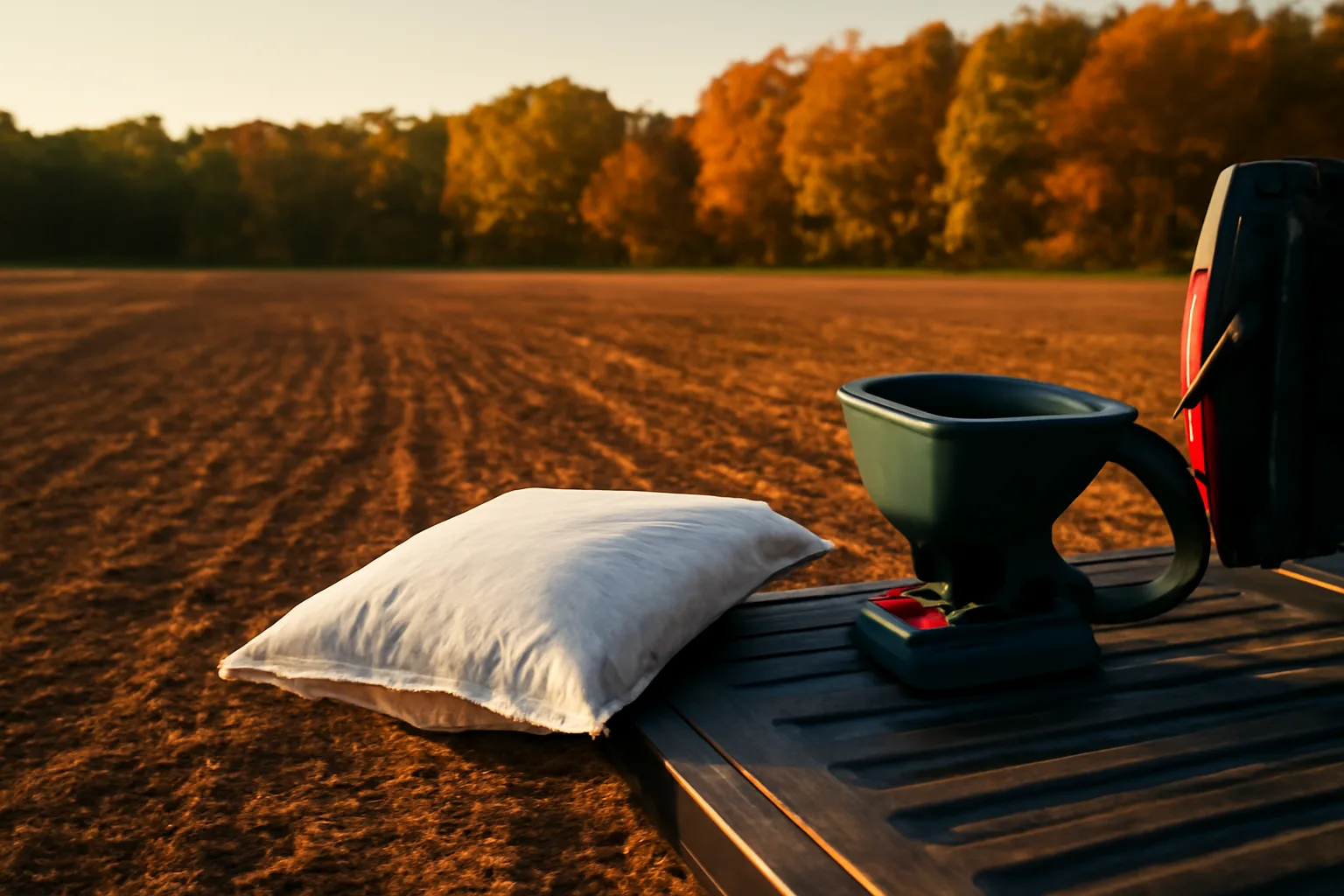
For small plots (under an acre), a hand or tow-behind broadcast spreader, a rake or drag harrow, and a way to kill existing vegetation (herbicide or tillage) covers it. Total cost for basic gear if you're starting from zero is usually $150 to $400, depending on whether you already own an ATV or UTV to tow implements. For larger plots (1 to 5 plus acres), a disc or tiller, a cultipacker or roller, and a broadcast spreader mounted to a tractor or ATV make the job faster and the stand more even. Renting or borrowing equipment for a weekend is common and often cheaper than buying, especially for a first-year plot where you're still learning your ground. Don't skip the cultipacking or dragging step regardless of plot size. Seed-to-soil contact is the single biggest factor in germination success for small-seeded species like clover and brassicas. Broadcasting seed onto bare, loose dirt without pressing it in is one of the most common reasons plots fail. If you're weighing brand-name blends against basic farm store seed for your equipment and budget, food plot seed comparisons can help you figure out where the extra cost is actually buying you something.
Frequently asked questions
Do deer eat sorghum?
Yes, deer eat both the grain and leafy growth of sorghum, but it's usually a secondary choice compared to corn, soybeans, or clover. It's more valuable as a drought-tolerant cover crop or winter standing cover in dry regions than as a primary food plot species.
Do deer eat clover?
Yes, clover is one of the most preferred food plot forages for whitetail deer, largely because of its 25 to 30 percent crude protein content in vegetative growth stages, according to extension forage research. It's eaten heavily spring through fall wherever it's planted.
When should I plant food plots for deer?
Spring plots (clover, chicory, soybeans) go in mid-April through June once soil hits about 50 degrees Fahrenheit. Late summer plots (brassicas, turnips, oats, wheat) go in late July through early September, timed 90 to 100 days before your area's first hard frost.
Do deer like clover more than other food plot options?
Deer show strong, consistent preference for clover during the growing season, largely due to its high protein content. In fall, preference shifts toward brassicas and turnips once frost sweetens them, so clover isn't universally the top choice year-round, just during warmer months.
When do you plant oats for deer food plots?
Plant oats late July through early September in most of the Midwest and Northeast, giving 45 to 60 days of growth before a hard frost. Oats germinate fast and are commonly mixed with brassicas or winter wheat for a quick-growing fall plot combination.
When is the best time to plant turnips for deer?
Plant turnips 80 to 100 days before your area's average first hard frost, usually late July to mid-August in most northern and central zones. Deer often ignore the bulbs until several frosts sweeten them, so turnip plots peak in appeal in late fall and early winter.
What exactly is a food plot?
A food plot is a planted area of forage, usually clover, brassicas, or cereal grains, established on hunting land to feed and hold deer. It ranges from a quarter-acre bow-range plot near cover to multi-acre nutrition plots meant to support herd health across the season.
What is the favorite food of deer?
There's no single universal favorite; it shifts by season and region. White oak acorns are frequently cited as a top natural preference due to high fat content and low tannins, while clover and soybeans rank highest among planted food plot species during the growing season.
Do deer like honey?
There's no real evidence deer seek out honey; it isn't part of their natural diet. The question usually comes from confusion with honey-scented mineral or attractant products, which are a different category from food plot forage and may fall under state baiting rules.
Is Fleet Farm food plot seed as good as specialty food plot brands?
Agronomically, often yes, since the underlying seed genetics (clover, brassica, oats) are frequently similar. The premium price of boutique food plot brands usually buys marketing and pre-mixed regional blends, not fundamentally different seed, though availability and timing at farm stores can be less predictable.
How do I know what seed to buy for my soil?
Get a soil test through your county extension office or a private ag lab first (typically $10 to $20). Your pH and fertility results, not the seed bag's suggested rate, should drive species selection and lime or fertilizer amounts.
Can I plant a food plot without tilling the soil?
Yes, no-till broadcast planting works for clover (especially frost-seeding in late winter) and some brassica blends, as long as you get decent seed-to-soil contact through a drag, roller, or rain event soon after seeding. Full tillage generally gives more reliable germination on weedy or compacted ground.
Sources
- University of Georgia Extension, "Forage Legumes" (Bulletin 1476): Clover crude protein content in vegetative growth stages is typically 25 to 30 percent
- USDA Forest Service, Fire Effects Information System, "Quercus alba" (white oak) species review: White oak acorns have lower tannin levels than red oak acorns and are a preferred wildlife food source
- Mississippi State University Deer Lab, "Deer Nutrition and Food Habits" fact sheet (Jones and Demarais): Deer diet composition shifts continuously with seasonal food availability rather than a fixed preference order
- USDA NRCS, "Soil Quality Indicators: pH" fact sheet: Basic soil tests report pH, phosphorus, potassium, and organic matter to guide lime and fertilizer decisions
- Iowa State University Extension: Discussion of soil testing and pH considerations relevant to selecting food plot seed for local soil conditions.