Last updated 2026-07-25
TL;DR
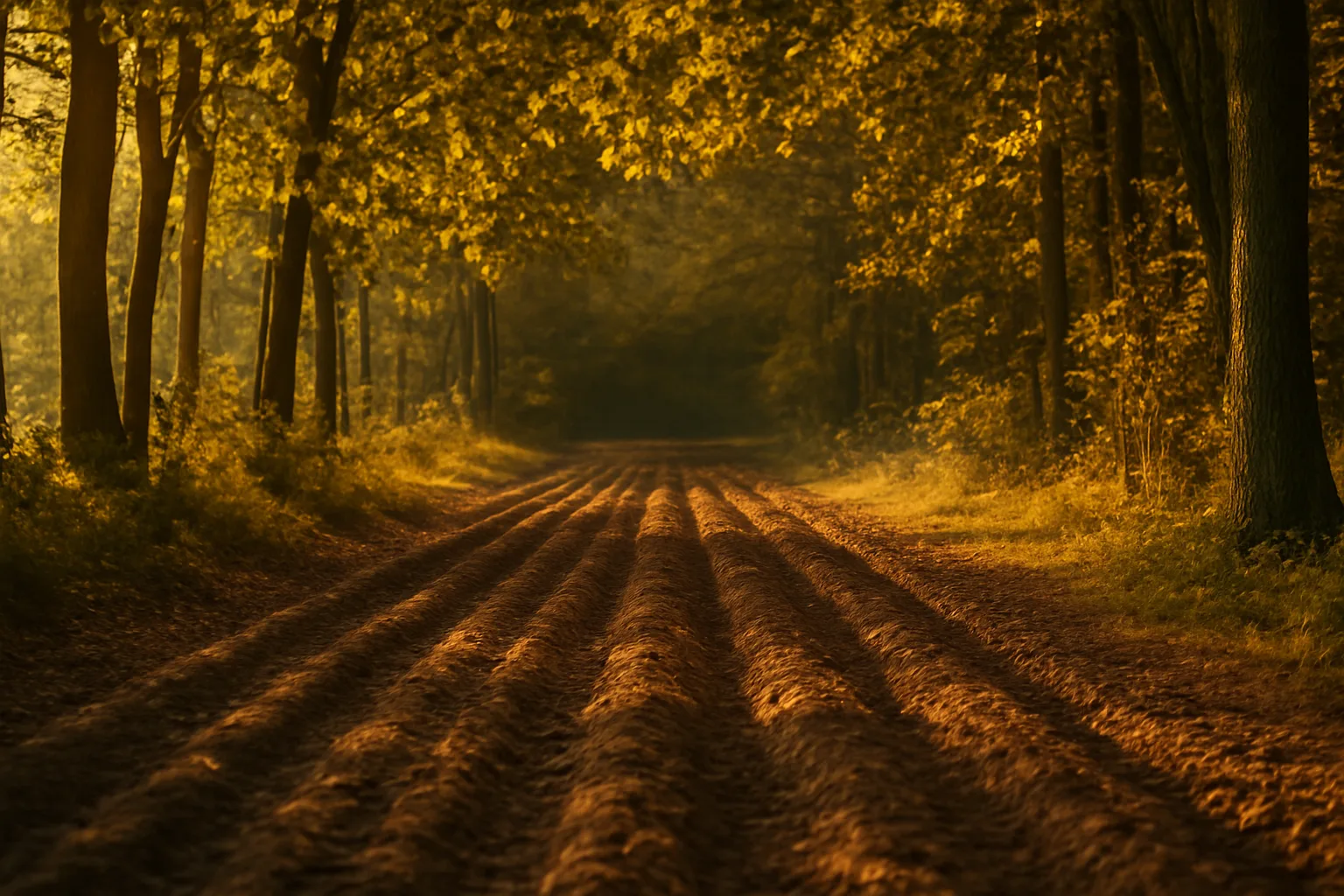
A food plot for deer in the woods works, but shade cuts yields hard. You need at least 4-6 hours of direct sun, extra lime and fertility, and shade-tolerant species like clover, brassicas, or cereal grains. Full-shade timber openings under 1/4 acre rarely justify the seed cost.
what is a food plot, exactly?
A food plot is a planted opening, usually somewhere between a quarter acre and a few acres, that grows forage or grain specifically to feed and hold deer on a property. It's not a garden and it's not a wildlife food plot mix scattered by hand and forgotten. Most serious plots involve a soil test, some lime and fertilizer, a seedbed, and a species pick that matches the season and the site. In timber, the definition doesn't change but the constraints do. You're not picking a species because it yields the most tonnage per acre in full sun. You're picking one that can survive on 4 to 6 hours of direct or filtered light, in soil that's often more acidic and lower in organic matter than the field edges nearby. The USDA's National Agroforestry Center treats wildlife openings in timber as a distinct management practice from row-crop-style plots, because light, soil pH, and competition from tree roots change the math [1]. If you're planning your first timber plot, it helps to read up on food plot whitetail basics first, since a lot of the fundamentals (soil test, lime, seed-to-soil contact) carry over directly.
will a food plot even work in the woods?
Sometimes. It depends almost entirely on how much light actually reaches the ground, not on how big the clearing looks from the road. Most extension guidance puts the minimum useful sunlight for a woods plot at around 4 hours of direct sun a day, with 6+ hours being far more reliable for anything beyond clover or shade-tolerant brassicas [2]. Landowners routinely underestimate how much a full forest canopy blocks light, even in a clearing that looks open in winter when the leaves are down. If your opening is under a quarter acre and surrounded by mature hardwoods with a closed canopy, don't expect much. Roots from adjacent trees will pull moisture and nutrients out of that soil fast, and shaded soil dries slower and stays cooler, which slows germination. A better move on tiny, deep-shade openings is often a simple mineral or attractant site instead of a full plot. You're fighting biology you can't beat with more fertilizer. Wider logging trails, power line cuts, and clearcut edges perform much better than pocket openings inside solid timber, because they get several hours of direct overhead sun even under a canopy that isn't fully removed.
when to plant food plots for deer in wooded ground?
Timing splits into two windows almost everywhere in whitetail country: a spring/summer planting for warm-season forage, and a late-summer/fall planting for cool-season annuals like brassicas, cereal grains, and clover. Cool-season plots (clover, oats, wheat, brassicas) generally go in from mid-August through mid-September in the North, and from early September through mid-October in the transition zone and parts of the South, timed so the plants have 6 to 8 weeks of growth before a hard frost [3]. Warm-season plots (soybeans, cowpeas, sorghum) go in after your last frost date, typically May into early June depending on latitude. In shaded woods openings, many managers push planting a week or two earlier than the open-field recommendation for their zone. Slower light penetration means slower germination and growth. You want every extra day of warm soil you can get before day length and canopy shade both start working against the seedling. Check your zone-based planting calendar against your local extension office's frost dates. A regional calendar is only a starting point, not a guarantee for your specific opening.
do deer like clover, and does it work in shade?
Yes, clover is one of the most consistently preferred forages in whitetail diet studies, and it's also one of the better shade performers among common food plot species. Ladino and red clover can tolerate partial shade better than most legumes, though yield still drops as canopy cover increases. University of Tennessee Extension lists white clover as a strong choice for wildlife food plots because of its high protein content, often 25 to 30 percent crude protein in vegetative stages, and its ability to persist for multiple years if maintained [3]. It's also one of the few species that tolerates the lower light and root competition typical of woods openings reasonably well, though it still wants at least a few hours of direct sun a day to stay productive. Clover's downside in timber is weed and grass competition. In full sun you can mow to control weeds without hurting clover much. In shade, clover grows slower and weeds that tolerate shade (certain grasses, briars) can get ahead of it fast. Expect more maintenance in a woods clover plot than in an open one, not less.
when to plant oats for deer food plots?
Oats go in as a cool-season annual, typically from late August through September in northern and mid-latitude zones, timed 6 to 8 weeks before your average first frost so they establish before growth slows [3]. In the Southeast, planting often runs into October since frost comes later. Oats are a solid pick for woods openings because they germinate fast and tolerate lower light better than many warm-season grains. They also work well mixed with a brassica or clover, giving deer a quick-growing grain forage in the first few weeks while the slower species establish underneath. A hard freeze will eventually kill oats back. They're less winter-hardy than winter wheat or rye. In colder zones oats function as an early-fall attraction plot rather than a food source that lasts deep into winter. If you want late-winter forage in the same spot, consider blending oats with winter wheat or cereal rye, which survive harder freezes and keep something green in the plot into late winter.
when to plant turnips for deer, and do they work in the woods?
Turnips and other brassicas go in as a late-summer planting, generally 60 to 90 days before your first expected hard frost, since they need that runway to bulb out and reach peak palatability [3]. That usually means early August in far northern zones down to mid-September in the transition zone. Brassicas need more direct sun than clover to bulb properly. Extension programs note that brassica forage quality, and bulb development specifically, drops in partial shade compared to clover or cereal grains, which handle lower light better. In a woods opening with only 4 hours of direct sun, expect leafy brassica growth but don't count on big bulbs. Turnips also famously go through a flavor shift after the first hard frost, when starches convert to sugars and deer usage often jumps. That's true in the woods too, but if your plot barely gets enough light to grow leaf, don't expect the frost-sweetened bulb effect to save a weak stand.
do deer eat sorghum, and does it belong in a woods plot?
Deer do eat sorghum, both the grain heads and the young forage growth, but it's a warm-season crop that wants full sun and it's a poor fit for shaded timber openings. Grain sorghum is more commonly planted as a standalone or blended warm-season food plot in open fields, often for its drought tolerance and its ability to provide standing grain into fall and winter. In a woods setting with partial canopy, sorghum tends to grow tall and spindly reaching for light, with reduced head and grain production compared to open-field stands. If your only sunny spot in the timber is a small logging road or a modest clearing, you're generally better off putting your effort into clover, oats, or brassicas. All of them handle lower light with less yield penalty than sorghum does. Where sorghum makes sense near timber is as a border planting along a field edge that gets full sun most of the day, used as a screen or a standing grain source next to a woods bedding area, rather than as an interior plot species.
what's the best food plot layout for a small woods opening?
| White/ladino clover | 4-6 hrs | Late Aug-Sept (fall) or April-May (spring) | Good |
|---|---|---|---|
| Oats | 4-6 hrs | Late Aug-Sept | Moderate |
| Winter wheat/rye | 4-6 hrs | Sept-Oct | Moderate |
| Brassicas (turnip, radish) | 6+ hrs | Early Aug-mid Sept | Fair, poor bulbing in shade |
| Grain sorghum | 8+ hrs (full sun) | May-June | Poor |
| Soybeans/cowpeas | 6-8 hrs | May-June | Poor to fair |
Long and narrow beats round and blocky in timber, because a long plot oriented along an east-west opening captures more total daily sun hours than a compact circular clearing of the same square footage. A useful rule from several extension wildlife programs: aim for plots at least 1/4 acre in size if possible, since smaller kill-plots can get browsed out fast by even a modest deer herd, especially in areas with limited alternative forage [3]. In heavy timber where a food plot competes directly with browse-rich understory, a small plot can disappear under grazing pressure within weeks of germination. If you're stuck with a small opening, consider fencing off a portion temporarily during establishment (a simple electric or poly fence) to let the stand get a head start before deer hit it hard. This matters more in the woods than in open ag country, where deer have more forage options and less concentrated pressure on any one small plot. Here's a rough comparison of how common woods-plot species handle limited sun and typical planting windows: | Species | Min. sun for decent yield | Typical planting window (northern/transition zones) | Shade tolerance |
what does soil pH and fertility look like in the timber?
Woods soil is very often more acidic than adjacent field soil, because decades of leaf litter (especially from oaks and pines) acidify the topsoil over time. A soil test is not optional here. It's the only way to know how much lime you actually need. Many land-grant extension soil labs recommend target pH ranges of 6.0 to 6.8 for most food plot species, with clover and brassicas particularly sensitive to low pH limiting nutrient uptake even when fertilizer is applied [4]. If your woods plot soil tests at 5.0 or 5.2, which isn't unusual under hardwood canopy, you may need 1 to 2 tons of ag lime per acre to correct it. Lime takes months to fully react in the soil, so fall applications for a following spring or summer planting are the realistic path in a lot of cases. Your soil test lab is the authority on exact lime and fertilizer rates for your dirt. A regional recommendation is a starting point, not a substitute for your own results. Get the test done through your county extension office or a private ag lab before you spend money on seed for a new woods opening. If you want a written plan built around your specific soil test numbers, species goals, and zone, that's exactly the kind of detail work the $99 one-time Custom Food Plot Plan is built to handle. It's general guidance based on your inputs, not a site visit, but it saves a lot of guesswork compared to picking a bag off the shelf.
what are deer's favorite foods, in the woods or otherwise?
Deer are opportunistic browsers, and their preferences shift by season, region, and what's available. That said, several forages show up again and again in preference studies and extension forage guides as consistently high on the list: white clover, soybeans, cowpeas, and brassicas in the growing season, and acorns, browse (woody stems and leaves), and agricultural grain crops in fall and winter [3]. Acorns deserve real mention in a woods-plot article. In a mast year, deer will often pass right by a food plot to hit a white oak flat, since acorns are calorie-dense and require no chewing effort compared to browsing stems. This is one reason woods food plots sometimes seem to underperform in a big mast year. It's not that the plot failed. A better food source showed up nearby. In a poor mast year, the same plot can look like a magnet. This variability is normal and it's part of why a food plot in timber should be thought of as one tool among several (along with existing browse, mast trees, and agricultural fields nearby) rather than a standalone solution.
do deer like honey, and does that matter for food plots?
There's no real evidence that whitetail deer specifically seek out honey, and it doesn't show up in wildlife forage research or extension food plot guidance as a meaningful attractant. Deer are occasionally reported to nibble at exposed honeycomb or investigate spilled syrup-like substances, largely out of general opportunistic feeding behavior and curiosity, not because honey is a preferred food source in any documented sense. Some commercial deer attractant products use sweet, sugary scents (including honey-like or molasses-based formulas) as a scent lure rather than a nutritional source, similar to how mineral licks work more on mineral craving than caloric need. If you're trying to draw deer to a spot or a trail camera, a sweet scent lure is a completely different tool than a food plot, and it isn't a substitute for actual planted forage. Worth a mention here too: before spreading any attractant, mineral, or supplemental feed in or near a woods plot, check your state wildlife agency's baiting and feeding regulations. Rules vary widely. Some states prohibit baiting for hunting purposes entirely, others restrict it seasonally or by distance from a stand, and enforcement details differ by state game agency. What's legal in one state can be a citation in the next one over.
how do you pick equipment for a small woods plot?
You don't need a 60-horsepower tractor for a quarter-acre timber opening, and honestly, big equipment is often a poor fit for tight, root-filled clearings anyway. A lot of woods-plot managers get by with a compact ATV or UTV, a small disc or cultipacker, a hand-crank or ATV-mounted broadcast spreader, and a backpack sprayer for spot herbicide work. Because woods openings often have stumps, roots, and rocks close to the surface, no-till or minimal-till approaches (spraying to kill existing vegetation, then broadcasting seed into the residue) often work better than trying to run a disc through root-bound soil. If you're planning equipment purchases around a woods plot specifically, it's worth reading a broader deer food plot seed guide alongside your equipment decisions. Seed size and depth requirements (tiny clover seed versus larger grain seed) drive a lot of the planting method choice more than the plot's location does.
Frequently asked questions
Do deer eat sorghum?
Yes, deer eat both sorghum grain and young forage growth, but it's a full-sun warm-season crop. In shaded timber openings it grows tall and thin with poor grain production, so it's a better fit for open field plots or sunny field-edge plantings than for interior woods clearings.
Do deer eat clover?
Yes, clover is one of the most consistently preferred whitetail forages, often testing at 25-30% crude protein in the vegetative stage according to University of Tennessee Extension. It also handles partial shade better than most legumes, making it one of the stronger choices for a woods food plot opening.
When should I plant food plots for deer?
Cool-season plots (clover, oats, brassicas, wheat) generally go in mid-August through mid-October depending on latitude, timed 6-8 weeks before first frost. Warm-season plots (soybeans, sorghum, cowpeas) go in after your last spring frost, typically May into early June. Check your local extension office's frost date charts for your specific zone.
Do deer like clover more than other plot species?
Preference varies by season and region, but clover ranks consistently high in whitetail forage studies and extension guides because of its protein content and long growing season. It's not universally deer's single top choice everywhere, but it's a reliable, repeatable performer across most of the whitetail's range.
When should I plant oats for deer?
Plant oats as a cool-season annual roughly 6-8 weeks before your average first fall frost, which lands in late August through September for most northern and transition zones, and can run into October in parts of the Southeast. Oats germinate fast but aren't very winter-hardy compared to wheat or rye.
When is the best time to plant food plots for deer overall?
There isn't one single best date; it depends on species and zone. As a rule, cool-season plantings happen in late summer to early fall (6-8 weeks before frost) and warm-season plantings happen in late spring after your last frost. A regional planting calendar from your state land-grant extension office is the most reliable starting reference.
When should turnips be planted for deer food plots?
Plant turnips and other brassicas 60 to 90 days before your area's first expected hard frost, since they need that time to develop leaf mass and bulb properly. That's roughly early August in far northern zones and mid-September in transition zones. They need more direct sun than clover to bulb well.
What exactly is a food plot?
A food plot is a deliberately planted opening, often a quarter acre to several acres, that grows forage or grain crops specifically to feed and hold deer on a property. It typically involves a soil test, lime and fertilizer application, seedbed prep, and species selection matched to season, region, and available sunlight.
What are deer's favorite foods?
Deer preferences shift by season and region, but white clover, soybeans, cowpeas, brassicas, acorns, and woody browse consistently rank high in forage studies and extension guides. In big acorn years, deer often prefer mast over planted food plots entirely, since acorns are calorie-dense and require less effort to eat.
Do deer like honey?
There's no solid evidence deer specifically seek out honey as a food source. Occasional interest in honeycomb or sugary substances is opportunistic curiosity, not a documented dietary preference. Sweet-scented commercial attractants sometimes use honey-like scents as a lure, but that's a scent tool, not a nutritional food plot substitute.
Can a food plot actually grow well in heavy timber shade?
It depends on available light. Most extension guidance puts the practical minimum at 4 hours of direct sun daily, with 6 or more hours being far more reliable. Under a fully closed canopy with less light than that, even shade-tolerant species like clover will struggle, and a mineral site may be a better use of that spot.
How big should a woods food plot be?
Aim for at least 1/4 acre where possible. Smaller plots in timber can get browsed out fast because deer have concentrated access and often limited alternative forage nearby. Long, narrow plots oriented to capture more direct sun across the day generally outperform small round clearings of the same total size.
Does soil pH matter more in woods food plots than open field plots?
Often yes. Decades of leaf litter, especially under oaks and pines, tend to acidify woods soil more than adjacent open ground. A soil test is essential before planting; many woods plots need 1 to 2 tons of ag lime per acre to reach the 6.0-6.8 pH range most food plot species prefer.
Is baiting or supplemental feeding legal near a woods food plot?
It depends entirely on your state. Some states prohibit baiting for hunting purposes outright, others allow it with restrictions on distance, timing, or feeder type. Always check your state wildlife agency's current regulations before adding mineral, feed, or attractant near a plot, since rules and enforcement vary widely and change over time.
Sources
- USDA National Agroforestry Center, working trees for wildlife: Wildlife openings and forest edge plantings are treated as a distinct agroforestry practice affected by light and canopy conditions.
- University of Missouri Extension, managing forest openings for wildlife (G9421): Food plots in wooded or shaded areas often underperform because landowners underestimate canopy light reduction; roughly 4-6 hours of direct sun is the practical threshold.
- University of Missouri Extension, soil test interpretations and recommendations (G9111): Target soil pH range of 6.0-6.8 for most food plot forage species and the role of lime in correcting acidic soils.
- University of Georgia Extension: Recommendations on planting dates and species selection, including oats, clover, and brassicas, for deer food plots
- USDA Forest Service Research: Research on deer forage preferences and habitat use in wooded environments