Last updated 2026-07-26
TL;DR
The best dove food plots combine sunflower (65-90 days to bloom-down), browntop millet (60-70 days), and grain sorghum, planted so seed heads dry down 7-10 days before opening day. Mow or disk strips in stages, keep water and bare ground nearby, and check your state's baiting rules before you plant or mow anything.
What is a food plot, and how is a dove plot different from a deer plot?
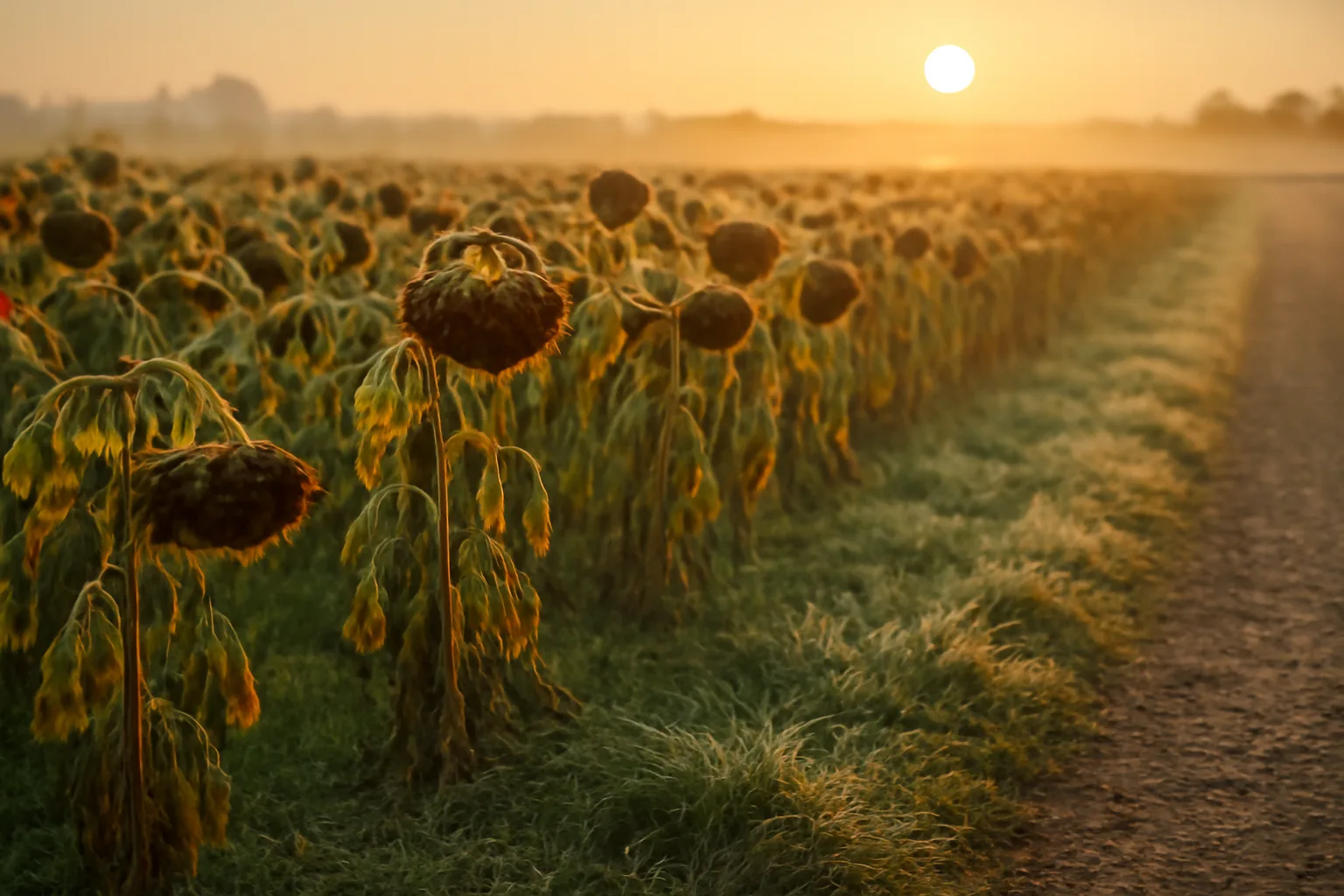
A food plot is any planted area designed to grow food that attracts and holds wildlife, whether that's a half-acre clover patch for deer or a five-acre sunflower field for doves. The core idea is the same across species: you're growing something an animal wants to eat, in a spot you can hunt. Dove plots differ from deer plots in a few practical ways. Doves are ground feeders that want bare soil and dropped seed, not standing forage. They feed by sight, walking rows and picking up seed that has shattered or been knocked down. A deer plot wants to stay green and growing through the season. A dove plot wants the opposite by opening day: mature, dry, and either mowed, disked, or burned down so seed sits exposed on open ground. Timing also flips. Most dove seasons open in very early September across the Central and Eastern zones, and the daily bag limit for mourning and white-winged dove combined is 15 birds under the current federal frameworks published in the Federal Register [1], so a dove plot has to be planted, matured, and manipulated on a tight spring-to-summer window. Deer food plots run on a much longer calendar tied to fall and winter forage needs. If you're building both types of ground, treat them as separate projects with separate seed lists. For deer-specific planning, see food plot whitetail and deer food plots.
What are doves' favorite food plants?
Doves key in on small, exposed seed more than any single 'favorite' plant. That said, a handful of species show up again and again in wildlife agency planting guides because they're reliable, they mature fast, and they shatter seed well. Browntop millet is close to the gold standard for a quick dove field. It matures in roughly 60 to 70 days and drops seed readily once it dries, which makes it forgiving if your planting date slips a couple weeks. Grain sorghum (milo) is another workhorse; it takes longer, generally 90 to 120 days depending on variety and region, but it produces heavy seed heads doves will work for weeks. Sunflower, especially black oil types, is the field most hunters picture when they think 'dove field,' and for good reason. Sunflower typically needs 80 to 100 days from planting to a stand ready for disking down, and doves will hit a sunflower field hard once the heads dry and start dropping seed. Beyond those three, wheat, corn, and Japanese millet all show up in state agency dove field recommendations, often as secondary or filler species to stagger maturity across a field. Mississippi State University Extension Publication 2111, "Mourning Dove Field Management," lists browntop millet, grain sorghum, sunflower, and corn as core species for managed dove fields in the state [2]. Texas A&M AgriLife Extension's dove field guidance leans on similar species with an emphasis on staggering planting dates so seed matures across several weeks instead of all at once [3].
When should you plant food plots for deer versus dove fields?
This is one of the most common points of confusion for hunters managing both deer and dove ground on the same property, because the calendars barely overlap. Dove fields go in the ground in spring to early summer. In the Southeast, that typically means late April through June for sunflower and sorghum, and as late as July for browntop millet, so the crop matures and can be manipulated by late August or early September ahead of a Labor Day opener. Mississippi State Extension Publication 2111 recommends planting sunflowers in April through early June in most of the state to have them ready for a September 1 opener [2]. Deer food plots run on a completely different clock. Spring and summer plots (soybeans, cowpeas, chicory) go in after your last frost date, generally April through June depending on latitude, and are built for summer nutrition and early bow season. Fall plots (brassicas, cereal grains, clover) get planted from late summer into early fall, often 60 to 90 days before your first hard frost, so they're mature and palatable when deer need them most in late fall and winter. If you're new to zone-based timing for deer plots specifically, the guidance varies a lot by USDA plant hardiness zone and first/last frost dates, which is worth mapping out separately from your dove field schedule. For species and seed selection on the deer side, see deer food plot seed and food plot seed.
When should you plant oats for deer?
Oats are a fall food plot staple, not a spring one. Plant them roughly 6 to 8 weeks before your area's average first frost date, which puts most of the Midwest and Upper South in a late August to mid-September planting window, and the Deep South into late September or October. Oats germinate fast, often within 5 to 10 days in warm, moist soil, and they green up quickly, which makes them one of the better early-season attraction plots if you're trying to pull deer in during archery season. They're cold-tolerant to a point but will die back with hard, sustained freezes, so in northern zones oats tend to be a fall-only annual rather than a plant that holds through winter. Pairing oats with a brassica or a cereal rye in the same blend extends palatability later into the season, since rye tolerates cold much better than oats do. Getting the planting window right matters more for oats than for a lot of other species, because they need enough warm-season growth to establish a stand before frost really shuts things down.
When should you plant turnips for deer?
Turnips are a late-summer planting, timed so they mature into fall and take a hard frost or two before deer really start eating the bulbs. The general rule from most land-grant extension guidance is to plant turnips 80 to 90 days before your first expected hard frost, which lands most of the Midwest and Upper South in late July to mid-August, and pushes into early September for the Deep South. The reason for that timing isn't arbitrary. Turnip bulbs and tops taste bitter to deer until a freeze converts starches to sugars, which is why turnip plots often get ignored in October and then get hammered in December. If you plant too late and a killing frost hits before the plant has bulked up, you'll have small bulbs and thin tonnage. Plant too early in hot, dry August soil and you risk poor germination or flea beetle damage before the plants establish. Brassica blends (turnips, radish, rape) are commonly paired with cereal grains like oats or wheat in the same plot, which spreads out palatability across the fall and winter instead of betting on one plant type.
Do deer eat sorghum?
Yes, deer will eat grain sorghum, though it's more of a secondary or opportunistic food for them than a preferred plot species. Sorghum is grown far more often as a dove and upland game bird plot than as a dedicated deer plot, because deer generally rank it below soybeans, corn, clover, and brassicas in preference studies and field observation. Where sorghum earns its place on deer ground is as a screening or cover crop, and as incidental forage once the grain heads mature and start dropping seed in fall. Some hunters plant sorghum strips specifically to create visual cover along field edges or approach trails, with deer feeding activity as a secondary benefit rather than the main goal. If your priority is deer nutrition, sorghum shouldn't be your headline species. If you're managing a mixed-use field for dove hunting in September and want some deer activity later in the fall once the field dries down, sorghum's dual role starts to make more sense.
Do deer eat clover, and do deer like clover?
Yes, and clover is consistently one of the most preferred forages in food plot research, more than anecdotal hunter opinion. Perennial clovers like white clover and red clover show up at or near the top of preference studies because they're high in protein, palatable through most of the growing season, and they regrow after grazing pressure instead of getting wiped out the way annuals can. Research out of the Mississippi State University Deer Lab on food plot forage preference has repeatedly found clover and other legumes ranking among the highest-preference plantings when deer have a choice across multiple plot species, a finding echoed across extension literature on perennial food plots. Auburn University Extension's food plot guidance similarly lists clover as a foundational perennial for whitetail plots because of its protein content, often in the 20 to 30 percent crude protein range depending on soil fertility and clover variety [4]. Clover's main downside is establishment. It needs decent soil pH (most extension guidance targets 6.0 to 6.5) and adequate phosphorus and potassium to really perform, which is exactly why a soil test matters before you plant. Skip the lime and fertilizer step and even the best clover variety will underperform on acidic ground.
What is deer's favorite food, according to research and field data?
There's no single universal answer, because preference shifts by region, season, and what's already growing nearby, but the research is fairly consistent on a short list of top performers. Soybeans, cowpeas, and clover consistently rank as high-preference forages in food plot studies, particularly during the growing season when protein demand is highest for does raising fawns and bucks growing antlers. In fall and winter, preference shifts toward high-carbohydrate, high-energy foods: acorns where available, brassicas after a frost, and cereal grains like wheat and oats. Natural forage availability matters here too. A deer herd with heavy acorn production nearby may largely ignore a food plot in October, then hit it hard in January once acorns run out. That's a pattern a lot of hunters misread as 'my plot isn't working.' The honest answer is that 'favorite food' is really 'most preferred food relative to what else is available and what the deer's nutritional needs are that month.' A blend that covers spring/summer legumes and fall/winter brassicas or grains, rather than betting on one species, tends to hold deer more consistently across the season. For a broader look at species selection across a full property plan, see deer food plot seed.
Do deer like honey, and does that matter for food plots?
Deer are not drawn to honey in any meaningful field sense, and it has no real place in food plot planning. This question usually comes up because of 'honey hole' terminology (a hunter's favorite hidden spot) getting confused with an actual food source, or from social media claims about pouring honey or sugar water on plots to boost attraction. There's no peer-reviewed wildlife research supporting honey as a deer attractant, and it's not a practice recommended by any state wildlife agency or extension program. Sugar-based attractants in general fall into a gray area that overlaps with baiting laws in a lot of states, which is a much bigger practical concern than whether honey 'works.' If you want a sweet, high-carb food deer genuinely respond to, that's what brassicas post-frost and grain crops are for. Skip the honey.
How do you lay out and manage a dove field for hunting?
Layout matters as much as species choice for dove hunting, because doves feed by sight on open, bare ground and they want clear sightlines to come and go. Most successful managed dove fields aren't planted wall to wall; they're planted in strips or blocks that get manipulated in stages. A common approach, echoed in Texas A&M AgriLife Extension's dove field recommendations [3], is to plant roughly half to two-thirds of the field and leave the rest disked or mowed bare from the start, then mow or disk the planted sections in stages over several weeks leading up to the opener. This staggers seed availability and keeps the field producing fresh exposed seed across multiple hunts instead of getting picked clean after the first sit. Water and grit nearby help too. Doves need both, and a pond edge or gravel road cutting through or bordering the field adds to a plot's draw. Keep some bare dirt strips through the field itself; doves are ground feeders and won't work through standing vegetation to find seed. Tree lines and power lines bordering the field are actually an asset, not a liability. Doves like to perch and survey before dropping into a field, so fields with some structure at the edges often outperform wide-open fields with nothing to land on first.
What are the legal and baiting-law considerations for dove fields?
This is the part that gets hunters in real legal trouble, and it's worth being blunt about. Federal migratory bird regulations prohibit hunting over bait, and the definition of what counts as baiting versus normal agricultural practice is specific and enforced at the state level. The U.S. Fish and Wildlife Service's baiting regulation at 50 CFR 20.21 defines baiting as "the direct or indirect placing, exposing, depositing, distributing, or scattering of salt, grain, or other feed that could serve as a lure or attraction for migratory game birds to, on, or over any areas where hunters are attempting to take them" [5]. The same section addresses agricultural fields directly, allowing hunting over areas where seed or grain is scattered as the result of "normal agricultural planting, harvesting, or post-harvest manipulation." Practically, this means: planting a field and harvesting or mowing it in the course of normal farming is fine; going back in and dumping extra grain, or mowing in an abnormal pattern designed purely to concentrate birds beyond what normal ag practice would produce, crosses into baiting. States layer their own rules on top of the federal baseline, and enforcement details (how long after manipulation you can hunt, what counts as 'normal' for your region's crops) vary. Check your state wildlife agency's current migratory bird regulations before you mow or disk anything close to opening day, not after.
How much does it cost to plant a dove field, and is it worth planning ahead?
Costs vary a lot by field size, whether you're renting equipment, and seed source, but rough per-acre numbers give a useful planning baseline. Browntop millet seed typically runs in the range of $1 to $2 per pound with seeding rates around 25 to 30 pounds per acre, putting seed cost alone around $25 to $60 per acre. Sunflower and grain sorghum run somewhat higher per acre once you factor lower seeding rates but higher per-pound seed cost, plus the fact that sunflower fields often need more aggressive weed control. Fertility costs sit on top of that and depend entirely on your soil test. A field that's been in row crops or has decent native fertility might need little more than nitrogen; ground that hasn't been limed in years could need several hundred dollars per acre in lime alone to correct pH before fertilizer even starts working efficiently. This is true for dove plots and deer plots alike: skipping the soil test is the single most common way hunters waste money on a plot that underperforms. If you're planning food plots across a whole property, a $99 one-time Custom Food Plot Plan can take your soil test results and property goals and turn them into a straightforward planting plan, though your soil-test lab remains the real authority on exact lime and fertilizer rates for your ground. A plan is general guidance, not a substitute for site-specific agronomy advice from your lab or local extension office.
Frequently asked questions
Do deer eat sorghum?
Yes, but it's a secondary food for deer, not a preferred one. Deer generally rank sorghum below soybeans, clover, and brassicas. Sorghum is planted mostly for dove and upland bird fields, with deer feeding on dropped grain later in fall as a bonus rather than the main draw.
Do deer eat clover, and do deer like clover?
Yes, clover ranks among the most preferred forages in food plot research. It's high in protein (often 20-30% crude protein depending on variety and soil fertility) and regrows after grazing, unlike many annuals. It needs decent soil pH, generally 6.0-6.5, and adequate phosphorus and potassium to perform well, so a soil test matters.
When should you plant food plots for deer?
It depends on the plot type. Spring/summer plots (soybeans, cowpeas) go in after the last frost, roughly April-June. Fall plots (brassicas, cereal grains, clover) go in 60-90 days before your area's first hard frost, typically late summer into early fall. Exact windows shift by USDA hardiness zone and local frost dates.
When should you plant oats for deer?
Plant oats 6 to 8 weeks before your area's average first frost date. That's late August to mid-September for most of the Midwest and Upper South, later into September or October in the Deep South. Oats germinate in 5-10 days and green up fast, making them a strong early-fall attraction plot.
When should you plant turnips for deer?
Plant turnips roughly 80-90 days before your first expected hard frost, generally late July to mid-August in the Midwest and Upper South, into early September farther south. Turnip bulbs taste bitter until frost converts starches to sugars, which is why deer often ignore turnip plots in October and hit them hard in December.
What is a food plot?
A food plot is a planted area designed to grow food that attracts and holds wildlife on a property, whether that's a clover field for deer nutrition or a sunflower field for dove hunting. Species, timing, and layout differ a lot depending on which animal and season you're planning for.
What are deer's favorite food?
There's no single answer; preference shifts by season. Soybeans, cowpeas, and clover rank high during the growing season for protein. In fall and winter, deer shift toward acorns, brassicas (after frost), and cereal grains for energy. A blend covering both periods tends to hold deer more consistently than one species alone.
Do deer like honey?
No, there's no real evidence deer are drawn to honey, and it has no legitimate place in food plot planning. This confusion often comes from 'honey hole' slang. Sugar-based attractants can also brush up against state baiting laws, so it's not worth the risk or the money.
What's the best food plot for doves specifically?
Browntop millet (60-70 days to maturity), grain sorghum (90-120 days), and sunflower (80-100 days) are the three species most state agency guides recommend for managed dove fields. Staggering planting dates across these species, or planting in blocks manipulated at different times, keeps seed available across multiple hunts instead of all at once.
How do you know when to mow or disk a dove field before hunting?
Time it so seed heads are dry and starting to shatter roughly 7-10 days before your opener, not immediately before. Mowing too early wastes seed to weather and birds before season; mowing right before the opener can cross into baiting violations depending on your state's specific timing rules, so check current agency guidance.
Is it legal to mow a dove field right before opening day?
It depends on your state and the specific manipulation, since federal rules under 50 CFR 20.21 allow normal agricultural practices like mowing but restrict manipulation designed purely to concentrate birds beyond that. Check your state wildlife agency's current migratory bird regulations before mowing, since enforcement details and allowed timing vary by state.
Can you plant a field for both dove hunting and deer hunting?
Yes, but treat it as two projects on two calendars. Plant sunflower or sorghum for a September dove opener, then let deer feed on dropped grain and regrowth later in fall as a secondary benefit. Don't expect one planting to be the primary attraction for both species at their peak times.
How much does a dove food plot cost per acre?
Seed alone typically runs $25-60 per acre for browntop millet at standard seeding rates, with sunflower and sorghum often higher per acre. Fertility costs on top of that depend entirely on your soil test results; fields needing lime correction can run several hundred dollars more per acre before fertilizer becomes effective.
Sources
- U.S. Fish and Wildlife Service, Migratory Bird Hunting Frameworks: Dove season opening dates and daily bag limits fall in early September across most hunting zones under federal frameworks
- Mississippi State University Extension Publication 2111, Mourning Dove Field Management: Recommended species (browntop millet, grain sorghum, sunflower, corn) and planting timing for managed dove fields in Mississippi
- Texas A&M AgriLife Extension Wildlife and Fisheries Sciences, dove field management guidance: Recommended dove field layout, staggered planting, and manipulation timing
- Auburn University Extension, ANR-2213, Establishing and Managing Wildlife Food Plots: Clover's role and crude protein range as a foundational perennial food plot forage
- U.S. Fish and Wildlife Service, 50 CFR 20.21 Baiting Definition: Federal definition of baiting for migratory game birds and the normal agricultural practice exception