Last updated 2026-07-25
TL;DR
Cover food plot seed at roughly 2 to 4 times its diameter. Tiny seeds like clover and brassicas need 1/4 inch or less, sometimes just a cultipack. Oats and cereal grains want 1 to 1.5 inches. Sorghum wants 1/2 to 1 inch. Too deep is the most common mistake and it kills germination outright.
How deep should you cover food plot seeds?
The rule agronomists use is simple: plant seed at a depth of about 2 to 4 times its diameter. A tiny clover seed is smaller than a pinhead, so it wants maybe 1/4 inch of soil or less. A cereal grain like oats or wheat is the size of a grain of rice, so it can handle 1 to 1.5 inches. Get this backwards and you'll wonder why half your plot never came up. This isn't a food-plot-specific number. It's basic agronomy that shows up in university seeding guides across the country. Kansas State University's forage establishment guidance puts it plainly: "small-seeded forages should be planted no more than 1/4 to 1/2 inch deep, while larger-seeded species can be planted deeper, up to 1 to 2 inches" [1]. The practical problem is that most food plot blends mix small and large seeds in the same bag (think clover with a little wheat as a nurse crop). You can't perfectly satisfy both. So you plant to the depth that suits the majority of the mix and accept some compromise on the rest.
What is a food plot, exactly?
A food plot is a planted patch of forage, usually annual grains, legumes, or brassicas, on hunting or wildlife land meant to feed and hold deer or other game. It's farming at a small scale, done with deer nutrition and hunting strategy in mind instead of yield per bushel. Most plots run anywhere from a quarter acre to several acres. Some landowners plant a single big destination plot near a stand. Others scatter several small plots through the timber for browse. Neither approach is wrong; they solve different problems. A more complete rundown of what food plots are for and how to size them lives at food plot whitetail. The soil prep, seed selection, and seed covering steps are the same regardless of plot size. Skip proper coverage and even a perfectly fertilized, perfectly limed plot can fail at the germination stage. That's the most preventable failure in the whole process.
When to plant food plots for deer (by region)
Timing depends on whether you're planting a spring/summer annual (clover, soybeans, sorghum) or a fall annual (brassicas, cereal grains, winter peas). Spring plantings generally go in after the last frost date for your area, and fall plantings go in 60 to 90 days before your average first frost so plants can establish before killing cold. The USDA Plant Hardiness Zone Map is the standard reference for figuring your last and first frost windows, and your state's land-grant extension office publishes local planting date charts built on that data. As a rough national guide: northern zones (Michigan, Minnesota, Wisconsin, Maine) plant fall blends from mid-July through August. Transition zones (Kentucky, Missouri, Virginia) plant August through mid-September. Southern zones (Alabama, Georgia, Texas) can wait until September or even October for cereal grains and brassicas, since frost comes later and heat lingers longer. Spring annuals like clover, chicory, and soybeans go in April through June depending on soil temperature, generally once soil hits 50 to 55°F for clover and closer to 60°F for warm-season grasses like sorghum. A soil thermometer costs about $10 and takes the guesswork out of this decision. For a full walk through species-by-species timing and combinations, see deer food plots.
When to plant oats for deer
Plant oats for deer 60 to 90 days before your first fall frost, which lands most of the Midwest and Northeast in the August window and the Deep South in September. Oats germinate fast (often within 5 to 10 days in warm soil) and deer hit them hard as soon as they're a few inches tall. Oats want to be covered about 1 to 1.5 inches deep. They're a larger seed than clover or brassica, so a drill or a disk-and-cultipack combo works better than broadcasting alone. If you broadcast oats, drag a section harrow or chain over the seed afterward to knock soil over it, then cultipack to firm the seedbed. Oats don't overwinter well in the northern half of the country. Hard freezes typically kill them off, which is fine because most hunters want oats to peak during the early fall bow season anyway. In the Deep South, oats can survive milder winters and keep producing into late winter.
When to plant turnips for deer
Plant turnips (and other brassicas like radish and rape) 90 to 100 days before your first killing frost. That timing matters because brassicas need a full growing season plus a frost or two to convert starches to sugars, which is when deer really start eating the bulbs and leaves hard. Turnip seed is tiny, smaller than a grain of sand in some varieties, so it wants only about 1/4 inch of cover or less. Many food plotters don't cover turnip seed at all; they broadcast it onto a firm, prepared seedbed and just cultipack over the top, letting the packer press seed into the top skin of soil without burying it. Clemson Cooperative Extension's brassica planting guidance advises planting brassica seed at a depth of 1/4 to 1/2 inch, or simply pressing it into a firm, well-prepared seedbed, since seed placed too deep will fail to emerge [2]. Planting too deep is the single most common reason a turnip plot comes up thin.
Do deer eat sorghum?
Yes, deer eat sorghum, both the standing grain heads and the green forage, though it's more commonly planted as a summer annual for tonnage and cover than as a preferred browse crop. Sorghum also draws turkey, dove, and other wildlife to the seed heads once they mature, which makes it a multi-species plot option in warm-season rotations. Sorghum seed wants to be covered about 1/2 to 1 inch deep, similar to grain sorghum planted in row-crop agriculture. It's a warm-season crop, so it goes in the ground after soil temperatures reach roughly 60 to 65°F, generally May through June depending on latitude. The USDA NRCS Plant Guide for sorghum outlines these warm-soil planting windows for the crop [3]. One caution: sorghum and sudangrass can develop toxic prussic acid (cyanide compounds) in young or drought-stressed, frost-damaged growth. This is a bigger concern for livestock grazing than for deer browsing small amounts, but it's worth knowing if you're planting a grazing-style forage sorghum blend. Land-grant extension guidance on sorghum recommends waiting until plants are at least 18 to 24 inches tall before heavy grazing pressure to reduce prussic acid risk [4].
Do deer eat clover, and do they actually like it?
Yes, deer eat clover readily, and it's consistently one of the most preferred food plot forages available. White clover and red clover show up near the top of deer preference studies across multiple states because they're high in protein (often 20 to 30 percent crude protein in vegetative growth) and stay palatable through most of the growing season [5]. Clover's popularity with hunters comes down to two things: deer genuinely prefer it, and it's a perennial, so a well-maintained clover plot can produce forage for 3 to 5 years before needing to be replanted, unlike annuals that need fresh seed every year. Clover seed is extremely small, smaller than a pinhead, and it should be covered no deeper than 1/4 inch, often less. Many growers broadcast clover onto a firm seedbed and cultipack without any additional covering step at all. Cover it too deep and it simply won't emerge. Clover has almost no stored energy in the seed to push through buried soil. For species comparisons and blend options, deer food plot seed breaks down clover against other perennial and annual choices.
What are deer's favorite foods overall?
| White/red clover | Very small | 0 to 1/4 in | Consistently high preference, high protein [5] | |
|---|---|---|---|---|
| Brassicas (turnip, radish) | Very small | 0 to 1/4 in | Low preference until after frost, then heavy use | |
| Oats | Medium | 1 to 1.5 in | High early preference, fast growth | |
| Winter wheat/rye | Medium | 1 to 1.5 in | Moderate to high, especially late season | |
| Soybeans | Large | 1 to 1.5 in | Very high where tonnage survives browse pressure | |
| Grain sorghum | Medium | 1/2 to 1 in | Moderate, more for tonnage and multi-species draw | No species on this list is a guarantee of deer activity on your specific property. Preference research describes averages across studies, not promises for your ground. |
There's no single universal answer because deer preference shifts by region, season, and what's available naturally, but research consistently ranks a handful of foods near the top: acorns, soybeans, clover, and other legumes. Mississippi State University's white-tailed deer nutrition guidance lists acorns and soft mast as preferred fall foods when available, with agricultural crops like soybeans and clover ranking high where planted . In food plot contexts specifically, soybeans (as a standing forage crop), clover, chicory, and brassicas after a frost tend to draw the most consistent attention. Corn and cereal grains matter more for late-season energy than early preference. Here's a rough comparison of common food plot species by seed size, cover depth, and deer preference reporting: | Species | Seed size | Cover depth | Deer preference notes |
Do deer like honey (or honeysuckle)?
This question usually means one of two things: honey the substance, or honeysuckle the plant, and the answer differs. Deer don't seek out honey as a food source in any documented way; it's not part of natural deer diet and isn't something wildlife agencies or extension research discuss as a forage. Honeysuckle is a different story. Japanese honeysuckle (Lonicera japonica) is browsed by white-tailed deer, and in parts of the Southeast it's actually considered a significant naturalized browse plant, especially in winter when other green forage is scarce. The USDA Forest Service's Fire Effects Information System notes that Japanese honeysuckle is browsed by white-tailed deer and can be an important winter food source where it's established . If someone's asking about honey-based deer attractants or scented additives sold for food plots, there's no research base showing deer respond to a food source based on sweetness the way, say, a bear might respond to a sugar scent. Deer preference is driven by protein content, sugar in the plant tissue itself (like post-frost brassicas), and palatability of the actual forage, not surface flavoring.
What tools actually cover seed correctly?
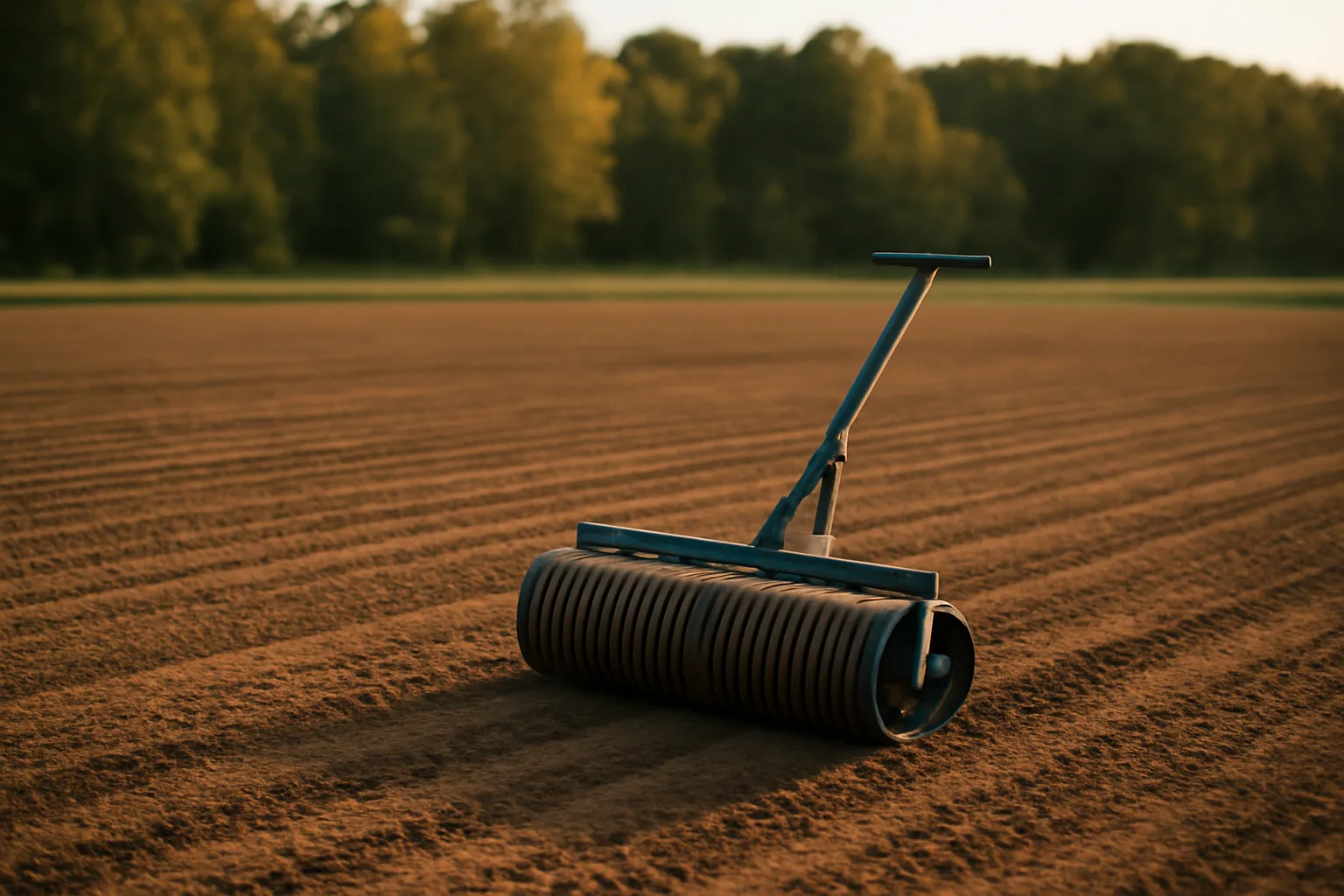
The tool matters less than matching the tool's action to the seed size. A cultipacker (a roller with ridges that firms soil and presses seed in) is the single best all-around tool for small seeds like clover and brassicas. Roll before AND after broadcasting on a firm seedbed for the best results; that first pass firms loose, fluffy dirt so seed doesn't sink too deep, and the second pass presses seed into good contact. For larger seed like oats, wheat, soybeans, and sorghum, a drill is the gold standard because it places seed at a consistent depth in one pass. A no-till drill can plant into standing residue without full tillage, which saves a step and holds soil moisture. Drills cost real money to buy (used units often run $2,000 to $8,000+) but many farm co-ops and conservation districts rent them out for a day rate, often $20 to $50 an acre. If you don't have a drill, a disk followed by a drag (a section of chain-link fence, a piece of cyclone fencing, or a homemade drag harrow) works fine for medium seed. Broadcast the seed, disk it in lightly (just enough to move soil over it, not bury it deep), then cultipack or drive over it with an ATV tire to firm the seedbed. A rundown of specific tools and their cost ranges by plot size lives at food plot seed.
What happens if you plant seed too deep or too shallow?
Too deep and the seed simply runs out of stored energy before the sprout reaches sunlight. Small seeds like clover have almost no reserve; buried at an inch, most of them never emerge at all. Larger seeds like oats and soybeans have more reserve and can push up from an inch or more, but even they struggle past 2 inches in heavy soil. Too shallow, and the opposite problem happens: seed dries out before it germinates, especially in sandy soil or during a dry stretch. Seed sitting on bare soil surface with no cultipacking is at the mercy of the next rain and the next hot, dry afternoon. Birds and rodents also pick off surface-broadcast seed that never gets pressed into contact with soil. The fix for both problems is the same: match seed size to cover depth, and always finish with a firming pass (cultipacker, roller, or even driving over it with a four-wheeler) so the seed has firm soil contact on all sides. Soil contact, more than depth alone, drives whether a seed germinates reliably.
How does soil test data change your covering plan?
Your soil test doesn't tell you how deep to cover seed, but it tells you whether the plot is worth planting at all this season. A soil pH below about 6.0 will limit legume nodulation and nutrient uptake regardless of how perfectly you cover the seed, and University of Missouri Extension's soil testing guidance recommends applying lime months ahead of planting because it takes time to move through the soil profile . Your soil test lab is the authority on how much lime and fertilizer your specific field needs. Recommendations vary by lab, by crop, and by regional soil chemistry, so follow what your test report says over generic advice. A general plan (like the kind we build) can tell you what species suit your region and goals, but it can't replace a site-specific soil test for lime and fertilizer rates. If you're building a planting plan from scratch and want species, timing, and rate recommendations pulled together in one place, the $99 one-time Custom Food Plot Plan walks through your region, soil test results, and equipment to hand you a plan built around what you've actually got. It's general guidance based on the information you give it, not a substitute for your soil lab's specific lime and fertilizer numbers.
A quick reference: seed depth by common food plot species
| White/red clover | 0 to 1/4 in | |
|---|---|---|
| Chicory | 0 to 1/4 in | |
| Brassicas (turnip, radish, rape) | 0 to 1/4 in | |
| Alfalfa | 1/4 to 1/2 in | |
| Oats | 1 to 1.5 in | |
| Winter wheat | 1 to 1.5 in | |
| Winter rye | 1 to 1.5 in | |
| Grain sorghum | 1/2 to 1 in | |
| Soybeans | 1 to 1.5 in | |
| Corn | 1.5 to 2 in | These are general depths drawn from standard agronomic seeding guides; heavier clay soils should lean toward the shallow end of each range, and light sandy soils can lean deeper since sand dries faster and seed needs more contact with moisture below the surface [1]. One more practical note: always check your blend's actual seed tag or bag instructions first. Commercial food plot blends sometimes mix species with different ideal depths, and the manufacturer's tested recommendation for that specific blend should override a general chart every time. |
Here's a condensed depth chart worth keeping on your phone during planting season. | Species | Seeding depth |
Frequently asked questions
Do deer eat sorghum?
Yes. Deer browse young sorghum forage and eat mature grain heads, and it also draws turkey and dove. It's usually planted more for summer tonnage and multi-species draw than as a top preference food, and cover depth runs about 1/2 to 1 inch.
Do deer eat clover?
Yes, and clover ranks among the most preferred food plot forages in research and field reports, largely due to high protein content in vegetative growth. It's a perennial, so a well-kept stand can last 3 to 5 years before needing replanting.
When should I plant deer food plots?
Fall annuals like brassicas and cereal grains go in 60 to 90 days before your first frost. Spring/summer annuals like clover, soybeans, and sorghum go in after last frost once soil hits 50 to 60°F depending on species. Exact windows vary by USDA hardiness zone.
Do deer like clover more than other food plot species?
Clover consistently shows up near the top of deer preference in field studies, largely because of its protein content (often 20 to 30 percent crude protein) and long season of palatability compared to many annuals. Preference always varies by region and food availability though.
When should I plant oats for deer?
Plant oats 60 to 90 days before your area's average first fall frost, generally August in the Midwest and Northeast, September in the Deep South. Cover seed 1 to 1.5 inches deep. Oats germinate quickly, often within 5 to 10 days in warm soil.
When is the best time to plant food plots overall?
It depends on the species. Fall blends (brassicas, cereal grains) go in 60 to 100 days before first frost. Spring/summer blends (clover, soybeans, sorghum) go in after last frost once soil warms. Check your USDA hardiness zone and state extension planting charts for local dates.
When should I plant turnips for deer food plots?
Plant turnips about 90 to 100 days before your first killing frost so the plant has time to bulb up and go through a frost cycle, which sweetens the leaves and roots. Cover the tiny seed no deeper than 1/4 inch, or just cultipack it onto a firm seedbed.
What is a food plot in hunting terms?
A food plot is a planted area of forage, usually annual grains, legumes, or brassicas, established on hunting land to provide nutrition and draw or hold deer and other wildlife. Plots range from small quarter-acre browse patches to multi-acre destination fields near a stand.
What are deer's favorite foods?
Preference varies by region and season, but acorns and soft mast rank high when available, along with soybeans, clover, and other legumes in agricultural or food plot settings. No single food is universally preferred; local forage availability changes what deer favor most.
Do deer like honey?
There's no research showing deer seek out honey as a food source; it isn't part of their natural diet. Honeysuckle, a different thing entirely, is browsed by deer and is documented as an important winter browse plant in parts of the Southeast.
How deep should I cover food plot seed?
As a rule, cover seed at 2 to 4 times its diameter. Tiny seeds like clover and brassicas want 1/4 inch or less. Cereal grains like oats and wheat want 1 to 1.5 inches. Corn wants 1.5 to 2 inches. Firm the soil with a cultipacker after covering.
Can I just broadcast seed without covering it at all?
For very small seed like clover or brassicas, broadcasting onto a firm seedbed and cultipacking works fine and is common practice. For larger seed like oats, soybeans, or corn, broadcasting alone leaves too much seed exposed to birds, rodents, and drying out; you need a drag or light disking afterward.
What's the best tool for covering food plot seed?
A cultipacker is the best single tool for small seed, firming soil before and after broadcasting. A no-till or conventional drill is the best option for larger seed like oats, wheat, and soybeans since it places seed at a consistent, correct depth in one pass.
Sources
- Kansas State University Research and Extension, Forage Establishment (MF3230): Small-seeded forages should be planted no more than 1/4 to 1/2 inch deep, while larger-seeded species can be planted deeper, up to 1 to 2 inches
- USDA NRCS Plant Guide, Sorghum (Sorghum bicolor): Grain sorghum planting occurs after soil temperatures warm, generally May through June depending on latitude
- University of Georgia Extension, Bulletin 1391: Nitrate and Prussic Acid Poisoning of Livestock: Sorghum and sudangrass can develop prussic acid in young or stressed growth; guidance recommends plants reach 18-24 inches before heavy grazing
- USDA Forest Service, Fire Effects Information System: Lonicera japonica: Japanese honeysuckle is browsed by white-tailed deer and can be an important winter food source in parts of the Southeast
- University of Missouri Extension, Publication G9101: Soil Acidity and Liming: Soil pH below about 6.0 limits legume nodulation and nutrient uptake, and lime should be applied months ahead of planting