Last updated 2026-07-25
TL;DR
A woods food plot works if you get real sunlight to the ground (aim for at least 50% canopy opening), kill existing weeds and roots before seeding, test your soil, and pick shade-tolerant species like clover, oats, or brassicas. Small woods plots (quarter acre to one acre) often outperform big field plots because deer feel safer there.
what is a food plot, exactly
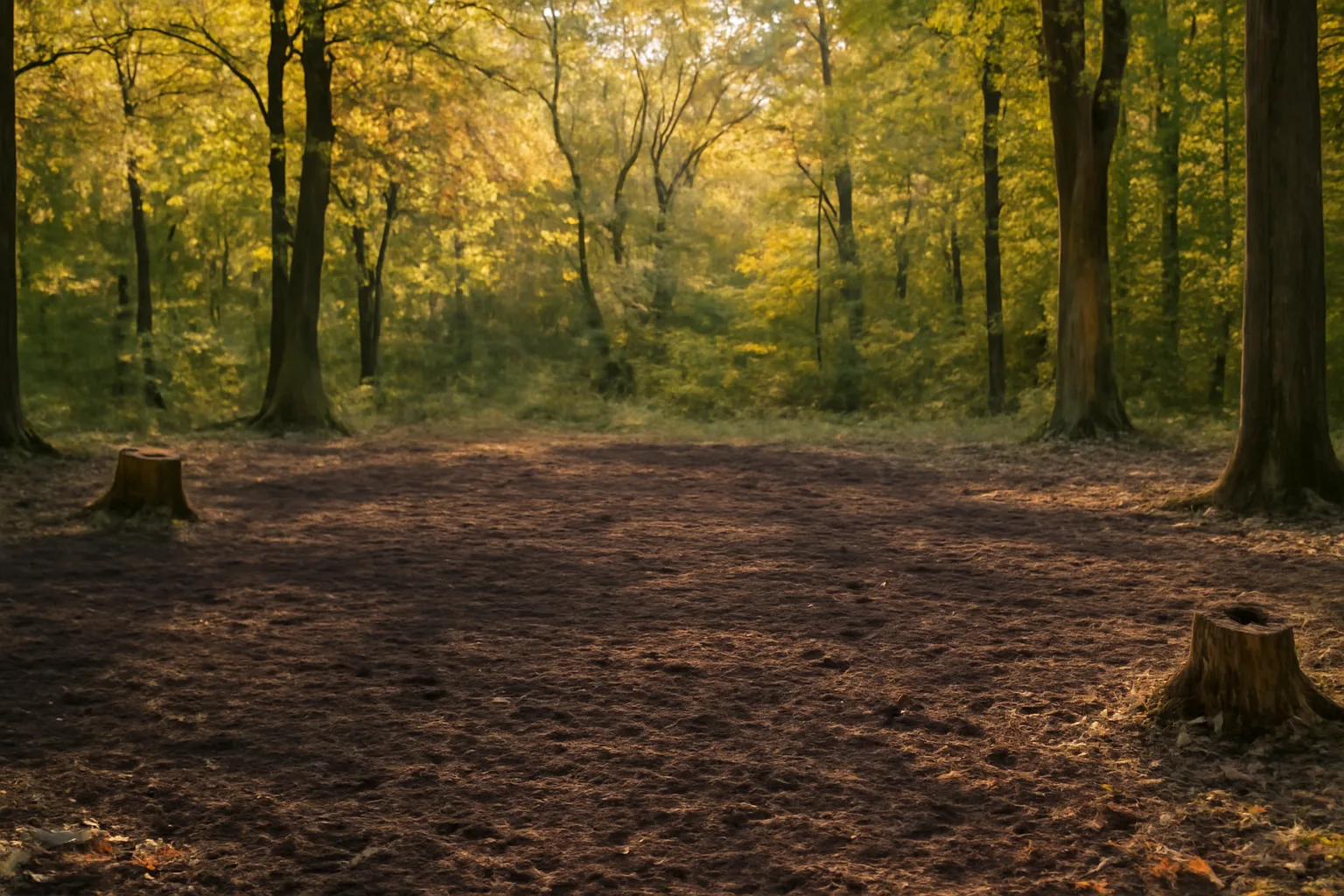
A food plot is a planted area, usually somewhere between a quarter acre and a few acres, established specifically to grow forage that attracts and holds deer or other wildlife. It is not a garden and it is not a lawn. It is agriculture done on a small scale for a wildlife management goal. The USDA's NRCS treats food plots as a wildlife habitat practice, often grouped under its "Wildlife Habitat Planting" standard (Code 420), which land managers can get cost-share help for through programs like EQIP in some states [1]. That tells you something: food plots are recognized enough as a habitat tool that federal conservation programs will help pay for them in the right circumstances. In the woods specifically, a food plot is doing double duty. It's giving deer food, but it's also giving them a place to eat that feels enclosed and safe, which is why interior timber plots often get used more during daylight than big open field plots. Deer are edge animals by instinct, and a hole cut into hardwoods effectively creates edge everywhere around the plot perimeter.
why put a food plot in the woods instead of a field
The honest answer: because deer trust it more. A one-acre kill plot cut into mature timber gives deer forty yards of cover in every direction, and that changes daylight behavior. Whitetail research consistently shows deer favor thick cover and shorter sightlines when moving and feeding, which is exactly what an interior woods plot offers compared to a wide open field [2]. The tradeoff is sunlight. Trees block it, and without direct light, most food plot species fail. This is the single biggest reason woods plots disappoint people: they clear a hole that looks big enough on the ground, plant, and get thin, spindly forage that dies out by August because the canopy is still shading 70% of the plot. A woods plot also costs more labor up front than a field plot. You're not driving a tractor into an existing ag field. You're often dropping trees, grinding stumps or living with them, and hauling gear in by ATV or by hand. Budget more time for site prep than for the actual planting.
how much sunlight does a woods food plot need
Most food plot species need at least 50% full sun to grow decently, and full-sun exposure (roughly 6+ hours of direct light) gives you far better results and more species options. Clover, chicory, and some brassicas tolerate partial shade better than corn, soybeans, or sorghum, which basically demand open sky. University extension guidance on small woodland openings generally recommends clearing at least a half-acre opening, and larger where terrain allows, specifically because partial clearings under 50% light penetration underperform no matter what seed goes in the ground. If you're working with an opening under a quarter acre, don't expect much from anything except the most shade-tolerant clover blends, and even then, expect thinner stands than you'd get in the open. Practical rule: stand in the middle of your planned plot at midday in the growing season and look up. If you can't see meaningful patches of open sky in most directions, you need to drop more trees before you plant anything.
how do you clear a food plot site in timber
Start by picking your spot before you touch a chainsaw. Good woods plot locations sit on a bench, saddle, or gentle flat, ideally with decent soil (check for hardwood versus pine, since hardwood sites usually carry better soil), and within realistic reach of your equipment or a trail you can widen. Here's the actual sequence that works: 1. Mark boundaries and drop trees. Take down everything in the plot footprint. On the edges, hinge-cut a ring of trees rather than clear-cutting a hard edge; this both opens more canopy and creates browse and screening cover deer like. 2. Deal with stumps and roots. You don't have to grind every stump, but you do need clean ground where you're actually running a disc or drill. Many hunters plant around stumps in irregular shapes rather than fighting every one of them. 3. Kill the existing vegetation. Whatever is growing there now (briars, ferns, saplings, grass) is competition. A glyphosate application timed 2 to 3 weeks before planting, when the existing growth is actively growing, gives you a clean seedbed. Follow label rates and your state's herbicide use rules. 4. Test the soil. Do this before you spend a dollar on lime or fertilizer. 5. Amend, then plant. Apply lime and fertilizer per your soil test recommendations, work the seedbed, and plant at the right depth for your species. Skipping step 3 is the most common mistake. Broadcasting clover seed into standing weeds and grass gets you a thin, weedy stand that a deer walks past.
do you need a soil test for a woods plot
Yes, and woods soil often needs more correction than field soil, not less. Timber soils tend to run more acidic because of years of leaf litter decomposition, and acidic soil locks up nutrients even if you dump fertilizer on it. Most land-grant universities run soil test labs for $10 to $20 per sample and will hand back a lime and fertilizer recommendation specific to the crop you tell them you're planting [3]. Cooperative extension offices in nearly every state (for example, Penn State's Agricultural Analytical Services Lab or Mississippi State's Extension soil testing lab) offer this exact service, and it beats guessing every time [3] [4]. Your soil test lab is the actual authority on lime and fertilizer rates for your dirt. Anything you read online, including this article, is general guidance. If your test says pH 5.2 and recommends 2 tons of lime per acre, that number is what you follow, not a generic "add some lime" suggestion from a forum post.
what should you plant in a shaded or partially shaded woods plot
| Ladino/white clover | Good | Spring or late summer | Perennial, 3-5 year stand life with upkeep | |
|---|---|---|---|---|
| Red clover | Good | Spring or late summer | Shorter-lived than white clover, 2-3 years | |
| Oats | Moderate | Late summer/fall | Fast germination, good nurse crop | |
| Brassicas (turnips, radish) | Moderate | Late summer | Need more direct light than clover | |
| Winter wheat/rye | Moderate | Fall | Tolerates thin soil and shade decently | |
| Corn | Poor | Spring | Needs full sun, avoid in shaded openings | |
| Soybeans | Poor | Late spring | Needs full sun, deer will hammer seedlings anyway | |
| Grain sorghum | Poor to moderate | Late spring | Needs sun, more drought tolerant than corn | If you want species-specific seed selection guidance for your exact opening size and light level, check food plot seed and deer food plot seed for variety comparisons. |
Clover is the default answer for a reason. Ladino and red clover both tolerate partial shade better than most alternatives, they fix their own nitrogen once established, and they come back for multiple seasons if you maintain them (mowing, spot spraying grass, and reapplying lime as needed) [5]. Oats also handle partial shade reasonably well and germinate fast, which makes them a good nurse crop mixed with clover, brassicas, or a fall blend. Brassicas (turnips, radishes) want more sun than clover but still outperform corn or soybeans in a shaded opening. Here's a rough comparison for woods plot planning: | Species | Shade tolerance | Typical planting window | Notes |
when to plant food plots for deer
Timing splits into two windows almost everywhere in the whitetail's range: a spring/summer planting for warm-season annuals and perennials, and a late-summer planting for fall annuals and brassicas. Spring plots (clover, chicory, soybeans, corn, sorghum) generally go in after your last frost date, which varies enormously by latitude, roughly late April in the Deep South to early June in the northern tier and Canada border states. Your state extension office publishes a frost date map specific to your county; that's a better source than a generic national date . Fall plots (brassicas, oats, wheat, rye, clover overseed) go in 60 to 90 days before your first fall frost, which in most of the whitetail's range lands somewhere between late July and early September. Planting too late is the number one fall plot failure; brassicas especially need that growing window to bulb out before a hard freeze locks growth. Check your local frost dates through your state's cooperative extension service before locking in a date. A South Georgia planting window and a Northern Wisconsin window can be six to eight weeks apart.
when to plant oats for deer
Oats go in as a fall planting, typically late August through mid-September in most of the whitetail's range, timed to give 60 days of growth before a hard freeze. In the Deep South, that window can push into October. Oats germinate fast, often within a week under good moisture, and deer will hit young oat shoots almost immediately, which is exactly why some hunters mix a bit of oats into a brassica or clover blend as a quick-draw component while the slower stuff establishes. Oats also winterkill in most of the northern half of the country, so don't count on them as a perennial; treat them as an annual that dies back and gets replanted or replaced by whatever you overseed.
when to plant turnips for deer
Turnips are a fall brassica, planted roughly 80 to 90 days before your area's first hard frost, which usually lands in the window of late July through mid-August across most of the whitetail range. Purdue Extension and other land-grant programs note that brassicas need that long runway to bulb properly and reach peak palatability after a few frosts sweeten the sugars in the leaves and bulbs . Deer often ignore turnip tops and bulbs early in fall and hit them hard in late fall and winter once frost has converted starches to sugars, so don't panic if your turnip plot looks untouched in October. That's normal, not a failure. Turnips need decent sun, more than clover wants, so in a heavily shaded woods opening they'll underperform compared to a clover or oat blend.
do deer eat clover, and do deer actually like it
Yes, and clover is close to a universal favorite. It's high in protein (often 20-25% crude protein in good stands), it's available for a long growing season, and deer return to healthy clover stands repeatedly through spring, summer, and fall [5]. Whitetail research and extension forage guides both list clover among the highest-preference forages tested in browse studies, and it's the most commonly planted food plot species in North America for that reason. The catch is stand maintenance. Clover gets choked out by grass and weeds within a season or two if you don't mow it periodically and spot-spray grassy competition. A neglected clover plot two years in still has clover in it, but it's competing with foxtail and crabgrass for space and the protein value the deer actually want drops.
do deer eat sorghum
Yes, deer eat grain sorghum, both the standing seed heads and the plant itself as browse when young, but sorghum needs full sun and a longer warm season than a typical woods opening provides. It's more common as a field crop or a food plot component in the South and Midwest than as a shaded timber plot choice. Sorghum has an advantage in drought-prone or sandy soils where corn struggles, and it also stands through winter reasonably well, giving late-season grain access after other plots have been grazed down. If your woods opening gets close to full sun (a big clearcut edge, for instance), sorghum is worth trying. In a tight, mostly-shaded hole, skip it and go with clover or brassicas instead.
what are deer's favorite foods, and do deer like honey
Deer preference isn't fixed; it shifts by season, region, and what's locally available, but extension forage palatability research and browse surveys consistently rank a handful of foods near the top: acorns (especially white oak family acorns, which are lower in tannins and more palatable than red oak acorns), clover, soybeans, and agricultural crops like corn and alfalfa when available [2] [5]. In the wild, deer are also heavy browsers of native forbs, woody browse, and mast crops depending on season. As for honey: deer don't eat honey in any meaningful, documented way as part of natural diet or food plot science. There's no wildlife agency or extension publication recommending honey as deer attractant or forage; it's not a real food plot input. If you've seen mineral or attractant products marketed with honey as an ingredient, that's a flavoring or binder claim, not something backed by deer nutrition research. Skip it and put your money into seed, lime, and fertilizer instead.
how big should a woods food plot be
Most successful timber plots run a quarter acre to two acres. Smaller than a quarter acre and you often don't get enough total forage to hold up under grazing pressure; deer can eat a tiny plot down to nothing in a few weeks. Bigger than two or three acres in solid timber and you're fighting a massive clearing job for a plot that no longer feels like a secure interior spot to deer, which erases the main advantage of a woods plot in the first place. A lot of experienced managers run several small plots (a quarter to half acre each) scattered through a property rather than one big timber clearing, specifically because it spreads pressure, gives more entry and exit options, and creates more total edge habitat per acre cleared. If you're planning your first woods plot and aren't sure how big to go relative to your property size and herd density, a Custom Food Plot Plan from PlotSeason runs a one-time $99 and gives general guidance on sizing, species mix, and layout based on what you tell us about your property; your soil test lab still has final say on lime and fertilizer rates.
what equipment do you actually need for a woods plot
Minimum viable setup: a chainsaw, a sprayer (backpack sprayer works fine for plots under an acre; an ATV sprayer is faster for anything bigger), a way to broadcast seed (hand-crank spreader is fine for small plots), and a way to work the seedbed (a hand rake for tiny plots, a disc or cultipacker towed behind an ATV or UTV for anything over a half acre). A no-till drill is worth it if you're planting multiple plots a year or your soil is rocky and hard to work; renting one from a farm co-op or conservation district is common and cheaper than buying. For a single small woods plot done once or twice a year, you genuinely don't need a tractor. People get hung up on equipment before they've even tested their soil, and that's backward. Buy the soil test first, buy the sprayer and spreader second, and only invest in tillage equipment once you know you'll be running multiple plots for multiple seasons. For broader plot layout thinking and how a woods plot fits with your other plots on the property, food plot whitetail and deer food plots cover whole-property planning.
check your state's baiting and feeding rules before you plant
Food plots are legal planting almost everywhere, but some states draw a legal line between a planted food plot and a pile of bait or a supplemental feeder, and the rules genuinely vary. A few states also restrict hunting over food plots planted within a certain timeframe of season, or have specific definitions of what counts as "baiting" versus normal agricultural planting. Check your state wildlife agency's hunting regulations before you plant and before you hunt over any plot, especially if you're near a state line or hunting public-adjacent leased ground where rules can differ from your home state. This is a five-minute check on your state agency's website that saves you a citation.
Frequently asked questions
Do deer eat sorghum?
Yes, deer eat both the grain heads and young sorghum plants. It needs full sun and a long warm season, so it works better in open fields than shaded woods openings. It's also more drought tolerant than corn, which makes it a solid option in sandy or dry soils in the South and Midwest.
Do deer eat clover?
Yes, clover is one of the most consistently preferred food plot forages, with crude protein often in the 20-25% range in well-maintained stands. Deer use it through spring, summer, and fall as long as the stand isn't overtaken by grass and weeds, which requires periodic mowing and spot spraying.
When should you plant food plots for deer?
Spring plantings (clover, soybeans, corn) go in after your last frost date, roughly late April in the South to early June up north. Fall plantings (brassicas, oats, wheat) go in 60 to 90 days before first fall frost, usually late July through early September depending on latitude. Check your state extension's frost date map for exact local timing.
Do deer like clover more than other food plot options?
Extension forage research and browse studies consistently rank clover near the top of preferred food plot species, alongside soybeans and natural mast like acorns. It's not universally the single top choice in every season, but it's rarely a bad choice, and it's the most commonly planted food plot species in North America.
When should you plant oats for deer?
Plant oats in late August through mid-September in most of the whitetail range, giving roughly 60 days of growth before a hard freeze. Oats germinate fast, often within a week, and winterkill in colder regions, so treat them as a fall annual rather than something that persists into next spring.
When should you plant turnips for deer?
Plant turnips 80 to 90 days before your area's first hard frost, generally late July through mid-August across most of the whitetail range. Deer often ignore turnips early in fall and hit them hard in late fall and winter once frost sweetens the leaves and bulbs; that delayed interest is normal.
What is a food plot exactly?
A food plot is a small planted area, usually a quarter acre to a few acres, established to grow forage that attracts and holds deer or other wildlife. The USDA's NRCS recognizes wildlife habitat plantings like food plots as a conservation practice eligible for cost-share in some states.
What are deer's favorite foods overall?
Preference shifts by season and region, but white oak family acorns, clover, soybeans, and alfalfa consistently rank as high-preference foods in browse surveys and extension research. Natural mast crops (especially white oak acorns, lower in tannins than red oak) often outcompete planted forage when they're on the ground.
Do deer like honey?
No documented wildlife research or extension publication supports honey as a real deer attractant or forage. It's not part of natural deer diet in any meaningful way. If you see it listed as an ingredient in a mineral or attractant product, treat it as marketing flavoring, not a science-backed food source.
How much sunlight does a food plot in the woods actually need?
Aim for at least 50% direct sunlight exposure; full sun (6+ hours) gives far better results and opens up more species options. Clover and brassicas tolerate partial shade better than corn or soybeans, which need close to full sun. Openings under a quarter acre in heavy timber usually underperform no matter what you plant.
How big should a food plot in the woods be?
Most successful interior timber plots run a quarter acre to two acres. Smaller plots often get grazed down too fast to sustain forage; plots over two or three acres require major clearing and lose some of the secure, enclosed feel that makes woods plots attractive to daylight deer movement in the first place.
Do I need a soil test before planting a woods food plot?
Yes. Timber soil is often more acidic than field soil due to leaf litter decomposition, and acidic soil locks up nutrients regardless of fertilizer applied. Most land-grant university extension labs run soil tests for $10 to $20 and provide crop-specific lime and fertilizer recommendations, which is your best available guidance.
Is it legal to hunt over a food plot?
In most states, planted food plots are treated differently from bait piles or feeders and are legal to hunt over, but rules vary by state and some states restrict hunting near recently planted plots or draw specific legal lines around what counts as baiting. Check your state wildlife agency's current regulations before hunting.
Sources
- USDA NRCS, Wildlife Habitat Planting Conservation Practice Standard (Code 420): Food plots are recognized as a wildlife habitat conservation practice eligible for federal cost-share support in some states
- Penn State Agricultural Analytical Services Laboratory, Soil Testing: University soil test labs charge roughly $10-20 per sample and provide crop-specific lime and fertilizer recommendations
- University of Tennessee Extension, Establishing and Managing Wildlife Food Plots: Clover provides high crude protein content and is among the most preferred and commonly planted food plot forages
- NOAA National Centers for Environmental Information, Frost/Freeze Dates: Frost dates vary significantly by latitude across the whitetail deer range, affecting planting windows
- Purdue University Extension, Brassicas for Deer Food Plots: Brassicas need 80-90 days before first hard frost to bulb properly, and palatability increases after frost converts starches to sugars