Last updated 2026-07-24
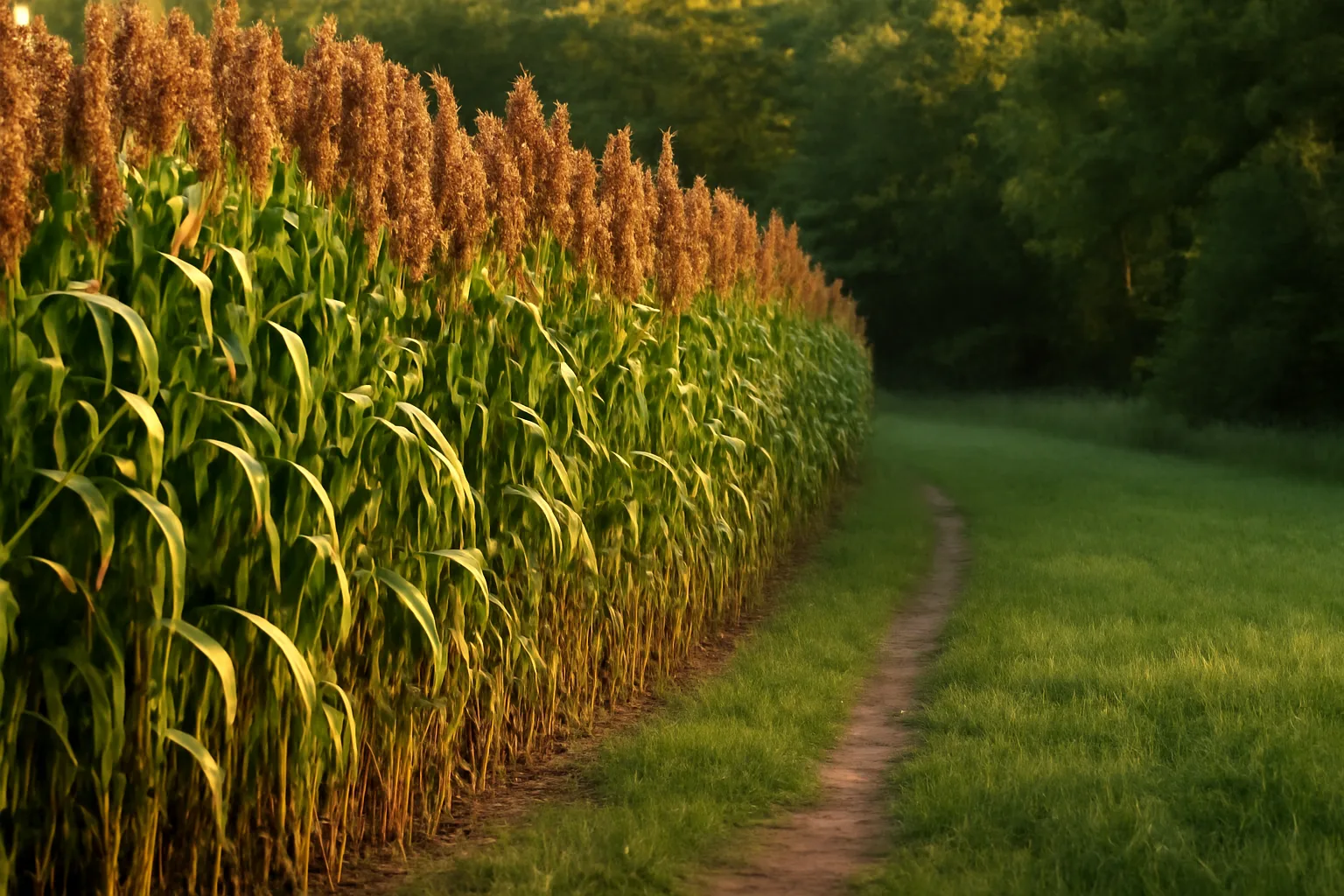
TL;DR
a food plot screen is a strip of tall, thick vegetation (often sorghum, sunn hemp, or a hybrid forage sorghum) planted along a plot's edge or entry trail to block deer from seeing hunters, vehicles, or roads. Plant it with your spring or summer forage, usually late May through June in most of the whitetail range, so it has height by opening day.
what is a food plot screen
A food plot screen is a planted barrier, usually a row or block of tall annual vegetation, that blocks the line of sight into a food plot or along an access trail. It is not the plot itself. Think of it as a living privacy fence. Hunters use screens to hide a stand location from a road, to keep deer from spotting a truck in a field lane, or to break up a plot so deer feel comfortable entering during daylight. The idea borrows from an old habitat management principle: deer, especially mature does and bucks, avoid open sight lines where they feel exposed. A University of Georgia study on deer movement and cover found that whitetails consistently favor edges and thicker cover over open sight lines when moving during daylight [1]. A screen recreates that edge effect artificially, right where you want it. Most screens run 8 to 12 feet tall by late summer. Common species include grain sorghum, forage sorghum-sudangrass hybrids, sunn hemp, Egyptian wheat, and sometimes a mix of sunflowers and sorghum for a denser wall. None of these are planted because deer eat much of them (some do eat the seed heads late season), they are planted because they grow fast and thick. A basic screen is not complicated, but people mess up the timing and spacing constantly. Get those two things right and the rest is easy.
why plant a screen at all
The main reason is behavioral, not nutritional. Mature deer, particularly bucks over 3.5 years old, tend to hang up outside a plot at last light and scan before committing, especially if they can see a road, a parked truck, or a stand silhouette. A visual screen along the plot edge or access trail removes that hesitation point. Screens also help you hunt a plot on days with less-than-ideal wind, because deer can't visually pick you out even if their nose gets a partial read. They are especially useful along county roads, driveways, or shared property lines where you have no control over what shows up on the other side. A screen is cheap insurance. A 20 by 100 foot strip of grain sorghum costs maybe $15 to $25 in seed, planted with a hand spreader or small drill. Compare that to the cost of a plot that gets nocturnal because deer keep busting movement at the field edge. The honest caveat: a screen won't fix a bad stand location, a plot that's downwind of a bedding area, or heavy hunting pressure. It reduces one specific problem (visual detection), nothing more.
when to plant food plots for deer
| Deep South (zone 8-9) | April-May | September-October | September-October | |
|---|---|---|---|---|
| Mid South/Transition (zone 7) | May | August-September | September | |
| Midwest/Mid-Atlantic (zone 6) | Mid-May to June | Mid-July to August | August-September | |
| Upper Midwest/Northeast (zone 4-5) | Late May-June | Mid-July to early August | August | Always confirm against your county's average last frost date and your soil test results before committing seed to ground. |
Timing depends on whether you're planting a spring/summer plot (usually for screening, soybeans, or warm-season perennials) or a fall plot (brassicas, cereal grains, clover establishment). Most of the whitetail range splits into two windows. Spring/summer plantings, which include screen species, generally go in after soil temperatures reach 60 to 65 degrees F and the last frost date has passed. In the Midwest and Upper South that's roughly May 1 through June 15. In the Deep South it can start in April. In the northern tier (Minnesota, Wisconsin, Maine) growers often wait until late May or early June. Fall plantings for brassicas, oats, and winter wheat go in 60 to 90 days before your first hard frost, so the plants have time to mature before killing cold. Penn State Extension recommends planting brassica food plots in the Northeast between mid-July and early August. In the South, growers can wait until September. Here's a rough planting calendar by zone: | Zone (approx.) | Screen/summer annuals | Fall brassicas/oats | Clover establishment |
what species work best for a screen
Grain sorghum (milo) is the most common screen crop because it's cheap, drought-tolerant, and reaches 6 to 10 feet with a thick stalk canopy. Forage sorghum-sudangrass hybrids grow even taller, sometimes 10 to 14 feet, and can be planted at a heavier seeding rate for extra density. Sunn hemp is a legume that grows fast, fixes nitrogen in the soil, and can hit 6 to 8 feet in a single season. It works well mixed with sorghum because the broad leaves fill in gaps at eye level that a grass stem alone won't cover. Egyptian wheat is another classic screen option, favored because it tends to stay standing better in wind and heavy rain than straight sorghum. Some growers add sunflowers along the front row for extra density and a touch of wildlife interest, since sunflower seed heads do draw some birds and deer late season. Seeding rate matters more than species pick. Most screen mixes go in at a heavier rate than a food crop planting, often double the label rate for a straight food sorghum, specifically to create a wall rather than scattered stalks. Check your specific seed tag; rates vary by supplier and by whether you're drilling or broadcasting.
do deer eat sorghum
Yes, deer will eat sorghum, particularly the seed heads once they mature and dry down in late summer and fall. Grain sorghum is used both as a wildlife food source and as a screen crop, and in areas with heavy deer pressure the plants can get browsed hard while young, which actually makes for a thinner screen if you're not careful. Mississippi State University Extension lists grain sorghum as a supplemental deer food, noting it's often planted in combination with other summer annuals for both nutrition and cover value [2]. If you want sorghum to function primarily as a screen, plant it thick enough (or fence a small area early) that browsing pressure on young plants doesn't thin the stand before it reaches full height. Deer generally prefer other options first, soybeans, clover, and standing corn tend to get hit harder for the vegetative growth. Sorghum's real value to deer comes later in the season when the grain heads dry down and other food sources thin out.
do deer eat clover, and do deer like clover
Yes, and clover is arguably the single most reliable deer food plot crop for spring through fall in most of the country. Deer readily eat white clover, red clover, and ladino clover varieties, and repeated grazing pressure is actually a sign the plot is working, not a problem, as long as the stand is properly established and maintained. Clover's appeal comes down to protein content and availability. Quality clover stands run 20 to 25 percent crude protein during active growth, which lines up well with lactation demands on does in late spring and antler growth in bucks through summer [3]. It also stays palatable longer into the season than most annual grains because it regrows after grazing, unlike a corn or bean plot that gets consumed and done. The tradeoff is establishment time and maintenance. Clover needs a properly limed soil (most varieties want a pH of 6.0 to 6.5) and it competes hard with weeds in year one. Extension guidance from the University of Tennessee recommends mowing clover plots to 4 to 6 inches through the growing season to control weed competition and keep the clover in a vegetative, high-protein state [4]. For a screen specifically, clover is a poor pick, it stays low to the ground and won't block anything. Pair a clover plot with a sorghum or sunn hemp screen along the entry trail instead of trying to make clover do double duty.
when to plant oats for deer, and when to plant turnips for deer
Oats and turnips are both cool-season, fall-focused plantings, and timing them right matters more than almost any other variable in whether deer actually use the plot. Oats should go in 45 to 60 days before your average first frost so they have time to establish leafy growth before cold slows things down. In much of the Midwest and Mid-Atlantic that lands in the August 15 to September 15 window. Oats are a favorite fall attractant because deer prefer the young, sugar-rich leaves, and a light frost actually increases palatability by converting starches to sugars. Turnips need a slightly longer runway, generally 80 to 100 days from planting to full bulb maturity, so most growers target late July through August depending on latitude. Iowa State University Extension recommends planting brassicas like turnips in early to mid-August for the Upper Midwest, timed so bulb development happens as temperatures cool into fall [5]. Deer often ignore turnip tops and bulbs early in the season, then hit them hard after the first couple of frosts once starches convert to sugar, similar to the oat effect. Both species do best on well-drained soil with a pH of 6.0 or higher and moderate nitrogen, roughly 40 to 60 pounds of actual nitrogen per acre for brassicas per extension guidance, though your specific soil test is the real authority on rates for your ground [5].
how to design and plant a screen: spacing and layout
Screens work best planted in a strip, usually one to three rows deep, along the specific sight line you're trying to block; a trail camera check or a walk-through at dusk will show you exactly where deer are catching movement. A single row of sorghum or Egyptian wheat, planted thick (think 2 to 4 inches between plants after thinning from broadcast seeding), will block sight lines by mid-summer in most zones. For a road-facing screen where you want zero visibility gaps, plant two staggered rows about 3 feet apart. Length matters less than most people think. A screen only needs to cover the specific angle a deer or a passing vehicle would have into your stand or plot entry, often 30 to 75 feet is plenty, not the whole field edge. Plant screens on the same schedule as other spring/summer annuals in your zone (see the planting calendar table above), and expect full height by 60 to 90 days after planting depending on species and rainfall. If you're screening a fall food plot, get the screen in early enough that it's tall well before archery season opens, which in most states falls in September or early October. If you want a done-for-you layout matched to your specific property, soil test, and hunting setup, PlotSeason's $99 one-time Custom Food Plot Plan maps out species, seeding rates, and screen placement based on your acreage and goals. It's general guidance built around your inputs, not a substitute for your soil test lab's specific lime and fertilizer recommendations.
what are deer's favorite foods, and do deer like honey
Deer are opportunistic browsers, and their preferences shift by season and region, but extension research consistently ranks a handful of foods at the top. Soft mast (apples, persimmons), acorns (especially white oak group acorns, which are lower in tannins and more palatable than red oak acorns), soybeans, and clover routinely top preference studies. A well-cited Mississippi State University deer nutrition study found acorns can make up over 50 percent of a whitetail's fall diet in years with a strong mast crop, because they are extremely high in fat content, which deer need heading into winter. When acorns are scarce, deer shift hard toward agricultural crops and food plots. As for honey: there's no real research showing deer actively seek out honey, and it's not a natural or commonly available food source for wild whitetails outside of the rare disturbed hive. Some hunters use honey-based scent or mineral products marketed for deer attraction, but that's a manufactured product claim, not documented dietary behavior, and there's no peer-reviewed feeding study confirming deer preference for honey specifically. If you're trying to pull deer to a spot, a real food source, standing beans, clover, or brassicas after a frost, has actual research behind it. Honey doesn't.
do state baiting and feeding rules affect food plot screens
A planted food plot, including a screen crop, is generally legal everywhere and is not the same thing as baiting in the eyes of most state wildlife agencies, since it's a standing crop grown in place rather than hauled-in feed. That said, rules on supplemental feeding, mineral use, and what counts as "bait" vary a lot by state, and some states regulate hunting over a food plot differently if it's been recently disturbed or altered. Michigan, for example, defines baiting distinctly from food plots and has specific restrictions on baiting tied to Chronic Wasting Disease management zones [6]. Wisconsin similarly separates food plots from baiting and feeding bans, but bans vary by county based on CWD status [7]. Before you plant anything, especially a screen crop you might later mow, chop, or otherwise manipulate close to season, check your state wildlife agency's current regulations, because CWD-related feeding and baiting bans change year to year and county to county.
common mistakes with food plot screens
The most common mistake is planting too late. A screen planted in early July in a zone that needs 60 to 90 days to reach full height won't be tall enough by opening day in most Midwest and Northern states. Work backward from your season opener, not forward from whenever you happen to get to it. The second mistake is under-seeding. People treat a screen planting like a food plot planting and use the standard label rate, which leaves gaps a deer can see through by August. Screens need a denser stand specifically to block sight lines, so bump the seeding rate above what you'd use for a straight grain crop. Third, people screen the wrong sight line. Walk the actual approach a deer would take into the plot, and check the specific angle from the road or from your stand. A screen planted on the wrong edge does nothing. Last, screens planted on wet, poorly drained ground often fail outright, since sorghum and sunn hemp both want moderate drainage and don't tolerate standing water well. If your screen location floods in spring, pick a different spot or a different species, and lean on your soil test for a realistic read on drainage and fertility before you commit seed.
Frequently asked questions
Do deer eat sorghum planted as a food plot screen?
Yes. Deer browse young sorghum plants and eat the mature seed heads later in the season, especially after other food sources thin out. Mississippi State Extension lists grain sorghum as a supplemental deer food as well as a common screen crop, though heavy browsing on young plants can thin a screen stand if it's not seeded thick enough.
Do deer eat clover and do deer actually like it?
Yes, clover is one of the most consistently used food plot crops for whitetails. It runs 20 to 25 percent crude protein during active growth, which supports lactation in does and antler growth in bucks. Deer will graze it hard through spring, summer, and fall as long as the stand is established on properly limed soil.
When should I plant food plots for deer?
It depends on the crop. Spring/summer annuals and screens go in after the last frost, typically May through mid-June depending on your zone. Fall brassicas and oats go in 60 to 100 days before your first hard frost, usually mid-July through September depending on latitude. Always check your county's average frost dates first.
When should I plant turnips for deer?
Turnips need 80 to 100 days from planting to bulb maturity. Iowa State University Extension recommends planting brassicas like turnips in early to mid-August for the Upper Midwest, so bulbs mature as fall temperatures cool. In warmer, southern zones you can push planting into September.
When should I plant oats for deer?
Plant oats 45 to 60 days before your average first frost, generally August 15 through September 15 across most of the Midwest and Mid-Atlantic. A light frost after emergence actually improves palatability by converting plant starches to sugars, which is why oat plots often get hit hardest in October and November.
What is a food plot screen exactly?
A food plot screen is a strip of tall, dense vegetation, usually grain sorghum, a sorghum-sudangrass hybrid, sunn hemp, or Egyptian wheat, planted along a plot edge, trail, or road to block sight lines. It's a visual barrier, not a food source, though deer will eat parts of most screen species late season.
What are deer's favorite foods overall?
Acorns (especially white oak group), soft mast like apples and persimmons, soybeans, and clover consistently rank as top whitetail foods in extension research. Mississippi State University research found acorns can make up over 50 percent of a whitetail's fall diet in strong mast years because of their high fat content.
Do deer like honey?
There's no credible research showing wild deer seek out honey as a food source. It isn't naturally available to them outside a rare disturbed hive. Some commercial scent and attractant products use honey as an ingredient, but that's a marketing claim, not a documented dietary preference backed by feeding studies.
How tall does a food plot screen need to be to work?
Most functional screens reach 6 to 12 feet by late summer, tall enough to block a standing adult's sight line and often a view from a vehicle. Height depends on species (forage sorghum-sudangrass hybrids get taller than straight grain sorghum) and on planting date, since a late-planted screen simply won't reach full height in time.
Can I use a food plot screen to hide a hunting stand from a road?
Yes, that's one of the most common uses. Plant a dense strip, often two staggered rows, along the road-facing edge, timed to reach full height before your season opens. Check your state's regulations first, since some states restrict planting or mowing near public rights-of-way.
Is a food plot screen the same thing as baiting deer?
No. A planted, standing crop grown in place is generally treated differently from hauled-in bait by most state wildlife agencies. Rules vary though, especially in states with active Chronic Wasting Disease management zones, so check your state wildlife agency's current baiting and feeding regulations before you plant or hunt near a screen.
What's the best screen crop for a small food plot?
Grain sorghum is the cheapest and most reliable pick for most small plots, usually $15 to $25 in seed for a 20 by 100 foot strip. Egyptian wheat holds up better in wind and heavy rain if your site is exposed. Sunn hemp adds broadleaf density and fixes nitrogen, which helps soil for whatever you plant next.
Sources
- University of Georgia, Warnell School of Forestry and Natural Resources: Whitetails favor edge cover and avoid open sight lines during daylight movement
- Mississippi State University Extension, Deer Food Plots: Grain sorghum is used as both a supplemental deer food and a summer annual planting
- Mississippi State University Extension, Deer Nutrition: Clover crude protein content of 20-25 percent during active growth supports doe lactation and antler growth
- University of Tennessee Extension, Establishing Wildlife Food Plots: Clover food plots should be mowed to 4-6 inches to control weeds and maintain vegetative growth
- Iowa State University Extension, Food Plots for Wildlife: Brassicas including turnips should be planted in early to mid-August in the Upper Midwest for proper bulb maturity
- Michigan Department of Natural Resources, Baiting and Feeding Regulations: Michigan regulates baiting distinctly from food plots and ties baiting restrictions to CWD management zones
- Wisconsin Department of Natural Resources, Baiting and Feeding Rules: Wisconsin separates food plots from baiting and feeding bans, with restrictions varying by county CWD status