Last updated 2026-07-25
TL;DR
Tractor Supply carries real food plot options, including clover, oats, brassica and turnip blends from brands like Whitetail Institute and Mossy Oak BioLogic. Most are fine choices for a fall or perennial plot if you match the seed to your soil test and planting window. Skip anything without a seeding rate and planting date on the bag.
Does Tractor Supply actually sell real food plot seed?
Yes. Most Tractor Supply stores carry a seasonal food plot section, usually stocked heavier from late summer through fall, with brands like Whitetail Institute, Mossy Oak BioLogic, and Antler King alongside generic "deer plot mix" bags and raw seed like winter wheat, oats, and Austrian winter peas. The quality is real. These are the same core species (clover, brassica, cereal grains) that university extension programs recommend for wildlife plantings [1]. What varies store to store is freshness and selection depth. A rural Tractor Supply in whitetail country might have six pallets of options in September. A suburban store might have two bags of clover left over from spring. Check the tag on any bag for a lot number and test date. Seed germination drops over time in storage, and a bag that's been sitting since last year can under-perform even if the species choice is right. If you want a plan built around your actual soil test and acreage instead of guessing at the shelf, that's the whole reason a Custom Food Plot Plan exists. It's a $99 one-time build that tells you exact seed, rate, and lime and fertilizer targets for your dirt, not a generic bag rate.
What is a food plot, exactly?
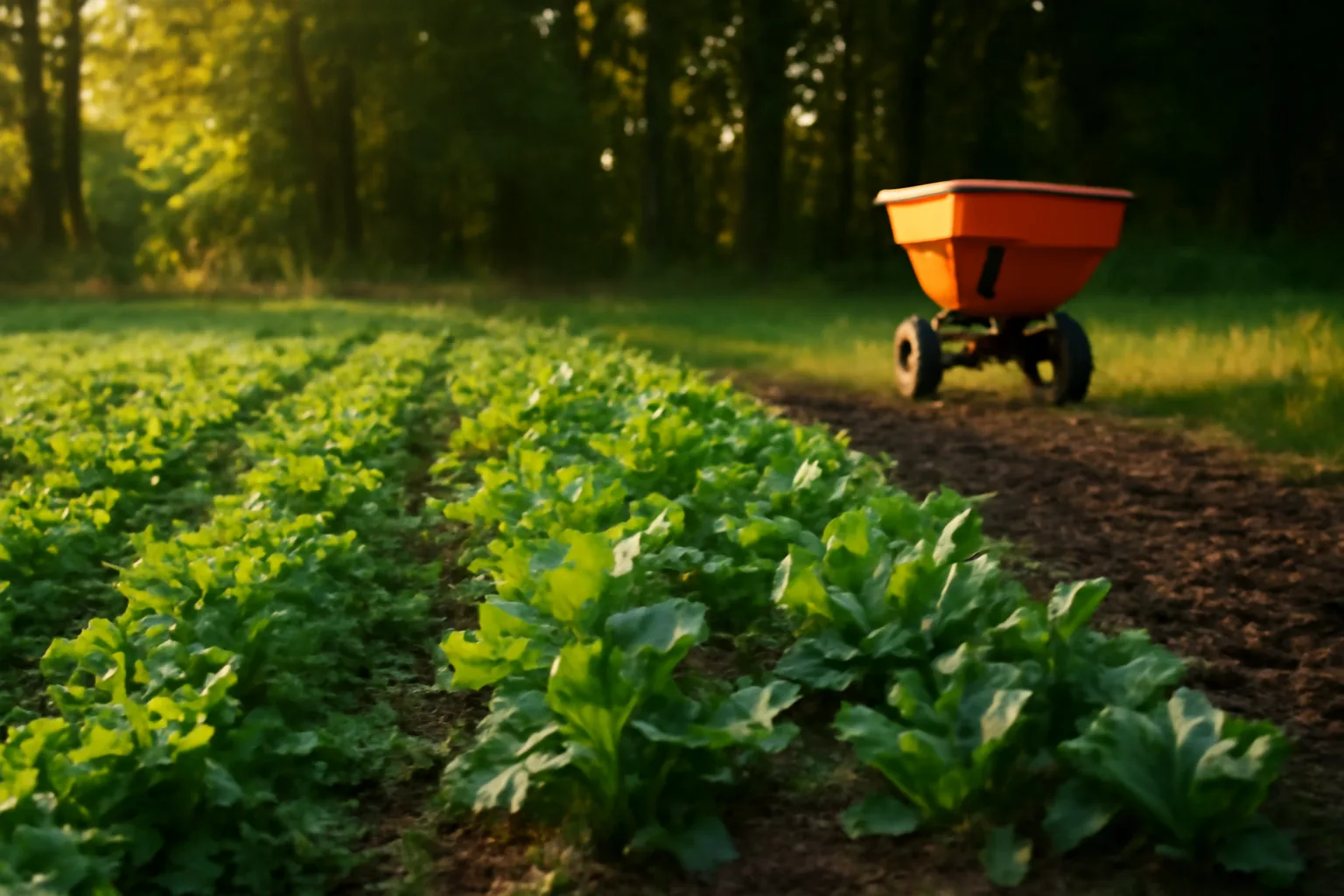
A food plot is a planted area, usually somewhere between a quarter acre and several acres, seeded with forage or grain specifically to feed and attract deer or other wildlife on a property. It's not a garden and it's not a lawn. It's agriculture done for wildlife instead of for a farmer's paycheck. Food plots generally fall into two categories. Annual plots get replanted every year (brassicas, cereal grains, some clover blends) and often provide a big tonnage burst in fall. Perennial plots (clover, chicory, alfalfa) get planted once and can produce for three to five years with mowing and fertilizer maintenance. State wildlife agencies and land-grant universities both publish food plot guidance because the practice sits at the intersection of habitat management and hunting regulation. Some states classify plots differently from bait piles under law, and the line matters. Check your food plot whitetail basics before you plant if you're new to this, because plot legality and feeding law are two separate things that get confused constantly.
Do deer eat clover, and is it worth planting?
Yes, and it's one of the most reliable food plot species that exists. Clover is a preferred forage for whitetail deer in spring and summer, and multiple state agencies list it as a top perennial recommendation for wildlife plots [2]. White clover (ladino types) and red clover both work, though ladino tends to hold up better under heavy grazing pressure because it spreads by stolons instead of relying only on regrowth from the crown. Clover is high in protein, often 25 to 30 percent crude protein in vegetative growth stages, which matters most during antler growth and lactation in late spring and summer [3]. The catch: clover needs decent soil pH to thrive, generally in the 6.0 to 6.5 range, and it's slow to establish. If you skip lime on acidic ground, clover will limp along and get out-competed by weeds within a season. This is exactly the kind of thing a soil test answers and a bag rate on the shelf can't. Clover is also a poor choice for pure fall gun-season attraction on its own, since deer often prefer standing grain or brassica once the first hard frosts hit. Pair it with a fall annual if hunting season access is your main goal.
Do deer like honey, and does it belong in a food plot?
No, honey has nothing to do with food plots, and deer aren't drawn to it as a forage source. This question shows up because people confuse "honey hole" hunting slang, or mineral/attractant products that use molasses and sweeteners, with actual plot forage. Some commercial mineral licks and liquid attractants do use molasses or sugar-based additives to increase palatability, and deer will lick and consume those. That's a supplement product, not a planted food source, and it's regulated very differently in a lot of states. Several states classify mineral and scent-based attractants under baiting rules even where standing food plots are legal, so check your state wildlife agency's baiting definition before you set one out [4]. If your goal is nutrition or fall hunting attraction, put the effort into a planted plot. Skip attractant sprays and mineral tubs as a substitute; they're a minor supplement at best and a legal risk at worst depending on your state.
Do deer eat sorghum, and should you plant it?
Yes, deer eat sorghum, particularly grain sorghum heads and young sorghum shoots, but it's a secondary food plot choice rather than a headline species. Sorghum shows up more often as a cover crop or a component in wildlife blends than as a standalone deer plot. Grain sorghum (milo) produces a seed head deer and turkey both use in late fall and winter once other softer forages are gone. It's also drought tolerant, which is part of why it shows up in blends aimed at the Southeast and parts of the Midwest where summer dry spells hit clover and beans hard. The downside: sorghum needs a full growing season, generally 90 to 120 days to maturity depending on variety, and it competes poorly with weeds early on. It also draws birds heavily once heads fill, which can strip a small plot before deer season even opens. For most hunters planting a half-acre to two-acre plot, sorghum works better as 10 to 15 percent of a diverse blend than as the main event.
When to plant food plots for deer, by season
| Upper Midwest / Northeast | late July to mid-August | mid-May to early June | |
|---|---|---|---|
| Mid-South / transition zone | mid-August to mid-September | late April to late May | |
| Deep South | September | March to April | These are general regional windows, not a substitute for your local extension office's planting calendar, which accounts for your actual frost dates and soil temps. For a full breakdown by species, see deer food plot seed and deer food plots. |
Timing depends entirely on what you're planting and where you are, but the two big windows are spring (May through June) for warm-season perennials and annuals, and late summer through early fall (mid-August through September in most of the whitetail's range) for cool-season annuals like brassicas, cereal grains, and clover. Spring plantings: clover, chicory, alfalfa, soybeans, and warm-season annual blends go in after your last frost date, generally once soil temps hold above 55-60°F for a few consecutive days. Cooperative extension frost date tools are the fastest way to check your specific county. Fall plantings: brassicas (turnips, radish, rape) and cereal grains (oats, winter wheat, winter rye) get planted roughly 60 to 90 days before your first expected fall frost, timed so plants have enough growing season to bulk up before hunting season and cold weather hit. In the northern whitetail range that's often late July through mid-August. In the Southeast it can run into mid-September. | Region (general) | Cool-season fall planting window | Spring/summer planting window |
When to plant oats for deer
Plant oats 60 to 90 days before your area's first hard fall frost, which puts most of the whitetail range somewhere between late July and early September. Oats germinate fast, often within 5 to 7 days in warm, moist soil, and they're one of the most palatable cereal grains for deer in early fall. Oats aren't cold-hardy the way winter wheat or winter rye is. A hard freeze will kill oats back, which is actually useful if you want a plot that dies down cleanly rather than one that regrows and gets rank in spring. If you want something that survives into late winter and greens back up in spring, blend oats with winter wheat or cereal rye rather than planting oats alone. Seeding rate for oats broadcast in a food plot setting generally runs 2 to 3 bushels per acre (roughly 64 to 96 pounds), higher than a drilled agricultural rate, because broadcast seeding has lower emergence and you're managing for browse tonnage, not grain yield [5]. Always check the bag; rates vary by variety and by whether you're drilling or broadcasting.
When to plant turnips for deer
Plant turnips 60 to 90 days ahead of your first fall frost date, which for most of the whitetail range lands between late July and mid-August. Turnips need that runway to bulb out and build sugar content before deer really start hitting them hard. Here's the thing nobody tells you on the seed bag: deer often ignore turnip bulbs and even the leaves for the first month or two after a plot comes up. Palatability increases sharply after the first hard frosts convert starches to sugars in the plant, which is why turnip plots often look untouched in September and get hammered in November and December [6]. That delayed-use pattern is a feature, not a bug, if you're planning a late-season hunting plot. It's a problem if you were hoping for August bow season activity. If early season attraction matters more to you, pair turnips with clover or soybeans rather than relying on a pure brassica plot. Seeding rate for turnips alone runs small, generally 2 to 4 pounds per acre broadcast, since the seed is tiny and easy to over-seed. Most bag blends combine turnips with radish and rape specifically to balance early palatability (radish, rape) with late-season bulk (turnips).
Do deer like clover better than other plot options?
Deer show strong, consistent preference for clover during the growing season, but "favorite" changes by time of year and by what else is available on the landscape. Spring and summer, clover and soybeans rank at the top of most preference studies and extension guidance. Fall and winter, brassicas and cereal grains often pull harder once frost sweetens them and clover growth slows [2] [3]. So the honest answer is: clover is a favorite, not the favorite, and the real answer depends on season and regional food availability. A property surrounded by soybean fields will see less plot pressure in August than a property surrounded by hardwoods and pasture. This is also why single-species plots underperform diverse blends over a full season. A plot planted only in clover feeds well May through September and then goes quiet exactly when hunting season opens. A plot with a clover perennial field next to a brassica/cereal grain fall annual field covers both windows.
What are deer's favorite foods, plot species aside?
Outside of planted plots, whitetail deer preferentially browse acorns (especially white oak group acorns, which are lower in tannins and more palatable than red oak group acorns), soft mast like apples and persimmons, agricultural crops like soybeans and corn, and a long list of native browse plants like greenbrier, honeysuckle, and forbs [7]. Acorns deserve a specific callout because they can override plot activity entirely in a heavy mast year. If white oaks in your area drop hard in October, don't be surprised if your beautiful brassica plot sits untouched for two or three weeks while deer clean up free calories in the timber. This isn't a plot failure, it's deer being efficient. Ag crops matter too. If you're near corn or soybean fields, understand your plot is competing with (or supplementing) a much larger food source, and your plot's real value might be as a hunting location and a late-season/stress-period food source rather than the primary diet driver on the landscape.
How do you pick the right Tractor Supply bag for your soil and season?
Start with a soil test, not the seed aisle. County extension offices and most state land-grant universities offer soil testing for a small fee, usually somewhere between $7 and $20 per sample depending on the state and lab [8]. That test tells you your actual pH and nutrient levels, which determines whether clover will even survive on your ground or whether you need lime first. Once you know your pH, match species to season. If it's June and you're at a Tractor Supply looking at bags, you're in perennial and warm-season annual territory: clover, chicory, soybeans. If it's August, you're in fall annual territory: brassica blends, oats, winter wheat, winter rye. Read the bag rate, more than the species name. A "Deer Plot Mix" from a generic house brand and a branded blend from Whitetail Institute or BioLogic might have wildly different seed density and filler content. Check the guaranteed analysis tag required by law on most seed bags, which lists actual seed percentage, other crop content, and weed seed percentage, more than the marketing photo of a giant buck. If you'd rather skip the guesswork entirely, a Custom Food Plot Plan turns your soil test results and acreage into an actual seed list, planting dates, and fertilizer targets for your specific ground, for a one-time $99 fee. It's built as general regional guidance based on your inputs, not a site visit or a guarantee of deer activity, and your soil test lab is still the final word on lime and fertilizer amounts. For broader species comparisons before you commit, food plot seed and domain food plot seed cover blend options in more depth.
What should you check before you plant, legally and practically?
Check your state's baiting and feeding regulations before you assume a food plot is treated the same as a bait pile under law. Some states explicitly exempt planted, standing crops from baiting definitions while restricting piled grain, minerals, or processed feed. Others regulate distance from stands or blinds. This varies enough state to state that a blanket answer would be wrong; check your state wildlife agency's current regulations directly before you plant or hunt over anything [4] [9]. Practically, check your equipment against your acreage before buying seed. A quarter-acre plot can be broadcast by hand or ATV spreader. An acre-plus plot with any real brush or sod needs a disc, cultipacker, or no-till drill, or you're wasting seed on ground it can't reach. See equipment-and-methods coverage on this site for gear matched to plot size before you buy seed you can't properly plant. Last check: buy seed close to your planting window, not months ahead. Seed sitting in a hot truck bed or garage over summer loses germination. Buy it within a few weeks of going in the ground when you can.
Frequently asked questions
Do deer eat sorghum in food plots?
Yes, deer eat sorghum grain heads and young shoots, and it's drought tolerant, but it's usually planted as part of a blend rather than alone. It needs 90 to 120 days to mature and draws birds heavily, which can strip a small plot before hunting season starts.
Do deer eat clover, and is it a good food plot choice?
Yes, clover is one of the most reliable and preferred food plot forages, often 25 to 30 percent crude protein in vegetative growth. It needs soil pH around 6.0 to 6.5 to thrive, so a soil test before planting matters more than the seed choice itself.
When should you plant deer food plots?
Spring perennials and warm-season annuals (clover, soybeans, chicory) go in after your last frost, typically May into June. Fall annuals (brassicas, oats, winter wheat) go in 60 to 90 days before your first fall frost, generally late July through September depending on your region.
Do deer like clover more than other forages?
Deer strongly prefer clover in spring and summer, but preference shifts to brassicas and cereal grains in fall and winter, especially after frost sweetens brassica sugars. Clover is a top choice, not automatically the single best option year-round.
When do you plant oats for deer food plots?
Plant oats 60 to 90 days before your first hard fall frost, roughly late July to early September across most of the whitetail range. Oats germinate in 5 to 7 days but aren't cold-hardy, so they die back after a hard freeze unless blended with winter wheat or rye.
When do you plant turnips for deer food plots?
Plant turnips 60 to 90 days before your first fall frost, typically late July through mid-August. Deer often ignore turnips until after a hard frost converts starches to sugar, so activity usually peaks in November and December, not early fall.
What is a food plot exactly?
A food plot is a planted area seeded specifically to feed and attract deer or other wildlife, ranging from a quarter acre to several acres. Plots split into annuals (replanted yearly, like brassicas or cereal grains) and perennials (clover, alfalfa, chicory) that can produce for three to five years.
What are deer's favorite foods besides planted plots?
White oak acorns, soft mast like apples and persimmons, soybeans, corn, and native browse like greenbrier and forbs top the list. In a heavy acorn year, deer can ignore plots entirely for weeks while cleaning up mast in the timber.
Do deer like honey or sweet attractants?
No, honey isn't a real deer food source; the confusion comes from molasses-based mineral licks and liquid attractants. Those are supplement products, not planted forage, and several states regulate them under baiting rules even where standing food plots are legal, so check your state agency first.
Is the food plot seed at Tractor Supply actually good quality?
Generally yes. Branded bags from Whitetail Institute, Mossy Oak BioLogic, and Antler King contain the same core species (clover, brassica, cereal grains) recommended by university extension programs. Check the bag's lot date and guaranteed analysis tag, since older stock loses germination over time.
What food plot seed does Tractor Supply carry?
Stock varies by store and season, but typically includes clover blends, brassica/turnip mixes, oats, winter wheat, winter peas, and branded "deer plot" mixes from a few national brands, heaviest in stock from late summer through fall.
How much does a soil test cost before planting a food plot?
Most state land-grant university extension labs charge roughly $7 to $20 per sample, depending on the state and how many nutrients are tested. It's the cheapest step in the whole process and it determines whether your seed choice will actually work on your soil's pH.
Sources
- Mississippi State University Extension, Establishing Wildlife Food Plots (Publication P2111): Core food plot species like clover, brassica, and cereal grains are standard university extension recommendations for wildlife plantings
- University of Georgia Extension, Wildlife Food Plots for the Southeast (Circular 892): Clover is listed among top perennial forage recommendations for wildlife food plots
- Mississippi State University Extension, Quality Deer Forages (Publication 2287): Clover forage protein content runs roughly 25 to 30 percent crude protein during vegetative growth
- Pennsylvania Game Commission, Feeding of Wildlife regulations: State wildlife agencies regulate mineral and feed-based attractants separately from standing food plots under baiting definitions
- Purdue University Extension, Forage Field Guide: Oats: Broadcast seeding rates for oats in forage settings run higher than drilled agricultural rates due to lower emergence
- Mississippi State University Extension, Brassicas for Deer: Brassica palatability, including turnips, increases sharply after frost converts plant starches to sugars
- USDA Forest Service, Fire Effects Information System: Odocoileus virginianus: White oak acorns are lower in tannins and more palatable to deer than red oak group acorns, and mast availability affects plot use
- University of Missouri Extension, Soil Testing for Lawns, Gardens and Crops (Fee Schedule): University soil testing labs charge a per-sample fee generally in the single digits to low twenties of dollars
- Michigan Compiled Laws, Baiting and Feeding of Deer and Elk, MCL 324.40111a: Baiting and feeding rules vary by state and treat standing food plots differently from bait piles or mineral feed