Last updated 2026-07-25
TL;DR
Food plot seed clearance sales cut prices 30-50% on last season's clover, brassica, and grain mixes, but germination drops each year seed sits in a bag. Check the test date on the tag, do a quick home germ test if it's unclear, and match any clearance buy to your soil test and planting window before you commit.
what is a food plot, and why does clearance seed matter here
A food plot is a planted patch of ground, usually somewhere between a quarter acre and several acres, put in specifically to feed and hold deer on land you own or lease. It's not a garden and it's not a lawn. The goal is tonnage of digestible forage or grain at the right time of year, planted with equipment and seed chosen for that job. Clearance seed enters the picture because food plot seed is a real cost. A 50-pound bag of a clover and chicory blend can run $80 to $150 depending on the brand and the coating, and brassica or cereal grain mixes aren't much cheaper per acre once you add in fertilizer and lime. When a farm store or seed dealer marks down last year's inventory 30 to 50 percent to clear shelf space before the next planting season, that's real money. The catch is that seed is a living product with a shelf life, and clearance racks are exactly where seed that's aged past its prime tends to land. If you're new to plots entirely, it helps to read up on food plot whitetail basics and deer food plots strategy before you start shopping discount bins, so you know what species and blend actually fit your ground.
is clearance food plot seed actually a good deal
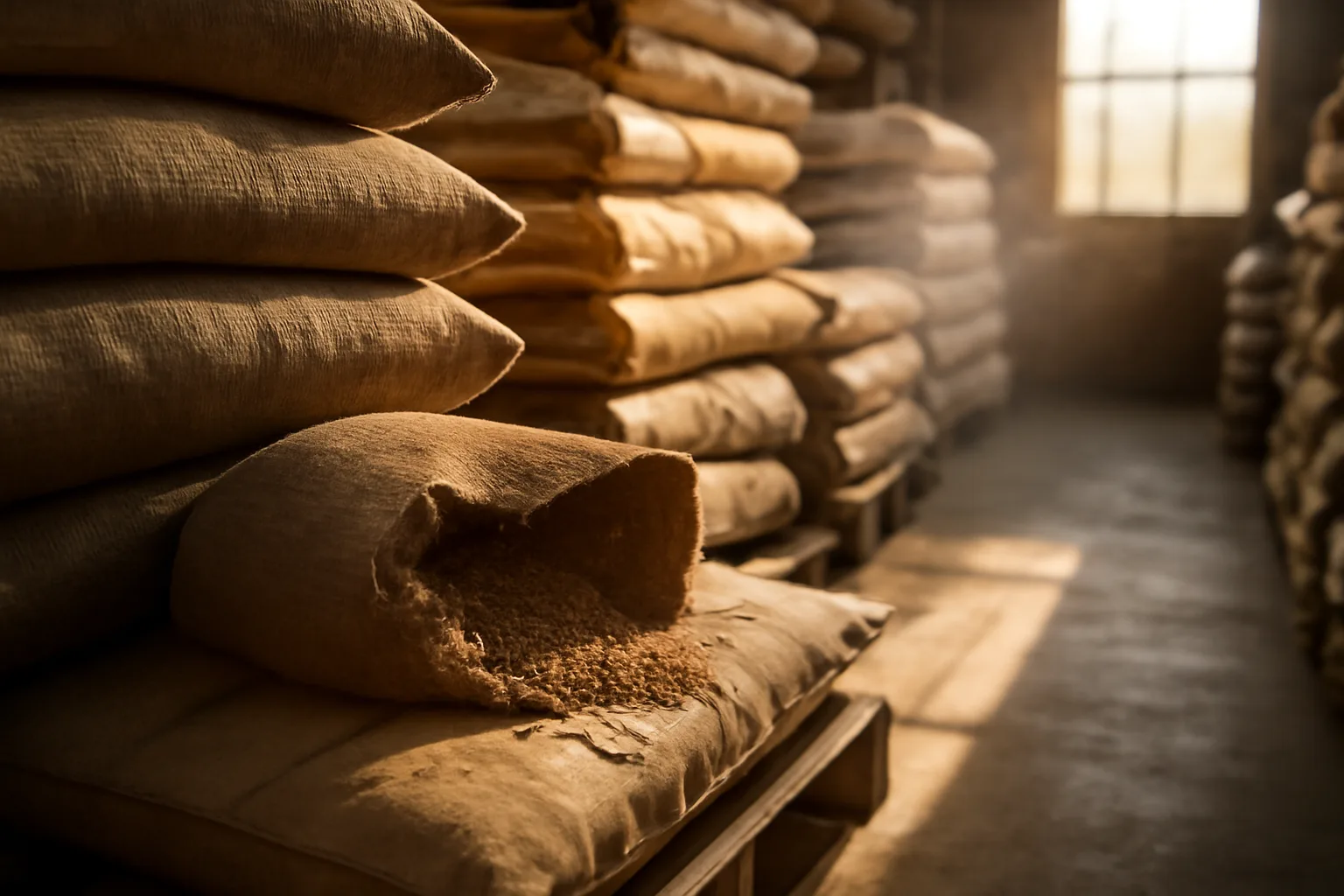
Sometimes, yes. Sometimes it's a waste of a planting window. The difference comes down to species, storage, and how long the seed has been sitting. Small-seeded legumes like clover store reasonably well if kept cool and dry, often holding acceptable germination for 2 to 3 years past the test date. Brassicas (turnips, radishes, rape) are similar. Cereal grains like oats and wheat degrade faster once humidity gets involved, and any seed that's been through a hot truck or a leaky warehouse can lose viability regardless of species. University Extension seed storage research consistently ties germination loss to storage temperature and humidity, with heat and moisture flagged as the two biggest drivers of viability loss in stored seed [1]. The honest math: if clearance clover is 40 percent off and germ tests at 75 percent instead of the 90 percent on a fresh bag, you're still coming out ahead per viable seed, as long as you seed a little heavier to compensate. If it's 40 percent off and germ is down at 40 to 50 percent, you're not saving money anymore, you're gambling on a thin stand and probably a second trip to buy more seed mid-season.
how do you check if clearance seed is still good
Every bag of agricultural seed sold in the U.S. is required to carry a tag listing the germination percentage and the date that test was run. This isn't optional labeling, it's federal law under the Federal Seed Act, enforced through USDA's Agricultural Marketing Service [2]. Look for that tag before anything else. A test date more than 12 months old is a yellow flag, not necessarily a dealbreaker, but ask the store when the germ test was actually performed and whether the bag has been reconditioned or retested since. Some states also require seed sold at retail to meet a minimum germination standard to be legally labeled and sold, so check your state department of agriculture's seed law if you want the specifics for where you're buying. If the tag is missing, faded, or the store can't tell you the test date, that's not a $20 savings worth chasing. Walk. You can also run your own rag-doll germination test at home in about a week: count out 50 to 100 seeds, roll them in a damp paper towel, seal in a plastic bag, and keep it around 70 degrees. Check daily and count how many sprout by day 7 to 10 depending on species. Cornell Cooperative Extension has a simple home germination test protocol that walks through this exact method [3]. If you get 80 percent or better, plant it at the normal rate. If you're down around 50 percent, you can still use it, just double your seeding rate and expect a thinner stand.
when to plant food plots for deer
Timing depends entirely on what you're planting and where you live, but the two big windows are late summer to early fall for most brassica and cereal grain plots, and spring through early summer for warm-season legumes and annual grain plots meant to be standing through hunting season. Fall plots (brassicas, cereal grains, clover overseeding) generally go in 60 to 90 days before your first hard frost, which gives brassicas time to bulb up and grain time to establish a leafy stand before growth slows. In much of the whitetail belt that lands somewhere between mid-July and early September, but a grower in the Deep South is working a different calendar than one in the Upper Midwest. Spring and summer plots (soybeans, cowpeas, clover, chicory, some sorghum and corn blends) go in after your last frost date, generally April through June depending on latitude. Your state's land-grant extension office publishes frost date maps and planting calendars specific to your county, and that's a better source than a national blanket date. For a full breakdown by region, see deer food plot seed for calendar guidance.
when to plant oats for deer
Oats are a fall food plot staple because deer hit them hard right as the weather cools, and they establish fast, often showing green growth within 7 to 10 days of planting. Most of the whitetail range plants oats 45 to 60 days before the average first fall frost, which in practice usually means late August through mid-September for the Midwest and Northeast, and into October for the mid-South. Oats are not reliably frost-hardy long-term. A hard freeze in the teens will kill the plant, though moderate frosts actually sweeten the forage by converting starches to sugars, which is part of why deer key in on oat plots so hard in October and November. If you're planting oats alone, a seeding rate around 100 to 130 pounds per acre broadcast is typical, per Extension forage guidance, though rates vary by drill versus broadcast method [4]. Mixed with a brassica or clover, cut the oat rate down so it's not smothering the slower-establishing companion species.
when to plant turnips for deer
Turnips go in during the same late-summer fall window as most brassicas, typically 80 to 100 days before your first expected hard frost, since turnips need that full runway to bulb out before deer start really working the plot. In practice that's late July through early September across most of the whitetail range, earlier in the northern tier, later in the South. Turnips are slow to get interesting to deer. They often ignore the tops early and don't hit the bulbs hard until after a few frosts convert starches to sugar, similar to what happens with oats. That means a turnip plot planted in August might not see heavy deer use until November or December, which is exactly the point for late-season hunters. Extension forage guidance for brassica food plots generally recommends a seeding rate around 4 to 6 pounds per acre for turnips broadcast alone, or lower when mixed with other brassicas or cereal grains. Don't overseed turnips. A too-thick stand competes for the same nutrients and you end up with a lot of small bulbs instead of a few large ones.
do deer eat sorghum
Yes, deer eat sorghum, both the grain heads and, to a lesser degree, the foliage, and it's a legitimate food plot and standing-grain option in warmer regions and drought-prone soils where corn struggles. Grain sorghum (milo) is more drought-tolerant than corn, which is why it shows up more in food plot mixes for the southern Plains and parts of the Southeast. Deer tend to use sorghum heavier in late fall and winter once the grain has matured and dried down, similar to how they work a standing cornfield. It's rarely anyone's first-choice species on its own, but as a component of a fall grain blend, or as a drought-insurance planting where corn is too risky, it earns a spot. One real caution: sorghum and its relative sudangrass can develop toxic levels of prussic acid (cyanide) in young, stressed, or frost-damaged growth, a known risk documented in university extension forage toxicity guidance. That's mostly a livestock grazing concern rather than a deer food plot one, since deer are browsing mature standing grain, not grazing young regrowth, but it's worth knowing if you're managing sorghum plots through multiple cuttings or heavy frost damage.
do deer eat clover, and do deer like clover
Yes, deer eat clover readily, and it's one of the most reliable, most planted food plot species in North America for good reason. Clover, especially white clover and red clover varieties, produces high-protein forage (often tested in the 20 to 30 percent crude protein range depending on variety and maturity) across a long growing season, and deer return to it repeatedly from spring green-up through fall. What makes clover different from an annual brassica or grain plot is persistence. A well-established perennial clover plot, properly limed and fertilized, can produce for 3 to 5 years before it needs to be renovated or reseeded, according to Extension forage management guidance [4]. That's a real cost advantage over replanting an annual plot every single season, assuming your soil and weed pressure cooperate. The tradeoff is clover needs decent soil pH (extension guidance generally targets 6.0 to 6.5 for clover) and it's slower to establish than a fast annual like oats. It's also more work to maintain long-term. Mowing to keep it vegetative and knock back weed competition is a normal part of clover plot upkeep, not an occasional chore.
do deer like honey, and what are deer's favorite foods
Deer don't seek out honey in any meaningful wildlife management sense, and there's no research base suggesting honey is a food plot attractant or forage source. Deer are herbivorous browsers built around plant material, not around nectar or animal-derived sugars, and honey doesn't show up in state wildlife agency food-habit studies or Extension forage recommendations as a deer food source at all. If you've heard about deer and honey, it's likely conflating deer with pollinators or it's a hunting-attractant product claim, not a food plot species. As for actual favorite foods, deer diet studies consistently show acorns, soybeans, clover, and browse from woody plants near the top of preference and availability, with strong regional variation. Acorns in particular are often the single most sought-after fall food source where oaks are present, because of their fat content, and deer will often bypass a food plot entirely during a heavy acorn drop. State wildlife agency deer management guides consistently list soybeans, clover, and standing corn or grain sorghum among the top cultivated food plot draws, alongside natural browse and mast.
how do soil tests fit into a clearance seed purchase
A clearance sale doesn't change what your dirt needs. If your soil test says pH 5.4 and low phosphorus, that's true whether the clover seed in your truck cost full price or half off. Pull a soil sample before you commit to any clearance buy, not after. Most state land-grant Extension soil labs charge somewhere in the $10 to $20 range per sample and return results with lime and fertilizer recommendations specific to the crop you tell them you're planting [5]. If you already have a soil test in hand, match the clearance species to what your dirt can actually support. Clover on a 5.0 pH soil with no lime applied is going to struggle regardless of germination rate, and that's not a seed problem, it's a soil chemistry problem. Your soil test lab is the actual authority on lime and fertilizer rates for your specific field. Generic bag instructions and general articles like this one are a starting point, not a substitute for your test results.
what should you check before buying clearance food plot seed
| Test date on tag | Within 12 months ideally | Federal Seed Act requires this be listed [2] | |
|---|---|---|---|
| Germination percentage | 80%+ for full-rate planting | Below that, seeding rate needs to go up | |
| Species | Clover, brassica store better than grains | Cereal grains degrade faster in storage | |
| Storage condition | Cool, dry, sealed bag | Heat and moisture kill viability fastest [1] | |
| Coating/inoculant | Check expiration separately | Inoculant on legume seed has its own shelf life | |
| Weed seed content | Listed on same tag | Cheap seed sometimes carries more weed seed | |
| Price vs. viable seed | Do the math per viable pound | 50% off at 50% germ isn't a deal | One line item people skip: inoculant. Clover, soybean, and other legume seed is often sold pre-inoculated with rhizobia bacteria that help the plant fix nitrogen. That inoculant has its own shelf life, generally shorter than the seed's, and old or heat-damaged inoculant means a weaker, more nitrogen-hungry stand even if the seed itself germinates fine. |
Run through this before you hand over money at a clearance rack or an end-of-season online sale. | Check | What to look for | Why it matters |
how much can you actually save buying clearance seed
Real-world clearance markdowns on food plot seed typically run 20 to 50 percent off original shelf price, heaviest late in the planting season or right after a fall/spring cutoff when stores want the shelf space back for the next seasonal push. On a $120 bag of clover blend, a 40 percent markdown saves $48. That's meaningful, especially across multiple bags for a multi-acre plot program. But if you have to seed 30 percent heavier because germ tested at 70 instead of 95, you're eating back a chunk of that savings in extra bags. Do the arithmetic before you buy, not after you've planted a thin stand and are wondering why the deer aren't using it. Where clearance seed makes the most sense: annual species you're planting this season anyway (oats, brassicas, annual clover), bought close to your actual planting window so storage time before you get it in the ground is short. Where it makes the least sense: perennial clover or chicory you're hoping will hold up for 3 to 5 years, where a weak initial stand from marginal germination compounds every year after.
getting the plan right, more than the seed
A discount bag of the wrong species for your soil, planted at the wrong time of year, isn't a deal at any price. The seed cost is usually the smallest part of a food plot budget once you count lime, fertilizer, fuel, and your own time. If you're staring at a soil test and a pile of clearance seed options and aren't sure what actually fits your ground, that's a planning problem, not a seed-shopping problem. PlotSeason's $99 one-time Custom Food Plot Plan takes your soil test results, your region, and your equipment and builds a specific species and planting plan around them, so you're not guessing which clearance bag is worth grabbing. Check it out at plot-plan-builder. Whichever route you take, start with the food plot seed basics and the domain food plot seed comparison guide before you commit real money to a discount rack, clearance or not.
check your state's baiting and feeding rules first
Before you plant anything, including a clearance-rack food plot, check your state wildlife agency's baiting and feeding regulations. Food plots are legal, planted-in-the-ground agriculture in essentially every state, but supplemental feeding (piles of grain, mineral blocks, feeders) is a separate legal category that many states restrict or ban outright, sometimes tied to chronic wasting disease concerns. Rules vary widely and change year to year, especially in states responding to CWD detections. Michigan, for example, restricts baiting and feeding of deer through its Natural Resources and Environmental Protection Act rule-making authority, with specific bans tied to counties in its CWD management zones, administered by the Michigan DNR . Don't assume a rule from a neighboring state applies to yours, and don't assume last year's rule still stands this year. Check your own state wildlife agency's current regulations before the season starts.
Frequently asked questions
Do deer eat sorghum?
Yes. Deer eat both grain sorghum heads and, to a lesser extent, the foliage, and it's a legitimate drought-tolerant alternative to corn in food plot grain mixes, especially in the South and southern Plains. Deer tend to use it most heavily in late fall and winter once the grain has matured and dried down.
Do deer eat clover?
Yes, and clover is one of the most planted food plot species in North America because it's high in crude protein (often 20-30 percent depending on variety and maturity) and produces across a long season. Deer return to established clover stands repeatedly from spring through fall.
Do deer like clover?
Yes, deer show strong, consistent preference for clover in Extension forage research and food plot field experience alike. A well-limed, well-fertilized perennial clover plot can hold deer traffic for 3 to 5 years before it needs renovation, per Extension forage management guidance.
When should you plant food plots for deer?
Fall plots (brassicas, cereal grains) generally go in 60 to 90 days before your area's first hard frost. Spring/summer plots (soybeans, cowpeas, clover) go in after your last frost date. Exact dates vary by region, so check your state land-grant Extension office's local planting calendar.
When should you plant oats for deer?
Plant oats 45 to 60 days before your first expected fall frost, typically late August through mid-September across most of the Midwest and Northeast, later in the mid-South. Oats aren't frost-hardy long-term, but moderate frosts sweeten the forage and increase deer use through fall.
When should you plant turnips for deer?
Plant turnips 80 to 100 days before your first hard frost, typically late July through early September depending on latitude. Deer often ignore turnip tops and bulbs early, then hit them hard after a few frosts convert starches to sugar, usually in November or December.
What is a food plot?
A food plot is a planted area, usually a quarter acre to several acres, established specifically to feed and attract deer on hunted land. Plots use targeted species like clover, brassicas, or cereal grains chosen for the season, soil, and hunting purpose, rather than general pasture or crop production.
What are deer's favorite foods?
Acorns are typically the top preferred fall food where oak trees are present, due to their fat content; deer will often bypass planted food plots during a heavy acorn drop. Among cultivated foods, soybeans, clover, and standing corn or grain sorghum are consistently among the most heavily used food plot species.
Do deer like honey?
No, there's no research or wildlife agency data showing honey as a deer food source or attractant. Deer are herbivorous browsers and don't seek out nectar or animal-derived sugars; honey doesn't appear in food-habit studies or Extension forage recommendations for deer.
Is clearance food plot seed worth buying?
Sometimes. Check the germination test date on the seed tag (required under the Federal Seed Act) and the storage conditions. If germination tests above 80 percent and the discount is 30 percent or more, it's usually worth it. Below 50 percent germination, you're often not saving real money once you seed heavier to compensate.
How do you test if old food plot seed will still germinate?
Roll 50 to 100 seeds in a damp paper towel, seal in a plastic bag, and keep around 70 degrees for 7 to 10 days, checking daily for sprouts. Count the percentage that germinate. Extension offices like Cornell Cooperative Extension publish this exact home germination test method.
Does clearance seed need a higher seeding rate?
Yes, if germination testing comes back below the roughly 85-95 percent typical of fresh seed. Increase your seeding rate proportionally; for example, seed testing at 70 percent germination should be planted at roughly 20-25 percent heavier rates than the bag's standard recommendation to get a comparable stand.
What food plot seed stores the longest on a shelf?
Small-seeded legumes like clover and brassica seed (turnips, radishes) generally hold acceptable germination longer, often 2 to 3 years past the test date if kept cool and dry. Cereal grains like oats and wheat, and inoculated legume seed, tend to lose viability faster, especially with heat or moisture exposure during storage.
Sources
- University of Minnesota Extension, seed germination and storage guidance: Heat and moisture during storage are the primary causes of seed viability loss
- USDA Agricultural Marketing Service, Federal Seed Act (7 U.S.C. 1551-1611): Seed sold in the U.S. must carry a label with germination percentage and test date under the Federal Seed Act
- Cornell Cooperative Extension, home seed germination testing: A rag-doll paper towel test at room temperature over 7-10 days is a standard home germination test method
- University of Georgia Extension, Southern Forages seeding rate guidance (Bulletin 1347): Typical oat seeding rates and clover perennial stand longevity guidance for forage plantings
- North Carolina Department of Agriculture, agronomic soil testing services: State land-grant soil testing labs return lime and fertilizer recommendations for a specified crop, typically for a modest per-sample fee