Last updated 2026-07-25
TL;DR
Wildlife food plot seeds fall into a few workable categories: clovers and brassicas for cool-season plots, soybeans and corn for warm-season protein and cover, and cereal grains like oats for fast fall attraction. Timing depends on your USDA hardiness zone and first/last frost dates, generally spring planting April through June and fall planting late July through September.
what is a food plot, exactly
A food plot is a planted area on hunting or wildlife land, usually somewhere between a quarter acre and several acres, seeded with forage or grain crops to feed deer and other wildlife and to concentrate animal activity where a hunter wants it. It's agriculture with a hunting purpose attached rather than a commodity purpose. Most state wildlife agencies and land-grant universities treat food plots as one piece of a wildlife habitat management plan, not a shortcut. A plot alone doesn't fix a property with no cover or bedding structure nearby. You still need timber management, water, and security cover doing their part. Food plots generally split into two working categories. Perennial plots, mostly clover and chicory blends, get planted once and can produce forage for two to five years with maintenance mowing and fertilizing. Annual plots (brassicas, cereal grains, soybeans, corn) get replanted every year and are built around a specific season, usually late summer through fall for hunting season timing. One planning note before you buy seed: check your state's baiting and supplemental feeding regulations. A planted, rooted food plot is legal to hunt over in nearly every state, but piling loose grain or minerals on the ground is a different category and rules vary a lot by state, sometimes by county for disease-management zones. Your state wildlife agency's hunting regulations page is the source to check, not a seed bag label.
what are deer's favorite foods
Deer preference isn't one static list. It shifts by season, by what's naturally available, and by region, but a few patterns hold up across research and extension data. In spring and summer, deer favor high-protein forbs and legumes: clover, soybeans, cowpeas, and native forbs when available. Whitetails need diet crude protein in roughly the mid-teens to around 20 percent range during lactation and antler growth, a level most native browse can't consistently hit on its own. That's a big part of why clover and soybean plots get used so heavily in growing season. In fall, preference shifts toward carbohydrates and fat as deer build reserves for winter: acorns first if they're on the ground, then brassicas, cereal grains, and standing corn or soybeans. Extension forage trials consistently rank a short list at the top for palatability and tonnage: clover (white and red), soybeans, brassicas (turnips, radish, rape), cereal grains (oats, wheat, rye), and cowpeas. Corn and grain sorghum rank lower on raw preference but are heavily used for standing winter cover and late-season calorie density. Deer are also opportunists. A property with a hot acorn drop will pull deer off a soybean field almost overnight, and a plot that looked ignored all September can get hammered in November once other food sources thin out. Don't judge a food plot's value by traffic in the first six weeks.
do deer like clover, and is it worth planting
Yes. Clover is consistently one of the highest-use food plot species in university trials and is often the default recommendation for a first perennial plot. It's high in protein, often 20 to 30 percent crude protein in vegetative growth, tolerates repeated grazing pressure, and comes back for multiple seasons if it's mowed and limed correctly. White clover (Ladino types especially) is one of the most planted perennial food plot species in the whitetail world, largely because it handles shade better than most legumes and holds up under heavy browsing. Red clover grows more upright, tolerates poorer drainage, and often outproduces white clover in tonnage, but it's shorter-lived, usually two to three years versus four or more for a well-maintained white clover stand. Clover's downside is establishment risk. It's a small seed. It needs good seed-to-soil contact and a pH around 6.0 to 6.5 to nodulate and fix nitrogen properly. Skip the soil test and plant clover into a 5.2 pH field and you'll get a thin, disappointing stand no matter how good the seed is. This is the single most common food plot failure extension agents report: guessing on lime instead of testing. If you want one low-maintenance, multi-year plot and you're not going to rotate crops every season, clover is the right starting species for most of the eastern and midwestern whitetail range.
do deer eat sorghum
Yes, deer eat grain sorghum, but it's not a top preference food and it's used more as a standing cover and late-season backup crop than a primary attractant. Sorghum (milo) produces a seed head deer will feed on once it dries down, and the tall stalks double as screening cover, which is often the real reason it gets planted. In preference trials, sorghum ranks well below soybeans, corn, and brassicas for deer use. It's more drought-tolerant than corn, which is why it shows up in food plot mixes for sandier soils or lower-rainfall regions. If your main goal is feeding deer, sorghum is a supporting player, not the anchor crop. If your goal includes visual screening or standing winter cover in a harsh climate, it earns its spot.
do deer like honey (and honey locust confusion)
Deer don't seek out honey itself; it's not a natural forage item and isn't something wildlife feed on in any meaningful volume. This question usually comes from confusion with honey locust (Gleditsia triacanthos) or honeysuckle, both of which deer do browse. Honey locust pods, which ripen in fall, are a genuine deer food source, high in sugar content, and get eaten heavily once they drop, similar to how deer key in on acorns. Japanese honeysuckle is browsed year-round where it's available and is actually planted intentionally in some southern habitat programs as a browse species, though it's also flagged as invasive in many states, so check before planting it. Neither of these has anything to do with honey as a food product, and there's no research or extension guidance suggesting deer are drawn to honey itself.
when to plant food plots for deer (by season)
| North (zones 3-5) | mid-May to mid-June | late July to mid-August | |
|---|---|---|---|
| Mid-South (zones 6-7) | late April to late May | late August to mid-September | |
| Deep South (zones 8-9) | March to April | September to October | Spring plots (soybeans, cowpeas, clover establishment) need soil temps consistently above 60°F and no more frost risk. Fall plots need enough time before your first hard frost for the crop to establish, usually 60 to 90 days depending on species, so working backward from your average first frost date is the right way to plan rather than a fixed calendar date. If you're planting a new perennial clover plot, spring establishment (once soil temps hit the mid-50s) generally outperforms fall for first-year survival in northern climates, because the plants get a full growing season before winter. In the South, fall-planted clover often does better since it avoids summer heat stress during establishment. |
Timing is regional first, species second. The two planting windows that matter are spring (April through June depending on zone) for warm-season annuals and perennials, and late summer (late July through September) for fall annuals and cool-season perennials. USDA plant hardiness zones are the starting reference point for frost dates, but your local land-grant extension office's planting calendar is more precise than the zone map alone, since it factors in local frost data the national map doesn't. A rough national framework: | Region (approx. USDA zone) | Spring plot window | Fall plot window |
when to plant oats for deer
Oats are a fall annual, planted 45 to 60 days before your area's first expected frost, which lands most of the country in the late August to mid-September window. Oats germinate fast (5 to 10 days in warm soil), grow quickly, and are extremely attractive to deer within a few weeks of planting, making them one of the most reliable early-fall plot fillers. Oats aren't cold-hardy compared to wheat, cereal rye, or triticale. A hard freeze in the low 20s will usually kill oats back for the season, so they work best as an early-to-mid fall attraction crop rather than a food source you're counting on into January. If you want green forage standing through winter, blend oats with wheat or cereal rye so something's still alive after the first freeze. Soil test before planting oats just like anything else. Oats aren't picky about pH the way clover is (they'll tolerate down to about 5.5), but a starter dose of nitrogen (30 to 40 lbs/acre) noticeably improves tonnage and speed to green-up, per most extension small-grain forage guides.
when to plant turnips for deer
Turnips get planted in the same window as oats: late July through early September in most whitetail range, timed 80 to 90 days before your first killing frost since turnips need that long to bulb out and reach peak tonnage. Turnip tops (the leafy greens) get browsed almost immediately after germination and are attractive through fall. The bulbs are the second act: deer generally ignore bulbs until after the first hard frosts convert stored starches to sugars, which is why a turnip plot that looked untouched in October can get eaten to dirt in late December. This freeze-triggered sugar conversion is well documented in extension brassica forage research and is the main reason turnips are marketed as a late-season food plot species. Plant turnips shallow, a quarter inch or less, into a firm seedbed. They're a small seed and get planted too deep more often than any other food plot species, which is a common cause of poor stands. A brassica blend (turnip, radish, rape) spreads out the leaf-to-bulb timing and gives you attraction across a longer window than turnips alone.
how do I pick the right seed for my property
Start with your soil test, not the seed bag. Your local cooperative extension soil lab or a private ag lab will give you exact pH and nutrient recommendations specific to your dirt, and that lab result is the real authority on lime and fertilizer rates, not a general guide like this one or the recommendations printed on a seed bag. After soil chemistry, the next filters are sunlight (most food plot species need 4+ hours of direct sun minimum, 6+ for full production), drainage, and deer density pressure. High-pressure small plots often do better with sturdier, harder-to-overgraze species like cereal grains and brassicas; low-pressure larger plots can support clover and soybeans without getting grazed out before they establish. A lot of hunters land on a simple two-plot rotation: one perennial clover plot for spring through fall, one annual fall blend (oats, brassica, cereal rye) for hunting season timing. That combination covers most of the calendar without asking one seed blend to do everything. If you'd rather skip the guesswork of matching species, planting windows, and rates to your specific soil test and acreage, PlotSeason's $99 one-time Custom Food Plot Plan builds a planting plan from your test results and property details. It's general planning guidance built around your numbers, not a substitute for your soil lab's specific lime and fertilizer recommendations, which stay the final word on your dirt. For species-specific breakdowns and seed selection by goal, see food plot seed and deer food plot seed.
what equipment do I actually need to plant a food plot
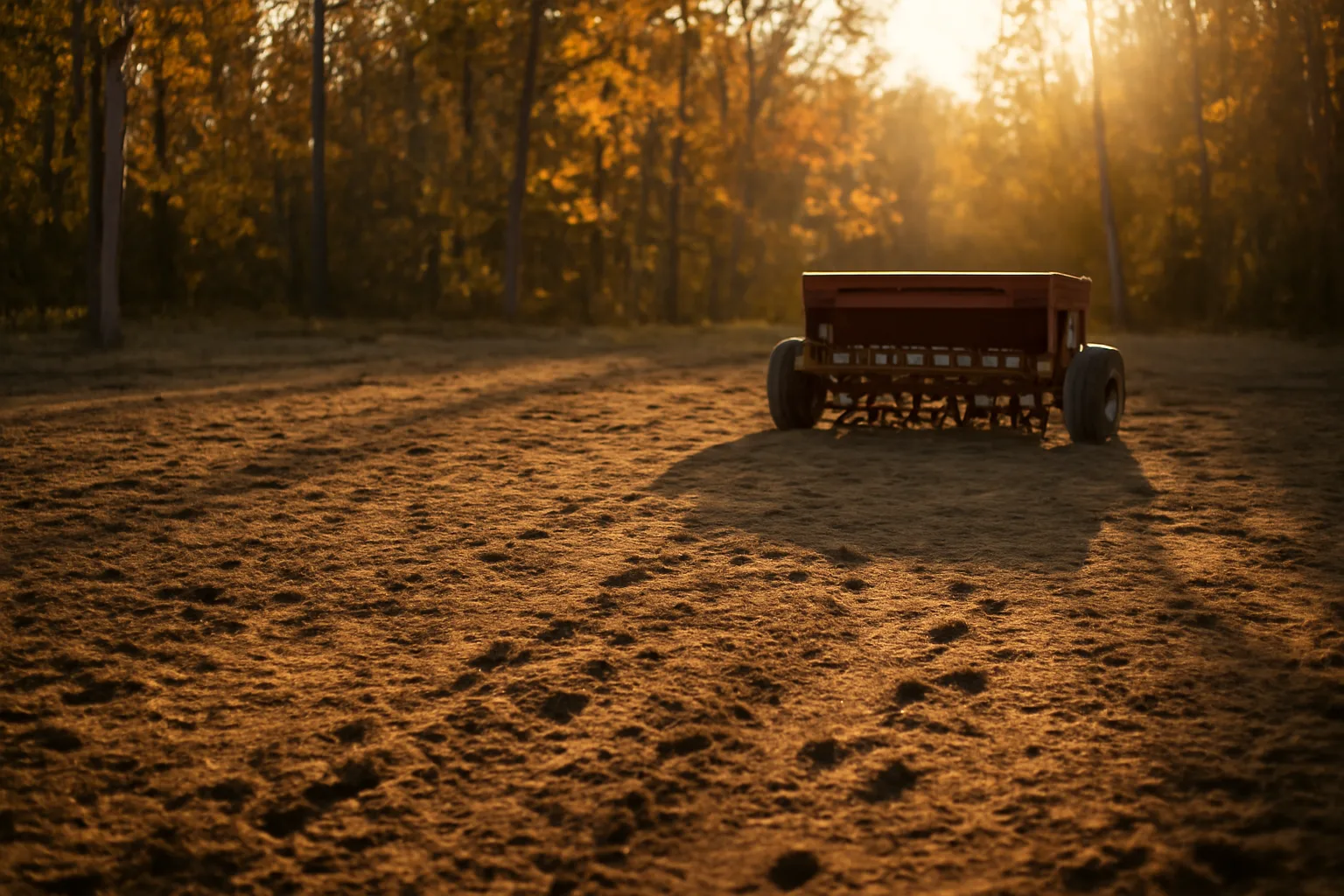
You don't need a tractor to plant a small food plot, but you do need a way to kill or knock down existing vegetation, break or loosen soil enough for seed contact, and pack the seed in. The minimum functional setup for a plot under an acre is a rotary mower or brush cutter, a hand-crank or ATV broadcast spreader, and a way to drag the seed in (a section of chain-link fence or a homemade drag works fine). For plots over an acre or on tougher ground, a disc harrow or tiller and a cultipacker start paying for themselves in stand quality. Broadcast-and-cultipack is the standard method for small seeds like clover and brassicas; drilling works better for larger seeds like soybeans and corn where seed depth control matters more. Herbicide (usually glyphosate for a burndown before planting) is standard practice in most food plot programs, applied 1 to 2 weeks before planting to clear competing vegetation. Read and follow label rates. Extension programs consistently note that under- or over-application is a common first-timer mistake. For a broader rundown on matching gear to plot size and species, deer food plots and food plot whitetail both cover equipment scaling in more depth.
common food plot seed mistakes worth avoiding
Planting too deep is probably the single most common failure, especially with small-seeded species like clover, brassicas, and chicory. Clover and turnip seed should go in at a quarter inch or less; buried at an inch deep, germination rates drop hard. Skipping the soil test is the second big one. Soil pH is the biggest single driver of food plot success or failure in most extension guidance, because pH controls nutrient availability regardless of how much fertilizer you put down. A $15 to $20 soil test avoids wasting a $200 seed and fertilizer bill on ground that can't use it. Third: planting a shaded plot with sun-hungry species. Clover and soybeans want 6+ hours of direct sun for real production. A quarter-acre plot ringed by mature timber with 3 hours of dappled light will always underperform, no matter the seed blend, and brassicas or cereal grains tolerate partial shade better if that's your site. Last, plot size relative to deer density gets overlooked constantly. A half-acre clover plot in an area with heavy deer pressure can get grazed to the dirt before it ever establishes. Extension habitat guides generally recommend food plots make up somewhere around 1 to 5 percent of total property acreage, distributed across multiple smaller plots rather than one big field, to spread out grazing pressure and reduce the odds of any single plot getting wiped out early.
Frequently asked questions
Do deer eat sorghum?
Yes, but it's a secondary food plot species. Deer will eat the seed heads once sorghum dries down in fall, but preference trials rank it below corn, soybeans, and brassicas. It's more often planted for its drought tolerance and use as standing winter cover or screening than as a primary attractant.
Do deer like clover?
Clover is one of the most consistently preferred food plot forages in university trials, offering 20 to 30 percent crude protein during vegetative growth. White clover (especially Ladino types) tolerates shade and grazing well; red clover grows more upright but has a shorter stand life, typically two to three years versus four-plus for white clover.
When should I plant food plots for deer?
Spring plots (soybeans, cowpeas, new clover) go in once soil temps hold above 60°F, roughly April to June depending on zone. Fall plots (oats, brassicas, cereal rye) go in 45 to 90 days before your area's first hard frost, generally late July through September. Your local extension office's frost date data is more precise than a national calendar.
When do you plant oats for deer plots?
Plant oats 45 to 60 days before your area's expected first frost, usually late August into mid-September for most of whitetail range. Oats germinate fast and are highly attractive within weeks, but they're not very cold-hardy; a hard freeze in the low 20s typically kills them back for the season.
When do you plant turnips for deer plots?
Plant turnips 80 to 90 days before your first killing frost, generally late July through early September. Deer eat the leafy tops right away but usually ignore the bulbs until after a hard frost converts stored starches to sugar, which is why turnip bulbs often get hammered in late fall and winter.
What is a food plot?
A food plot is a planted area, usually a quarter acre to several acres, seeded with forage or grain crops specifically to feed deer or other wildlife and concentrate their activity for hunting or habitat purposes. It's one tool within a broader habitat plan that should also include natural cover and water sources.
What are deer's favorite foods?
Preference shifts seasonally: high-protein legumes and forbs like clover and soybeans in spring/summer, and acorns, brassicas, cereal grains, and standing soybeans or corn in fall for fat reserves. Clover, soybeans, and brassicas consistently rank highest in university food plot forage trials for palatability and tonnage.
Do deer like honey?
No, honey isn't a natural deer food and there's no research showing deer are drawn to it. This question usually stems from confusion with honey locust, whose sugary fall-ripening seed pods deer do actively eat, or with honeysuckle, which deer browse year-round where available.
How much of my property should be food plots?
Most habitat management guides suggest food plots make up roughly 1 to 5 percent of total property acreage, spread across several smaller plots rather than one large field. This spreads out grazing pressure and reduces the risk of a single plot getting grazed out before it establishes.
Is a soil test really necessary before planting a food plot?
Yes. Soil pH controls how well plants can use any fertilizer you apply, and it's the most common reason food plots fail, according to extension habitat guidance. A soil test costs roughly $15 to $20 through most state extension labs and prevents wasting money on seed and fertilizer that poor soil chemistry can't use.
Can I hunt over a planted food plot legally?
In nearly every state, a planted, rooted food plot is legal to hunt over and isn't classified as baiting. Piling loose grain, minerals, or feed on the ground is a separate legal category with rules that vary significantly by state and sometimes by county, so check your state wildlife agency's current baiting regulations before adding any supplemental feed.
What's the difference between annual and perennial food plot seed?
Annual seed (oats, brassicas, soybeans, corn) gets replanted every year and is timed to a specific hunting season window. Perennial seed (clover, chicory, alfalfa) is planted once and, with mowing and fertility maintenance, can produce forage for two to five years before needing to be replanted.
Sources
- USDA Natural Resources Conservation Service, Conservation Practice Standard: Wildlife Habitat Management, Code 645: food plots function as one part of a broader wildlife habitat plan alongside natural forage, cover, and water
- USDA Forest Service, General Technical Report PSW-GTR-220 (nutritional ecology summaries referenced in wildlife habitat literature): whitetail deer nutritional needs increase substantially during lactation and antler growth, driving demand for higher-protein forage
- USDA NRCS Plant Fact Sheet, White Clover (Trifolium repens L.): white clover tolerates shade and heavy grazing pressure well, making it one of the most widely planted perennial forage legumes
- USDA NRCS Plant Fact Sheet, Forage Turnip (Brassica rapa): brassica forage crops like turnips are grown as fall and winter forage, with palatability characteristics tied to cold exposure
- USDA NRCS Plant Fact Sheet, Grain Sorghum (Sorghum bicolor): grain sorghum is more drought-tolerant than corn and is commonly used in wildlife plantings for cover and supplemental feed