Last updated 2026-07-25
TL;DR
The right food plot seed mix depends on your soil test, your planting window, and whether you want fall attraction or season-long nutrition. Clover and brassicas dominate most whitetail plots because they're cheap, palatable, and forgiving of imperfect soil, but no single mix works everywhere. Test your soil first, then match species to your region's frost dates and pH.
what is a food plot, exactly
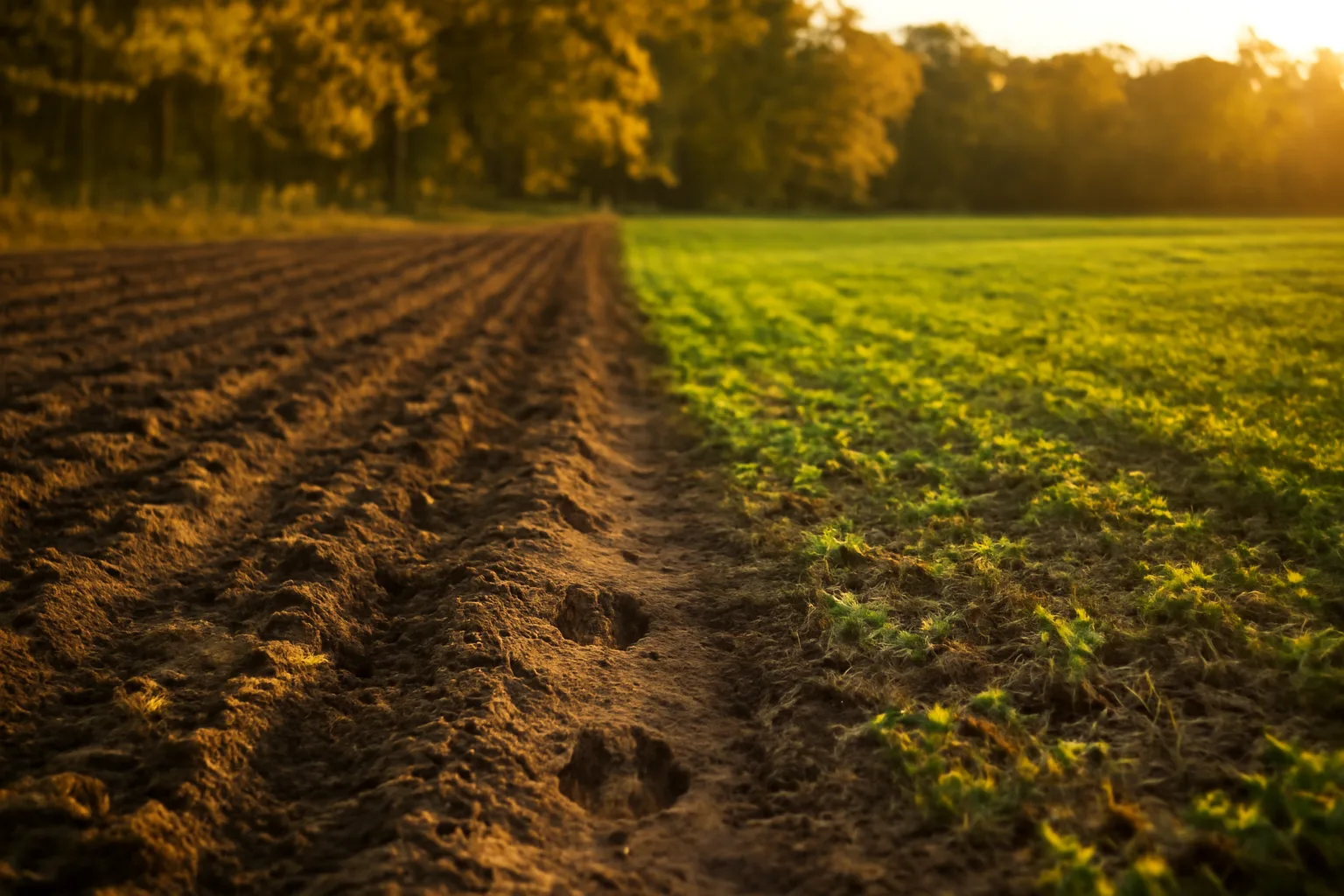
A food plot is a planted patch of forage, usually somewhere between a quarter acre and a few acres, put in specifically to feed and attract deer or other wildlife. That's the whole concept. It's not complicated, but people overthink it constantly. Most plots on private and leased deer ground fall into two rough categories: annual plots you replant every year (brassicas, cereal grains, forage soybeans) and perennial plots that persist for three to five years with maintenance (clover, alfalfa, chicory). The USDA's National Agroforestry Center and most state wildlife agencies treat food plots as a wildlife habitat management tool, not agriculture in the commercial sense, though the agronomy underneath is identical to a hayfield or pasture [1]. A lot of new plotters assume a food plot's main job is to "attract" deer for a hunt. That's part of it, especially with brassicas planted for fall gun season. But the better long-term framing is nutrition: does this ground grow something deer need at the time of year they need it? A spring clover plot supports lactating does and antler growth. A fall brassica plot supports deer packing on fat before winter. Different jobs, different seed. If you want a plan built around your specific acreage, soil test, and region instead of guessing off a bag label, that's exactly what our $99 Custom Food Plot Plan is built to do. It's general planning guidance, not site-specific agronomy, your soil test lab is still the final word on lime and fertilizer rates.
do deer like clover, and is it worth planting
Yes. Clover is one of the most preferred and most planted food plot forages in the country. It's high in protein, often 20-30% crude protein in a good stand, it regrows after grazing, and it can last three to five years on one planting before you need to reseed [2]. That combination of cost and durability is hard to beat. White clover (Ladino types especially) and red clover are the two workhorses. Ladino white clover tends to hold up better under heavy grazing pressure because of its creeping growth habit, while red clover grows more upright and can outcompete weeds early but doesn't persist quite as long. Extension trial data from land-grant programs consistently ranks clover among the highest-preference forages in deer feeding trials, though preference studies vary by region and deer density [2]. The catch with clover is soil pH. Clover wants a pH in the 6.0 to 7.0 range to really produce, and it's genuinely mediocre on acidic ground below 5.5 unless you lime it first. This is where a soil test earns its keep instead of guessing. Clover also needs decent sun, a half day minimum, and doesn't love standing water. Full-season maintenance (mowing to knock back weeds, occasional herbicide for grass control) is part of the deal if you want it to last the full three-to-five-year window instead of getting choked out in year two. For readers comparing clover against other perennial or annual options for a specific plot, our food plot whitetail guide breaks down more on matching forage type to your site conditions.
do deer eat sorghum
Yes, deer will eat sorghum, particularly the grain heads and, in some regions, the young leafy growth, but it's not a top-tier whitetail forage on its own and it's rarely the reason someone plants it. Grain sorghum (milo) is more commonly grown as a screening or cover crop, or as a component in dove and upland bird plots, than as a primary deer attractant. Where sorghum earns its place in a deer program is as a nurse crop or a structural component mixed with soybeans or cowpeas, and as standing cover through fall and winter that also drops seed heads deer will hit once other food thins out. Some southern food plotters use grain sorghum specifically for its drought tolerance on sandy or droughty ground where corn struggles. It's a solid choice if you need height and cover along with some food value, but if straight-up deer nutrition is the goal, brassicas, clover, and soybeans outperform it in preference trials [2]. Worth flagging: sorghum contains cyanogenic compounds (prussic acid precursors) in young, stressed, or frost-damaged growth. This is a documented risk for cattle and other ruminants that livestock extension programs warn about closely, and the Oklahoma State University Extension notes that "prussic acid poisoning can occur when livestock graze sorghum species that have been damaged by frost, drought, or other stresses" [3]. There isn't the same volume of deer-specific toxicity research, but it's a reasonable caution to graze plots down before a hard frost stresses the plant, and it's one more reason sorghum tends to play a supporting role rather than a headline role in most seed mixes.
do deer eat turnips, and when should you plant them
Deer eat both the leafy tops and the bulb of turnips, and in cold climates they often ignore the plant for weeks and then hit it hard once a few frosts sweeten the bulb by converting starches to sugars. This is one of the most well-documented patterns in food plot literature and it's why turnip-based brassica blends are marketed so heavily for late-season hunting. Plant turnips 60 to 90 days before your area's first hard killing frost. In much of the Midwest and Upper South that lands somewhere in late July through August; in the Deep South it can push into September. General land-grant extension guidance on brassica forages recommends a seeding rate around 4 to 5 lb per acre for turnips broadcast alone, or 2 to 3 lb per acre when blended with other brassicas like radish and rape. A few practical notes: turnips need a firm seedbed and shallow planting (a quarter inch or less, they're a tiny seed), they respond hard to nitrogen (most guidance runs 40-60 lb of actual N per acre depending on soil test results), and they're genuinely a fall/winter food, not a summer one. Deer pressure on turnip tops often starts in October, then shifts to bulb consumption in December and January once things freeze. If your plot gets hit too early and cleaned out before deer season peaks, that's usually a sign you planted too early relative to your frost date, not a species problem. See our deer food plot seed page for more on blending turnips with radish and cereal grains for a longer feeding window.
when to plant oats for deer, and how do they fit a mix
Oats go in the ground in late summer for a fall food plot, generally 6 to 8 weeks before your first expected frost, which for most of the Midwest and Northeast lands in late August to mid-September. In the Deep South, oats are often planted later, into October, as a true cool-season option that keeps growing through a mild winter. Oats are one of the fastest-germinating, most palatable cereal grains you can plant, often up and growing within 5 to 7 days in warm, moist soil. Deer hit young oat shoots hard, sometimes too hard, plots planted alone in small acreages (under an acre) can get grazed to the dirt before they ever mature if deer density is high. That's a real risk with oats specifically, more so than wheat or rye, because oats are less cold-hardy and less regrowth-tolerant once grazed to the ground repeatedly. Most successful plotters use oats as part of a blend rather than a monoculture, pairing them with clover or brassicas so there's a backup food source once the oats get hammered or winter-killed. Oats also aren't as frost-tolerant as winter wheat or cereal rye. A hard freeze (mid-20s F and below) will usually kill oats outright, while wheat and rye keep pushing new growth into much colder temperatures. If you're planting in a zone with real winters, oats are a great early-season draw but plan on rye or wheat to cover you into January.
when should you plant food plots for deer
| Northern (Zones 3-4) | Mid-May to mid-June | Late July to mid-August | |
|---|---|---|---|
| Transition (Zones 5-6) | Late April to late May | Mid-August to mid-September | |
| Southern (Zones 7-8) | Late March to April | Mid-September to mid-October | For a full breakdown by state and zone, our deer food plots guide covers regional calendars in more depth. |
Timing splits into two windows, spring/summer for perennials and warm-season annuals, and late summer/early fall for cool-season annuals, and the right one depends entirely on what you're planting and your region's frost dates. There's no single calendar date that works nationwide; USDA plant hardiness zones and your local extension office's frost date tables are the actual reference points. Spring plantings (typically April through June depending on latitude) cover clover, chicory, alfalfa, and warm-season annuals like soybeans, cowpeas, and corn. Soil temperature matters more than the calendar here: most clovers germinate reliably once soil hits 50°F, while soybeans want soil closer to 60°F. Fall plantings (roughly late July through September in most whitetail range, later in the Deep South) cover brassicas, oats, wheat, rye, and any clover or perennial you're overseeding into an existing stand. The rule of thumb repeated across extension publications is to plant brassicas and cereal grains 60 to 90 days ahead of your first killing frost so plants have time to establish before growth slows. Here's a simplified regional planting window reference. Treat it as a starting point, not gospel, your local extension office and a soil test still carry more weight than any national chart. | Region | Spring/Summer Planting | Fall Planting |
what do deer actually prefer to eat, and does that change by season
| Ladino white clover | 20-30% | Spring through fall |
|---|---|---|
| Forage soybeans | 25-30% (leaf) | Summer, standing beans into fall |
| Brassica tops (turnip/rape) | 15-25% | Fall |
| Winter wheat/oats (young growth) | 20-25% | Fall through winter |
| Standing corn (grain) | 8-10% | Late fall/winter energy source |
Deer are browsers with strong seasonal shifts, and "favorite food" changes depending on what's available and what life stage the deer is in. In spring and summer, does raising fawns and bucks growing antlers need protein, so clover, soybeans, and other legumes get heavy use. In fall, deer shift toward carbohydrates and fat storage, which is why acorns, corn, and standing soybeans get hammered hard once they're available. In late winter, browse (woody stems, buds) becomes the fallback food when plots and mast are gone. Acorns deserve a mention because in a mast year, deer will often ignore a food plot entirely in favor of a good white oak drop; that's not a plot failure, that's just deer being efficient. State deer research programs note that acorn availability can swing deer movement and plot use more than almost any planted forage in a given fall [2]. Across national browse studies and extension forage-preference trials, the consistently top-ranked planted species tend to be clover, soybeans (forage type), and brassicas in fall, in some order depending on region and season. Corn and cereal grains rank lower on pure preference but higher on raw energy content, which matters for winter survival in northern climates. A quick reference on relative crude protein, useful for understanding why deer gravitate to certain plots: | Forage | Typical crude protein | Primary season of use |
do deer like honey, or is that a myth
No, deer don't seek out honey in any meaningful biological sense, and there's no credible wildlife research suggesting honey is a deer attractant. This question shows up a lot because of commercial deer attractant sprays and "sweet feed" products that use molasses or sugar-based scents, but that's a manufactured additive story, not a natural food preference. What deer do respond to is sugar and carbohydrate content in general, which is part of why frost-sweetened brassicas and standing corn pull deer hard in late season; the plant itself is converting starch to sugar, which deer can taste and seek out. That's a documented physiological response in the plant, not deer chasing sweetness for its own sake. Also worth flagging: using bait, mineral, or scent products (including sugar-based attractants) to draw deer is regulated differently state by state, and some states classify certain attractant use the same as baiting for hunting purposes. Always check your state wildlife agency's current baiting and feeding regulations before using any attractant product near a stand, because rules change year to year and vary hard by state.
how do you choose the right seed mix for your plot
Start with your soil test, not the seed bag. A $10 to $20 soil test through your state land-grant extension lab will tell you your pH and major nutrient levels, and that result determines what will actually grow, no matter how good the seed genetics are. Most extension soil labs, including Penn State's Agricultural Analytical Services Lab, turn results around in about a week and include lime and fertilizer recommendations specific to the crop you tell them you're planting [4]. After the soil test, match species to season and purpose. A rough decision framework: - Want a plot that lasts multiple years with minimal replanting? Clover or clover/chicory blend.
- Want maximum fall attraction for gun season? Brassica blend (turnip, radish, rape) planted 60-90 days pre-frost.
- Want summer protein for antler growth and lactation? Forage soybeans or cowpeas.
- Want cold-hardy food into January? Winter wheat or cereal rye, alone or blended with brassicas.
- Have shaded or poor-drainage ground? Most legumes and brassicas struggle; look at more shade-tolerant options or accept lower yield. Most commercial blends on the market are pre-mixed combinations of the above for exactly this reason, one species covers early season, another covers late. That's not a gimmick. Blending species with different maturity rates and frost tolerances genuinely extends the feeding window compared to a monoculture. Our food plot seed and domain food plot seed pages go deeper on comparing specific blend types if you want to get into brand-level comparisons.
how much does a food plot seed mix cost, and is it worth the money
Seed cost varies enormously by species and blend complexity, but as a rough national range: straight clover seed runs somewhere around $4 to $8 per pound and a typical seeding rate of 6-8 lb per acre puts clover in the $25-$65 per acre range for seed alone. Brassica blends often run $6 to $12 per pound at lower seeding rates (4-6 lb per acre), landing in a similar overall per-acre cost. Premium name-brand proprietary blends can run noticeably higher per bag, largely for convenience and blend formulation rather than dramatically different genetics. Lime and fertilizer, not seed, are usually the bigger line item people underestimate. Ag lime can run $30-$60 per ton delivered and spread depending on region, and a plot needing two to three tons per acre to correct pH is a real cost before a single seed goes in the ground. This is exactly why the soil test matters more than the seed choice: cheap seed on corrected soil beats expensive seed on bad soil every time. If you're managing multiple plots or different soil types across a property and don't want to guess at species-by-acre allocation, that's the specific gap our $99 one-time Custom Food Plot Plan is meant to fill, matching species, seeding rate, and timing to your acreage and soil test instead of a one-size-fits-all bag recommendation. It's a planning tool, not a substitute for your soil lab's specific lime and fertilizer numbers.
Frequently asked questions
Do deer eat sorghum?
Yes, deer eat sorghum grain heads and some leafy growth, but it's a secondary forage, usually planted for cover, screening, or drought tolerance rather than as a primary attractant. Brassicas, clover, and soybeans consistently outrank sorghum in deer preference research.
Do deer like clover?
Yes, clover is one of the most preferred food plot forages, offering 20-30% crude protein and regrowth after grazing. Ladino white clover and red clover are the most common types, and both need soil pH in the 6.0-7.0 range to produce well.
When should you plant food plots for deer?
Perennials and warm-season annuals go in spring through early summer (April-June in most regions). Cool-season annuals like brassicas, oats, wheat, and rye go in 60-90 days before your area's first hard frost, typically late July through September depending on latitude.
When do you plant turnips for deer?
Plant turnips 60-90 days before your first hard killing frost, generally late July through August in the Midwest and Upper South. Deer often ignore turnips until a few frosts convert starches to sugar in the bulb, so late-season use is normal, not a failed plot.
When do you plant oats for deer?
Plant oats 6-8 weeks before your first expected frost, usually late August to mid-September in most whitetail range and later in the Deep South. Oats germinate fast but aren't very cold-hardy, so pair them with wheat, rye, or brassicas for winter coverage.
What is a food plot?
A food plot is a planted area, usually a quarter acre to a few acres, established specifically to feed and attract deer or other wildlife. It uses the same basic agronomy as a hayfield: soil testing, liming, fertilizing, and planting a chosen forage species.
What are deer's favorite foods?
Deer preference shifts seasonally: clover and soybeans dominate spring and summer for protein, acorns and standing corn dominate fall for fat storage, and brassica tops and frost-sweetened bulbs pull heavy attention in late fall and winter. Acorns in a good mast year can outcompete any planted plot.
Do deer like honey?
No, there's no credible research showing deer seek out honey specifically. Deer do respond to sugar content in frost-sweetened plants like brassicas, which is a plant physiology response, not deer chasing sweetness the way honey-scented attractant products imply.
What's the best food plot seed mix for a beginner?
A clover blend (often mixed with a small amount of chicory) is the most forgiving starting point because it tolerates a range of soils, lasts several years, and doesn't need replanting every season. Pair it with a fall brassica plot if you want late-season hunting attraction too.
How do I know what seed mix fits my soil?
Get a soil test through your state land-grant extension office before choosing seed. It'll return your pH and nutrient levels along with lime and fertilizer recommendations specific to the crop you plan to grow, which matters more than brand or blend marketing.
Can I plant a food plot without liming first?
You can, but most clovers and brassicas underperform badly below pH 5.5, and skipping lime on acidic soil is one of the most common reasons a food plot fails to establish. If your soil test calls for lime, budget for it before buying seed.
Is baiting deer with food plots legal?
Food plots themselves are legal planted forage everywhere, but rules around supplemental feeding, mineral, and bait products near a hunting area vary sharply by state. Check your state wildlife agency's current regulations before adding any attractant, since some states restrict baiting outright in parts of the state.
Sources
- USDA National Agroforestry Center, Working Trees for Wildlife: Food plots and planted forage areas are recognized as a wildlife habitat management practice
- University of Tennessee Extension, Wildlife Food Plots (PB 1769): Clover forages provide high crude protein and multi-year persistence for deer food plots
- Oklahoma State University Extension, Prussic Acid Poisoning in Livestock (PSS-2903): Sorghum species can develop cyanogenic (prussic acid) compounds under frost or drought stress
- Michigan Department of Natural Resources, Baiting and Feeding Regulations Summary: Michigan restricts deer baiting and feeding with specific statutory exceptions
- Penn State Extension, Agricultural Analytical Services Lab Soil Testing: Soil test turnaround time and inclusion of lime/fertilizer recommendations by crop