Last updated 2026-07-26
TL;DR
The best clover food plot mix for most hunters is a blend of ladino (white) clover and a small percentage of red clover, seeded at 6-8 lbs per acre with a cereal grain nurse crop. Ladino handles grazing pressure and drought better than straight red clover, and a blend hedges against soil and shade differences across your property.
What is a food plot, exactly, and why does clover matter so much?
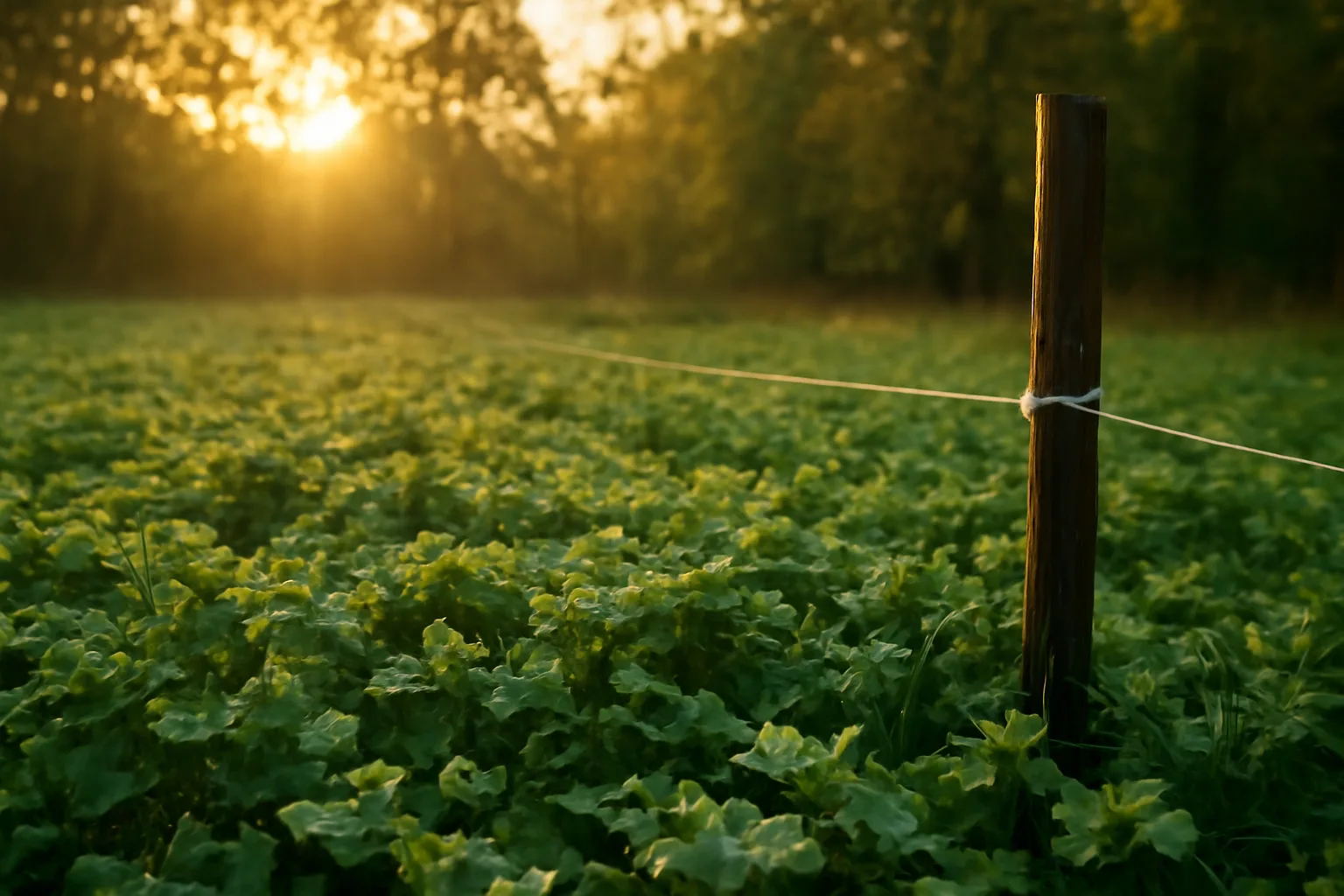
A food plot is a planted area on hunting land, usually a quarter acre to several acres, seeded with forage that deer and other wildlife eat. It's more than a bait pile with dirt underneath it. A good plot supplies nutrition through parts of the year when natural browse is thin, and it gives you a place to hunt where deer show up predictably because the food is there. Clover is the backbone of most perennial plot programs for a simple reason: it regrows after grazing. Unlike a brassica or a cereal grain that gets eaten down once and is done, a healthy clover stand can take repeated bites from spring through fall for two to five years before you need to reseed. The USDA Natural Resources Conservation Service lists white clover (Trifolium repens) as a species commonly used in wildlife plantings specifically because of its regrowth and its protein content, which commonly runs 25-30% crude protein in vegetative growth stages [1]. If you're building a plot program from scratch, clover is usually the first perennial you plant, then you layer in annuals like brassicas or cereal grains around it for fall variety. For a broader rundown of species options beyond clover, see food plot seed.
Do deer actually like clover, or is that just marketing?
Yes, deer like clover, and it's not close. Clover shows up near the top of forage preference studies across multiple regions, and it's one of the few plantings deer will hit hard in spring, summer, and fall in the same year. Research on white-tailed deer forage selection consistently finds legumes like clover ranked among the most preferred plot forages during the growing season, alongside soybeans and certain brassica blends, especially when deer need protein for antler growth and lactation. A study published in the Journal of Wildlife Management on forage quality and deer nutrition found that high-quality forages like clover directly support body condition and reproductive success in white-tailed deer [2]. The practical reason clover gets hit so hard is nutrition, not novelty. Deer are ruminants building fawns and antlers on protein and digestible energy, and a well maintained ladino clover stand can hit 25% or higher crude protein, which beats most native browse by a wide margin [1]. That's also why clover plots get pounded in June and July when other plots look untouched. If you want the deer-specific angle on plot planning in general, deer food plots covers the broader strategy.
What's actually in the best clover mixes, and how do they compare?
| Stand life | 3-5 years | 1-3 years | 2-3 years | |
|---|---|---|---|---|
| Grazing tolerance | High | Moderate | Moderate | |
| Drought tolerance | Low-moderate | Moderate | Low | |
| Wet soil tolerance | Moderate | Low | High | |
| Ideal soil pH | 6.0-7.0 | 6.0-7.0 | 6.0-6.5 | |
| Reseeds/spreads itself | Yes, via stolons | No | Limited | For most whitetail properties in the eastern half of the country, a blend that's roughly 70-80% ladino and 20-30% red clover, by seed count, covers the widest range of soil and moisture conditions in one bag. If your ground is consistently wet or low-lying, alsike earns a spot in the mix. For seed sourcing and blend options built for deer specifically, deer food plot seed is worth a look. |
Most commercial and DIY clover blends use some combination of ladino (a large-leaf white clover), medium red clover, and occasionally alsike or crimson clover as a nurse or filler. Each type has real tradeoffs, and the right blend depends on your soil, your rainfall, and how much shade the plot gets. Ladino white clover is the workhorse for food plots. It's a perennial, it tolerates close grazing better than red clover, and it spreads by stolons so it can fill in bare patches on its own. It wants a soil pH of 6.0-7.0 and does best in soils that hold moisture; it struggles in sandy, droughty ground without irrigation [3]. Red clover is technically a short-lived perennial (often behaving like a biennial in food plot settings), grows a deeper taproot than ladino, and tolerates slightly more acidic soil and drier conditions. It doesn't spread laterally the way ladino does, so once a stand thins, it's gone, not refilled. Many blends include 10-20% red clover by seed weight as insurance for tougher soil pockets within a plot. Here's a side-by-side on the traits that matter most when picking a mix: | Trait | Ladino (white) clover | Medium red clover | Alsike clover |
When should you plant clover food plots?
Clover goes in during spring or late summer/early fall, and the right window depends on your latitude and soil moisture, not a fixed calendar date. University extension guidance generally points to soil temperatures above 50°F for germination, with spring plantings from March through May in the North and fall plantings from August through October across most of the whitetail range [4]. Fall planting is usually the better call in the South and Mid-South because summer heat and weed pressure are brutal on spring-seeded clover before it establishes a root system. In the North, a spring planting gives clover a full season to root in before winter, though a well-timed late summer planting (early August in the upper Midwest, for instance) can also work if you get rain. The practical rule most experienced plotters use: plant clover 60-90 days before your first hard frost if going the fall route, or as soon as the ground is workable and soil temps hold above 50°F in spring. Clover seed is tiny, so seed-to-soil contact matters more than seeding depth. A quarter inch is plenty; anything deeper and germination rates drop hard. For a full breakdown of when to plant every plot type by region, food plot whitetail has the zone-by-zone calendar.
When should you plant oats, turnips, and other companion plantings alongside clover?
Oats, turnips, and other annuals aren't usually planted in the same square foot as your clover, but they fill the gaps in your plot rotation and often share a planting window. Oats for deer plots go in as a cool-season annual, typically late August through September in the North and September through October in the South, timed so they're tender and green when bow season opens [5]. Oats are also commonly used as a nurse crop seeded thin alongside a new clover planting; the oats come up fast, hold soil in place, and get grazed off, while the clover underneath establishes more slowly. Turnips for deer plots go in earlier than most hunters expect. Extension guidance recommends planting brassicas like turnips 60-90 days before your average first frost date, which usually lands turnip planting in July or August depending on your region [6]. Plant them too late and you get small bulbs and thin leaf growth; plant them too early in hot, dry conditions and germination suffers. A lot of hunters try to plant everything the same weekend in September. That's a mistake if turnips are on the list, since by the time cereal grains and clover typically go in, turnips are already three to six weeks behind schedule.
Do deer eat sorghum, and does it belong in a clover rotation?
Yes, deer eat grain sorghum, both the standing seed heads and the foliage, though it's used more as a grain and cover crop than a primary attractant plot. Sorghum is drought tolerant and often planted where corn struggles due to poor soil or limited rainfall, and it holds up as a standing food source into winter after other annuals are gone . Sorghum isn't a clover replacement; it's a different tool. Clover gives you spring-through-fall grazing pressure and protein. Sorghum gives you a late-season grain source and screening cover, especially valuable in areas without corn or soybean row crops nearby. Some plotters plant a sorghum or sorghum-Sudangrass strip along the edge of a clover field specifically for cover and late-season standing grain, not as the primary draw.
Do deer like honey, and does it belong in food plot planning at all?
No, this isn't really a food plot question. Deer don't have a meaningful dietary interest in honey, and it's not something wildlife feeding programs or extension guidance addresses because it's not a plantable forage or a natural part of deer diet. Deer occasionally investigate sweet scents out of curiosity, but honey has no established role in food plot strategy, and most states' baiting and feeding regulations would classify placing honey or syrup for deer attraction the same as any other bait substance. This matters more than it sounds like: many states prohibit baiting for deer hunting, defined broadly as placing any substance to attract or feed deer for hunting purposes, and the definitions often include things well beyond corn piles, like mineral blocks, salt licks, and scented attractants. Check your state wildlife agency's current regulations before placing anything other than a standard planted food plot, since rules vary by state and even by wildlife management unit within a state .
What are deer's favorite foods, and where does clover rank?
Deer preference shifts by season, region, and what's locally available, but clover, soybeans, and certain brassica blends consistently top forage preference studies during the growing season, while acorns and other hard mast dominate fall preference when available [2]. Here's the honest breakdown: in spring and summer, when deer need protein for antler growth and lactation, clover and soybeans are usually the top picks in head-to-head plot studies. In fall, when acorns are dropping, deer will often walk past a clover plot to hit a white oak flat, because acorns deliver fat and carbohydrates that help build fat reserves for winter. Late in the season, standing corn, soybeans, and brassicas (especially after a frost sweetens the sugars in turnips and radishes) become the priority. So clover isn't the single best food deer eat, it's the best year-round perennial base to build a plot program around, because nothing else gives you spring-through-fall availability from one planting. That's the practical case for making clover your first plot, then adding annuals around it.
How much clover seed do you need per acre, and what does it cost?
Ladino and red clover blends are typically seeded at 6-8 lbs of pure live seed per acre, broadcast into a well prepared, weed-free seedbed [3]. That's a light seeding rate compared to something like oats or wheat, because clover seed is tiny and a little goes a long way; overseeding wastes money and can cause overcrowding. Seed costs for a quality ladino/red clover blend typically run somewhere in the range of $8-15 per pound depending on brand, coated versus raw seed, and whether it includes inoculant, which puts a one-acre planting in the neighborhood of $50-120 for seed alone. Add lime and fertilizer based on your soil test, and a first-year clover plot commonly runs $150-300 per acre all-in, though that swings widely based on how much lime your soil test calls for. Your soil test is the actual authority here, not a blanket recommendation. Clover is sensitive to pH, and a soil sitting at 5.5 will underperform badly even with perfect seed and fertilizer, since clover's ability to fix nitrogen through rhizobium bacteria drops off hard in acidic soil [3]. Get the test done through your local cooperative extension office before you spend a dime on seed.
How do you prepare ground for clover, and what happens after planting?
Clover establishment lives or dies on seedbed prep. You want a firm, weed-free seedbed, not loose fluffy dirt, because clover seed needs to sit shallow and stay in tight contact with soil to germinate. A common method is to till or disc, let weeds flush and spray or till them again, then cultipack before and after broadcasting seed. Inoculant matters more than most first-time plotters realize. Clover fixes its own nitrogen through a symbiotic relationship with rhizobium bacteria in the soil, but many soils, especially ground that hasn't grown clover or alfalfa recently, don't have enough of the right bacteria present. Using a peat-based inoculant coated on the seed (or buying pre-inoculated seed) measurably improves nodulation and nitrogen fixation according to land-grant extension forage guides [3]. Once established, mowing is your main maintenance tool. Clipping clover to 4-6 inches a few times during the growing season knocks back weed competition and keeps the clover in a vegetative, high-protein growth stage rather than letting it go to seed and get stemmy. A soil test every 2-3 years tells you if lime or potassium needs a top-up; clover pulls potassium hard and will thin out over a few seasons without it.
What's the difference between planting a clover-only plot and a full rotational plot program?
A clover-only plot gives you one perennial planting that carries spring, summer, and early fall grazing pressure, and it's the lowest-maintenance option if you only have time or equipment for one plot type. A rotational program adds annuals, brassicas, cereal grains, maybe a grain like corn or sorghum, planted around or adjacent to the clover, to extend food availability into late season and add variety deer respond to. Most serious plot managers run both: a perennial clover field as the anchor plot, plus one or two annual plots nearby planted to brassicas or cereal grains timed for the fall opener. This is where a written plan pays off, because timing clover maintenance (mowing, spot-spraying, fertilizing) against annual plot planting windows takes some juggling, especially on properties with only one tractor pass available per season. If you want a plan built around your specific soil test results, your region, and your equipment, that's exactly what our $99 one-time Custom Food Plot Plan is built for at /plot-plan-builder. It's general planning guidance built from your inputs, not a substitute for your soil test lab's specific lime and fertilizer recommendations, but it does the legwork of matching species and timing to your actual property instead of a generic bag label.
When should you plant food plots across species?
There's no single planting date for food plots because you're usually managing at least two categories: perennials like clover, planted in spring or late summer/fall depending on region, and annuals like brassicas and cereal grains, planted from mid-summer through early fall so they mature in time for hunting season [4][5][6]. A rough national framework: perennial clover and chicory go in spring (March-May) in the North or fall (August-October) in the South. Brassicas like turnips and radishes go in 60-90 days before first frost, which is usually July-August depending on latitude. Cereal grains like oats, wheat, and rye go in late summer to early fall, generally 4-8 weeks before you want them green and attractive for hunting season. Your local cooperative extension office or state wildlife agency's food plot guidance is the best source for exact dates in your specific county, since first frost dates and growing degree days vary enormously even within a single state. For a full regional planting calendar, see food plot whitetail and deer for food for species-specific strategy notes.
Frequently asked questions
Do deer eat sorghum?
Yes. Deer eat both the grain heads and the foliage of grain sorghum. It's more commonly used as a drought-tolerant grain crop and late-season standing food source than as a primary attractant plot, and it's a good option on sandy or dry ground where corn struggles.
Do deer eat clover?
Yes, heavily. Clover ranks near the top of forage preference research, especially during spring and summer when deer need high protein (often 25-30% crude protein in vegetative clover) for antler growth and lactation.
When should you plant deer food plots?
Perennials like clover go in spring (March-May) in northern regions or late summer/fall (August-October) in southern regions. Annuals like brassicas and cereal grains go in mid to late summer, roughly 60-90 days before your area's first hard frost, so they mature in time for hunting season.
Do deer like clover?
Yes. Clover is one of the most consistently preferred food plot forages across regions and seasons, largely because of its high protein content and its ability to regrow after repeated grazing, unlike single-harvest annuals such as brassicas or cereal grains.
When should you plant oats for deer?
Oats typically go in late August through September in northern regions and September through October in the South, timed so they're tender and green heading into bow season. Oats are also commonly used as a fast-germinating nurse crop planted alongside new clover seedings.
When should you plant food plots for deer overall?
It depends on species. Perennial clover goes in spring or fall depending on region. Brassicas go in 60-90 days before first frost, usually July-August. Cereal grains like oats and wheat go in late summer to early fall. Check your local extension office for exact regional dates.
When should you plant turnips for deer?
Plant turnips 60-90 days before your area's average first frost date, which typically falls in July or August depending on latitude. Planting too late results in small bulbs and thin leaf growth; planting too early into summer heat and drought can hurt germination.
What is a food plot?
A food plot is a planted area on hunting or managed land, usually seeded with forage species like clover, brassicas, or cereal grains, designed to provide supplemental nutrition for deer and other wildlife and to concentrate animal activity in a predictable, huntable location.
What are deer's favorite foods?
It varies by season. In spring and summer, clover and soybeans typically top preference studies due to high protein content. In fall, acorns and other hard mast often become the priority when available. Late season, standing corn, soybeans, and frost-sweetened brassicas take over as top picks.
Do deer like honey?
There's no established evidence or extension guidance suggesting honey is a meaningful deer attractant or dietary component. It's not a plantable forage and isn't part of standard food plot strategy. Placing it for hunting purposes could also fall under state baiting regulations, so check local rules first.
What's the best clover mix for shaded food plots?
Ladino white clover with a higher percentage of alsike clover tends to handle partial shade and damp bottomland better than straight red clover, which wants fuller sun. No clover thrives in heavy shade, though, so thinning overhead canopy helps more than any seed blend choice.
How long does a clover food plot last before you need to replant?
A well maintained ladino clover stand typically lasts 3-5 years before thinning enough to require reseeding, provided soil pH and potassium levels are kept in range through periodic soil testing. Red clover components in a blend usually thin out faster, often within 2-3 years.
Should you mix clover with chicory?
Many plotters add 5-15% chicory by seed weight to a clover blend. Chicory has a deep taproot that pulls it through droughty stretches when clover struggles, and deer readily eat its leaves, giving the plot more drought resilience without giving up clover's core benefits.
Sources
- USDA Natural Resources Conservation Service, White Clover Plant Guide: White clover crude protein content and its common use in wildlife plantings
- Journal of Wildlife Management, forage quality and white-tailed deer body condition research (Verme and Ullrey, and related nutrition studies compiled by USGS): Forage quality, including legumes like clover, directly affects white-tailed deer nutrition, body condition, and reproduction
- University of Missouri Extension, Cool-Season Forage Legumes: Regional planting windows and soil temperature guidance for perennial and annual food plot species
- Oklahoma State University Extension PSS-2914, Brassica Forages: Turnip and brassica planting timing 60-90 days before first frost
- University of Georgia Extension Bulletin 1348, Wildlife Food Plots: Grain sorghum use as a drought-tolerant late-season food plot grain crop
- Pennsylvania Game Commission, Feeding and Baiting Regulations: State baiting and feeding regulations broadly restrict placing substances to attract deer for hunting purposes