Last updated 2026-07-26
TL;DR
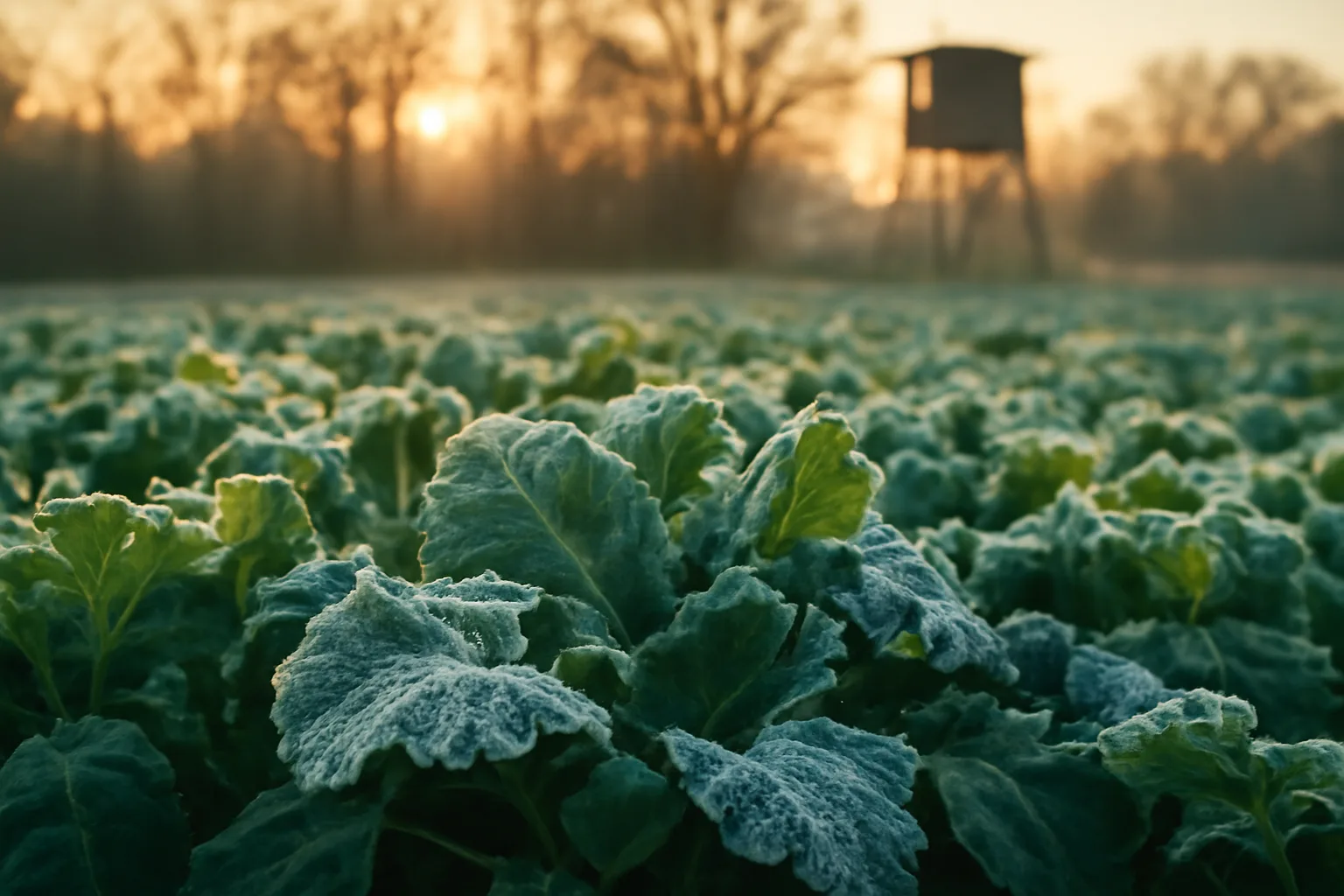
The best brassica food plot mix combines a leafy variety (kale or rape), a bulb variety (turnip), and forage radish, seeded at 3 to 5 pounds per acre. Plant 90 to 120 days before your area's first killing frost, on limed soil near neutral pH, so tubers size up and sugars concentrate right when deer start hammering them in late fall.
What actually makes a brassica mix "the best" one
There's no single bag that wins everywhere. The best brassica mix is the one matched to your frost date, your soil pH, and how long deer have had to get used to eating brassicas on your property. That said, most successful mixes share a formula: one leafy-heavy plant (rape or kale) for early season browse, one bulb-forming plant (purple top or globe turnip) for a late season carbohydrate dump, and often a forage radish thrown in for soil work and additional tonnage. Seeding rate for a blend usually lands between 3 and 5 lbs per acre, well under the 8 to 10 lbs/acre you'd use for straight turnip seed, because brassica seed is tiny and easy to overseed [1]. Deer don't always hit brassicas hard the first year. University research and extension observations consistently note a "conditioning" effect, deer on ground with no history of brassica plots often ignore or lightly browse them the first fall, then hit them much harder in year two and beyond once they've learned the plant is food [2]. If your plot sat untouched last October, that's not necessarily a bad mix. It might just be a new taste for your local herd. A plot heavy on tonnage but planted on unlimed, acidic soil will underperform a smaller plot on corrected pH almost every time. Brassicas want pH in the 6.0 to 6.5 range and respond hard to nitrogen, more on that below.
What is a food plot, exactly
A food plot is a planted area, usually somewhere between a quarter acre and several acres, seeded specifically to attract and feed deer or other wildlife rather than for human harvest or livestock grazing. It's a wildlife management tool, not a crop in the commercial sense. Most hunters plant two broad types: annual plots (brassicas, cereal grains, clover blends meant to be replanted yearly) and perennial plots (clover, chicory stands meant to persist 3 to 5 years with maintenance). Brassica plots fall firmly in the annual category. You till, fertilize, seed, and start over next year, though volunteer brassica plants sometimes reseed lightly if you let a few go to seed. State wildlife agencies generally regulate food plots less strictly than bait piles or feeders, but the line between the two can matter legally. Some states classify a planted, standing crop as a food plot regardless of who hunts over it, while others have specific rules about supplemental feeding, minimum plot size, or distance from a stand. Check your state wildlife agency's regulations before you assume a small brassica patch is treated the same as a broadcast corn pile, the rules genuinely vary state to state [3]. If you're building your first plot from scratch, our overview on food plot whitetail basics and deer food plots planning covers site selection and sizing before you even pick seed.
Do deer eat sorghum
Yes, deer eat sorghum, particularly grain sorghum heads once they mature, but it's a secondary food plot crop rather than a first choice. Sorghum shows up more often as a screening or standing-corn-alternative crop, valued for height and structure as much as forage value, and it's more commonly grazed hard once other food sources thin out in late winter. Compared to a brassica bulb crop or a cereal grain like oats, sorghum isn't typically a top-tier draw during the archery and early gun seasons that most hunters are planning around. It has a place in a diverse plot rotation, especially in the South where it tolerates heat and drought better than brassicas do, but if you're choosing one plot type to maximize fall attraction, brassicas and cereal grains generally outperform sorghum for pure browse preference in most published forage trials and extension guidance.
Do deer eat clover, and do deer like clover
Deer eat clover readily, and yes, deer like clover a great deal, it's one of the most consistently preferred forages across whitetail range. Clover is a perennial legume, so unlike brassicas it doesn't need replanting every year once established, and it provides high protein forage through spring, summer, and fall. The catch is timing. Clover peaks in nutritional value during the growing season, spring through early fall, and goes dormant or gets buried under snow in a lot of northern winters right when a hunter most wants deer on the property. That's exactly the gap brassicas fill. Clover feeds deer all summer and builds antler and body mass; brassicas turn sweet and load with sugar after a hard frost, giving you a high-energy food source in November and December when clover has stalled out. A lot of experienced plotters run both: clover as the perennial anchor plot and brassicas as the annual, frost-triggered plot nearby. If you're weighing clover against brassica for a specific acre, our deer food plot seed comparison breaks down the tradeoffs plot by plot.
When to plant food plots for deer, and when to plant turnips for deer
| Northern tier (early frost, late Aug-Sept) | Mid-July to early August | |
|---|---|---|
| Mid-latitude / transition zone | Late July to mid-August | |
| Southern states (late frost, Oct-Nov) | Mid-August to mid-September | Planting too early in hot, dry August conditions risks poor germination and bolting before fall; planting too late means the bulbs never size up before a hard freeze locks the ground. Turnip bulbs specifically need that 80-120 day runway to bulb out properly, a short-season planting gets you leafy top growth but small, tough roots. Use your local NOAA climate data, or your county extension office, to pin down your actual average first frost date rather than guessing from a national chart [4]. |
Timing for brassica and turnip plots is driven by your first expected fall frost, not by a calendar date. The general rule from extension programs and seed producers alike is to plant turnips and other brassicas 80 to 120 days before your average first killing frost [1]. That translates roughly to these windows, though local conditions always shift it a couple weeks either direction: | Region (rough first frost) | Brassica/turnip planting window |
When to plant oats for deer
Oats are typically planted alongside or as a companion to brassica and clover plots, and the window is similar: late summer through early fall, generally 60 to 90 days before your first hard frost, since oats mature faster than turnips. In the North that's often late August into early September; in the South it can run September into October. Oats are a cool-season cereal grain that germinates fast, greens up quick, and gives deer an immediate food source while a slower brassica blend in the same field is still establishing. A lot of popular "brassica blend" bags on the market actually include a small percentage of oats or wheat in the mix for exactly this reason, fast cover and early attraction while the turnips and rape take their time. Spring oat plantings also work in some regions as a summer annual, but for deer hunting purposes almost everyone plants oats in late summer to be attractive through archery season into the cereal grain's natural fall growth cycle.
How much brassica seed do you need per acre
For a straight brassica blend (not pure turnip), plan on 3 to 5 lbs of seed per acre. Pure turnip seed is often recommended slightly heavier, up to 4 to 6 lbs per acre, since it's not blended with lighter-seeded companion species. Straight forage rape or kale can run similar rates, 3 to 6 lbs per acre depending on the product. This is genuinely easy to overdo. Brassica seed is extremely small, on the order of 100,000+ seeds per pound for some varieties, so a bag that looks skimpy for an acre is often plenty. Overseeding leads to a thick stand of small, spindly plants competing for light and nutrients instead of a stand of properly bulbed turnips and full rape leaves. Seeding rate recommendations do vary by exact product and blend ratio, so always check the tag or the seed company's published rate for that specific mix rather than assuming one number covers every bag on the shelf.
What soil and fertility does a brassica plot need
Brassicas are nitrogen hogs and pH-sensitive. Extension guidance across the Midwest and Southeast generally recommends a target soil pH of 6.0 to 6.5 for brassica plots, with lime applied well ahead of planting since it takes months to fully adjust soil chemistry [1]. A typical fertility recommendation for brassica plots runs somewhere around 40 to 60 lbs of nitrogen per acre at planting, sometimes split with a second nitrogen application 3 to 4 weeks later to push bulb and leaf growth through the fall. Phosphorus and potassium needs depend entirely on your existing soil levels, which is exactly what a soil test tells you. This is the one part of the plan we won't guess at for you. Your soil test lab is the authority on how much lime and fertilizer your specific field needs, not a general seed bag label. A $15-20 soil test through your county extension office or a private ag lab will give you an actual pH reading and nutrient levels specific to your dirt, and that number should drive your lime and fertilizer purchase, not a one-size-fits-all rate off the internet. If you want help translating a soil test into an actual seed and fertilizer plan for your acreage, that's exactly what our $99 one-time Custom Food Plot Plan is built to do, though it's general planning guidance based on your inputs, not a site visit or a substitute for your lab's specific lime and fertilizer recommendations.
What are deer's favorite foods, and do deer like honey
Deer are opportunistic browsers whose "favorite" food shifts constantly with season and availability. In general, whitetails show strong preference for acorns (especially white oak family acorns, which are lower in tannins than red oak acorns), soybeans, clover, and, once frost hits, brassica bulbs and tops . Agricultural crops like corn and soybeans are heavily used where available because of their sheer caloric density. Do deer like honey? Deer aren't drawn to honey itself in any meaningful, documented way in wildlife forage research, they're not pollinator-style nectar feeders, and honey isn't a food plot input or attractant with any real research backing it as a deer food source. Some commercial deer attractant sprays use sweet, sugary scents (including honey-adjacent or molasses-based formulas) to draw deer by smell rather than as a nutritional food source, but that's a different category from planting or feeding actual honey. If you're trying to build a plot deer will actually eat as forage, honey isn't part of that conversation; brassicas, clover, beans, and cereal grains are the tested, real options.
Brassica varieties compared: turnip, rape, kale, and radish
| Purple top / globe turnip | Bulb + tops, sweetens after frost | Late season, Nov-Jan | Needs full 80-120 day season to bulb properly | |
|---|---|---|---|---|
| Forage rape | Fast leafy growth, high tonnage | Early to mid season | Deer often hit tops before turnips bulb | |
| Kale (like Maximus) | Cold-hardy leaf, holds through deep freezes | Late season, into winter | Some varieties bred specifically for extreme cold tolerance | |
| Forage/tillage radish | Deep taproot breaks up compaction, some root browse | Early to mid season | Doubles as a soil-building cover crop | A reasonable starting blend for most whitetail range: 40% turnip, 30% forage rape, 20% radish, 10% cereal grain (oats or wheat) by seed count or by the ratios printed on a commercial bag. If you're shopping blends rather than building your own from straight species, our guide to deer food plot seed options and the broader food plot seed selection page both cover specific product comparisons. |
Each brassica species brings something different to a blend, which is why most commercial mixes combine two or three rather than planting one straight. | Variety | Main draw | Best timing use | Notes |
How do you plant a brassica food plot step by step
The process is straightforward but the sequence matters, especially the lime and fertilizer timing relative to seeding. First, pull a soil test 2 to 3 months before your planting window if at all possible, so lime has time to start working. Second, kill existing vegetation, either by tillage or a burndown herbicide, and let the field sit clean. Third, apply lime and fertilizer per your soil test results, working them into the top few inches of soil where possible. Fourth, broadcast brassica seed at your target rate (3 to 5 lbs/acre for a blend) and cultipack or drag lightly to press seed into contact with soil, brassica seed germinates poorly if buried too deep since it's so small. Fifth, and this one gets skipped a lot: fence or otherwise protect the plot from deer browse pressure in the first 3 to 4 weeks if you have a small plot and a high deer density. Deer can hammer young brassica seedlings hard enough to prevent the plants from ever establishing, which is a common reason a plot looks thin all fall despite good soil work. A temporary electric fence or even a simple physical barrier for the first month can make the difference between a plot that fills in and one that gets grazed to dirt before it has a chance.
Brassicas vs. other fall plot options: which should you plant
Brassicas aren't the only fall option, and for a lot of properties a mixed approach beats going all-in on one crop type. Cereal grains (oats, wheat, rye) establish faster and are more forgiving of a late planting date, but they don't carry the same late-season sugar spike that frost-sweetened brassica bulbs do. Clover is a stronger spring and summer draw but goes dormant in cold climates right when brassicas peak. Standing corn or soybeans left unharvested provide the highest raw caloric density but require a full growing season commitment and more acreage. Most experienced plotters run brassicas specifically because they fill a hole nothing else does: a food source that gets more attractive, not less, as temperatures drop and other browse disappears. If you're deciding between plot types for a specific parcel, our deer for food planning guide and the domain food plot seed product rundown both help narrow the choice down to what fits your season length and soil.
Frequently asked questions
Do deer eat sorghum in food plots?
Yes, deer eat sorghum, especially the grain heads once mature, but it's a secondary plot crop compared to brassicas or cereal grains. Sorghum is more valued for height, screening, and drought tolerance in southern climates than as a top preference food during archery and early gun season.
Do deer eat clover, and do deer actually like it?
Deer eat clover readily and prefer it strongly, it's a top perennial forage across whitetail range. It's highest in nutritional value spring through fall and goes dormant in cold winters, which is why many hunters pair a clover plot with a brassica plot to cover the late-season gap.
When should you plant food plots for deer?
Timing depends on plot type. Perennial clover and chicory plots go in spring or late summer. Annual brassica and turnip plots go in 80 to 120 days before your area's first fall frost. Cereal grains like oats go in 60 to 90 days before frost. Check your local average first frost date to set the exact window.
When is the best time to plant turnips for deer?
Plant turnips 80 to 120 days before your region's average first killing frost so bulbs have time to size up. In northern states that's roughly mid-July to early August; in southern states it can run mid-August into mid-September. Planting too late leaves bulbs undersized before a hard freeze.
When should you plant oats for deer plots?
Plant oats 60 to 90 days before your first hard frost, generally late August into September in most of the whitetail's range, later in the South. Oats germinate and green up faster than brassicas, so they're often used as a companion crop for early attraction while a brassica blend establishes.
What exactly is a food plot?
A food plot is a planted area, typically a quarter acre to several acres, seeded specifically to attract and feed deer or other wildlife rather than for commercial harvest. Plots can be annual (brassicas, cereal grains) replanted yearly, or perennial (clover, chicory) that persist several years with maintenance.
What is a deer's favorite food overall?
There's no single universal favorite; deer preference shifts by season and region. Acorns, especially white oak family acorns, soybeans, and clover rank consistently high, and frost-sweetened brassica bulbs and tops become a strong preference in late fall and winter when other browse is scarce.
Do deer like honey?
No meaningful research supports honey as a deer attractant or food source. Deer are browsers, not nectar feeders. Some commercial attractant sprays use sweet, sugary or molasses-based scents to draw deer by smell, but that's separate from honey being an actual forage crop or feed.
How much brassica seed should you plant per acre?
For a blended brassica mix, plant 3 to 5 lbs of seed per acre. Straight turnip seed can run slightly heavier, up to 4 to 6 lbs per acre. Brassica seed is very small, so it's easy to overseed; check the specific product's tag since rates vary by blend.
What soil pH do brassicas need for a food plot?
Brassicas grow best in soil with pH between 6.0 and 6.5. Lime takes months to fully adjust soil chemistry, so pull a soil test well ahead of planting and apply lime early. Your soil test lab's specific recommendation should always override a general rate found online.
Will deer eat brassicas the first year you plant them?
Not always, and that's normal. Deer on ground with no history of brassica plots often browse lightly the first fall, then hit the same plot much harder in following years once they've learned to recognize it as food. A slow first year doesn't necessarily mean a bad planting.
Should you fence a new brassica plot from deer?
Consider it for small plots with high deer density. Young brassica seedlings can get browsed down before they establish, especially in the first 3 to 4 weeks after planting. A temporary electric fence or physical barrier during establishment often makes the difference between a full plot and a thin one.
Sources
- Mississippi State University Extension Publication 3372, Brassicas for Deer and Other Wildlife: Brassica blend seeding rates and pH/nitrogen recommendations, and 80-120 day planting window before frost
- University of Tennessee Institute of Agriculture Extension, PB1769 Wildlife Food Plots for Tennessee: Deer often show low interest in brassica plots the first year but increased use in subsequent years
- Michigan Compiled Laws 324.40111c, Baiting and feeding of deer: Food plot and baiting/feeding rules differ by state wildlife agency
- NOAA National Centers for Environmental Information, U.S. Climate Normals: Average first frost dates vary by region and should guide planting timing
- USDA Forest Service, Fire Effects Information System, Odocoileus virginianus: Whitetail deer food preference patterns including acorns and browse species by season