Last updated 2026-07-26
TL;DR
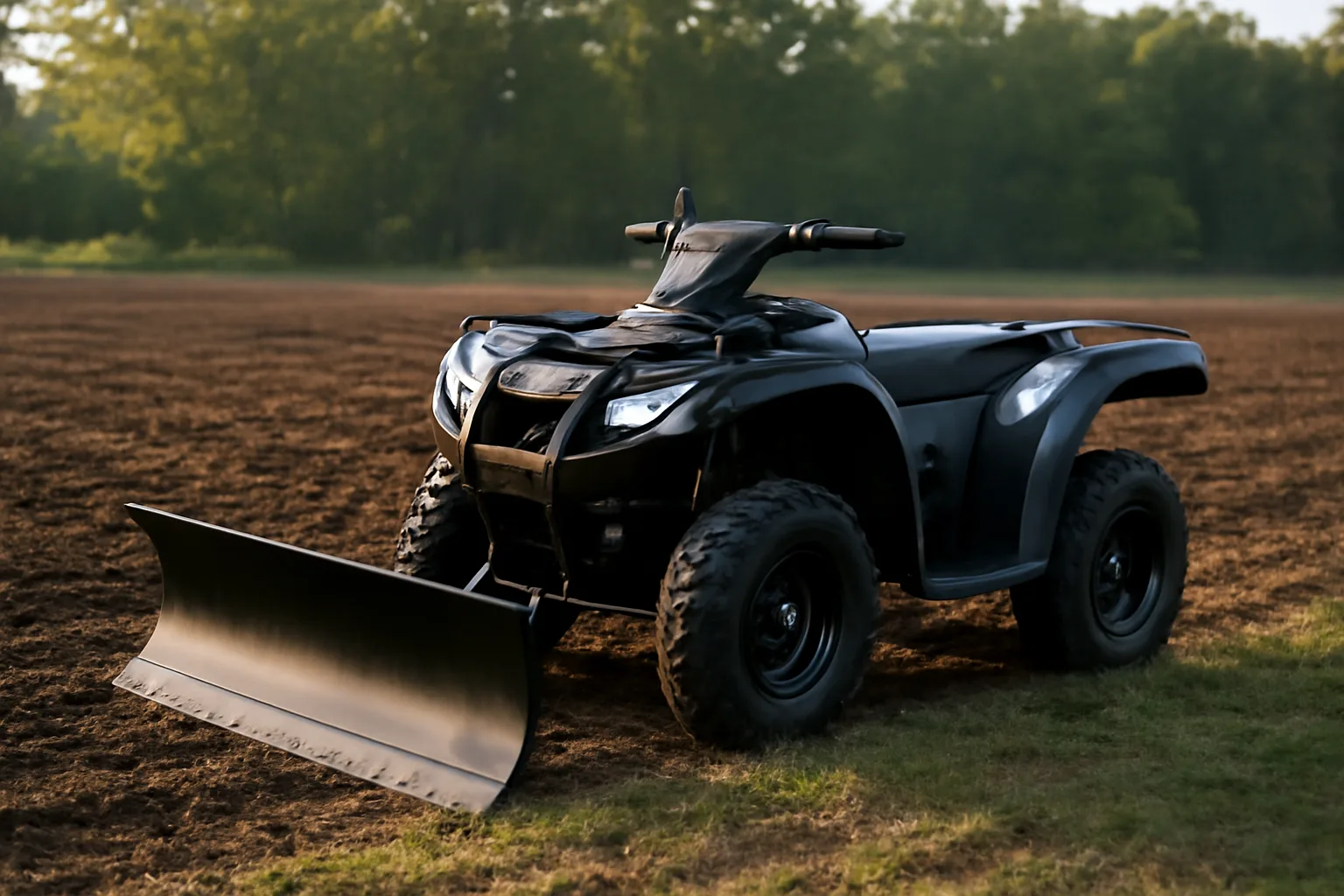
For most food plot work under 5 acres, a mid-size 4x4 ATV (400-500cc) with a plug-in plow, drag harrow, and pull-behind sprayer handles seedbed prep, spraying, and spreading. Bigger plots or heavy clay push you toward a UTV or compact tractor instead. Match horsepower and implement weight to your acreage, not the other way around.
What's the best ATV for food plots, really?
There's no single best model, but there's a clear formula that works. You want a 4x4 ATV in the 400cc to 500cc range, at least 30 horsepower, a rear rack rated for 100+ pounds, and a receiver hitch or drawbar for pulling implements. That combination handles disking, dragging, spot spraying, and spreading fertilizer on plots up to about 3 to 5 acres without much drama. Brand matters less than most forum arguments suggest. Honda Foreman, Polaris Sportsman, Yamaha Kodiak, and Can-Am Outlander all show up on food plot properties across the country, and all of them can pull a plow if you size the implement correctly. What actually separates a good food plot rig from a bad one is torque at low RPM, ground clearance in wet clay, and whether you've got a way to hook up the implements you need. If your plots run bigger than 5 acres, or your soil is heavy clay that turns to concrete in August, an ATV starts to strain. That's the point where a UTV with a small trailer, or a subcompact tractor (think 25 to 35 horsepower), starts making more financial sense per acre worked. More on that tradeoff below. One thing worth saying plainly: the ATV isn't what grows the plot. Soil fertility, seed selection, and timing do the heavy lifting. The machine just gets you into position to do those things without borrowing a neighbor's tractor every spring.
How big of an ATV do I actually need for food plots?
Size the machine to your worst plot, not your average one. If you've got one 2-acre opening and one steep half-acre kill plot tucked in timber, buy for the steep one. That usually means 4x4 with locking differential, not 2WD, and enough displacement to pull a disc through root-choked ground without lugging down. As a rough guide: plots under an acre can be worked with a 250cc to 350cc ATV and hand tools plus a small drag. Plots from 1 to 3 acres want 400cc to 500cc and real 4x4 with a locker. Plots from 3 to 5 acres are pushing what an ATV should do; you'll want the bigger end of that range, an implement built light (steel drag or cultipacker, not a heavy disc), and patience because you'll make more passes. Once you're regularly working more than 5 acres, or you've got multiple plots totaling more than 8 to 10 acres a season, the math shifts. A used compact or subcompact tractor (25 to 40 horsepower) with a 3-point hitch does in one pass what takes an ATV three or four passes, and it does it without you replacing a CV axle every other season. A lot of guys land on a hybrid setup: ATV for the small, awkward plots deep in the woods, and a tractor or UTV-with-trailer for the big field edges. That's not overbuying. That's just matching tools to terrain.
ATV vs UTV vs tractor for food plots: which is worth the money?
| ATV (400-500cc, 4x4) | Plots under 3-5 acres, tight timber access, steep or narrow trails | $7,000-$10,000 | $3,000-$6,000 | Limited implement weight, single-passenger, wears out on heavy clay | |
|---|---|---|---|---|---|
| UTV (side-by-side, 700-1000cc) | Plots 3-8 acres, hauling seed/fertilizer/lime in a bed, passengers | $12,000-$20,000 | $6,000-$12,000 | Higher cost, wider footprint on tight trails | |
| Compact/subcompact tractor (25-40 hp) | 5+ acres, 3-point implements, heavy disc or box blade work | $18,000-$28,000 new | $8,000-$15,000 used | Overkill for small trail-access plots, needs more storage | Prices above are rough market ranges pulled from typical retail listings and vary a lot by region and year; treat them as planning numbers, not quotes. If you already own an ATV for hunting access, hauling stands, and scouting, and your plots are small, adding a plow and drag to that machine is the cheapest path. If you're starting from zero and your total plot acreage is over 5 acres, a used compact tractor often beats a new ATV on cost per acre worked over a 10-year span, because tractor implements (box blade, disc, cultipacker) last decades and a 3-point hitch never strips out the way an ATV hitch pin does. UTVs sit in the middle. They're the best choice if you need to haul lime, seed, and fencing material in one trip and your trails are wide enough. They're a poor choice if your access is narrow, timbered, or steep, because most UTVs are 50 to 64 inches wide compared to 42 to 48 inches for a typical ATV. |
This is the real decision most people are actually trying to make when they search for "best ATV." Here's the honest breakdown. | Machine | Best for | Typical cost (new) | Typical cost (used) | Limitations |
What implements do you actually need behind the ATV?
The machine is half the equation. The implement list for a basic food plot setup is short and doesn't need to be expensive. A plug-in plow or disc breaks new ground and turns over old plots. Steel drag harrows or a section of chain-link fence smooths the seedbed after disking, and this step matters more than people think because seed-to-soil contact drives germination rates. A pull-behind broadcast spreader (ground-driven or battery powered) handles fertilizer and seed at the right rate, which matters because both under- and over-application waste money and, in the case of lime and fertilizer, can throw off the soil chemistry your test recommends. A cultipacker or roller after seeding pushes small seed like clover and brassicas into contact with soil without burying it too deep. That's one of the most common food plot mistakes according to extension seedbed guidance [1]. Finally, a small pull-behind or ATV-mounted sprayer (15 to 25 gallon tank) handles herbicide burndown before planting. You don't need all of this on day one. A disc, a drag, and a spreader will get a new plot from bare dirt to planted in a weekend. Add the sprayer and cultipacker as you expand.
What is a food plot, and why does the machine matter so much?
A food plot is a planted area on hunting land, typically annual or perennial forage crops like clover, brassicas, or cereal grains, established specifically to attract and hold deer and to supplement their natural diet. State wildlife agencies generally treat food plots as a habitat management tool distinct from baiting, though the legal line between the two varies by state and matters for hunting over them [2]. The machine matters because plot success is mostly a function of timing and seedbed quality, and both of those depend on getting equipment into the field at the right moment. A perfect seed blend broadcast onto a cloddy, weedy seedbed two weeks late will underperform a cheap seed blend planted into a clean, firm bed on time. Land-grant extension programs consistently point to seedbed preparation and planting date as bigger yield drivers than seed brand [1]. For a rundown on species selection once your ground is ready, see food plot whitetail and deer food plot seed.
When should you plant food plots for deer?
Timing splits into two windows: spring/summer plots and fall plots, and the right window depends on species and region. Spring plantings (usually April through June in the Midwest and Northeast, earlier in the South) work for warm-season annuals like soybeans, cowpeas, and some clover establishments. Fall plantings (roughly late August through October depending on latitude) work for brassicas, cereal grains, and clover frost-seeding follow-ups. Most state extension planting guides break recommendations down by frost date, not calendar month, because a fixed date in Minnesota and Alabama means completely different soil temperatures. As a rule of thumb, count backward from your area's average first fall frost date. Brassicas and turnips generally want 60 to 90 days of growing time before a hard frost, since frost actually sweetens brassica forage and increases deer use late season. Cereal grains like oats and winter wheat want roughly 45 to 60 days before frost to establish enough leaf growth to survive grazing pressure. Check your local frost dates through your state's extension office or the NOAA Climate Normals tool rather than relying on a national chart, because a two-week miss in either direction changes germination and tonnage significantly [3].
When should you plant oats for deer?
Plant oats 45 to 60 days before your area's average first fall frost date, which typically lands in late August to mid-September across most whitetail range. Oats germinate fast (often within 5 to 10 days in warm, moist soil) and provide some of the highest early fall attraction of any cereal grain, but they winterkill in most of the Midwest and North once temperatures drop into the teens. In the Deep South, oats can be planted later, into October, and often persist through a mild winter. In northern states, oats are best treated as a fall attraction crop rather than a plant that survives to spring, so pair them with winter wheat or rye in the same mix if you want late-winter food value too.
When should you plant turnips for deer, and do deer even eat them?
Plant turnips 60 to 90 days before your first expected fall frost, generally late July through August across most of the whitetail's range, later in the Deep South. Turnips need that runway to bulb out and build the sugar content that makes them attractive after frost. Deer often ignore turnip tops and bulbs early in the season and hit them hard in December and January, after repeated frosts convert starches to sugars. That late-season shift is well documented in extension brassica trial write-ups, and it's the reason turnips get planted for fall but really shine in the two months after [1]. If your plot only gets used in late season, that's not a failure. That's turnips working as designed. For species-specific blends and planting depth guidance, see deer food plots.
Do deer eat sorghum?
Yes, deer eat sorghum, both the grain heads and the standing forage, though it's typically used more as a screening and late-season standing grain crop than a primary attraction plot. Grain sorghum holds up well through winter compared to soybeans, which get hammered flat by weather and deer pressure early. Sorghum works best mixed with other species or planted as a block for cover and late-season calories rather than as a stand-alone early season attractant. It's drought tolerant, which makes it a reasonable choice on sandy or marginal ground where corn struggles.
Do deer like clover, and is it worth the equipment investment?
Yes, deer consistently rank clover among their top forage choices, and it's one of the most planted food plot species in North America because it's perennial (lasting 3 to 5 years per planting with maintenance), high in protein (often 25 to 30% crude protein in vegetative growth), and tolerant of repeated grazing. Extension forage trial data consistently shows white clover varieties like Durana and Ladino holding up under heavy deer pressure better than red clover [1]. Clover is also one of the lowest equipment-demand crops once established. You need a disc and cultipacker (or drag) to get the initial seedbed right, since clover seed is tiny and needs firm soil contact, but after that a plot can run for years on just mowing and an annual light fertilization based on soil test recommendations. That makes clover a good first plot for someone buying ATV equipment for the first time, because the ongoing implement demand is low. For blend comparisons across clover, brassica, and cereal grain options, food plot seed breaks down species by soil type and maintenance level.
What's the process for actually building a plot with an ATV?
Soil test first, always. Your county extension office or a private ag lab will run pH, phosphorus, potassium, and organic matter, and that report is the actual authority on how much lime and fertilizer your ground needs, not a generic bag rate off a seed label. Most land-grant extension services offer soil testing for $10 to $20 per sample [4]. Once you have lime and fertilizer recommendations, here's a rough sequence for a new plot: spray existing vegetation with glyphosate (check your state's herbicide label restrictions and any local regulations first), wait the label-specified interval, disc the ground twice in perpendicular passes, spread lime and fertilizer per your soil test, disc lightly to incorporate, drag smooth, broadcast seed at the recommended rate, then cultipack or drag lightly again to firm the seedbed. That whole sequence is very doable with a mid-size ATV and the implement list from earlier, assuming plot size stays under 3 to 5 acres. If you want a plan that maps species and timing to your specific soil test results and region, that's exactly what a Custom Food Plot Plan is built to do. It's a $99 one-time report, not a subscription, and it works from your actual soil numbers rather than a generic national calendar. Your soil lab's lime and fertilizer numbers are still the final word for your ground; the plan builds species and timing recommendations around that data.
What do deer actually prefer to eat, and does that change what you plant?
Deer preference shifts by season, region, and what's already available in the surrounding habitat, but research consistently ranks a handful of species at the top: clover, soybeans, cowpeas, and standing corn during growing season; brassicas, cereal grains, and acorns in fall and winter. Acorns in particular can pull deer off a planted plot entirely in a heavy mast year, which is one reason plot performance varies year to year even with identical planting. State wildlife agency deer management guides generally note that native browse and mast still make up the majority of a wild deer's diet across the year, with food plots functioning as a supplement and attraction tool rather than a primary food source. That framing matters for expectations. A well-built plot increases the odds deer use that specific acre at a specific time of day, but it's not replacing the deer's overall diet. Do deer like honey? There's no real research or wildlife agency guidance suggesting honey is a meaningful deer attractant or food source, and it's not a practice covered in any extension or state wildlife food plot literature. Deer are occasionally documented investigating sweet scents, but honey isn't a planted crop or forage component, so it falls outside food plot planning entirely. If you're seeing this claim on forums, treat it as anecdote, not agronomy.
What should you check before hunting over or near a food plot?
Baiting and feeding regulations vary sharply by state, and the line between a legitimate food plot and illegal baiting depends on things like whether the crop is standing versus piled, how it was planted, and sometimes distance from a stand. Some states draw a clear legal distinction between a planted, standing food plot and bait (piled or spread feed), while others restrict supplemental feeding entirely in certain zones due to chronic wasting disease concerns. Before you hunt a plot, check your state wildlife agency's current baiting and feeding regulations directly, since these rules change frequently, sometimes year to year, in response to CWD detections. Wisconsin's administrative code, for instance, restricts baiting and feeding of deer in counties under CWD-related rules, and similar zone-based bans exist in Michigan. Don't rely on last year's rule .
Frequently asked questions
What size ATV is best for food plots under 2 acres?
A 250cc to 400cc 4x4 ATV with a small plug-in plow and drag harrow handles plots under 2 acres comfortably. You don't need top-end horsepower at this size; you need low-end torque and a locking rear differential for wet or root-heavy ground.
Do I need a UTV instead of an ATV for food plots?
Only if your plots total more than 5 to 8 acres, you need to haul lime or seed in bulk, or you regularly bring a passenger. For smaller, trail-access plots deep in timber, an ATV's narrower footprint (42-48 inches vs 50-64 for most UTVs) is usually the better fit.
When to plant food plots for deer in general?
Spring plantings (April-June) suit warm-season annuals like soybeans and cowpeas. Fall plantings (late August-October) suit brassicas, cereal grains, and clover. Count backward from your area's average first frost date rather than using a fixed calendar date, since frost timing varies by hundreds of miles.
Do deer eat sorghum, and how does it compare to corn?
Yes, deer eat both the grain and standing forage of sorghum. It's more drought tolerant than corn and holds up better through winter weather, making it a solid late-season standing grain option on sandy or marginal soils, though it's used less often as a primary early-season attractant.
Do deer like clover more than other food plot crops?
Clover consistently ranks among deer's top forage preferences in extension trial data, largely because of its high crude protein content (often 25-30%) and its tolerance for repeated grazing across a full growing season. It's also one of the lowest-maintenance perennial options once established.
When to plant oats for deer specifically?
Plant oats 45 to 60 days before your area's average first fall frost, typically late August through mid-September in most whitetail range. Oats germinate fast and provide strong early fall attraction but usually winterkill in northern climates, so pair with wheat or rye if you want winter persistence.
When to plant turnips for deer for best results?
Plant turnips 60 to 90 days before your expected first fall frost, generally late July through August across most whitetail range. Deer often ignore turnips early and hit them hard in December and January after frost converts starches to sugars in the bulbs and tops.
What is a food plot in simple terms?
A food plot is a planted patch of forage, like clover, brassicas, or grain, established on hunting land specifically to attract deer and supplement their diet. It's a habitat management tool, distinct from baiting in most states, though the legal line varies and should be checked with your state wildlife agency.
What are deer's favorite foods overall?
Research and extension trial data generally rank clover, soybeans, cowpeas, and standing corn at the top during the growing season, with brassicas, cereal grains, and acorns leading in fall and winter. Acorns can pull deer off a planted plot entirely in a heavy mast year.
Do deer like honey as an attractant?
There's no wildlife agency or extension research supporting honey as a deer attractant or food source. It isn't a planted crop and doesn't appear in food plot agronomy literature, so it should be treated as internet anecdote rather than a real planning option.
Can I pull a disc with any ATV, or does it need to be a certain size?
Most 400cc-plus 4x4 ATVs with a receiver hitch or drawbar can pull a small plug-in disc rated for ATV use. Match the disc's working width (usually 3 to 4 feet for ATV-rated units) to your ATV's horsepower; going wider than the machine is rated for just stalls it in heavy clay.
Is a tractor really better than an ATV for food plots?
For total plot acreage over 5 acres, yes, usually. A compact tractor with a 3-point hitch handles heavier implements in fewer passes and the implements last decades, while ATV hitch pins and small implements wear out faster under repeated heavy use.
Sources
- University of Tennessee Institute of Agriculture Extension, PB1769: Establishment and Management of Wildlife Food Plots: Seedbed preparation and planting date are consistently identified as bigger yield drivers than seed brand; clover crude protein and grazing tolerance data; turnip palatability increases after frost
- Michigan Legislature, Natural Resources and Environmental Protection Act 451 of 1994, Section 324.40111c (baiting and feeding of deer): States distinguish planted food plots from baiting/feeding, with specific restrictions tied to CWD management
- University of Wisconsin-Madison Extension, Wildlife Food Plots publication (A3773): Planting windows for food plot species are based on frost dates rather than fixed calendar dates
- NOAA National Centers for Environmental Information, U.S. Climate Normals: Average first fall frost dates vary regionally and should be used to time plantings rather than a fixed national date
- University of Missouri Extension, Soil and Plant Testing Laboratory fee schedule: Land-grant extension soil testing typically costs in the range of $10-$20 per sample
- Pennsylvania Game Commission, Deer Management Program overview: Native browse and mast make up the majority of a wild deer's diet across the year, with food plots functioning as a supplement
- Wisconsin Legislature, Administrative Code NR 10.11 (deer baiting and feeding restrictions): Wisconsin and other states have specific feeding and baiting bans tied to CWD management zones