Last updated 2026-07-26
TL;DR
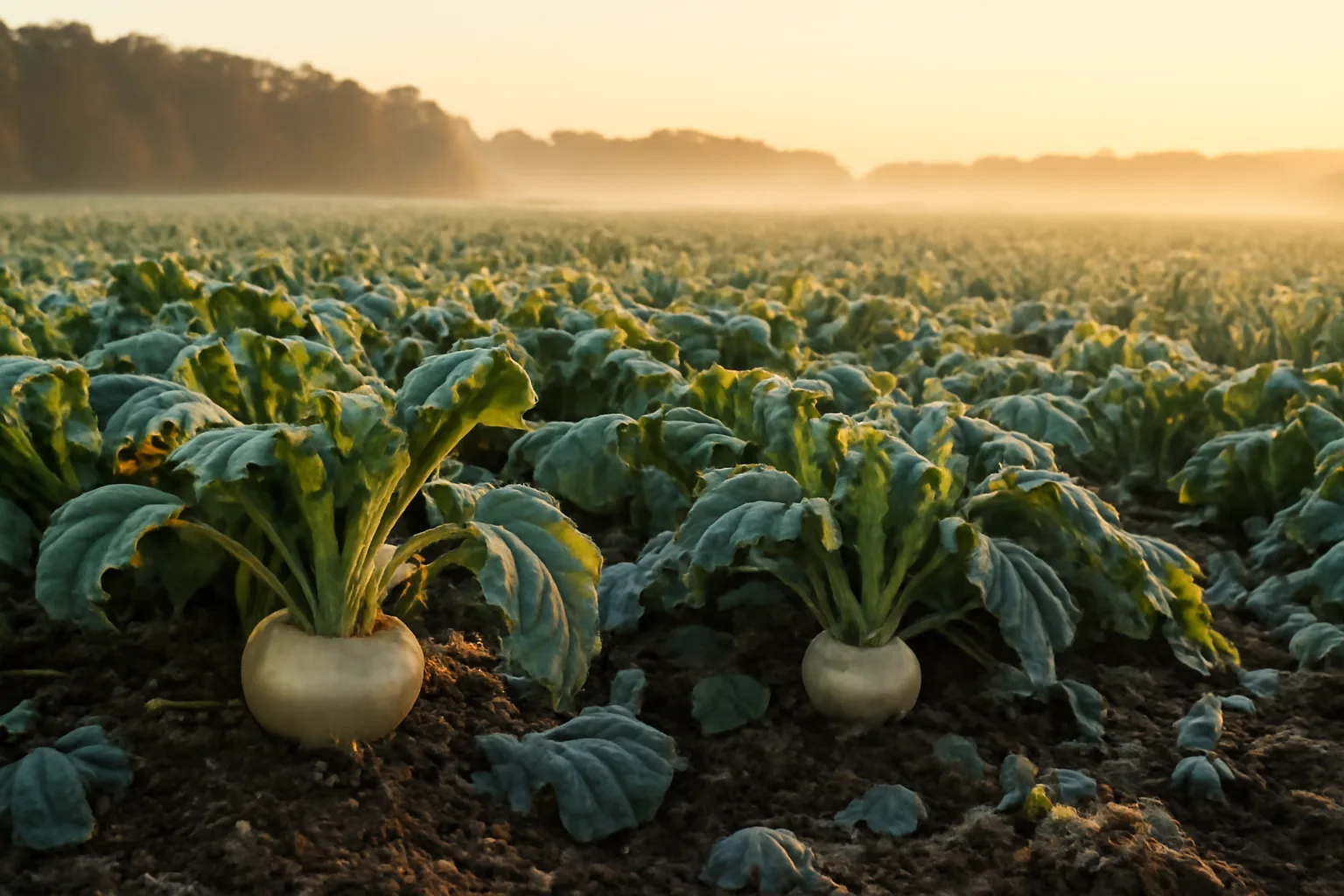
The best winter food plot combines a brassica (turnips or radishes) with a cereal grain (oats or winter wheat) and a perennial clover nearby. Brassicas get sweeter after frost converts starch to sugar, cereal grains stay green under snow, and clover holds over as a spring bridge. Plant brassicas 90-100 days before your first hard frost.
What is a food plot, exactly?
A food plot is a planted patch of forage or grain on land you own or lease, put there specifically to feed and hold deer (and often other wildlife) through part or all of the year. It's not the same as a garden or a hay field, even though the agronomy overlaps a lot. The goal is nutrition and attraction on a schedule that matches deer needs, not maximum yield per acre. Most hunters run two kinds: annual plots (replanted every year, usually brassicas, cereal grains, or clover-annual mixes) and perennial plots (clover or alfalfa that persists 3-5 years with maintenance). Winter plots are almost always annuals, because you want tonnage and quality timed to hit right when natural browse crashes. State wildlife agencies generally treat food plots as a normal land management practice separate from baiting. The line gets blurry in some states if you're hunting directly over a plot with supplemental feed added. Check your state agency's baiting definition before you combine a plot with mineral or feed stations [1].
When to plant food plots for deer, by season
| Zone 3-4 (cold, short season) | Northern Minnesota, Maine | late July to mid-August | mid-August to early Sept | |
|---|---|---|---|---|
| Zone 5-6 (transition) | Iowa, southern Ohio, Virginia | mid-August to early Sept | early Sept to early Oct | |
| Zone 7-8 (warm, long season) | Georgia, Alabama, east Texas | early Sept to early Oct | late Sept to early Nov | If you're planting a straight clover perennial plot, late summer works too, but so does early spring in most regions south of the transition zone. Clover is more forgiving on timing than brassicas because you're not racing a frost deadline for peak tonnage. |
Winter plots go in the ground in late summer, not winter. That trips up a lot of first-year planters. You're planting in August or September so the crop has time to mature and reach peak tonnage right as cold weather and hunting pressure force deer to concentrate on the best food source around. The general rule from university extension programs is to count backward from your average first fall frost date. Brassicas need roughly 80-100 days of growing time before they're at peak palatability, cereal grains need less, and everything needs enough soil moisture to germinate, which means you're at the mercy of late-summer rain in a lot of regions [2]. Here's a rough breakdown by growing zone (use your local extension office to confirm, first frost dates vary year to year): | Zone | Region example | Brassica planting window | Cereal grain window |
When to plant turnips for deer
Plant turnips 80 to 100 days before your area's first killing frost. That's the window university forage trial data consistently points to for peak bulb size and leaf tonnage [2]. Too early and the plants bolt or get overwhelmed by summer weed pressure. Too late and you get small bulbs with thin leaf mass, which means less food right when you need the most. Turnips (and radishes, which behave similarly) are famous for the frost-sweetening effect. Cold temperatures trigger the plant to convert stored starches into sugars as a natural antifreeze response. Deer that ignored the plot in October will hammer it in December once a few hard frosts have hit [3]. This is well documented in forage science, more than hunting folklore. Sugar beet and brassica producers see the same starch-to-sugar shift. A common mistake: planting turnips alone at a low seeding rate and getting all leaf, no bulb, because the plot got hit by deer browsing before the bulbs sized up. Fencing a small test strip for the first month, or planting a bigger acreage than you think you need, solves this.
When to plant oats for deer
Oats go in 60 to 90 days before first frost, which puts most of the country in a late August to mid-September window. Oats germinate fast, usually within 5-10 days given decent moisture, and they green up quickly, giving you a food source deer will use within a month of planting, well before brassicas are ready. Oats aren't cold-hardy the way winter wheat or cereal rye is. A hard freeze in the teens will usually kill oats outright, so in colder zones oats function as an early-to-mid winter plot, not a season-long one. If you want food that lasts through a Wisconsin or Michigan winter, pair oats with winter wheat or cereal rye in the same mix. The rye will still be green after the oats have browned out [4]. Oats also work well as a nurse crop mixed with clover. The oats come up fast and give deer something to eat while the clover establishes underneath, then the oats die back in winter and the clover carries the plot into spring.
Do deer like clover, and is it good for winter?
Yes, deer readily eat clover, and it's one of the most consistently preferred forages in food plot research. Clover is high in protein (typically 20-25% crude protein in vegetative growth) and digestible, which is why it's the backbone of most spring and summer plot programs [5]. But clover alone is a weak winter food source in anything colder than the deep South. It goes dormant once soil temperatures drop consistently below the mid-40s (Fahrenheit), and growth basically stops. In zones 7 and warmer, clover can stay green and grazeable most of the winter with mild dormancy. In zones 5 and colder, clover under snow is essentially unavailable to deer even though the plant is still alive underneath. The better play in cold climates: use clover as your spring/summer perennial plot and add an annual brassica or cereal grain plot specifically for winter. Clover's real winter value is what's underground. The root system holds nitrogen and organic matter that benefits whatever you plant on rotation.
Do deer eat sorghum?
Yes, deer eat grain sorghum, both the standing grain heads and the leaves, though it's used more as a standing corn substitute and screening/bedding cover crop than a primary winter forage plot. Sorghum (milo) is drought-tolerant and cheaper per acre than corn in a lot of regions, which is why it shows up in food plot mixes marketed for deer and turkey. Sorghum's winter value comes mostly from the grain heads standing through cold weather, similar to how standing corn works: high energy carbs at a time when deer need calories to maintain body condition. It's not a browse crop the way brassicas or clover are. One caution: sorghum, especially young, stressed, or frost-damaged plants, can produce cyanogenic compounds that are toxic to livestock in extreme cases. This is a known agronomic issue in forage sorghum for cattle grazing, less commonly studied in deer specifically. It's worth knowing if you're combining a plot with any livestock grazing [6].
What are deer's favorite foods, overall?
There's no single universal answer. Deer preference shifts by season, region, and what's already available naturally, but food plot research and browse studies point to a consistent short list: acorns (when available, deer often prioritize them over planted forage entirely), soybeans and clover in the growing season, and brassicas and cereal grains in late fall and winter [7]. Acorns are the wild card that ruins more food plot plans than anything else. In a heavy mast year, deer will walk past a lush clover plot to hit a white oak flat, because acorns pack more fat and energy per pound. This is well documented in deer nutrition literature, and it's the reason experienced managers don't panic if a plot gets ignored during a big acorn drop. It usually comes back into use once acorns run out in December or January. Within planted crops, soybeans rank near the top for summer preference (high protein, deer will hit a bean field hard in July and August), while brassicas and turnips climb the preference list specifically after frost, for the sugar-conversion reason covered above.
Do deer like honey, or sweet attractants generally?
Deer aren't drawn to honey itself in any meaningful documented way. This question usually comes from confusion with commercial "deer honey" or molasses-based liquid attractant products sold at hunting stores, not literal bee honey. Those products are sugar-based scent and taste attractants sprayed on the ground or on existing forage, not a food plot ingredient. There's no peer-reviewed wildlife research showing honey or these liquid molasses attractants meaningfully change deer visitation rates compared to standing food plots. What is documented is deer's strong preference for high-sugar forage, which is exactly why frosted brassicas work so well. The plant does its own sugar conversion naturally rather than needing a sprayed-on additive. If you want a genuine sweet draw for deer in winter, a frosted turnip or radish plot does more real work than any bottled attractant, and it feeds them instead of just luring them in for a look.
What's the actual best food plot mix for winter?
For most of the whitetail's range, the strongest single winter plot recipe is a brassica and cereal grain blend: something like 60% winter wheat or cereal rye, 30% turnips or radishes, and 10% or so of a companion like crimson clover, by seed weight. This gives you fast early cover and grazing from the cereal grain, a mid-to-late-winter sugar spike from the brassica bulbs and leaves, and cold tolerance from the rye that will still be green in February when everything else is done. Seeding rate matters more than most people think. Brassicas are often overseeded because the seed is tiny and cheap, but a rate of roughly 4-6 lbs/acre for a turnip/radish blend, mixed with 50-100 lbs/acre of oats or wheat, is a reasonable starting range. Always check the specific product's label since blends vary [2]. Soil test first. Brassicas are heavy nitrogen feeders and most soil test labs will recommend 40-60+ lbs of actual nitrogen per acre for a brassica-heavy mix, split into a preplant and a topdress application. Your soil test lab knows your dirt better than any generic article, follow their lime and fertilizer numbers over any rule of thumb here. If you want a starting point built around your zip code, frost dates, and soil test results rather than a generic mix, that's exactly what a Custom Food Plot Plan is built to do. It's a $99 one-time plan, not a subscription, and it's meant to save you a season of guessing.
How much acreage do you actually need for a winter plot to work?
There's no fixed number that works everywhere, but a commonly cited starting range from state agency and extension guidance is 1-5% of total property in food plots, split across multiple smaller plots rather than one big field, to spread pressure and reduce the risk of deer wiping out a single plot before winter hits hard . A half-acre to one-acre brassica plot can absolutely work on smaller properties, but expect heavier per-acre browsing pressure, deer will hit a small plot harder relative to its size. On larger leases, 2-5 acre winter plots give more buffer against overbrowsing and let you rotate strips. Don't forget cover. A winter food plot that's wide open with no bedding or screening cover nearby often gets used more at night than during shooting light. Pairing plots with staging areas near thicker cover is a bigger driver of daylight use than the exact species mix. This shows up constantly in deer movement and food plot placement guidance from extension wildlife programs .
Winter plot mistakes worth avoiding
Planting brassicas too late is the single most common failure. If your turnips only had 50 days of growth instead of 90 before frost, you'll get skinny leaves and no bulb, and deer will barely touch it. Mark a calendar date based on your local first frost and plant on time, even if soil moisture looks marginal, a slightly dry planting usually beats a late one. Skipping the soil test is the second big one. Brassicas in particular are sensitive to soil pH, and lime takes months to fully react in the soil. A fall soil test for a fall plot often means you're correcting pH too late for that season, but right on time for next year . Overbrowsing before maturity is the third. If deer numbers are high relative to plot size, they can graze brassica leaves down before bulbs ever size up, leaving you with a plot that looks eaten but never delivered its winter energy payload. Bigger plots, temporary fencing on a portion, or multiple smaller plots planted on staggered dates all help manage this.
Frequently asked questions
Do deer eat sorghum?
Yes. Deer eat both the leaves and grain heads of sorghum (milo), and it's a common standing-grain option for winter energy, similar to standing corn. It's cheaper and more drought-tolerant than corn but generally yields less tonnage per acre. It's used more for standing grain and cover than as a browse forage crop.
Do deer eat clover?
Yes, clover is one of the most preferred forages in food plot research, running 20-25% crude protein in vegetative growth. It's strongest as a spring and summer plot. In zones 5 and colder it goes dormant in winter and offers little grazing value under snow, so pair it with an annual brassica or grain for winter.
When should I plant deer food plots?
Timing depends on the crop and your zone. Brassicas need 80-100 days before first frost, cereal grains need 60-90 days, and perennial clover can go in late summer or early spring in most regions. Count backward from your local average first frost date rather than using a fixed calendar date.
Do deer like clover more than other forages?
Clover ranks very high in most preference studies, especially during spring and summer growth. In late fall and winter, though, frosted brassicas often outcompete clover for deer attention because of the sugar conversion that happens after a hard freeze, something clover doesn't do.
When should I plant oats for deer?
Plant oats 60 to 90 days before your first fall frost, usually late August to mid-September in most of the whitetail's range. Oats germinate fast and green up within a month but aren't cold-hardy, a hard freeze in the teens will typically kill them, so pair with winter wheat or rye for longer season coverage.
When are food plots typically planted for deer?
Most annual winter plots (brassicas, cereal grains) go in during August or September, counting backward from local first frost dates. Spring/summer plots (soybeans, clover establishment) go in April through June depending on soil temperature and last frost risk in your zone.
When should turnips be planted for deer plots?
Plant turnips 80 to 100 days before your area's expected first killing frost. This gives bulbs time to size up before the frost-driven starch-to-sugar conversion that makes them attractive to deer in December and January.
What exactly is a food plot?
A food plot is a planted area, usually less than a few acres, established specifically to provide deer (and often turkey and other wildlife) with quality forage or grain on a schedule that supports nutrition and hunting access, distinct from farm fields grown for commercial harvest.
What food do deer prefer most?
There's no single universal favorite. Acorns often top the list when available due to high fat content. Among planted crops, soybeans and clover lead in summer, while brassicas and cereal grains lead in late fall and winter after frost improves palatability.
Do deer like honey as an attractant?
No documented evidence supports deer being drawn to literal honey. Commercial 'deer honey' or molasses-based liquid attractants are sugar-scented products, not food plot crops, and there's no peer-reviewed research showing they meaningfully increase deer visitation compared to an actual food source like frosted brassicas.
How big should a winter food plot be?
State and extension guidance commonly suggests 1-5% of total property acreage in food plots, split into multiple smaller plots. A half-acre to one-acre brassica plot can work on small properties but expects heavier browsing pressure than a 2-5 acre plot on larger ground.
Can I combine brassicas and cereal grains in one winter plot?
Yes, and it's often the strongest single winter mix. A blend around 60% winter wheat or rye, 30% turnips or radishes, and a small percentage of clover gives fast early grazing, a mid-winter sugar spike from frosted brassicas, and cold-season persistence from the cereal grain.
Sources
- PubMed, Frost effects on carbohydrate metabolism in Brassica forage crops (PMID: 16512828): Frost converts starches to sugars in brassica forage, increasing palatability after cold exposure
- USDA NRCS Plant Guide, Cereal Rye (Secale cereale L.): Cereal rye cold tolerance and winter persistence compared to oats in winter food plot mixes
- University of Georgia Extension, Clover for Wildlife Food Plots (Circular 853): Clover crude protein content typically 20-25% in vegetative growth stages
- USDA APHIS, Cyanide (Prussic Acid) Poisoning fact sheet: Sorghum can produce cyanogenic (prussic acid) compounds under stress that are toxic in livestock grazing situations
- PubMed, White-tailed deer diet composition and acorn mast dependence study (PMID: 28275013): Deer preference shifts toward acorns during heavy mast years over planted forage
- University of Missouri Extension, Establishing and Managing Wildlife Food Plots (G9421): Recommended food plot acreage as percentage of total property and plot placement near cover
- University of Kentucky College of Agriculture, Soil Acidity and Liming publication (AGR-19): Reduced brassica yields documented below soil pH 6.0 in extension trial data