Last updated 2026-07-25
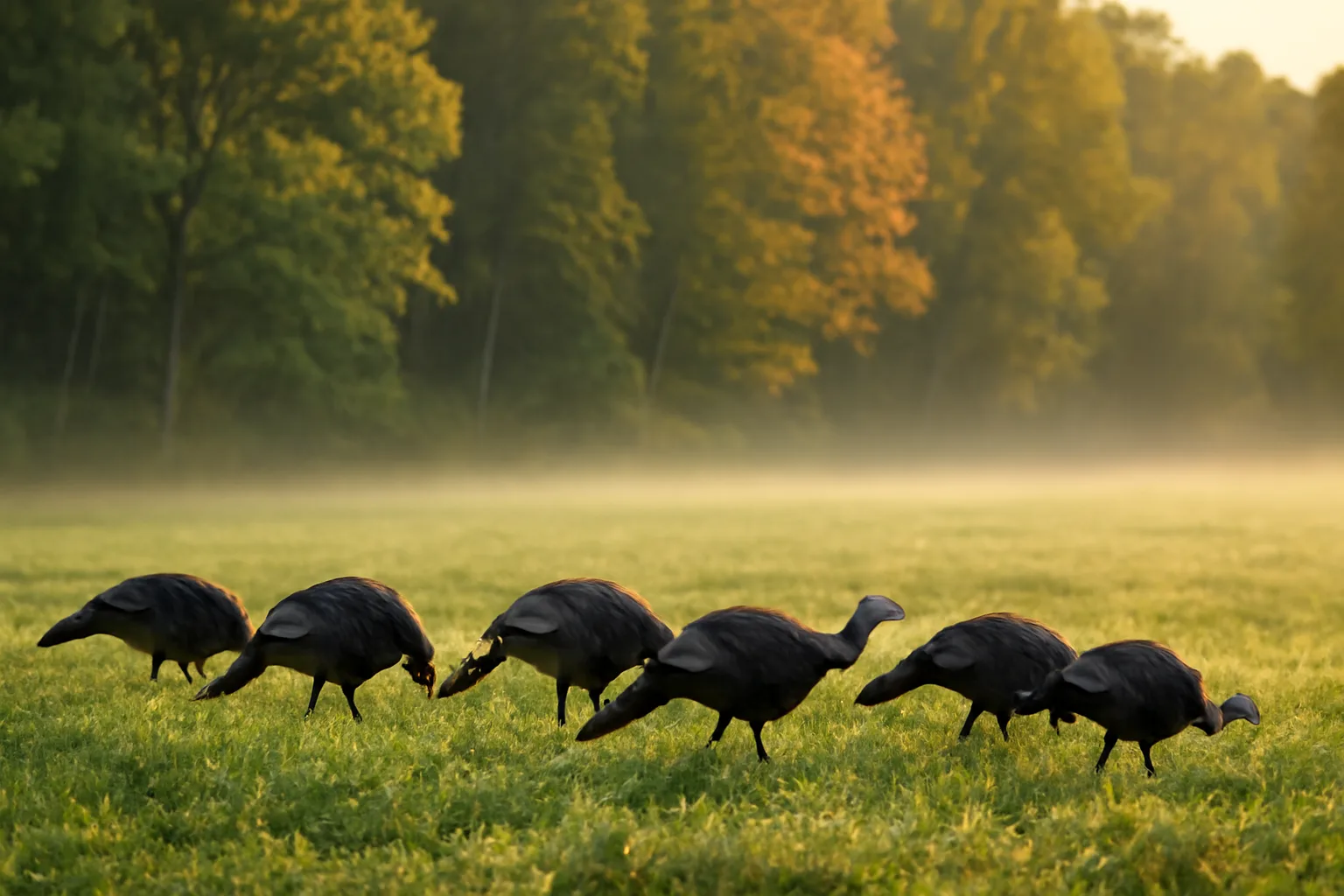
TL;DR
The best turkey food plot mixes chufa (a favorite dig-for tuber), clover for bugs and greens, and a cereal grain like oats or wheat for fall and spring cover crops. Turkeys are opportunists, not specialists, so a plot that grows insects and greenery beats any single miracle seed.
what is a food plot, and does it work the same for turkeys as deer?
A food plot is a planted area, usually somewhere between a quarter acre and a few acres, seeded with forage or grain to supplement what wild game finds naturally. Most food plot advice online is written for whitetail deer, and for good reason: deer are the primary economic driver of the food plot industry. But turkeys use plots differently than deer do, and a plot built purely for deer isn't automatically a turkey magnet. Deer eat the plants directly, mostly browse and forbs. Turkeys are omnivores and opportunists. Adult turkeys eat plant material (seeds, waste grain, greens, mast) but poults in their first few weeks need protein, and that mostly means insects. A University of Georgia Extension publication on wild turkey habitat notes that young turkeys rely heavily on insects for the protein needed for rapid growth in the first several weeks of life [1]. So a food plot that grows bugs (clover, alfalfa, chufa patches with some weed structure) can matter more to turkey production than one that just grows grain. If you already have a food plot whitetail program running, you don't need a separate turkey-only field in most cases. Clover, chufa, and cereal grain plots planted for deer already draw turkeys. The difference is timing and placement: turkeys want open sight lines near roosting timber, and they'll use small plots (even a tenth of an acre) that deer might walk past.
what do turkeys eat, and what's their actual favorite food?
There's no single "favorite food" for wild turkeys the way there might be for a picky housecat. Diet studies and state agency guides consistently describe turkeys as generalist foragers that shift with the season: insects and green forage in spring and summer, seeds, mast (acorns), and waste grain in fall and winter. Acorns are widely cited by wildlife agencies as one of the most important fall and winter foods where oak timber is present, because they're calorie-dense and broadly available across the whitetail and turkey range [2]. In a planted-plot context, though, a few crops come up again and again in state agency and extension recommendations: chufa (a sedge that produces underground tubers turkeys dig for), clover, grain sorghum, and small grains like wheat, oats, and milo. Chufa is one of the most attractive food plot plantings for turkeys specifically because the tubers persist in the ground through fall and winter, giving birds a reason to return to the same spot for months [3]. So if you want one word for "favorite," the honest answer is: it depends on the season, and acorns usually beat anything you plant. If you want the best planted answer, chufa is the closest thing to a turkey-specific superfood in the food plot world.
do deer like clover, and is it good for turkeys too?
Yes, deer like clover, and it's one of the most planted food plot crops in North America for good reason: it's perennial (lasting 3-5 years per stand with good management), it's high in protein (commonly 15-25% crude protein depending on variety and growth stage), and it tolerates grazing pressure better than most annuals. Clover is a staple recommendation across nearly every land-grant extension deer and wildlife program. Turkeys benefit from clover plots too, but not primarily for the clover leaf itself. Clover fields host huge numbers of insects, especially in the seedling and early vegetative stages, and that's where turkeys, particularly hens with poults, spend a lot of time in late spring and early summer. A clover field mowed periodically to keep growth low and tender attracts more insects and stays more accessible to young poults than a shaggy, waist-high stand. If you're already running a deer food plot with clover, you're doing turkeys a favor without extra work. The main adjustment for turkey benefit: keep at least part of the clover field mowed short in a strip or section during brood-rearing season (May-July in most of the whitetail range) so poults can move through it easily and hens can watch for predators.
do deer eat sorghum, and does it work in a turkey plot?
Deer do eat sorghum, both the leaves as browse when young and the grain heads later in the season, though it's generally considered secondary to corn or soybeans for deer tonnage per acre. Grain sorghum (milo) is drought tolerant and often planted in food plot mixes specifically as a turkey and upland bird component rather than a deer headliner. For turkeys, grain sorghum is a solid fall and winter food source. The seed heads stand above snow cover better than a lot of alternatives, and turkeys will work a sorghum field methodically once the heads mature and start to lean or shatter. The Mississippi State University Extension publication on wildlife food plantings lists grain sorghum among recommended plantings for turkey and quail alongside chufa and browntop millet [3]. One practical note: sorghum can take 90-120 days to reach grain maturity depending on variety and region, so timing the planting date matters if you want mature heads standing by opening day of fall turkey season in your state.
when to plant food plots for deer and turkey (by region)
| Deep South (zone 8-9) | March-May | September-November | |
|---|---|---|---|
| Mid-South / transition (zone 7) | April-June | August-October | |
| Midwest / Upper South (zone 6) | May-June | August-September | |
| Northern tier (zone 3-5) | Late May-June | Late July-August | If you want planting dates matched to your county rather than a regional guess, that's exactly the kind of detail a soil test and a written plan solve. Plotseason's $99 Custom Food Plot Plan builds a species list and planting calendar around your ZIP code and soil results; find it at /plot-plan-builder. Your soil test lab is still the final word on lime and fertilizer rates, the plan is general planting guidance, not site-specific agronomy. |
Planting windows depend entirely on your frost dates and whether you're planting a spring/summer annual, a fall annual, or a perennial. There's no single national planting date, and any article that gives you one calendar date for the whole country is guessing. The general framework extension agronomists use: warm-season annuals (chufa, sorghum, soybeans, cowpeas) go in after your last spring frost, when soil temps are reliably above 60°F. Cool-season annuals and perennials (clover, oats, wheat, brassicas) go in 4-8 weeks before your first fall frost, so they establish before cold weather but still get fall growth. Clover can also be frost-seeded or spring-planted in northern climates. Here's a rough regional planting window comparison. Always check your local extension office or state agency for your specific frost dates rather than relying on a national chart. | Region | Spring/summer annuals (chufa, sorghum, beans) | Fall annuals (clover, oats, wheat, brassicas) |
when to plant oats for deer (and does it help turkeys too)
Oats are typically planted as a fall annual, usually 6-10 weeks before your area's first killing frost, so the plant can establish a root system and put on leaf growth before winter dormancy or frost kill. In much of the Midwest and Upper South, that lands in late August through mid-September. In the Deep South, oats can go in as late as October and still perform, since winters are milder. Oats are a favorite for deer because they're highly palatable early in growth and often outcompete weeds fast when drilled into a prepared seedbed. Oklahoma State University Extension's food plot guidance lists oats among the top cool-season cereal grain choices for fall deer attraction, particularly in mixes with clover or wheat [4]. Turkeys will use an oat field, mostly picking through it for waste grain, green shoots, and the insects that live in a cereal grain stand, but oats aren't a turkey specialty crop the way chufa is. If you're planting oats primarily for deer, don't expect it to be a turkey destination field on its own. It's a supporting player, not the plot you'd build turkey season plans around.
when to plant turnips for deer, and do turkeys eat them?
Turnips and other brassicas are planted as fall annuals, typically 60-90 days before your first hard frost since the plant needs time to bulb before it's a target for deer. In much of the whitetail range that means a July or August planting date. Brassicas like turnips get sweeter after a frost because the plant converts starches to sugars, which is part of why deer often ignore turnips in September and hammer them in December. Turkeys generally don't eat turnip bulbs or much of the mature leaf tissue. What turkeys will use in a turnip or brassica field is the same thing they use in any broadleaf planting: the insect population in the canopy, especially early in the plant's growth when leaves are tender and bugs are dense. Once the plot matures into a thick brassica canopy, it's much more a deer destination than a turkey one. If turkey use is your goal, turnips are a low-value pick. Chufa, clover, or a cereal grain mix will outperform a brassica-heavy plot for turkey activity almost every time.
do turkeys like honey, and does that matter for plots?
Wild turkeys are not documented as attracted to honey in any wildlife agency or extension source, and there's no legitimate food-plot or attractant use for honey with turkeys. This question shows up in search because turkeys, like most birds, occasionally take nectar or sugary plant exudate opportunistically, and some hunters ask about "sweet" attractants generally. But there's no research or agency guidance recommending honey as a turkey food source or plot additive. What turkeys do respond to that's sweet-adjacent: ripening soft mast like wild grapes, and waste corn or grain sugars late in the season. If you're looking for a real attractant strategy, stick to the documented ones: chufa tubers, insect-rich clover, waste grain, and mast. Honey isn't part of any credible turkey habitat plan, and in many states, using bait or attractants (including sugar-based products) to hunt turkeys is illegal. Check your state wildlife agency's baiting and feeding regulations before placing any attractant near a hunting area; rules vary widely by state and by whether you're hunting over the material or simply planting a food source.
what's the actual best food plot mix for turkeys?
| Chufa | High (tuber dig site) | Fall-winter | Moderate | |
|---|---|---|---|---|
| Clover | High (insects + greens) | Spring-summer | High | |
| Wheat/oats | Moderate (waste grain, insects) | Fall-spring | High | |
| Grain sorghum | Moderate-high (seed heads) | Fall-winter | Moderate | |
| Turnips/brassicas | Low | Fall-winter | High | A quarter-acre to half-acre chufa patch next to a larger clover or clover/grain field, positioned within sight of roost timber, is a realistic small-property setup. You don't need several acres dedicated to turkeys specifically; turkeys will use the edges and open sections of a deer-focused plot program if the plant mix includes at least one insect-friendly perennial like clover and one dig-friendly annual like chufa. |
If you want one answer: a chufa and clover combination, with a cereal grain border, covers turkeys across all four seasons better than any single-species plot. Chufa gives you a fall-through-winter dig site since the tubers stay in the ground and turkeys will return to a productive chufa patch for months, sometimes scratching through snow to get at it. Clover gives you spring and summer insect production plus green forage for adult birds. A cereal grain border (wheat or oats) adds waste grain and additional insect habitat, and it doubles as deer forage, so you're not running a turkey-only field that competes with your deer program for acreage. Here's a simple comparison of the main turkey-relevant plantings and what season they actually produce for: | Planting | Peak turkey value | Season | Deer value too? |
how big should a turkey plot be, and where should I put it?
Size matters less than sight lines and edge structure. Turkeys, especially hens with poults, want to see predators coming, so a plot bordered by low, patchy cover rather than a solid wall of thick brush tends to get more use. A quarter acre in the right spot, near roost trees with a clear approach, often outperforms a two-acre field buried in the woods. Proximity to roost is the biggest single placement factor extension and agency guides emphasize. Turkeys don't like flying or walking far from roost cover first thing in the morning, so a plot within a few hundred yards of mature timber they're already using to roost gets hit hard, especially in spring. If you're planning plot locations across a property that also runs deer plots, food plot seed choices, and equipment schedules, it helps to lay the whole property out at once rather than picking spots plot by plot. That's the kind of planning question a written plan is built for; see deer food plot seed and food plot seed for species-specific breakdowns, or get a property-specific layout through the $99 Custom Food Plot Plan.
do state baiting and feeding rules affect turkey food plots?
Yes, and this trips up a lot of hunters who assume a planted crop is automatically legal to hunt over. In most states, a food plot planted and left to grow naturally (not harvested and piled, not supplemented with loose grain) is legal to hunt over because it's considered normal agricultural activity. But the line between a legitimate food plot and illegal baiting varies by state, and some states have specific rules about turkey hunting near feeders or bait piles that differ from deer rules. Baiting rules are state-specific and change; there's no national standard. Some states allow baiting for some species and not others, some define a waiting period after bait is removed before the area is legal to hunt (commonly 10 days in states that allow a cooldown period), and some prohibit any supplemental feed year-round. Before you place chufa, corn, or any other attractant near a spot you plan to hunt turkeys, check your state wildlife agency's current baiting and feeding regulation page directly, since these rules are revised periodically and vary even between neighboring counties in some states.
turkey plots vs deer plots: what's actually different?
The honest answer is: less than most marketing suggests. Turkeys and deer overlap heavily in the plants they use, especially clover, cereal grains, and soft mast. The real differences are in scale, timing within the season, and what part of the plant matters. Deer plots are usually built around tonnage and protein for antler and fawn development, with brassicas and soybeans doing a lot of the heavy lifting for total forage produced per acre. Turkey use skews toward insect production and small dig sites (chufa) rather than raw plant tonnage. A turkey plot can be much smaller and still be effective, because you're managing for activity and dig sites, not pounds of browse. If your property already runs a full deer food plots program with clover and grain, you're 80% of the way to a good turkey program already. The last 20%: add a small chufa patch near roost cover, and leave part of the clover mowed short through brood season. That's a cheap, low-effort addition compared to building a separate turkey field from scratch.
Frequently asked questions
Do deer eat sorghum?
Yes. Deer browse young sorghum leaves and eat the grain heads later in the season, though most whitetail programs treat it as a secondary crop behind corn or soybeans. Sorghum is more often planted specifically for its value to turkey and upland bird programs because of its drought tolerance and standing seed heads.
Do deer like clover?
Yes, clover is one of the most widely planted deer food plot crops because it's high protein (roughly 15-25% crude protein), perennial for 3-5 years with good management, and tolerates repeated grazing. It's a staple recommendation across nearly every land-grant extension deer program in the whitetail range.
When to plant deer food plots?
It depends on the crop type: warm-season annuals like soybeans and chufa go in after your last spring frost, while fall annuals and perennials like clover, oats, and brassicas go in 6-10 weeks before your first fall frost. There's no single national date; check your local extension office for your area's frost windows.
When to plant oats for deer?
Typically 6-10 weeks before your area's first fall frost, so oats can establish leaf growth and root mass before winter. In the Midwest and Upper South that's usually late August to mid-September; in the Deep South, planting can extend into October.
When to plant turnips for deer?
About 60-90 days before your first hard frost, since turnips need time to bulb before deer show real interest. Many hunters plant turnips in July or August. Deer often ignore turnips until after a frost converts plant starches to sugars, making the bulbs and leaves sweeter.
What is a food plot?
A food plot is a planted patch, usually a quarter acre to a few acres, seeded with forage or grain crops to supplement wild food sources for deer, turkey, or other wildlife. Plots range from simple clover fields to multi-species mixes planned around soil tests and regional planting calendars.
What are deer's favorite foods?
There's no single favorite; deer diets shift by season and region, but extension research consistently ranks acorns, soybeans, and clover among the highest-preference foods where available. Native browse and agricultural crops also make up a large share of natural deer diets depending on habitat type.
Do turkeys like honey?
No credible wildlife source documents turkeys being attracted to honey, and it has no legitimate role in a food plot or attractant strategy. Real turkey attractants with documented support include chufa tubers, insect-rich clover stands, waste grain, and acorn mast.
What's the single best food plot planting for turkeys?
Chufa is generally considered the top turkey-specific planting because its underground tubers persist through fall and winter, giving birds a reason to keep returning and dig. Clover is a close second because it produces the insects poults need for protein in spring and summer.
Can I use the same plot for both deer and turkey?
Yes, and most successful properties do exactly that. Clover, cereal grains, and even chufa border strips work for both species; the main adjustment for turkey benefit is mowing part of the clover short during brood season and adding a small chufa patch near roost cover.
How close to roost trees should a turkey plot be?
As close as practical, ideally within a few hundred yards of timber turkeys are already using to roost. Turkeys are reluctant to travel far from roost cover early in the morning, so proximity matters more than plot size for consistent use.
Is it legal to hunt turkeys over a food plot?
In most states, a standing, unharvested food plot counts as normal agriculture and is legal to hunt over, but baiting and feeding rules vary significantly by state and sometimes by species. Check your state wildlife agency's current regulations before hunting near any planted or supplemental food source.
Sources
- University of Georgia Extension, Wild Turkey Habitat Management: Young turkeys rely heavily on insects for protein in the first several weeks of life
- Pennsylvania Game Commission, Wild Turkey Natural History: Acorns and other mast are among the most important fall and winter foods for wild turkeys where oak timber is present
- Mississippi State University Extension Publication P2111, Establishing and Managing Wildlife Food Plots: Chufa is one of the most attractive food plot plantings for turkeys because tubers persist through fall and winter
- Oklahoma State University Extension, Food Plots for Wildlife: Oats are among the top cool-season cereal grain choices for fall deer attraction
- National Wild Turkey Federation, Wild Turkey Basics: Diet: Wild turkeys shift diet seasonally between insects, green forage, seeds, mast, and waste grain
- USDA Natural Resources Conservation Service, Plant Fact Sheet: Chufa (Cyperus esculentus): Chufa tubers persist in the soil and are dug by wildlife including turkeys through fall and winter