Last updated 2026-07-25
TL;DR
The best seed for deer food plots depends on your soil, region, and hunting goals, but clover, brassicas (turnips), oats, and sorghum/grain sorghum are the core workhorses. Plant cool-season seed 6-10 weeks before your first fall frost and warm-season seed after your last spring frost. A soil test should decide lime and fertilizer, not the seed bag.
what is a food plot, exactly
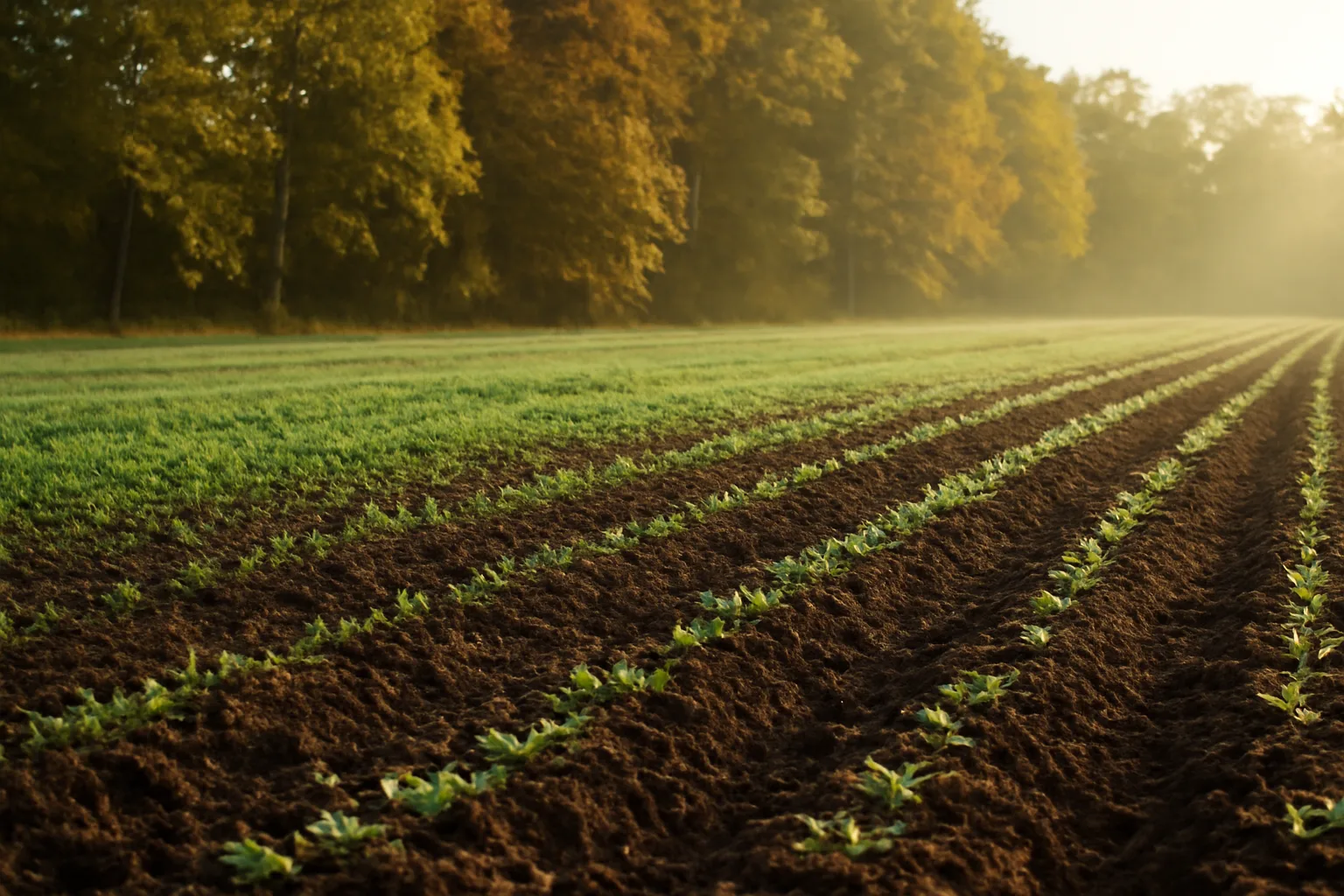
A food plot is a planted patch of forage, usually somewhere between a quarter acre and several acres, put in specifically to feed and hold deer on a property. It is not a garden and it is not lawn care. The goal is tonnage of digestible forage at the right time of year, plus enough attraction to bring deer past a stand or blind during legal shooting hours. Most plots fall into two rough categories: annual plots reseeded every year (clover can be a perennial exception) and food sources meant to carry deer through a specific stress period, like late summer drought or the post-rut lull in December and January. The USDA's National Agroforestry Center and state wildlife agencies both treat food plots as a habitat management tool, not a baiting shortcut, though the legal line between the two varies a lot by state. A plot only works if it fits the dirt it's planted in. That's the part people skip. A $40 bag of premium seed blend does nothing for you on a compacted clay pad with a soil pH of 4.9. If you want a plan built around your specific soil test results, tree cover, and region, that's exactly what the Custom Food Plot Plan is for. It's a $99 one-time build, not a subscription, and it still leaves the actual lime and fertilizer call to your soil-test lab, because they know your dirt better than any national article can.
what are deer's favorite foods, and does that change by season
There's no single "favorite food" for deer nationwide. Preference shifts hard by season, region, and what's locally available. That said, wildlife research keeps landing on a short list of high-value plants deer seek out when they can get them. Acorns are usually at or near the top wherever oaks exist. Multiple state deer studies show acorns can make up 25 percent or more of fall diet by volume in good mast years, sometimes far higher, because they're calorie-dense and easy to digest [1]. Clover, soybeans, and other legumes rank high because of protein content, especially in spring and summer when does are lactating and bucks are growing antlers. In fall and winter, deer shift toward carbohydrate-dense foods (corn, acorns, brassicas after a frost sweetens them) because they need energy to survive cold, not protein to grow tissue. Regional food plot preference also depends heavily on what deer already have around them. A plot competing against a standing cornfield gets ignored in September. The same plot in a landscape of mature timber with no ag nearby gets hit hard. That's why "best seed" questions never have one right answer, only a right answer for your specific ground.
do deer like clover, and is it worth planting
Yes, deer readily eat clover, and it's one of the most planted food plot species in North America for good reason. White clover and red clover both show up constantly in deer diet studies as a preferred forage, and university extension programs recommend it as a foundation species for perennial plots [2]. Clover's advantage is protein. Quality clover stands run 25 to 32 percent crude protein during active growth, which is well above what most grain crops offer and squarely in the range does need for lactation and bucks need for antler growth [2]. It's also relatively cheap per acre compared to specialty brassica or grain blends, and once established, a good stand can produce for three to five years with proper mowing and fertility maintenance, cutting your annual reseeding cost. The tradeoff: clover needs a soil pH of 6.0 to 6.5 to really perform, and it's not fast in year one. It also gets hammered hard by drought and can't handle heavy shade. If your plot sits under a closed canopy or your soil test comes back at pH 5.2 with no lime applied yet, clover will disappoint you no matter how good the seed tag looks. This is a case where a soil test genuinely matters more than seed selection. If you're comparing clover against other perennial and annual options for your specific plot, food plot seed and deer food plot seed both break down species side by side.
do deer eat sorghum, and is it a real food plot option
Yes, deer eat grain sorghum (milo), and it's a legitimate warm-season food plot crop, though it's used more often as a summer/fall standing grain crop or a cover component than as the primary attractant. Sorghum tolerates drought and poor soil noticeably better than corn, which is a big reason Midwest and southern Plains land managers lean on it in dry years [3]. Deer will browse young sorghum shoots and eat the grain heads once they mature, but sorghum is generally considered a secondary preference compared to soybeans, corn, or acorns when those are available on the same property. Its bigger value on a lot of properties is structural: sorghum grows tall and thick, giving deer screening cover and a reason to bed near a plot edge, plus a standing food source that holds up into winter better than soft-leaved forages. If you plant sorghum, expect it to work best as part of a mix (sometimes blended with cowpeas or soybeans) rather than as a monoculture attractant plot. Alone, in a region with better food sources nearby, it tends to sit unused until food gets scarce.
do deer like honey, and does it matter for food plots
Deer don't forage for honey in any meaningful sense in the wild, and there's no wildlife research or extension guidance recommending honey as a deer attractant or food plot input. Deer aren't pollinators and they don't raid beehives the way bears do. Any anecdotal claim of deer being drawn to honey scent products is not backed by peer-reviewed feeding studies, and no state wildlife agency lists it as a legitimate food source. Where honey does show up legitimately in the food plot world is as a minor ingredient in some commercial mineral or attractant products, riding on scent rather than nutrition. If you're chasing deer attraction, your money is much better spent on clover, brassicas, or standing beans than on anything honey-based. It's a novelty, not a strategy.
when to plant food plots for deer
| Deep South (zones 8-9) | Sept 15 - Nov 1 | Mar 15 - May 15 | |
|---|---|---|---|
| Mid-South / Transition (zones 6-7) | Aug 15 - Oct 15 | Apr 15 - Jun 1 | |
| Upper Midwest / North (zones 3-5) | Aug 1 - Sept 15 | May 15 - Jun 15 | These ranges track general USDA Plant Hardiness Zone patterns [5], not exact prescriptions. For a genuinely useful calendar, cross-reference your county extension office's planting guide against your own frost records, not a national blog average. |
Timing is the single biggest factor separating a plot that produces tonnage from one that dies in the ground. There are two broad windows: cool-season plots (clover, brassicas, oats, wheat, rye) and warm-season plots (soybeans, cowpeas, corn, sorghum). Cool-season seed goes in during late summer to early fall, timed 60 to 90 days ahead of your area's average first hard frost, so plants establish before growth slows [4]. Warm-season seed goes in after your last spring frost date, once soil temperatures are reliably warm, usually April through June depending on latitude. The honest answer to "when" is always "look up your local frost dates," because a date that works in southern Georgia will kill a plot in northern Minnesota. The National Weather Service and NOAA publish average first and last frost date data by station, and most state extension offices translate that into planting calendars by county. Here's a rough national framework. Understanding your specific zone can shift these windows by a month in either direction. | Region (rough USDA zones) | Cool-season plot window | Warm-season plot window |
when to plant oats for deer food plots
Oats are a cool-season cereal grain and go in the ground the same window as most fall cool-season plots: 6 to 10 weeks before your area's average first fall frost. That puts most of the country somewhere between mid-August and mid-September, with the Deep South stretching into October [4]. Oats germinate fast (often 7 to 10 days in good soil moisture) and green up quickly, which makes them a strong early-season attractant while slower species like clover and brassicas are still establishing. They're also genuinely high in palatability; deer often hit a fresh oat plot before touching anything else nearby, which is why a lot of mixes use oats as the "draw" species alongside a slower perennial base. The catch is winter hardiness. Standard oat varieties are not very cold tolerant and typically die back hard after temperatures drop into the teens, so in northern zones oats function more as a fall attractant than a food source that survives to spring. Where extended winter food matters, pair oats with winter wheat or cereal rye, which tolerate cold far better and can persist into a spring green-up.
when to plant turnips for deer food plots
Turnips are planted in the same late-summer cool-season window as other brassicas: roughly 60 to 90 days before your first expected fall frost, which lines up to mid-July through early September across most of the whitetail's range, with earlier planting in the north and later in the south [6]. Turnips need that runway because deer generally ignore the bulb and leaves early in the season and only start hitting them hard after a couple of frosts convert starches to sugars, making the plant noticeably sweeter. That's a documented pattern in extension brassica trial reports, and it's the reason turnip plots that look untouched in October can get hammered in December [6]. If you're hunting a state with a September or October season, don't expect turnips to be your primary draw yet; they're a late-season play. Soil matters here too. Brassicas like turnips want a pH close to 6.0 to 6.5 and decent nitrogen; a soil test showing low phosphorus or a pH under 5.5 will visibly stunt bulb development regardless of how good the seed variety is. If you're planting turnips as part of a blend, deer food plots covers how brassicas pair with clover and cereal grains for a season-long plot instead of a single-species gamble.
how do you pick seed to match your soil test
Your soil test tells you three things that matter more than any seed tag: pH, phosphorus/potassium levels, and organic matter. Land-grant extension labs (Penn State, Mississippi State, University of Tennessee, and others all run public ag soil testing programs) return a report with a specific lime and fertilizer recommendation for the crop you tell them you're planting . If your pH comes back under 6.0, clover and alfalfa will struggle to fix nitrogen properly no matter how much fertilizer you add, because the soil chemistry limits nutrient uptake at low pH [2]. Brassicas are somewhat more forgiving down to about 5.5, and cereal grains like oats, wheat, and rye are the most tolerant of low pH among common plot species, which is part of why they're a common first-year crop on ground that hasn't been limed yet. The practical order of operations: pull a soil sample 4 to 6 weeks before your planting window, send it to a land-grant lab (more than a big-box store kit), get pH and nutrient numbers back, then choose seed. Lime especially needs lead time; agricultural lime can take several months to fully react and raise pH, so applying it the same week you plant does very little for that season's crop . Your soil test lab's specific lime and fertilizer rate recommendation is the number to follow, not a generic bag rate, because your organic matter and buffer pH change how much lime you actually need.
single-species plot vs. blend: which seed setup actually works better
Single-species plots are simpler to manage and easier to diagnose when something goes wrong, but they leave you exposed if that one species has a bad year from drought, deer pressure, or a soil mismatch. Blends spread the risk and usually extend the plot's useful season, since a clover/brassica/cereal grain mix gives you spring-summer protein, fall attraction, and winter carbohydrate in one planting. The downside of blends is management complexity. Different species in the same blend often want different mowing schedules, different fertility, and sometimes different planting depths, so a blend optimized on paper can underperform if you can't manage it precisely. A lot of experienced plotters run a hybrid approach: a perennial clover base plot for spring/summer, plus a separate annual brassica/cereal grain plot timed for fall and winter. If you're brand new to food plots and want the lowest-effort setup, a straightforward oat/clover or wheat/clover blend on a well-limed plot is about as forgiving as it gets. If you're trying to stack multiple attraction windows on limited acreage, a three-way blend earns its complexity. For a broader look at how plot type interacts with strategy (kill plot vs. destination plot vs. transition plot), food plot whitetail and deer for food both go deeper on layout decisions beyond just seed choice.
legal and baiting considerations before you plant
Food plots are legal in every state, but the line between a food plot and illegal baiting is not the same everywhere, and it genuinely matters before you plant near a stand. Some states define baiting strictly around placed or piled feed and treat a planted, rooted crop (a food plot) as entirely separate and legal to hunt over. Other states have supplemental feeding bans tied to chronic wasting disease concerns that can affect what you're allowed to do near a plot, especially with mineral or protein supplement additions. Michigan, for example, has specific baiting and feeding regulations enforced by the Department of Natural Resources that differ from states like Texas, where feeders are widely legal . Always check your state wildlife agency's current regulations before assuming a plot setup that worked in one state is legal in another; rules change nearly every legislative session in some states. This is not legal advice, and it's not a substitute for reading your state's actual regulation text for the current season. It's a reminder to check before you plant, not after you've already built a stand over it.
common food plot seed mistakes worth avoiding
The single biggest mistake is planting before a soil test or skipping the test entirely. A seed bag can't fix a pH problem; only lime can, and lime needs months, not days, to work . The second most common mistake is planting cool-season seed too early or too late relative to your local frost date. Too early in hot, dry late summer and germination fails from heat stress. Too late and plants don't establish enough root mass before frost stops growth. Third: over-seeding rate. More seed per acre is not automatically better; overcrowded stands compete against each other for light and moisture and often produce less total forage than a properly rated seeding rate. Follow the bag's per-acre rate, adjusted only if your drill or spreader calibration says otherwise. Fourth: ignoring weed pressure. A lot of first-year plots fail not because the seed was bad but because existing grass and weeds outcompeted new seedlings. A burndown herbicide application or tillage pass before planting, timed per your local extension recommendation, solves more "my seed didn't come up" complaints than any seed brand switch would.
Frequently asked questions
What is a food plot for deer?
A food plot is a planted area, typically a quarter acre to several acres, seeded specifically to provide deer forage and increase the odds of holding or attracting deer for observation or hunting. It's a habitat management tool, distinct from baiting, though the legal distinction varies by state, so check your state wildlife agency's rules before hunting near one.
Do deer eat sorghum?
Yes. Deer browse young sorghum shoots and eat mature grain heads, though sorghum ranks below soybeans, corn, and acorns in most preference studies when those options are available nearby. It's most useful as a drought-tolerant component in a mixed planting, providing both late-season grain and thick screening cover rather than serving as a standalone attractant.
Do deer like clover, and is it a good food plot choice?
Yes, clover is one of the most consistently preferred food plot forages, offering 25 to 32 percent crude protein during active growth. It performs best at soil pH 6.0-6.5 and can produce for three to five years once established, but it struggles in shade, drought, and acidic soil that hasn't been limed.
When should you plant food plots for deer?
Cool-season plots (clover, brassicas, oats, wheat) go in 60-90 days before your area's average first fall frost, usually mid-July through early October depending on latitude. Warm-season plots (soybeans, cowpeas, sorghum) go in after your last spring frost, typically April through June. Check your county extension office's frost date data for exact local timing.
When should you plant oats for a deer food plot?
Plant oats 6-10 weeks before your area's first fall frost, generally mid-August through mid-September in most whitetail range, later into October in the Deep South. Oats germinate in 7-10 days and green up fast, making them a strong early fall attractant, but they have limited winter hardiness compared to wheat or cereal rye.
When should you plant turnips for deer?
Plant turnips 60-90 days before your first fall frost, roughly mid-July through early September depending on region. Deer usually ignore turnip bulbs and leaves early on and hit them hard only after a few frosts convert starches to sugar, so turnip plots are typically a late-season food source, not an early-fall draw.
Do deer like honey?
No credible wildlife research supports honey as a deer food or attractant; deer aren't drawn to honey the way bears are. Some commercial scent or mineral products include trace honey as an ingredient, but it functions as a minor scent additive, not a nutritional draw. Clover, brassicas, and standing grain are far better-supported attractant choices.
What are deer's favorite foods overall?
There's no single universal favorite; preference shifts by season and region. Acorns often dominate fall diet in mast years (sometimes 25%+ of volume where oaks are present), while clover, soybeans, and other legumes rank highest in spring and summer for their protein content. Local food availability changes preference more than any species' inherent palatability.
What's the difference between a food plot and baiting?
A food plot is a rooted, planted crop; baiting typically means placing or piling loose feed like corn or minerals. Most states treat these differently under law, but some states restrict supplemental feeding broadly, partly over chronic wasting disease concerns. Regulations vary significantly by state and change often, so verify current rules with your state wildlife agency before hunting over any planted or placed food source.
How much does it cost to plant a deer food plot?
Costs vary widely by seed type, acreage, and whether you already own equipment, ranging roughly from $50 to $200+ per acre for seed alone, before lime, fertilizer, or herbicide. Perennial clover costs more upfront but can produce for several years, while annual blends need repurchasing every season, which changes the long-term cost comparison significantly.
Do I need a soil test before planting a food plot?
Yes, strongly recommended. A land-grant lab soil test tells you pH and nutrient levels, which determine whether your seed choice can actually succeed. Clover and alfalfa need pH 6.0-6.5 to perform well, and no seed variety overcomes a pH problem; only lime corrects that, and lime needs months of lead time to fully react in the soil.
Can I plant a food plot without a tractor or ATV?
Yes, on small plots (roughly a quarter acre or less), hand tools, a hand-crank seed spreader, and a lawn-style mower can work, especially for cereal grains and clover that don't need deep tillage. Larger plots generally need at least an ATV/UTV with a disc, cultipacker, or no-till drill to get consistent seed-to-soil contact and reasonable planting time.
Sources
- Pennsylvania Game Commission, Deer Management and Acorn Mast Studies: Acorns can make up a large share of fall whitetail diet by volume in good mast years
- University of Missouri Extension, Clover for Wildlife: Clover crude protein content typically runs 25-32 percent and requires soil pH of 6.0-6.5 for best performance
- Oklahoma State University Extension, Grain Sorghum Production: Grain sorghum tolerates drought and poor soil substantially better than corn
- NOAA National Weather Service, Frost/Freeze Climatology: Average first and last frost dates are tracked by local weather station and vary regionally
- Clemson University Cooperative Extension, Brassicas for Deer Food Plots: Turnip palatability to deer increases after frost converts starches to sugars, making them primarily a late-season food source
- University of Missouri Extension, Soil Testing for Wildlife Food Plots: Agricultural lime requires months to react and raise soil pH, so lime timing must precede planting by a season