Last updated 2026-07-25
TL;DR
A food plot soil test measures pH, phosphorus, potassium, and organic matter, usually for $8 to $20 per sample through your state land-grant extension lab. Pull cores 4 to 6 inches deep from 10 to 15 spots per plot, mix them, and send in one composite sample. Results tell you exact lime and fertilizer rates instead of guessing.
What is a food plot, and why does soil testing matter for one
A food plot is a planted opening on hunting land, usually somewhere between a quarter acre and several acres, seeded with forage that deer will eat and that hunters can use to pattern or attract animals during season. Common plantings include clover, brassicas, cereal grains, chicory, and soybeans. Some plots sit in permanent fields cut into timber. Others are old ag fields converted over to a rotation planned around bow season or late-season pressure. Soil testing matters because food plot ground is almost always compromised in some way. It might be a logging deck, an old pasture that never saw lime, or a shaded opening with acidic duff built up over decades. Extension research consistently finds that whitetail food plots fail more often from wrong pH and starved fertility than from bad seed choice. Purdue's forestry and natural resources extension found many wildlife openings test below pH 5.5, a range where clover and brassicas struggle to pull nitrogen and phosphorus out of the soil even when both are physically present [1]. A soil test is the only way to know what your dirt is actually short on. Guessing costs more in wasted lime and fertilizer than the test itself, which usually runs $8 to $20 per sample depending on the lab [2]. Skip it and you're either underliming (stunted, pale plants) or overspending on nutrients the soil already has plenty of. If you're picking species for the first time, it helps to look at food plot whitetail options and deer food plot seed blends before you test, so you know what pH and fertility target you're testing toward.
How do you actually pull a soil sample for a food plot
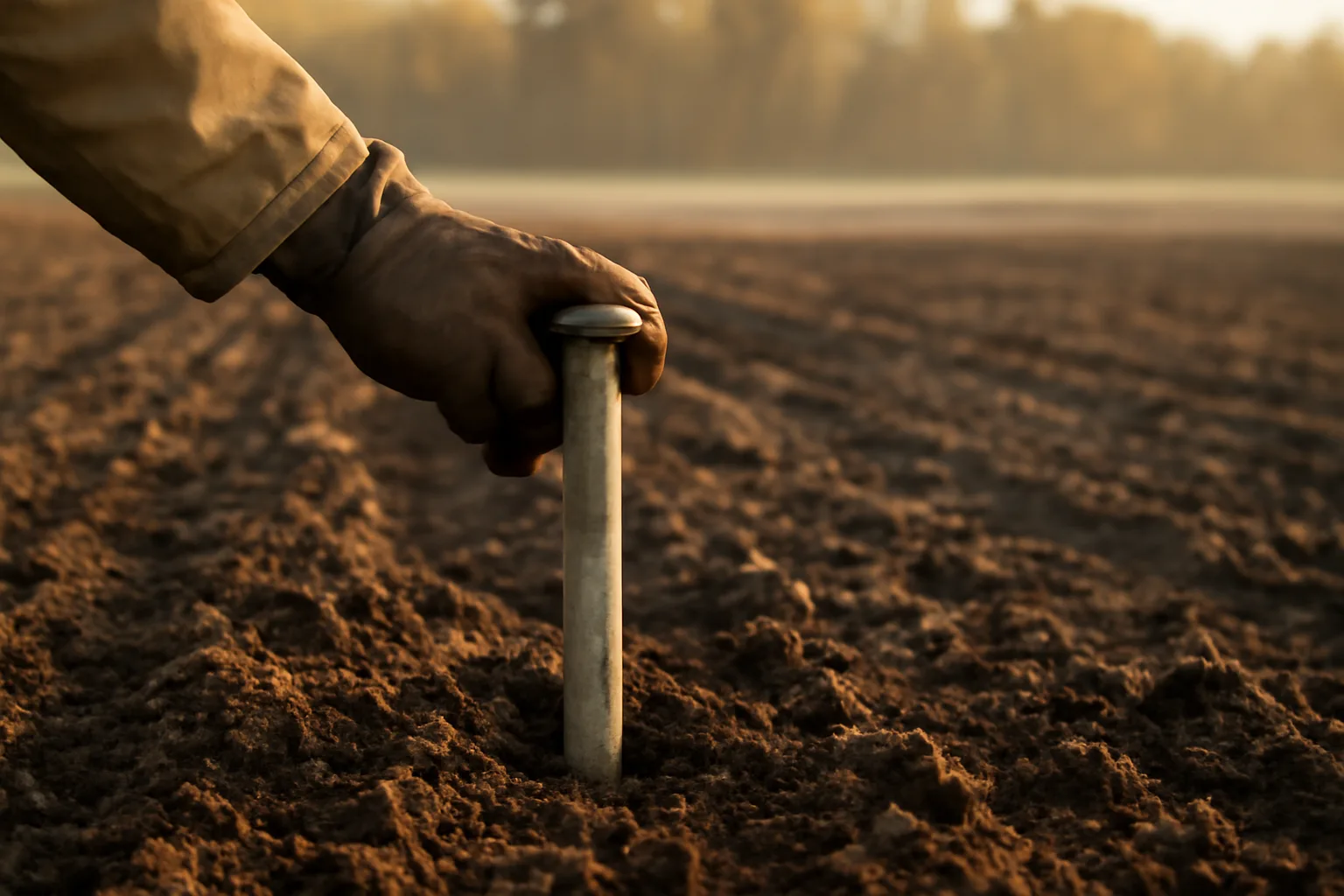
Pull 10 to 15 core samples per distinct plot area, going 4 to 6 inches deep, which matches the tillage and root zone depth most extension labs calibrate their recommendations around [3]. Walk the plot in a zigzag pattern and take a core every 15 to 20 paces. Dump all cores into a clean plastic bucket (not galvanized metal, which can skew micronutrient readings), break up any clumps, and mix thoroughly. From that mixed bucket, pull out about a pint to a quart of soil, that's your composite sample. Let it air dry on a tray or paper if it's wet, don't oven-dry it or microwave it, both can distort test results. Label it with the plot name and bag it for the lab. If a single field has an obviously different area, a wet corner, a shaded strip along timber, a spot where you limed heavy three years ago, sample that separately. Mixing distinct zones into one composite just averages out useful information and can hide a problem area that needs its own lime rate. Most state land-grant universities run their own soil testing labs and accept mail-in samples from landowners, more than farmers. The University of Missouri, Penn State, and Mississippi State all publish specific sampling depth and pattern guidance for wildlife food plots as a distinct category from row-crop fields [4]. Check your own state extension site first since submission forms, mailing addresses, and turnaround times vary.
What does a soil test actually measure and report
A standard food plot soil test reports pH, buffer pH (used to calculate lime rate), phosphorus, potassium, calcium, magnesium, and often cation exchange capacity (CEC) and organic matter percentage. Some labs add sulfur, zinc, and boron for an extra fee. pH tells you how acidic or alkaline the soil is on a 0 to 14 scale, with 7 neutral. Most food plot forages, clover, chicory, brassicas, cereal grains, want a pH between 6.0 and 7.0 [5]. Below 6.0, phosphorus starts locking up chemically and becomes unavailable to roots even if the raw number on the report looks fine. Buffer pH is a separate reading labs use specifically to calculate how much lime you need. Two fields can have the same water pH but need very different lime tonnage because one has more clay and organic matter buffering against pH change. This is why your report gives you a specific tons-per-acre lime recommendation rather than a flat rule. Phosphorus and potassium show up as parts per million (ppm) or pounds per acre, categorized on most reports as low, medium, high, or very high. Low means you need to add substantial fertilizer before the plot will perform. High or very high means you can often skip that nutrient entirely and save money. Organic matter percentage matters because it affects nitrogen mineralization, water holding capacity, and how much lime is needed to shift pH. Sandy food plot ground with 1 to 2 percent organic matter behaves very differently than a rich bottomland field at 4 to 5 percent, even at the identical pH reading.
How do you read the lime and fertilizer recommendations
Your report will list a lime recommendation in tons per acre and fertilizer recommendations in pounds per acre of nitrogen (N), phosphorus as P2O5, and potassium as K2O. These numbers are calculated for the specific crop you tell the lab you're planting, so always list your intended food plot species on the submission form. Lime takes time to work. Agricultural lime needs to react with soil moisture over months, and most extension guidance recommends applying it 6 to 12 months before planting if pH needs to move more than a full point . If you're testing in spring for a fall plot, you're often fine. If you're testing in August for a September planting and pH comes back at 5.0, lime you spread won't fully correct it before the seed goes in the ground, though even a partial correction helps. Pelletized lime works faster than raw ag lime because it's ground finer, but it costs more per effective ton and is mainly a good option for small plots where hauling bulk lime isn't practical. Fertilizer recommendations are usually split by what the crop needs at planting versus what it can pull from reserves already in the soil. Follow the lab's specific N-P-K recommendation rather than a generic bag ratio from the farm store. A report calling for 0-20-20 per acre means don't buy a 10-10-10 blanket blend and dump extra nitrogen you don't need onto brassicas that are already fine on N from the soil's organic matter.
When to plant food plots for deer, by region and species
| Zone 3-4 (Northern Midwest, Upper Great Lakes) | Late April - late May | Late July - mid August | |
|---|---|---|---|
| Zone 5-6 (Mid-Midwest, Mid-Atlantic, Northeast) | Mid April - late May | Mid August - mid September | |
| Zone 7-8 (Mid-South, Southern Plains) | Late March - late April | Early September - early October | |
| Zone 9 (Deep South, Gulf Coast) | March | Late September - late October | A soil test result changes this timeline in one important way: if lime is needed and you're more than a point off in pH, plan your planting date around getting lime down 6 to 12 months ahead, not the other way around. |
Timing depends on your USDA plant hardiness zone, your target species, and whether you're feeding deer through summer stress or setting up a fall hunting draw. Northern zones (4 to 5) generally plant spring plots (clover, chicory) in April through May and fall plots (brassicas, cereal grains) in late July through August. Southern zones (7 to 9) push both windows later into the calendar and can often get a second fall planting in through September or even October . Cool-season perennials like clover establish best when soil temperatures sit in the 55 to 65 degree range, which usually lines up with the same weeks a region plants cool-season lawn grass. Warm-season annuals like soybeans and sorghum need soil to warm past roughly 60 degrees and all frost risk to be gone. Here's a general planting window table. Confirm against your specific state extension frost date charts before committing, since a single hardiness zone can span very different last-frost dates depending on elevation and local microclimate . | Region (USDA zone) | Spring plot window | Fall plot window |
When to plant oats for deer
Oats go in during the fall planting window for most regions, typically August through early October depending on zone, and they're one of the fastest-germinating cereal grains available for food plots, often showing green growth in 5 to 7 days under good moisture . Oats are a cool-season annual, so they won't survive hard summer heat and they'll die back completely once temperatures drop into the teens for extended periods, which makes them a fall-and-early-winter forage rather than a year-round planting. Oats pair well with brassicas and clover in a blend because they germinate fast and give deer something to eat within two to three weeks while slower species like turnips and clover are still establishing root systems. A soil pH in the 6.0 to 7.0 range and moderate nitrogen (oats are hungrier for nitrogen than clover) gets the best tonnage. In far northern zones, oats planted too early in fall can bolt and head out before winterkill, wasting tonnage on stem instead of leaf. Extension trial data from several land-grant programs generally recommends planting oats 60 to 90 days before your area's average first hard frost for peak leaf production timed to hunting season .
Do deer like clover, and do deer eat clover regularly
Yes, whitetails eat clover heavily and it's one of the most reliable food plot forages across the entire whitetail range. Clover is a perennial legume, meaning a well-maintained stand can produce forage for 3 to 5 years off one planting, and it fixes its own nitrogen through root nodules, cutting fertilizer costs significantly compared to annual grain plots. Clover wants a pH between 6.0 and 6.8 for best nodulation and yield. Below pH 6.0, the nitrogen-fixing bacteria in the root nodules stop working efficiently, and the plant starts competing with weeds it usually outcompetes. This is one of the clearest cases where a soil test pays for itself: a $15 test that flags a pH problem can save an entire clover stand that would otherwise thin out and get overtaken by grass within a year or two. White clover (ladino types) and red clover are both common in food plot blends. White clover tends to be shorter and more grazing-tolerant, red clover grows taller and handles drier soil slightly better. Deer show a strong preference for both across most forage preference studies, generally ranking clover among the top few plantings alongside soybeans in summer . For species selection beyond clover, deer food plots covers blend options across a full season.
When to plant turnips for deer, and do deer eat them
Turnips go in during the same fall window as other brassicas, roughly 80 to 90 days before your first expected hard frost, since they need that runway to bulb out before the ground freezes . Deer eat turnip leaves readily starting in early fall, but interest in the actual bulb typically doesn't ramp up until after a few hard frosts convert starches in the bulb into sugars, which is why turnip plots often look untouched in October and get hammered in late December and January. This delayed-interest pattern is well documented enough that it shapes an entire late-season food plot strategy: plant turnips specifically to hold deer on a property through the late muzzleloader or late bow season, not for early fall hunts. Turnips want pH 6.0 to 7.5 and respond strongly to phosphorus and potassium, both of which your soil test will call out specifically if levels are low. Skimping on potassium is a common mistake, since it's the nutrient most tied to bulb size and sugar content in brassicas.
Do deer eat sorghum, and is it worth planting
Deer will eat sorghum, particularly the grain heads once they mature and dry down in fall, but it's generally a secondary or supplemental food plot planting rather than a primary draw crop. Sorghum is more commonly planted for its cover value, standing tall through winter and giving deer and other wildlife a thermal and visual screen, with grain as a secondary benefit once other food sources thin out late in the year. Grain sorghum needs warm soil to establish, similar timing to corn and soybeans, and it's more drought-tolerant than corn, which makes it a reasonable choice on sandier or lower-rainfall ground where a soil test shows low organic matter and poor water holding capacity. It's not a top-tier attractant compared to soybeans or standing corn, and most food plotters use it in a blend or border planting rather than as a stand-alone plot.
What are deer's favorite foods, and do deer like honey
Deer preference varies by season, region, and what's locally available, but soybeans, clover, and acorns consistently rank at or near the top across forage studies and browse surveys in whitetail range . In late summer, soybeans and clover both offer high protein content that lactating does and antler-growing bucks need. In fall, acorns (especially white oak family acorns, which are lower in tannins than red oak family) often pull deer off food plots entirely for a few weeks until the acorn crop is cleaned up. Deer do not eat honey in any meaningful sense as a forage item. Whitetails are browsers built to digest cellulose and plant material through a four-chambered rumen system, not sugar syrups, and honey isn't a natural or recommended food plot or attractant additive. Where hunters ask this question, they're usually thinking of commercial deer attractant products that use sweet scents or molasses-based minerals, not literal honey, and states vary widely on whether using any supplemental attractant or feed counts as illegal baiting near a stand. Check your state wildlife agency's baiting and feeding regulations before using any mineral, scent, or supplemental feed product, since rules differ by state and sometimes by county, and some states classify food plots themselves as exempt from baiting laws while others regulate proximity to stands or the manner of placement .
How much does a soil test cost and where do you send it
Most state land-grant university extension soil labs charge $8 to $20 per standard sample for pH, P, K, and lime/fertilizer recommendations, with add-on tests for micronutrients or organic matter sometimes bumping the price up a few dollars more [2]. Private ag labs charge more, often $20 to $40, but turn results around faster and sometimes offer more detailed micronutrient panels. Find your state's lab through your land-grant university's extension website, they'll have a submission form (usually a PDF) asking for the crop you're planting, sample ID, and contact info. Turnaround is typically 1 to 3 weeks depending on season, with spring being the busiest and slowest time since row-crop farmers flood the same labs. Once you have your results, matching lime and fertilizer numbers to an actual planting plan is the part most hunters find confusing, since the report gives raw numbers but not a step-by-step plot plan. That's the gap a $99 one-time Custom Food Plot Plan is built to close: you upload your soil test and property details and get a species and fertility plan back matched to your zone and goals. Your soil test lab is still the authority on the exact lime and fertilizer numbers; a plan translates those numbers into a planting strategy.
What equipment do you need to act on soil test results
Acting on a soil test doesn't require much specialized gear for a small plot. A drop spreader or push spreader handles lime and fertilizer on plots under an acre. Broadcast spreaders towed behind an ATV or tractor make sense once you're managing multiple plots or anything over an acre or two. Lime is heavy, roughly 80 to 100 pounds per bag of pelletized lime, and bulk ag lime often needs a farm supply delivery truck with a spreader attachment if your recommendation calls for more than a ton or two per acre. Get quotes locally since bulk lime delivery and spreading cost varies a lot by region and distance from a quarry. A basic soil pH meter or handheld tester is not a substitute for a lab test. These consumer meters are notoriously inconsistent and extension soil scientists generally don't recommend relying on them for anything beyond a rough spot-check between real lab tests . Spend the $15 and mail in an actual sample. For picking the right seed once your ground is corrected, check out food plot seed and domain food plot seed for species matched to different soil and light conditions, and deer for food for a broader look at plot goals beyond pure attraction.
Frequently asked questions
How often should I soil test a food plot?
Test every 2 to 3 years for established plots, and every year for a brand new plot or one where you're aggressively correcting pH. Annual testing on a stable, well-limed perennial clover field is usually overkill; the bigger return is testing any new ground before the first planting.
What is a food plot exactly?
A food plot is a planted opening, usually a quarter acre to several acres, seeded with forage like clover, brassicas, or cereal grains to feed deer and other wildlife and to help hunters pattern animals near a stand or blind during season.
Do deer eat sorghum?
Yes, deer eat sorghum grain heads once they mature in fall, but sorghum is mainly valued for winter cover and screening, not as a top attractant. Most hunters plant it as a supplemental or border crop alongside soybeans, clover, or brassicas rather than as a stand-alone draw.
Do deer like clover, and how long does a clover plot last?
Deer strongly prefer clover, and it's one of the most reliable food plot forages in whitetail range. A well-maintained perennial clover stand, kept at pH 6.0 to 6.8 and mowed to control weeds, can produce forage for 3 to 5 years before it needs replanting.
When should I plant oats for deer?
Plant oats in the fall window, typically 60 to 90 days before your area's average first hard frost, which usually lands in August through early October depending on your USDA zone. Oats germinate fast, often showing growth in 5 to 7 days, making them good for filling in a blend quickly.
When is the best time to plant food plots for deer overall?
Spring plots (clover, chicory) generally go in April through May in northern zones and March through April further south. Fall plots (brassicas, cereal grains) go in late July through September depending on zone, timed 60 to 90 days ahead of first frost for most brassica and grain species.
When should turnips be planted for deer?
Plant turnips 80 to 90 days before your area's expected first hard frost, which puts most regions in the August window. Deer typically ignore the bulbs until after a few hard frosts sweeten the starches into sugar, so turnip plots peak in draw during late season, not early fall.
What is a deer's favorite food overall?
There's no single universal favorite since it depends on season and region, but soybeans, clover, and white oak family acorns consistently rank among the top preferred foods in whitetail forage studies. Acorns can pull deer off planted plots entirely during a heavy mast fall.
Do deer like honey or eat it as forage?
No, deer don't eat honey as a meaningful food source. They're browsers digesting plant cellulose through a four-chambered rumen, not built for sugar syrups. People asking this are usually thinking of sweet-scented commercial attractants, which are a different product entirely and may be restricted under state baiting laws.
How deep should I pull soil samples for a food plot test?
Pull cores 4 to 6 inches deep, which matches the depth most extension lab recommendations are calibrated around for tilled food plot ground. Take 10 to 15 cores across the plot in a zigzag pattern and mix them into one composite sample before sending it in.
How much lime do I need based on a soil test?
Your lab report gives an exact tons-per-acre lime recommendation calculated from your buffer pH reading, not a generic number. It varies by how far off your current pH is and how much clay and organic matter the soil has buffering against change, so two fields at the same pH can need very different lime rates.
Can I use a cheap pH meter instead of a lab soil test?
You can use one for a rough spot-check, but consumer pH meters are widely considered unreliable by extension soil scientists and shouldn't replace an actual lab test. A real soil test costs $8 to $20 and gives you calibrated lime and fertilizer numbers a handheld meter can't provide.
Sources
- Purdue University Forestry and Natural Resources Extension, wildlife opening soil fertility: Many wildlife openings test below pH 5.5, limiting nutrient availability for food plot forages
- University of Missouri Extension, Soil and Plant Testing Laboratory fee schedule: Standard soil test fees for landowners, roughly $8 to $20 per sample
- University of Missouri Extension, food plot establishment guidance: Separate sampling recommendation for distinct soil zones within a single plot
- NOAA National Centers for Environmental Information, average frost/freeze dates: First and last frost dates vary significantly within a single hardiness zone
- USDA Forest Service, whitetail deer forage preference research summaries: Soybeans, clover, and acorns consistently rank among top whitetail forage preferences