Last updated 2026-07-25
TL;DR
For sandy soil, cowpeas, buckwheat, cereal rye, and forage sorghum tolerate drought and low fertility best. Clover works but needs irrigation or a wet fall. Turnips and oats need more moisture-holding capacity than pure sand offers. Test your soil first; sandy ground often needs split nitrogen applications since it leaches fast.
What makes sandy soil so hard on food plots?
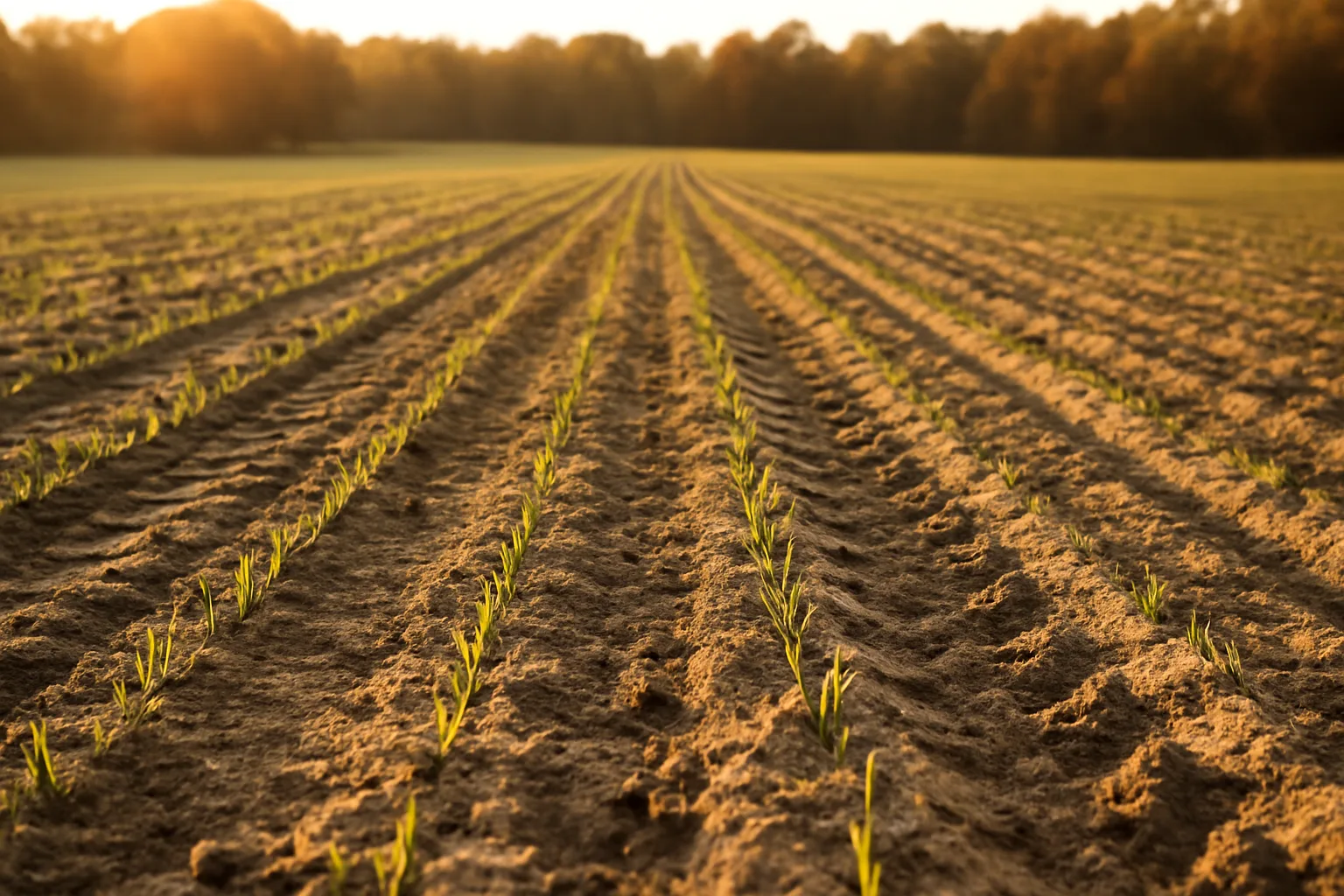
Sandy soil has big particles and huge pore spaces, so water runs through it instead of sticking around for roots to use. The USDA's soil texture guidance classifies a soil as sand when it is at least 85% sand-sized particles with a low enough clay content that it won't form a ribbon between your fingers [1]. That structure is great for drainage after a hard rain, and terrible for holding onto water and nutrients between rains. Nitrogen is the biggest casualty. Sandy soils leach nitrate nitrogen fast, especially after heavy rain, because there's little clay or organic matter to hold onto it. University extension soil scientists consistently recommend splitting nitrogen applications on sandy ground into two or three smaller doses instead of one big shot, because a single large application just washes past the root zone before the plant can use it [2]. Organic matter matters more here than on loam or clay ground. Every percentage point of organic matter can hold meaningful extra water per acre-foot of soil, which is why cover crops and no-till buildup pay off over multiple seasons on light soils. If your plot is pure beach sand, don't expect turnips or clover to perform like they would on river-bottom loam. Pick species bred for exactly this problem, and adjust your expectations on establishment and yield.
What is a food plot, and why does soil type change the plan?
A food plot is a planted area, usually somewhere between a quarter acre and a few acres, seeded specifically to attract and feed deer or other wildlife rather than to produce a cash crop. Landowners plant them on field edges, clear-cuts, or dedicated openings inside timber, often using a mix of annuals and perennials to spread out food availability across seasons. Soil type changes almost every decision after that. Seed selection, seeding rate, fertilizer timing, and even mowing schedule all shift based on whether you're working sand, clay, or a loam in between. On sandy ground specifically, you're managing for drought stress and nutrient leaching first, and deer attraction second. Get the agronomy wrong and there's no plot to attract anything to. If you want a plan built around your actual dirt instead of general advice, a soil test tells you where you stand on pH and base nutrients before you spend money on seed. For a broader look at plot styles and how they fit different properties, see food plot whitetail and deer food plots.
What is the best food plot seed for sandy soil overall?
| Cereal rye | Excellent | Low | Aug 15 to Oct 15 | Most forgiving grain on sand | |
|---|---|---|---|---|---|
| Buckwheat | Good | Low | May 15 to Jul 15 | Fast cover, short season only | |
| Cowpeas (iron-clay) | Good | Low (fixes N) | Late May to early Jul | Needs warm soil, 65F+ | |
| Forage sorghum-sudangrass | Very good | Moderate | Late May to Jun | Handles heat and dry spells well | |
| Clover (white/red) | Fair, needs irrigation or wet fall | Moderate | Late Aug to Sept, or early spring | Struggles without consistent moisture | |
| Brassicas (turnips) | Poor to fair | Moderate to high | Late Jul to mid-Aug | Needs moisture for bulb formation | |
| Oats | Fair | Moderate | Late Aug to Sept | Fast growth but shallow roots dry out | For a rundown on how these species compare across soil types generally, check deer food plot seed and food plot seed. |
For pure sandy ground, cowpeas, buckwheat, forage sorghum (grain sorghum types), and cereal rye consistently outperform clover, alfalfa, and brassicas in drought tolerance and low-fertility survival. None of these need to be babied through a dry August the way a tender clover stand does. Cowpeas (iron-clay type) fix their own nitrogen through rhizobia bacteria, tolerate sandy, low-fertility soil, and hold up under summer heat better than soybeans in many trial plots run by southern extension programs. Buckwheat germinates in as little as 3 to 5 days, grows fast enough to outcompete weeds, and needs minimal fertility, which makes it a smart short-season filler on sand [3]. Cereal rye is the most winter-hardy and drought-tolerant of the small grains, and it will grow on soil too poor for wheat or oats. Here's a quick comparison for sandy-ground performance: | Species | Drought tolerance on sand | Fertility needs | Typical planting window (northern zone) | Notes |
Do deer eat sorghum?
Yes, deer readily eat grain sorghum and forage sorghum, both as young green forage and later as mature grain heads. Sorghum is a warm-season annual that tolerates heat and drought far better than corn, which is exactly why it works on sandy ground where corn often burns up by mid-July. Forage sorghum and sorghum-sudangrass hybrids grow tall, provide bedding-height cover in addition to food, and can be planted where corn would be a financial gamble due to sandy soil's lower water-holding capacity. Deer will browse the leaves and stalks when young, then hit the grain heads hard once they mature in fall, similar to how they use standing corn. It's a solid low-input alternative to corn on light soils, and it costs less per acre in seed and fertilizer than a corn program aiming for similar tonnage.
Do deer eat clover, and do deer like clover on sandy soil specifically?
Yes, deer eat clover readily and it's one of the most preferred forages in food plot research, but sandy soil makes clover harder to establish and keep alive. Clover has shallow to moderate rooting and needs consistent moisture through germination and early growth, something sandy soil doesn't naturally provide. White clover and red clover both rank near the top of deer preference in university browse studies, and they offer season-long forage once established, which is why so many food plot programs are built around them. The catch on sand is establishment. You either need supplemental irrigation, a reliably wet planting window, or you accept a lower success rate. Ladino white clover has slightly better drought tolerance than common white clover varieties, and adding a nurse crop like oats can help hold soil moisture and reduce erosion while the clover establishes. If your property is mostly sand, clover isn't off the table, just plan for a fall planting timed right before consistent rain, and don't count on it in a dry-summer establishment attempt. The USDA NRCS plant guide for white clover notes it "is best adapted to areas with well-distributed rainfall" and performs poorly where soil moisture is inconsistent during establishment, which is exactly the risk on loose sand [4].
When to plant food plots for deer (by region)?
Planting windows depend on frost dates and species, but as a general rule, cool-season plots (clover, brassicas, cereal grains) go in late summer to early fall, and warm-season plots (cowpeas, soybeans, sorghum) go in late spring after soil warms. In northern zones (roughly USDA hardiness zones 3 to 5), cool-season plantings typically run from mid-August through mid-September, timed to get 45 to 60 days of growth before a hard frost. Warm-season plantings there run late May through mid-June once soil temps hit the mid-60s Fahrenheit. In the transition zone (zones 6 to 7), you get more flexibility, cool-season plots can go in from late August through early October, and warm-season plots from May through June. In the Deep South (zone 8 and warmer), cool-season plantings can push into October and even November, and warm-season windows open earlier, often by April. Sandy soil doesn't change your calendar much, but it makes hitting the moisture window more important. A cool-season plot planted into dry sand right before a two-week dry spell will struggle to germinate evenly, so watch the forecast more than the calendar on light ground. For a full breakdown by zone, see seasonal-calendars content on the site, and general species timing at deer for food.
When to plant oats for deer, and do they work on sandy soil?
Oats are typically planted in late summer, roughly late August through mid-September in northern and transition zones, timed to establish before frost. They germinate fast, often in 5 to 10 days under good moisture, which makes them a popular quick-cover option. On sandy soil, oats grow fine early but their relatively shallow root system means they dry out faster than cereal rye or wheat once the fall turns dry. Deer love young oats, often preferring them over other cereal grains when both are available at the same growth stage, but a stand on straight sand can thin out fast if rain doesn't cooperate. Mixing oats with cereal rye hedges that risk, since the rye will carry the plot if the oats struggle, and the oats give you faster early attraction while the rye is still getting established.
When to plant turnips for deer, and are they worth it on sand?
Turnips are usually planted from late July through mid-August in most of the whitetail range, giving them 90 to 100 days to develop bulbs and top growth before deer start hitting them hard after the first hard frosts sweeten the leaves and roots. On sandy soil, turnips are one of the tougher brassicas to grow well. Bulb formation needs consistent soil moisture, and sand's poor water-holding capacity means bulbs often stay small or the plant bolts under drought stress before it ever forms a proper root. You can still grow turnips on sand, but expect smaller bulbs and more reliance on well-timed rain than you'd need on loam. If your sandy plot has any low spots or areas with slightly more organic matter and clay content, that's where to concentrate brassica plantings rather than spreading them across the driest, highest ground on the property.
What are deer's favorite foods, and how does that change your seed pick?
Deer preference studies consistently rank clover, soybeans, and certain brassicas among the most preferred food plot forages, but preference doesn't equal what will actually grow on your soil. A crop deer love that dies from drought stress feeds nothing. Acorns, when available, generally outcompete planted forages for deer attention in fall, which is worth remembering if you're planting adjacent to oak stands. Among planted options, soybeans and cowpeas both rank high in deer preference during the growing season, and clover stays attractive nearly year-round where it survives. On sandy soil specifically, the smart move is picking from the preferred list that also tolerates your conditions: cowpeas over soybeans in droughty sand (better drought tolerance), and cereal rye over wheat if you want the most forgiving cool-season grain. Chasing pure preference rankings without checking drought tolerance is a common and expensive mistake on light ground.
Do deer like honey, and does it matter for food plots?
There's no research support for deer seeking out honey specifically, and it's not a practical food plot input or attractant in any agronomic sense. Deer are herbivores built to digest plant fiber through a four-chambered rumen system, not concentrated sugars in the form bees produce it. What people are usually really asking about is mineral or sugar-based attractants marketed for deer, separate from actual food plot seed. Those products exist, but they're not a substitute for planted forage, and many states regulate or ban feeding and baiting practices that involve placing supplemental food, minerals, or attractants outside a planted crop. Rules vary a lot by state, some allow baiting outright, some ban it entirely, some restrict it seasonally or by distance from stands, so check your state wildlife agency's current hunting regulations before using any non-planted attractant. For actual deer nutrition, energy comes from what's rooted in the ground, not from a jar.
How do you fix sandy soil fertility before planting?
Start with a real soil test, not a guess. A soil test tells you your current pH, phosphorus, potassium, and organic matter, and it's the only reliable way to know your actual lime and fertilizer needs before you spend money on seed and inputs. Sandy soils commonly run acidic and low in organic matter, and cooperative extension programs typically recommend correcting pH with agricultural lime well before planting, since lime can take several months to fully react with soil and raise pH into the 6.0 to 6.5 range most food plot species prefer [5]. Because sandy soil leaches nitrogen fast, splitting nitrogen fertilizer into two or three applications across the growing season, rather than putting it all down at planting, generally gives better plant uptake and less waste on light soils [2]. Building organic matter over multiple seasons, through cover crops, crop residue left in place, or added compost, gradually improves both water-holding capacity and nutrient retention. This isn't a one-year fix. Think of sandy soil improvement as a three to five year project where each season's plot choices either build the soil or ignore it. Your soil test lab's specific lime and fertilizer recommendations should always be the final word for your field, since regional labs calibrate recommendations to local soil chemistry, and general advice like this can only give you the framework.
What seeding rates and depths work best in sandy soil?
Sandy soil dries out fast near the surface, so seeding depth matters more than on heavier ground. As a rule, plant slightly deeper than the seed tag's minimum recommendation on sand, since shallow seed in loose, dry sand often fails to get consistent moisture contact. Cereal rye and oats generally go in at 1 to 1.5 inches deep. Cowpeas and soybeans do better at 1 to 1.5 inches as well, sometimes slightly deeper on sand to reach residual moisture. Clover and brassica seed is tiny and should stay shallow, around a quarter inch, but on sand that means you need a cultipacker or roller to firm the seedbed and ensure seed-to-soil contact, since loose sand won't hold seed at the surface through wind or a hard rain the way heavier soil will. Bumping seeding rates 10 to 15% above the bag's standard recommendation is a reasonable insurance policy on sandy ground, since germination rates tend to run lower on droughty, low-organic-matter soil compared to loam. It costs a little more seed up front, but a thin stand on sand invites weed pressure fast, and thickening the stand from the start is cheaper than a second planting.
What equipment actually matters for planting sandy soil plots?
A cultipacker or roller matters more on sandy soil than almost any other single implement, because firming the seedbed after planting is what keeps loose sand from letting seed dry out before it germinates. Skipping this step is one of the most common reasons small-grain and clover plantings fail on light ground. No-till drills work well on sand if you're following a cover crop or previous plot residue, since the residue helps hold moisture and reduce wind erosion between rows. If you're broadcasting seed instead of drilling, a drag harrow or chain harrow lightly incorporates seed into the top inch of soil, followed by a cultipacker pass to firm it back down. Straight broadcast-and-walk-away planting has the lowest success rate of any method on sandy soil, because uncovered seed on loose sand is exposed to wind, birds, and fast surface drying. For equipment comparisons and setup guidance across different plot sizes and soil types, see domain food plot seed.
Frequently asked questions
Do deer eat sorghum?
Yes. Deer eat both young forage sorghum and mature grain sorghum heads. It's a strong warm-season option on sandy soil because it tolerates heat and drought far better than corn, and it costs less to grow to a comparable tonnage on light ground.
Do deer eat clover?
Yes, clover is one of the most preferred forages in food plot studies. White and red clover both rank highly in deer browse preference, but on sandy soil, establishment depends on consistent moisture, so a wet fall planting window matters more than on loam or clay ground.
Do deer like clover on sandy soil?
They like it just as much as on any soil, the challenge is growing it. Sandy soil drains too fast for clover's moisture needs during germination. Plant during a reliably wet window, use a nurse crop like oats, and firm the seedbed with a cultipacker for better odds.
When should I plant food plots for deer?
Cool-season species (clover, brassicas, cereal grains) generally go in late August through September in northern and transition zones, later in the South. Warm-season species (soybeans, cowpeas, sorghum) go in late May through June once soil hits the mid-60s Fahrenheit.
When do you plant oats for deer?
Late August through mid-September works in most northern and transition zones, giving oats time to establish before frost. They germinate fast under good moisture but have shallow roots, so on sandy soil they can dry out quicker than cereal rye during a dry fall.
When do you plant turnips for deer?
Late July through mid-August, giving turnips roughly 90 to 100 days before deer start hitting them hard after frost sweetens the leaves and bulbs. On sandy soil, expect smaller bulbs unless rainfall is consistent through the bulb-formation stage.
What is a food plot?
A food plot is a planted area, typically a quarter acre to several acres, seeded specifically to feed and attract deer or other wildlife rather than for cash crop production. Plots usually mix annuals and perennials to spread food availability across seasons.
What are deer's favorite foods?
Acorns generally top the list when available, followed by soybeans, clover, and cowpeas among planted forages in most preference studies. On sandy soil, prioritize species that are both preferred and drought-tolerant, like cowpeas, over pure preference-ranked options like soybeans.
Do deer like honey?
There's no research support for deer seeking honey specifically. Deer are herbivores that digest plant fiber through a rumen system, not concentrated sugars. Sugar or mineral-based deer attractants are a separate product category from food plot seed, and many states regulate their use under baiting rules.
What's the best cover crop to build up sandy soil before planting a food plot?
Buckwheat and cowpeas both work well as short-season builders. Buckwheat germinates in 3 to 5 days and adds organic matter fast, while cowpeas fix nitrogen through rhizobia bacteria. Terminate and plant your fall food plot into the residue for better moisture retention.
How much lime does sandy soil usually need for a food plot?
It varies by starting pH, which is why a soil test matters. Sandy soils often run acidic, and extension programs typically recommend correcting toward 6.0 to 6.5 pH with agricultural lime applied months before planting since lime reacts slowly in soil.
Can you grow a good food plot on pure sand without irrigation?
Yes, but choose drought-tolerant species: cereal rye, buckwheat, cowpeas, and forage sorghum all perform reasonably well on dry sand. Clover, brassicas, and corn are much harder without supplemental moisture or a consistently wet planting window.
Sources
- USDA NRCS, Soil Texture Classification Field Guide: USDA texture classification defines sand as soil with roughly 85% or more sand-sized particles
- University of Florida IFAS Extension, Soil and Nutrient Management for Sandy Soils (SL 336): Splitting nitrogen applications reduces leaching losses on sandy soil compared to single large applications
- Cornell University Field Crops Extension, Buckwheat Growth and Development Guide: Buckwheat germinates in 3 to 5 days and requires minimal fertility
- USDA NRCS Plant Guide, White Clover (Trifolium repens): Clover establishes best into a firm, moist seedbed rather than dry loose soil, and is best adapted to areas with well-distributed rainfall
- USDA NRCS, National Soil Survey Handbook, Part 618 Soil Properties and Qualities: Soil organic matter increases plant-available water holding capacity, which is a key limiting factor on sandy textured soils