Last updated 2026-07-26
TL;DR
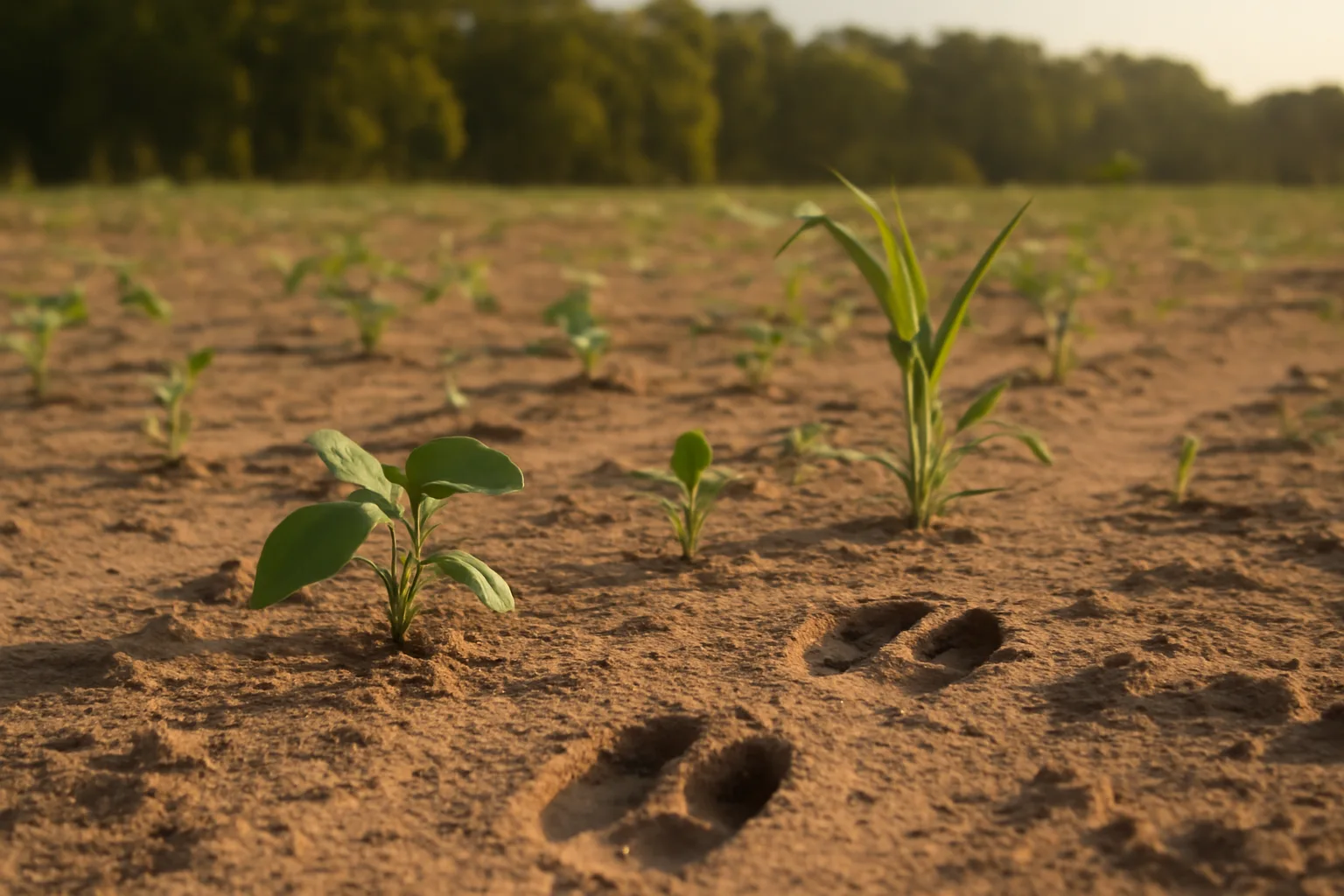
Sandy soil food plots struggle because water and nutrients drain fast and pH runs low. Fix it with a soil test, split fertilizer applications, more organic matter, and drought-tolerant species like cowpeas, buckwheat, cereal rye, and certain clovers. Skip nitrogen-hungry brassicas on pure sand unless you're irrigating or heavily amending.
why does sandy soil make food plots so hard to grow
Sand particles are big and round compared to silt or clay, so water runs straight through instead of clinging to soil particles. That means nutrients you apply, especially nitrogen and potassium, leach below the root zone before your plants can use them. USDA's soil health guidance describes sandy soils as having low water holding capacity and low cation exchange capacity (CEC), which is the soil's ability to hold onto positively charged nutrients like calcium, magnesium, and potassium [1]. Low CEC is the real enemy here, more than drought stress in most years. A heavy clay soil might hold a CEC of 20 to 30, while a sandy soil can sit at 3 to 5. That's a soil that just can't bank fertilizer for later. You put out 40 pounds of nitrogen and a hard rain two weeks later can wash a big chunk of it past the roots. Sandy ground also warms up and dries out fast in spring, which is actually a small advantage for early planting, but it means summer droughts hit harder. A plot that looked great in May can burn up by July if you picked the wrong species.
what is a food plot, and why does soil type matter this much
A food plot is a planted area, usually somewhere between a quarter acre and several acres, designed to give deer and other wildlife a reliable food source and to give hunters a place to observe or hunt over. It's not a lawn and it's not a row crop field, though the agronomy overlaps with both. Soil type matters because it decides what will actually survive long enough to feed anything. Cooperative extension programs consistently point to a soil test as the starting point for any planting decision, since it tells you your current pH, phosphorus, potassium, and organic matter percentage before you spend money on seed [2]. On sandy ground, that test also tells you how much lime and fertilizer you'll likely need to reapply mid-season, since a single spring application often isn't enough. If you skip the test, you're guessing. On clay you might get away with that guess for a season. On sand, an off guess on nitrogen can mean a stand that greens up for three weeks and then stalls.
when to plant food plots for deer on sandy ground
Timing follows the same regional windows as any food plot, but sandy soil gives you a little more flexibility in spring because it warms and drains fast enough to work early, and a little less flexibility in late summer because it dries out fast during hot stretches. For spring and summer annuals (soybeans, cowpeas, sunn hemp, grain sorghum), most extension guidance for the eastern and midwestern US points to planting after last frost date, generally April through June depending on latitude. Check your state's average last frost date through your local extension office before committing seed to the ground. For fall plots (brassicas, cereal grains, clover establishment), the target is 60 to 90 days before your average first frost, so the plants have time to mature before growth slows. In much of the whitetail range that lands in a window from late July through early September. On sandy soil specifically, a lot of growers plant fall brassicas and cereal grains right at the front edge of that window, or even slightly earlier, because the ground dries out fast and you want roots established before any late-summer dry spell. Don't plant into bone-dry sand and hope for rain. Check a 10-day forecast. If there's nothing coming, wait a few days rather than burn seed.
when to plant oats for deer, and do they work in sandy soil
Oats are typically planted in late summer to early fall, roughly August through September in most of the whitetail range, so they have time to establish before frost slows growth. Some hunters in the Deep South also plant oats in fall as a cool-season option that stays green through winter. Oats do reasonably well in sandy soil compared to some other cereal grains, mostly because they germinate fast and put down roots quickly, which helps them get ahead of the drainage problem before a dry spell hits. They're not deep-rooted like cereal rye, though, so on pure sand they'll show stress in an extended dry period faster than rye will. If you're choosing between the two on sandy ground, cereal rye (Secale cereale) generally out-performs oats for drought tolerance and will survive colder winters too. Oats are more palatable early on, which is why a lot of blends mix the two: oats for immediate attraction, rye for the long haul.
do deer eat clover, and does it grow in sandy soil
Yes, deer eat clover heavily, and it's one of the most consistently preferred forages across whitetail range. Clover regrows after grazing, stays palatable through most of the growing season, and offers protein levels that matter for antler growth and lactation. The catch on sandy soil is that clover, especially white clover (Trifolium repens), wants consistent moisture and doesn't love drought stress. Red clover (Trifolium pratense) has a deeper taproot and handles sandy, well-drained soil better than white clover does, which is why a lot of sandy-soil growers lean toward red clover or a red/white blend rather than pure white clover. Clover also needs decent soil fertility and a pH close to neutral, generally 6.0 to 7.0, to fix nitrogen efficiently through its root nodules [3]. On acidic sandy soil, which is common, lime is often the single biggest yield fix you can make before you ever touch a fertilizer bag. A soil test will tell you exactly how many tons per acre you need. On sandy ground, ag guidance often recommends applying lime a season ahead of planting since sand doesn't buffer pH changes the way clay does, so reactions happen faster but you still want time for the whole root zone to adjust. Bottom line: clover can absolutely work in sandy soil, but it wants more attention to pH and irrigation timing than it does on loam.
do deer eat sorghum, and is it a fit for sandy soil plots
Yes. Deer eat grain sorghum (milo) heads and will browse the plant itself, and it's a common food plot summer annual, often planted as a nurse crop alongside beans or as a standalone grain source that stands through fall and winter. Sorghum is actually one of the better options for sandy, drought-prone ground. It's more drought tolerant than corn, needs less nitrogen to produce a decent stand, and its root system handles low-moisture conditions better than most other grain crops used in food plots. A USDA NRCS plant guide notes sorghum's adaptation to lower rainfall and its wide tolerance range for soil types, including well-drained sandy soils [4]. If you're on sandy ground and corn keeps disappointing you, sorghum is worth a serious look as a replacement, especially in the southern half of whitetail range where summer heat and drought are a bigger problem than winter cold.
when to plant turnips for deer, and how do they perform in sand
Turnips are planted in late summer, generally 60 to 90 days before your first expected fall frost, so bulbs have time to size up before deer start hitting them hard after the first frost sweetens the leaves and roots. In most of the whitetail range that's a window from late July through early September. Turnips and other brassicas are nitrogen-hungry crops. That's their biggest weakness on sandy soil. They'll germinate fine and look decent early, but if nitrogen leaches past the root zone before the bulb-forming stage, you get a plot of skinny leaves and small bulbs instead of the tonnage you're after. On sandy ground, split your nitrogen application, some at planting and a second round 3 to 4 weeks later, rather than dumping it all up front. That gives the plant a chance to use the second dose before the first one has fully leached. USDA NRCS soil health guidance notes that low-CEC soils lose mobile nutrients like nitrate faster to leaching, which is the agronomic basis for splitting applications on sandy ground [1]. If your soil test comes back showing very low organic matter (under 2%) and no history of amendment, temper your expectations on a brassica plot the first year. It usually takes a season or two of adding organic matter, through cover crops or manure, before brassicas really take off on pure sand.
what do deer like to eat most, and does that change on sandy ground
Deer preference doesn't change by soil type, deer eat what tastes good and what's available regardless of what it's growing in, but what you can successfully grow on sandy soil narrows your realistic menu. Across most of the research and extension literature, the forages that show up again and again as high-preference, high-use food plot species are clover, soybeans, cowpeas, and brassica tops (before the ground freezes and deer switch to the bulbs) [2]. In agricultural areas, deer also hit soybean fields and corn hard, which is part of why food plots work best as a supplement to, not a replacement for, whatever ag or native browse is already in the area. On sandy soil, cowpeas and soybeans (with proper inoculant) tend to outperform clover in a dry year because they're annuals with a fast life cycle. They don't need to survive a full season of drought stress the way a perennial clover stand does. If you want a species picked specifically to survive your site's drainage and pH, a food plot seed guide built around soil-specific blends is a faster path than trial and error.
do deer like honey, and is that relevant to food plots at all
There's no real food plot connection here, and no wildlife agency or extension source treats honey as a deer attractant or forage. Deer are herbivores that browse leaves, forbs, mast, and grain; they don't seek out honey in the wild. Anecdotally, some hunters have used sweetened liquid attractants or molasses-based products on trail cameras or over bait sites, but that's a bait/attractant question, not a food plot question, and it runs straight into state baiting law. Baiting and supplemental feeding rules vary hard by state: some states allow it outright, some ban it everywhere, some allow it only outside certain disease-management zones (often tied to chronic wasting disease surveillance). Check your state wildlife agency's current regulations before using any bait or attractant product, food plot or otherwise. For sandy soil specifically, this question doesn't have a real agronomic answer because honey isn't a planted crop. If you came here looking for a sweetener to boost plot attraction, save the money and put it toward lime instead.
how do you fix low CEC and nutrient leaching in sandy soil plots
The core fix is organic matter. Adding organic matter through cover crops, composted manure, or leaving crop residue in place raises CEC over time by giving the soil more surface area and more negatively charged sites to hold onto nutrients. This doesn't happen in one season; USDA soil health guidance describes organic matter building as a slow, cumulative process tied to years of management, not a one-time fix [1]. In the meantime, here's what actually moves the needle in year one. Split fertilizer applications instead of one big dose. Two or three smaller applications spread across the growing season keep more nutrient available in the root zone at any given time, since less sits around waiting to leach. Lime according to your soil test, and expect to test more often on sandy ground since pH swings faster with less buffering capacity. Plant a cover crop like cereal rye or buckwheat in the off-season specifically to build organic matter and hold soil structure, even in years you're not planning to hunt over that plot. Use a fertilizer with some slow-release nitrogen component where budget allows, since sandy soil punishes fast-release straight urea harder than it punishes a blended product. Mulch or leave residue on the surface after planting where practical; bare sand loses moisture and organic matter fast to wind and sun.
which food plot species actually handle sandy soil well
| Cowpeas (iron clay) | High | Low (fixes own N) | Strong pick, fast growing summer annual | |
|---|---|---|---|---|
| Grain sorghum | High | Moderate | Better than corn on sand, less water needed | |
| Buckwheat | High | Low | Fast cover crop, builds soil, short season | |
| Cereal rye | High | Low-moderate | Best fall/winter cereal for drought and cold | |
| Red clover | Moderate-high | Fixes own N | Deeper root than white clover, better on sand | |
| White clover | Moderate | Fixes own N | Needs more consistent moisture than red | |
| Soybeans | Moderate | Low (with inoculant) | Good if deer pressure isn't too heavy early | |
| Turnips/brassicas | Low-moderate | High | Needs split N application, struggles on poor sand | |
| Corn | Low | High | Generally a poor sandy-soil choice without irrigation | If your plot is on truly light, blow-sand ground, lean toward the top rows of that table for the first year or two while you build organic matter. Save brassicas and corn for after you've gotten your organic matter percentage up and your fertility program dialed in. |
Some species tolerate drought and low fertility better than others. Here's a rough comparison based on general drought tolerance and fertility demand, useful as a starting filter before you check your own soil test numbers. | Species | Drought tolerance | Nitrogen demand | Notes for sandy soil |
should you irrigate a sandy soil food plot
Most hunters aren't going to run irrigation to a food plot, and that's fine, but it's worth knowing the tradeoff. Sandy soil's low water holding capacity means the exact same rainfall that would carry a clay-soil plot through a two-week dry spell might only carry a sandy plot through four or five days before plants show stress. If you have any option to add water, even a temporary sprinkler run off a well or pond during establishment (the first 2 to 3 weeks after planting), that's the highest-leverage window to use it. Established plants with roots down 6 to 12 inches handle a dry spell far better than a seedling still working on its first inch of root depth. Realistically, most food plot ground doesn't have irrigation infrastructure, and running it isn't worth the cost for a few acres of deer forage. The better return on investment is picking species that don't need it (see the table above) and timing your planting around actual soil moisture rather than the calendar. If the sand is bone dry, wait for a rain in the forecast rather than planting on faith.
how do you build a fertility plan specific to your sandy plot
Start with the soil test, every time, no exceptions. Your local cooperative extension office runs soil tests for anywhere from about $8 to $20 per sample in most states, and turnaround is usually one to two weeks. That test is the actual authority on how much lime and fertilizer your specific dirt needs; nobody writing a general guide, including this one, can tell you your exact numbers without it. Once you have results, a few sandy-soil-specific adjustments to the standard recommendation are worth making: split your nitrogen into two or three applications instead of one, lean slightly heavier on potassium since it leaches almost as fast as nitrogen on sand, and don't skip the lime just because the plot 'looks okay,' since brassicas and clover in particular will underperform silently on low pH ground for a year or two before you notice. If you want a starting framework built around your specific soil test numbers, acreage, and region rather than working it out species by species, that's exactly the kind of thing a Custom Food Plot Plan is built for. It's a $99 one-time plan, and it's general planning guidance built from your inputs, not a replacement for your soil test lab's specific lime and fertilizer recommendation, which stays the final word on your dirt. For picking the actual seed mix once your fertility plan is set, a look at deer food plot seed options suited to lighter soils will save you some expensive trial and error.
what mistakes do people make most often on sandy soil plots
The single biggest mistake is applying all the fertilizer at once and assuming it'll last the season. On sandy ground it often doesn't; a chunk of it is gone within a few weeks of a hard rain. Second most common: skipping lime because the plot grew something last year. Low pH doesn't always look dramatic, it usually just shows up as slow growth and lower yield, easy to blame on weather instead. Third: picking species based on what worked at a buddy's place on heavier ground. Corn and heavy brassica programs are a rough fit for pure sand without real fertility investment and often irrigation. A deer food plots overview covering species selection by soil type is worth a look before you order seed. Fourth: planting too shallow or too deep because sandy soil handles seed depth differently than clay. Small-seeded species like clover and brassicas want a shallow, firm seedbed on sand, roughly a quarter inch, since sand doesn't hold moisture near the surface the way clay does; too deep and they never break through, too shallow and they dry out before germinating.
Frequently asked questions
Do deer eat sorghum planted in food plots?
Yes. Deer eat both the grain heads and browse the plant, and grain sorghum is a common summer annual food plot crop. It's notably more drought tolerant than corn and needs less nitrogen, which makes it a solid choice on sandy, low-fertility soils where corn tends to struggle without irrigation.
Do deer like clover in food plots?
Yes, clover is one of the most consistently preferred food plot forages for whitetail deer, offering high protein and season-long regrowth after grazing. On sandy soil, red clover generally outperforms white clover because of its deeper taproot, though both need a pH near 6.0 to 7.0 to fix nitrogen efficiently.
When should you plant food plots for deer?
Spring/summer annuals like soybeans and cowpeas go in after your last frost date, typically April through June. Fall plots (brassicas, cereal grains, clover) go in 60 to 90 days before your first fall frost, usually late July through early September in most of the whitetail range. Check your local extension office for exact frost dates.
When is the best time to plant oats for deer?
Oats are usually planted late summer to early fall, roughly August through September, so they establish before frost slows growth. They germinate fast and work reasonably well on sandy soil, though they're less drought-tolerant long-term than cereal rye, which is why many blends mix the two.
When should turnips be planted for deer food plots?
Plant turnips 60 to 90 days before your area's average first fall frost, generally late July through early September. This gives bulbs time to size up before frost sweetens them and triggers heavier deer use. Turnips are nitrogen-hungry, so on sandy soil, split your nitrogen application to reduce leaching losses.
What exactly is a food plot?
A food plot is a planted area, usually a quarter acre to several acres, established specifically to provide a reliable wildlife food source and give hunters a place to hunt or observe deer activity. It uses standard agronomic practices (soil testing, fertilizing, species selection) applied to a wildlife management goal rather than commercial crop production.
What is a deer's favorite food overall?
There's no single universal favorite; deer preference shifts by season, region, and availability. Extension and wildlife research consistently show clover, soybeans, cowpeas, acorns, and brassica tops rank as high-preference forages across much of the whitetail range, but local ag crops and native browse often get hit just as hard.
Do deer like honey or sweet attractants?
No wildlife agency or extension source treats honey as deer forage or a meaningful attractant; deer are browsers that eat leaves, forbs, mast, and grain, not honey. Some hunters use molasses-based liquid attractants, but that's a baiting question governed by state law, not a food plot species question.
Why do food plots struggle in sandy soil specifically?
Sandy soil has low water holding capacity and low cation exchange capacity (CEC), meaning it can't hold water or nutrients like nitrogen and potassium near the root zone. Fertilizer leaches past the roots faster than in clay or loam soil, and pH tends to run more acidic, both of which limit plant growth without extra management.
What food plot species grow best in sandy soil?
Cowpeas, grain sorghum, buckwheat, cereal rye, and red clover generally handle sandy, drought-prone, low-fertility ground better than corn, white clover, or brassicas. Nitrogen-fixing legumes and deep-rooted species are the safest bets until you've built up organic matter and fertility over a season or two.
Do you need to fertilize sandy soil food plots differently?
Yes. Split nitrogen into two or three smaller applications instead of one large dose, since sandy soil leaches nitrogen fast. Test soil pH more often since sand has less buffering capacity, and don't skip lime, since low pH quietly suppresses yield on clover and brassicas even when the plot looks fine above ground.
Can you fix sandy soil for food plots long term?
Yes, mainly by building organic matter through cover crops (buckwheat, cereal rye), composted manure, and leaving crop residue in place, which raises CEC and water holding capacity over multiple seasons. This isn't a one-time fix; USDA soil health guidance treats it as a gradual, multi-year improvement process.
Sources
- USDA NRCS, Soil Health Key Points: sandy soils have low water holding capacity and low cation exchange capacity, and organic matter builds over years of management
- Mississippi State University Extension Publication 2665, Establishing and Managing Wildlife Food Plots: soil testing is the recommended starting point for food plot planning and species like clover and soybeans are high-preference deer forages
- University of Georgia Extension Circular 858, Soil Fertility and Nutrient Management for Forage Legumes: clover needs a pH near 6.0 to 7.0 to fix nitrogen efficiently
- USDA NRCS Plant Guide, Grain Sorghum (Sorghum bicolor): grain sorghum is adapted to lower rainfall and tolerates a wide range of soil types including well-drained sandy soils
- University of Georgia Extension: Turnips and other brassicas can be planted for deer food plots with specific timing recommendations that affect their performance in different soil types, including sandy soils.