Last updated 2026-07-26
TL;DR
Fertilizing after planting means top-dressing nitrogen once seedlings are up, usually 2 to 4 inches tall, especially on brassicas and grasses like oats. Legumes like clover need less nitrogen but still want potassium and phosphorus based on a soil test. Never guess rates; a $15 to $20 soil test tells you exactly what your dirt is short on.
do you need to fertilize food plots after planting, or just before?
Both, usually. Most food plot programs put down the bulk of phosphorus and potassium before or at planting, worked into the seedbed where roots can reach it. Nitrogen is different. A lot of it leaches or volatilizes if you dump it all preplant, especially on sandy or high-rainfall ground, so a second application after emergence often makes more sense for nitrogen-hungry plants. The soil test you pulled (or should pull) tells you the starting point. Extension programs like the University of Tennessee's soil testing lab break recommendations into pounds of N-P-K per acre based on your crop and your current soil levels. If you skipped the test, you're guessing, and fertilizer is not cheap enough to guess with. A basic soil test through a land-grant university lab runs somewhere in the $7 to $20 range depending on the state, and most turn results around in one to two weeks [1]. For brassicas (turnips, radishes, rape) and cereal grains (oats, wheat, rye), a post-emergence nitrogen top-dress is close to standard practice. For clover and other legumes, you generally don't need much nitrogen at all after planting because the plant fixes its own once it's nodulated. What clover does need, often more than people realize, is potassium and sometimes boron, which extension guides flag as commonly deficient in food plot soils [2].
when should you top-dress nitrogen after planting a food plot?
The general window is once seedlings are established, roughly the 2 to 4 leaf stage or 2 to 4 inches tall, not the day you broadcast seed. Putting nitrogen down before germination on a broadcast plot just feeds weeds and washes off if it rains. For brassicas planted in late summer, that means a top-dress about 3 to 4 weeks after planting, once you can see rows or a solid stand. For fall cereal grains like oats or wheat, many growers split nitrogen: some at planting, the rest 3 to 5 weeks later as the crop tillers out. Purdue Extension's small grains guidance describes split nitrogen applications as standard for improving yield and reducing lodging risk in cereal grains, though that guidance is written for grain farmers, not food plotters, so treat it as a directional principle rather than a plot-specific rate [3]. Don't top-dress into a drought. Nitrogen needs moisture to move into the root zone. If you're in a dry stretch, wait for a rain forecast within a few days, or hold off entirely rather than let expensive urea sit on top of dry soil and volatilize into the air, which is a real loss pathway for surface-applied urea documented by Iowa State University Extension research [4].
how much nitrogen does a food plot actually need after planting?
| Brassicas (turnips, radish) | Moderate to high, 30-50 lbs/acre | 3-4 weeks after emergence | |
|---|---|---|---|
| Cereal grains (oats, wheat, rye) | Moderate, split application common | 3-5 weeks after emergence, tillering stage | |
| Clover (red, white, ladino) | Low to none, focus on K and boron | Rarely needed; check soil test | |
| Chicory | Low to moderate | Only if soil test shows deficiency | |
| Brassica/cereal blends | Moderate | Match to the higher-demand species | These are starting ranges, not prescriptions. Your soil test lab is the actual authority here, not a table on a website. Soil pH matters too: if your pH is below about 5.8 to 6.0, nitrogen and other nutrients won't be used efficiently no matter how much you apply, and most extension labs recommend correcting lime deficits before or alongside fertility work. |
It depends entirely on species, and this is where a soil test earns its keep. As a rough range, brassica and cereal grain plots often call for 30 to 60 pounds of actual nitrogen per acre split between planting and a post-emergence application, per extension crop guides for forage brassicas and small grains [3]. Clover and other legumes typically need only a small starter dose of N, often 20 to 30 pounds per acre or less at planting, because a healthy nodulated stand fixes the rest from the air. Here's a simple comparison of what different plot types generally need post-planting, based on university extension forage guidance: | Plot type | Post-emergence N need | Typical top-dress timing |
what is a food plot, and why does post-planting fertility matter so much?
A food plot is a planted area on hunting land, usually somewhere between a quarter acre and a few acres, seeded with forage or grain to attract and hold deer and other wildlife. It's part agriculture, part habitat management. Most state wildlife agencies and extension services treat food plots as a wildlife management tool distinct from commercial row-crop farming, though the agronomy underneath it is the same soil chemistry. Post-planting fertility matters because a thin, nitrogen-starved plot produces less tonnage and lower-protein forage, which somewhat defeats the point. Deer plots aren't judged on bushels per acre, but a stressed, yellowing stand of oats or brassicas is going to get browsed down and killed faster than a plot with the nutrients to keep pushing new growth through fall. If you want a plan built around your specific soil test and region instead of general ranges, that's exactly the kind of thing a custom food plot plan is meant to solve, matching species, rates, and timing to your dirt rather than a one-size table. For background on picking species before you ever get to the fertility question, see food plot whitetail and deer food plots.
when should you plant food plots for deer in the first place?
Timing splits into two seasons: spring/summer plots (usually warm-season annuals or perennial clover establishment) and late-summer/fall plots (brassicas, cereal grains, annual clovers). The right window depends heavily on your USDA plant hardiness zone and first-frost date, which the USDA's interactive hardiness zone map lets you look up by zip code. As a general rule, fall brassica and cereal grain plots go in 60 to 90 days before your average first frost, giving turnips and radishes enough time to bulb up and oats time to establish before cold shuts growth down. In much of the Midwest and upper South, that lands somewhere in mid-August through early September. In the Deep South and lower Southeast, growers often push into September or even October because frost comes so much later. Spring and summer plots, whether it's clover, chicory, or warm-season annuals like soybeans or sorghum, go in after your last frost date, once soil temperatures have warmed enough for germination. Extension planting guides for forage soybeans, for example, generally recommend soil temperatures of 60°F or higher at planting depth [5]. Check your seasonal calendars for your specific zone before locking in a date.
when should you plant oats for deer?
Oats are a fall-planted cereal grain in most whitetail country, going in the ground 6 to 10 weeks before your first hard frost so they have time to establish a good leafy stand before cold slows them down. That typically lands in the August to early September window across the Midwest and mid-South, per land-grant extension small grains planting guides [3]. Oats are cold-tolerant but not indestructible. They'll take a light frost fine and often get sweeter (more palatable to deer) after a frost converts starches to sugars, but a hard freeze in the teens will eventually kill the plant back. That's actually part of the appeal: oats give you a fast-growing, highly attractive fall food source, then fade out over winter rather than persisting as a maintenance headache. If you're top-dressing nitrogen on an oat plot, the tillering stage (when the plant starts putting out multiple shoots from the base) is the classic timing window extension agronomists point to for a nitrogen boost, generally 3 to 5 weeks after planting [3].
when should you plant turnips for deer?
Turnips go in the ground on the same general calendar as other brassicas: roughly 60 to 90 days before your first expected frost. That gives the plant time to build leaf mass and, more importantly for deer attraction later in the season, bulb up a root that deer will dig into once cold weather sweetens it. In much of the whitetail belt that means planting turnips sometime between mid-July in the far north and mid-September in warmer southern zones. Seed depth matters more than people expect: turnip seed is tiny and only needs to go about a quarter inch deep, so a light drag or cultipack after broadcasting is usually enough, no need to bury it. Turnips are moderate nitrogen users. A post-emergence top-dress once plants have 3 to 4 true leaves helps push bulb development, but don't overdo phosphorus if your soil test already shows adequate levels; excess P doesn't help and it's money down the drain. For species pairing ideas, deer food plot seed covers common brassica blends.
do deer eat sorghum?
Yes, deer will eat grain sorghum (milo), both the leaves as browse when young and the grain heads once they mature and dry down, especially in fall and winter when other food sources thin out. It's more commonly planted as a summer annual for cover and a standing grain source than as a primary attractant like clover or brassicas, though it does get used in food plot blends, particularly in the South. Sorghum is a warm-season crop, planted after last frost once soil temperatures are reliably above 60-65°F, similar timing to corn. It's drought-tolerant compared to corn, which is part of why it shows up in food plot mixes on drier or sandier ground where corn struggles. One caution: sorghum and sudangrass species can develop prussic acid (cyanide compound) risk in young, stressed, or frost-damaged growth, a concern documented in livestock forage guidance from extension agronomy programs. That risk is mainly a livestock grazing management issue rather than a documented deer health concern, but it's worth knowing if you're managing a mixed-use field.
do deer eat clover, and do deer actually like it?
Yes, and clover is arguably the single most reliable food plot forage across whitetail range. Deer eat clover heavily through spring, summer, and fall, and it regrows after grazing pressure better than almost anything else you can plant, which is exactly why it shows up in nearly every food plot recommendation list from extension wildlife programs [6]. Clover's appeal comes down to protein and digestibility. Extension forage analyses commonly show clover crude protein content in the 20 to 30 percent range depending on variety, maturity, and growing conditions, well above what mature standing corn or many warm-season grasses offer [6]. That protein matters most in spring and summer during antler growth and lactation, which is a big reason clover perennial plots anchor so many food plot systems. The fertility catch with clover: because it fixes its own nitrogen, over-applying N after planting doesn't help much and can actually favor weed and grass competition over the clover itself. Extension guidance generally points clover growers toward potassium, phosphorus, and boron maintenance based on soil test results rather than routine nitrogen top-dressing [2]. If your soil test comes back short on K, that's the nutrient to prioritize post-establishment, not nitrogen.
what are deer's favorite foods, and does that change what you fertilize for?
There's no single universal answer because deer diet shifts by season, region, and what's locally available, but extension and state wildlife agency food habit studies consistently point to a short list: acorns and other hard mast, clover and other legumes, soybeans, and agricultural grains like corn when available [6] [7]. Acorns in particular are a preferred fall food where oaks are present, often pulling deer off planted plots entirely during a heavy mast year, a pattern state wildlife agencies note when explaining inconsistent plot use in good acorn years [7]. What this means for fertility decisions: you're not trying to out-compete acorns, you're trying to give deer a reliable, high-quality option on the years and in the windows when natural mast is scarce or has already dropped. That's part of why a lot of food plot programs mix perennial clover (spring/summer draw) with fall brassicas or cereal grains (late-season draw), rather than betting on one species. Fertilizing after planting supports this goal directly: a well-fed, actively growing plot produces more tonnage and higher protein forage than a plot running on preplant fertilizer alone, particularly by late fall when the initial application has been used up or leached. For a broader species comparison, see deer food plot seed and food plot seed.
do deer like honey, and does it belong in a food plot conversation?
Deer aren't drawn to honey itself in any meaningful field sense, and there's no extension or wildlife agency research supporting honey as a deer attractant or feed additive. This question likely gets asked because commercial deer attractant sprays and mineral licks sometimes use sweet or scent-based additives, but that's a different category from food plot planting and fertility entirely. What deer are documented to respond to is sugar content in forage itself, which is real and relevant to fertility timing. Brassicas and some cereal grains convert starches to sugars after a frost, which is why turnips and oats often get hit hard by deer in late fall after a cold snap, not because of any additive, but because the plant's own carbohydrate chemistry changed. If you're checking state rules before using any attractant, mineral, or supplemental feed product, note that baiting and feeding regulations vary widely by state and sometimes by county within a state, and some states restrict it entirely during hunting season. Check your state wildlife agency's current regulations before using anything beyond a planted food plot, since a legitimate food plot is treated differently under most state law than bait or mineral placement.
what equipment do you need to fertilize a food plot after planting?
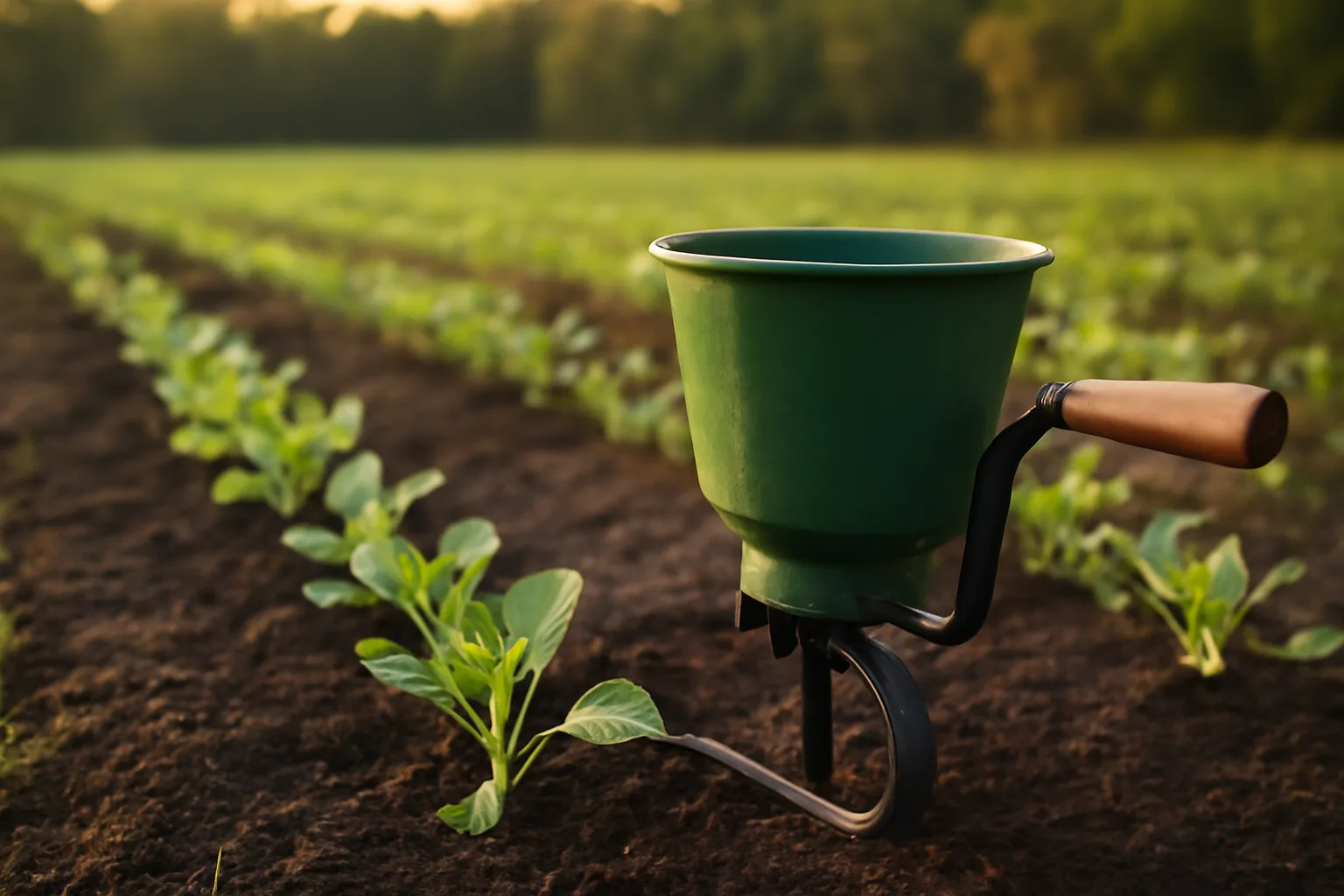
For small plots, a handheld or backpack broadcast spreader works fine and costs somewhere in the $40 to $150 range depending on capacity and build quality. For anything over an acre or two, a tow-behind ATV or UTV spreader speeds things up considerably and gives more even coverage, generally running $150 to $600 depending on hopper size and spread width. Calibration matters more than the spreader itself. A spreader set wrong can put down double or half the intended rate, which either wastes money or under-feeds the crop. Most extension equipment guides recommend a simple catch-pan calibration test (running the spreader over a measured area with a known amount of product and checking actual coverage) rather than trusting the dial settings printed on the hopper, since settings vary by product density and are only approximate. For granular top-dress applications, timing the pass for right before rain (or irrigating if you can) helps move nitrogen into the root zone instead of losing it to volatilization off the leaf and soil surface, a loss pathway that's well documented for surface-applied urea in particular [4]. For gear comparisons and setups by plot size, see equipment and methods resources.
Frequently asked questions
Do deer eat sorghum?
Yes, deer browse young sorghum leaves and eat the mature grain heads, especially in fall and winter. It's more common as a summer annual grain crop in food plot blends than a primary attractant like clover. Watch for prussic acid risk in young, frost-damaged sorghum growth, a documented concern in extension livestock forage guidance.
Do deer eat clover?
Yes, clover is one of the most heavily used food plot forages across whitetail range, eaten spring through fall. Extension forage data commonly shows clover crude protein in the 20 to 30 percent range, which is why it's a staple in perennial food plot systems, particularly for spring antler growth and summer lactation needs.
Do deer like clover more than other food plot options?
Clover ranks near the top of most preference studies and extension recommendations because of its protein content, regrowth after grazing, and long season of availability. That said, deer preference shifts seasonally; acorns and soft mast often pull deer away from clover plots during heavy mast years, per state wildlife agency observations.
When should you plant food plots for deer?
It depends on species and your frost dates. Fall brassicas and cereal grains go in 60 to 90 days before first frost, often mid-July through mid-September depending on zone. Spring and summer plots (clover establishment, warm-season annuals) go in after last frost once soil has warmed. Check USDA hardiness zone maps for your specific dates.
When should you plant oats for deer?
Plant oats 6 to 10 weeks before your average first frost, typically August through early September across the Midwest and mid-South. Oats tolerate light frost and often get sweeter afterward, but a hard freeze eventually kills the plant back, which is normal and expected for this fall annual.
When should you plant turnips for deer?
Plant turnips 60 to 90 days before your first expected frost, roughly mid-July in northern zones to mid-September further south. Seed only needs about a quarter inch of soil depth. Bulbing and sweetening happen after cooler fall temperatures arrive, which is when deer use typically increases.
What is a food plot?
A food plot is a planted area on hunting or managed land, usually a quarter acre to several acres, seeded with forage crops like clover, brassicas, or cereal grains to provide wildlife nutrition and hunting opportunity. It functions as a wildlife management practice distinct from commercial row-crop farming, though it uses the same soil and fertility principles.
What are deer's favorite foods?
Diet shifts by season and region, but acorns and other hard mast, clover and legumes, soybeans, and available agricultural grain consistently rank as preferred deer foods in extension and state wildlife agency food habit studies. Acorns often take priority over planted plots during a heavy mast fall.
Do deer like honey?
There's no research supporting honey itself as a deer attractant, and it has no real place in food plot fertility or planning. Deer do respond to natural sugar increases in forage, like turnips or oats sweetening after a frost, but that's plant carbohydrate chemistry, not anything related to honey.
How soon after planting should you fertilize a food plot?
Wait until seedlings are established, generally 2 to 4 inches tall or the 2 to 4 leaf stage, before top-dressing nitrogen. Applying nitrogen before germination mostly feeds weeds and risks washing away. For split-nitrogen crops like oats, a second application often comes 3 to 5 weeks after planting.
Should I fertilize clover food plots after planting?
Clover needs little to no additional nitrogen after establishment because it fixes its own nitrogen once nodulated. Focus post-planting fertility on potassium, phosphorus, and boron based on your soil test results, since these are the nutrients most commonly deficient in clover plots according to extension forage guidance.
What's the best fertilizer to use after planting a food plot?
There's no single best fertilizer; the right blend depends on your soil test results and species. Brassicas and cereals typically want a nitrogen top-dress like urea or ammonium nitrate. Clover wants potassium and boron more than nitrogen. Always match the product and rate to your specific soil test, not a generic recommendation.
Can you over-fertilize a food plot after planting?
Yes. Excess nitrogen on clover can favor grass and weed competition over the clover itself, and excess phosphorus beyond what soil tests show as needed doesn't add growth benefit, it just wastes money and can run off into nearby water. Match rates to soil test recommendations rather than applying extra for insurance.
Sources
- Penn State Extension, Agricultural Analytical Services Lab soil test fees: Basic soil test costs and turnaround time through a land-grant lab
- University of Kentucky Extension, Clover fertility and boron deficiency guidance: Clover fertility needs focus on potassium and boron rather than nitrogen
- Purdue University Extension, Wheat and small grains nitrogen management: Split nitrogen applications are standard practice for small grains including oats
- Iowa State University Extension, Ammonia volatilization from surface-applied urea: Surface-applied urea nitrogen can be lost to volatilization, especially without incorporation or rain
- Iowa State University Extension, Soybean planting date and soil temperature guidance: Warm-season legume planting generally requires soil temperatures around 60°F or higher
- Mississippi State University Extension, Food plot forages and deer nutrition: Clover crude protein content and its role as a preferred, high-protein food plot forage
- Pennsylvania Game Commission, Deer management and mast crop information: Acorn and mast availability affects deer use of planted food plots in a given fall