Last updated 2026-07-26
TL;DR
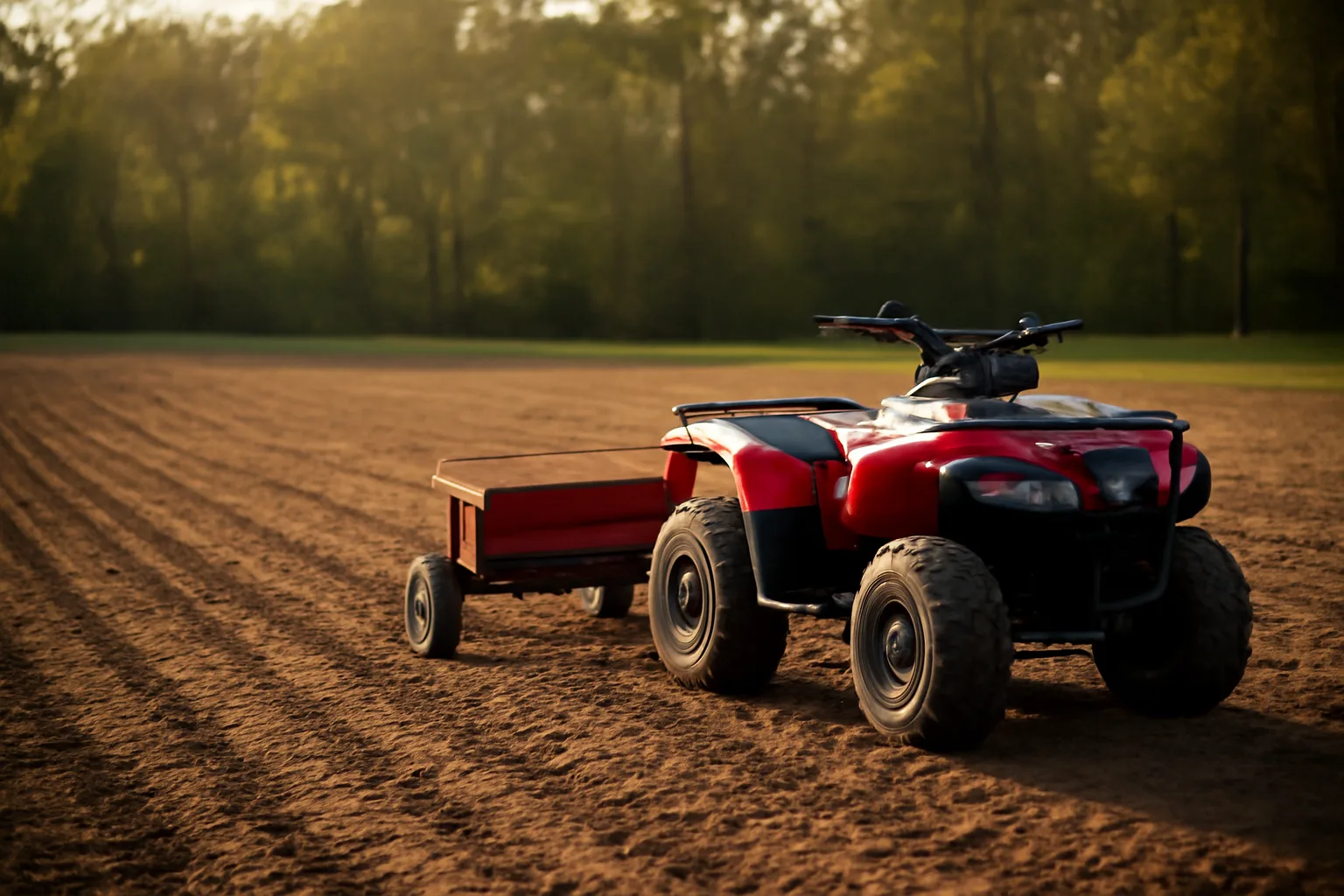
An ATV food plot seeder is a small broadcast, drop, or no-till drill unit that mounts behind an ATV or UTV to plant food plots up to about 5 acres. Broadcast spreaders run $100-$400, tow-behind drills run $1,500-$4,000+. Match seed depth to species: clover and turnips need surface contact, oats and sorghum need 0.5-2 inches of soil.
What is a food plot, and why do you need a seeder for it?
A food plot is a planted patch of forage or grain, usually somewhere between a quarter acre and a few acres, put in specifically to feed and hold deer on a property. Think clover, brassicas, cereal grains, or a soybean/legume blend planted in a cleared, tilled, or sprayed opening in the woods or field edge. You don't strictly need a seeder. Plenty of small plots get planted by hand, walking rows with a bag of seed and a bucket. But once you're past a half acre, hand seeding gets uneven fast, and uneven seeding means bare patches, weed takeover, and wasted seed. An ATV food plot seeder solves that by giving you a consistent, calibrated rate across the whole plot in a fraction of the time. The other reason people move to an ATV seeder is access. A lot of hunting ground has plots tucked into places a truck or tractor can't reach: narrow logging roads, ridge-top clearings, river-bottom benches. An ATV or UTV with a small seeder on the back can get into those spots a full-size tractor never will. For a broader look at plot planning basics before you buy equipment, see food plot whitetail.
What types of ATV food plot seeders are there, and which one should you buy?
| Broadcast spreader | Clover, brassicas, chicory | $100-$400 | None (surface only) | |
|---|---|---|---|---|
| Drop/gravity drill | Oats, wheat, small grains | $800-$2,500 | Basic, adjustable gate | |
| No-till drill | Any species, no-till ground | $1,500-$4,000+ | Precise, adjustable depth | If your plots are small (under an acre), on tilled or worked ground, and mostly clover or brassica, a broadcast spreader is not a compromise. It's the right tool. Save the no-till drill money for when you've got multiple bigger plots or ground you can't or don't want to till. |
There are three basic categories, and they solve different problems. Broadcast spreaders are the cheapest and most common. They throw seed (and sometimes lime or fertilizer) in a fan pattern behind the ATV, usually 6 to 20 feet wide depending on the unit and ground speed. They're great for small-seeded species that just need surface contact and a light drag or roller afterward: clover, chicory, brassicas like turnips and radishes. A decent tow-behind or hitch-mount broadcast spreader runs $100 to $400. Drop seeders (sometimes called gravity drills or box seeders) release seed straight down through a metering gate into a furrow or onto tilled soil, often followed by a press wheel. These give you tighter control over seeding rate and better seed-to-soil contact, which matters more for grains like oats, wheat, and sorghum that want to be planted at a real depth rather than just scattered on top. Expect $800 to $2,500 for a decent ATV-pulled unit. No-till drills are the step up. They cut a slot through existing sod or crop residue, drop seed at a set depth, and close the furrow, all in one pass, without plowing first. This is the category that actually lets you skip tillage entirely on compatible ground. ATV-pull no-till drills (Genesis, Firminator-style units scaled down, Whitetail Institute's Imperial line, and others) run $1,500 to $4,000+, and some UTV-rated versions push higher. Full-size tractor no-till drills cost far more, often $8,000 to $20,000+, which is part of why the ATV-scale versions have a real following on smaller hunting parcels. | Seeder type | Best for | Typical cost | Seed depth control |
When should you plant food plots for deer?
Timing depends entirely on your zone and what you're planting, but there are two broad windows: spring plots (warm-season, planted after last frost) and fall plots (cool-season, planted 60-90 days before your first hard frost). Spring/summer plantings, things like soybeans, cowpeas, and warm-season grain blends, generally go in after soil temps are reliably above 50-60°F and frost risk has passed. In much of the whitetail range that's late April through June, later up north, earlier in the Deep South. Fall plantings are the bigger draw for most hunters because they line up with hunting season. Cool-season plots (clover, brassicas, cereal grains) are typically planted from late July through September depending on latitude, timed so plants establish before the first freeze. USDA's plant hardiness zone data and your state extension's frost date tables are the most reliable way to nail this down for your specific location. A rough rule extension agronomists use: for brassicas and cereal grains, count back 60-90 days from your average first fall frost date. For clover, you want 6-8 weeks of growth before frost so plants can root in before winter dormancy. If you're planting into an established seedbed with a no-till drill, you generally have a bit more flexibility on timing than broadcasting bare ground, since the drill doesn't depend on rain to wash seed into contact with soil. For a full breakdown by region, deer food plots covers zone-specific windows in more depth.
When should you plant oats for deer?
Oats are a cool-season cereal grain, so they go in during the same late-summer to early-fall window as other fall plantings, roughly August through mid-September in northern and mid-latitude states, and into October in the South [1]. Oats germinate fast (5-10 days in warm soil) and put on a lot of green growth quickly, which is why they're a staple in fall attraction blends. They're also cold-tolerant compared to some grains but will still winterkill in hard freezes north of about zone 6, so in cold climates oats are often treated as a fall-only attractant rather than something that'll carry a plot through winter. Plant oats about 1 to 1.5 inches deep. A drop seeder or no-till drill gets you that depth reliably; broadcasting oats on the surface and dragging works too, but germination is less even because seed-to-soil contact varies. Oats are a good test case for why depth control matters: too shallow and they dry out before germinating, too deep and emergence stalls.
When should you plant turnips for deer?
Turnips go in mid-summer to late summer, generally 80-90 days before your first expected fall frost, since they need that runway to bulb up before deer start hitting them hard in late fall and winter [1]. In much of the whitetail's range that puts turnip planting somewhere between late July and mid-August. Plant too late and you get leafy growth without much root development, which matters because a lot of the winter attraction value in brassicas comes from deer switching to the bulbs once frost sweetens the starches. Turnip seed is tiny and only needs to go about a quarter inch deep, essentially on the surface with light soil contact. This is squarely broadcast-spreader territory. Cultipacking or dragging a chain behind the ATV after broadcasting firms up seed-to-soil contact without burying seed too deep. Don't run a drop seeder set for grain depth on turnips; you'll bury them too deep and germination will suffer.
Do deer eat sorghum, and is it worth planting?
Yes, deer eat sorghum, both the standing grain heads and the foliage, though it's more of a fall/winter standing-grain food source than a primary summer forage [2]. Grain sorghum (milo) is commonly planted as a component of wildlife food plot blends specifically because the seed heads persist standing through winter, giving deer and other wildlife a food source after most green forage has died back or gone dormant. Sorghum is drought-tolerant and does well in the same warm-season window as corn and soybeans, planted after soil warms in late spring. It's not usually the main draw of a plot on its own; it works better mixed with legumes or as a screening/standing-grain component in a larger plot design. Seeding depth for sorghum runs about 1 to 1.5 inches, similar to corn but with a lighter seed, so a drop seeder or drill with a small-seed setting works better than a broadcast spreader alone.
Do deer like clover, and how is it different from other plot species?
Yes, clover is one of the most consistently preferred food plot forages for whitetail deer, and it's also one of the most forgiving to establish [3]. White clover varieties (Durana, Ladino) and red clover are the two most common types in food plot mixes. Clover offers high protein content, often 20-30% crude protein in vegetative growth, which matters most in spring and summer when does are lactating and bucks are growing antlers [3]. Clover's other advantage is that it's a perennial in most of its range, meaning a well-established stand can produce for 3-5 years with proper mowing and fertility maintenance, versus replanting annuals every season. That makes it one of the better returns on seeder time and fuel, since you're not running equipment across that plot every year. Clover seed is small and shallow-planted, about a quarter inch deep or less, which again puts it in broadcast-spreader territory. Good seed-to-soil contact matters more than depth here; a cultipacker pass after broadcasting is standard practice. If you're deciding between clover and a brassica blend for a given plot, deer food plot seed has more on matching species to plot conditions.
What are deer's favorite foods, and do plot species match up?
Deer diets shift by season and region, but extension research and forage preference studies consistently rank a handful of foods high: acorns (especially white oak family), soybeans, clover, and various browse species like greenbrier and honeysuckle depending on region [4]. Among planted food plot species, soybeans and clover consistently show up near the top of preference studies, with brassicas and cereal grains rated highly in fall/winter when other options are scarce [3] [4]. There's no single universal "favorite" because preference depends on what else is available. A deer in an agricultural landscape with standing soybeans nearby doesn't need your plot the way a deer in solid timber with no ag around does. That's actually a useful planning lesson: if you're the only food source for miles, almost anything green and nutritious will get used. If you're competing with a neighbor's bean field, your plot needs to offer something different, like standing grain in December when the beans are picked, or a perennial clover stand that's up and growing before ag fields green up in spring.
Do deer eat honey, or is that a myth?
No, deer don't eat honey in any meaningful sense as part of natural foraging behavior. Deer are herbivores built to digest plant fiber through a four-chamber rumen system; honey isn't part of that diet and there's no wildlife agency or extension guidance recommending it as an attractant [5]. This question likely comes up because of confusion with commercial "honey hole" branding on mineral or attractant products, or because deer will occasionally investigate sweet-smelling substances out of curiosity, not because it's a food source. Worth noting: many states restrict or ban baiting and feeding deer outright, and rules on what counts as bait (including sweet attractants, salt, and mineral licks) vary significantly by state. Always check your state wildlife agency's current baiting and feeding regulations before using any attractant, sweet or otherwise, since a food plot itself is generally legal but supplemental feeding or bait piles often are not treated the same way under state law .
How do you set up and calibrate an ATV food plot seeder?
Calibration is the step most people skip, and it's the reason half the plots you see online look patchy. Every seeder, broadcast or drop, has a rate setting tied to ground speed and seed size. Skip calibration and you're guessing. For broadcast spreaders: check the manufacturer's rate chart for your seed type (clover, brassica, and cereal grain settings are usually different gate openings), then do a bag test. Run the spreader over a tarp or measured area at your planned ATV speed, weigh what came out, and compare it to your target rate per acre. Adjust the gate and retest. It takes 20 minutes and saves you from putting down triple the recommended rate, which wastes seed money and can actually reduce stand quality from overcrowding. For drop seeders and no-till drills: most have a seed plate or metering wheel matched to seed size (small clover seed vs. larger oat or bean seed needs a different plate/setting). Get this wrong and you'll either starve the plot or clog the unit. Manufacturer manuals include a rate chart by ground speed and gear setting; use it as a starting point, then do a short test pass and count seeds per foot of row. Ground speed matters more than people think. Most ATV seeders are calibrated for 3-5 mph. Go faster and rate drops and coverage gets spotty; go slower and you're wasting fuel and time without gaining accuracy. A steady, consistent speed matters more than hitting an exact number. One more thing worth doing before you ever hook up the seeder: pull a soil test. Your local cooperative extension office runs soil tests for a small fee, typically $10-$20, and the results tell you exactly how much lime and fertilizer your plot needs. Skip this and even perfect seeding won't fix a pH problem; most food plot species want soil pH in the 6.0-7.0 range, and a lot of remote hunting ground runs more acidic than that without lime.
What size plot and terrain actually work with an ATV seeder?
ATV seeders are built for the 0.25 to 5 acre range. Below a quarter acre, honestly, hand seeding or a hand-crank spreader is faster to set up than hooking up a tow-behind unit. Above 5 acres, you're looking at longer pass times and more fuel, and a tractor-mounted drill starts making more economic sense if you've got the equipment access. Terrain matters too. ATV seeders handle rolling ground, narrow field edges, and irregular-shaped clearings better than tractor equipment, which is exactly the terrain a lot of leased or wooded hunting ground has. Steep slopes are trickier: broadcast spreaders throw seed unevenly on a hillside (more lands downhill), so on sloped plots a drop seeder or drill gives more even results. If your ground is rocky or has heavy root mats from clearing timber, a no-till drill with adjustable down-pressure will handle it better than a light drop seeder, which can skip or clog on debris. Check manufacturer specs; most ATV-scale drills are rated for ATVs/UTVs with at least 400-500cc engines and a functioning hitch or receiver, since pulling a loaded drill through rough or wet ground takes real torque.
Broadcast, drop, or no-till drill: how do you decide?
Here's the honest breakdown based on what you're actually planting and what shape your ground is in. If you're planting clover, brassicas, or chicory on ground you've already tilled or sprayed clean, buy the broadcast spreader. It's cheap, it's fast, and those seeds don't need depth control anyway. Pair it with a cultipacker or drag chain for seed-to-soil contact and you're done. If you're planting cereal grains (oats, wheat, rye) or want more consistent stands, step up to a drop seeder. The extra $500-$1,500 buys you actual depth control, which matters a lot for grain germination rates. If you've got multiple plots, want to skip tillage entirely (better for soil health and erosion, especially on sloped ground), or you're planting a mix of species across a season, the no-till drill earns its higher price. It's the one piece of equipment that handles clover, brassica, and grain seed sizes all in one unit with adjustable depth, and it lets you plant directly into a killed cover crop or old plot without ever running a disc or tiller. A lot of hunters land on owning both a cheap broadcast spreader and, eventually, a shared or used no-till drill for the bigger plots. That's a reasonable path if budget is the constraint: start with broadcast and a soil test, build up equipment as your plot acreage grows. If you want a plan built around your specific soil test results, species goals, and zone before you buy or run equipment, PlotSeason's $99 Custom Food Plot Plan gives you a one-time, tailored planting plan rather than guessing at rates and blends. Your soil test lab is still the final word on lime and fertilizer amounts; the plan works alongside that, not instead of it. For more on matching seed blends to your plot type before you commit to equipment, see food plot seed and domain food plot seed.
What does an ATV food plot seeder actually cost, all in?
Budget for more than just the seeder unit. A realistic all-in cost for a small operation looks like this: broadcast spreader $150-$400, seed for a half-acre clover/brassica plot $30-$80, lime if your soil test calls for it (often 1-2 tons per acre at roughly $30-$60 per ton delivered, more in remote areas), and fertilizer per your soil test recommendation. For a no-till drill setup: unit cost $1,500-$4,000+, plus you're saving on herbicide or tillage costs since no-till skips those steps, plus fuel for extra passes if you're running multiple plots per season. The seeder is usually the smallest recurring cost once you own it. Seed, lime, and fertilizer are the costs that repeat every season, and lime especially can be a bigger one-time hit than people expect if your soil test comes back with a low pH and calls for a heavy application.
Frequently asked questions
Do deer eat sorghum?
Yes. Deer eat both the grain heads and foliage of sorghum, and it's commonly included in food plot blends because standing grain heads persist through winter after other forage has died back or been consumed, giving deer a late-season food source when green browse is scarce.
Do deer like clover?
Yes, clover is one of the most consistently preferred food plot forages for whitetail deer, offering 20-30% crude protein in vegetative growth. It's especially valuable in spring and summer for lactating does and antler-growing bucks, and a well-managed stand can persist 3-5 years without replanting.
When should you plant food plots for deer?
It depends on species and zone. Warm-season plots (soybeans, cowpeas) go in after last frost, typically April-June. Cool-season plots (clover, brassicas, cereal grains) go in 60-90 days before your first fall frost, generally late July through September depending on latitude. Check your state extension's frost date tables for exact local windows.
When should you plant oats for deer?
Plant oats in late summer to early fall, roughly August through mid-September in northern and mid-latitude states, later into October in the South. Oats germinate in 5-10 days and put on fast growth, but they winterkill in hard freezes north of about USDA zone 6, so treat them as a fall attractant rather than a winter-long food source in cold climates.
When should you plant turnips for deer?
Plant turnips 80-90 days before your first expected fall frost, usually late July to mid-August in most of the whitetail range. That runway lets bulbs develop before deer switch to eating them heavily in late fall and winter, once frost sweetens the starches in the root.
What is a food plot?
A food plot is a planted area, typically a quarter acre to a few acres, established specifically to provide forage or grain for deer and other wildlife. Common plantings include clover, brassicas, cereal grains, and soybeans, planted in cleared openings, field edges, or timber clearings on hunting property.
What are deer's favorite foods?
There's no single universal favorite; it depends on region and season. Preference research consistently ranks acorns (especially white oak), soybeans, and clover highly, with brassicas and cereal grains becoming more attractive in fall and winter as other food sources decline. Availability of nearby agriculture heavily affects how much deer use any given plot.
Do deer eat honey?
No. Deer are herbivores with a rumen digestive system built for plant fiber, and honey isn't a natural or recommended food source. No wildlife agency or extension service lists honey as deer forage. Any interest deer show in sweet substances is curiosity, not dietary need, and many states restrict sweet-based baiting anyway.
What size ATV food plot seeder do I need for a 2-acre plot?
For a 2-acre plot, a tow-behind broadcast spreader with a 10-20 foot spread width or a small drop seeder/drill works fine. Most ATV-rated units handle 0.25 to 5 acres efficiently; above that, pass times get long and a tractor-mounted drill may be more practical if you have access to one.
Can I use a broadcast spreader for oats and grain, or do I need a drill?
You can broadcast oats and drag a chain or cultipacker behind to work seed into the soil, and it will germinate. But germination is less even than with a drop seeder or drill set to 1-1.5 inch depth, since broadcast seed sits at variable depths depending on soil contact and rainfall timing.
How much does an ATV no-till drill cost compared to a broadcast spreader?
A broadcast spreader for an ATV runs $100-$400. An ATV-scale no-till drill runs $1,500-$4,000 or more. The drill costs 5-15 times more but adds precise seed depth control and lets you plant directly into unworked ground without tilling first, which matters most on sloped or erosion-prone plots.
Do I need a soil test before running a food plot seeder?
Yes, it's the single most useful thing you can do before planting. Cooperative extension soil tests typically cost $10-$20 and tell you exact lime and fertilizer needs. Most food plot species want soil pH between 6.0 and 7.0; planting into acidic soil without correcting pH first often limits yield no matter how well the seeder is calibrated.
Sources
- University of Tennessee Extension, Establishing and Managing Wildlife Food Plots: Planting windows and depth guidance for oats and brassicas including turnips
- University of Georgia Extension, Deer Food Plots: Establishment and Management: Clover crude protein content and its role in spring/summer deer nutrition
- Noble Research Institute, Whitetail Deer Food Preferences: Deer forage preference rankings including acorns, soybeans, and clover
- USDA Forest Service, White-tailed Deer Ecology and Habitat: White-tailed deer digestive system and general forage habits
- Example State Wildlife Agency Baiting and Feeding Regulations: Baiting and feeding rules for deer vary by state and often restrict sweet attractants