Last updated 2026-07-26
TL;DR
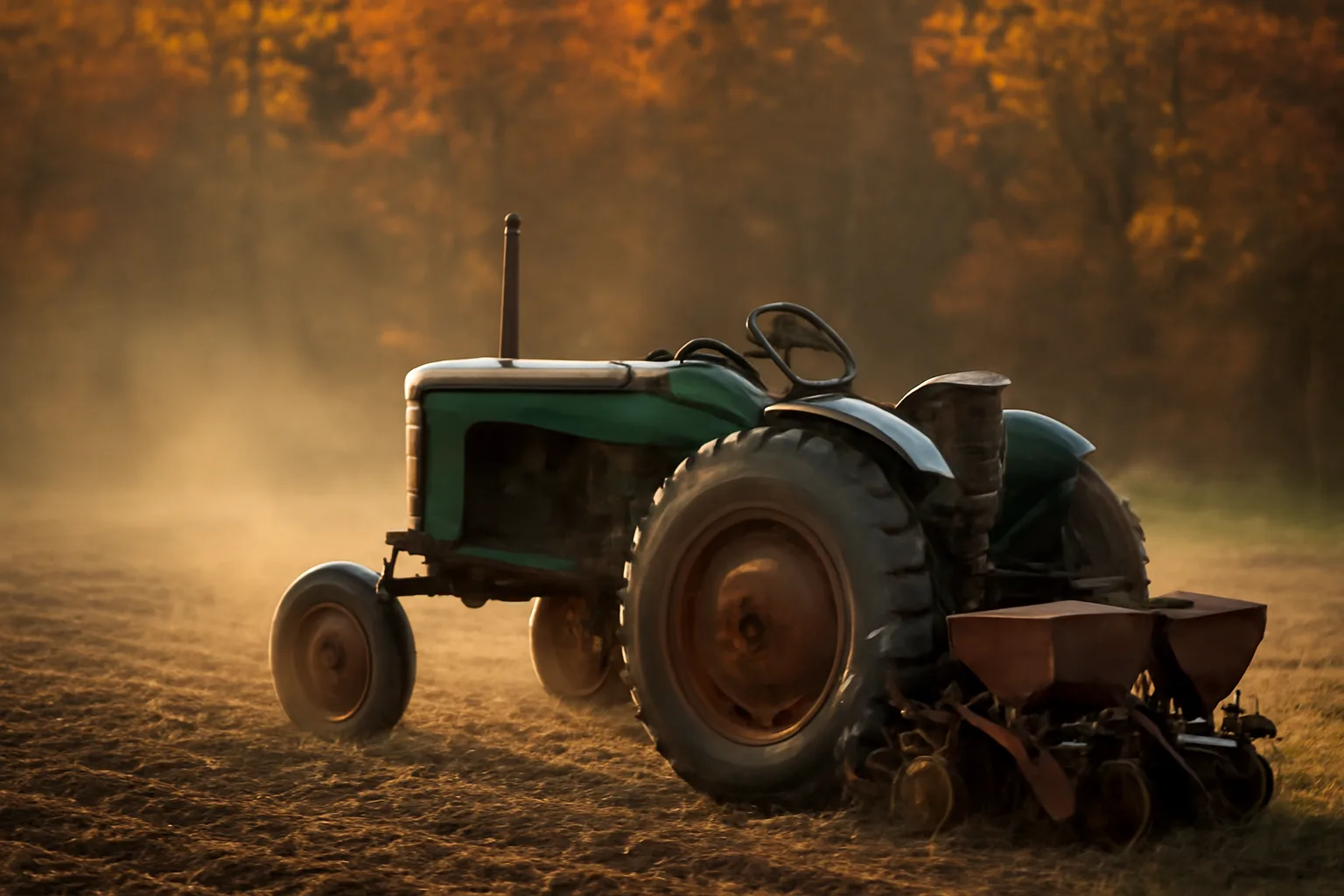
For food plot corn, a row planter (2 to 4 row, 30-inch spacing) beats a drill or broadcast setup because corn needs precise seed depth (1.5 to 2 inches) and spacing to pollinate and yield well. Budget options like the Kinze 2000 series or a used John Deere 71 flex-planter work fine on plots under 10 acres. Broadcasting corn wastes seed and gives spotty stands.
what is a food plot and why does the planter matter so much for corn
A food plot is a planted area on hunting land, usually somewhere between a quarter acre and several acres, seeded with forage or grain to feed deer and hold them on your property through hunting season. Most food plots run clover, brassicas, or cereal grains because those forgive sloppy planting. Corn does not forgive much of anything. Corn is a row crop by nature. It needs consistent seed depth, even spacing between plants, and good seed-to-soil contact to germinate and later pollinate properly. Corn pollinates by wind, with pollen from the tassel falling onto the silks of nearby plants. If your stand is patchy or your rows are crooked with gaps, you get poor pollination and cobs that only fill in halfway. That's a planter problem, not a seed problem. This is the main reason corn plots fail for people coming from clover or brassica planting. You can broadcast turnips over disked ground and get a fine stand. Broadcast corn and you'll get 40 to 60 percent emergence at best, with seed sitting too shallow, too deep, or on top of the ground where turkeys and crows clean it out. If you want a real corn plot, you need a planter built to place seed, not scatter it. For background on plot types and where corn fits against clover, brassicas, and cereal grain, see food plot whitetail.
what's the best type of planter for a food plot corn patch
| Under 1 acre | Hand push planter (Earthway, Jang) | $150 to $500 | Slow but workable for small clearings | |
|---|---|---|---|---|
| 1 to 5 acres | 2-row planter (Kinze 2000, older JD 71) | $1,500 to $4,000 | Best value for most food plotters | |
| 5 to 15 acres | 4-row planter | $3,500 to $8,000 | Needs a bigger tractor, worth it if you plant corn every year | |
| Any size, low budget | No-till drill set to corn spacing | $2,000 to $15,000 used | Works if drill has large-seed metering plates | |
| Any size | Broadcast + disk | Under $500 | Cheapest option, worst stand quality | A lot of food plotters already own a grain drill for cereal grains or clover. Some drills, especially older John Deere and Great Plains models, have interchangeable seed plates or a large-seed box that can handle corn in a pinch, though row spacing will be tighter than a true corn planter (7.5 to 15 inches instead of 30). Tighter rows aren't fatal for a food plot since you're not chasing bushels per acre for market, but you will get more plant-to-plant competition and slightly smaller ears. If you're planting under 2 acres and don't want to own a planter at all, a lot of guys just hire a local farmer with a planter already set up for corn to run their small patch for a six-pack and a tank of fuel. That's a completely reasonable move and often cheaper than buying equipment you'll use once a year. |
For plots under roughly 10 acres, a 2-row or 4-row mechanical row planter on 30-inch spacing is the sweet spot. It's small enough to pull with a 35 to 60 horsepower tractor, cheap enough to buy used for $1,500 to $6,000, and it plants corn the way corn wants to be planted: metered seed drop, consistent depth, packed soil behind the seed. Here's the honest breakdown by plot size and budget. | Plot size | Planter type | Typical used price | Notes |
should you buy new or used for a food plot corn planter
Buy used. Almost nobody needs a new planter for a food plot corn patch under 15 acres. Old 2-row and 4-row planters from the 1970s through 1990s (Kinze, John Deere 71 and 7000 series, International Harvester 400 series) show up on Facebook Marketplace and at farm auctions constantly, because commercial farmers upgraded to 8, 12, and 16-row planters decades ago and their old equipment sat in a shed. These units are simple, mechanical, and easy to fix with basic tools. Seed plates wear out and get replaced for $20 to $50 each. What to check before buying used: seed plate condition, chain and sprocket wear on the drive system, whether the press wheels still turn freely, and whether the down-pressure springs still have tension. A planter that's been sitting outside for 20 years with rusted press wheels will still probably plant fine after a little grease and a new set of seed plates. Walk away from anything with a bent frame or a seriously cracked seed hopper. New 2-row planters do exist (Cole Planter Co. and a few others still build small units) and run $3,000 to $6,000 new. If you're planting corn on a lease every year for a decade, that math can work out. For most one-property hunters, used is the move.
what row spacing and seeding rate should you use for deer corn
Standard row spacing for corn is 30 inches, and that's what most used planters are already set up for. There's no strong reason to change it for a food plot. Some plotters go narrower (20 inches) to get a denser stand faster, which can help create thicker screening cover, but narrow rows also mean more competition for water and light, and yield per plant can actually drop. Seeding rate matters more than spacing for food plot purposes. University extension guidance for grain corn generally lands in the 28,000 to 34,000 seeds per acre range for most row spacings [1], though food plot corn is often planted a bit lighter, in the 20,000 to 24,000 seed range, because plot corn is grown for standing forage and cover through winter rather than max grain yield, and thinner stands hold up better to deer browsing pressure on young plants without total stand loss. Seed depth should be 1.5 to 2 inches, deeper in dry sandy soil, shallower in heavy clay that stays wet. This is exactly the kind of thing a mechanical planter controls and a broadcast spreader cannot. For seed selection questions on top of planting mechanics, deer food plot seed covers variety choice in more depth.
when to plant food plots for deer, and specifically when to plant corn
Timing depends entirely on your frost dates and region, and this is one place where guessing wrong costs you the whole season. Corn needs soil temperatures at or above 50°F to germinate reliably, and agronomists generally recommend planting after soil hits 50°F and is trending warmer [2]. As a rough national range: corn typically goes in the ground from mid-April in the Deep South up through late May or even early June in the northern tier of states and Canada border areas. Your local land-grant extension office publishes exact planting windows by county, and that's a better source than any national chart, because a 50°F soil reading in coastal Georgia and northern Minnesota can be six weeks apart. For other food plot species on your property, general timing looks like this: - Cereal grains (oats, wheat, rye): late summer to early fall for a fall/winter plot, roughly August to September in most of the Midwest and Northeast, or late winter/early spring for a spring oat plot [3]
- Turnips and brassicas: mid-summer to early fall, generally 60 to 90 days before your first hard frost, since brassicas need time to bulb up before cold sets in [4]
- Clover: either early spring (March to April) as a spring seeding, or late summer to early fall (August to September) as a dormant or late-summer seeding, both work depending on your goals [5] Corn stands apart from all of these because it's the one summer annual most food plotters plant, and it has to go in early enough to mature and dry down before deer season, but late enough to avoid a killing frost right after emergence. For a full breakdown by planting zone, see food plot seed.
when to plant oats for deer food plots
Oats for a fall food plot go in the ground in late summer, typically August through mid-September across most of the whitetail's range, timed so the plants have 6 to 8 weeks of growth before the first hard frost. That gives you a lush, palatable stand right as deer season opens. Oats are one of the most attractive cool-season forages you can plant, often outcompeting wheat and rye for early-season deer preference, though oats are also less cold-hardy than wheat, cereal rye, or triticale. In harsh winters oats can die back hard after repeated hard freezes, while rye and wheat keep producing some green growth into winter. A lot of food plot mixes blend oats with a hardier cereal grain specifically to get oats' better taste with rye's winter survival. A smaller spring oat planting, done in March or April, is also common as a quick nurse crop or early green forage, though it won't persist into fall since spring oats mature and die back in summer heat.
when to plant turnips for deer plots
Turnips go in the ground roughly 60 to 90 days before your area's average first frost date, which for most of the whitetail range lands somewhere between mid-July and early September. Land-grant extension programs generally recommend seeding brassicas in this window so bulbs have time to size up before cold weather triggers the sugar conversion that makes them attractive to deer [4]. Turnips actually get sweeter after a hard frost, because the plant converts starches to sugars as a cold-tolerance response, which is why turnip plots often see the heaviest deer use in December and January rather than October. If you're hunting an early season and want deer on turnips by opening weekend, you'll likely be disappointed. Turnips are a late-season plot play, full stop. Seeding rate for turnips broadcast alone runs about 4 to 5 lbs per acre; drilled rates can be lower since drilling gives better seed-to-soil contact than broadcasting.
do deer eat sorghum, and how does it compare to corn as a plot crop
Yes, deer eat sorghum, and it's a legitimate substitute for corn in areas where corn struggles, particularly on drier or sandier ground. Grain sorghum (milo) is considerably more drought tolerant than corn and needs less nitrogen to produce a decent stand, which makes it a good pick on marginal soil where corn yields would be disappointing anyway. Sorghum can be planted with the same row planter setup you'd use for corn, at similar or slightly narrower row spacing, and its seed size is small enough that some grain drills handle it more easily than they handle corn. Deer use sorghum heads through fall and winter similarly to how they use corn, picking through the heads as grain matures and dries. The tradeoff is standing cover and screening value. Corn grows 6 to 10 feet tall and holds deer in thick, opaque cover; sorghum typically tops out shorter, in the 3 to 6 foot range for many grain sorghum varieties, so it offers less visual screening even though the food value is comparable. If cover is your main goal alongside food, corn wins. If drought tolerance and lower input cost matter more, sorghum is worth a look.
do deer eat clover, and do they actually like it
Yes, deer eat clover heavily, and most whitetail biologists and extension programs rank it among the most consistently used food plot forages available, largely because it's a perennial that keeps regrowing through repeated grazing all season long, unlike an annual that gets eaten down once and is done. Clover also runs high in crude protein, commonly in the 20 to 30 percent range depending on variety, maturity, and soil fertility, which matters most in spring and summer for antler growth and lactating does [6]. Do deer like clover? By every measure available, yes, it's one of the most reliably preferred plot forages across the whitetail's range, right alongside soybeans and alfalfa in most preference studies and field observations. Clover's main limitation isn't palatability, it's soil pH. Clover struggles badly below pH 6.0, and a soil test is the only real way to know where you stand before planting; a lot of clover plot failures trace straight back to skipping that step and fighting acidic soil the whole season. For species-specific clover planting guidance, deer food plots and domain food plot seed both cover variety selection and mix ratios.
what are deer's favorite foods, and where does corn rank
There's no single universal answer here because deer preference shifts by season, region, and what's already growing wild nearby, but most wildlife agency and university food habit studies point to a consistent short list: acorns, soybeans, clover, and standing corn rank among the most consistently preferred foods across most of the whitetail range . Agricultural crops like corn and soybeans often get hit hardest right after harvest or during the milk/dough stage, and acorns can outcompete everything in a heavy mast year, which is why plot hunters sometimes get frustrated in October when deer ignore a beautiful plot for a white oak flat 200 yards away. Corn's specific role in that lineup is less about deer racing to eat it the day it's planted and more about winter carrying capacity. Standing corn left through winter provides both high-energy food and dense cover exactly when deer need both most, in January and February when other forages are gone or buried in snow. That's corn's real job on most properties: not the October attractant, but the February survival plot. Honey doesn't factor into any of this in a practical sense. Deer aren't known to seek out honey as a food source in the wild; that's not something documented in deer diet studies, and it comes up often enough as a question that it's worth answering directly. If you've heard of hunters using sweet feed or molasses-treated products, that's a different thing entirely, and it also runs straight into state baiting law questions covered below.
does planting corn count as baiting under state law
Generally no, a planted food plot is legal in every state, but the line between a plot and illegal baiting gets blurry the moment you start supplementing a standing crop with piled grain, mineral, or feed. Rules vary hard state to state and this is not an area to guess on. Some states draw the line at whether the crop is growing in a normal agricultural manner versus piled, spread, or otherwise placed. Pennsylvania prohibits baiting outright and defines it to include placing feed, salt, or minerals to attract deer, while explicitly allowing normal agricultural plantings under its game code . Other states publish similar carve-outs distinguishing a standing crop from a bait pile. Before you plant, and especially before you supplement a corn plot with extra piled grain, check your state wildlife agency's current baiting regulation directly. These rules change year to year in some states, and a food plot that was legal last season isn't automatically legal this season if the regulation changed.
planter setup checklist before you plant
Run through this before seed ever goes in the hopper. - Pull a soil test 60 to 90 days before planting and follow your lab's lime and fertilizer recommendations; corn is a heavy nitrogen feeder and generally wants 100 to 150+ lbs of actual nitrogen per acre depending on your soil test and yield goal, split between pre-plant and a sidedress application - Check seed plates match your seed size (corn plates are different from bean or sorghum plates on most older planters)
- Set planter depth to 1.5 to 2 inches and verify with a tape measure in the field, more than the gauge setting
- Check down-pressure springs and press wheels for even soil closure behind the row
- Calibrate seed spacing by turning the drive wheel a measured distance and counting seed drops
- Confirm your seed variety's maturity rating (days to maturity) fits your remaining frost-free window If you want help translating a soil test into an actual planting plan for your specific ground, that's exactly the gap a Custom Food Plot Plan is built to fill: for $99 one-time, you get a plan built around your soil test results, plot size, and region. Your soil lab is still the authority on exact lime and fertilizer rates; the plan turns those numbers into a practical planting strategy for your property.
corn plot mistakes worth avoiding
The single biggest mistake is planting corn too small. A quarter-acre or half-acre corn plot gets pounded by deer, raccoons, and turkeys before it ever produces a mature ear, because there's no buffer of unused corn to absorb pressure. Most experienced plot managers recommend at least 2 to 3 acres of corn if you want any of it to stand into winter, more if your local deer density is high. Second mistake: planting too late. Corn planted after your local extension office's recommended cutoff for grain maturity might green up fine but never dry down or produce usable grain before frost kills the plant. Check your regional growing degree day requirements against your seed variety's maturity rating before you buy seed, not after. Third mistake: skipping the soil test and guessing on nitrogen. Corn without adequate nitrogen looks fine early and then stalls out and yellows midsummer, producing stunted, mostly barren stalks. This is the single most fixable problem in food plot corn and the one people skip most often because it costs $15 to $20 for a soil test and feels like an extra step. It isn't optional if you actually want ears on those stalks.
Frequently asked questions
Do deer eat sorghum?
Yes. Deer readily eat grain sorghum (milo) heads through fall and winter, similar to how they use corn. Sorghum is more drought tolerant and needs less nitrogen than corn, making it a solid substitute on sandy or marginal soil, though it grows shorter and offers less screening cover than corn.
Do deer eat clover?
Yes, heavily. Clover is a perennial that regrows after repeated grazing all season and runs 20 to 30 percent crude protein depending on variety and soil fertility, making it one of the most consistently preferred food plot forages across the whitetail's range, alongside soybeans and alfalfa.
When to plant deer food plots?
It depends on the species and your climate. Spring/summer annuals like corn and soybeans go in after soil hits roughly 50°F and frost risk passes. Fall plots (oats, brassicas, cereal grains) go in late summer to early fall, timed 6 to 12 weeks before your first hard frost. Check your local land-grant extension for exact county dates.
Do deer like clover?
Yes. By palatability, protein content, and season-long availability, clover ranks among the most reliably preferred food plot forages. Its main limitation is soil pH; clover struggles below pH 6.0, so a soil test before planting matters more than variety choice in most failed clover plots.
When to plant oats for deer?
Late summer to early fall, typically August through mid-September in most of the whitetail range, giving oats 6 to 8 weeks to establish before the first hard frost. A smaller spring planting in March or April also works as a quick early-season forage but won't persist into fall.
When to plant food plots for deer?
Cool-season plots (clover, brassicas, cereal grains) go in late summer to early fall. Warm-season annuals (corn, soybeans, sorghum) go in spring after soil temperature holds above 50°F. Your state or county cooperative extension office publishes the most accurate local planting windows.
When to plant turnips for deer?
Roughly 60 to 90 days before your area's average first frost date, generally mid-July through early September across most of the whitetail range. Turnips need that lead time to bulb up; they get sweeter after frost as the plant converts starches to sugar, so heaviest deer use often comes in December and January.
What is a food plot?
A food plot is a planted patch on hunting land, from a quarter-acre clearing to several acres, seeded with forage or grain to feed deer and other wildlife and hold them on the property, especially useful for hunting access and observation during archery and gun seasons.
What are deer's favorite foods?
Preference shifts by season and region, but acorns, soybeans, clover, and standing corn consistently rank among the most preferred foods for whitetail deer in food habit studies. Acorns can outcompete planted forages entirely during a heavy mast year.
Do deer like honey?
There's no real evidence deer seek out honey as a wild food source; it doesn't show up in deer diet studies. Some hunters use sweet feed or molasses-based attractants instead, but those products raise separate legal questions since many states classify supplemental feed as bait.
What's the best row spacing for a food plot corn planter?
30-inch rows are standard and what most used 2-row and 4-row planters are already set up for. There's little practical reason to change it for a food plot; narrower spacing can build a denser stand faster but increases competition for water, light, and nutrients.
Can I use a grain drill instead of a row planter for corn?
Sometimes. Some drills, especially older large-box models, have interchangeable plates that handle corn, though row spacing runs much tighter (7.5 to 15 inches) than a true corn planter's 30 inches. It works for a food plot's purposes, just expect smaller ears from more plant competition.
How big should a corn food plot be?
At least 2 to 3 acres if you want corn to survive deer, raccoon, and turkey pressure long enough to mature and stand into winter. Quarter-acre and half-acre corn plots frequently get eaten down to nothing before producing a usable ear.
Sources
- Iowa State University Extension and Outreach, PM 1885 Corn Planting Guide: Standard grain corn seeding rates fall around 28,000 to 34,000 seeds per acre
- Oklahoma State University Extension, PSS-2130 Brassica Forage Production: Brassicas including turnips should be seeded 60 to 90 days before the first killing frost to allow bulb development
- Oklahoma State University Extension, PSS-2589 Forage Legumes for Oklahoma: Clover forage commonly tests in the 20 to 30 percent crude protein range depending on variety and fertility
- USDA Forest Service, Fire Effects Information System, Odocoileus virginianus: Acorns, soft mast, and agricultural crops including soybeans and corn are among the most consistently preferred whitetail deer foods
- Pennsylvania Game Commission, Title 34 Pa.C.S. Section 2312, Unlawful Devices and Methods (baiting provisions): Pennsylvania prohibits baiting deer with feed, salt, or minerals but allows normal agricultural crop plantings
- University of Wisconsin-Madison Extension, A2809 Nutrient Application Guidelines for Field, Vegetable, and Fruit Crops in Wisconsin: Grain corn nitrogen recommendations commonly range from 100 to 150+ lbs of actual nitrogen per acre depending on soil test and yield goal