Last updated 2026-07-24
TL;DR
No till food plot planting means killing existing vegetation with herbicide (usually glyphosate), then broadcasting or drilling seed directly into the dead thatch without disking. It saves fuel and soil moisture, controls erosion, and works well for clover, brassicas, oats, and cereal grains. Give the herbicide 7-14 days to work before you plant, and pull a soil test first.
what is a food plot, and how is no till different from a regular one
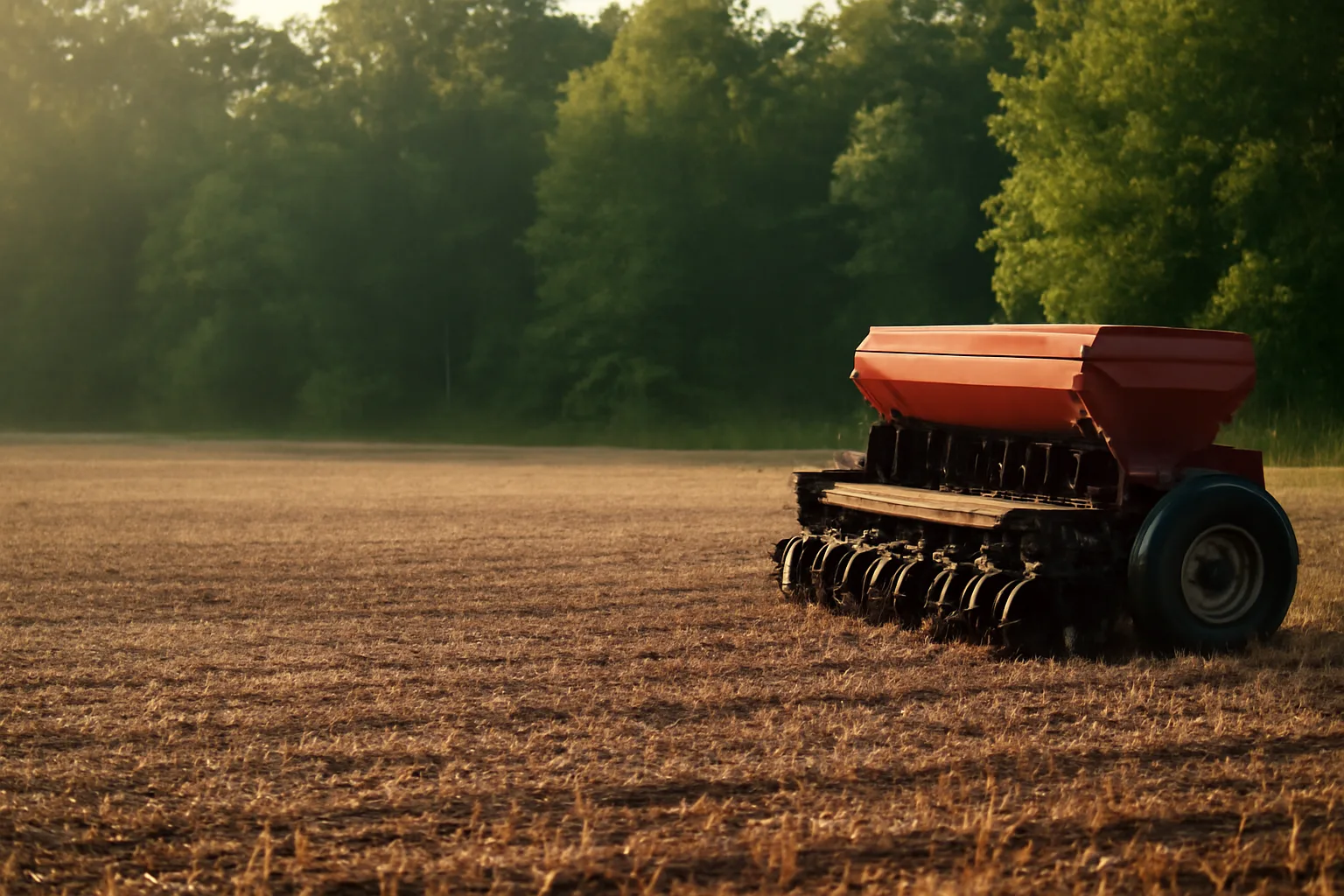
A food plot is a planted patch of forage or grain on hunting land, built specifically to feed and hold deer (and often to give you a shot opportunity along the edge). Plots range from quarter-acre kill plots tucked in timber to multi-acre destination fields planted in clover or beans. The USDA Natural Resources Conservation Service treats these plantings as a form of wildlife habitat management. NRCS Conservation Practice Standard 645, Upland Wildlife Habitat Management, covers the underlying soil and vegetation principles that apply whether you're farming 400 acres or a two-acre lease [1]. Conventional plot prep means disking or tilling the soil to bury weeds and create a loose seedbed. No till skips that step entirely. Instead, you kill the existing vegetation with herbicide, let it die down, and plant directly into the dead residue using a no-till drill, a spinner spreader followed by a cultipacker, or even just boots and a rain forecast. The appeal is real but not magic. No till saves you a pass with a disk or tiller, which matters if you're working steep ground, thin equipment, or a small ATV. It also protects topsoil structure and moisture, since disking dries out the top few inches of soil right when you need that moisture for germination. On the downside, no till depends heavily on herbicide timing and rain. Skip the kill step or plant too soon after spraying, and you'll fight weeds all season.
how do you actually no till a food plot, step by step
The sequence matters more than the tool. Here's the order that works on real dirt, more than in the seed catalog. First, pull a soil test. Your county extension office or a private ag lab will run pH, phosphorus, potassium, and organic matter for $10 to $20 in most states, and results tell you exactly how much lime and fertilizer you actually need instead of guessing. Purdue Extension notes that soil pH below 6.0 can cut nutrient availability enough to stunt clover and brassica growth even with adequate fertilizer, so this step isn't optional [2]. Lime takes months to change pH, so if your test comes back at 5.2, get it down before you plant. Second, spray. Glyphosate (Roundup and generic equivalents) at labeled rates knocks back grass and broadleaf weeds in 7 to 14 days depending on temperature and weed size. Cooler fall temps slow it down; hot, actively growing weeds in spring die faster. Spray when weeds are actively growing, not stressed by drought, or the herbicide won't translocate well. Third, wait. This is the step people skip and regret. Let the vegetation actually die and start to break down, more than yellow. Ten to fourteen days is a reasonable minimum for most broadleaf weed and grass mixes. Fourth, plant. For small seeds like clover or brassica, a broadcast spreader followed by a cultipacker or ATV tire drag gives good seed-to-soil contact. For oats, wheat, or beans, a no-till drill sets seed at a controlled depth and generally beats broadcasting, especially into heavier thatch. Fifth, fertilize based on your soil test results, not a bag rate off the shelf. Your soil test lab is the authority here. Follow their lime and fertilizer recommendation over any general rule of thumb, since your specific field's nutrient levels and CEC (cation exchange capacity) drive the real number.
when to plant food plots for deer
Timing splits into two windows: spring plots and fall plots. The right one depends on species and your region's frost dates. Spring plantings (April through June in most of the whitetail's range) work for warm-season annuals like soybeans, cowpeas, and some clover establishments. You need soil temps consistently above 50-55°F for good germination on most warm-season legumes. Fall plantings (late August through October depending on latitude) suit cereal grains, brassicas, and clover frost-seeding. The general rule extension agronomists use is to plant fall plots 6 to 8 weeks before your area's first hard frost, which gives brassicas time to bulb up and cereal grains time to establish a root system before winter dormancy. In the Upper Midwest that often means late July to mid-August for brassicas; in the Southeast you can push into September or even early October. No till doesn't change these windows, but it can compress your prep timeline since you're not waiting on ground to dry enough to disk. That said, you still need to build in the 10-14 day herbicide kill window before your planting date, so back-plan from your target date. If you want a fall brassica plot in by August 15, your glyphosate application needs to go down by August 1 at the latest.
when to plant oats for deer
Oats go in as a fall annual, typically 6 to 8 weeks before your first expected frost, which puts most of the whitetail range somewhere between mid-August and mid-September. Oats germinate fast, often showing green in 5 to 7 days under good moisture, and they tolerate a wider planting window than brassicas because deer will hit them from the seedling stage all the way through hard frost. Some hunters also plant oats in early spring as a quick cover crop or nurse crop for clover, but fall is the main event for oats as a standalone deer food plot. Oats do lack cold hardiness compared to winter wheat or cereal rye, so in northern states they'll die back hard after a few nights in the teens, while wheat and rye keep producing green forage into winter. If you want season-long attraction through late winter, blend oats with wheat or rye rather than planting oats alone. No till oats work well drilled directly into a sprayed-out summer plot or dead lawn area. Oats are more forgiving of imperfect seed-to-soil contact than clover, so a broadcast-and-cultipack approach after your herbicide kill also gets a fine stand most years.
when to plant turnips for deer
Turnips and other brassicas go in the ground 90 to 100 days before your first hard frost, which is earlier than most hunters expect. In much of the Midwest and Northeast, that lands in late July to mid-August. Wait until September and you'll get green tops but small or nonexistent bulbs, since brassicas need that longer runway to bulb up before cold weather triggers the sugar conversion that makes them palatable. Here's the trick with turnips specifically: deer often ignore the tops and bulbs early in the season, then hit them hard after the first couple of hard frosts. Cold temperatures convert starches in the bulb to sugars, which is why a turnip plot that gets ignored in October can get hammered in December. For no till turnip plots, drill or broadcast seed shallow (a quarter inch or less) since turnip seed is tiny and won't emerge from depth. A cultipacker pass after broadcasting improves germination substantially by pressing seed into contact with moist soil.
do deer like clover, and do they actually eat it
Yes. Clover is one of the most consistently used food plot forages across the whitetail's range, and it's a legume, meaning it fixes its own nitrogen from the air rather than needing heavy nitrogen fertilizer. That's a real cost saver over time. Clover regrows after grazing, unlike brassicas or grain that get eaten down once and done, so a well-maintained clover stand can produce forage from spring green-up through fall, sometimes 3 to 4 years before you need to replant depending on stand health and weed pressure. University extension forage guides list clover crude protein commonly in the 25-30% range for actively growing stands, which stacks up well against native browse that often runs under 10% protein in late summer [3]. No till clover establishment works, but clover seed is small and shallow-planted (an eighth of an inch or less), so seed-to-soil contact matters more here than with any other food plot species. Broadcast onto a well-killed, firm seedbed, then cultipack hard. Skip the cultipacker and you'll get a spotty, disappointing stand even with good seed and good weather. For frost-seeding clover into an existing dormant plot or thin lawn in late winter, no equipment beyond a hand spreader is needed since freeze-thaw cycles work the seed into the soil for you.
do deer eat sorghum, and does it fit a no-till plot
Yes, deer eat grain sorghum, though it's more often used as a standing grain and cover crop than a primary attractant like clover or beans. Sorghum (milo) produces a grain head deer will feed on through fall and winter, and the tall stalks double as screening cover, which some hunters value as much as the food value. Sorghum is a warm-season crop, planted in late spring once soil temps hit the mid-60s, similar timing to corn and soybeans. It's drought tolerant compared to corn, which makes it a reasonable no-till option on sandy or dry upland ground where corn struggles. That said, sorghum isn't a top-tier deer food plot choice on its own. Most food plot programs use it as a component in a blend (with soybeans, sunflowers, or cowpeas) rather than a monoculture, largely because deer preference studies and practical field reports rank it below beans, clover, and standing corn for pure attraction value. For no till sorghum, drilling gives more consistent stand and depth control than broadcasting, since sorghum seed does best planted around one inch deep.
what are deer's favorite foods, and does that change by season
There's no single favorite food, because deer preference shifts hard by season and by what's available naturally. In general, extension wildlife programs and food plot researchers rank soybeans, clover, and standing corn among the most consistently preferred planted forages, largely because of high protein (soybeans can run 35-40% crude protein in the leaf stage) and high energy content (corn grain) [2]. In spring and summer, deer key in on protein for antler growth and lactation, favoring clover, soybeans, and cowpeas. In fall, energy becomes the priority as deer build fat reserves for winter and the rut, which is when acorns, corn, and brassica bulbs (post-frost) become the draw. In late winter in northern climates, any standing green forage or grain left in the field, plus woody browse, is what's left. That's exactly why cereal grains and brassicas that survive into December and January carry outsized importance up north. Acorns deserve a mention here too, since in years of good mast production, deer will often bypass planted plots entirely in favor of white oak acorns, which are lower in tannins and more palatable than red oak acorns. That's not a food plot failure. It's just deer being deer, and it's one of the honest reasons why nobody can promise you a plot will get hit hard every single year.
do deer like honey, and does that matter for plot planning
Deer aren't drawn to honey as a food source in any meaningful, documented way, and it doesn't have a place in food plot planning. This question usually comes up confused with two different things: honey locust trees (Gleditsia triacanthos), whose sugary seed pods deer do eat readily in fall, and commercial mineral or attractant products that sometimes use honey or molasses as a binder or flavoring agent in mineral licks, not as a standalone food source. If you're seeing "deer and honey" search results pointing at mineral supplements, know that many states regulate or outright ban supplemental feeding and baiting, including mineral licks, especially in areas managing chronic wasting disease risk. Check your state wildlife agency's regulations before using any mineral or attractant product, since rules vary widely and violating baiting laws can cost you a hunting license over something that was never a real food plot decision to begin with.
what equipment do you actually need for no till food plots
You need less than the disk-and-tiller crowd wants you to believe, but a few tools make a real difference in stand quality. A sprayer is the one piece of gear you can't skip. A 25-gallon ATV or UTV-mounted boom sprayer covers small plots efficiently; backpack sprayers work fine for quarter-acre or smaller kill plots. Get your glyphosate rate right off the label, generally 1 to 2 quarts per acre of a 41% concentrate product for most weed pressure, though always follow the specific product label since rates vary by formulation [2]. A no-till drill is the gold-standard planting tool since it cuts through thatch, places seed at a controlled depth, and closes the furrow in one pass. Renting one from a local co-op or conservation district often costs less than buying, especially if you're only planting a few acres a year. Without a drill, a broadcast spreader (hand-crank or ATV-mounted) plus a cultipacker gets you a workable stand on small seeds like clover and brassicas. Skip the cultipacker and you're relying on rain timing alone to press seed into the soil, which is a real gamble. For larger grain seed like beans, corn, or sorghum, a drill or planter beats broadcasting by a wide margin, since depth control actually matters for germination on bigger seed.
does no till actually save money and time compared to conventional tillage
Mostly yes, with real caveats. You skip the fuel, wear, and time cost of disking, which on rough or rocky ground can mean real tractor and implement damage avoided. USDA NRCS describes residue and tillage management practices, including no-till, as ways to reduce erosion, conserve soil moisture, and cut production costs compared to conventional tillage systems, which is one reason the practice is incentivized through EQIP and other federal conservation programs administered by NRCS [4]. What you're trading that savings for is herbicide cost and a longer prep timeline. Glyphosate isn't free, and you're paying for a sprayer or sprayer rental, plus the 10-14 day wait between spraying and planting that a conventional disk pass doesn't require. On a plot with heavy existing sod or weed pressure, no till can also mean a rougher-looking seedbed and a bit more competition from dying-but-not-fully-dead vegetation compared to a freshly disked field. For small hunting-lease acreage, especially plots under 2 acres accessed by ATV or UTV rather than a tractor with a disk, no till is very often the more practical choice. For larger ag-scale plots where you already own tillage equipment, the calculation is closer, and it comes down to whether erosion control and moisture retention matter more to you than the upfront simplicity of a disk pass. If you want help figuring out which approach and species mix fits your specific soil test results and acreage, Food Plot Seed options run wide, and building out a full seasonal plan based on your ground rather than a generic bag rate is exactly what a $99 one-time Custom Food Plot Plan is built to do.
what mistakes ruin a no till food plot
Planting too soon after spraying is the number one killer. If you spray and plant the same week, you're planting into live, competing weeds that will out-grow your seedlings. Give it the full 10-14 days minimum. Skipping the soil test is the second big one. Planting into a pH of 5.0 without lime means your clover or brassica stand struggles no matter how good your seed and timing are, since Purdue Extension and most land-grant soil labs point to pH 6.0-6.5 as the target range for the biggest food plot species [2]. Lime is slow to work into the soil profile, often taking 6 months or more to fully adjust pH, so this decision needs to happen a season ahead if you can manage it. Poor seed-to-soil contact on small seeds (clover, brassica) from skipping the cultipacker step is the third common failure. And finally, planting a shade-tolerant crop like clover in a spot that only gets 4 hours of direct sun a day sets you up for a thin, weedy stand no matter how well you handle the no till steps, since most food plot forages need 4-6 hours of direct sunlight minimum to compete.
Frequently asked questions
What is a food plot?
A food plot is a planted area of forage, grain, or legumes on hunting or wildlife management land, designed to feed and hold deer or other game. Plots range from small quarter-acre kill plots in timber to multi-acre agricultural-scale fields, and they're planted with species like clover, brassicas, soybeans, or cereal grains depending on season and goals.
Do deer eat sorghum?
Yes, deer eat grain sorghum, both the standing grain heads and the leaves, though it's typically planted as part of a blend rather than a standalone attractant. Sorghum is drought tolerant and doubles as screening cover due to its height, making it useful on dry or sandy ground where corn struggles.
Do deer eat clover?
Yes, clover is one of the most heavily used food plot forages across the whitetail's range. It's a legume that fixes its own nitrogen, regrows after grazing, and often tests at 25-30% crude protein when actively growing, according to university forage extension data, making it a strong spring and summer food source.
When should you plant deer food plots?
It depends on species. Warm-season plots (soybeans, cowpeas) go in April through June once soil temps top 50-55°F. Fall plots (brassicas, cereal grains, clover) go in 6 to 8 weeks before your area's first hard frost, generally late July through September depending on latitude.
Do deer like clover more than other food plot options?
Clover ranks among the top preferred food plot forages in most extension research and field observation, alongside soybeans and standing corn. Preference shifts by season though; deer favor high-protein clover and beans in spring and summer, and shift toward energy-dense corn, acorns, and frost-sweetened brassicas in fall and winter.
When should you plant oats for deer?
Plant oats in late summer to early fall, roughly 6 to 8 weeks before your area's first hard frost, which lands between mid-August and mid-September across most of the whitetail range. Oats germinate fast, often showing green growth in 5 to 7 days, but lack the cold hardiness of wheat or rye.
When should you plant turnips for deer?
Plant turnips 90 to 100 days before your first hard frost, typically late July to mid-August in most of the Midwest and Northeast. Planting too late gives you green tops without bulbs, since turnips need that long runway to bulb up before the cold triggers the sugar conversion that makes them palatable.
What are deer's favorite foods overall?
There's no single favorite; preference shifts by season. Soybeans, clover, and standing corn rank consistently high in extension research due to high protein or energy content. In good acorn years, deer often prefer white oak acorns over any planted forage, which is a natural and expected pattern, not a plot failure.
Do deer like honey?
Not in any documented, meaningful way. This question is usually confused with honey locust tree pods, which deer do eat readily in fall, or with mineral supplement products that use honey or molasses as a flavoring. Honey itself has no real role in food plot planning.
How long after spraying glyphosate can you plant a no-till food plot?
Wait a minimum of 10 to 14 days after a glyphosate application before planting, giving weeds and grass time to fully die back rather than just yellow. Cooler fall temperatures slow herbicide activity, so build extra time into your schedule if you're spraying in cooler weather.
Do you need a no-till drill, or can you broadcast seed instead?
A no-till drill gives the best stand for grain and larger seed like beans or corn since it controls planting depth. For small seed like clover or brassicas, broadcasting followed by a cultipacker pass works well too; skipping the cultipacker step is the most common cause of a thin, spotty stand.
Is no till food plot planting cheaper than tilling?
Generally yes on fuel, equipment wear, and erosion, according to NRCS conservation practice guidance for no-till systems, but you're trading that for herbicide cost and a longer prep timeline of 10 to 14 days between spraying and planting. For small ATV-accessed plots, no till is usually the more practical, lower-hassle choice.
Sources
- USDA NRCS, Conservation Practice Standard 645, Upland Wildlife Habitat Management: Food plots fall under upland wildlife habitat management conservation practices
- Purdue University Extension, Food Plots for Wildlife (FNR-437-W): Soil pH below 6.0 can significantly limit nutrient availability for clover and brassica food plots
- University of Kentucky Forage Extension: Actively growing clover commonly tests in the 25-30% crude protein range
- USDA NRCS Farm Bill EQIP practice guidance referencing residue and tillage management, no-till systems: No-till systems are applied to reduce erosion, improve soil moisture and soil health, and reduce production costs compared to conventional tillage, and are incentivized through federal conservation programs
- Iowa State University Extension: Cover crop and no-till planting practices reduce input costs and time compared to conventional tillage
- University of Georgia Extension: Recommended planting dates and practices for oats as a deer food plot forage
- Michigan State University Extension: Grain sorghum's suitability and deer palatability as a food plot crop