Last updated 2026-07-24
TL;DR
Food plot planters for sale range from $200 hand-crank broadcast seeders to $25,000+ no-till drills. Match the planter to your seed size, ground type, and acreage: broadcast for small clover and brassica plots, drills for grain and beans on bigger fields, no-till units if you can't till. Budget and tractor size decide more than brand does.
what is a food plot, and why does the planter matter
A food plot is a planted area, usually a fraction of an acre to a few acres, that gives deer and other wildlife a concentrated food source and gives hunters a place to observe or hunt over. Most state wildlife agencies treat food plots differently from bait piles under law, since the crop is rooted and growing rather than piled feed, but the line between "food plot" and "baiting" varies by state and you should check your own agency's regulations before planting near a stand [1]. The planter is the machine (or hand tool) that gets seed into the ground at the right depth and spacing. This matters more than most people think going in. A $1,500 seed drill and a $30 hand-crank spreader can both grow a plot, but they're suited to completely different seed types, ground conditions, and acreages. Buy the wrong one and you'll either waste seed broadcasting oats too deep to germinate, or you'll own an expensive drill that never leaves the barn because your plots are quarter-acre kill plots you can walk in ten minutes. Before shopping, know your plot size, your tillage situation (till, no-till, or hybrid), and your seed mix. Those three answers narrow the planter field fast.
what types of food plot planters are for sale, and what do they cost
| Hand-crank spreader | $20-$150 | Plots under 1 acre, small seed | No depth control, slow | |
|---|---|---|---|---|
| Tow-behind broadcast/drag combo | $300-$2,500 | 2-10 acres, mixed seed types | Less precise depth than a drill | |
| No-till drill (small, used) | $3,000-$8,000 | Grains, beans, no-till ground | Needs a decent tractor to pull | |
| Commercial no-till drill | $10,000-$40,000+ | Large acreage, farm-scale operations | Overkill for most food plotters | |
| Cultipacker seeder | $2,000-$10,000 | Clover, brassica, firming seedbed | Heavier, needs bigger tractor | Most hunters managing 1 to 10 acres across a few plots do best with a tow-behind broadcast/cultipacker combo. It's the sweet spot of cost and capability. |
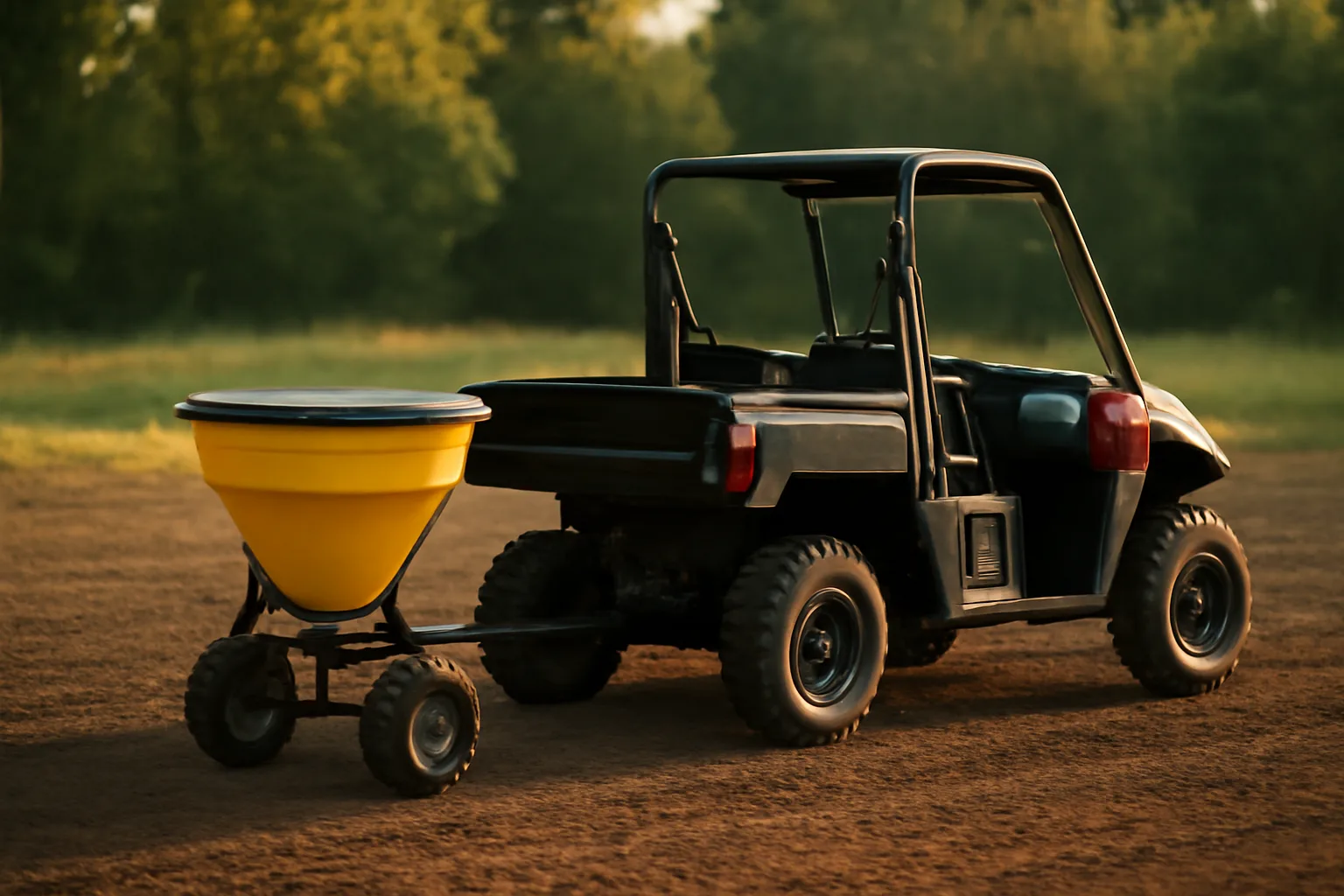
Food plot planters fall into a few clear categories, and price scales hard with acreage capacity and precision. Hand-crank and backpack broadcast spreaders run $20 to $150. These work fine for small plots under an acre, clover, brassicas, and other small seed you're broadcasting on top of prepared or lightly disked ground. Fine for a bowhunter with three small kill plots and no tractor. Tow-behind ATV/UTV broadcast spreaders and combo units (spreader plus drag harrow or cultipacker) run $300 to $2,500 depending on hopper size and features. Brands like Firminator, Woods, and various ATV-implement makers sell these. They're the most common upgrade path for someone with a UTV and 2 to 10 acres of plots spread across multiple fields. No-till drills, the category most serious plotters eventually want, run from around $3,000 for small single-row units up to $25,000 to $40,000+ for commercial-grade Great Plains or John Deere no-till drills bought used. These cut a slot, drop seed at a set depth, and close the row, which matters a lot for grains like oats and wheat and for beans, where planting depth affects germination directly. Extension agronomy guidance for small grains generally recommends a seeding depth of about 1 to 1.5 inches depending on soil moisture and grain type [2]. Cultipacker seeders (like a Brillion or a Firminator's built-in packer wheels) run $2,000 to $10,000 used, and are popular for food plot brassica and clover because they firm the seedbed after planting, which small seed needs for good soil contact. | Planter type | Typical price (used/new mix) | Best for | Limitation |
do deer eat sorghum
Yes. Deer eat grain sorghum, both the seed heads and the young green growth, and it's used both as a food plot component and as a standing screen crop. Sorghum is more drought-tolerant than corn, which makes it a reasonable substitute in parts of the whitetail range with lighter rainfall or sandier soils, and it also provides winter standing cover and a late-season food source when the heads mature [3]. It's not usually a deer favorite compared to soybeans or corn in a side-by-side test, but it holds up better under drought stress and browsing pressure early on, since deer prefer the grain over the vegetative stalk in most cases. If you're planting sorghum with a planter, row spacing and seeding rate matter: too thick and you get spindly stalks with poor head development, too thin and weeds take over. University of Nebraska-Lincoln Extension guidance for grain sorghum recommends seeding rates generally in the range of 4 to 8 lbs/acre depending on row spacing and rainfall zone [3], well below corn's typical seeding rate.
do deer eat clover, and do deer like clover
Yes to both. Clover, especially white clover and red clover blends, is one of the most consistently used food plot crops in whitetail management, and deer readily browse it through spring, summer, and fall. Its popularity comes down to protein content and regrowth: clover can run 20 to 30 percent crude protein in vegetative stages, which lines up well with the elevated protein needs of lactating does and antler-growing bucks in late spring and summer [4]. Clover is also a perennial, so once established (usually taking a full season to get a stand thick enough to hold up to grazing), it can produce for 3 to 5 years with proper mowing and fertility management, versus annuals you replant every year. That makes it one of the better returns on planter and seed cost over time. For planting, clover is small, light seed that needs shallow planting, generally 1/4 inch deep or less, and firm soil contact. A cultipacker seeder or a simple broadcast-then-cultipack approach works better than a drill here, since most drills are set up for larger seed and will bury clover too deep to emerge well.
when to plant food plots for deer, by season
Timing splits into two windows almost everywhere in whitetail country: spring plantings for summer forage (usually warm-season annuals and perennials) and late-summer plantings for fall/winter forage (cool-season annuals and brassicas). Your exact dates depend heavily on your frost dates and USDA plant hardiness zone, so treat any calendar as a starting range, not a rule. Spring plot planting generally runs from mid-April through early June in most of the whitetail range, once soil temperatures are reliably above 50-55°F for warm-season crops like soybeans, cowpeas, and corn. Clover and chicory can also be frost-seeded earlier, late winter into early spring, in northern zones. Fall plot planting for cool-season crops (brassicas, oats, wheat, cereal rye, clover) usually runs from mid-July through early September in northern zones, and can push into October in the Deep South. The general rule extension agronomists use is to plant brassicas and cereal grains 60 to 90 days before your area's average first hard frost, since these crops need a growing window before cold weather locks in growth [5]. If you're planning multiple plot types across a property, you're realistically looking at two separate planting trips per year, spring and late summer, which is another reason planter choice matters: a machine you can hook up twice a year without a fight beats one that sits because it's a pain to use.
when to plant oats for deer
Oats are a cool-season annual, and the planting window is late summer to early fall in most whitetail range, generally 6 to 10 weeks before your first expected frost. That usually lands between mid-August and mid-September in the North, and can run into late September or early October farther south [5]. Oats germinate fast (often within a week under good moisture) and put on rapid, tender, high-attraction growth that deer hit hard in September and October, which makes them a popular standalone fall plot or a nurse crop mixed with clover or brassicas. Oats aren't very winter-hardy in northern climates and will usually die back after a hard freeze, so in the far north they function as a fall attraction plot rather than a winter food source. In the South, oats can persist and provide grazing into winter. Seeding depth for oats is generally 1 to 1.5 inches, which favors a drill over a broadcast spreader if you have one, though broadcasting oats onto a worked seedbed and dragging or cultipacking to cover them works fine too and is what most hunters actually do.
when to plant turnips for deer, and do deer like them
Turnips are planted in late summer, generally late July through August in the North and into September in the South, timed so the plant has 80 to 90 days to mature before hard frost. Deer often ignore turnip bulbs and tops early in the season and hit them hard after a few frosts convert starches to sugars, so a plot planted too late won't have time to bulb up and sweeten before deer show real interest [5]. This frost-triggered preference shift is one of the most reliable patterns in food plot behavior: plant turnips in July or August, and don't expect heavy use until October or November once temperatures drop. That late-season timing is exactly why turnips and other brassicas are prized as a late-bow and gun-season food source, when other green forage has died back. Turnip seed is tiny, similar to clover, and needs a shallow, firm seedbed, generally seeded at 1/4 inch or less. A cultipacker seeder or broadcast-and-cultipack combo handles this better than any drill built for larger seed.
what are deer's favorite foods, according to research
There's no single universal "favorite," because deer preference shifts by region, season, and what else is available, but research consistently shows a few patterns. Acorns are often the single most preferred natural fall food where oaks are present, since they're calorie-dense and deer will travel to find them over almost anything else in a plot during a good mast year . Among planted food plot crops, soybeans (as both a summer forage and a fall grain source) and clover consistently rank at the top of preference studies and grower experience, with brassicas and grain crops like corn and oats also drawing strong use once the season and frost timing line up [4] [5]. The honest answer for most land managers is that deer preference is opportunistic: they'll favor whatever's highest in protein or sugar and easiest to access at that moment, and a good food plot program plants a mix across seasons (clover and beans for spring/summer, brassicas and grains for fall/winter) rather than betting on one "magic" crop.
do deer like honey
There's no wildlife research or extension data showing deer seek out honey as a natural food source; it isn't part of any published forage or diet study for whitetail deer. Deer are herbivores and their digestive system is built around browse, forbs, and mast, not concentrated sugars like honey. The more relevant question for hunters is usually about sugar-based attractants, syrups, or scent products marketed with "honey" in the name. Those are separate from food plot planning and fall under bait/attractant regulations in many states, which are often stricter or entirely different from food plot rules. If you're using any attractant product, check your state wildlife agency's baiting regulations directly, since rules on scent and feed products vary widely and can carry real penalties if you're hunting over something classified as bait [1].
how do i pick the right planter for my ground and plot size
Start with three numbers: total plot acreage, your tractor or UTV's horsepower and hitch type, and your dominant seed type (fine seed like clover/brassica versus larger seed like beans/oats/corn). Under 1 acre total, spread across small plots: a hand-crank or backpack spreader plus a hand tool or ATV disk to work the seedbed is genuinely enough. Don't overspend here. 1 to 5 acres with a UTV: a tow-behind broadcast and cultipacker combo unit is the standard answer, and it's flexible enough to handle clover, brassica, and light grain seeding in one machine. 5 to 15 acres with a compact tractor (25-45 HP): this is where a small no-till drill starts paying for itself, especially if you're planting beans, corn, or grain in no-till ground. You'll get more even stands and better depth control than broadcasting. 15+ acres, or farm-scale operations: a used commercial no-till drill (Great Plains, John Deere, Case IH) bought off an auction or dealer network is the standard move, and the per-acre cost drops fast once you're covering real acreage every season. For a deeper look at matching specific seed blends to your planting method and calendar, see deer food plot seed and food plot seed for species-level planting depth and rate guidance.
new versus used: where should you actually spend money
Used equipment is almost always the better buy for food plotters, with one exception: broadcast spreaders are cheap enough new that used savings aren't worth the risk of a worn-out spinner disc or broken hopper. Drills are a different story. A used no-till drill from a farm auction or dealer trade-in can run 40 to 60 percent less than new, and drills are mechanically simple enough (metering wheels, opener discs, closing wheels) that a knowledgeable buyer can spot wear easily. The main thing to check is opener disc condition and seed metering wheel wear, since those are the expensive parts to replace. Cultipackers and packer wheels last decades if the bearings are maintained, so buying used here is close to risk-free. The main failure point is rusted-out or bent frames from sitting outside, which is easy to spot on an inspection. If budget is the main constraint, spend the real money on the drill or cultipacker (the parts that determine planting depth and seed-to-soil contact) and save on the broadcast spreader, which is a simple, low-tech tool no matter the price point.
do i need a tractor, or can a UTV/ATV handle it
For plots under 5 acres total, a UTV or ATV with a tow-behind implement handles almost everything: broadcast seeding, light disking, dragging, and even small cultipacker seeders in the 3 to 5 foot width range. Most UTV-rated implements are built for 400cc to 700cc side-by-sides and don't need more than that. Once you're pulling a drill (even a small one) or a wider cultipacker, or you need to break new ground with a disk or plow, you're generally better off with a compact tractor in the 25-45 HP range. Drills have real draft requirements, meaning they need consistent pulling power to maintain proper depth, and an ATV bouncing over uneven ground can't hold that consistency the way a tractor with a 3-point hitch can. If you're building a plot program from scratch and don't own either yet, a lot of experienced plotters actually rent a compact tractor with implements once or twice a year for the heavy tillage and drilling work, and use a UTV with a small broadcast spreader for maintenance mowing, spot spraying, and touch-up seeding the rest of the year. That combination often beats owning a full tractor if you're only planting a few acres.
getting the planting plan right before you buy a planter
A planter is only as good as the plan behind it. Before you spend money on equipment, get a soil test done (your county extension office or a private ag lab can run one for $10 to $20) and follow its lime and fertilizer recommendations directly, since your soil test lab is the actual authority on what your specific dirt needs. General articles, including this one, can tell you typical ranges, but they can't replace a site-specific test. Once you know your soil pH and nutrient levels, and you've picked your seed mix and planting windows, the equipment question gets a lot simpler because you'll know exactly what seed sizes and acreages you're planting for. If you want a starting point that pulls your zone, plot size, and seed choices together into an actual planting plan, the $99 one-time Custom Food Plot Plan builds a general plan around your inputs; it's guidance to work from, not a guarantee of results, and it doesn't replace your soil test lab's specific lime and fertilizer numbers. For species-specific planting depth, rate, and blend advice once you've got your planter sorted, food plot whitetail and deer food plots cover plot design and layout, while domain food plot seed and deer for food go deeper on specific seed products and mixes.
Frequently asked questions
What is a food plot?
A food plot is a planted area, typically a fraction of an acre to several acres, established to provide concentrated forage for deer and other wildlife and to give hunters a place to observe or hunt game. Plots are usually planted with clover, brassicas, grains, or legumes chosen for the season and region. Most state agencies distinguish planted, rooted crops from bait piles, but rules vary, so check your state wildlife agency.
Do deer eat sorghum?
Yes, deer eat both the grain heads and young green growth of sorghum. It's more drought-tolerant than corn, making it a reasonable food plot or screen crop in drier regions, though it's generally less preferred than soybeans or corn when deer have a choice between the two.
Do deer eat clover, and do deer like clover?
Yes, clover is one of the most consistently used and preferred food plot crops for whitetail deer, valued for its high protein content (often 20-30 percent crude protein) and long growing season. As a perennial, an established clover stand can produce forage for 3 to 5 years with proper mowing and fertility upkeep.
When should I plant food plots for deer?
Warm-season plots (soybeans, corn, cowpeas) generally go in mid-April through early June once soil temperatures clear 50-55°F. Cool-season fall plots (brassicas, oats, wheat, clover) generally go in mid-July through early September, timed 60 to 90 days ahead of your area's first hard frost. Exact windows depend on your USDA hardiness zone.
When should I plant oats for deer?
Plant oats 6 to 10 weeks before your area's average first hard frost, which usually lands between mid-August and mid-September in the North and can run into late September or October farther south. Oats germinate quickly and provide fast, attractive fall growth, but they typically die back after a hard freeze in northern climates.
When should I plant turnips for deer?
Plant turnips 80 to 90 days before your expected first hard frost, generally late July through August in the North and into September in the South. Deer often ignore turnips until after a few frosts convert plant starches to sugars, so heavy use usually doesn't start until October or November.
Do deer like turnips right after planting?
Usually not much. Deer typically show light interest in turnip tops during warm early fall weather and shift to heavy browsing on both tops and bulbs after several hard frosts sweeten the plant through starch-to-sugar conversion. Don't judge a turnip plot's success until real cold weather sets in.
What are deer's favorite foods overall?
There's no single universal favorite; it shifts by region and season. Acorns are often the top preference where oaks produce a good mast crop in fall. Among planted crops, soybeans and clover consistently rank highest in preference research and grower experience, with brassicas and grains drawing strong use once cold weather hits.
Do deer like honey?
There's no wildlife research showing deer seek out honey as a natural food; it isn't part of any published whitetail diet study. Deer are herbivores built around browse, forbs, and mast, not concentrated sugar sources. Sugar-based attractant or scent products are a separate category from food plots and often fall under state baiting regulations.
What's the cheapest way to plant a food plot?
A hand-crank or backpack broadcast spreader ($20-$150) paired with a hand rake or ATV drag to work the seedbed is the cheapest functional setup, and it's genuinely adequate for plots under an acre with small seed like clover or brassica. Save drill or cultipacker spending for when your acreage or seed types actually need it.
Do I need a no-till drill for food plots?
Not necessarily. Drills earn their cost on larger acreage (roughly 5+ acres) or when planting larger seed like beans, corn, or grain into no-till ground, since they control planting depth precisely. For small plots under clover or brassica, a broadcast spreader and cultipacker combo works as well or better.
How much does a food plot planter cost?
Prices span a huge range: hand-crank spreaders run $20-$150, tow-behind broadcast/cultipacker combos run $300-$2,500, small no-till drills run $3,000-$8,000 used, and commercial-grade no-till drills run $10,000-$40,000 or more. Most hunters managing a few acres do best with a tow-behind combo unit in the low thousands.
Can I use an ATV or UTV to pull a food plot planter?
Yes, for plots under about 5 acres. UTV-rated broadcast spreaders, drags, and small cultipacker seeders are built for 400cc-700cc side-by-sides. Larger drills or wide cultipackers generally need a compact tractor (25-45 HP) for the consistent pulling power required to hold proper seeding depth.
Sources
- Michigan Legislature, Wildlife Conservation Order, Baiting and Feeding of Deer and Elk, Section 5.001: Food plot rules and baiting/feeding regulations differ by state and should be checked with your own state wildlife agency
- Kansas State University Research and Extension, Wheat Production Handbook, Seeding Depth Recommendations: Recommended seeding depth for small grains like oats and wheat is generally 1 to 1.5 inches depending on soil moisture
- University of Nebraska-Lincoln Extension, Growth and Development of Grain Sorghum (G1993): Grain sorghum is more drought tolerant than corn and typical seeding rates run 4-8 lbs/acre depending on row spacing and rainfall
- Oklahoma State University Extension, Establishing Fall Food Plots for Deer (NREM-9007): Cool-season crops like brassicas and cereal grains should be planted 60-90 days before the area's average first hard frost
- University of Georgia Warnell School of Forestry and Natural Resources, Deer Nutrition and Food Habits fact sheet (WSFNR-20-27A): Acorns are often the most preferred natural fall food for white-tailed deer during good mast years