Last updated 2026-07-26
TL;DR
Food plot planting steps: pull a soil test, clear and kill existing vegetation, apply lime and fertilizer per the test, till or drill at the right depth, seed at the correct rate and calendar window for your zone (late summer for brassicas, spring or late summer for clover), then cage or spray to protect seedlings.
What is a food plot, exactly?
A food plot is a planted patch of forage on hunting land meant to feed deer and other wildlife and, for hunters, to concentrate animal movement in a spot you can watch or hunt. It's not a lawn and it's not a farm field, though it uses the same basic agronomy as both. Plots range from quarter-acre kill plots tucked in timber to five-plus acre destination fields planted in soybeans or corn. The purpose splits into two categories that a lot of people mix up. A hunting plot (sometimes called a kill plot) is small, close to stand access, and designed to draw a deer into range during shooting hours. A food or nutrition plot is bigger, farther from pressure, and meant to hold deer on the property and support antler and body growth through the year. Most properties benefit from both, not one or the other. State wildlife agencies generally treat food plots differently from bait piles. Feeding and baiting rules vary a lot by state and change over time, so check your state wildlife agency's current regulations before you plant or supplement, especially if you're near a state line or hunting public-adjacent private ground [1].
When to plant food plots for deer?
| North (3-4) | Late April-May | Late July-mid August | |
|---|---|---|---|
| Upper Midwest/Northeast (5) | Early May | Early-late August | |
| Transition/Mid-South (6-7) | Mid April-May | Mid August-mid September | |
| Deep South (8+) | March-April | September-October | This table is a starting point, not gospel. Pull your county's average first and last frost dates from your local NOAA cooperative station data or your state land-grant extension planting guide before locking in a date [2]. |
Timing depends on species and your USDA Plant Hardiness Zone, not a single calendar date. Cool-season plots (clover, brassicas, cereal grains) generally go in either early spring (April to May in the North) or late summer to early fall (mid-August through September), while warm-season plots (soybeans, cowpeas, sorghum-based blends) go in after your last frost date, typically May into June. The single biggest timing mistake is planting brassicas too late. Turnips, radishes, and other brassicas need 80 to 100+ days of growing time before a killing frost to bulb out and sweeten up, so in most of the Midwest and Upper South that means a planting window from late July through mid-August. Wait until September and you'll get leafy growth but small or no bulbs. Here's a rough national breakdown, but always check your local extension office for frost dates specific to your county: | Region (USDA Zone) | Spring window | Late-summer/fall window |
How do I pick the right food plot site?
Sun and soil drainage matter more than shape or size. Most food plot species, including clover and brassicas, want at least four to six hours of direct sun; full shade under a closed canopy just won't produce forage no matter what you plant [3]. Low spots that hold standing water after rain will drown seedlings and rot roots, so avoid true bottomland unless you're planting something wet-tolerant. Access matters as much as soil. A gorgeous half-acre plot that you can only reach by walking past a bedding area is a plot you'll never hunt without blowing deer out first. Plan entry and exit routes before you plant, not after. Size depends on your goal. Kill plots of a quarter acre to half an acre work fine tucked into timber openings. Destination or nutrition plots usually run half an acre to several acres, since deer pressure on a tiny plot in ag country will get hammered down to dirt fast.
Step 1: Pull and read a soil test
Everything else in this process depends on this step. A soil test tells you your current pH and nutrient levels (phosphorus, potassium, and often calcium and magnesium) so you know exactly how much lime and fertilizer to apply instead of guessing [4]. Most land-grant university extension labs run a soil test for somewhere between $7 and $20 per sample, and turnaround is usually one to two weeks [5]. Pull cores from six to eight spots across the plot at a 4 to 6 inch depth, mix them in a clean bucket, and send in a composite sample rather than testing one random spot. Your results will show a target pH, usually 6.0 to 7.0 for most food plot species, and a lime recommendation in tons per acre if you're below that [4]. Clover in particular is sensitive to low pH; below about 6.0, nitrogen-fixing rhizobia bacteria on clover roots become far less efficient, and yield drops even if you've fertilized correctly. Your soil test lab is the authority on your specific lime and fertilizer rates. A general planting guide (including this one) can tell you what's typical, but only a test of your actual dirt tells you what your plot needs this year.
Step 2: Clear and kill existing vegetation
You can't drill good seed into a mat of existing grass and weeds and expect it to compete. Most experienced plotters either mow low and then spray a glyphosate-based herbicide two to three weeks before planting, or till repeatedly to expose and kill root systems, or use both together. Glyphosate needs actively growing green tissue to work and takes 7 to 14 days to fully translocate and kill perennial weeds and grasses, so spray early enough that you're not planting into still-green vegetation [6]. If you're going no-till (drilling directly into dead sod), this burndown step is not optional; it's the entire foundation of a successful no-till plot. For plots with heavy existing sod or perennial grass like fescue, one spray-and-wait cycle often isn't enough. A second burndown two to three weeks later catches whatever regrew or germinated from the seed bank.
Step 3: Apply lime and fertilizer per your soil test
Lime works slowly. Agricultural lime needs to react with soil moisture over months to shift pH, so if your test calls for lime, get it down as early as possible, ideally the season before you plant, though many plotters apply it right before tilling and accept a partial correction the first year [4]. Fertilizer is different: it's available to the plant almost immediately, so apply it at or close to planting time rather than months ahead, where rain can leach nitrogen and potassium away before roots are even in the ground. A basic example: if your test recommends 1 ton of lime per acre and a fertilizer blend like 0-20-20 (no nitrogen, since clover fixes its own), spread the lime first, till it in if possible, then apply fertilizer at or just before seeding. Legumes like clover and soybeans need little to no nitrogen fertilizer because of that rhizobia relationship; grain and brassica plots generally do need some nitrogen, often 30 to 60 lbs per acre depending on species and your test.
Step 4: Prepare the seedbed (till or no-till)
A good seedbed is firm, not fluffy, and free of big clods. If you till, work the ground two to three times over a week or two, letting weed seeds germinate and die between passes, then make a final light pass right before planting. A firm bed matters because small seeds like clover and brassica need shallow, consistent seed-to-soil contact. Till too deep and too loose right before seeding and you'll bury small seed too deep or leave air pockets that dry out the seedling before it establishes. No-till is a legitimate option, especially on erosion-prone or hard-to-access ground, using a no-till drill that cuts through dead sod and places seed at a controlled depth. It generally requires less equipment horsepower but a more thorough herbicide burndown beforehand, since you're not physically destroying competing vegetation with steel.
Step 5: Choose your seed and know your rates and depths
| Clover (white/red) | 6-8 lbs/acre | 1/4 inch or less | 60-90 | |
|---|---|---|---|---|
| Brassicas (turnip/radish blend) | 4-6 lbs/acre | 1/4-1/2 inch | 80-100+ | |
| Oats | 60-100 lbs/acre | 1-1.5 inches | 50-60 (to forage stage) | |
| Winter wheat | 60-120 lbs/acre | 1-1.5 inches | varies, overwinters | |
| Soybeans (forage type) | 50-90 lbs/acre | 1-2 inches | 90-120 | These are general ranges pulled from common land-grant extension forage guides and seed tag information; always check the tag on the specific blend or variety you buy, since rates shift with seed size and germination rate [3] [7]. Broadcasting works for small seed on a prepared bed, especially if you cultipack or drag afterward to firm the soil over the seed. A drill gives more consistent depth control and usually better stands, but costs more to own or rent. |
Seeding rate and depth vary a lot by species, and getting depth wrong is one of the most common reasons a plot fails. Small seeds like clover and most brassicas want to be barely covered, often 1/4 inch or less; grain seeds like oats and wheat go deeper, around 1 to 1.5 inches; soybeans go deeper still, 1 to 2 inches [3]. | Species | Typical seeding rate (broadcast) | Planting depth | Days to maturity |
When to plant oats for deer?
Oats are almost always a fall plot in whitetail country, planted from mid-August through September depending on your zone, timed so plants reach a leafy, vegetative stage right as bow season opens and cooler weather makes them sweeter and more attractive. Oats are a cool-season annual and will winterkill in most northern climates, though they can be grazed hard right up until snow cover. A spring oat planting is possible and works as a nurse crop or quick-growing cover, but it's less common for hunting purposes since it matures and gets tough before fall hunting season even starts. If you want oats standing and attractive during archery and gun season, plant in that mid-August to September window, not spring. Oats pair well in a blend with brassicas or clover; the oats grow fast and give deer something to eat early while the slower brassica bulbs or clover stand establishes underneath.
When to plant turnips for deer?
Turnips need to go in the ground roughly 80 to 100 days before your area's first hard frost, which in most of the whitetail's range lands in a window from late July to mid-August. Plant later than that and you'll grow leaves but skip the bulb development that makes turnips a preferred late-season food source. Turnips actually get more attractive to deer after a frost or two, because cold temperatures convert stored starches to sugars, sweetening both the bulb and the greens. This is why turnip and other brassica plots often look ignored in October and then get hammered in late November and December once a hard freeze hits. Don't plant turnips alone in a monoculture if you can help it. A blend with oats, wheat, or clover extends the useful window and hedges against one component underperforming due to weather or grazing pressure.
Do deer eat clover, and do deer like it?
Yes, deer eat clover readily and it's one of the most consistently used food plot species across the whitetail's range, largely because it's high in protein and available across a long season rather than for a few weeks like an annual grain. Both white clover (including ladino types) and red clover are common plot choices; white clover tends to handle grazing pressure and mowing better, while red clover grows taller and produces more total tonnage per cutting. Clover's real advantage is that it's a perennial, typically productive for three to five years before a stand needs renovation, so it's the backbone a lot of hunters build a food plot program around rather than a plot they replant every single year. It's also one of the most nutritionally useful plots, since clover regularly tests at 20 percent or higher crude protein during the growing season, comparable to a lot of purchased protein pellets. The catch is clover is very sensitive to soil pH and weed competition in its establishment year. A brand-new clover plot planted into acidic, weedy ground without lime correction is one of the most common food plot failures, not because deer don't like clover, but because the stand never really establishes.
Do deer eat sorghum?
Deer will eat sorghum, particularly the grain heads once they mature, and sorghum (including grain sorghum and forage sorghum types) shows up in food plot blends mainly as a warm-season grain option and as cover or screening. That said, it's not typically a first-choice deer forage the way soybeans or clover are; it's more often used for its drought tolerance, its value as a standing grain source into winter, and its usefulness as visual screening along field edges or stand approaches. Sorghum is planted in the warm-season window, generally late May into June after soil temperatures warm, similar timing to corn and soybeans. If your goal is pure deer nutrition, soybeans or forage-type sorghum-sudangrass blends generally outperform straight grain sorghum for tonnage and protein; if your goal includes screening cover for stand access, sorghum's height (often 5 to 8 feet) does real work that clover or brassicas can't.
What are deer's favorite foods, and do they like honey?
There's no single official ranked list of deer's favorite foods, because preference shifts by season, region, and what's locally available, but research and extension observation consistently point to a short list: acorns (especially white oak group acorns, which are lower in tannins and more palatable than red oak group acorns), soybeans, clover, and other legumes rank among the most preferred whitetail foods across most of their range . Agricultural crops like corn and soybeans get hit hard when available, and native browse (forbs, woody stems, and mast) fills the gap the rest of the year. As for honey: deer are not known to eat honey in any meaningful documented way, and it's not a food plot or attractant with any real basis in wildlife research. This question shows up online a lot, likely conflated with mineral licks, salt, or commercial sweet-scented attractant products, none of which are the same thing as a deer walking up to a beehive. There's no credible extension or wildlife agency source recommending honey as deer forage, and in many states, placing any food substance to attract deer for hunting purposes may fall under baiting regulations, so check your state agency's rules regardless of what you're using [1]. Acorn crop size varies a lot year to year, and in a heavy mast year deer will often ignore food plots almost entirely in favor of a nearby oak flat, which is a normal, well-documented pattern in whitetail research, not a sign your plot failed .
Step 6: Protect the plot after planting
New seedlings, especially clover and brassicas, are vulnerable to browse pressure before they've built any root reserve, and small plots (under an acre) surrounded by high deer density can get grazed to the dirt before they ever establish. A simple electric or exclusion fence around a portion of the plot for the first few weeks lets you see, by comparison, whether browse pressure or a germination problem is the real issue. Weed control doesn't stop at planting. A post-emergent herbicide labeled for your specific crop (clover-safe products like Clethodim for grass control, for instance) may be needed a few weeks in if grass competition shows up. Always read and follow the herbicide label; it's a legal document, not a suggestion. If you're using a soil test and want a full planting plan built around your specific acreage, region, and goals rather than a general guide like this one, that's exactly the kind of thing a Custom Food Plot Plan from PlotSeason is built to do. It's a $99 one-time plan; your soil test lab is still the final word on lime and fertilizer rates for your ground, and the plan is general planning guidance, not a substitute for site-specific agronomy advice.
What equipment do I actually need to plant a food plot?
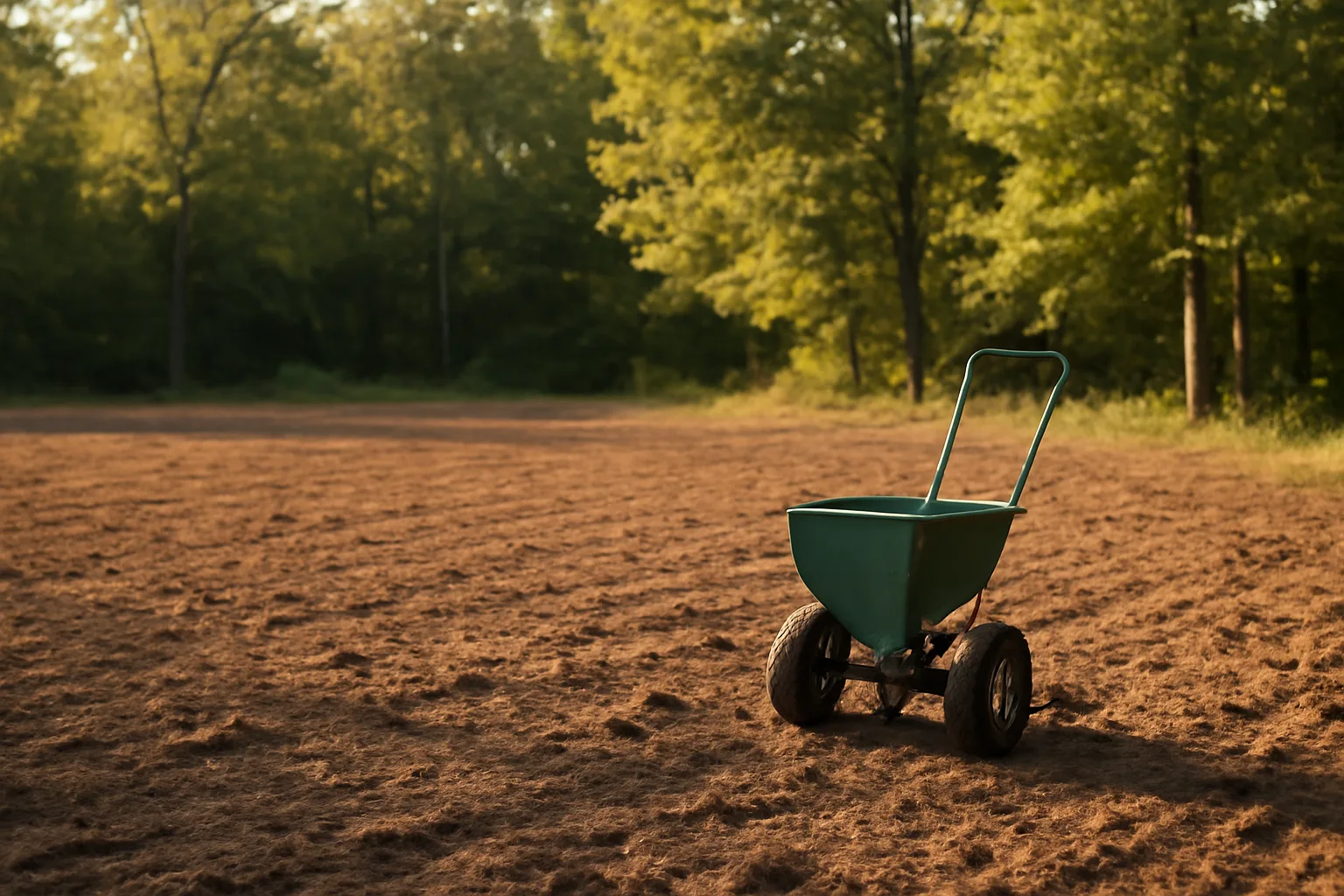
At minimum you need something to kill existing vegetation (a sprayer, even a small ATV or backpack sprayer works on plots under an acre), something to work the soil (a disc, tiller, or drag), a way to spread seed and fertilizer (a broadcast spreader, handheld or towed), and a way to firm the seed into the soil (a cultipacker, drag harrow, or even driving over it with a light vehicle). You don't need a tractor to start. Plenty of successful small kill plots get made with an ATV or UTV, a pull-behind disc or harrow, and a hand-crank or tow-behind broadcast spreader. A tractor with a box blade, disc, and PTO spreader speeds up bigger acreage and makes seedbed prep more consistent, but it's not a requirement for a quarter-acre plot in the timber. A no-till drill is the one piece of gear that changes the game most for reduced tillage plots, since it solves seed depth and soil contact in one pass, but it's also the most expensive item on this list to own outright; a lot of hunters rent one from a local co-op or conservation district for a day instead of buying.
Frequently asked questions
Do deer eat sorghum?
Yes, deer eat sorghum grain and forage, but it's typically used in food plots for drought tolerance, standing winter grain, and screening cover rather than as a top preferred forage. Soybeans and clover generally outperform sorghum for pure deer nutrition and tonnage per acre.
Do deer eat clover?
Yes, clover is one of the most consistently used food plot forages, often testing at 20 percent or higher crude protein during the growing season. It's a perennial that can produce for three to five years once established, making it a common backbone plot for hunters.
When should you plant food plots for deer?
It depends on species and your USDA Plant Hardiness Zone. Cool-season plots like clover, oats, and brassicas typically go in either April-May or mid-August through September; warm-season plots like soybeans go in after your last spring frost, usually May into June.
Do deer like clover?
Yes, clover is one of the most preferred and heavily browsed food plot species across the whitetail's range, largely because of its high protein content and long season of availability compared to short-window annual grains or brassicas.
When should you plant oats for deer?
Plant oats mid-August through September in most whitetail range so they reach a leafy, attractive stage right as bow season opens. Spring oat plantings are possible but usually mature and toughen before fall hunting season, making them less useful for hunting purposes.
When is the best time to plant food plots?
There's no single best date nationwide; it depends on your zone and species. Cool-season forages generally go in spring or late summer to early fall, while warm-season forages go in after your last frost, typically May into June.
When should you plant turnips for deer?
Turnips need roughly 80 to 100 days before a hard frost to bulb out properly, which puts planting in late July to mid-August for most of the whitetail's range. Plant too late and you get leafy growth without bulb development.
What is a food plot?
A food plot is a planted patch of forage on hunting or wildlife land, meant to feed deer and concentrate their movement for observation or hunting. Plots range from quarter-acre kill plots in timber to multi-acre nutrition fields planted in soybeans or clover.
What are deer's favorite foods?
There's no official ranked list, since preference shifts by region and season, but acorns (especially white oak group), soybeans, clover, and other legumes are consistently among the most preferred whitetail foods documented in wildlife research and extension observation.
Do deer like honey?
There's no credible evidence deer seek out honey as a food source; it's not documented in wildlife research as deer forage. This question likely gets confused with mineral licks or commercial attractant products, which are unrelated and may fall under state baiting rules.
How much does a soil test cost for a food plot?
Most land-grant university extension soil testing labs charge somewhere between $7 and $20 per sample, with results typically back in one to two weeks. Pull composite samples from six to eight spots across the plot rather than testing one location.
Do I need to till the soil before planting a food plot?
Tilling isn't strictly required; no-till planting with a no-till drill works well, especially on erosion-prone ground, but it demands a more thorough herbicide burndown beforehand since you're not physically disturbing competing vegetation with steel.
How deep should I plant food plot seed?
Depth depends on seed size. Small seeds like clover and brassicas want 1/4 inch or less of coverage; oats and wheat go about 1 to 1.5 inches deep; soybeans go 1 to 2 inches deep. Planting small seed too deep is a common cause of a failed stand.
Can I plant a food plot without a tractor?
Yes. An ATV or UTV with a pull-behind disc or harrow, a sprayer, and a broadcast spreader can establish a solid quarter- to half-acre plot. A tractor speeds up larger acreage but isn't required for small kill plots in the timber.
Sources
- Association of Fish and Wildlife Agencies / individual state wildlife agency baiting regulation pages: Baiting and feeding regulations for deer vary by state and change over time
- NOAA National Centers for Environmental Information, Freeze/Frost Data: County-level average first and last frost dates are available from NOAA cooperative station data
- University of Tennessee Extension, Establishing Wildlife Food Plots: Most food plot species require at least four to six hours of direct sunlight to produce forage
- University of Georgia Extension, Soil Testing: Standard soil test fees at land-grant extension labs typically run in the range of about $7 to $20 per sample
- University of Missouri Extension, Herbicide Mode of Action and Use: Glyphosate requires actively growing green tissue and takes roughly one to two weeks to fully translocate and kill target vegetation
- Oklahoma State University Extension, Food Plots for Wildlife: Seed tag information and extension guides both inform correct seeding rates for common food plot species
- USDA Forest Service, Northern Research Station, Whitetail Deer Habitat and Food Habits: White oak group acorns are generally lower in tannins and more palatable to deer than red oak group acorns