Last updated 2026-07-24
TL;DR
A grain drill places seed at a set depth and spacing, which improves germination and cuts seed waste compared to broadcasting. For small clover or brassica plots, broadcasting works fine. For grain plots (oats, wheat, sorghum) over an acre or two, a drill pays for itself in seed savings and stand quality within a few seasons.
what is a food plot, and where does a grain drill fit in?
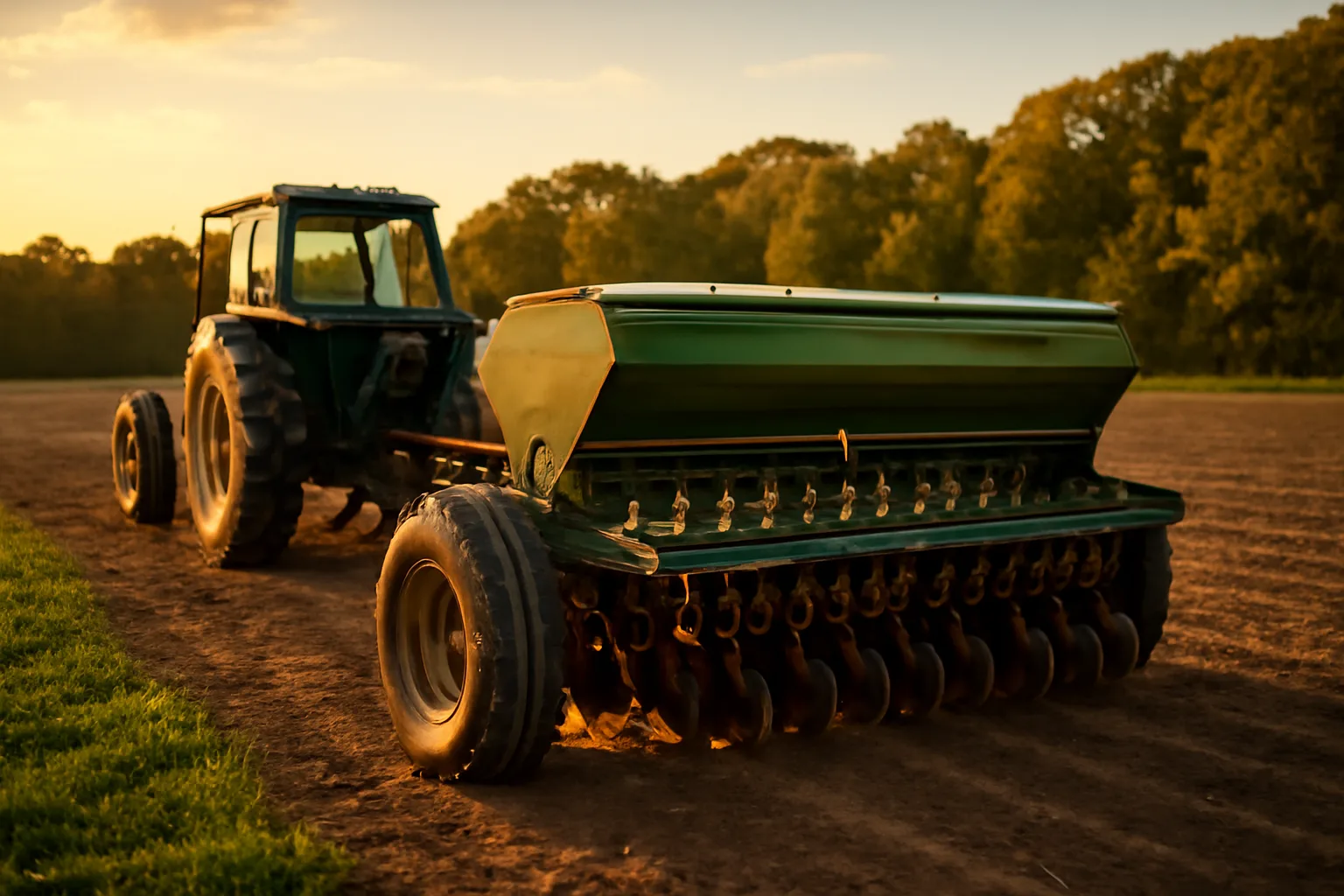
A food plot is a planted patch of forage or grain on hunting land, put in specifically to feed and attract deer or other wildlife. Plots range from quarter-acre kill plots tucked in timber to multi-acre destination fields planted in clover, brassicas, or cereal grains. The USDA Natural Resources Conservation Service treats these plantings as a wildlife habitat practice when cost-shared through conservation programs, and most state wildlife agencies publish their own planting guides for landowners doing it on their own dime [1]. A grain drill is the equipment that gets seed into the ground at the right depth and spacing, in rows, instead of scattering it on the surface. It's pulled behind a tractor or ATV, and it opens a small furrow, drops seed at a set rate, and closes the furrow behind it in one pass. That's the whole job. Where it fits: broadcasting (spreading seed on top of the soil, sometimes followed by a light drag or cultipacker) is cheaper and faster for small clover or brassica plots. A drill earns its keep on larger acreage, on grain crops that need consistent planting depth (oats, wheat, sorghum, corn, soybeans), and on any plot where you're trying to stretch seed dollars across more acres. If you're planting a quarter acre of clover behind your house, don't buy a drill. If you're putting in five acres of oats and beans across three plots, a drill will save you real money in seed alone.
how does a grain drill actually work?
A grain drill has a seed box on top, metering wheels or cups that dispense seed at a set rate, and furrow openers (usually double-disc openers) that cut a slot in the soil. Behind the openers, press wheels or a chain drag close the furrow and firm the soil around the seed. Row spacing on most food-plot-scale drills runs 6 to 7.5 inches, though some no-till drills used for grain crops run wider. The key adjustment is depth. Most food plot seed wants to go in shallow, generally 1/4 to 1/2 inch for clover and small-seeded forages, up to 1 to 1.5 inches for larger seeds like oats, wheat, or soybeans. University extension planting guides consistently point out that depth control is the single biggest variable separating a good stand from a thin one, because seed planted too deep simply doesn't emerge, and seed left on the surface dries out before it germinates. Many drills built for food plots (and no-till drills in general) can also handle two seed boxes, a small-seed box up front for clover or brassica seed and a large-seed box behind it for grains. That lets you plant a grain/legume mix (oats and clover, for example) in one pass, with each seed type going in at its own depth.
do i actually need a grain drill, or can i broadcast instead?
You don't need a drill to grow a good food plot. Broadcasting seed followed by a cultipacker or light disking works well for small-seeded species like clover, chicory, and brassicas, especially on prepared, firm seedbeds. Millions of acres of food plots get planted every year with nothing more than a hand spreader or ATV broadcaster. Where broadcasting struggles is with larger, heavier seed. Oats, wheat, rye, corn, and soybeans need to be covered with soil at a specific depth to germinate reliably. You can broadcast these and then disk them in, but seed depth ends up uneven, some seed sits on the surface and gets eaten by birds or dries out, and you generally need to plant a heavier rate to compensate for the losses. Extension agronomists commonly note that broadcast seeding of grain crops requires 20 to 30 percent more seed than drilling to get an equivalent stand, because germination and emergence rates are lower and less consistent. So the honest answer: broadcast for small plots and small seed. Drill for larger acreage, grain crops, or when you're planting into no-till ground with heavy residue, where a drill's disc openers cut through crop residue that would smother broadcast seed sitting on the surface.
what does a grain drill cost, and is it worth buying versus renting?
Used grain drills sized for food plots (5 to 8 foot working width, pull-type, 3-point or ATV-towable) commonly sell in the $1,500 to $6,000 range depending on condition, brand, and whether it's a true no-till drill or a conventional-till drill. New no-till drills built specifically for small food plot acreage run higher, often $4,000 to $10,000+, because of the heavier frame and disc-opener design needed to cut through sod and residue without tillage. Many county Soil and Water Conservation Districts and NRCS field offices maintain equipment-share programs where landowners can rent a no-till drill for a day or a weekend, often for $10 to $30 per acre or a flat daily fee in the $50 to $150 range. This is usually the smartest move for anyone planting under 5 acres a year: you get drill-quality results without tying up capital in a machine that sits in a shed 350 days a year. Check with your local NRCS service center or conservation district office, since availability and pricing vary a lot by county [2]. If you're planting 10+ acres a year across multiple properties, or you're doing custom plot work for other landowners, owning a drill starts to pencil out. The math: at $60 a bag of oats seed and a 30 percent seed savings from drilling versus broadcasting, you save something like $15 to $20 per acre in seed cost alone every time you drill instead of broadcast. Over several seasons and several acres, that adds up to real money, though it still takes years to fully offset a $4,000 no-till drill purchase on food-plot-scale acreage alone.
when should i plant food plots for deer?
Timing splits into two windows: spring/summer plantings (warm-season annuals and perennials) and late summer/fall plantings (cool-season annuals). Which window you use depends entirely on species and your USDA Plant Hardiness Zone, since a planting date that works in zone 7 can be a month or more off from what works in zone 4. Spring plots (soybeans, corn, clover, chicory, sorghum, cowpeas) generally go in after the last frost date, once soil temperatures warm into the mid-50s to 60s Fahrenheit. That's typically April in the Deep South, May in the Midwest and mid-Atlantic, and late May into June in the northern tier and higher elevations. Fall plots (brassicas, oats, wheat, rye, clover overseeds) go in 6 to 10 weeks before your area's average first hard frost, so the plants have time to establish before growth slows. In much of the whitetail's range that means late July through early September, but check your local extension office's frost date tables, since first-frost dates vary widely even within a single state. Planting too early into hot, dry late-summer soil is one of the most common food plot failures; planting too late means plants don't get enough growth before frost and dormancy set in.
when should i plant oats for deer?
Oats are a cool-season annual, and most extension guidance recommends planting them in late summer to early fall, roughly 6 to 8 weeks ahead of your first expected frost, so they get solid vegetative growth before cold weather slows them down [3]. That window runs from mid-August in northern states to mid-September or later in the South. Oats can also go in as a spring planting in northern climates for early-season forage, but the fall planting is far more common for food plots because oats are extremely attractive to deer right when they're putting on new growth in September and October, which lines up well with early bow season in most states. A drill is a real advantage here: oats want to be planted about 1 to 1.5 inches deep, and a drill gets you that consistent depth across the whole plot in one pass. Broadcast-and-drag can work, but stands tend to be spottier.
when should i plant turnips for deer?
Turnips, like other brassicas, are planted in mid to late summer for fall and winter deer forage, generally 60 to 90 days before your first killing frost. In most of the whitetail's range that puts turnip planting somewhere between mid-July and mid-August, though extension planting calendars for northern states like Wisconsin and Minnesota often push that window to late July, while southern states can wait until late August or early September. Turnip seed is tiny, roughly 100,000 to 150,000 seeds per pound, and it only needs to go in 1/4 to 1/2 inch deep. That shallow depth is easy to overshoot with a drill if you're not careful with the small-seed box settings, and a lot of drills handle tiny brassica seed better through a broadcast box or by mixing with a carrier like pelletized lime or cracked corn and spreading it, then rolling with a cultipacker. Either method works; the depth control matters more than the tool.
do deer eat sorghum?
Yes. Deer readily eat sorghum, particularly the seed heads once they mature, and grain sorghum is a common component of fall/winter food plot mixes, especially in the South and lower Midwest where it tolerates heat and drought better than corn. Sorghum is also planted as a standing grain crop specifically to hold seed through winter for deer and turkey, since the seed heads stay on the plant through fall rather than dropping like some grains. Sorghum is a large seed that benefits from drilled planting depth of about 1 to 1.5 inches. It's drought-tolerant relative to corn, which makes it a common substitute in food plot mixes for landowners in dry regions or on sandy soils that can't reliably finish a corn crop [4].
do deer eat clover, and do they actually like it?
Yes, and clover is generally considered one of the most consistently preferred food plot forages available. It's high in protein (often 20 to 30 percent crude protein in vegetative growth stages), it regrows after grazing, and a well-maintained perennial clover stand can produce forage for 3 to 5 years before it needs to be replanted, which makes it one of the better cost-per-year plantings for a food plot program [5]. Deer preference studies and extension forage trials consistently rank white clover and red clover among the top-choice plantings, though actual preference on any given property depends heavily on what else is available. A clover plot next to a soybean field full of pods might get less pressure in late summer than the same clover plot surrounded by mature timber with little other forage. Clover is small-seeded (roughly 300,000 seeds per pound for white clover) and wants a firm, shallow seedbed, 1/4 inch deep or less. It's a broadcast-and-cultipack crop for most landowners; a drill isn't necessary and can actually bury clover seed too deep if depth isn't dialed in carefully.
what are deer's favorite foods, and does that change by season?
There's no single "favorite food" for deer across all regions and seasons; preference shifts with what's available, the nutritional stage of the plant, and the time of year. That said, across food plot species, clover, soybeans (as forage and later as pods), and brassicas after a frost consistently show up as high-preference plantings in state wildlife agency and extension forage trials [5]. In native browse, deer favor forbs and soft mast (acorns are a major fall preference where oaks are present) over woody browse when given the choice, and acorn availability in a given fall can noticeably pull deer off planted plots. This is well documented in whitetail nutrition research going back decades, and it's the reason experienced plot managers watch mast crops each year and expect plot traffic to vary accordingly. A frost matters a lot for brassicas specifically: turnips and other brassicas convert starches to sugars after a hard frost, which makes them noticeably more palatable, so a plot that deer ignore in October can get hammered in December once the leaves and bulbs sweeten up.
do deer like honey, or is that a myth?
There's no research support for deer having a meaningful attraction to honey, and it isn't a recognized food plot or attractant strategy in any state wildlife agency or extension publication. Deer are herbivores that browse forbs, grasses, mast, and agricultural crops; honey isn't part of their natural diet or a documented attractant. This question likely comes from confusion with commercial mineral or attractant products that use molasses or sweet scents as a carrier or additive, or from apple/persimmon-based attractants (real, well-documented deer preferences) getting mixed up with the idea of honey. If you're looking for something sweet that deer genuinely go after, whole apples, standing soybeans, and brassica bulbs post-frost have actual research and field data behind them; honey doesn't. One more practical note: many states regulate or ban baiting and feeding of deer outright, and rules on what counts as bait (mineral licks, scent products, supplemental feed) vary a lot by state. Check your state wildlife agency's regulations before using any additive or attractant product, since a legal food plot in one state can cross into an illegal baiting violation in another depending on how the product is applied.
how do you pick the right seeding rate and depth for a drill?
| Oats | 1-1.5 in | 80-96 | 100-120 | |
|---|---|---|---|---|
| Winter wheat | 1-1.5 in | 90-120 | 110-150 | |
| Grain sorghum | 1-1.5 in | 6-8 | 8-12 | |
| Soybeans (forage) | 1-1.5 in | 50-60 | 60-80 | |
| White clover | 0.25 in or less | 4-6 | 6-8 | |
| Turnip/brassica | 0.25-0.5 in | 3-4 | 4-6 | These are general reference ranges pulled from common extension planting guidance, not a substitute for the rate printed on your specific seed bag [3]. |
Every seed bag and extension planting guide lists a recommended seeding rate (pounds per acre) and planting depth, and a drill lets you hit both consistently across the plot. General reference rates: oats, 2 to 3 bushels per acre (about 64 to 96 pounds); winter wheat, 90 to 120 pounds per acre; soybeans (forage type), 50 to 60 pounds per acre; grain sorghum, 6 to 10 pounds per acre; white clover, 6 to 8 pounds per acre broadcast, less if drilled precisely. When drilling, you can generally cut the broadcast rate by 20 to 30 percent because germination efficiency is higher; a drill puts nearly every seed at usable depth, where broadcasting loses a portion to surface exposure, birds, and uneven coverage. Always double-check your specific seed tag or state extension guide rather than relying on a general number, since regional soil and rainfall differences shift recommended rates. Here's a rough comparison of drilled versus broadcast seeding for common food plot species: | Species | Planting depth | Drill rate (lb/acre) | Broadcast rate (lb/acre) |
how does soil testing factor into a grain drill planting?
A drill gets seed in the ground right, but it can't fix bad soil chemistry. Before you plant anything, whether drilled or broadcast, a soil test tells you your pH and nutrient levels, and it's the single biggest factor in whether a plot actually produces. Most land-grant university soil labs charge $10 to $20 per sample and turn results around in 1 to 2 weeks, and they'll give you specific lime and fertilizer recommendations based on the crop you tell them you're planting. Lime takes months to fully react with the soil, so testing and applying lime the season before you plant (or as early as possible) matters more than almost any other single decision you'll make. If your soil test comes back at pH 5.2 and you're planting clover, which wants something closer to 6.0-6.5, no amount of drilling precision will make up for that mismatch. Your soil test lab is the authority on exact lime and fertilizer rates for your specific field, since recommendations depend on your soil type, buffer pH, and crop. General food plot planning guidance, including the kind covered here, gives you the framework; the lab report gives you the numbers for your dirt. If you want help turning a soil test and your property's layout into an actual seed and equipment plan, PlotSeason's $99 Custom Food Plot Plan walks through species selection and timing based on your zone and soil results, though the lab itself remains the final word on lime and fertilizer rates.
what other equipment do you actually need alongside a drill?
A drill handles the planting pass, but a food plot needs prep work before it and sometimes a finishing pass after. Most plots start with a soil test, then lime and fertilizer application (broadcast spreader, often the same one you'd use for seed), then either tillage (disk, tiller) or herbicide burndown to clear existing vegetation, especially for a no-till approach. A cultipacker or roller is worth owning even if you own a drill, because it firms the seedbed after broadcasting small seed like clover, and some landowners run one behind the drill anyway for extra seed-to-soil contact in dry conditions. A basic disk harrow handles seedbed prep on plots you're not doing no-till on, and a boom or ATV sprayer handles herbicide application for weed control and burndown. For most first-time or small-acreage food plotters, the honest priority order is: soil test first, then a sprayer and broadcast spreader, then a disk if you're tilling, and a drill only once you're consistently planting grain crops on more than an acre or two. Compare notes on species selection over at food plot whitetail and deer food plot seed once you've got the ground worked out, and look at deer food plots for layout ideas that make the equipment question easier to answer.
Frequently asked questions
Do deer eat sorghum?
Yes, deer readily eat grain sorghum, especially the seed heads once mature. It's a common fall/winter food plot component, particularly in the South and lower Midwest, because it handles heat and drought better than corn while still providing a standing grain source through winter.
Do deer eat clover, and do they like it?
Yes. Clover is one of the most consistently preferred food plot forages, running 20-30% crude protein in vegetative growth. A well-managed perennial clover stand can last 3-5 years before replanting, making it one of the better long-term value plantings for a food plot program.
When should I plant food plots for deer?
Spring annuals (soybeans, corn, clover) go in after last frost, once soil hits the mid-50s to 60s F. Fall annuals (oats, brassicas, wheat) go in 6-10 weeks before your area's first hard frost. Exact dates depend on your USDA Plant Hardiness Zone, so check your local extension office's frost tables.
When should I plant oats for deer?
Plant oats 6 to 8 weeks before your first expected fall frost, generally mid-August in northern states through mid-September or later in the South. Oats can also be spring-planted in northern climates, but fall planting is far more common because it lines up oat growth with early bow season.
When should I plant turnips for deer?
Plant turnips 60 to 90 days before your first killing frost, roughly mid-July to mid-August in most whitetail range, adjusted earlier for northern states and later for the South. Turnips sweeten noticeably after the first hard frost, which often increases deer use through late fall and winter.
What is a food plot?
A food plot is a planted area of forage, grain, or legumes put in on hunting land specifically to feed and attract deer or other wildlife. Plots range from small quarter-acre kill plots in timber to multi-acre agricultural-style fields planted in clover, brassicas, or cereal grains.
What are deer's favorite foods?
There's no single universal favorite; preference shifts by region, season, and availability. Among plot species, clover, soybeans, and frost-sweetened brassicas consistently rank as high-preference. In native habitat, acorns and other soft mast often pull deer off plots entirely during a heavy mast year.
Do deer like honey?
There's no research or agency guidance supporting honey as a meaningful deer attractant. Deer are herbivores that browse forbs, mast, and crops; honey isn't part of their natural diet. Real documented attractants include apples, persimmons, and standing soybeans or brassicas, not honey.
Do I need a grain drill for a small food plot?
Not usually. For plots under an acre planted in clover or brassicas, broadcasting seed and rolling with a cultipacker works fine and costs far less. Drills earn their cost on larger acreage or grain crops like oats, wheat, and sorghum, where planting depth control matters more.
How much does a grain drill cost?
Used food-plot-scale grain drills (5-8 foot width) typically run $1,500 to $6,000. New no-till drills built for food plots often cost $4,000 to $10,000 or more. Many county NRCS offices and conservation districts also rent drills, often for $10-30 per acre or a flat daily fee.
What planting depth should I use with a grain drill?
It depends on the seed. Small seed like clover and brassicas wants 1/4 to 1/2 inch deep. Larger seed like oats, wheat, sorghum, and soybeans wants 1 to 1.5 inches. Planting too deep is one of the most common reasons a drilled stand comes up thin.
Can a grain drill plant a clover and oats mix in one pass?
Yes, if the drill has a dual seed box setup, a small-seed box for clover and a large-seed box for oats. Each box meters and drops its seed at a different depth simultaneously. Not every drill has this feature, so check before assuming yours can handle a mix.
Is broadcasting or drilling better for food plot seed?
Broadcasting is cheaper and fine for small-seeded species like clover and brassicas on a prepared, firm seedbed. Drilling gives better depth control and typically needs 20-30% less seed to get an equivalent stand, which matters more for grain crops like oats, wheat, and sorghum on larger acreage.
Sources
- USDA Natural Resources Conservation Service, Wildlife Habitat practices: Food plot plantings are recognized as a wildlife habitat practice under NRCS conservation programs
- USDA NRCS, Find a Service Center: Landowners can find local NRCS or conservation district equipment programs, including drill rentals, through their county service center
- University of Tennessee Extension, Establishing Wildlife Food Plots: Fall cool-season plantings including oats should go in roughly 6-8 weeks before first frost for adequate vegetative growth
- Mississippi State University Extension, Wildlife Food Plot Establishment: Grain sorghum is more drought-tolerant than corn and is commonly substituted in food plot mixes on dry or sandy soils
- Auburn University Extension, White-tailed Deer Food Habits and Nutrition: Clover and other legumes rank among the highest-preference and highest-protein food plot forages for deer