Last updated 2026-07-25
TL;DR
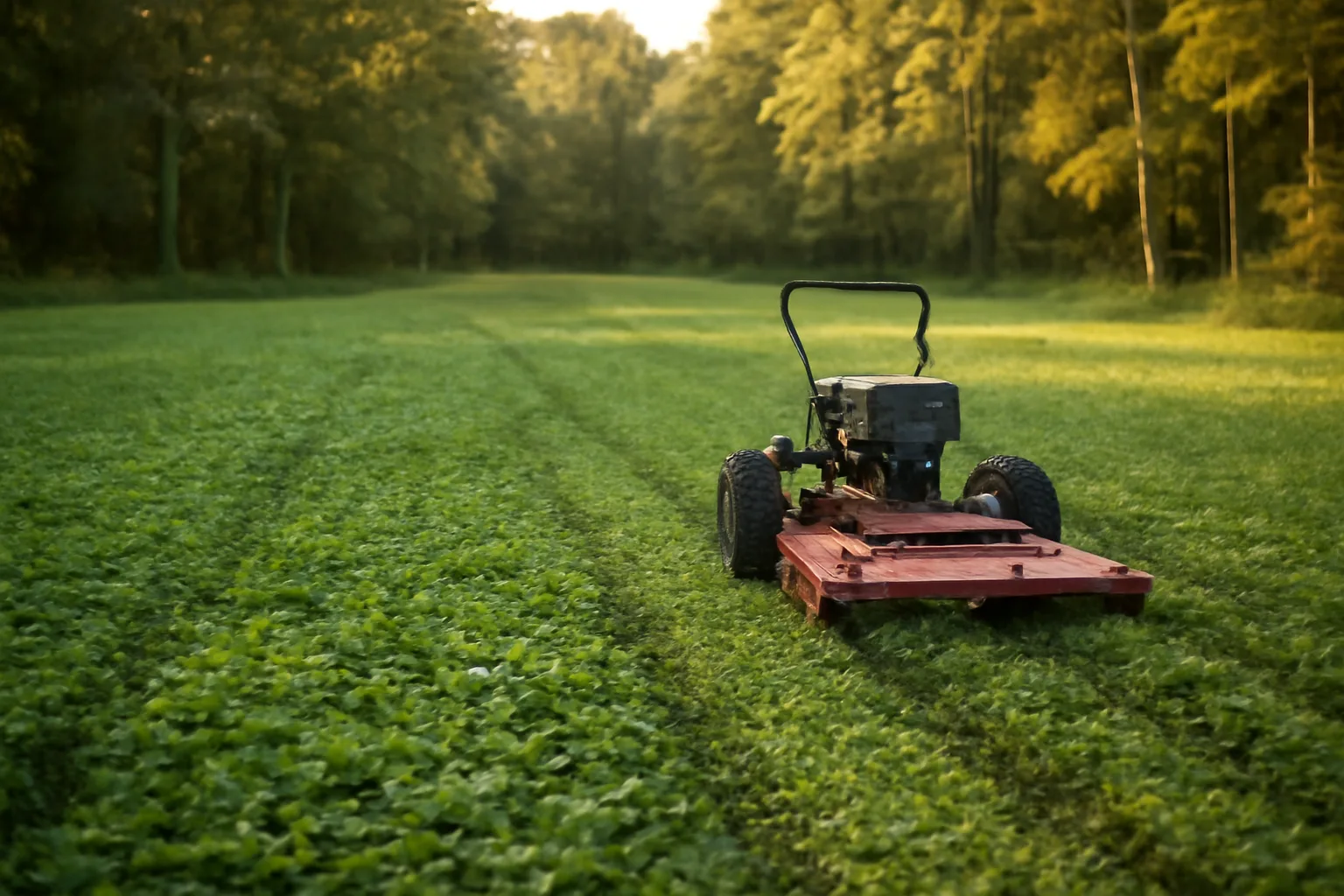
Mow clover food plots every 3 to 4 weeks during active growth, cutting down to about 4 to 6 inches. This knocks back weeds before they seed out and pushes the clover to put out new, tender growth deer prefer. Skip mowing during peak summer heat drought stress and stop about 3 to 4 weeks before your first hard frost.
How often should you mow a clover food plot?
Most established clover plots need mowing every 3 to 4 weeks during the growing season, roughly April through September in much of whitetail country. That's not a rigid calendar rule though. Weed pressure, rainfall, and how fast the clover is growing all shift the actual interval. The target height matters more than the calendar date. University of Kentucky's forage extension work on clover management recommends mowing when growth reaches 8 to 10 inches and cutting back down to 4 to 6 inches [1]. That height keeps the plant vegetative (leafy, tender, low in stem) instead of letting it flower and get woody. In a wet spring, that might mean mowing every 2 to 3 weeks. In a dry August, clover growth slows way down and you might go 5 or 6 weeks between cuts, or skip a mowing entirely. Watch the plot, not the calendar. A simple rule that works in practice: if you can still see mostly clover leaves and only a little weed seed head poking through, wait another week. Once weeds start going to seed or clover stems get thick and woody, it's past time.
Why do you need to mow clover at all?
Mowing clover does two jobs at once: it sets back weed competition and it stimulates fresh, nutrient dense regrowth that deer actually want to eat. Clover left uncut gets tall, stemmy, and less palatable. Deer preferentially browse young clover leaves over mature growth loaded with fiber. Regular mowing resets the plant to a vegetative state, which is also when crude protein content is highest, often in the 25 to 30 percent range for well managed clover according to forage testing summarized by Penn State Extension [2]. Mowing also controls broadleaf and grassy weeds that compete for light, water, and nutrients. Most common food plot weeds (foxtail, ragweed, horseweed) can't tolerate repeated cutting at 4 to 6 inches the way a perennial clover crown can. Clover has a low growing point, so mowing at the right height cuts the weeds off before they seed while barely touching the clover's regrowth potential. Skip mowing for a full season and you'll often see weed cover exceed 50 percent of plot area by late summer, based on general weed succession patterns documented in Midwest cooperative extension weed management guides [3]. At that point, mowing alone won't fix it. You're looking at herbicide or replanting.
What's the right height to mow clover down to?
Cut clover to 4 to 6 inches, never shorter. Scalping it down to 2 or 3 inches removes too much leaf area and stresses the plant, slowing regrowth and letting weeds regain ground. The 4 to 6 inch target leaves enough leaf surface for the plant to keep photosynthesizing and bounce back fast, usually within a week to 10 days under decent moisture. Mow when clover is 8 to 10 inches tall, before it starts flowering. Once white or red clover blooms, it's diverting energy into seed production instead of leaf growth, and palatability to deer actually drops. A bush hog or rotary mower on a tractor works fine for larger plots. Smaller plots (under an acre) do well with a pull behind rotary cutter on an ATV, or even a heavy duty string trimmer on tiny hunter access plots. Whatever you use, keep blades sharp. A dull mower shreds rather than cuts, which stresses the plant more and can invite disease into the wound.
When should you NOT mow clover?
Don't mow during severe drought stress or in the peak heat of mid summer if the plot is already struggling. Cutting clover when it's wilted and stressed removes leaf area it needs to survive, and it may not regrow until conditions improve. Also stop mowing about 3 to 4 weeks before your area's first expected hard frost. This gives the clover time to build root reserves for winter and gives you standing forage right when deer need it most, heading into fall and hunting season. Mowing too late in the season, especially into September in northern states, can set the plant back going into dormancy. If you're using the plot as a hunting location rather than pure agronomy, you'll also want to time your last mow around scouting and hunting pressure. A lot of hunters do a final light mow in early September, then leave the plot standing through the season. Check your state wildlife agency's baiting and feeding regulations before assuming any food plot practice is legal in your state; supplemental feed and attractant rules vary widely and mowing itself isn't regulated, but some states have rules about clover plots located near stands or blinds in relation to baiting definitions [4].
Do deer actually like clover?
Yes, clover is one of the most consistently preferred food plot forages for whitetail deer. It's high in protein, digestible, and available across a long season, which is why it shows up in most food plot seed blends and extension forage guides for deer management [5]. White clover (Trifolium repens) and red clover (Trifolium pratense) are the two most common species planted. White clover, especially improved varieties like Durana or Ladino types, tends to hold up better to grazing pressure and mowing because of its low growing, spreading crown. Red clover grows more upright and can take more mowing cuts before establishment but doesn't persist quite as long as a stand, often 2 to 3 years versus 4 to 5 for white clover types under good management [6]. Protein content in vegetative clover commonly runs 20 to 30 percent crude protein, which lines up well with what lactating does and antler growing bucks need in spring and summer [2]. That's a big part of why clover plots get hit hard from green-up through mid summer, then again in fall once cooler weather returns and regrowth picks up. If you're deciding what to plant in the first place, food plot seed selection and deer food plot seed blends are worth comparing before you commit acreage to straight clover.
When should you plant food plots for deer?
Timing splits into two windows: spring/summer plots (clover, chicory, soybeans) and fall plots (brassicas, cereal grains, annual clovers). Spring seeded perennial clover generally goes in as soon as soil can be worked and frost risk has passed, often March through May depending on latitude, following soil temperature and frost date guidance from state land grant extension services . Fall annual plots like brassicas and cereal grains are typically planted 60 to 90 days before your first killing frost, which lines up with why turnip and oat planting windows (below) sit in later summer. The real driver is soil temperature and moisture, not a fixed date. Most extension planting charts give a range by hardiness zone rather than a single day, because a warm March in Kentucky and a warm March in Minnesota aren't the same thing. Hunters using a Custom Food Plot Plan get zone specific windows mapped to their actual location instead of guessing off a generic chart; a $99 one-time plan from PlotSeason breaks planting dates, seed mixes, and mowing schedule down by region. It's general guidance built for your zone, not a substitute for your soil test lab's specific lime and fertilizer recommendations.
When should you plant turnips for deer?
Plant turnips 60 to 90 days before your first expected fall frost, which for most of the whitetail range falls between late July and early September. Turnips need that runway to bulb out and reach peak palatability right as cold weather hits. Turnips get sweeter after a frost because the plant converts starches to sugars as a cold tolerance response, a well documented brassica trait referenced in Extension brassica plot guides . That's exactly why turnip plots often sit untouched most of the fall, then get hammered in November and December once temperatures drop and deer key in on the sugar spike. Seeding rate for turnips alone typically runs 4 to 6 pounds per acre, and they're commonly blended with other brassicas like radish or rape rather than planted as a monoculture. A firm, well prepared seedbed matters a lot here; turnip seed is tiny and needs good soil contact, similar to establishing clover.
When should you plant oats for deer?
Oats go in the ground about 6 to 8 weeks before your first fall frost in most regions, typically August through early September for northern states and into late September for the mid-South. Oats are a cool season annual cereal grain that germinates fast, often within 5 to 7 days under decent moisture, and provides quick green forage while slower brassicas and clover are still establishing. They're a common nurse crop mixed into fall clover plantings for exactly that reason: fast cover while the clover gets established underneath. Spring plantings of oats are possible too in northern climates as a short season forage, but fall is by far the more common and more productive window for deer plots, since oats tolerate light frost and stay palatable well into early winter .
Do deer eat sorghum?
Yes, deer will eat grain sorghum, both the leaves and the seed heads, though it's used more as a standing grain/cover crop than a primary attractant forage compared to clover or beans. Sorghum is more commonly planted for its drought tolerance and as a screening or bedding cover crop that also provides late season grain, rather than as the centerpiece browse plot. USDA NRCS plant guides list grain sorghum among wildlife food plot species suited to drier soils and shorter growing windows . It's a reasonable option on sandy or low fertility ground where corn or soybeans struggle, but don't expect the same season long grazing pressure you'd see on a clover plot.
What exactly counts as a food plot?
A food plot is a planted area, usually somewhere between a quarter acre and several acres, established specifically to grow forage that attracts and feeds wildlife, most often deer on hunting properties. It's distinct from agricultural cropland in that the goal is wildlife nutrition and hunting opportunity, not commercial yield. Food plots generally fall into two categories: perennial plots (clover, chicory, alfalfa) that persist for multiple years with mowing and fertility maintenance, and annual plots (brassicas, cereal grains, soybeans, corn) that get replanted each season. Many properties run both, using perennials for spring and summer nutrition and annuals for fall hunting season draw. State wildlife agencies and universities both publish food plot guidance aimed at private landowners, treating it as a habitat management practice alongside timber stand improvement and prescribed burning . If you're new to the concept entirely, food plot whitetail and deer food plots cover the broader planning basics before you get into species specific management like mowing schedules.
What are deer's favorite foods, and where does clover rank?
| White clover | 20-30% | Spring through fall | Every 3-4 weeks | |
|---|---|---|---|---|
| Red clover | 18-25% | Spring through fall | Every 3-4 weeks | |
| Soybeans | 30-40% (leaf) | Summer | Not typically mowed | |
| Turnips/brassicas | 15-25% | Fall/winter | Not mowed | |
| Oats | 12-20% | Fall | Not mowed | |
| Grain sorghum | Lower, grain-based | Fall/winter | Not mowed | Protein figures are approximate ranges pulled from forage testing summaries and vary with soil fertility, plant maturity, and growing conditions [2][6]. |
Deer are opportunistic browsers whose preferred foods shift by season, but across food plot species, clover, soybeans, and chicory consistently rank near the top for whitetail preference in forage trials . Outside of planted plots, natural whitetail diets lean heavily on acorns and other hard mast in fall, woody browse in winter, and forbs plus agricultural crops in spring and summer, according to deer diet studies summarized by state wildlife agencies . Within the food plot world specifically, clover holds up well because it's available across a long season (often 6 to 8 months of active growth) compared to a soybean field that's only palatable while beans are in the vegetative stage before pods form. Here's roughly how common food plot species compare on a few practical measures: | Species | Crude protein (approx.) | Season of use | Mowing needed |
Do deer like honey?
There's no real evidence deer seek out honey as a food source, and it's not a practical food plot or attractant question in the way the others on this list are. Deer are herbivores built to digest cellulose and forage through a four chambered rumen system, not a diet suited to concentrated sugars from honey . Some hunters have used sugary liquid attractants historically, but check your state wildlife agency's baiting definition first; many states classify any placed feed or attractant, including sugar based products, under baiting restrictions, and rules vary a lot by state [4].
A simple clover mowing schedule you can actually use
Here's a practical season by season breakdown for most of the whitetail range (adjust by a few weeks for your specific latitude): Spring (April-May): First mow once clover hits 8-10 inches and before it flowers. This is usually the heaviest weed pressure mow of the year. Early summer (June): Mow again roughly 3-4 weeks after the spring cut, same 8-10 inch trigger height. Mid summer (July-August): Watch soil moisture closely. In a normal year, mow again on the same 3-4 week rhythm. In drought, skip it and let the clover ride until moisture returns. Late summer/early fall (September): Final mow of the season, timed 3-4 weeks before your area's first hard frost. After this, let it stand for hunting season. If you're not sure where your property falls on frost dates and planting windows, that's exactly the gap a Custom Food Plot Plan is built to fill, mapping mowing and planting timing to your actual zone rather than a national average. Your soil test lab remains the final word on lime and fertilizer rates; the plan handles timing and species selection guidance around that.
Frequently asked questions
How short should you cut clover when mowing a food plot?
Cut clover down to 4 to 6 inches, not shorter. Scalping it to 2 to 3 inches removes too much leaf area, stresses the plant, and slows regrowth, which gives weeds an opening. The 4 to 6 inch target keeps enough leaf surface for fast recovery, usually within a week to 10 days under normal moisture.
Can you mow clover too often?
Yes. Mowing more than every 2 to 3 weeks without letting clover reach 8 to 10 inches first doesn't allow the plant to rebuild leaf area between cuts, which weakens the stand over time. Stick to a growth trigger (8-10 inches) rather than a strict weekly schedule.
Do deer eat sorghum?
Yes, deer eat both grain sorghum seed heads and leaves, though it's usually planted for drought tolerance and cover rather than as a primary browse attractant like clover. USDA NRCS lists grain sorghum among viable wildlife food plot species for drier, lower fertility soils.
Do deer like clover?
Yes, clover is one of the most preferred food plot forages for whitetail deer, offering 20 to 30 percent crude protein in vegetative growth and staying palatable across a long spring-through-fall season, longer than most other common plot species.
When should you plant food plots for deer?
Perennial clover plots go in spring, roughly March through May depending on latitude and soil temperature. Fall annual plots like brassicas and cereal grains go in 60 to 90 days before the first killing frost. Exact dates depend heavily on your hardiness zone and local frost data.
When should you plant turnips for deer?
Plant turnips 60 to 90 days before your area's first fall frost, typically late July through early September across most of the whitetail range. Turnips need that time to bulb out, and they get sweeter after a frost as starches convert to sugar.
When should you plant oats for deer?
Plant oats about 6 to 8 weeks before your first fall frost, generally August through early September in northern states and later into September in the mid-South. Oats germinate fast, often in 5 to 7 days, and are commonly used as a nurse crop with fall clover.
What is a food plot?
A food plot is a planted area, usually a quarter acre to several acres, established to grow forage that attracts and feeds wildlife, most often deer, for hunting and habitat purposes. Plots split into perennials (clover, chicory) and annuals (brassicas, cereal grains) with different management needs.
What are deer's favorite foods?
Whitetail diets shift seasonally: acorns and hard mast dominate fall, woody browse carries winter, and forbs and agricultural crops matter most in spring and summer. Within food plots specifically, clover, soybeans, and chicory rank consistently high in forage preference trials.
Do deer like honey?
There's no solid evidence deer actively seek out honey, and it's not a standard food plot forage or attractant. Deer are herbivores with a rumen system built for cellulose digestion, not concentrated sugar sources. Some sugary attractants exist commercially, but check your state's baiting rules before using any.
How tall should clover get before you mow it?
Mow when clover reaches 8 to 10 inches tall, before it starts flowering. Waiting past that point lets the plant put energy into blooms and seed instead of leafy regrowth, which lowers protein content and palatability for deer.
Should you mow clover food plots in the fall before hunting season?
Do your last mow about 3 to 4 weeks before your area's first hard frost, then let the plot stand through hunting season. Mowing too late into September or October in northern states can stress the plant heading into dormancy and reduce standing forage exactly when deer need it most.
Sources
- University of Missouri Extension, Weed Management in Food Plots: Weed succession and cover patterns in unmanaged plots
- Pennsylvania Game Commission, Baiting and Feeding Regulations: State wildlife agency baiting and feeding rules vary and apply to attractant use near hunting areas
- University of Georgia Extension, Wildlife Food Plot Planting Dates: Oats are typically planted 6-8 weeks before first fall frost as a fast-germinating cool season annual
- USDA NRCS, Plant Fact Sheet: Grain Sorghum: Grain sorghum is used in wildlife food plots on drier, lower fertility soils
- Pennsylvania Game Commission, White-tailed Deer Biology and Diet: Whitetail deer diet shifts seasonally between mast, browse, and forbs/crops
- USDA Forest Service, White-tailed Deer Ecology (Species Guide): Deer are ruminant herbivores with digestive systems built for cellulose-based forage