Last updated 2026-07-26
TL;DR
A John Deere food plot planter is any Deere-brand drill, planter, or seeder used to plant deer forage. Options range from used 3-point box drills (roughly $1,500 to $5,000) to modern no-till drills like the 1590 (often $20,000 to $35,000 used). Match the machine to your acreage and tillage plan, not the brand name alone.
What is a food plot, exactly?
A food plot is a planted patch of forage or grain on hunting land, meant to feed deer and other wildlife and give hunters a place to observe or intercept animals. Plots range from quarter-acre kill plots tucked in timber to 5-acre plus destination fields planted in clover, brassicas, or grain. The USDA Natural Resources Conservation Service treats food plots as a wildlife habitat practice. Its conservation practice standard for wildlife habitat management describes the goal as providing "food and cover for wildlife species" through planted vegetation on agricultural or forest land [1]. State wildlife agencies generally view food plots as a land management tool, not a substitute for natural habitat diversity. A plot is really just small-scale farming with a different customer. Instead of selling a crop, you're growing tonnage and attraction for deer. That means the same rules apply: soil test first, match the seed to the site, and plant on the right calendar date for your zone. For a broader look at plot styles and layouts, see food plot whitetail and deer food plots.
Does John Deere actually make a 'food plot planter'?
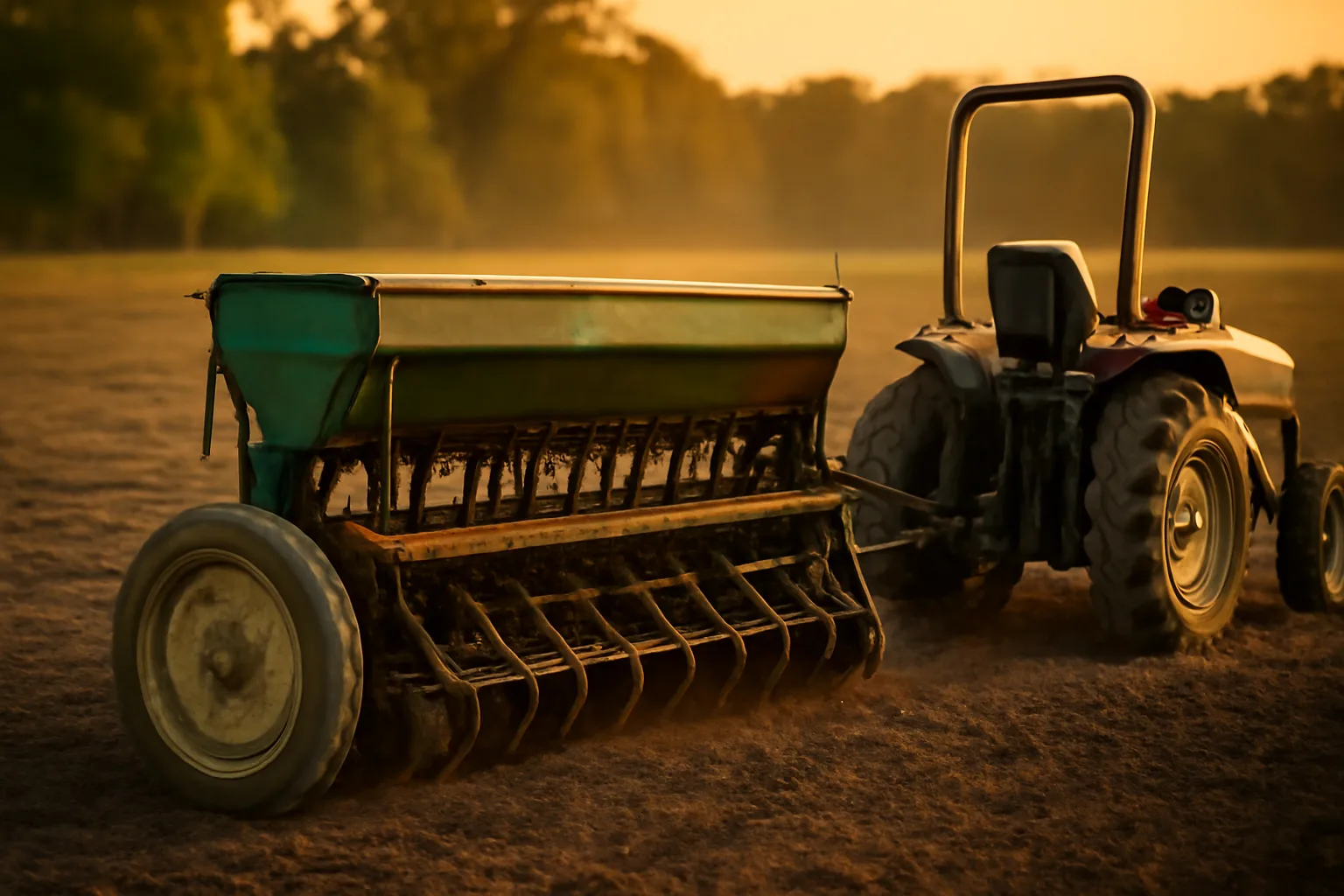
No. John Deere doesn't sell a product literally branded "food plot planter." Hunters use that phrase to describe several different Deere machines repurposed or scaled down for small-acreage forage planting. The most common candidates are the Deere 1590 no-till drill, older box drills like the 8300 or 455, small grain drills pulled behind ATVs or compact tractors, and in some cases row-crop planters like the 1770 or MaxEmerge series adapted for soybeans or corn plots. None of these were designed with deer hunters in mind. Deere built them for row-crop and forage farmers, and food plotters bought used units because they're durable and parts are easy to find. That's actually good news for buyers. It means you're shopping a mature used-equipment market, not a niche product with inflated hunting-brand pricing. A 20-year-old Deere drill with decent bearings will still plant a plot just fine.
Which John Deere models actually work for food plots?
| Small box drill (3-pt) | 8300, 455, 750 | 1 to 10 acre plots, tilled seedbeds | $1,500 to $6,000 | |
|---|---|---|---|---|
| No-till drill | 1590, 1560 | Standing residue, small grains, clover into sod | $18,000 to $38,000 | |
| Row crop planter | 1770, MaxEmerge 2/3/5 | Corn or soybean plots over 5 acres | $8,000 to $25,000 | |
| ATV/UTV seeder | Not Deere-branded; often paired with Deere Gators | Sub-acre kill plots, tight access | $300 to $1,500 | Prices above are rough used-market ranges based on typical farm equipment auction and dealer listings; they move a lot with condition, row spacing, and local demand. If you're only planting 1 to 3 acres a year, a small box drill or even a cultipacker-and-broadcast-seeder combo will outperform a big no-till rig on cost per acre. Save the 1590-class investment for guys planting 15-plus acres across multiple properties or leasing out drilling work to neighbors. |
The right machine depends on acreage, soil type, and whether you're planting into tilled ground or standing residue. | Model type | Example Deere units | Best for | Typical used price |
Do I need a no-till drill, or will tillage equipment work?
You need a no-till drill only if you're planting into standing sod, crop residue, or ground you can't or don't want to till. Otherwise, conventional tillage plus a simple drop spreader or box drill works fine and costs far less. No-till drills like the Deere 1590 cut a slot through residue, place seed at a set depth, and close the slot in one pass. That's a real advantage on erodible ground, small plots surrounded by trees where full tillage isn't practical, or clover and brassica plantings where you want to avoid disturbing soil structure. University extension tillage research generally shows no-till and reduced-till systems cut soil erosion substantially compared to conventional tillage, though the exact percentage varies by slope, soil type, and rainfall [2]. But no-till drills are heavy, need real horsepower to pull, and cost multiples of a used box drill. If your plots are small, accessible, and you're comfortable disking or tilling first, a $2,000 to $4,000 used drill or even a tow-behind broadcast spreader with a cultipacker will get seed in the ground for a fraction of the cost. Don't buy a $25,000 drill to plant three 1-acre plots. That math never works out.
When to plant food plots for deer
Timing depends entirely on what you're planting and your USDA plant hardiness zone, not on a single national date. Cool-season plots (clover, brassicas, oats, wheat) go in late summer to early fall in most of the whitetail's range; warm-season plots (soybeans, corn, sorghum) go in late spring after soil warms. As a rough framework: in northern zones (upper Midwest, Northeast), cool-season plantings typically go in from mid-August through early September, giving plants 6 to 8 weeks before hard frost. In the transition zone (Kentucky, Tennessee, Virginia), late August through mid-September works for most brassicas and cereal grains. In the Deep South, growers often wait until late September or October since summer heat lingers longer. Warm-season plots (corn, soybeans, sorghum) follow local row-crop planting windows, generally after soil temperatures hit 50 to 60°F, which most extension agronomy guides tie to regional last-frost dates [3]. Your local extension office publishes exact frost-date tables for your county, and that's the best single resource for nailing your window.
When to plant oats for deer
Oats are a cool-season cereal grain, so they're planted in late summer to early fall in most whitetail country, roughly 6 to 8 weeks before your area's first hard frost. That timing lets oats establish leafy growth before cold weather, which is when deer hit them hardest. In the upper Midwest and Northeast, that generally means mid-August to early September. In the transition zone, late August to mid-September. Oats can also be spring-planted in northern climates as a quick-growing spring forage, but most food plotters use them as a fall attraction crop because deer key in on tender oat regrowth after frost, when the plant converts starches to sugars. Oats are cheap, germinate fast, and tolerate a wider soil pH range than clover, which makes them a forgiving choice if your soil test came back marginal. They don't persist like a perennial, though. Expect a single season of use unless you interseed with a cereal rye or clover blend for spring cover.
When to plant turnips for deer
Turnips and other brassicas are planted in late summer, generally 90 to 100 days before your first expected hard frost, since deer typically won't hit the bulbs and leaves hard until after a couple of frosts sweeten the plant's sugars. That window lands around late July to mid-August in northern states, and mid-August to early September through the transition zone. Plant too late and the bulbs won't size up before winter; plant too early in still-hot weather and germination suffers along with flea beetle pressure. Brassicas need a fairly fertile, well-drained soil and respond hard to nitrogen. Cooperative extension guidance on brassica forage crops recommends soil testing before planting since brassicas are heavy nitrogen users and underfed plants produce thin, unpalatable growth [4]. If your soil test came back low on phosphorus or with a pH under 6.0, correct that before you plant. Your soil test lab's specific lime and fertilizer recommendation is the one to follow, since regional rates vary by soil type.
Do deer eat clover, and do they actually like it?
Yes. Clover is one of the most consistently used food plot forages for whitetail deer across the country, and it's a genuine preferred food, more than a convenient one to plant. Deer graze it spring through fall, and it regrows after grazing better than almost any other plot forage, which is why extension food plot guidance repeatedly lists it as a top forage choice for whitetail plots [5]. White clover (Ladino types) and red clover are the two most common species. Clover is a legume, meaning it fixes nitrogen through root bacteria, which cuts your fertilizer bill over time and builds soil for whatever you plant next in rotation. It also tolerates mowing and light grazing pressure far better than brassicas or grain. The catch: clover needs a soil pH generally in the 6.0 to 7.0 range to perform well, and it's slow to establish, often taking a full season to get thick. If your soil test shows a pH under 5.5, clover will struggle no matter how good the seed is. Lime first, plant second. For seed blend options built around clover, see deer food plot seed.
Do deer eat sorghum?
Yes, deer eat grain sorghum, though it's usually a secondary or late-season food source rather than a primary attractant compared to soybeans, corn, or acorns. Deer browse the leaves some during the growing season and hit the grain heads hard in fall and winter once other food sources thin out. Sorghum's real value in a food plot is structure and drought tolerance, not raw preference ranking. It grows well in poor or sandy soil and drought-prone regions where corn struggles, and standing sorghum doubles as cover, which can hold deer on your property longer during hunting season. Many food plotters blend sorghum with soybeans or other grains specifically for that screening and late-season food combo. If you're choosing between corn and sorghum on marginal ground, sorghum is usually the safer bet for germination and yield consistency. It just won't pull deer the way a fresh soybean field does in August.
What are deer's favorite foods?
There's no single universal answer since deer preference shifts by season, region, and what's locally available, but research and extension data point to a consistent short list: acorns, soybeans, clover, and agricultural crops like corn typically rank at or near the top of preferred whitetail foods where they're available . Acorns are arguably the single most preferred natural food across the whitetail's range in fall, since they're calorie-dense and deer will travel to find them. Among planted forages, soybeans (grazed both as growing plants and as pods/beans later) and clover consistently show up as high-preference selections in feeding studies and extension forage guides. Seasonal need shifts things too. Spring and summer, deer favor high-protein forages like clover and soybeans for antler growth and lactation. Fall and winter, they shift toward high-carbohydrate foods like corn, acorns, and brassica bulbs to build fat reserves. A plot plan that only offers one food type misses half the year's nutritional need, which is why most serious plot programs run a rotation of at least a spring/summer legume and a fall grain or brassica.
Do deer like honey?
There's no credible wildlife research showing deer seek out honey as a food source, and it's not a practical or legal food plot or attractant strategy in most states. Deer are herbivores adapted to browse, forbs, mast, and agricultural crops, not concentrated sugars like honey. Some hunters use sweet liquid scents or molasses-based mineral products marketed as attractants, and there's anecdotal use of sugar-based baits in states where baiting is legal, but that's a different category from a food plot. Straight honey isn't a standard product in that space and isn't something extension or wildlife agencies discuss as a deer food. More relevant: check your state's baiting and feeding regulations before using any concentrated attractant, sweet lick, or mineral product, since a growing number of states restrict or ban baiting, partly over chronic wasting disease concerns. Your state wildlife agency's hunting regulations page is the source to check before buying anything marketed as a deer attractant.
How much does a food plot planter setup actually cost?
Total cost depends far more on tillage equipment and tractor horsepower than on the drill itself. A realistic small-property setup: used compact tractor ($8,000 to $20,000 if you don't already own one), disk or tiller ($1,000 to $3,000 used), and a small box drill or broadcast spreader ($500 to $5,000). Add lime and fertilizer, which your soil test will specify in exact amounts per acre. For plotters who already own a tractor, the marginal cost of adding planting equipment is much smaller. A used cultipacker-seeder or small grain drill in working condition often runs $1,500 to $4,000, and that single purchase can plant clover, oats, wheat, and brassicas across several seasons. If you're leasing dozens of acres or managing multiple properties, the math shifts toward the no-till drill category, where the labor savings from single-pass planting justify the higher sticker price. For most hunters managing under 10 acres of plots, though, a modest tillage-plus-drill combo beats a big no-till rig on cost per planted acre, and that money is often better spent on soil amendments than on iron. This is where a lot of guys overspend: buying a big drill before they've even run a soil test to know what the ground needs.
Do I need a soil test before I plant, regardless of equipment?
Yes, every time, and it matters more than which planter you own. Soil pH and nutrient levels determine whether seed germinates and thrives, and no drill or planter fixes a soil deficiency. Land-grant university extension soil testing labs typically recommend testing every 2 to 3 years for established plots and before planting any new plot, since pH and nutrient levels can shift significantly between seasons depending on rainfall, prior crop, and lime application history. A basic soil test usually costs $10 to $20 through most state extension labs and reports back pH, phosphorus, potassium, and organic matter, along with lime and fertilizer recommendations specific to the crop you tell them you're planting. That soil test result, not a magazine article or a bag of seed's marketing copy, is the real authority on how much lime and fertilizer your specific field needs. If you want help turning a soil test into an actual planting plan matched to your zone and acreage, PlotSeason's $99 Custom Food Plot Plan builds that out species by species; find it at /plot-plan-builder. But the test itself, run through your state's extension lab, is the foundational document either way.
Used vs. new: which makes more financial sense for a hunter?
Used, almost always, unless you're planting commercial-scale acreage or plan to resell the equipment for farm use later. Food plot planting doesn't demand the precision or speed that justifies a new $40,000-plus drill. A 15 to 25 year old Deere box drill or small grain drill, mechanically sound with decent disc openers and seed metering, does the same planting job a brand new unit does for a fraction of the cost. Parts availability for older Deere equipment is generally strong since the company has been in the ag equipment business for well over a century and dealer networks stock common wear parts. Where new equipment earns its price is precision seed placement on large acreage, GPS-guided planting, and warranty coverage if you're running the equipment hard across hundreds of acres. None of that math applies to a hunter planting 2 to 15 acres of food plots a year. Buy used, budget for a bearing or chain replacement in year one, and put the savings into lime, fertilizer, and better seed. For seed selection matched to your plot size and soil, browse food plot seed and domain food plot seed.
Frequently asked questions
What is a food plot?
A food plot is a planted area, usually a fraction of an acre up to several acres, seeded with forage or grain to feed deer and other wildlife and to give hunters a spot to observe or hunt over. The USDA treats food plots as a wildlife habitat management practice, not a farming operation, though the planting techniques are the same.
Does John Deere sell a specific 'food plot planter'?
No. Deere doesn't market a product under that name. Hunters use small box drills, no-till drills like the 1590, or repurposed row-crop planters, all originally built for farm use, to plant food plots. The used-equipment market for these is large and prices are far lower than buying new.
When should I plant food plots for deer?
It depends on the crop and your zone. Cool-season plots (clover, brassicas, oats) generally go in mid-August through September depending on latitude; warm-season plots (soybeans, corn) go in late spring after soil warms. Check your local extension office's frost-date tables for exact windows in your county.
Do deer like clover?
Yes, clover is a consistently preferred food plot forage for whitetail deer, grazed heavily spring through fall. It regrows well after grazing and, as a legume, adds nitrogen to the soil. It needs a soil pH of roughly 6.0 to 7.0 to perform well, so a soil test before planting is essential.
When should I plant oats for deer?
Plant oats 6 to 8 weeks before your area's first hard frost, generally mid-August to early September in northern states and late August to mid-September in the transition zone. Oats are a fast-germinating, cheap cool-season grain best used as a single-season fall attraction crop.
When should I plant turnips for deer?
Plant turnips and other brassicas roughly 90 to 100 days before your first expected hard frost, generally late July through early September depending on latitude. Deer usually don't hit the bulbs hard until after a frost or two sweetens the plant's sugars.
Do deer eat sorghum?
Yes, though it's typically a secondary food source behind soybeans, corn, and clover. Deer browse sorghum leaves some in summer and hit the grain heads in fall and winter. Its bigger value is drought tolerance and standing cover, especially blended with soybeans for a food-and-screening combo plot.
What are deer's favorite foods?
Preference shifts by season and region, but acorns, soybeans, clover, and other agricultural crops like corn consistently rank as top whitetail foods where available. Deer favor high-protein forages like clover and soybeans in spring and summer, then shift to high-carb foods like corn and acorns in fall and winter.
Do deer like honey?
There's no credible research showing deer seek out honey, and it isn't a practical or legal food plot ingredient in most states. Deer are adapted to browse, forbs, mast, and crops, not concentrated sugar sources. Check your state wildlife agency's baiting rules before using any sweet attractant product.
Do I need a no-till drill for a small food plot?
Not necessarily. No-till drills earn their cost on standing residue or sod where tillage isn't practical. For small, accessible plots you can disk first, a used box drill or broadcast spreader plus cultipacker costs far less and plants just as effectively.
How much does a used John Deere food plot drill cost?
Small 3-point box drills run roughly $1,500 to $6,000 used. No-till drills like the Deere 1590 typically run $18,000 to $38,000 used depending on condition and width. Prices vary a lot by region and auction demand, so check local listings for current pricing.
How often should I soil test before planting a food plot?
Most university extension labs recommend testing every 2 to 3 years for established plots, and always before planting a new plot. A basic test usually costs $10 to $20 and reports pH, phosphorus, potassium, and organic matter, plus lime and fertilizer recommendations specific to your target crop.
Sources
- USDA NRCS, Conservation Practice Standard 645: Wildlife Habitat Management (Code 645): Food plots fall under wildlife habitat management practices aimed at providing food and cover for wildlife
- Purdue University Extension, Conservation Tillage guidance (AY-269-W): No-till and reduced-till systems significantly reduce soil erosion compared to conventional tillage
- University of Missouri Extension, corn and soybean planting guide: Warm-season crop planting is tied to soil temperature thresholds around 50 to 60°F following regional frost dates
- Oklahoma State University Extension, Brassicas for Forage (PSS-2129): Brassica forages are heavy nitrogen users and require soil testing before planting for adequate growth
- University of Georgia Extension, Deer Food Preferences and Food Plots (B1391): Acorns, soybeans, and clover rank among the most preferred whitetail deer foods where available