Last updated 2026-07-25
TL;DR
The best food plot drill is a no-till drill sized to your tractor's horsepower and your plot's soil type, set to plant seed 1/4 to 1 inch deep with good seed-to-soil contact. For most food plotters, a used or rented no-till drill (Great Plains, Genesis, or a co-op unit) beats broadcasting because it controls depth, which is the single biggest reason plots fail.
What is a food plot, and why does the drill matter so much?
A food plot is a planted patch of forage, grain, or browse on hunting land, meant to feed and hold deer (and other wildlife) and give hunters a place to watch or hunt over. Plots range from quarter-acre kill plots tucked in timber to multi-acre agricultural fields planted in soybeans or clover. The drill matters because seed depth kills more plots than deer pressure, drought, or bad luck combined. Clover and brassica seed is tiny. Plant it half an inch too deep and it never emerges. Broadcast it on top of hard ground with no cultipacking and half of it dries out or gets eaten by birds before it germinates. A drill (or a broadcast-and-cultipack combo done right) puts seed at a consistent, correct depth with soil pressed around it. That's the difference between a thin, patchy plot and a solid stand. University forage agronomy guidance identifies planting depth and seed-to-soil contact as primary factors controlling stand establishment success, alongside seedbed firmness [1]. If you're just getting into plot planning and want the basics on plot types and how they fit your land, food plot whitetail is a good starting point before you spend money on equipment.
What's the actual difference between a no-till drill, a conventional drill, and broadcasting?
| No-till drill | Beans, corn, brassicas, cereal grains, clover | Excellent | $3,000 to $15,000+ (new); less used or shared |
|---|---|---|---|
| Conventional drill | Tilled ground, row crops | Good | $2,000 to $10,000+ |
| Broadcast + cultipack | Clover, small plots, frost seeding | Fair to good | $200 to $1,500 |
| Broadcast only, no packing | Emergency/last resort | Poor | Minimal |
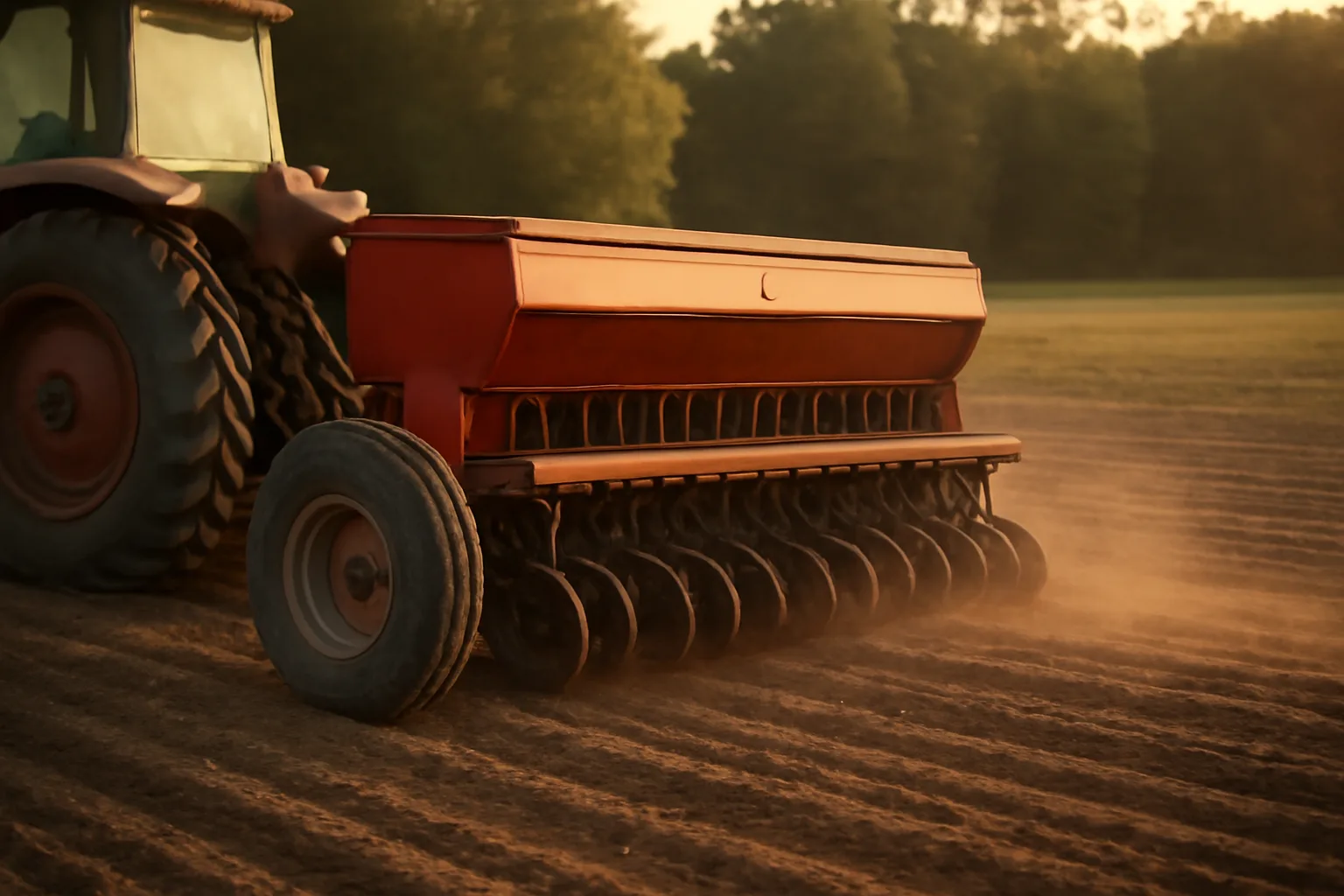
A no-till drill cuts a slot into existing sod or residue, drops seed into the slot, and closes it, all in one pass. No plowing, no disking required. A conventional (or box) drill needs a worked, tilled seedbed first. Broadcasting just throws seed on top of the ground, usually followed by a cultipacker or drag to press it in. For food plots on hunting land, no-till drills win most of the time because plot ground is often small, oddly shaped, hard to reach with a full tillage rig, and erosion-prone if you turn it black every year. No-till also lets you plant into a terminated cover crop or old plot residue, which holds moisture and cuts weed pressure. Broadcasting still has a place. For small kill plots under half an acre, for frost-seeding clover into thin ground in late winter, or for guys without drill access, broadcasting followed by a cultipacker gets a workable stand, especially with clover, which tolerates shallow surface seeding better than most crops. USDA NRCS cover crop planting guidance notes that seeding method and depth control directly affect stand uniformity and establishment success [2]. Here's the rough tradeoff: | Method | Best for | Seed depth control | Equipment cost |
How do I choose the best food plot drill for my setup?
Match the drill to your tractor first, your acreage second, and your soil type third. A 40 horsepower tractor can't reasonably pull a 10-foot no-till drill through sod; you'll spin out or break a shear pin. Most food plot guys run drills in the 4 to 8 foot width range behind 25 to 60 horsepower tractors or heavy-duty ATVs and UTVs. For small plots (under 2 acres), an ATV/UTV-pulled no-till drill like a Genesis or a used Tye drill scaled down works fine and is easier to haul between plots. For bigger acreage or ag-style plots (soybeans, corn), a tractor-mounted Great Plains, John Deere, or Case IH no-till drill in the 6 to 10 foot range is the standard. Check these before buying: - Down-pressure adjustment: you need to vary pressure for clay versus sandy loam.
- Seed box configuration: a drill with a separate small-seed box (for clover, brassica) versus a large-seed box (beans, corn) covers more of your planting calendar with one machine.
- Coulter type: fluted coulters cut through residue better than plain disc openers in heavy cover.
- Row spacing: 7.5 inch spacing is standard for drilled beans and grains; some drills adjust down to 6 inch for tighter stands. If you're deciding between plot styles (small kill plots vs. larger field plots) before you even get to equipment, deer food plots breaks down the planning side.
Is it worth buying a food plot drill, or should I rent or share one?
For most landowners planting under 10 acres a year, buying new doesn't pencil out. A new no-till drill from Great Plains or Genesis runs anywhere from about $3,000 for a small ATV unit to $15,000 or more for a tractor-mounted 8 to 10 foot model with dual seed boxes. Used units in decent shape often sell for 40 to 60 percent of that. Many county conservation districts and state wildlife agencies rent or loan no-till drills to landowners doing habitat or cover crop work, sometimes for a nominal daily fee. It's worth a call to your local USDA Service Center before you buy anything; USDA publishes a service center locator so landowners can find the office covering their county [3]. Some QDMA/NDA chapters and co-ops also run shared drill programs. If you're planting 15+ acres a year across multiple properties, or you're doing custom plot work for others, owning starts to make sense. Otherwise, renting or splitting the cost of a used drill with a hunting buddy usually beats owning outright, especially since a drill sits idle 50 weeks a year.
When should I plant food plots for deer?
Timing splits into two windows: spring plots (planted May through June in most of the whitetail's range) for summer forage like soybeans, cowpeas, and clover, and fall plots (planted August through early October) for brassicas, cereal grains, and clover overseeding. Exact dates depend heavily on your USDA plant hardiness zone and first/last frost dates. Cooperative extension offices publish local planting windows and generally recommend fall brassica and cereal grain plantings in the late July through August window across the Mid-Atlantic and Northeast, timed so plants mature before killing frost [4]. In the Deep South, fall plots often go in as late as October since frost comes later. A rough national guide: - Spring plots (soybeans, cowpeas, corn): after last frost, typically May to early June.
- Summer annuals in the South: can go later, into July.
- Fall brassicas and cereal grains: 60 to 90 days before first killing frost, so most of the Midwest and Northeast plants August through mid-September.
- Clover (spring or fall establishment): early spring via frost seeding, or late summer alongside a cereal grain nurse crop. Because windows shift by region, check your local calendar rather than a national date. If you want a zone-specific breakdown, that's exactly what a Custom Food Plot Plan is built to do; for $99 one time, it maps species and timing to your zip code and soil test instead of a generic calendar.
When should I plant oats for deer, and how does a drill help?
Plant oats for deer in late summer to early fall, generally 60 to 75 days before your area's first hard frost, so most of the country is looking at mid-August through mid-September. Oats germinate fast (5 to 10 days in good moisture) and provide quick, attractive fall forage, often paired with brassicas or winter peas. Oats do fine broadcast and cultipacked, but a drill gives more even emergence and better performance in dry falls because the seed sits at consistent moisture depth instead of drying out on the surface. Depth should run about 1 to 1.5 inches, deeper than clover or brassica seed. A drill with adjustable depth bands handles that switch in seconds; broadcasting can't control depth at all, it just relies on the cultipacker to press seed to varying depths. Spring oats are also an option as a nurse crop for spring-seeded clover in northern climates, planted as soon as ground is workable.
When should I plant turnips for deer, and what depth do they need?
Plant turnips for deer in late July through August in most of the whitetail range, aiming for 80 to 90 days of growth before a hard frost since turnips need time to bulb and the tops need time to get sweet from a few frosts. Turnip seed is tiny, similar to clover, so it needs shallow planting, no more than 1/4 to 1/2 inch deep. This is where a drill with a dedicated small-seed box earns its keep. Turnip seed dropped too deep from a standard grain-depth setting simply won't come up; shallow, uniform placement is one of the most repeated recommendations in university brassica forage guidance because depth errors are such a common cause of thin stands [5]. If you're broadcasting turnips instead, a light cultipack pass afterward is close to mandatory, since uncovered turnip seed dries out fast on bare soil. Deer response to brassicas, including turnips, tends to build through fall as tubers sweeten after frost converts starches to sugars, which is why turnip plots often get hit hardest in November and December rather than at planting.
What are deer's favorite foods, and does that change what I should drill?
Deer preference shifts by season, region, and what's already available in the surrounding habitat, so there's no single universal favorite. That said, several crops show up again and again as high-preference food plot species: soybeans and cowpeas in summer, clover nearly year-round where it stays green, and brassicas plus cereal grains in fall and winter after a frost sweetens them. Native browse and mast (acorns, especially white oak group acorns) often outcompete planted forage when they're available, which is part of why plots get hit hard in years with poor acorn crops and lightly in years with a strong mast crop. State deer research programs that track whitetail diet composition generally find that agricultural crops and mast make up a large share of fall and winter diets in areas where both are available [6]. For drill choice, this matters because your "favorite" species list should include both a high-preference summer crop (soybeans, cowpeas) and a high-preference fall crop (brassica, cereal grain, clover), and your drill needs to handle both large seed (beans) and small seed (clover, brassica) without buying two machines. That's the main reason dual seed-box drills are worth the extra cost over a single-box unit if you're planting more than one crop type a year. For help matching species to your specific soil and region rather than a generic "favorite foods" list, deer food plot seed and food plot seed cover species selection in more depth.
Do deer eat sorghum?
Yes, deer eat grain sorghum, though it's usually a secondary or fall/winter standing-grain option rather than a primary plot species. Sorghum is planted like corn (late spring, after soil warms past about 60°F) and works well in the South and parts of the Midwest as a drought-tolerant grain crop that also provides standing cover through winter. Deer use sorghum heaviest in late fall and winter once the seed heads mature and other food sources thin out. It's a common choice in drought-prone regions because it out-performs corn on marginal soil and needs less nitrogen. Kansas State University's Grain Sorghum Production Handbook describes sorghum as more drought-tolerant than corn and better suited to marginal, moisture-limited soils, which is why it shows up in wildlife plantings across dry-summer regions . From a drill standpoint, sorghum seed is medium-sized, similar to corn but smaller, and plants at about 1 to 1.5 inch depth. Most row-crop drills and planters handle it without modification.
Do deer eat clover, and do deer actually like it?
Yes, deer eat clover heavily, and it's one of the most consistently preferred food plot forages across the whitetail's range. Clover is high in protein (often 20 to 25 percent crude protein in vegetative growth stages), stays palatable through most of the growing season, and regrows after grazing, which is why it holds up to repeated browsing better than annuals. University forage research backs this up directly. Clover's regrowth ability under grazing pressure, plus its nitrogen-fixing benefit to soil, makes it a staple recommendation across nearly every state extension food plot publication. Clover's downside is establishment. Seed is tiny (roughly 700,000+ seeds per pound for white clover), needs shallow planting (1/4 inch or less), and is unforgiving of poor seed-to-soil contact. This is a case where a drill with a properly calibrated small-seed box, or a careful broadcast-and-cultipack job, matters more than almost any other plot decision. Planting clover too deep is probably the single most common food plot mistake reported anecdotally by extension specialists and seed companies alike.
Do deer like honey, and does that matter for plot planning?
No, honey isn't part of a deer's natural diet and isn't relevant to food plot planning. Deer are herbivores that browse plants, forbs, mast, and agricultural crops; they don't seek out honey the way bears do. This question shows up in general deer-diet searches but has no real bearing on plot species selection or drill choice. If you're researching deer nutrition broadly, the more useful question is which plants supply the protein and energy deer need seasonally, covered above under clover, brassicas, and grain crops.
How do I set up and calibrate a food plot drill correctly?
Start with the seed depth chart on the drill (most manufacturers include one) and set the depth bands for your specific seed before you ever pull into the field. Small seed (clover, brassica) needs 1/4 to 1/2 inch; medium seed (oats, wheat, rye) needs 1 to 1.5 inch; large seed (beans, corn, sorghum) needs 1.5 to 2 inch. Run a calibration pass on a small test strip first. Drop the drill, run 100 feet, then check actual seed depth by digging a few spots along the row. Adjust down-pressure if seed is riding too shallow in hard ground, or dial back pressure in soft, tilled soil where it's easy to bury seed too deep. Ground speed matters more than people think. Most no-till drills are rated for 4 to 6 mph; going faster causes seed bounce and uneven depth, especially in rocky or root-filled ground common on hunting land. Slow down in rough spots even if it costs you time. Last step: check your seeding rate against the drill's population chart, more than the depth. A drill set at perfect depth but wrong population (too thick or too thin) still gives a disappointing stand. This is also where a soil test pays off, since your fertility and lime numbers affect how thick a stand the ground can actually support; your soil test lab's recommendation is the final word on lime and fertilizer rates for your specific field, not a general drill guide.
What should I check before every planting season with my drill?
Before the first pass each season, check disc openers and coulters for wear (dull discs cause hairpinning, where residue gets shoved into the slot instead of cut), check seed tubes for blockages, grease every zerk fitting per the manual, and check tire pressure on gauge wheels since uneven pressure throws off depth control across the width of the drill. Also confirm your baiting and feeding regulations haven't changed. Some states regulate food plots differently than bait piles, but rules on things like mineral supplementation, planting near stands, or what counts as "baiting" during hunting season vary by state and do change. Check your state wildlife agency's current regulations before you plant or hunt over a plot, since enforcement and definitions differ meaningfully state to state. Finally, walk the field itself. Drainage patterns, deer trails, and shade lines shift year to year, especially after storms or logging nearby. A drill is only as good as the field plan behind it.
Frequently asked questions
Do deer eat sorghum?
Yes. Deer eat grain sorghum, especially in late fall and winter once seed heads mature. It's a common drought-tolerant substitute for corn in the South and dry-summer regions, planted the same way corn is planted, and standard row-crop drills handle the seed size without modification.
Do deer eat clover?
Yes, heavily. Clover is one of the most preferred food plot forages available, with crude protein often in the 20 to 25 percent range during active growth. It regrows after grazing better than annual forages, which is why it's a staple in nearly every state extension food plot recommendation.
When should I plant food plots for deer?
Spring plots (soybeans, cowpeas) go in after your last frost, typically May into June. Fall plots (brassicas, cereal grains, clover) go in 60 to 90 days before your area's first killing frost, generally August through mid-September in most of the whitetail's range, later in the Deep South.
Do deer like clover?
Yes. Clover ranks among the top preferred food plot species across most of the whitetail's range, in part because it's high in protein and stays palatable much of the year. It's less preferred only where better forage (fresh soybeans, standing corn, acorns) is locally available.
When should I plant oats for deer?
Plant fall oats 60 to 75 days before your area's first hard frost, generally mid-August through mid-September in most regions. Oats germinate in 5 to 10 days with adequate moisture and are often paired with brassicas or winter peas for a fast-establishing fall plot.
When should I plant turnips for deer?
Plant turnips late July through August in most of the whitetail's range, giving them 80 to 90 days before a hard frost so bulbs mature and tops sweeten from frost exposure. Seed is tiny and needs shallow planting, no deeper than 1/4 to 1/2 inch.
What is a food plot?
A food plot is a planted area on hunting or wildlife land, seeded with forage, grain, or browse crops to feed deer and other wildlife and give hunters a place to hunt or observe animals. Plots range from small kill plots under an acre to multi-acre agricultural-style fields.
What are deer's favorite foods?
There's no single universal favorite; preference shifts by season and region. Soybeans and cowpeas rank high in summer, clover stays high nearly year-round, and brassicas and cereal grains become favorites in fall and winter. Native mast, especially white oak acorns, often outcompetes planted forage when available.
Do deer like honey?
No. Honey isn't part of a deer's natural diet. Deer are herbivores that browse plants, forbs, and mast; they don't seek out honey the way bears do, so it has no relevance to food plot species selection.
Is a no-till drill better than broadcasting seed for food plots?
For most seed types, yes, because a no-till drill controls seeding depth precisely, which university extension forage guidance identifies as a primary factor in stand establishment. Broadcasting still works reasonably well for clover and small kill plots if followed immediately by a cultipacker pass.
How much does a food plot drill cost?
New no-till drills range from about $3,000 for small ATV-pulled units to $15,000 or more for tractor-mounted 8 to 10 foot models with dual seed boxes. Used units typically sell for 40 to 60 percent of new price. Many conservation districts and state agencies also rent or loan drills.
What depth should I set my drill for clover versus corn?
Clover and brassica seed need about 1/4 to 1/2 inch depth since the seed is tiny. Cereal grains like oats and wheat need 1 to 1.5 inch. Large seed like corn, beans, and sorghum need 1.5 to 2 inch. Always check the drill's own depth chart for your specific seed.
Sources
- University of Wisconsin-Madison Extension, Nutrient and Pest Management Program, "Successful Forage Establishment": Seeding depth and seed-to-soil contact are top controllable variables in forage stand establishment
- USDA NRCS Conservation Practice Standard, Cover Crop (Code 340): Seeding method and depth control are central to stand establishment success in cover crop plantings
- USDA Farm Service Agency, Service Center Locator: USDA field offices support landowners with conservation and habitat program access
- Virginia Cooperative Extension, "Food Plots for Wildlife" (Publication 420-135): Late July through August fall plot planting window recommended for brassicas and cereal grains in the Mid-Atlantic
- University of Kentucky Cooperative Extension, "Brassicas for Supplemental Forage and Wildlife Food Plots" (AGR-193): Shallow, uniform planting depth is repeatedly emphasized to avoid brassica stand failure
- Kansas State University Extension, "Grain Sorghum Production Handbook" (C-687): Grain sorghum is a drought-tolerant alternative to corn suited to marginal, dry-summer soils