Last updated 2026-07-26
TL;DR
The best cultipacker for food plots matches your tractor's horsepower and plot width, has enough weight (roughly 250 to 400 lbs per foot of width for cast models) to firm soil without crushing small seed, and uses cast iron rings for clay-heavy ground or notched rings for lighter, sandier soil.
what does a cultipacker actually do for a food plot
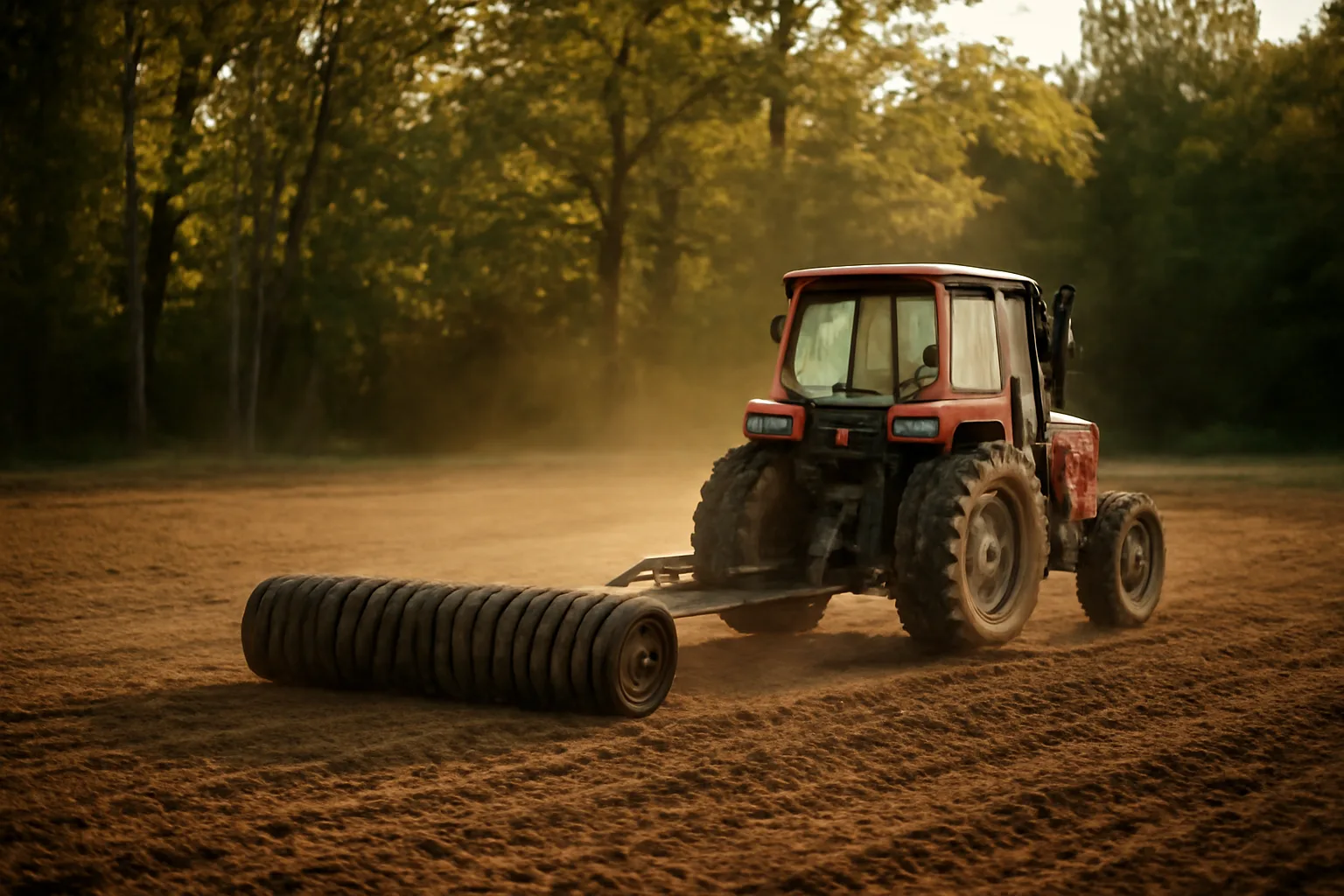
A cultipacker is a towed implement covered in heavy notched or corrugated wheels (called rings) that roll over freshly worked or seeded ground and press it firm. That firming step matters more than most first-time plotters expect. Small seeds like clover, chicory, and brassicas need to sit at a shallow depth, often 1/4 inch or less, with tight contact against moist soil to germinate well. Loose, fluffy dirt has air pockets that dry seed out fast. Most university extension seeding guides describe the same basic sequence: work the seedbed, broadcast the seed, then cultipack (or drag) to firm it. That firming step improves seed-to-soil contact so germination is more even, which is the entire point of running a packer at all. A cultipacker is not a substitute for tillage and it's not a fertilizer tool. It's the last pass before you let the plot sit and germinate. Skip it on small-seeded plots and you'll often get spotty, thin stands even with good seed and good rain. If you're not sure what a food plot actually is or how the whole planting sequence fits together, food plot whitetail walks through the basics before you get to equipment decisions.
what is a food plot, and why does seedbed prep matter this much
A food plot is a planted area of forage, grain, or browse, usually somewhere between a quarter acre and several acres, established on hunting land to supplement natural deer nutrition and to concentrate deer activity for hunting or observation. State wildlife agencies generally treat food plots as a habitat management practice, separate from baiting or supplemental feeding, though the legal line between the two varies a lot by state. Seedbed prep is where most food plots succeed or fail before a single deer ever shows up. Small-seeded species (clover, chicory, brassicas, most blends) germinate from very shallow depths. If the seed lands on loose, cloddy dirt, wind and sun dry the top half inch out in a day or two during a dry stretch. A firm, packed seedbed holds moisture longer and keeps seed in direct contact with soil particles, which is why extension seeding recommendations for small-seeded forages consistently call for cultipacking or rolling after broadcasting on disked or tilled ground [1] [2]. For species and blend selection once your ground is prepped, deer food plot seed and food plot seed cover what to plant and why.
how do i choose the right cultipacker size for my plots and tractor
| ATV/UTV | 3 to 5 ft | Lighter pull-behind models, fine for small plots under 1 acre | |
|---|---|---|---|
| Compact tractor, 20 to 45 hp | 4 to 6 ft | Most common food-plot setup | |
| Utility tractor, 45 to 75 hp | 6 to 8 ft | Good for multi-acre plot programs | |
| Larger tractor, 75+ hp | 8 to 10+ ft | Fewer passes on bigger acreage | These are general sizing patterns, not a spec sheet from any single manufacturer, so check your tractor's rated pull capacity and the packer's actual shipping weight before buying. |
Size the packer to your tractor's horsepower and your typical plot width, not the other way around. A packer that's too wide for your tractor won't get proper down-pressure and will bounce or skip on uneven ground. A packer that's too narrow just means more passes. As a rough field guide, compact tractors in the 20 to 45 horsepower range typically pull 4 to 6 foot cultipackers comfortably. ATV and UTV owners generally run smaller 3 to 5 foot pull-behind units, often lighter-duty models built for food plot use rather than row-crop farming. Larger tractors (60+ hp) can pull 8 to 10 foot packers, which makes sense if you're planting several acres at once and want fewer passes. Weight matters as much as width. A cultipacker that's too light just rides on top of clods instead of crushing and firming them. Cast iron models generally run heavier per foot of width than steel notched or spike-tooth versions, which is part of why they cost more. | Tractor size | Typical packer width | Notes |
cast rings vs notched rings vs spike-tooth: what's actually different
Cast iron ring packers are the traditional design: solid iron wheels with a corrugated or ridged face, strung together on an axle. They're heavy, durable, and firm soil well in a straight line, which makes them a strong choice on clay or clay-loam ground that tends to clod up. The tradeoff is price and weight; a used cast packer can be a bargain, but a new one in a decent width isn't cheap, and moving it around takes a real tractor or a stout trailer. Steel notched or "crowfoot" ring packers are lighter and cheaper. They tend to shed wet clay better than smooth cast rings, since the notches break up crust as they roll instead of just pressing it. They're a common choice for lighter soils, sandy loam ground, or anyone whose plots are on the smaller side and who doesn't want to haul a half-ton implement down a two-track trail. Culti-mulchers and spike-tooth drags are a step down in firming power and a step up in soil-breaking. They're better thought of as a finishing harrow than a true packer, useful for lighter surface work but not the tool for pressing a freshly broadcast small-seed plot into firm contact. NRCS conservation planting guidance for small-seeded legumes and grasses calls for a firm seedbed, with a practical field test being that a footprint should sink no more than roughly a half inch. That's the target any ring-style packer is trying to hit, with cast iron doing it most consistently on heavier ground [3].
pull-behind vs pto-driven vs tow-behind atv cultipackers: which fits your setup
Most cultipackers, regardless of size, are simple ground-driven, pull-behind implements. There's no PTO version doing the packing itself; the rings turn because the ground turns them as you drive. What actually differs between models is the hitch style, frame width, and whether it's built to run behind a tractor's 3-point or drag-chain hitch, versus a lighter ATV/UTV drawbar setup. If your only equipment is a UTV or ATV, look specifically at packers marketed for that use. They're built lighter (often 150 to 400 lbs total) so the machine can actually move them without spinning out, especially on any kind of grade. Full-size cast packers built for tractors can run 1,000 lbs or more in a 6 foot width and are not something a UTV should be pulling. Some landowners skip a dedicated packer entirely and use a cultimulcher/drag combo, or even a section of chain-link fence weighted down with tires, dragged behind an ATV. It's a real budget option and it does firm soil to some degree, but it's inconsistent compared to a true ring packer, and extension seeding guides consistently reference cultipacking or rolling as the standard practice, not dragging [1] [3].
do you need a cultipacker before or after seeding, or both
The standard sequence for small-seeded food plot species is: till or disk the ground, broadcast the seed, then cultipack once to press seed into firm soil. Some growers also pack once before seeding to firm a rough seedbed and knock down clods, then broadcast and pack a second time after. Two passes is more work but it does produce a noticeably more even stand on rough or freshly broken ground. For larger seed like corn, soybeans, or sorghum planted with a drill or planter, cultipacking after seeding is optional and less critical, since drills place seed at a controlled, deeper depth already. It's the shallow-planted, small-seeded species (clover, brassicas, chicory, most fall blends) where the after-seeding pack step matters most. Don't pack wet, sticky clay. It'll smear rather than crumble and firm, and you'll end up with a crusted surface that sheds water instead of absorbing it. Wait a day or two after rain until the top inch has dried enough to crumble in your hand.
do deer eat sorghum, and does it matter for equipment choice
Yes, deer eat sorghum, both the grain heads and the plant itself, and it's a common component in fall/winter food plot blends and standing grain plots because it also holds up well through winter weather and provides cover. Sorghum seed is larger than clover or brassica seed and is typically planted at a deeper depth (roughly 1 to 1.5 inches), often with a drill or planter rather than broadcast. Because of that planting depth, sorghum doesn't need the same aggressive seed-to-soil packing that tiny broadcast seed does. If sorghum is your main planting, a cultipacker is less essential; a cultimulcher pass or even just a light drag can be enough. If you're mixing sorghum into a blend with clover or brassicas broadcast on top, pack after seeding as you would for the small seed.
do deer eat clover, and do deer like clover more than other forages
Yes, deer readily eat clover, and it's one of the most consistently used food plot forages across the whitetail's range. Clover is a perennial legume, meaning a well-maintained stand can produce forage for 3 to 5 years or more before needing replanting, which makes the establishment step (including a firm, packed seedbed) worth getting right the first time. Mississippi State University Extension's food plot forage guidance lists clover among the primary cool-season perennial forages recommended for deer plots, citing its high protein content and multi-year persistence as reasons it's a mainstay planting [2]. Whether deer prefer clover "more" than other options depends heavily on what else is available locally. In areas thick with row-crop soybeans or corn, clover competes with easier calories nearby, but on plots surrounded by hardwoods or pasture it's often heavily used. Clover seed is tiny, roughly 250,000 to 375,000 seeds per pound depending on the variety, which is exactly the kind of seed that needs a firm, packed bed rather than loose tilled dirt on top.
do deer like honey, and what does that have to do with food plots
There's no real evidence deer specifically seek out honey, and it's not a practical or legal food plot input in most states, since it's not a planted crop and using it to draw deer would functionally be baiting under most state definitions, not habitat management. Deer are drawn to sugar and carbohydrate-rich foods generally, which is part of why brassicas (which sweeten after a hard frost as starches convert to sugars) and standing corn or soybeans see heavy late-season use. If the underlying question is really "what sweet or high-sugar food draws deer," the honest answer for food plot purposes is frost-sweetened brassicas, standing corn, and soybeans, all of which are plantings, not something you pour on the ground. Check your state wildlife agency's baiting and feeding rules before adding any non-planted attractant to a plot. Rules vary widely and some states classify mineral, salt, and supplemental feed differently from planted forage.
what are deer's favorite foods in a food plot setting
There's no single universal "favorite," because deer preference shifts by season, region, and what else is available on the landscape. That said, extension research and food plot studies consistently point to a short list of high-use species: soybeans and clover during the growing season, brassicas and cereal grains (oats, wheat, rye) in fall and winter, and standing corn or grain sorghum as winter energy sources. Mississippi State Extension's food plot programs have repeatedly found clover and soybeans among the most heavily browsed food plot forages where deer density is moderate to high, though heavy browse pressure can also mean deer hit soybeans so hard early that the plot never reaches maturity [2]. If you want deer using a plot across more of the year rather than hammering one planting in August, most successful plot programs mix a perennial (clover) with a fall annual (brassica or cereal grain blend) rather than betting on one species. For a broader rundown on species selection by region and season, deer food plots and domain food plot seed go deeper on blend strategy.
when to plant food plots for deer, by planting window and region
| Upper Midwest/Northeast | mid-May to early June | mid-July to mid-August | |
|---|---|---|---|
| Mid-South/Transition zone | April to early May | late August to mid-September | |
| Deep South | March to April | September to early October | These are general patterns, not guarantees; always check your local extension office's frost date data before locking in a planting date. |
Timing depends on species and your USDA plant hardiness zone, but there are two broad windows most food plot species fall into: spring/summer plantings (clover, soybeans, corn) go in after your last frost date, and fall plantings (brassicas, cereal grains, most fall blends) go in 60 to 90 days before your first fall frost, timed so plants mature into cooler weather rather than summer heat. Your local land-grant extension office publishes frost date tables and planting calendars specific to your county, and that's a better source than any generic national chart, since a fall planting window in coastal Alabama can run six or more weeks later than one in northern Minnesota. The USDA Plant Hardiness Zone Map is a useful starting reference for gauging your general frost timing before checking a local source. | Region example | Spring planting window | Fall planting window |
when to plant oats for deer, and when to plant turnips for deer
Oats are a fall annual cereal grain, planted 60 to 90 days before your area's first hard frost so they establish and put on leaf growth before cold weather slows them down. In much of the whitetail's range that lands somewhere in the August to early September window, though it shifts earlier in northern states and later in the Deep South. Oats are also sometimes planted in early spring as a quick cool-season forage, but the fall planting is far more common in food plot programs since oats are frost-tolerant and stay attractive well into early winter. Turnips (and brassicas generally) follow a similar fall-focused calendar: plant roughly 60 to 90 days ahead of first frost, since turnips need time to bulb out before cold weather and actually improve in palatability after a hard frost converts starches to sugars. Mississippi State Extension's food plot forage guide notes brassicas are typically planted from late July through August across much of the South, with earlier windows further north [2]. Both oats and turnips have small to medium seed that benefits from a firm, packed seedbed after broadcasting, same as clover.
how much does a good food plot cultipacker cost
Pricing spans a wide range depending on width, ring type, and whether it's new or used. Small ATV/UTV pull-behind packers (3 to 5 feet) generally run somewhere in the $400 to $900 range new. Mid-size tractor packers (5 to 6 feet, steel notched rings) commonly land in the $900 to $1,800 range. Full cast iron packers in similar widths run higher, often $1,500 to $2,500+ new, mostly because of the raw weight of cast iron. Used farm-auction cast packers can be a real bargain, sometimes a few hundred dollars for a well-worn unit, since cast iron doesn't wear out the way bearings and tires do. Check the bearings, hitch point, and frame welds on anything used; the rings themselves rarely need replacing. If a dedicated packer isn't in the budget yet, driving a loaded ATV or truck tire slowly over a small broadcast plot, or renting/borrowing one for a weekend, gets seed-to-soil contact close enough for a plot under an acre. It's not ideal, but it beats skipping the step entirely. Once you've got the ground and equipment sorted, matching species, rates, and timing to your specific soil test and region is its own project. That's the gap a $99 one-time Custom Food Plot Plan is built to fill: it turns your soil test results and property details into a straightforward planting plan, though your soil-test lab remains the real authority on lime and fertilizer recommendations, and no plan can promise deer activity or a specific harvest outcome.
Frequently asked questions
Do deer eat sorghum?
Yes. Deer eat both the grain heads and plant material of sorghum, and it's a common fall/winter food plot component because it holds up through weather and offers cover along with food. It's typically drilled at 1 to 1.5 inches deep rather than broadcast, so it needs less aggressive seedbed packing than small-seeded clover or brassica plantings.
Do deer eat clover?
Yes, clover is one of the most widely used food plot forages for deer, valued for its high protein content and multi-year persistence as a perennial. Mississippi State University Extension lists clover among the primary recommended cool-season forages for deer plots [2]. How heavily deer use it depends on what other food sources, like nearby row crops, are available.
When to plant deer food plots?
It depends on species. Spring/summer plantings (clover, soybeans, corn) go in after your last frost date. Fall plantings (brassicas, cereal grains, most blends) go in 60 to 90 days before your area's first fall frost. Check your local land-grant extension office's frost date tables, since windows shift by several weeks across regions.
Do deer like clover?
Yes, deer generally show strong preference for clover where it's available, especially during spring and summer growth. It's a perennial legume that can produce forage for 3 to 5 years from one planting if maintained, which is part of why it's a mainstay in food plot programs across the whitetail's range [2].
When to plant oats for deer?
Plant oats 60 to 90 days before your area's first hard frost, typically August to early September across much of the whitetail range, earlier in northern states, later in the Deep South. Oats are frost-tolerant and stay attractive to deer well into early winter, making the fall window far more common than a spring planting.
When to plant food plots for deer overall?
There's no single date; it depends on species and your region's frost dates. Spring annuals go in after last frost, fall annuals and brassicas go in 60 to 90 days before first frost, and perennial clover can be planted in either spring or late summer depending on your climate. Your local extension office publishes region-specific frost date charts.
When to plant turnips for deer?
Plant turnips 60 to 90 days before your area's first fall frost, commonly late July through August across much of the South and earlier further north, per Mississippi State Extension's food plot guidance [2]. Turnips need time to bulb before cold weather, and their palatability actually improves after a hard frost.
What is a food plot?
A food plot is a planted area, usually a quarter acre to several acres, established on hunting or managed land to supplement natural deer nutrition and concentrate activity for hunting or observation. Wildlife agencies generally treat food plots as habitat management, distinct from baiting, though the legal distinction varies by state, so check your state wildlife agency's rules.
What are deer's favorite foods in a plot setting?
There's no single universal favorite; it shifts by season and region. Extension research consistently points to soybeans and clover in growing season, brassicas and cereal grains in fall/winter, and standing corn or sorghum as winter energy sources [2]. Mixing a perennial with a fall annual gives more consistent use across the year than one species alone.
Do deer like honey?
There's no solid evidence deer specifically seek out honey, and it isn't a practical food plot input since it's not a planted crop. Using it to draw deer would likely count as baiting under most state definitions. Deer are drawn to sugar generally, which is part of why frost-sweetened brassicas and standing corn see heavy late-season use.
Do I need a cultipacker for a food plot, or can I skip it?
For small-seeded species like clover, brassicas, and most blends, yes, a firm seedbed meaningfully improves germination and moisture retention according to extension and NRCS seeding guidance [1][3]. For drilled larger seed like corn or soybeans it matters less. On a small plot you can improvise with a weighted drag or ATV tire, though results are less consistent than a real packer.
What size cultipacker do I need for my tractor?
Match width to horsepower: compact tractors (20 to 45 hp) typically pull 4 to 6 foot packers, utility tractors (45 to 75 hp) handle 6 to 8 feet, and larger tractors pull 8 to 10+ feet. ATV/UTV setups need lighter dedicated pull-behind models, usually 3 to 5 feet and under 400 lbs total.
Are cast iron cultipackers better than steel notched ones?
Cast iron packers are heavier and firm heavier clay soils more consistently, but cost more and are harder to move. Steel notched (crowfoot) packers are lighter, cheaper, and shed wet clay better since the notches break crust as they roll. Lighter, sandier soils generally do fine with notched steel; sticky clay favors cast iron.
Sources
- Purdue University Extension, "Forages: Getting a Good Stand" (AY-322-W): firming a loose seedbed after tillage improves seed-to-soil contact for more even germination
- Mississippi State University Extension Publication 2111, "Establishing and Managing Wildlife Food Plots": clover and brassicas are listed among primary recommended forages for deer food plots, with brassica planting windows from late July through August in the South
- USDA NRCS Plant Materials Technical Note No. 9, "Seedbed Preparation and Seeding Equipment for Conservation Plantings": a firm seedbed for small-seeded legume and grass plantings should not allow a footprint to sink more than about half an inch
- USDA Agricultural Research Service, National Plant Germplasm System, Sorghum bicolor crop description: sorghum is a large-seeded grain crop typically established at greater planting depths than small broadcast forage seed
- Cornell University Nutrient Management Spear Program, Agronomy Fact Sheet #60, "Seedbed Preparation for Forage Establishment": cultipacking or rolling after broadcasting small-seeded forage is standard practice to firm the seedbed