Last updated 2026-07-25
TL;DR
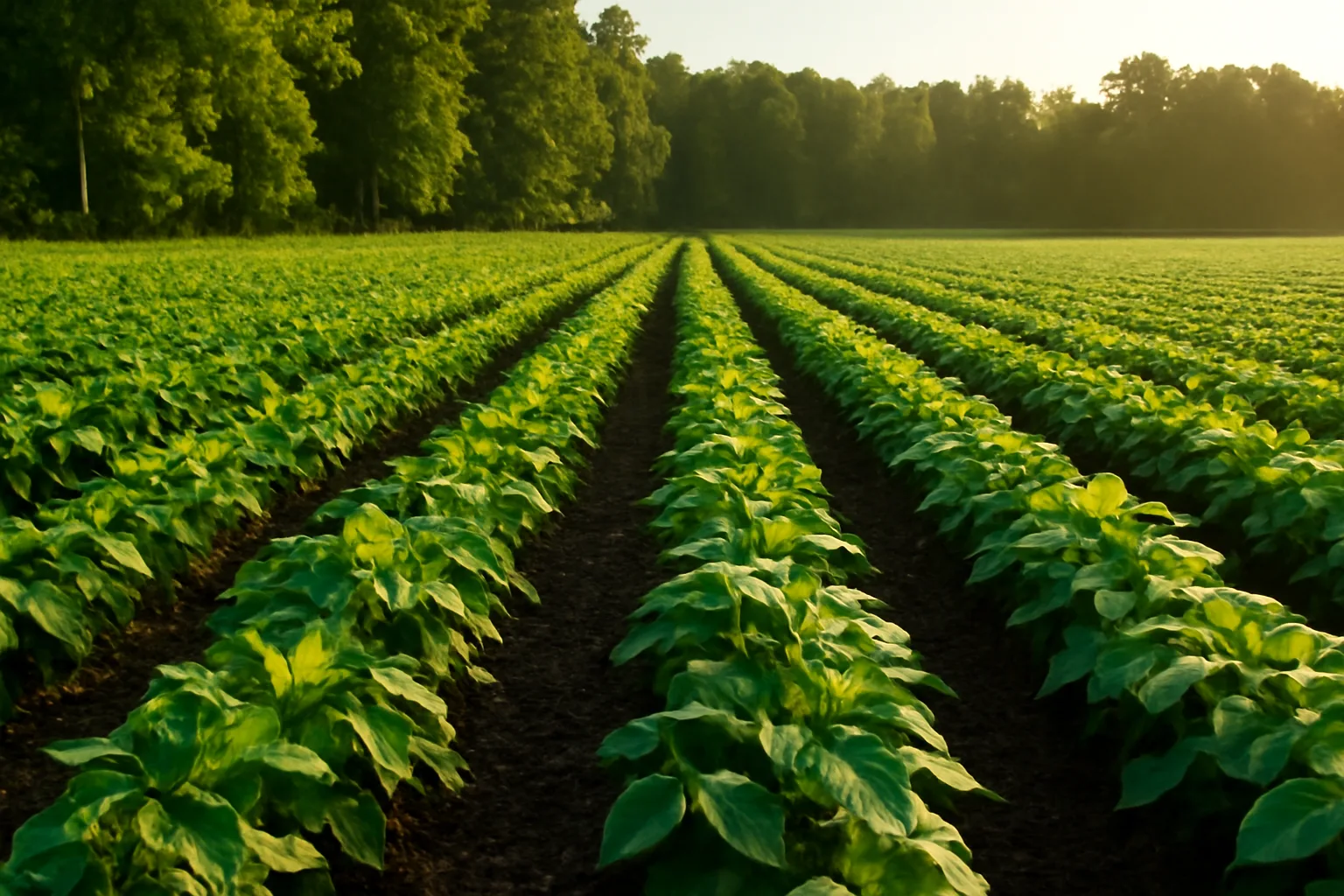
Summertime food plots for deer are warm-season plantings (soybeans, cowpeas, sorghum, sunflowers, clover) put in after last frost, roughly May through June depending on zone. They feed does and growing bucks through the stress period and set up fall hunting plots. Perennial clover planted in spring also carries summer forage if it gets mowed and doesn't get shaded out.
What is a food plot, and why plant one in summer?
A food plot is a planted patch of forage, usually somewhere between a quarter acre and a few acres, put in specifically to feed deer and other wildlife on a property. It's not a garden and it's not landscaping. The USDA Natural Resources Conservation Service funds food plot style plantings through its wildlife habitat practice standards, including Practice Code 645 (Upland Wildlife Habitat Management), which covers establishing food and cover plantings for game species [1]. Summer food plots serve a different job than fall plots. Fall plots are usually about hunting, brassicas and cereal grains that pull deer in during October and November. Summer plots are about biology. Does are nursing fawns, bucks are growing antlers, and the whole herd needs high-protein forage during the hottest, most metabolically demanding months of the year. A soybean or cowpea plot at 20 to 30 percent crude protein does more for antler growth in July than any fall plot ever will. Summer plots also matter because native browse gets rough this time of year in a lot of the country. Drought stress hits wild forbs hard, and by August a lot of native vegetation is fibrous and low in nutrition. A well-fertilized warm-season plot stays green and palatable when the woods dry out. If you're new to this and want a rundown on plot categories before picking species, the food plot whitetail guide covers the basic types side by side.
When should you plant food plots for deer?
Timing depends entirely on what you're planting and where you live. There is no single planting date for the whole country, and any calendar that gives you one number is oversimplifying. For summer, warm-season annuals go in after your last spring frost date, when soil temperatures are reliably above 65 degrees F. That's late April in the Deep South, mid-May in the transition zone, and late May to mid-June in the northern tier and Canada border states. Cooler soil delays germination and invites seed rot, especially with beans. Fall plot species (brassicas, cereal grains, clover overseeds) go in 60 to 90 days before your average first frost, which for most whitetail range lands somewhere between late July and early September. Clover is the outlier: it can be planted in spring or late summer/early fall, and a lot of experienced planters prefer a late-summer clover seeding because weed pressure is lower. Soybean planting guidance from land-grant agronomy programs ties planting windows to soil temperature and last frost date rather than a fixed calendar month, which is the right way to think about it regardless of where you hunt. Purdue University's Corn and Soybean Field Guide notes that soybean seed germinates best when soil temperatures are at or above 50 degrees F but that stand establishment and vigor improve considerably as soils warm into the 60s, and that late planting cuts into the yield potential of the crop [2]. Check your state's extension planting date charts (most land-grant universities publish one by county or growing zone) before you buy seed.
What should you actually plant in a summer food plot?
| Soybeans | 30-40% (leaf) [3] | Moderate | Low (needs acreage or fencing) | |
|---|---|---|---|---|
| Iron & clay cowpeas | 20-25% | Moderate-high | Moderate-high | |
| Grain sorghum | 8-11% | High | High | |
| Sunflower (forage type) | 12-16% | Moderate | Moderate | |
| Established white/red clover | 25-30% | Moderate (needs moisture) | High (once established) | If you want seed already blended for these summer goals rather than sourcing each species separately, deer food plot seed breaks down what's typically in a warm-season mix. |
For pure summer tonnage and protein, the short list is soybeans, cowpeas (iron and clay type), grain sorghum, and sunflowers. These are the workhorses. Soybeans are the gold standard where you have acreage and can fence or otherwise manage deer pressure. Forage quality data compiled by university extension and forage testing programs put mature soybean leaf tissue in the 30 to 40 percent crude protein range, though realistic whole-plant averages in food plot settings run lower once you factor stems and pods [3]. The catch: beans get hammered by browsing in the seedling stage. Under 3 acres in high deer density areas, you can lose the whole stand before it gets ankle high. Cowpeas and lablab are more browse-tolerant than soybeans and still deliver strong protein, generally in the 20 to 25 percent range depending on growth stage. They're a smart choice on smaller plots or in areas with heavier deer pressure. Grain sorghum and buckwheat work as filler crops or drought-insurance options, and sorghum in particular tolerates poor soil and dry spells better than beans. Clover, where it's already established, keeps producing through summer as long as it's mowed to knock back weed competition and keep it in a vegetative, high-protein stage. Here's a comparison of the main summer options: | Species | Approx. crude protein | Drought tolerance | Deer browse pressure tolerance |
Do deer eat sorghum?
Yes, deer eat grain sorghum, both the standing forage and the grain heads once they mature, though it's rarely their first choice when better food is around. Sorghum's real value in a summer plot isn't as a preferred food, it's as a drought-tolerant, deer-pressure-tolerant filler that keeps something green in a tough plot when beans or clover would get wiped out. Many food plot blends use sorghum or sudangrass as a nurse crop, planted alongside beans or cowpeas to give deer something to browse while the legumes get established. It also adds structure and screening cover later in the season, which some hunters value as much as the forage itself. Sorghum isn't a nutrition powerhouse. Crude protein in vegetative sorghum forage generally falls in the 8 to 11 percent range, well below legumes, according to forage sorghum quality summaries from land-grant forage testing programs [4]. Treat it as a supporting player, not your main summer plot species.
Do deer like clover, and does clover work as a summer plot?
Deer like clover a lot, and it's one of the most reliable food sources across almost the whole growing season, more than spring and fall. Clover routinely tests at 25 to 30 percent crude protein in its vegetative stage, which puts it close to soybeans without the seedling-browse vulnerability that beans have [3]. The catch with clover in summer is drought and weed pressure, not deer preference. Clover slows down and can go semi-dormant during a hot, dry July stretch, especially on sandy or shallow soils. It also gets outcompeted by grasses and broadleaf weeds if you don't mow it every 3 to 5 weeks through summer, keeping it at 4 to 6 inches tall so it stays in a leafy, high-protein growth stage instead of bolting to seed. White clover (Ladino types) and red clover are the two most common food plot varieties. White clover tends to persist 3 to 5 years with good management; red clover is more of a 2 to 3 year plant but establishes faster and tolerates wetter soil. If clover is already your go-to perennial, the deer for food piece walks through species pairing if you want to overseed it with a summer annual for extra tonnage during the stress period.
What are deer's favorite foods, and does that change in summer?
Deer preference shifts by season and region, but across most of whitetail range, acorns, soybeans, and clover consistently rank as top choices when available. Research on white-tailed deer diet composition, including forage studies published through university wildlife programs, points to soft mast, acorns, and agricultural legumes like soybeans as preferred high-energy foods whenever they're accessible on the landscape [5]. In summer specifically, deer key in on high-protein plant material because that's what nursing does and antler-growing bucks need. Soybeans, cowpeas, native forbs, and clover top the list. Once acorns start dropping in September and October, deer will often abandon plot forage entirely for a few weeks in favor of mast, which is a normal, well-documented pattern and not a sign your plot failed. Deer are also opportunistic. In agricultural country they'll hit standing corn and soybeans hard; in more wooded terrain they lean harder on browse, forbs, and whatever plot forage is available. There's no universal single favorite food, it depends on what's on the landscape and what stage of the year it is.
Do deer like honey, and is that a real food plot question?
No, deer don't seek out honey and it has no place in food plot planning. This question shows up sometimes because hunters use commercial deer attractant products, some of which are sweetened with molasses, sugar, or synthetic scents, not because deer forage on honey in the wild. Worth knowing: several states restrict or ban baiting and the use of scent or feed-based attractants for deer hunting, and the rules vary a lot by state and sometimes by county within a state. Michigan, for example, prohibits baiting and feeding deer statewide outside of a small set of exceptions, a rule the Michigan Department of Natural Resources ties directly to slowing the spread of chronic wasting disease and bovine tuberculosis. Michigan's baiting and feeding restrictions are codified in the Wildlife Conservation Order under Michigan Compiled Laws 324.40114a, which authorizes the Natural Resources Commission to regulate baiting and feeding of deer and elk [6]. Before you use any mineral lick, attractant, or supplemental feed near a plot, check your state wildlife agency's current baiting and feeding regulations, because a legal food plot can still put you in violation if you add bait to it in a restricted state.
When to plant oats for deer
Oats are a cool-season cereal grain, so they're a fall plot, not a summer one, planted 6 to 8 weeks before your first fall frost so they can establish before cold weather. For most of whitetail range that lands somewhere between late August and mid-September, with the Deep South stretching into early October. Oats germinate fast, often within 5 to 7 days in warm soil, and deer will hit young oat shoots almost immediately, which makes them a popular fall attraction crop. But oats aren't winter-hardy in the northern half of the country; hard freezes below roughly 20 degrees F typically kill the plant back, so in cold climates oats function as an early-fall food source that fades by December, not a season-long plot. Some hunters plant a small oats patch in very early summer as a nurse crop for a summer clover or forage blend seeding, but that's a minor secondary use. The primary planting window for oats is fall, and it's worth being clear about that so you don't waste seed trying to establish them in June heat, when they'll bolt and burn out fast.
When to plant turnips for deer
Turnips are a brassica and a fall food, planted 90 to 100 days before your first expected frost so the bulbs and leaves have time to mature before deer start using them heavily. That planting window generally runs late July through mid-August across most of the whitetail range, adjusted earlier for northern states and later for the Deep South. Turnips are a poor fit for summer planting. They're a cool-season crop, they bolt and get bitter in hot weather, and deer generally ignore turnip forage until after a hard frost sweetens the leaves and bulbs by converting starches to sugars. That frost-triggered palatability shift is a pattern documented in university brassica food plot research, including trial work from the University of Tennessee Extension on brassica variety performance and deer use timing in fall food plots [7], and it's the reason turnip plots get hot in November and December, not August. If your summer plot planning also involves setting up a fall brassica plot on the same acreage, plan your rotation now: a summer soybean or cowpea plot can be terminated and drilled into turnips in late July, giving you both a summer protein plot and a fall attraction plot off the same ground in one season.
How do you prep soil and fertility for a summer plot?
Start with a soil test, not a guess. A basic soil test tells you pH and nutrient levels (phosphorus, potassium, sometimes micronutrients). North Carolina's state soil testing lab, run through the NC Department of Agriculture and Consumer Services, processes routine agronomic soil samples for free during most of the year, switching to a $4 per sample fee during the peak winter testing season (typically late November through March), with turnaround usually running 1 to 3 weeks depending on season . Your soil test lab is the actual authority on how much lime and fertilizer your specific ground needs; a general article like this one can't replace a result pulled from your dirt. Most food plot species, including soybeans, clover, and cowpeas, want soil pH between 6.0 and 6.8. Below that, legumes especially struggle to fix nitrogen and take up phosphorus even if it's present in the soil, so lime is often the single highest-return input on acidic ground, more impactful than any fertilizer blend. Lime takes months to fully react in the soil, so if your test calls for it, get it down as early in spring as you can, ideally the fall or spring before planting, not the week of. For summer legumes (soybeans, cowpeas, clover), inoculant matters. These species fix their own nitrogen through a symbiotic relationship with soil rhizobia bacteria, but if that bacteria isn't already present in your soil (common on ground that's never grown a legume), an inoculated seed or seed treatment can be the difference between a thin stand and a full one. For equipment and prep methods once your fertility plan is set, food plot seed and deer food plots both cover seedbed prep and drilling versus broadcasting in more depth.
How big should a summer food plot be, and where should you put it?
Size depends on deer density and what species you're planting. As a rough rule, soybeans and other high-browse-pressure legumes need at least 3 to 5 acres in moderate to high deer density areas to survive to maturity; smaller than that and deer can eat the whole stand down before it ever produces grain or full leaf canopy. Cowpeas, lablab, and sorghum blends tolerate browse pressure better and can work in plots as small as half an acre to an acre, especially with a sorghum or sudangrass nurse crop mixed in to buffer early browsing. Site selection matters as much as species. Summer plots want at least 6 hours of direct sun, decent drainage (standing water kills beans and clover fast), and reasonable access for a tractor, ATV, or at minimum a broadcast spreader and cultipacker. South-facing slopes warm up and dry out faster in spring, which can be an advantage for early planting timing in cooler climates. If you're planning a whole property's plot layout, more than one field, working out a $99 Custom Food Plot Plan through the plot plan builder can save a lot of trial and error on species selection, size, and placement based on your soil test and location. It's general guidance built from your inputs, not a site visit, so your soil test lab still has final say on lime and fertilizer rates.
What mistakes wreck summer food plots most often?
Planting too early into cold soil is the most common one. Beans and cowpeas planted before soil temps hit 65 degrees F sit in the ground, rot, or germinate unevenly, and a thin, patchy stand is far more vulnerable to being browsed out entirely. Skipping the soil test is the second most common mistake, and probably the costliest. Extension agronomy guidance consistently shows that correcting soil pH into the 6.0 to 6.8 range has a bigger yield impact on legume forage than any amount of extra fertilizer applied to acidic soil . Spending money on fertilizer while ignoring a pH problem is throwing money at the wrong problem. Undersizing a bean plot in heavy deer country is third. A gorgeous 1-acre soybean field looks great in April and is a mowed-down stub by June if your deer density is high and that's the only green food around. Bigger acreage, a browse-tolerant blend, or temporary electric exclusion fencing during the seedling stage are the three real fixes. Last one: forgetting to mow clover and other perennials through summer. Left unmown, clover gets shaded out by grass and weeds and drops in palatability as it matures and goes to seed. A simple bush hog pass every 4 to 6 weeks, set high enough to clear the clover crown, keeps it in the leafy stage deer actually prefer.
Frequently asked questions
Do deer eat sorghum?
Yes. Deer will browse grain sorghum forage and eat the grain once it matures, though it's not usually a preferred food compared to legumes. Sorghum's real strength in food plots is drought tolerance and resistance to being browsed out, which makes it a common nurse crop or filler species alongside beans and cowpeas in summer plots.
Do deer like clover?
Yes, clover is one of the most consistently preferred forages across whitetail range and tests at roughly 25 to 30 percent crude protein in its vegetative growth stage. It's popular because it regrows after grazing, unlike a lot of annuals, and it produces forage across spring, summer, and fall if it's mowed regularly to control weeds.
When should you plant food plots for deer?
It depends on the species. Warm-season plots (soybeans, cowpeas, sorghum) go in after last frost when soil hits 65 degrees F, generally late April through mid-June depending on your zone. Fall plots (brassicas, cereal grains) go in 60 to 100 days before first frost, usually late July through September. Clover can go in spring or late summer.
When to plant oats for deer?
Plant oats 6 to 8 weeks before your area's first fall frost, typically late August through mid-September for most of whitetail range, later in the Deep South. Oats are a cool-season crop and aren't a summer planting; they germinate fast and attract deer quickly but usually die back after hard freezes below about 20 degrees F.
When to plant food plots for deer, summer versus fall?
Summer plots (soybeans, cowpeas, sorghum, sunflowers) go in after last spring frost, roughly late April to mid-June by zone. Fall plots (oats, brassicas, wheat) go in late summer to early fall, 60 to 100 days ahead of first frost. Check your state land-grant extension's planting date chart for your specific county.
When to plant turnips for deer?
Plant turnips 90 to 100 days before your first fall frost, which lands around late July through mid-August for most whitetail range. Turnips are a fall/winter food; deer generally ignore the bulbs and leaves until after a hard frost sweetens them by converting starches to sugar, so don't expect summer use from a turnip plot.
What is a food plot?
A food plot is a planted area, usually a fraction of an acre up to several acres, established specifically to provide forage for deer or other wildlife. It's distinct from a farm crop field in that its primary purpose is feeding and attracting game, and the USDA NRCS supports food plot establishment under its wildlife habitat management practice standards.
What are deer's favorite foods?
There's no single universal favorite; it shifts by season and region. Acorns, soybeans, and clover consistently rank among top preferred foods where available, according to whitetail diet and forage research. In summer, deer favor high-protein forage like soybeans, cowpeas, and clover; in fall, acorns often take priority over any planted plot.
Do deer like honey?
No. Deer don't naturally seek out honey, and it's not a real food plot consideration. The question usually comes up because of sweetened commercial deer attractants, some of which use molasses or sugar. Many states restrict baiting and scent-based attractants for deer hunting, so check your state wildlife agency's current rules before using any.
What's the best summer food plot for deer if I only have one acre?
On a single acre with real deer pressure, cowpeas, lablab, or a cowpea-sorghum blend usually outperforms soybeans, which can get browsed out on that small an acreage before maturing. Clover also works well on one acre if it's already established and mowed regularly through the season.
How hot does it need to be to plant summer food plot seed?
Most warm-season food plot species need soil temperatures consistently above 65 degrees F to germinate reliably, which usually follows a few weeks after your last spring frost date. Planting into cooler soil leads to slow, uneven germination and higher risk of seed rot, especially with soybeans and cowpeas.
Can I plant a summer food plot without a soil test?
You can, but you're guessing on lime and fertilizer rates, and pH below 6.0 can cut legume forage yield significantly regardless of fertilizer applied. A basic soil test through your state's land-grant soil testing lab is inexpensive or free depending on season and state, and takes 1 to 3 weeks, and it's the actual authority on what your specific ground needs.
Sources
- USDA Natural Resources Conservation Service, Conservation Practice Standard 645, Upland Wildlife Habitat Management: Food plots are supported under NRCS wildlife habitat management practice standards for establishing food and cover for game species
- Purdue University, Corn and Soybean Field Guide, soybean planting and stand establishment: Soybean planting windows are tied to soil temperature and last frost date, and late planting reduces yield potential
- University of Georgia Extension, Soybean Production Guide, forage and grain quality: Soybean forage and clover crude protein levels in vegetative growth stages
- Oklahoma State University Extension, Forage Sorghums fact sheet: Grain sorghum vegetative forage crude protein typically falls well below legume forages
- Journal of Wildlife Management, Nutritional Ecology of White-tailed Deer: Acorns, soybeans, and clover rank among consistently preferred whitetail foods where available
- University of Tennessee Extension, Brassicas for Deer Food Plots, W 349-C: Turnip bulbs and leaves become more palatable to deer after a hard frost converts starches to sugars
- North Carolina Department of Agriculture and Consumer Services, Agronomic Services Soil Testing fees and turnaround: Soil pH correction into the target range has a larger impact on legume forage yield than added fertilizer alone, and typical soil test costs and turnaround