Last updated 2026-07-26
TL;DR
A DIY food plot planter can be as simple as a chain-link drag behind an ATV or ord to a converted grain drill on a compact tractor. Cost ranges from under $100 for a homemade drag to $1,500 or more for a used no-till drill. Match the tool to your seed size and soil, and plant according to your region's frost dates.
What is a food plot and why build your own planter
A food plot is a planted patch on hunting land, usually somewhere between a quarter acre and five acres, seeded with forage or grain that deer and other wildlife eat. Landowners plant them to hold deer on a property, add nutrition during stress periods, and create hunting spots with predictable travel patterns. State wildlife agencies generally treat food plots as normal agriculture, not baiting, as long as the seed is broadcast and grown in place rather than piled up loose. Always check your state's specific baiting and feeding rules before you plant, since some states regulate supplemental feed differently than a standing crop. A DIY food plot planter is any homemade or repurposed implement that gets seed into the ground without buying a dedicated no-till drill new. That covers a lot of ground: a chain-link fence section dragged behind a four-wheeler, a cultipacker pulled behind a tractor, a converted lawn spreader mounted on a garden tractor, or a used grain drill bought off a farm auction site for a fraction of retail. The goal is the same no matter the budget: get seed-to-soil contact at the right depth, at the right time of year, for the species you picked. Most small food plot failures trace back to two things, planting too deep and planting at the wrong time. A $40 drag behind a four-wheeler that gets seed lightly covered beats a $30,000 drill run at the wrong depth or the wrong month. That is the whole case for building your own rig. It is not about cutting corners, it is about matching the tool to a one-to-three acre plot instead of buying equipment sized for 200-acre row crop fields.
What DIY options exist for planting a food plot
| Chain-link/box spring drag behind ATV | $0-150 | Clover, brassicas, small grains broadcast on worked ground | No depth control, needs finished seedbed | |
|---|---|---|---|---|
| Cultipacker | $300-1,000 | Firming seedbed after broadcast, small seed | Doesn't break sod or cover seed itself | |
| Used disc (single or tandem) | $200-2,000 | Breaking sod, turning in old plot residue | Can bury small seed too deep if overused | |
| Used grain drill (5-8 ft) | $800-3,000 | Corn, soybeans, sorghum, oats at controlled depth | Heavier, needs a real tractor to pull | A lot of experienced plotters run a two-step combo: disc to break ground, broadcast seed by hand or spreader, then drag or cultipack to cover. That combo covers 80% of food plot species without ever touching a drill. |
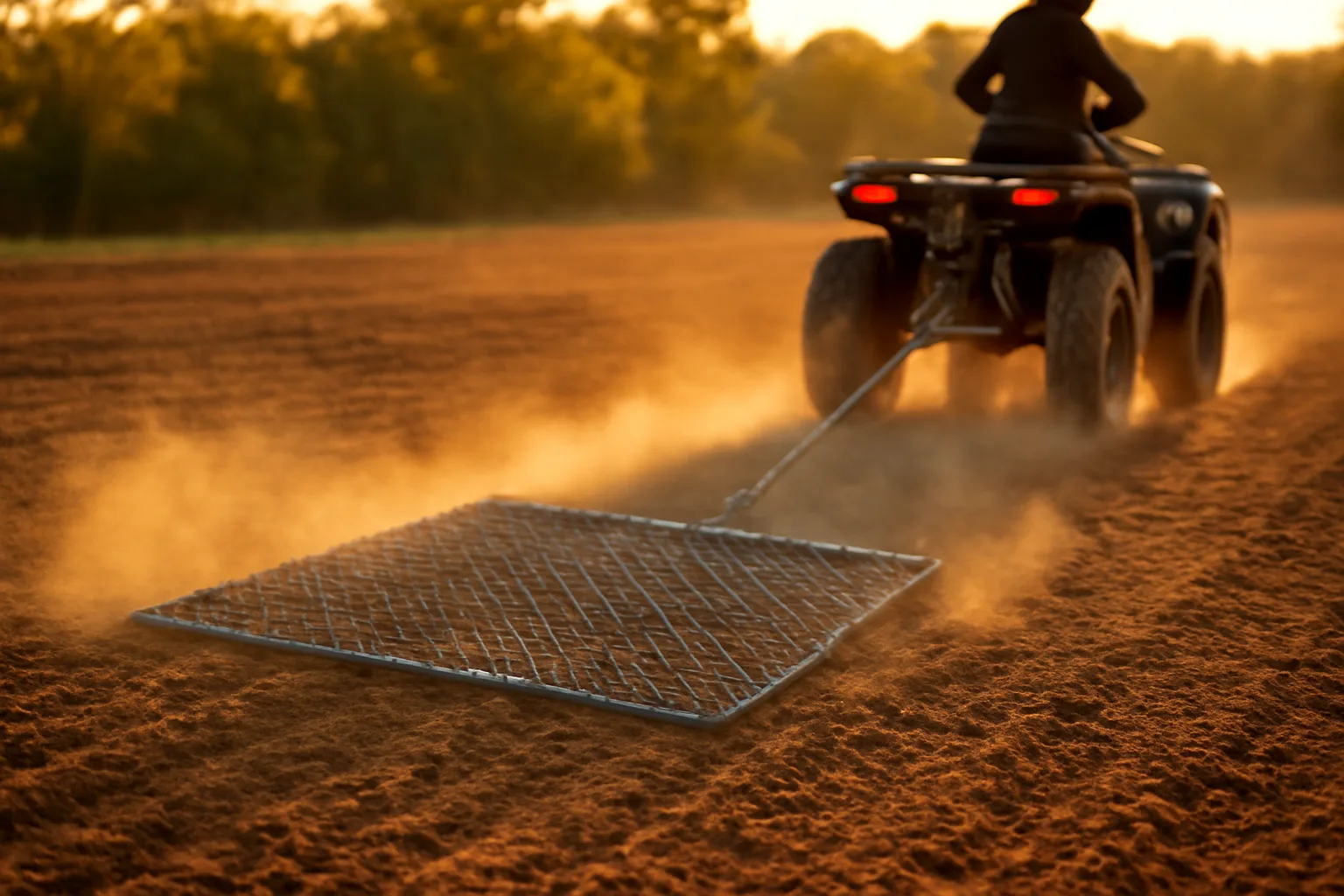
There are four rough tiers of DIY food plot planters, and most hunters land in the first two. Drag or harrow behind an ATV/UTV. A section of chain-link fence, a piece of box spring, or a homemade drag made from angle iron and railroad spikes, pulled behind a four-wheeler after broadcasting seed by hand or with a spreader. Cost is usually under $150 if you're building from scrap or a cheap fence remnant. This works well for small-seeded species like clover and brassicas that only need light soil coverage, generally a quarter inch or less. Cultipacker or cultipacker-seeder combo. A used cultipacker (the ribbed roller wheel implement) runs $300 to $1,000 depending on width and condition, and it firms the seedbed after broadcasting, which matters a lot for small seed. Some hunters bolt a lawn spreader hopper on the front so they broadcast and pack in one pass. Disc plus cultipacker, or a disc alone. A used single-gang or tandem disc for a compact tractor or ATV runs anywhere from $200 (rough, older units off Facebook Marketplace or auction sites) to $2,000 for something in good shape with a 3-point hitch. Discs break up sod and turn under old growth, which is often the real bottleneck on new plots, not the planting step itself. Converted or used grain drill. A real no-till drill sets seed at a consistent, controlled depth, which matters most for larger seed like soybeans, corn, or sorghum. Used small grain drills built for 5 to 8 foot widths show up at farm auctions for $800 to $3,000 depending on age and drill spacing. Some hunters convert an old drill by swapping seed cups or adding a small-seed attachment for clover and brassica blends. Here's a rough comparison to help you pick a starting point. | Setup | Typical used/DIY cost | Best for | Weak point |
How do you build a drag or harrow for a food plot
The classic build is a chain-link fence drag, and it takes an afternoon. Cut or find a 6 by 8 foot section of used chain-link fencing, fold it in half or thirds so it has weight and drag surface, and chain the corners to a tow point. Some hunters throw cinder blocks or a chunk of railroad tie on top to add weight for harder ground. Total cost, if you're not buying new fencing, is close to zero beyond a tow chain. A second common build uses box spring mattress frames, which have the same open-grid, spike-like surface and drag well over broadcast seed. Landowners also weld up drags from angle iron with railroad spikes welded on point-down, which lasts longer than a chain-link fence but takes welding equipment and more time. The depth rule that matters here: most food plot seed wants 0 to 1/2 inch of coverage, and small seed like clover, chicory, and brassica wants barely covered at all, closer to 1/4 inch or simply pressed into the surface. A drag is a light-touch tool. If your ground is rough or cloddy, disc it first, let it settle for a few days or a rain event, then broadcast and drag.
When to plant food plots for deer
Planting timing depends on whether you're planting a cool-season or warm-season plot, and both depend on your local frost dates, which come from your state's cooperative extension office or the NOAA climate normals for your county. There is no single national planting date, because a frost-free window in southern Georgia can run from late March to early November, while a spot in northern Minnesota might only run from late May to mid-September. As a general framework: warm-season plots (soybeans, corn, sorghum, cowpeas) go in after your last spring frost date, typically anywhere from mid-April in the Deep South to early June in the northern tier. Cool-season plots (clover, brassicas, cereal grains) go in during late summer to early fall, usually 6 to 10 weeks before your first fall frost date, so the plants establish before cold shuts down growth. Your county extension office publishes exact frost date ranges and is the most reliable free source for this, more reliable than a national blog average. If you want a starting point built around your specific zip code and soil test, that is the kind of thing a Custom Food Plot Plan is built to nail down for $99, but the extension office data is free and worth pulling regardless.
When to plant oats for deer
Oats are a cool-season cereal grain, best planted in late summer to early fall, generally 45 to 60 days before your first fall frost so plants reach a good leafy growth stage before killing cold arrives. In much of the whitetail range that lands somewhere between mid-August and mid-September. Oats can also go in as a spring planting in northern climates for early season grazing, planted as soon as ground is workable in spring. Oats germinate fast, often in 5 to 10 days with adequate soil moisture, and deer hit them hard in the first 60 days of growth when the plant is tender. Oats are not frost-hardy long term. Once temperatures drop into the low 20s Fahrenheit for extended periods, oat forage quality drops off, which is part of why many blends pair oats with more cold-tolerant brassicas or cereal rye to extend the plot's usefulness into winter.
When to plant turnips for deer
When to plant turnips for deer, and why timing is unforgiving
Turnips need roughly 80 to 90 days from planting to reach full bulb maturity, and they need to go in the ground so that window lands before the ground freezes hard, which means planting in mid to late summer across most of the whitetail range, typically late July through August depending on latitude. Plant too late and you get leafy top growth with no bulb; plant too early in southern zones and summer heat can stress seedlings before fall cooling helps them size up. Turnips are a brassica, and deer usage follows a pattern extension research has documented for decades: deer often ignore brassica plots for the first several weeks after emergence, then hit them hard after the first hard frost, because cold converts starches in the leaves and bulbs to sugars, making the plant taste sweeter. That means a turnip plot planted in August might look untouched in October and get hammered in December, which surprises first-time planters who assume the plot failed. Seeding rate for turnips run alone is typically 4 to 6 pounds per acre; broadcast rates run a bit higher than drilled rates because broadcast seed has lower emergence consistency. If you're using a disc-and-drag combo described above, err toward the higher end of the rate range to compensate for uneven coverage.
Do deer eat sorghum
Yes, deer eat grain sorghum, both the standing grain heads and the leaves, and it is a real warm-season food plot option, though it is used less often than corn or soybeans in most food plot mixes. Sorghum tolerates drought and poor soil better than corn, which makes it a fit for sandy or drought-prone ground where corn struggles. Extension trial work on wildlife food plots lists grain sorghum as a viable summer annual for attracting deer, turkey, and dove, particularly where deer pressure on young corn is a problem, since sorghum's growth habit and stalk are a bit tougher for deer to flatten early on. The tradeoff: sorghum needs the same warm soil and frost-free window as corn, generally planted once soil temperatures hit 60 degrees Fahrenheit, and birds (particularly blackbirds and doves) can hit maturing sorghum heads hard, sometimes stripping a plot before deer season even opens. Sorghum works best as part of a mixed warm-season plot rather than a monoculture on small acreage.
Do deer eat clover, and do they actually prefer it
Yes, deer eat clover heavily, and most food plot research and extension guidance rank it among the most consistently used plantings across the whitetail's range. Clover is a perennial legume, meaning one planting can produce forage for 3 to 5 years with proper mowing and fertility maintenance, which makes it one of the better cost-per-year options once it's established. Whitetail deer diet studies going back decades, including foundational work summarized by university wildlife programs, consistently show legumes like clover rank at or near the top of preferred forages when available, largely because clover offers high crude protein, often 25 to 30% in vegetative growth, compared to many grasses and browse species. That protein content matters most in spring and summer for antler growth and lactation, which is one reason clover plots pull double duty as both a hunting plot and a nutrition plot. Clover is a small seed crop, planted at 1/4 inch depth or less, which makes it a strong match for the drag-behind-ATV approach described earlier in this article. You do not need a drill to plant clover well; you need a firm, worked seedbed and a light covering.
What are deer's favorite foods, in general
There is no single universal favorite, because deer diet preference shifts by season, region, and what's locally available, but extension and state wildlife agency food habit studies consistently point to a shortlist: acorns (especially white oak group acorns, which are lower in tannin and more palatable than red oak group acorns), clover and other legumes, soybeans, and browse from young woody stems and forbs. Acorns in particular are treated by wildlife biologists as one of the single most important natural fall foods across the whitetail's range in years when mast crops are strong, because of their high fat content, which deer need heading into winter. Among planted food plot species, soybeans and clover consistently rank at the top of forage preference studies when deer have free choice, largely due to protein content, followed by brassicas (once frost-sweetened), cereal grains like oats and wheat, and cowpeas. Corn is heavily used but mostly as an energy source in late fall and winter rather than a top preference food in warm months. One honest caveat: preference studies vary by location, deer density, and what else is available on the landscape. A plot that gets hammered on one farm might sit untouched on a neighboring farm with heavier natural browse or ag fields nearby. Preference rankings are a guide, not a guarantee.
Do deer like honey, and does it matter for food plots
There's no real research or wildlife agency guidance on deer and honey specifically, and it is not a relevant food plot question in any practical sense, deer are not going to seek out honey the way they seek clover or acorns. What people are usually really asking about is whether sweet scents or mineral/molasses-based attractants work, which is a separate topic from food plot planning and falls more under supplemental feed and mineral products, which carry their own state regulations. Some states restrict or ban supplemental feeding and baiting outright, and molasses-based products can fall under those baiting definitions depending on how the state defines bait, so check your state wildlife agency's regulations before using any concentrated attractant on a hunting property. If you're focused on what actually pulls deer to a plot and holds them there through the season, the species and planting window matter far more than any additive. Clover, brassicas, and cereal grains planted at the right time will out-perform any attempt to sweeten a plot artificially.
How much does a DIY food plot planter setup actually cost
Here's a realistic budget breakdown for a one-to-three acre plot, DIY equipment only, not counting seed, lime, or fertilizer. - Chain-link or box spring drag, built from scrap: $0-100 (tow chain and hardware)
- Hand-crank or tow-behind broadcast spreader: $40-200
- Used cultipacker, 4-6 ft: $300-1,000
- Used single or tandem disc for compact tractor: $200-2,000
- Used small grain drill, 5-8 ft: $800-3,000 Most DIY plotters working an acre or two with an ATV or small tractor land in the $150 to $600 range total for a drag-and-spreader setup, which is enough to plant clover, brassicas, and cereal grains competently. Stepping up to corn, soybeans, or a large multi-acre program is where a used disc or drill starts to pay for itself, both in stand establishment and in time saved. Soil work matters more than equipment budget. A soil test through your state land-grant extension office or a private ag lab, generally $10 to $20 per sample, tells you your pH and nutrient levels and is the actual authority on how much lime and fertilizer your specific ground needs, no blog post or planter build substitutes for that. If you want a starting framework tailored to your zip code, soil test results, and the equipment you already have, that's the specific gap the $99 one-time Custom Food Plot Plan is built to fill, though the soil test lab itself remains the final word on your lime and fertilizer rates.
What mistakes do first-time DIY planters make
The most common mistake is planting too deep. A disc alone, run too aggressively, can bury clover or brassica seed two inches down when it wants a quarter inch or less, and it simply won't emerge. If you're using a disc, always follow with a light drag or cultipacker rather than relying on the disc pass itself to finish the seedbed. The second common mistake is ignoring the soil test. A plot planted into soil at pH 5.0 without lime will struggle no matter what species you pick or how well you plant it, since most food plot forages want a pH in the 6.0 to 7.0 range for good nutrient uptake. Lime takes months to fully react in the soil, so late applications right before planting help less than lime applied a season ahead. The third mistake is planting on the calendar instead of on the ground conditions and frost dates for the actual property. A date that works two counties over doesn't necessarily work on your land if you're in a frost pocket or a different elevation band. Pull your county's actual frost date data rather than trusting a generic regional guide. For readers building out a broader plan, related reading on food plot whitetail strategy, deer food plot seed selection, and deer food plots basics covers the species and layout side of this decision, while this article focuses on the equipment and timing side.
Frequently asked questions
What is a food plot in deer hunting terms
A food plot is a planted area, usually a fraction of an acre up to a few acres, seeded with forage like clover, brassicas, or grain to feed deer and other wildlife and to draw predictable deer activity to a property. Most states treat a properly planted, standing food plot as agriculture rather than baiting, though rules vary, so check your state wildlife agency's regulations.
Do deer eat sorghum in food plots
Yes. Grain sorghum is a viable warm-season food plot crop that deer eat, both the leaves and grain heads, and it tolerates drought and poor soil better than corn. It's used less often than corn or soybeans but works well on sandy or dry ground, and extension trial guidance lists it as a standard summer annual option for deer plots.
Do deer like clover more than other food plot options
Clover consistently ranks among the top preferred food plot forages in extension and wildlife research, largely due to its high crude protein content, often 25-30% in vegetative growth. It's a perennial that can produce for 3-5 years per planting, making it one of the best cost-per-year options once established.
When is the best time to plant food plots for deer
It depends on species. Cool-season plots (clover, brassicas, cereal grains) go in 6-10 weeks before your first fall frost, often August through early September. Warm-season plots (corn, soybeans, sorghum) go in after your last spring frost, typically mid-April to early June depending on latitude. Check your county extension office for exact frost dates.
When should I plant oats for a deer food plot
Plant oats 45 to 60 days before your first fall frost date so they reach a leafy growth stage before cold sets in, usually mid-August to mid-September in much of the whitetail range. Oats can also be spring-planted in northern climates for early-season grazing. They germinate in 5-10 days with good soil moisture.
When do I plant turnips for a deer food plot
Plant turnips in mid to late summer, typically late July through August, since they need 80-90 days to reach full bulb maturity before the ground freezes. Deer often ignore turnip plots at first and hit them hard after the first hard frost, when cold converts starches to sugars in the leaves and bulbs.
What do deer prefer to eat most
There's no single universal favorite, but acorns (especially white oak group), clover and other legumes, soybeans, and tender browse consistently rank at the top across extension and state wildlife food habit studies. Preference shifts by season and region, and depends heavily on what else is available locally.
Do deer like honey or sweet attractants
There's no solid wildlife research on deer and honey specifically, and it isn't a meaningful food plot question. What matters far more is planting the right species at the right time. Concentrated sweet attractants can also fall under state baiting definitions, so check your state wildlife agency rules before using them.
Can I build a food plot planter myself without buying a drill
Yes. A chain-link fence section or box spring dragged behind an ATV, paired with a broadcast spreader, plants clover, brassicas, and cereal grains well on a worked seedbed for under $150 in most cases. A drill matters more for larger seed like corn, soybeans, or sorghum that need precise depth control.
How deep should I plant food plot seed with a DIY planter
Most small food plot seed (clover, brassica, chicory) wants 0 to 1/2 inch of coverage, often just pressed into the surface. Larger seed like corn or soybeans wants 1 to 2 inches. A light drag or cultipacker after broadcasting gets small seed to the right depth; a disc alone often buries it too deep.
How much does a soil test cost and do I really need one
A soil test through a land-grant extension office or private ag lab typically costs $10-20 per sample and tells you exact pH and nutrient levels for your specific ground. It's the authority on how much lime and fertilizer to apply, something no general planting guide or equipment choice can substitute for.
What's the cheapest way to plant a small food plot
A homemade chain-link or box spring drag pulled behind an ATV, combined with a hand-crank broadcast spreader, runs close to $150 total if you're using scrap materials and a used spreader. This works well for clover, brassicas, and cereal grains on a properly worked seedbed.
Sources
- University of Missouri Extension, Establishing Food Plots for Wildlife (G9421): Small-seeded food plot species like clover and brassicas need shallow seed depth, generally 1/4 inch or less
- NOAA National Centers for Environmental Information, Climate Normals: Frost-free growing season length varies widely by region, source for regional frost date variation
- Oklahoma State University Extension, Establishing and Managing Wildlife Food Plots (NREM-9007): Cool-season food plots should be planted 6-10 weeks before first fall frost; warm-season plots after last spring frost
- University of Georgia Extension, Wildlife Food Plots (Bulletin 1362): Grain sorghum is a viable warm-season food plot option, more drought-tolerant than corn
- University of Missouri Extension, Soil Testing for Lawns, Gardens, and Wildlife Plantings (G9111): Most food plot forages need soil pH in the 6.0-7.0 range, and soil testing determines exact lime and fertilizer needs