Last updated 2026-07-25
TL;DR
A DIY food plot works when you match species to your soil test, plant on the right regional calendar, and pick plants deer actually prefer, like clover, brassicas, and cereal grains. Most Northern plots go in July through September; Southern warm-season plots go in spring. Soil pH and fertility matter more than seed brand.
What is a food plot, exactly?
A food plot is a planted area, usually somewhere between a quarter acre and several acres, put in specifically to feed and attract deer or other wildlife. It's not a garden and it's not a lawn. Most hunters plant a mix of annuals (things like oats, brassicas, or soybeans that grow one season and die) or perennials (clover and alfalfa, which can produce for 3 to 5 years with the right care). The USDA Natural Resources Conservation Service treats food plots as a wildlife habitat practice, and many state cost-share programs fund similar plantings under wildlife food and cover standards [1]. That tells you something: this isn't just a hunting trick, it's recognized habitat work. A good plot does two things. It feeds deer through a stress period, and it gives you a place to hunt where deer show up predictably. The size, shape, and species mix should depend on what season you're hunting and what your soil can actually grow, not on what looked good in a seed catalog. If you're brand new to this, start by reading up on food plot whitetail basics before you buy a bag of anything.
When should you plant food plots for deer?
| North (Zones 3-5) | Late May-June | Mid-July-early Sept | |
|---|---|---|---|
| Transition (Zones 6-7) | May-June | Aug-Sept | |
| South (Zones 8-9) | April-June | Sept-Nov | Your local university extension office publishes exact frost dates and planting windows for your county, and that's a better source than any national seed company chart. Mississippi State University Extension recommends fall food plot plantings begin about 60 to 90 days before your average first frost so brassicas have time to bulb and clover has time to establish a root system before winter dormancy [2]. |
Timing depends entirely on your zone and whether you're planting a warm-season or cool-season species. There's no single national planting date, and anyone who tells you one date works everywhere is guessing. For Northern and transition zones (roughly USDA Hardiness Zones 3 to 6), cool-season plots like clover, brassicas, and cereal grains go in from mid-July through early September, timed so brassicas and clover germinate ahead of fall frost [2]. Spring plantings of clover or chicory in the North typically happen April through May once soil temps warm past 50 degrees F. In the South (Zones 7 to 9), you have two windows. Warm-season plots (soybeans, cowpeas, grain sorghum, corn) go in April through June. Cool-season plots (oats, wheat, clover, brassicas) go in September through November, often right after the first real cool-down. Here's a rough breakdown: | Region | Warm-season planting | Cool-season planting |
When to plant oats for deer
Oats are a fall staple because deer hit them hard right after planting, when the leaves are still soft and sweet, and again in late fall once cold weather sweetens the plant further through starch conversion. Plant oats 6 to 8 weeks before your first expected frost, which in most of the Midwest and Upper South lands somewhere between late August and mid-September. Oats germinate fast, often in 5 to 10 days with decent soil moisture, and they tolerate a wider pH range than clover, though they still perform best between 6.0 and 7.0. A lot of hunters plant oats alone in a small plot specifically for early bow season. Deer will walk right past standing corn to eat young oat shoots. One catch: oats aren't very winter-hardy. In the Deep North they'll usually die back hard after a few nights in the teens, so if you want late-winter food, pair oats with a brassica or winter wheat, which holds up better to repeated hard freezes. Drill oats at about 60 to 100 lbs per acre, or broadcast at the higher end of that range since broadcast seed has worse seed-to-soil contact. Extension guidance from Corn Belt land-grant programs backs oats as a reliable, cheap fall cover crop and wildlife food option.
When to plant turnips for deer
Turnips and other brassicas (radish, rape, kale) go in the ground 90 to 100 days before your first hard frost, because they need that long stretch of growing time to build both leaf mass and the bulb underground [3]. Plant too late and you'll get spindly plants with no bulb at all. For most of the Midwest and Upper South, that means late July through mid-August. In the Deep South, you can push planting into September. Turnips are a classic late-season play. Deer often ignore the leaves early on and hammer the bulbs after a few hard frosts convert starches to sugars. That's why so many hunters see little activity on a brassica plot in October and then watch it get pounded to dirt by late December. That's normal, not a failure. Seeding rate for turnips alone runs 4 to 6 lbs per acre if drilled, a little higher if broadcast. Most hunters blend turnips with other brassicas or a cereal grain rather than planting a monoculture, both for soil coverage and because deer seem to prefer some variety on the plate.
Do deer eat clover, and do they actually like it?
Yes. Clover is one of the most consistently preferred food plot plants across whitetail range, and it's not close. White clover (Ladino and similar varieties) and red clover both show up at or near the top of nearly every deer forage preference study done in the last few decades. A long-running Mississippi State University forage preference trial found white clover was among the most heavily used plot species tested, alongside soybeans and cowpeas during the growing season [2]. Clover also holds crude protein levels in the 25 to 30 percent range when it's actively growing and well-fertilized. That's genuinely high-value forage, comparable to or better than most commercial pellet feeds. The reason clover works so well as a plot staple isn't just taste. It's a perennial, so once established it comes back for 3 to 5 years with mowing and fertilizer maintenance, no annual reseeding. It also fixes its own nitrogen through rhizobia bacteria in the root nodules, so it needs less nitrogen fertilizer than grain crops, though it still wants phosphorus and potassium and a pH close to neutral. The tradeoff: clover takes real management. Mow it 2 to 3 times a season to knock back weeds and keep it from getting stemmy, and expect it to need a maintenance lime or fertilizer application most years based on your soil test. If you want a low-maintenance plot, clover isn't it. Brassicas or cereal grains are easier to walk away from.
What are deer's favorite foods overall?
There's no single universal answer, because preference shifts by season, region, and what's available naturally. But research and decades of plot data point to a consistent short list: acorns when available, soybeans, clover, and cowpeas during the growing season, and brassicas, cereal grains, and standing corn in fall and winter [2]. Acorns are the wildcard. In a good mast year, deer will bypass a lush clover plot to hammer a white oak flat, because acorns are calorie-dense from fat content and deer instinctively load up on them ahead of winter. This is well documented in wildlife management literature and it's the single biggest reason plot activity swings year to year even when your agronomy is identical. Outside of mast years, soybeans are usually the top pick during summer, when deer need protein for lactation and antler growth, and brassicas take over once frost hits. Corn is a favorite for pure calories in the dead of winter, especially in the North, but it's expensive and hard on soil without rotation. If you're picking one plant for a mixed plot with the broadest appeal, most experienced plotters land on clover for the growing season plus a brassica blend for fall. That combination covers spring green-up, summer stress, and the late-season push, all without needing three separate fields.
Do deer eat sorghum?
Yes, deer eat grain sorghum, both the standing seed heads and the green forage, though it's usually a secondary or supplemental plot species rather than a headline attractant. Sorghum is drought-tolerant, which makes it a solid choice in the South and parts of the Plains where summer heat kills weaker plants. Deer will browse young sorghum shoots readily, and they'll clean up standing grain heads in fall, especially once other food sources thin out. Where sorghum earns its keep is as a nurse crop and screening plant. It grows tall fast, gives you visual cover for a stand location, and works in a blend with cowpeas or soybeans to hold soil and suppress weeds while the legumes bulk up. On its own, most hunters wouldn't rank sorghum above soybeans or corn for pure deer draw, but it's a legitimate, cheap addition to a summer plot mix, especially somewhere hot and dry.
Do deer like honey, or anything sweet?
There's no real evidence deer are drawn to honey itself, and it's not a practical food plot or attractant question in most states anyway, because pouring honey or syrup on the ground functions as bait, and baiting rules vary sharply by state. What's true is that deer strongly prefer sugar-rich forage, which is part of why brassicas and turnips get so much late-season attention: cold weather converts starches to simple sugars in the plant tissue, making the same bulb taste sweeter in December than it did in October [3]. That's a real, well-documented plant physiology response, not a myth. If you're thinking about using syrups, molasses, or any liquid attractant instead of honey, check your state wildlife agency's baiting and feeding regulations before you do anything. Some states allow baiting outright, some allow it with restrictions on distance or timing, and some ban it completely for deer, often tied to chronic wasting disease concerns. Michigan, for instance, restricts baiting and feeding of deer, with specifics on location and CWD-affected areas spelled out in the state's Wildlife Conservation Order [4]. Always check your own state agency's current rules before adding anything to a plot beyond planted seed.
How do you figure out what to actually plant?
Start with a soil test, not a seed bag. Your local university extension office (or a private ag lab) will test pH, phosphorus, potassium, and organic matter for somewhere between $10 and $20 per sample in most states, and that test is the single most useful $15 you'll spend on a plot all year. pH matters more than almost anything else. Clover and alfalfa want a pH close to 6.5 to 7.0. If your soil sits at 5.5, which is common in a lot of wooded, previously unfarmed ground, clover will struggle no matter how much fertilizer you throw at it, because nutrient uptake drops off hard in acidic soil. Lime takes months to fully react in the soil, so if your test calls for lime, get it down as early as possible, ideally the season before you plant, not the week of. Once you know your pH and nutrient levels, match species to conditions rather than forcing conditions to match a species. Brassicas and cereal grains tolerate a wider pH range and lower fertility than clover or alfalfa. If your soil test comes back rough and you don't want to invest in multiple lime applications, plant something more forgiving the first year while you build the soil up. This is the exact process behind the deer food plot seed selection question most hunters ask first, and it's also where a lot of DIY plots go wrong: people buy seed before they test soil, then wonder why a $60 bag of clover produced a thin, yellow stand. If you'd rather skip the trial and error, PlotSeason's $99 one-time Custom Food Plot Plan takes your soil test results, location, and equipment on hand and builds a specific planting plan around them. It's general guidance built for your numbers, not a replacement for your soil-test lab's specific lime and fertilizer recommendations, which remain the final word on your ground.
What equipment do you actually need to DIY a plot?
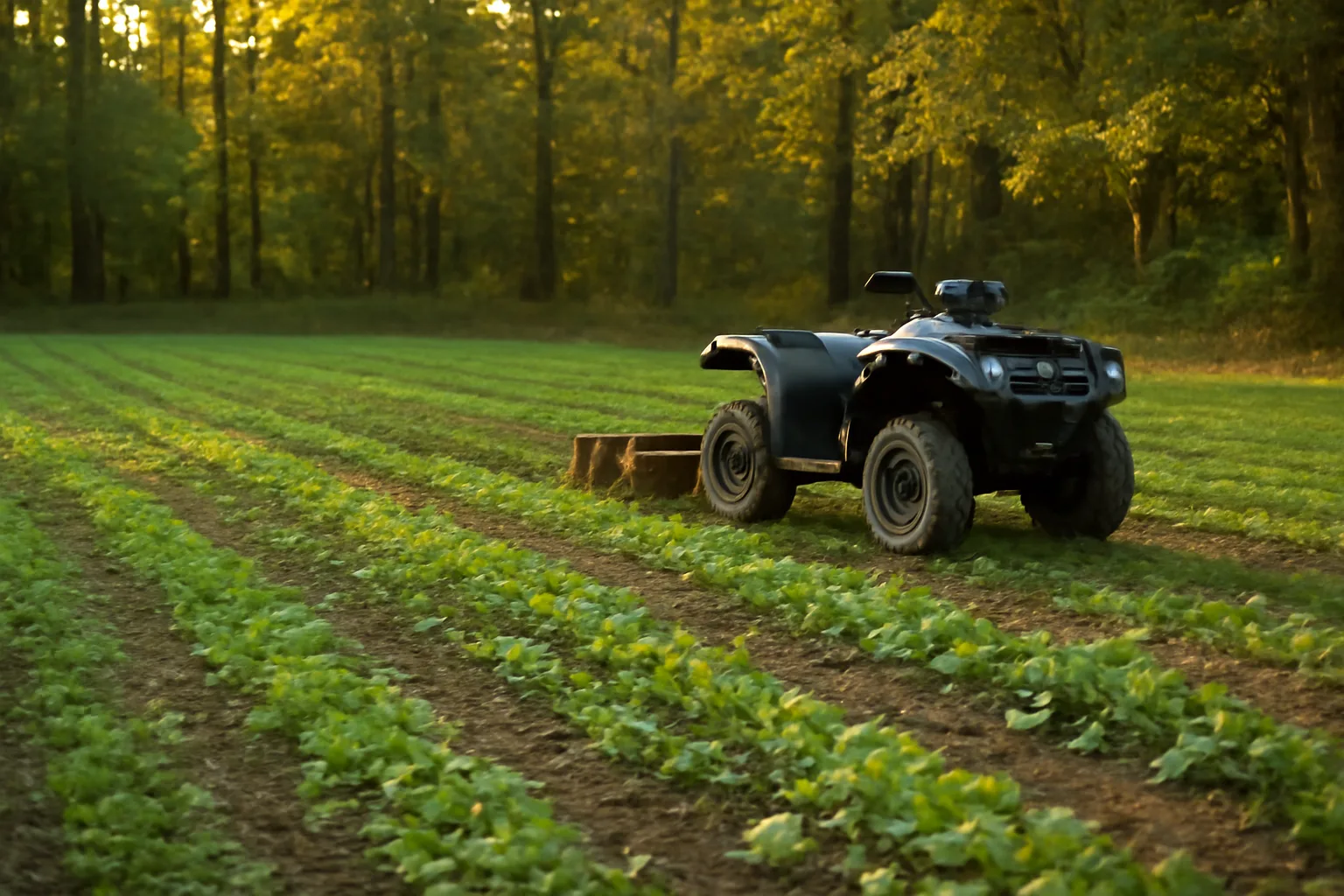
You don't need a tractor to put in a decent small plot, but you do need a way to break ground, plant seed at the right depth, and control weeds. A lot of one-acre-and-under plots get done entirely with an ATV or UTV, a small disc or tiller, a broadcast spreader, and a sprayer. For seed-to-soil contact, which matters enormously for small-seeded species like clover and brassicas, you want firm, fine soil, not clumpy dirt. A cultipacker or even dragging a chain-link section behind the ATV after broadcasting seed helps a lot. Cereal grains and larger seeds like beans tolerate rougher seedbeds and deeper planting, which is part of why they're the easier starter crop for a first-year DIY plot. Herbicide is worth the money almost every time. Glyphosate to burn down existing vegetation before planting, and a grass-specific herbicide like clethodim for maintaining a clover stand, both cost far less than reseeding a plot that got choked out by weeds. Skipping herbicide is the most common corner DIY planters cut, and it's usually the reason a plot fails in year one. For gear-specific comparisons and what's actually worth buying versus renting, see deer food plots and food plot seed for species-by-species seeding rates and depth charts.
How big should a DIY plot be, and where should you put it?
Size depends on your goal. A quarter-acre to half-acre plot tucked in timber works well as a bow-hunting kill plot, small enough that deer feel comfortable entering it in daylight. Larger plots, an acre or more, work better as feeding destinations placed farther from bedding, meant to hold deer on your property through fall and winter rather than to hunt directly. Sun matters as much as size. Clover and brassicas both want at least 4 to 6 hours of direct sun; a plot boxed in by mature timber on all sides will always underperform one with some canopy opening, no matter how good your soil test numbers are. Access and wind matter too, arguably more than plot design itself. A beautifully planted plot that you can't approach or hunt without blowing your scent across the only trail deer use to enter it will get you burned by November. Plan entry and exit routes before you ever break ground. For guidance on matching plot shape and placement to your specific terrain and hunting pressure, food plot whitetail covers layout strategy in more depth than seed selection alone can.
What's the honest cost of doing it yourself versus paying someone?
A basic DIY plot, seed, lime, fertilizer, and herbicide for a half-acre to one-acre plot, typically runs somewhere between $150 and $400 depending on species mix and how much lime your soil test calls for, based on typical per-acre input costs reported by university extension budget guides for forage crops [5]. Clover costs more upfront per acre than cereal grains but spreads that cost over multiple years since it's a perennial. Equipment is the real variable. If you already own or can borrow a UTV, disc, and sprayer, your only real annual cost is seed, lime, and fertilizer. If you have to rent or buy equipment from scratch, that can add $500 to a couple thousand dollars in year one alone, which is where a lot of first-time plotters get sticker shock. Hiring a local plot service to plant for you usually runs several hundred dollars per acre depending on your region and how much site prep is needed, on top of seed and soil amendment costs. For most hunters with even modest equipment access, DIY pencils out cheaper over a 3 to 5 year clover rotation, and you build the skill to adjust species and timing yourself instead of waiting on someone else's schedule. Whichever way you go, get the soil test first. It's the cheapest, highest-leverage decision in the whole process, and it's the one step no amount of good equipment can substitute for.
Frequently asked questions
Do deer eat sorghum?
Yes. Deer browse young sorghum shoots and clean up standing grain heads in fall, though it's usually a secondary plot species rather than a top attractant. It's most useful as a drought-tolerant addition to a summer plot blend with cowpeas or soybeans, especially in hot, dry regions where other species struggle.
Do deer eat clover?
Yes, and clover ranks among the most preferred food plot species in university forage trials, alongside soybeans and cowpeas. It stays high in protein (often 25 to 30 percent crude protein when actively growing) and is a perennial, so a well-managed clover stand can produce for 3 to 5 years before needing to be replanted.
When to plant deer food plots?
It depends on species and zone. Cool-season plots (clover, brassicas, cereal grains) go in mid-July through September in Northern and transition zones, and September through November in the South. Warm-season plots (soybeans, cowpeas, sorghum) go in April through June across most of whitetail range. Check your local extension office for exact frost dates.
Do deer like clover?
Yes, strongly. White and red clover consistently rank at or near the top of deer forage preference studies, and clover's high protein content makes it especially valuable during spring green-up and summer lactation and antler growth periods. It does require regular mowing and fertility maintenance to stay productive.
When to plant oats for deer?
Plant oats 6 to 8 weeks before your area's first expected frost, typically late August through mid-September across most of the Midwest and Upper South. Oats germinate fast, often in 5 to 10 days, but aren't very winter-hardy, so pair them with brassicas or wheat if you want food that lasts into late winter.
When to plant food plots for deer?
Cool-season food plots go in 60 to 90 days before your first fall frost so plants can establish before winter. Warm-season plots go in spring, generally April through June, once soil temperatures warm past 50 degrees F. Exact dates vary by USDA hardiness zone and by species, so check your local university extension calendar.
When to plant turnips for deer?
Plant turnips 90 to 100 days before your first hard frost, which lands in late July through mid-August for most of the Midwest and Upper South, later in the Deep South. Turnips need that full window to build both leaf mass and an underground bulb before deer start hitting them hard in late season.
What is a food plot?
A food plot is a planted area, usually a quarter acre to several acres, established specifically to feed and attract deer or other wildlife. It can be an annual planting like oats or brassicas that lasts one season, or a perennial like clover that can produce for multiple years with mowing and fertility upkeep.
What are deer's favorite foods?
Preference shifts by season and region, but acorns top the list whenever they're available due to their high fat and calorie content. Beyond mast, soybeans and clover dominate during the growing season, and brassicas, cereal grains, and standing corn take over in fall and winter as deer shift toward carbohydrate-dense food.
Do deer like honey?
There's no real evidence deer are specifically drawn to honey, and using it as an attractant functions as baiting in most states, which has widely varying legal restrictions. Deer are drawn to naturally sugar-rich forage though, which is part of why brassicas taste sweeter and get hit harder after a few hard frosts.
Can you plant a food plot without a tractor?
Yes. Many half-acre to one-acre plots are planted entirely with an ATV or UTV, a small disc or tiller, a broadcast spreader, and a sprayer. Larger seeds like soybeans and cereal grains tolerate rougher seedbeds, making them a practical first plot if your equipment is limited.
How much does a DIY food plot cost per acre?
Seed, lime, fertilizer, and herbicide for a basic one-acre plot typically runs $150 to $400, depending on species mix and how much lime your soil test calls for. Equipment access is the bigger cost variable; renting or buying gear from scratch can add several hundred to a couple thousand dollars in year one.
Do I need a soil test before planting a food plot?
Yes, strongly recommended. A soil test, usually $10 to $20 through a university extension office, tells you pH and nutrient levels so you can pick species that will actually grow in your soil rather than guessing. Clover and alfalfa need pH near 6.5 to 7.0; brassicas and cereal grains tolerate more acidic soil.
Sources
- USDA Natural Resources Conservation Service, Conservation Practice Standard, Wildlife Habitat Planting (Code 645): Food plots are recognized as a wildlife habitat conservation practice, often supported by cost-share programs
- Mississippi State University Extension, Publication 2872, "Establishing and Managing Wildlife Food Plots": Cool-season plot planting timing recommendations for fall food plots
- University of Tennessee Extension, Publication W391, "Brassicas for Deer": Brassicas need roughly 90-100 days before frost to develop bulbs, and frost sweetens plant tissue via starch-to-sugar conversion
- University of Georgia Extension, Circular 892, "Food Plots for Wildlife": Grain sorghum functions as a supplemental food and cover plant used by deer and other wildlife
- Michigan Department of Natural Resources, Wildlife Conservation Order Amendment No. 2 of 2019 (Baiting and Feeding): Michigan restricts or bans baiting and feeding of deer in CWD-affected areas of the Lower Peninsula
- University of Tennessee Extension, Publication W063, "Establishing and Managing Wildlife Food Plots": Typical per-acre input costs for forage-based food plots