Last updated 2026-07-26
TL;DR
No-till food plots skip tillage by killing existing vegetation with herbicide, then drilling or broadcasting seed into the residue. It saves soil moisture, cuts erosion, and works especially well for clover, oats, and brassicas. Success depends on a clean burndown 2-3 weeks before planting, good seed-to-soil contact, and planting into the right soil temperature window for your zone.
what is a food plot, and why go no-till
A food plot is a planted area on hunting land, usually a half acre to a few acres, meant to feed deer and other wildlife and to concentrate animal activity somewhere you can hunt or observe it. Landowners plant everything from simple clover fields to multi-species blends of brassicas, cereal grains, and legumes. The USDA's National Agroforestry Center and most state wildlife agencies treat food plots as a wildlife habitat management tool, not a replacement for natural forage, and every serious deer manager will tell you the same thing: a good plot supplements natural browse, it doesn't substitute for it. No-till planting means you don't plow, disc, or otherwise turn the soil before seeding. Instead you kill the existing vegetation with a burndown herbicide (usually glyphosate), let it die back, then plant directly into the dead residue using a no-till drill or by broadcasting seed onto the mulched surface. The USDA Natural Resources Conservation Service has pushed no-till and reduced-till systems in production agriculture for decades specifically because they cut soil erosion and preserve soil moisture and structure [1]. Those same benefits carry straight over to a two-acre plot in the back forty. For hunters, no-till has three practical advantages over conventional tillage. First, it's faster: no repeated disc passes, no waiting on ground to dry enough to work. Second, it holds moisture, which matters a lot on plots planted in August heat for fall hunting season. Third, it protects soil structure and organic matter on ground you're going to replant year after year, which over time improves infiltration and reduces compaction problems. If you're deciding what to plant before you decide how to plant it, start with a look at food plot seed options and match species to your soil and shade conditions before worrying about the drill.
when should you plant food plots for deer
Timing splits into two windows almost everywhere in whitetail country: spring/summer plantings for warm-season annuals and perennials, and late-summer plantings for fall brassicas and cereal grains. The exact dates shift by 4-6 weeks depending on your USDA Plant Hardiness Zone and local frost dates. Spring plots (clover, chicory, soybeans, corn) generally go in after your last frost date, once soil temperatures hit 50-55°F for clovers and warm further for soybeans and corn. In the Upper Midwest and Northeast (Zones 3-5) that's typically mid-April through May. In the Mid-South and Southeast (Zones 6-8) it can be March into April. Fall plots (brassicas, cereal grains, cool-season legumes) are timed backward from your first fall frost date, because most of these species need 60-90 days of growth before deer season and some, like turnips, actually improve in palatability after a hard frost converts starches to sugars. Extension guidance on brassica forages generally recommends planting 60-90 days before the first killing frost. That usually lands in a window from late July (northern states) through early September (southern states). Check your specific frost dates against the USDA Plant Hardiness Zone Map before locking in a date, and always cross-check against your state wildlife agency's food plot and baiting regulations, since some states regulate what counts as a food plot versus bait pile differently depending on size, visibility, and harvest method [2].
when to plant oats for deer
Oats are a fall staple because deer hit them hard right after emergence and again after frost sweetens the plant. Plant oats 6-8 weeks before your first expected fall frost, which for most whitetail range means a window from mid-August to mid-September. In northern states (Zone 3-4) aim for the first half of that window; in the transition zone and South (Zone 6-7) you can push into late September or even October. Oats germinate fast, often within 4-7 days in warm, moist soil, and tolerate a wide pH range, though they perform best between 6.0 and 7.0. Seeding rate for a drilled monoculture plot runs 2-3 bushels per acre (roughly 64-96 lbs, since a bushel of oats weighs about 32 lbs), broadcast rates run higher. Most hunters blend oats with brassicas or cereal rye rather than planting them alone, since the mix extends the attraction window into winter after the oats get grazed down or killed by hard freezes. Oats aren't cold-hardy the way winter wheat or rye is. A hard freeze in the teens will usually kill oats outright, so in far northern zones they function as an early-fall plot, not a winter one.
when to plant turnips for deer, and do deer actually eat them
Yes, deer eat turnips, and they eat the tops before the bulbs in most cases, then come back for the bulbs after repeated frosts sweeten them. Turnips (and other brassicas like radish, rape, and kale) are one of the most extension-documented food plot crops for fall attraction. Plant turnips 80-90 days before your first killing frost, which typically means late July through mid-August in northern zones and August into early September farther south. Turnip seed is tiny, so seeding depth matters: 1/4 to 1/2 inch is the general guidance, and no deeper. Broadcast rate runs 4-6 lbs per acre for a pure stand; in blends, 2-3 lbs per acre is common. Turnips need a firm, weed-free seedbed and respond strongly to phosphorus and boron, both of which your soil test will flag if deficient. One real limitation: turnip bulb consumption is inconsistent. Some properties see deer clean out bulbs to the dirt by January; others see bulbs sit untouched all winter while deer hammer the tops only. Nobody has a clean explanation for this pattern beyond regional deer density, snow cover, and competing food sources. Plant turnips expecting reliable leaf browse and treat bulb consumption as a bonus, not a guarantee.
do deer eat clover, and do deer actually like it
Yes, and by most measures clover is the single most consistently used food plot forage across whitetail range. White clover (Trifolium repens) and red clover (Trifolium pratense) both show up repeatedly in university extension forage-preference work as high-protein, high-palatability forages that deer return to through the growing season, more than once. Clover's real advantage over annuals is duration. A well-maintained perennial clover stand can produce quality forage for 3-5 years before it needs renovation, versus a single season for brassicas or cereal grains. Crude protein in vegetative clover commonly runs 25-30%, which lines up well with lactating doe and antler-growth nutritional demands in spring and summer. Clover does have downsides. It's slow to establish (often 60-90 days to full stand), it's sensitive to drought in its first year, and it needs a soil pH near 6.0-7.0 to persist, meaning acidic soils need lime correction before clover has a real shot. If your soil test comes back below pH 6.0, expect clover to struggle regardless of how good the seed is. For a no-till clover establishment, spray out existing vegetation 2-3 weeks ahead, then either drill at 1/4 inch depth or broadcast onto a firm surface and cultipack afterward, since clover seed needs tight soil contact more than most food plot species. If you want species-specific rate tables and blend recommendations, deer food plot seed breaks those down by region.
do deer eat sorghum, and where does it fit in a plot
Deer do eat sorghum, mainly the seed heads and, to a lesser extent, the leaves, but it's not a top-tier attractant on its own. Sorghum (grain sorghum or milo) shows up in food plots more often as a cover crop, a drought-tolerant summer filler in a blend, or a winter standing-grain source than as a primary deer draw. It tolerates heat and low rainfall far better than corn, which is why it gets planted in the southern Great Plains and parts of the South where corn struggles without irrigation. If you're planting sorghum for deer, expect turkeys, songbirds, and small mammals to hit the seed heads hard too, sometimes harder than deer do. Plant sorghum after soil temperatures reach 60-65°F, generally late May through June depending on zone, at a seeding rate of 6-10 lbs per acre drilled in rows. Sorghum's real value in a no-till system is as a nurse crop or biomass builder ahead of a fall brassica or clover planting. Terminate it with herbicide or let frost kill it, then drill your fall blend directly into the standing residue for erosion control and weed suppression.
do deer like honey, and does it belong in a food plot conversation
This one comes up more than you'd think, and the honest answer is: there's no real evidence deer forage on honey in any meaningful way, and it has nothing to do with food plot planning. Deer are browsers built around forbs, woody browse, mast, and agricultural crops; honey isn't part of their natural diet or any documented supplemental feeding program. If you're seeing this question search-adjacent to food plots, it's likely conflated with commercial deer attractant sprays that use sweet syrups or molasses as a scent carrier, not a nutritional source. Worth noting: baiting and scent-based attractants are regulated separately from food plots in most states, and rules vary widely on what's legal to use while hunting over it. Check your state wildlife agency's baiting statute before using any attractant product near a stand [2].
what do deer actually prefer to eat
Deer preference isn't static; it shifts by season, region, and what's locally available, but extension research and browse studies consistently rank a handful of categories at the top: soft mast (acorns above almost everything else in fall), legumes (clover, soybeans, cowpeas) for protein during spring and summer, and brassica tops and cereal grains for late fall and winter energy. Acorns deserve a specific callout. White oak acorns are lower in tannins and generally preferred over red oak acorns when both are available in the same year, a pattern documented in deer diet and food-habits research across the Southeast [3]. In a heavy mast year, deer will often ignore food plots almost entirely in favor of acorns, which frustrates hunters but isn't a plot failure, it's just deer doing what wild deer do. Among planted forages, soybeans (both forage and grain types) and clover consistently rank at or near the top of preference studies for protein-stage forage, while brassicas and cereal grains rank highest for late-season energy demand. There's no single 'favorite' food across all regions and seasons; the honest answer is that preference tracks nutritional need and availability more than any fixed hierarchy.
how do you actually plant a no-till food plot, step by step
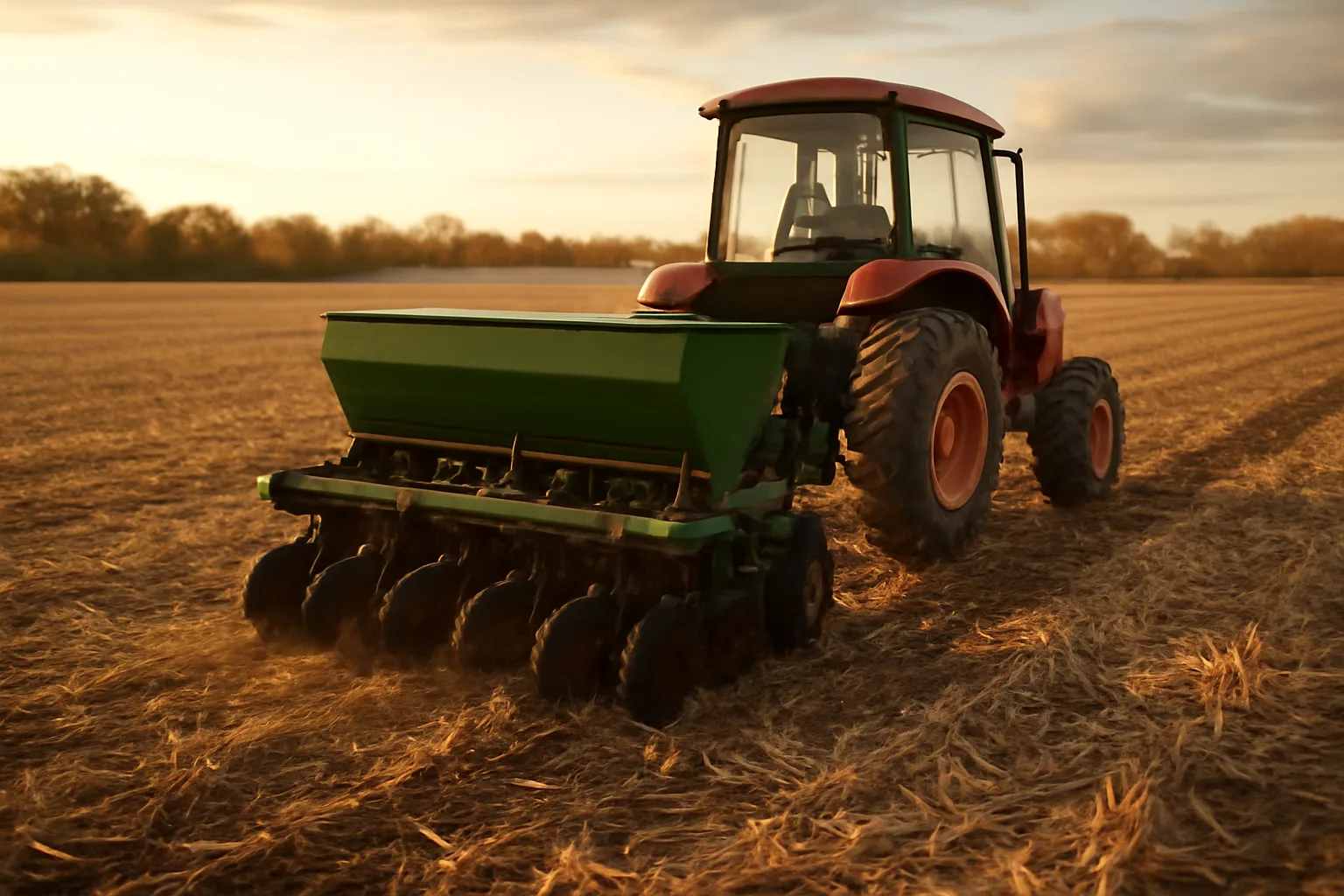
The sequence matters more than the equipment. Here's the order that works across species: test soil, spray, wait, plant, cultipack (if needed), and don't till. 1. Pull a soil test 60-90 days ahead if possible. Your soil test lab is the real authority on lime and fertilizer rates for your specific ground; a general article can't replace that number. Extension soil testing labs (most land-grant universities run one) typically return pH, phosphorus, potassium, and organic matter with specific lime and fertilizer recommendations for your target crop [4]. 2. Spray existing vegetation with glyphosate (or a burndown herbicide labeled for your target weeds) 2-3 weeks before your planting date. Full kill takes time, especially on tough perennial grasses and briars; spraying and planting the same week is the most common no-till mistake. 3. Mow if residue is heavy, though standing dead vegetation actually helps a no-till drill work and reduces erosion on sloped ground. 4. Plant. For small seeds (clover, brassicas, chicory) a no-till drill set to 1/4-1/2 inch depth gives the most consistent stand; broadcasting works too if you follow with a cultipacker or drag to firm the seed into contact with soil. For larger seeds (soybeans, corn, sorghum, cereal grains) drill depth runs 1-1.5 inches. 5. Skip the disc. The entire point of no-till is that you don't disturb the soil profile; tilling after spraying defeats the purpose and dries out the seedbed right when you need moisture most. If you don't own a no-till drill, most farm co-ops and conservation districts rent them, and many states' NRCS field offices maintain equipment-share programs for exactly this purpose. A drill costs real money to buy outright, often $3,000-$10,000+ used depending on width and condition, so renting or sharing one across a hunting group makes far more financial sense for most plots under 10 acres.
no-till vs conventional till: which actually performs better
| Soil moisture retention | Better, residue shades soil and cuts evaporation [1] | Worse, bare tilled soil dries faster | |
|---|---|---|---|
| Erosion control | Strong, especially on slopes | Weak, exposed soil washes easily | |
| Weed seed bank disturbance | Low, buried weed seeds stay buried | High, tillage brings buried seeds to the surface | |
| Speed to plant | Fast once sprayed | Slower, multiple passes needed | |
| Equipment cost | No-till drill needed ($3k-$10k+ used) | Disc/harrow often cheaper, more common on farms | |
| Seedbed uniformity | Can be uneven on rocky/rooty ground | Usually more uniform, finer seedbed | |
| Herbicide dependence | High, burndown is mandatory | Lower, tillage itself controls existing growth | Rocky, root-choked, or heavily wooded ground often plants better no-till simply because you can't run a disc through it anyway. Flat, open ag ground with no erosion concerns and existing tillage equipment on hand may see just as much success going conventional, especially for a first-year plot on ground that's never been limed or fertilized. If you're weighing which approach fits your specific acreage and species mix, that's exactly the kind of site-specific call PlotSeason's $99 Custom Food Plot Plan is built to walk through, species selection, planting windows, and equipment fit based on your ground, your zone, and your soil test results. |
Neither system wins every category, and the honest comparison depends on your ground, your equipment, and how much time you have before planting. | Factor | No-till | Conventional till |
what mistakes ruin a no-till food plot
Spraying and planting too close together tops the list. Glyphosate needs 7-14 days minimum to fully translocate and kill perennial weeds and grasses; spraying on Saturday and planting on Sunday leaves living root systems that outcompete new seedlings within weeks. Planting too deep is the second most common failure, especially with small-seeded brassicas and clover. A seed buried an inch deep when it needed a quarter inch simply won't emerge, no matter how good the seedbed looks otherwise. Skipping the soil test and guessing on lime and fertilizer wastes money and stunts stands, particularly on clover and brassicas, both of which are sensitive to low pH and phosphorus deficiency. A $15-20 soil test through your local extension office is cheap insurance against a $200 seed bag underperforming. And ignoring existing weed pressure at planting: a no-till plot without a clean burndown isn't a food plot, it's a weed patch with some deer forage mixed in. The residue mulch is only a benefit when the vegetation under it is actually dead.
which species work best in a no-till system
Almost anything can go no-till, but some species tolerate the system better than others because of seed size, germination speed, and how much they depend on tight soil contact. Clover and chicory do well no-till but need firm seedbeds and benefit from cultipacking after broadcast. Brassicas (turnips, radish, rape) do very well no-till since they're fast-germinating and tolerant of surface planting. Cereal grains (oats, wheat, rye) are probably the easiest no-till species, forgiving on depth and fast to establish. Soybeans and corn need more precise drill depth (1-1.5 inches) but otherwise no-till just fine and are common in large-acreage no-till row-crop systems already. For blends and specific seeding rate tables by species, deer food plots and domain food plot seed both cover rate charts you can cross-reference against your drill or spreader calibration.
Frequently asked questions
Do deer eat sorghum?
Yes, deer eat sorghum seed heads and some leaf material, but it's a secondary attractant compared to clover, soybeans, or brassicas. It's more commonly planted as a drought-tolerant cover crop or biomass builder ahead of a fall no-till planting than as a primary deer draw.
Do deer eat clover?
Yes, clover is one of the most consistently preferred food plot forages documented in university extension research, with crude protein often running 25-30% in vegetative growth. White and red clover both work well and can persist 3-5 years as a perennial stand if pH and fertility are maintained.
When should you plant food plots for deer?
Spring annuals and perennials go in after your last frost date when soil hits 50-55°F. Fall plots (brassicas, cereal grains) go in 60-90 days before your first killing frost, typically late July through early September depending on your USDA hardiness zone.
Do deer like clover?
Yes, clover ranks at or near the top of most forage preference studies for whitetail deer, especially during spring and summer when protein demand is highest for antler growth and lactation. It's also more drought-recoverable than most annuals once established.
When should you plant oats for deer?
Plant oats 6-8 weeks before your first fall frost, generally mid-August to mid-September in northern zones and into late September in southern zones. Oats germinate in 4-7 days but aren't cold-hardy, so a hard freeze in the teens usually kills the stand.
When do you plant food plots?
There are two main windows: spring/summer for warm-season annuals and perennials like clover, soybeans, and corn, and late summer for fall brassicas and cereal grains. Exact dates shift by USDA Plant Hardiness Zone, so check your local frost dates before locking in a planting date.
When should you plant turnips for deer?
Plant turnips 80-90 days before your first killing frost, usually late July through mid-August in the North and August into early September farther south. Turnip tops get browsed first; bulb consumption often increases after repeated frosts sweeten the starches.
What is a food plot?
A food plot is a planted area, often a half acre to several acres, established to provide supplemental forage for deer and other wildlife and to concentrate animal activity for hunting or observation. It supplements natural browse rather than replacing it.
What are deer's favorite foods?
Preference shifts by season and region, but acorns (especially white oak) rank at the top in fall, legumes like clover and soybeans rank high for spring/summer protein, and brassicas and cereal grains rank high for late-season energy. There's no single fixed favorite across all conditions.
Do deer like honey?
There's no real evidence deer forage on honey in any meaningful way; it isn't part of their natural diet. This question likely gets confused with scent-based attractant products that use sweet syrups as a carrier, which are a separate, and often regulated, category from food plots.
How long before planting should you spray for a no-till food plot?
Spray your burndown herbicide 2-3 weeks before your planting date. Perennial weeds and grasses need time for the herbicide to fully translocate into the root system; spraying and planting within the same week is the most common no-till failure point.
Do you need a special drill to plant no-till food plots?
A no-till drill helps a lot, since it cuts through residue and places seed at consistent depth without disturbing soil structure. Many hunters rent one from a farm co-op or conservation district instead of buying, since used drills often run $3,000-$10,000 depending on width.
Can you broadcast seed in a no-till food plot instead of drilling?
Yes, especially for small seeds like clover and brassicas, but broadcasting works best followed by a cultipacker or drag to press seed into firm soil contact. Without that step, germination rates drop noticeably compared to a drilled or cultipacked stand.
Sources
- USDA Natural Resources Conservation Service, "Soil Health: No-Till" (Soil Health Technical Note): No-till and reduced-till systems reduce soil erosion and preserve soil moisture and structure
- University of Tennessee Extension, Establishing and Managing Wildlife Food Plots (PB 1769): Soil testing and lime/fertility correction guidance for establishing food plot forages including clover
- Warren, R.J. and Krysl, L.J., "White-Tailed Deer Food Habits and Nutritional Status as Affected by Grazing and Deer Density," Journal of Range Management, 1983: White oak acorns are generally preferred over red oak acorns and legumes rank high for protein-stage deer forage
- USDA Forest Service Fire Effects Information System: Species-specific information on forage plants including turnips and clover used in wildlife plantings
- University of Georgia Extension: Best practices for no-till versus conventional tillage food plot establishment