Last updated 2026-07-26
TL;DR
For most ATV food plot builds under 2 to 3 acres, you need four tools: a disc harrow to break ground, a cultipacker or drag to firm the seedbed, a broadcast spreader for seed and fertilizer, and a boom or boomless sprayer for herbicide. Combo units (disc plus cultipacker) save trips and money on tight budgets.
What is a food plot and why does the implement matter
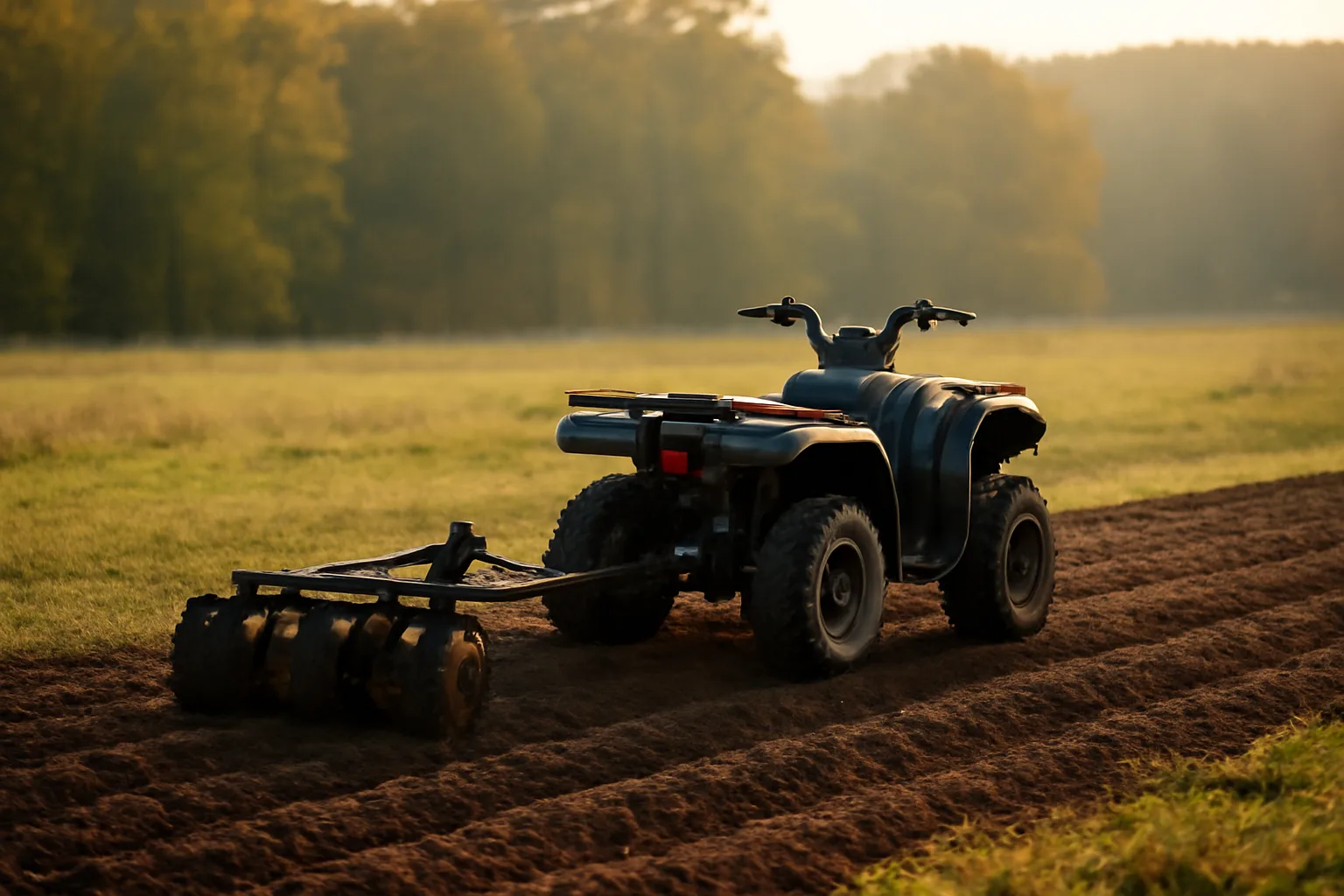
A food plot is a planted patch of forage or grain on hunting land meant to feed and hold deer, usually somewhere between a quarter acre and several acres. Most plots on leased or owned ground fall well under 5 acres, and a lot of hunters work with tenths of an acre tucked into a clearcut or field edge. The implement matters because a food plot lives or dies on seed-to-soil contact and a clean seedbed. A tractor with a box blade or a disc plow can do this work fine, but plenty of hunters don't own a tractor, or their plot access trail won't fit one. That's where ATV and UTV implements come in. A 500cc to 700cc ATV with a winch and a 2-inch receiver hitch can pull a disc, cultipacker, drag harrow, or small plow through soil that a tractor might never reach without cutting a new road. The tradeoff is power. An ATV puts out somewhere around 30 to 50 horsepower to the ground depending on model, versus 25 to 100+ horsepower on a compact tractor. That means you're working smaller implements, in drier soil, sometimes making two or three passes where a tractor makes one. For plots under 2 acres this is a non-issue. Past 3 acres, the math starts to favor a tractor or at least a bigger UTV. Cooperative extension guidance on wildlife food plots consistently notes that seedbed prep and seeding depth control matter more to establishment success than plot size or species choice [1]. That's the whole argument for spending real money on a disc and cultipacker instead of just broadcasting seed on unbroken ground.
What are the core ATV implements you actually need
| Disc harrow | $300 (single gang) | $600-900 (tandem) | 4-5 ft | |
|---|---|---|---|---|
| Cultipacker | $80 DIY drag | $400-700 (steel wheel) | 4-5 ft | |
| Spreader | $30-60 (hand crank) | $150-400 (tow, 100-175 lb) | 4-6 ft swath | |
| Sprayer | $150 (boomless) | $300-500 (boom, 25-40 gal) | 6-15 ft | A full mid-range setup for a first-time plotter runs somewhere between $1,300 and $2,300 before you buy seed, lime, or fertilizer. That sounds like a lot until you compare it to a single tractor implement, which often costs more than this entire list combined. |
You need four tools to do a food plot right from bare ground to planted: something to break the soil, something to smooth and firm it, something to spread seed and fertilizer, and something to spray herbicide. Everything else is a nice-to-have. Disc harrow. This is the workhorse. A tandem disc with 16 to 20 blades, in the 4 to 5 foot width range, runs about $400 to $900 new for ATV-rated models. It breaks sod, incorporates lime and fertilizer, and turns over old plot residue. Cheaper single-gang discs exist under $300 but don't cut as deep or as evenly. Cultipacker or drag harrow. After discing, you need to firm the seedbed so small seeds like clover and brassica don't sit too deep or get washed out. A steel-wheel cultipacker in 4 to 5 feet costs roughly $400 to $700. A cheaper option is a homemade chain-link or drag harrow, which many hunters build for under $100 using chain-link fence and rebar. Broadcast spreader. For seed, lime, and granular fertilizer. Tow-behind spreaders with 100 to 175 lb hoppers cost $150 to $400. A hand-crank spreader works fine for plots under a half acre and costs $30 to $60, but for anything bigger, towing saves your shoulders and gets more even coverage. Sprayer. A 25 to 40 gallon tow-behind sprayer with a boom runs $200 to $500. This is how you kill existing vegetation with glyphosate before planting, and how you spot-treat weeds in an established clover or chicory plot. Boomless nozzle sprayers cost less and work fine on odd-shaped plots. Here's a quick cost comparison for a first-time buildout: | Implement | Budget option | Mid-range | Typical width |
Do you need a combo disc-and-cultipacker unit
Yes, if you're buying one implement and want it to do double duty. Combo units mount a disc gang in front and a cultipacker roller behind on the same frame, so one pass breaks ground and firms it in the same trip. These cost $700 to $1,400 depending on width and brand, which is less than buying a disc and cultipacker separately in most cases. The advantage is fewer passes and less time on the ATV, which matters if you're working a small plot window between rain events. The downside is combo units are heavier and need a slightly stronger ATV to pull, generally 500cc or larger with a winch-rated hitch. For plots under an acre, a lot of hunters skip the disc entirely and just run a cultipacker or drag harrow over ground they've sprayed and let die back, then broadcast seed and drag again. It's not as thorough as discing, but it works, especially on soil that's already been a plot for a few years and doesn't have heavy sod or brush to break.
When should you plant food plots for deer
Planting timing depends entirely on whether you're planting a spring/summer plot or a fall plot, and that depends on your USDA plant hardiness zone and first/last frost dates. There's no single national planting date. For spring and summer plots (soybeans, cowpeas, clover establishment), most of the whitetail range plants between late April and early June, after soil temperatures hit 50-60°F and frost risk has passed. Extension guidance for the Southeast generally targets April through May, while northern states push into late May or June [2]. For fall plots (brassicas, cereal grains, annual clover), timing runs backward from your first hard frost. A widely cited rule from cooperative extension work is to plant brassicas 60 to 90 days before the first killing frost so they have time to bulb and reach peak palatability after a few frosts sweeten the leaves. In much of the Midwest that means late July through August. In the Deep South, growers can wait until September or even early October. Check your local extension office's frost date tables before locking in a date. The Old Farmer's Almanac and most state extension sites publish average first and last frost dates by county, and that's a better guide than any generic "plant in August" rule you'll see on a seed bag.
When to plant oats for deer
Plant oats for deer in late summer to early fall, generally 6 to 8 weeks before your average first frost date. Oats are a cool-season annual that germinates fast, often in 5 to 10 days, and provides green forage within a few weeks of planting. In the upper Midwest and Northeast, that puts oat planting in the August window. In the transition zone and Mid-South, September works. Oats winterkill in most of the northern half of the whitetail range once temperatures drop into the low 20s and below for extended periods, which is fine if you're using them as an early fall attractant plot rather than a plant meant to carry deer through winter. Oats pair well with brassicas and cereal rye in a blend because they green up fast and give deer something to eat while slower species establish.
When to plant turnips for deer
Turnips go in the ground 80 to 90 days before your first expected frost, which for most of the whitetail range lands somewhere between late July and mid-August. Turnips need that long runway to build the bulb that makes them valuable as a winter food source, and a hard frost or two actually improves palatability by converting starches to sugars. Plant turnip seed shallow, about a quarter inch deep, into a firm, weed-free seedbed. This is exactly where a cultipacker pass after broadcasting pays off, because turnip seed is tiny and easily planted too deep or left exposed on the surface where birds and wind take it. Deer often ignore turnip bulbs and tops early in the season and hit them hard in December and January once other food sources thin out and the cold has sweetened the plant. That delayed-use pattern is normal and doesn't mean the plot failed.
Do deer eat sorghum and is it worth planting
Yes, deer eat grain sorghum, but it's more commonly planted as a screening or bedding cover crop and a food source for turkey and upland birds than as a primary deer attractant. Deer will browse young sorghum plants and eat the grain heads once they mature, but whitetail research and extension trial work generally rank sorghum below soybeans, corn, and brassicas for deer preference and tonnage per acre. Where sorghum earns its place on a plot plan is as a tall screening border around a smaller, more attractive plot, or in a drought-prone area where sorghum's better drought tolerance than corn makes it a more reliable standing grain crop. If your main goal is feeding deer, put your best acreage into soybeans, clover, or brassicas and use sorghum as a secondary planting.
Do deer eat clover and do they actually like it
Yes, deer eat clover readily and it's one of the most consistently preferred food plot forages across the whitetail range. Clover (white clover, red clover, and ladino varieties) provides high protein forage, often 20-30% crude protein in vegetative growth, and deer browse it from spring green-up through fall, with regrowth after each grazing or mowing cycle [3]. Clover's biggest advantage over annuals is persistence. A well-limed, well-fertilized clover stand can produce for 3 to 5 years before needing to be replanted, compared to annual plots that need full seedbed prep every single year. That makes clover a favorite for hunters who want a low-maintenance perennial plot and don't want to run implements across the same ground every spring and fall. The catch is clover needs decent soil pH, generally 6.0 to 7.0, to thrive, and it needs mowing 2 to 4 times a season to keep it from getting stemmy and going to seed instead of staying leafy and palatable. If your soil test comes back with a pH under 5.5, expect a weak clover stand until you get lime worked in, which is exactly the kind of site-specific call your soil test lab should make, not a generic online guide.
What are deer's actual favorite foods
There's no single universal answer because preference shifts by season, region, and what's available naturally, but soybeans, acorns, and clover consistently rank at or near the top of deer preference studies and browse surveys across the whitetail range [4]. In agricultural areas, soybeans and corn dominate deer diets during growing season. In timbered country, acorns (especially white oak family acorns, which are lower in tannins than red oak family) are often the single most sought-after fall food source, sometimes pulling deer off planted plots entirely during a heavy mast year. Brassicas (turnips, radishes, kale) rank high as a late-season food once frost sweetens them. Chicory and alfalfa rank close to clover for warm-season forage quality. Winter wheat and oats provide reliable cool-season green forage when little else is growing. The honest answer for a plot planner: don't chase a single "favorite" species. Deer preference changes with the calendar, so a plot plan built around 2 to 3 complementary species (a perennial clover base plus a fall annual blend, for example) covers more of the year than betting everything on one crop.
Do deer like honey, and does it matter for food plots
There's no research support for deer being drawn to honey specifically as a food source, and it isn't a legitimate food plot or attractant strategy. Deer are herbivores built to digest cellulose and plant matter through a four-chamber rumen system, and honey isn't part of any documented natural deer diet. Some commercial deer attractant products use sugar, molasses, or scent compounds to draw deer to a feeding station, and those products operate in a legal gray area that varies heavily by state. Baiting and supplemental feeding rules differ enormously: some states allow baiting outright, some ban it entirely, and some restrict it to certain zones or disease-management areas because of chronic wasting disease concerns. Check your state wildlife agency's current baiting and feeding regulations before using any attractant product, because rules change year to year and violations can carry real penalties [5]. A planted food plot, by contrast, is legal everywhere and doesn't carry the same disease-transmission concerns that concentrated feeding sites do.
How do you match an ATV implement to your ATV's size
Match implement weight and width to your ATV's towing capacity and horsepower class, more than its receiver hitch size. A 400cc to 500cc ATV with 30 to 40 horsepower handles a 4-foot disc and cultipacker fine in most soil. Push to a 5 or 6-foot implement and you want 550cc or larger, ideally with a winch and low-range gearing. Soil type matters as much as implement weight. Clay soil that's dry and hard-packed fights an ATV disc far more than sandy loam does. If your plot ground is heavy clay, plan on spraying and letting vegetation die back well ahead of discing, and expect to make more passes than you would in lighter soil. UTVs (side-by-sides) generally out-tow ATVs by a wide margin, often 1,500 to 2,500 lbs of towing capacity versus 500 to 1,200 lbs for a typical ATV, so if you're regularly working plots over an acre and a half, a UTV upgrade pays for itself in fewer passes and less strain on the machine [6]. If you'd rather skip the guesswork on species mix, planting windows, and lime and fertilizer rates for your specific ground, a Custom Food Plot Plan for $99 gives you a one-time written plan built around your soil test and region. It won't tell you which disc to buy, but it takes the guesswork out of what to plant and when, which matters more than the implement once you're standing in the field with a bag of seed.
What round out a complete ATV food plot toolkit
Beyond the core four (disc, cultipacker, spreader, sprayer), a few add-ons make repeat plot work faster without being essential for a first build. A box blade or rear blade helps level trail ruts and rough spots before discing, and doubles as a light grading tool for the access trail itself. A plot plow attachment or single-bottom turning plow, useful if you're converting a wooded opening into a plot for the first time and need to bust real sod. A tow-behind seeder-in-one unit that combines a hopper and a light cultipacker in one pass, which costs more upfront ($500-900) but saves a trip across the plot. A soil probe and a basic test kit round things out, though a real lab test through your state land-grant extension office (usually $10 to $20 per sample) beats any consumer kit for actual lime and fertilizer recommendations [7]. Your lab's recommendation is the final word on how much lime and fertilizer your specific field needs. Nothing in this article replaces that soil test. For picking the actual seed to run through that spreader, see our breakdowns on deer food plot seed and food plot seed options by region and budget.
Frequently asked questions
Do deer eat sorghum?
Yes, deer browse young sorghum plants and eat mature grain heads, but it ranks below soybeans, corn, and brassicas in most deer preference research. It's more useful as a screening crop or drought-tolerant grain planting than as a primary attractant plot species.
Do deer eat clover?
Yes, clover is one of the most preferred food plot forages for whitetail deer, offering 20-30% crude protein during active growth. A well-maintained clover stand can produce for 3 to 5 years, making it a common choice for a low-maintenance perennial plot base.
When should you plant food plots for deer?
It depends on species and region. Spring/summer plots (soybeans, cowpeas) go in after last frost, typically April through June depending on zone. Fall plots (brassicas, cereal grains) get planted 60 to 90 days before first frost, generally late July through September.
Do deer like clover more than other forages?
Clover consistently ranks near the top of deer preference studies alongside soybeans and acorns, largely due to its high protein content and long growing season. Preference shifts seasonally though, so deer may favor acorns in fall or brassicas after frost even where clover is available.
When should you plant oats for deer?
Plant oats 6 to 8 weeks before your average first frost date, generally August in the northern half of the whitetail range and September further south. Oats germinate in 5 to 10 days and provide fast green forage, though they winterkill in most northern climates.
When should you plant turnips for deer?
Plant turnips 80 to 90 days before your area's first expected frost, usually late July to mid-August across most of the whitetail range. Turnips need that time to bulb out, and a frost or two afterward sweetens the plant and increases deer use.
What exactly is a food plot?
A food plot is a planted area of forage, grain, or legumes on hunting land intended to feed deer and other wildlife and hold them near a hunting spot. Plots typically range from a quarter acre to several acres and use annual or perennial species suited to the region and season.
What are deer's favorite foods overall?
Soybeans, white oak acorns, and clover consistently rank among the most preferred whitetail foods across regions and studies. Preference shifts by season: acorns dominate fall diets in timbered country, brassicas gain favor after frost, and clover and alfalfa lead during the growing season.
Do deer like honey?
There's no research support for honey as a deer attractant. Deer are herbivores adapted to digest plant cellulose, and honey isn't part of any documented natural diet. Some commercial attractants use sugar or molasses, but check your state's baiting and feeding rules before using any of these products.
What's the minimum ATV implement setup for a first-time food plot?
A disc harrow, a cultipacker or drag harrow, a tow-behind broadcast spreader, and a small tow sprayer cover the core needs. A mid-range setup of all four runs roughly $1,300 to $2,300 total, which is often cheaper than a single comparable tractor implement.
Can a small ATV pull a food plot disc?
A 400cc to 500cc ATV with 30 to 40 horsepower generally handles a 4-foot disc and cultipacker without issue in average soil. Heavier clay soil or wider implements (5-6 feet) call for a larger ATV, ideally 550cc or more, or a UTV with higher towing capacity.
Is a UTV better than an ATV for food plot work?
For plots over an acre and a half, yes. UTVs typically tow 1,500 to 2,500 lbs versus 500 to 1,200 lbs for most ATVs, which means fewer passes and less strain pulling a disc or cultipacker through firm or clay-heavy soil.
Do I need a soil test before buying food plot implements?
You don't need one to buy implements, but you need one before deciding lime and fertilizer rates. A state land-grant extension soil test typically costs $10 to $20 per sample and gives lab-specific recommendations that generic online guidance can't replace.
Sources
- Mississippi State University Extension, Establishing and Managing Wildlife Food Plots: Seedbed preparation and planting depth control are key to food plot establishment success
- University of Tennessee Extension, Wildlife Food Plots: Spring/summer food plot species are typically planted after last frost, generally April through May in southern regions
- University of Georgia Extension, Clover as a Wildlife Forage: Clover forage typically provides 20-30% crude protein during active vegetative growth
- USDA Forest Service, Whitetail Deer Habitat and Food Preferences: Soybeans, acorns, and clover rank consistently high in whitetail deer food preference studies
- Quality Deer Management Association / National Deer Association, Baiting and Feeding Regulations Summary: Baiting and supplemental feeding regulations for deer vary significantly by state and can change year to year
- Polaris Off-Road, UTV vs ATV Towing Capacity Comparison: UTVs typically offer significantly higher towing capacity than ATVs of comparable size
- University of Missouri Extension, Soil Testing for Lawns, Gardens and Food Plots: A standard land-grant extension soil test typically costs $10 to $20 per sample